October True Crime: Looking for Mr. Goodbar (dir by Richard Brooks)


In 1977’s Looking for Mr. Goodbar, Diane Keaton plays Theresa Dunn.

A neurotic and single woman who has never emotionally recovered from her childhood struggle with scoliosis, Theresa is trying to find herself in the wild and promiscuous world of the 1970s.  After losing her virginity to a condescending college professor (Alan Feinstein), Diane goes on to have relationships with a needy social worker (William Atherton) and an hyperactive petty criminal (Richard Gere).  During the day, she teaches deaf children and she’s good at her job.  She even manages to win over the distrustful brother (Levar Burton) of one of her students.  At night, she hits the bars.  She buys drugs from the neighborhood dealer (Julius Harris).  She tries to read the book that she always carries with her.  (Some nights, it’s The Godfather and other nights, it’s something else.)  She picks up strange men and takes them to her roach-infested apartment.  One of those men, Gary (Tom Berenger), turns out to both be a bit insecure about his masculinity and also totally insane….

Looking for Mr. Goodbar is an adaptation of a novel that was inspired by the real-life murder of a New York school teacher named Roseann Quinn.  The book was best seller and, just as he had with a previous best-selling true crime novel, director Richard Brooks bought the rights and both wrote and directed the film.  Diane Keaton, who at that point was best-known for playing Kay Adams in The Godfather and for appearing in Woody Allen’s comedies, took on the demanding role of Theresa and, whatever one may think of the film itself, it can’t be denied that Keaton gives a brave performance as the self-destructive Theresa.  In fact, I would say it’s one of Keaton’s best performances, outside of her work with Woody Allen and The Godfather Part II.  If she had been played by a lesser actress, Roseann could have been unbearable.  As played by Diane Keaton, though, she’s everyone’s best friend who just need some time to find herself.  The viewer worries about her and wants to protect her as soon as they see her, making her ultimate fate all the more tragic.

As for film itself, I’ve watched Looking For Mr. Goodbar a few times and I’m always a little bit surprised by how bad the movie actually is.  The film actually gets off to a strong start.  The scenes between Theresa and the professor make for a sensitive portrait of a repressed young woman finally getting in touch with her sexuality and, in the process, discovering that she deserves better than the man she’s with.  But once Theresa moves into her apartment and starts hitting the bars at night, the film takes on a hectoring and moralistic tone that leaves the viewer feeling as if the film is blaming Theresa for the tragedy that’s waiting for her at the end of the story.  Diane Keaton and Tuesday Weld (who plays her sister) both give excellent performances but everyone else in the film either does too much or too little.  This is especially true of Richard Gere, who is very hyperactive but still strangely insubstantial in his role.  (Whenever Richard Gere appears on screen, one gets the feeling that they could just walk right through him.)  A scene where Gere jumps around the apartment is meant to be disturbing but it’s more likely to inspire laughter than chills.

It’s an overly long film and the moments in which Theresa has dark, sexually-charged fantasies are never quite as powerful as the film obviously meant for them to be.  (Brian Dennehy makes his film debut as a doctor who kisses Theresa’s breast during one of her fantasies.)  As opposed to the empathy that he brought to In Cold Blood, one gets the feeling that director Richard Brooks didn’t like anyone in this movie and that he was more interested in Theresa as a cautionary tale than as a human being.  With this film, Brooks seemed to be standing athwart the Sexual Revolution and shouting, “Stop!”  That said, the film’s final moments are genuinely disturbing and difficult to watch.  It’s the one moment where Brooks’s lack of subtlety pays off.  Those last minutes are about as horrific as anything you could expect to see.

As for Roseann Quinn, her killer was eventually arrested.  John Wayne Wilson hung himself in prison, 5 months after murdering her.
Retro Television Review: St. Elsewhere 1.13 “Family History”


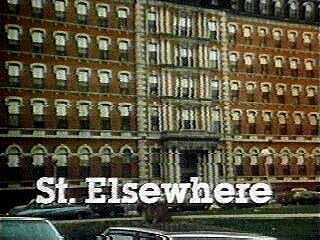
Welcome to Retro Television Reviews, a feature where we review some of our favorite and least favorite shows of the past! On Fridays, I will be reviewing St. Elsewhere, a medical show which ran on NBC from 1982 to 1988.  The show can be found on Hulu and, for purchase, on Prime!

Usually, I review this show on Friday but, yesterday, my week of visiting Lake Texoma in freezing weather finally caught up with me and I spent most of the day congested and curled up in bed.  As a result, St. Elsewhere got preempted until today.  Now, let’s see what’s happening at St. Eligius….

Episode 1.13 “Family History”

(Dir by Kevin Hooks, originally aired on February 8th, 1983)

After being a background character for the past few episodes, Dr. Wendy Armstrong (Kim Miyori) finally gets her time in the spotlight with this episode.  When Charlie Heller (Keenan Wynn) comes into the ER with a chronic nosebleed, Dr. Armstrong is too quick to assume that it’s nothing serious.  Dr. Westphall, who is in an especially crappy mood this episode, reprimands her for not getting a family history before making her diagnosis.  A chastened Armstrong gets Charlie’s family history and comes to suspect that he has a rare blood condition that only seems to effect Jewish men.  A very expensive test confirms Armstrong’s diagnosis.  Armstrong is excited.  “I was right!” she says.  Westphall again reprimands her, telling her that she now needs to tell Charlie that he has a chronic condition and will have to take medicine for the rest of his life.

Seriously, Westphall was not in a good mood during this episode!  But I don’t blame him.  From her first appearance on the show, Dr. Armstrong has been complaining nonstop.  No matter what happens in the hospital, she seems to take it as a personal affront.  Now, after several episodes of complaining about the other doctors, Armstrong fails to do a simple thing like get a family history.  No wonder Westphall was all like, What are you bragging about?

That said, even if his mood was understandable, I would not want to get on Westphall’s bad side.  Even after Armstrong makes the correct diagnosis, Westphall takes the time to say, “Next time, do what I told you to do.”  Agck!

While Westphall was dealing with whatever was eating away at him, Dr. Chandler was getting annoyed by John Doe’s refusal to try to remember anything about his past.  Even when John Doe’s real father showed up and explained that Doe was his son, Dave Stewart, he refused to try to remember anything.  Eventually, Chandler snapped at Dave for refusing to even try.  Chandler, of course, is played by a young Denzel Washington so, when he gets mad, it’s like having the voice of God call you out.  After Chandler’s reprimand, Dave finally makes an effort to remember his past.  He realizes that, when he was shot, he had a vision of his deceased mother welcoming him to heaven.  Awwww!

Dr. Craig’s friend has his gender affirmation surgery.  Crag met his friend’s lover, a trans man.  Needless to say, this episode featured a lot of scenes of Craig rolling his eyes as he struggled to come to terms with everything he was learning about his old friend.  It was all pretty predictable but William Daniels did a great job playing up Craig’s confusion and single-mindedness.

And finally, Peter was happy because his wife wanted to get back together.  I get the feeling any happiness Peter feels is destined to always be temporary.

This episode was a bit uneven.  Armstrong’s story would have been compelling if Armstrong herself was a more interesting character.  The highlight of the episode were the scenes between Denzel Washington’s doctor and Tom Hulce’s amnesiac.  It’s always enjoyable to watch two good actors perform opposite of each other.

Next week, the great Norman Lloyd takes center stage as Auschlander’s cancer returns.


Retro Television Review: The Hunted Lady (dir by Richard Lang)


Welcome to Retro Television Reviews, a feature where we review some of our favorite and least favorite shows of the past!  On Sundays, I will be reviewing the made-for-television movies that used to be a primetime mainstay.  Today’s film is 1977’s The Hunted Lady!  It  can be viewed on YouTube.

Detective Susan Reilly (Donna Mills) reluctantly teams up with a chauvinistic cop named Sgt. Arizzio (Alan Feinstein) to investigate a United States senator who has presidential ambitions.  Arizzio believes that the senator is being back by the Mafia and that it would be disastrous for the country if a mob-connected politician ended up in the White House.  (Being mob-connected didn’t seem to hurt John F. Kennedy but still….)

Now, Detective Reilly and Sgt. Arizzio working together to take down a corrupt senator sounds like an intriguing premise for a movie, right?  Well, oddly enough, that’s not what this movie is actually about.  Instead, it’s about Susan going on the run after she’s framed for Arizzio’s murder.  She escapes from police custody with the help of her father.  Though she’s still recovering from being shot earlier in the film, Susan makes her way to Reno and attempts to hide out from both the cops and the Mafia assassin that has been sent to kill her.

Susan hiding out in Reno.  Hmmm …. sound like an intriguing premise for a movie, right?  Well, don’t get to attached to Susan pretending to be a professional gambler because it turns out that bullet wound was more serious than she realized and she ends up passing out from blood loss.  When she awakens, she’s in a free clinic that is run by Dr. Arthur Sills (Robert Reed).  Dr. Sills doesn’t ask Susan too many questions about her past and even hires Susan on as a nurse.  Susan and Dr. Sills fall in love and try to clear the name of a Native American who has been accused of blowing stuff up.

Doing some research, I was not surprised to discover that The Hunted Lady was originally developed as a possible television show.  The show would have played out like a combination of Charlie’s Angels and The Fugitive, with Susan moving from town to town and getting involved with a new set of guest stars each week.  With both the police and the mob trying to track her down, Susan would try to clear her name while also helping out strangers.  Unfortunately, The Hunted Lady wasn’t exactly a hit in the ratings and Susan’s further adventures went untold.

The main problem with The Hunted Lady is an obvious one.  The idea of the Mafia trying to install one of their guys in the White House is considerably more intriguing that Susan falling in love with Dr. Sills while working at a free clinic.  The whole time that Susan was helping the doctor’s patients, I was thinking, “But what about the senator?”  Donna Mills was surprisingly convincing as a tough cop but she had next to no chemistry with Robert Reed.  If anything, Reed looked annoyed at just having to be there.

Anyway, here’s hoping that Susan cleared her name eventually.  You can only run for so long.

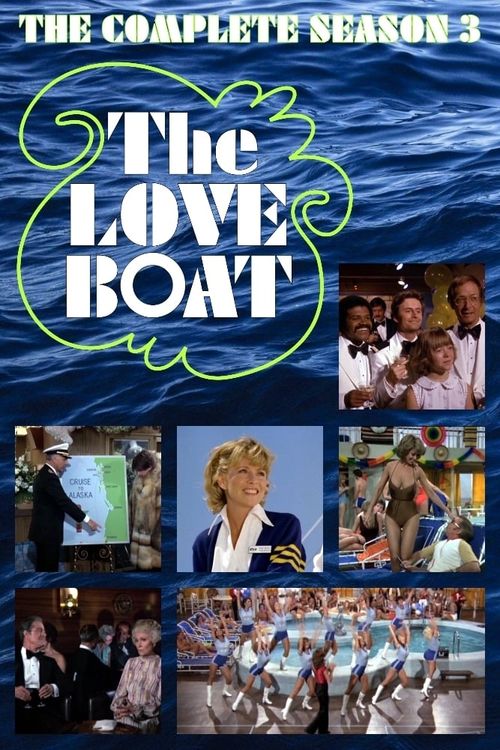
Retro Television Review: The Love Boat 3.26 “Vicki’s First Love/The High Cost of Living/Accident Prone”


Welcome to Retro Television Reviews, a feature where we review some of our favorite and least favorite shows of the past!  On Wednesdays, I will be reviewing the original Love Boat, which aired on ABC from 1977 to 1986!  The series can be streamed on Paramount Plus!

The Love Boat promises something for everyone!

Episode 3.26 “Vicki’s First Love/The High Cost of Loving/Accident Prone”

(Dir by George Tyne, originally aired on April 5th, 1980)

It’s not easy growing up on a cruise ship.  That was one of the main takeaways that I took from this week’s episode of The Love Boat.  Vicki is really excited when singer Mark Redding (Rex Smith) boards the ship.  She has a huge crush on him and she even gets to give him a tour of the boat.

Of course, despite his teen idol status, Mark is an adult and famous and being pursued by almost every woman on the ship.  Vicki feels insecure compared to the other women who are pursuing Mark.  (Of course, those women are all in their 20s while Vicki is 12.)  Eventually, Captain Stubing has one of his fatherly conversations with her and Vicki realizes that she doesn’t have to grow up quickly.  It’s a simple storyline but it’s nicely performed by both Jill Whelan and Gavin MacLeod and, speaking as someone who wanted to be an adult when she was 12, I could relate to Vicki’s feelings.  I was also glad that Mark turned out to be not a sleazy rock star, even if he was a bit superficial.  The Love Boat is a place for romance, not debauchery.

As for the other two storylines, one featured Steve Kanaly as Mr. Massey, a wealthy man who is paying a former lover palimony.  At his lawyer’s insistence, he boards the boat with a series of contracts.  Before he get involved with any woman, he is supposed to get her to sign an agreement not to sue him for palimony.  Needless to say, this does not make Massey’s romantic life easy.  Finally, he decides to forget about the contract, just for his shipboard hook-up to present him with a contract of her own.  Apparently, everyone’s scared of getting sued!

Speaking of getting sued, Tom Barry (Alan Feinstein) boards the boat with a broken leg and is shocked to discover that the bad driver responsible for the accident that injured him is on the boat as well!  Karen (Britt Ekland) is a bit accident-prone but, despite the awkwardness of their first meeting, Tom and Karen fall in love.  Tom even agrees to not sue her.  Yay!  I love a happy ending.

This was an enjoyable episode of The Love Boat.  With the exception of Tom and Karen’ story, there really wasn’t much romance.  There was just Vicki feeling insecure but coming to realize that she was just fine the way she was and then there was Mr. Massey trying to balance getting laid with remaining legally safe.  But the Vicki storyline was sensitive and intelligent while the Mr. Massey storyline featured some nice comedic desperation from Steve Kanaly.  Even Alan Feinstein and Britt Ekland had a really likable chemistry.  All in all, this was a pleasant cruise.