14 Days of Paranoia #2: Extreme Justice (dir by Mark L. Lester)


What type of justice?

Extreme justice, y’all!

In this 1993 film, Lou Diamond Phillips stars as Jeff Powers.  Who is Jeff Powers?  He’s a cop!  He wants to keep the street safe!  Sometimes, he knows that you have to be willing to break the rules!  He’s a cop who does things his way!

Okay, is that enough exclamation points?  I’m not just using them to be obnoxious.  The film is pretty much just one big exclamation point.  The action is hyperintense and the film is full of characters who always seem like they’re just one step away from exploding.  No one in this film is particularly calm or laid back.  From the start, everything is dialed to eleven and it just keeps going higher and higher.

After Jeff is put on probation for roughing up a suspect, he receives an invitation to join an elite squad of detective.  Led by the charismatic Detective Dan Vaughn (Scott Glenn, giving a performance that is so over-the-top that he yells straight at the camera at one point), the Special Investigative Section is the best of the bed.  Upon joining, Jeff finds himself a member of a sacred fraternity of law enforcers.  Working with men like the always amused Detective Larson (Yaphet Kotto) and the somewhat paranoid Angel (Andrew Divoff), Jeff finds himself tracking some of the biggest criminals in the city.

What Jeff also discovers is that SIS does more than just arrest criminals.  The SIS has been given an unofficial license to kill and they end up executing as many people as they take to jail.  Often times, Vaughn will tells the men to allow a crime to be committed so that they can then dispense their own brand of justice.  In the film’s most disturbing scene, the members of SIS wait until after a woman has been raped in an alley before they move to neutralize her attackers.  When Jeff finally decides that he can’t be a part of all this and tries to reveal what’s going on, he discovers that the SIS has some support in some very high places.  Who cares if the SIS is allowing crimes to be committed or if an innocent person occasionally gets caught in the crossfire?  At least they’re taking care of the criminals!

Extreme Justice is a crude and energetic film and one that is based on some of the stories that spread about the LAPD’s RAMPART division in the 90s.  That the film works is a testament to the performances of Phillips, Kotto, and Glenn and also the direction of Mark L. Lester.  An exploitation vet who occassionally made big studio action films as well, Lester keeps the pace moving at breakneck speed and, even more importantly, he allows both sides to have their say.  While Jeff is upset about SIS’s methods, Detective Vaughn is correct when he says that his unit is targeting the worst of the worst.  It makes for an unusually intelligent exploitation film, one that leaves the audience with a lot to consider.  How far would you go to keep your neighborhood safe?

Previous entries in 2025’s 14 Days Of Paranoia:
  1. The Fourth Wall (1969)

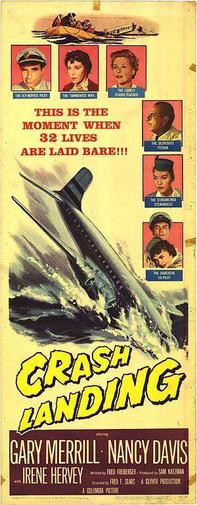
Crash Landing (1958, directed by Fred F. Sears)


Flying from Lisbon to New York City, a commercial airline is flying over the ocean when two of its engines fail.  When the propellers fail to restart, Captain Steve Williams (Gary Merrill) realizes that he will have to land the plane in the ocean.  The Navy is standing by to rescue the passengers.  It’s just a question of whether or not Steve and his crew can land the plane without injuring the passengers or causing the plan to break in half.

This is a disaster film that doesn’t really have a disaster.  The members of the crew all work professionally and efficiently to make sure that the landing is a success, even though none of them have ever had to ditch a plane before.  The Navy shows up on time and ready to help.  With one exception, the passengers react calmly and do what they’re told.  An Orthodox priest prays for the plane.  The flight attendants neatly pack all of the kitchen utensils.  The only drama comes from a boy who is traveling with his dog Wilbur and is upset to hear that Wilbur will have to stay in the back of the plane, where he will probably drown.  The boy’s father says, “I’ll buy you a new dog,” and the boy asks that his baseball cap be placed by Wilbur’s cage so that Wilbur knows his owner was thinking of him.  Don’t worry kid!  Steve Williams isn’t going to let your dog die.

It’s strange to see a disaster film without any real drama.  The crew thinks that Williams can be overbearing but it turns out he knows what he’s doing.  At home, his wife (Nancy Davis, in her final film role) thinks that Steve is too hard on their son.  Their son is going to grow up knowing how to land airplanes in water.  This is almost the Sully origin story.  Otherwise, the film emphasizes the way that everyone works together and doesn’t panic.  The scene where the plane lands in the water features some good special effects but otherwise, the movie is pretty dull.  It could have used Leslie Nielsen and Peter Graves.

Actress Nancy Davis retired from movies after this one but she remained in the public eye as the wife of future President Ronald Reagan.

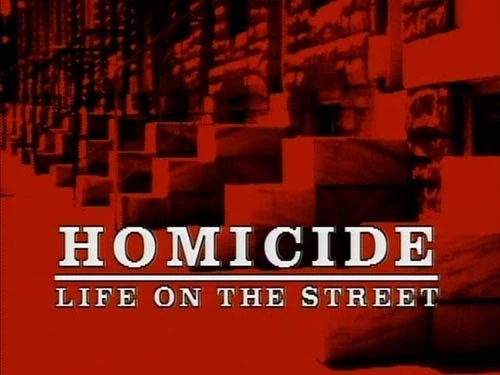
Retro Television Review: Homicide: Life On The Street 3.3 “Extreme Unction”


Welcome to Retro Television Reviews, a feature where we review some of our favorite and least favorite shows of the past!  On Sundays, I will be reviewing Homicide: Life On The Street, which aired from 1993 to 1999, on NBC!  It  can be viewed on Peacock.

This week, the White Glove Killer is discovered.

Episode 3.3 “Extreme Unction”

(Dir by Keith Gordon, originally aired on October 28th, 1994)

For all the hours that Pembleton and the other detectives put in and for all the motives that were considered and the suspects were interviewed, the murderer of Katherine Goodrich and two other women is captured not through deductive brilliance but because she herself enters the police station.

When Pamela Wilgis (Lucinda Jenney) first enters the station, she claims to have just witnessed two men dumping the third victim.  Pembleton is dismissive of her until she mentions the white gloves, a detail that has not been released to the public.  While Pembleton talks to her, the other detectives check out Pamela’s apartment and discover 12 sets of white cotton gloves hanging in her bathroom.  Pamela is the murderer.

When Pembleton asks Pamela about the gloves, Pamela suddenly starts speaking in an Irish accent.  Later, she starts speaking like an angry and rebellious child.  Later still, she reverts to being a wide-eyed innocent who says she had no idea how she ended up in the interrogation room.  Pembleton is convinced that she’s faking her alternate personalities but, despite his best efforts, he can never get her to actually confess that she committed the murders.

From the start, Homicide has emphasizes the role of luck in solving murders.  The majority of the show’s murders are solved precisely because someone thought they could outsmart the police or because they made a very obvious error.  For all of Pembleton’s strengths in the Box, his interrogation technique works best when he’s dealing with someone who doesn’t understand how the system works.  Pamela, on the other hand, obviously understands what he’s trying to do.  She knows the system and she knows how to game it.  Pamela does eventually confess but not Pembleton.  Instead, she does an interview with the obnoxious reported played by Tony Todd, blaming her crimes on the abuse she suffered as a child and her dissociative disorder.  Pembleton’s pride is hurt but he also finds himself struggling with his faith.  How can Pamela, after killing three saintly women, now avoid paying for her crimes?  Even with the thrilling interrogation scene between Pembleton and Pamela and the excellent performances of Andre Braugher and Lucinda Jenney, it’s all feels a bit anticlimactic.  But it also feels appropriate for the world in which Homicide takes place.

This episode also wrapped up a few other plotlines.  Munch, Bayliss, and Lewis finally own their bar.  Good for them.  I’m not really a bar person or a drinker but I probably would have enjoyed visiting the Waterfront whenever Munch was working the bar.  Even more importantly, Felton returned to his mentally unstable wife.  And again, that’s a good thing if just because I was getting sick of listening to Felton whine about his marriage.  So was Kay.

This episode was effective enough.  The scenes between Andre Braugher and Lucinda Jenney alone made the episode memorable.  At the same time, as I watched, it occurred to me that, if this episode had aired during the first season, the White Glove Murders probably never would have been solved.  If Adena Watson had died during the third season, one can be sure Bayliss would have gotten a confession out Risley Tucker.

Next week, we find out why Detective Crosetti has yet to return from Atlantic City.

Song of the Day: The Main Theme From The Natural by Randy Newman


Just like yesterday’s song of the day, this is a piece of music that will be familiar to anyone who has ever been to a baseball game.

Randy Newman composed this for the 1984 classic baseball movie, The Natural.  I defy anyone to listen to this without immediately remembering the greatest home run that they’ve ever seen.


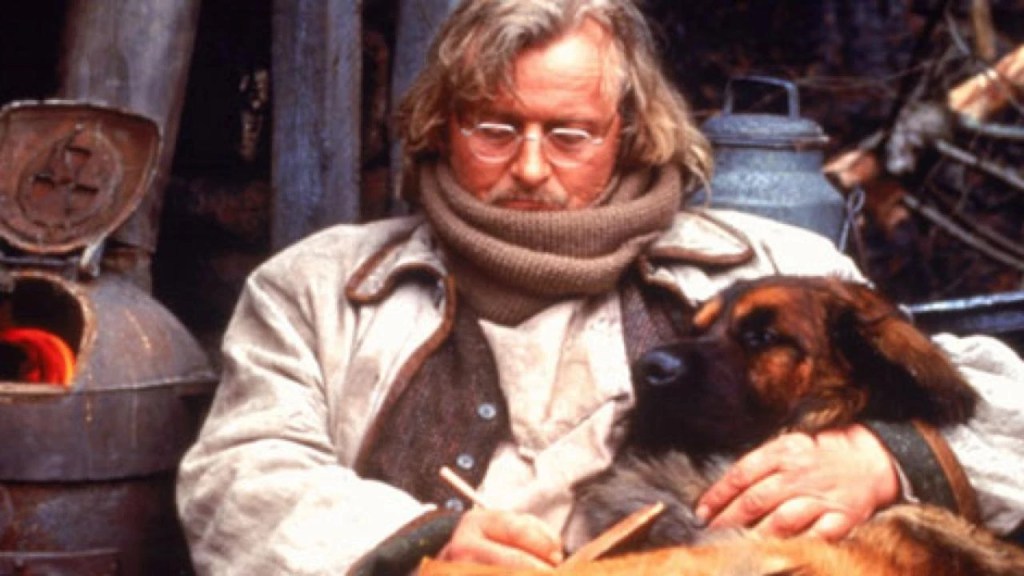
THE CALL OF THE WILD (1997) – Rutger Hauer stars in this version of the classic Jack London novel!


THE CALL OF THE WILD (1997) is based on Jack London’s classic story about Buck, a domesticated dog who lived the first four years of his life on the regal estate of Judge Miller. In 1897, he’s kidnapped and shipped up north to the frozen arctic regions where powerful dogs are in high demand. And Buck, a St. Bernard-Scotch Collie mix, is as powerful as it gets. 

On his journey, we see Buck fall into the hands of three different masters. First, he’s purchased by a dispatch courier for the Canadian government named Perrault (Luc Morissette) whose sled driver is Francois (Robert Pierre Cote). Perrault and Francois are kind to the dogs, but life is still harsh as they carry their dispatches across the snowy, frozen north. Buck sees a dog killed by other dogs for the first time. This is where he first learns that only the strong survive, and he soon has to prove it when he’s forced to fight and kill Spitz, the lead dog of the team. Unfortunately, circumstances require Perrault to sell Buck and his sled team to a group of greenhorns led by Hal (Charles Edwin Powell), his sister Mercedes (Bronwen Booth) and her husband Charles (Burke Lawrence). These morons have no business looking for gold in the Yukon. They have no clue as to what they’re doing and seem to be leading the group to certain death. Starving, tired, and sensing disaster, Buck is lucky that the group arrives at the camp of John Thornton (Rutger Hauer) just in the nick of time. Collapsing at the doorstep of Thornton’s tent, Buck refuses to get up and go any further. As Hal begins to beat Buck with a stick, even going so far as pulling his gun to shoot him, Thornton forcibly takes Buck from the morons. With Thornton, Buck has finally found his “human.” John Thornton nurses Buck back to health and the two become inseparable. Buck has found love for the first time with Thornton and will not let him out of his sight for fear he might lose him. Then something strange happens, he starts feeling a call from the forest, and the promise of a freedom he’s never known before. His love for Thornton is strong, but is it as strong as the call of the wild? 

Even though this 1997 version of THE CALL OF THE WILD is narrated by Richard Dreyfuss and includes the great actor Rutger Hauer in its cast, the true star of this film is Buck the dog. We really pull for Buck as we see him adapt to his new way of life after he’s stolen from his comfortable southern home. As hard as it is to see the animals kill the weakest among them, these are important lessons for Buck. His new world is no place for the weak, and he decides that he will never be weak again. Even though Buck has gotten tough, it’s still a relief when he ends up with John Thornton, the Hauer character. My favorite part of the film is when the two take off together in search of gold. Hauer is only in the film for about thirty minutes, but the relationship he shares with Buck is the highlight of the film as far as I’m concerned.

The last thing I want to mention about the film is that it’s directed by Peter Svatek. Svatek’s next film, BLEEDERS (aka HEMOGLOBIN) would also star Rutger Hauer, and he would follow that up with SILVER WOLF, starring Roy Scheider. For what it’s worth, the man definitely had something going for him since he was able to work with talents like Hauer and Scheider! 

I’ve never read Jack London’s novel, but I have read that this version of THE CALL OF THE WILD may be the most faithful adaptation of the book out there. If that’s truly the case or not, I still really enjoyed this adaptation, and it’s an easy recommendation from me. 

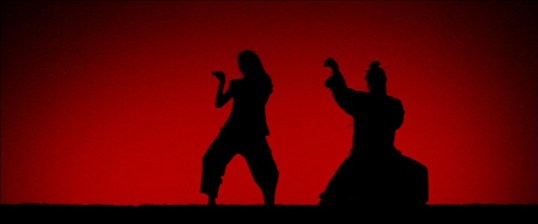
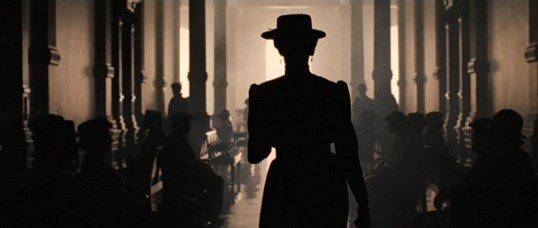
4 Shots From 4 Films: Celebrating The Silhouette


4 Or More Shots From 4 Or More Films is just what it says it is, 4 shots from 4 of our favorite films. As opposed to the reviews and recaps that we usually post, 4 Shots From 4 Films lets the visuals do the talking!

As a photographer, I love a good silhouette shot.  Here are some of my favorites.

4 Shots From 4 Films

Fantasia (1940, Dir. by Samuel Armstrong)

Kill Bill Vol. 2 (2004, Dir. by Quentin Tarnatino)

True Grit (2010, Dir. by Joel and Ethan Coen)

Lone Survivor (2013, Dir. by Peter Berg)

Late Night Retro Television Review: Check It Out! 3.7 “He’s No Heavy, He’s My Brother”


Welcome to Late Night Retro Television Reviews, a feature where we review some of our favorite and least favorite shows of the past!  On Saturdays, I will be reviewing the Canadian sitcom, Check it Out, which ran in syndication from 1985 to 1988.  The entire show is currently streaming on Tubi and Peacock!

Hey, Howard has an older brother!  I wonder how this will work out….

Episode 3.7 “He’s No Heavy, He’s My Brother”

(Dir by Alan Erlich, originally aired on  October 25th, 1987)

In this episode, we meet Howard’s brother, George (Gary Krawford).  George is an extremely wealthy money manager who lives in Switzerland.  At the start of the episode, he is fired because his employers want to hire a younger man who they can pay less.

Dejected, George returns to Canada.  He visits Howard at the store.  Because George doesn’t specify that he was fired, Howard assumes that George is dying.  Howard reveals that their father always liked George better.  George eventually reveals that he’s not dying and that, being worth five million dollars, he doesn’t need a job in Howard’s store.  Good for George.  I’m happy for him.

George buys Howard’s apartment building.  He then tells Howard that he’s a month behind on his rent.  Howard jokes about George evicting him.  George evicts Howard.  End of episode.

This was a weird episode.  I’m going to assume that the show’s producers were thinking of making George a regular character on the show and this episode was perhaps an attempt to reboot the entire series into a show that would focus 0n the rivalry between the Bannister brothers.  According to the imdb, though, this is the only episode in which George appeared.  Watching this episode, it occurred to me that the entire third season, so far, has featured epiosdes about characters who only appeared once or twice before vanishing.  The third season has been an improvement over the previous season but it’s still obvious that the show was still struggling to figure out what it actually wanted to be about.  This has not only led to a messy continuity but also a few unresolved cliffhangers.  Last episode, it appeared Jack Christian was going to get his own store.  In this episode, he’s still assistant manager at Howard’s store and no mention is made of last week’s events.

The strangest thing about this episode, though, is the show’s insistence that Howard is only in his forties when Don Adams was clearly in his sixties.  George is introduced as being Howard’s older brother but actor Gary Krawford was nearly 20 years younger than Adams and he looked it, too.

Strange, strange episode.  Considering George never again appeared after this episode, it’s probably best not to worry too much about it.  This episode might end with Howard getting evicted (and seriously, the man manages a store, shouldn’t he able to cover his rent?) but I have a feeling we’ll never hear about it again.

Either that or Howard will be forced to live in the store, which is what he pretty much does already.  The important thing is that it will all work out.