There’s nothing like dancing in an abandoned building.
Enjoy!
There’s nothing like dancing in an abandoned building.
Enjoy!
Welcome to Late Night Retro Television Reviews, a feature where we review some of our favorite and least favorite shows of the past! On Mondays, I will be reviewing CHiPs, which ran on NBC from 1977 to 1983. The entire show is currently streaming on Prime!
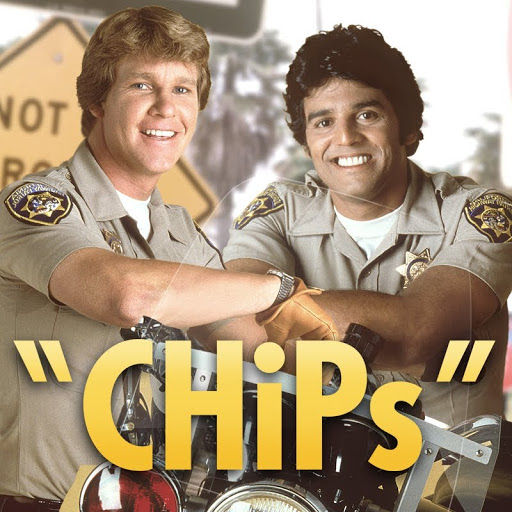
This week, we have a two-hour episode of CHiPs!
Episodes 4.5 and 4.6 “The Great 5K Star Race and Boulder Wrap Party”
(Dir by Gordon Hessler, originally aired on December 7th, 1980)
There’s a big boulder sitting on a mountain and it’s threatening to roll down onto the highway, where it could not only damage cars but also destroy the home of comedian Milton Berle. Berle calls the cops and generally gets annoyed with everyone who comes by his house. They all want to make jokes while the boulder hangs over him like death from above. I would be annoyed as well!
Ponch and Baker arrange for a demolition crew to come in and try to destroy the boulder. As Ponch is also in charge of the annual CHP charity fundraiser, Ponch recruits Berle to be a part of it. Ponch wants a bunch of celebs to take part in a bicycle race. Berle motions with his cigar and says he’ll play touch football instead.
This two-part episode attempts to recapture the fun of the previous season’s Roller Disco. A lot of celebrities show up for the fundraiser and Harlan provides a breathless commentary that basically amounts to continually repeating, “There’s George Peppard talking to Johnnie Ray! Nancy Kulp’s standing in a doorway! There’s Robert Mandan! Conrad Bain’s wearing an ascot! Look at Todd Bridges get down!” It’s not as much fun this time because there’s no roller skating and there’s no disco music. Instead, it’s celebs playing the type of dreary games that high schools and church youth groups have used for years to build up team work. You know that terrible game where people try to move an orange down a line without using their hands? They play that game. (My speech and debate coach had us play the game at a sleepover and I’ll just say that having an orange fall into your cleavage is not as much fun as it sounds, especially when you’re the only girl standing in the line.) An ascot-wearing Conrad Bain runs around in circles while balancing a wine bottle on a tray. The crowd loves it but I think it would be kind of boring to watch. There’s also a dunking booth so that the celebrities can send the members of the CHP into a tub of water. Baker does not participate but Ponch does and you better believe he flashes the biggest smile in the world after he goes down.
There are some other storylines going on, of course. Alex Rocco and Ken Berry are two racers who supplement their income by robbing homes and trucks. There’s a freeway pileup that features some slow motion car jumps. Hey, that truck has “EXPLOSIVES” written on it! Do you think it will explode!? Baker helps a kid who needs better parents. It’s typical CHiPs stuff but the majority of the episode is just a collection of television actors participating in silly games. “There’s Marcia Wallace talking to Chuck Woolery, having a good time!” It needed more disco.
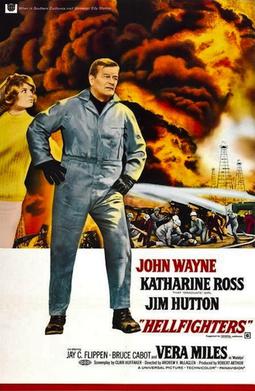 Chance Buckman (John Wayne) is the best there is when it comes to fighting oil fires. Along with Greg Parker (Jim Hutton), Joe Horn (Bruce Cabot), and George Harris (Edward Faulkner), Chance travels the world and puts out fires that the regular authorities can’t handle. Chance loves his job but he also loves his ex-wife, Madelyn (Vera Miles). When Madelyn indicates that she wants to remarry Chance but only if he pursues a less dangerous line of work, Chance retires from firefighting and becomes an oil executive. He leaves his firefighting company to his new son-in-law, Greg. When Greg and Chance’s daughter (Katharine Ross) head down to Venezuela to battle a fire and find themselves not only having to deal with the flames but also with a band of revolutionaries, Chance is the only one who can help them.
When I was growing up, Hellfighters was one of those movies that seemed to turn up on the local stations a lot. The commercials always emphasized the idea of John Wayne almost single-handedly fighting fires and made it seem as if the entire movie was just the Duke staring into the flames with that, “Don’t even try it, you SOB” look on his face. As a result, the sight of John Wayne surrounded by a wall of fire is one of the defining images of my childhood, even though I didn’t actually watch all the way through until recently. When I did watch it, I discovered that Hellfighters was actually a domestic drama, with an aging Wayne passing the torch to youngster Jim Hutton but then taking it back.
The fire scenes are the best part of Hellfighters and I wish there had been more of them. The movie gets bogged down with all of Chance’s family dramas but it comes alive again as soon as John Wayne and his crew are in the middle of a raging inferno, putting their lives at risk to try to tame the fire. Wayne was always at his best when he was playing strong, no-nonsense men who were the best at what they did. Hellfighters is slow in spots but the fire scenes hold up well. There’s no one I’d rather follow into an inferno than Chance Buckman.
Welcome to Retro Television Reviews, a feature where we review some of our favorite and least favorite shows of the past! On Mondays, I will be reviewing Miami Vice, which ran on NBC from 1984 to 1989. The entire show can be purchased on Prime!

This week, Crockett and Tubbs are not looking for bull semen.
Episode 4.13 “Vote of Confidence”
(Dir by Randy Roberts, originally aired on February 12th, 1988)
After spending last week trying to retrieve a cannister of bull semen, this episode finds Crockett, Tubbs, and Switek actually doing Vice work for once. At the start of this episode, they stop a train that doubles as a rolling bordello. They arrest a man named Tom Pierce (Larry Pine), a congressman who just happens to be running for governor!
(Tubbs thinks that Pierce has some good ideas. Crockett doesn’t believe in voting. Try to get away with that on a television show in today’s hyperpartisan climate.)
Tubbs and Crockett are frustrated when the district attorney declines to prosecute Pierce. The D.A. says that they can’t prove that Pierce was actually on the train to hook up with a prostitute. He could have just been passing out campaign literature. Crockett and Tubbs are outraged, wondering why the prostitutes should be arrested but not the people who keep them in business. Crockett and Tubbs see it as another example of the rich and powerful being let off the hook and they’re probably right about that.
Still, Pierce’s campaign is rocked by the news of his arrest and, when he withdraws from the election, Internal Affairs investigates to make sure that Crockett and Tubbs didn’t set him up. While Crockett and Tubbs are definitely innocent, they still suspect that someone may have indeed set Pierce up. When Pierce disappears, they wonder if maybe he’s been abducted or murdered. Their investigation leads them to a notorious political prankster (Barry Lynch) and a shady press operative (Jonathan Hadary).
This episode was apparently based on the same scandal that, decades later, would inspire The Front Runner. It was an improvement on last week’s but then again, anything would have been an improvement on last week’s episode. Just the fact that Crockett and Tubbs were actually doing police work as opposed to stifling laughs every time someone mentioned “bull semen” guaranteed that this episode would shine compared to last week’s episode. On the plus side, this episode features a return of the cynical Crockett and Tubbs that we all know and love. On the negative side, the story itself is so bland that it fades from the memory as soon as the episode ends. This episode was competently done but bland. That’s the problem with episodes that are meant to be “ripped from the headlines.” Headlines eventually fade.
4 Or More Shots From 4 Or More Films is just what it says it is, 4 shots from 4 of our favorite films. As opposed to the reviews and recaps that we usually post, 4 Shots From 4 Films lets the visuals do the talking!
Today, the Shattered Lens remembers director Andrew V. McLalgen, born 105 years ago on this day. It’s time for….
4 Shots From 4 Andrew V. McLaglen Films
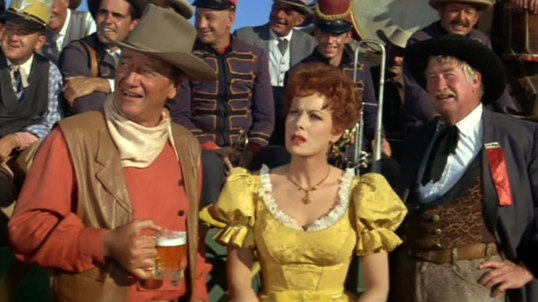
McLintock! (1963, dir by Andrew V. McLaglen, DP: William H. Clothier)
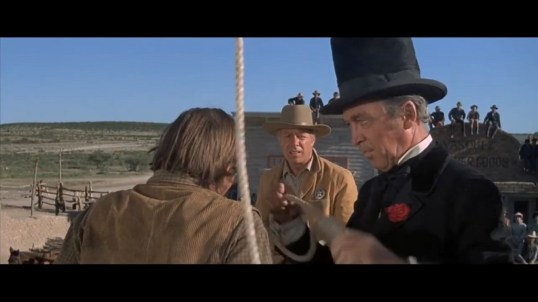
Bandolero! (1968, dir by Andrew V. McLaglen, DP: WIlliam H. Clothier)

Hellfighters (1968, dir by Andrew McLaglen, DP: William H. Clothier)
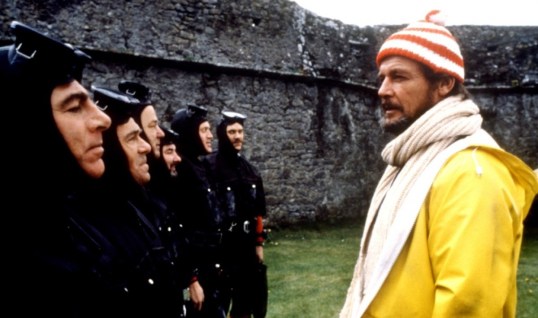
Ffolkes (1980, dir by Andrew V. McLaglen, DP: Tony Imi)
Friends Forever. It’s a nice idea.
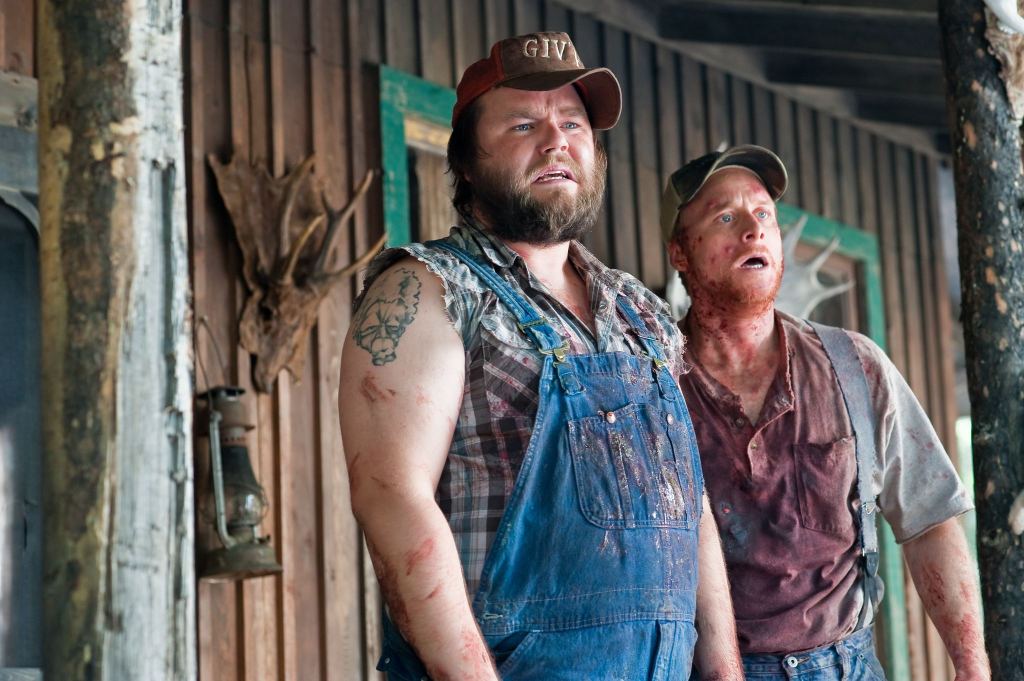
Every Monday night at 9:00 Central Time, my wife Sierra and I host a “Live Movie Tweet” event on X using the hashtag #MondayMuggers. We rotate movie picks each week, and our tastes are quite different. Tonight, Monday, July 28th, we’ll be watching TUCKER & DALE VS. EVIL (2020), starring Tyler Labine, Alan Tudyk, Katrina Bowden, Jesse Moss, Philip Granger, Brandon Jay McLaren, Chelan Simmons, Travis Nelson, Adam Beauchesne, and Eli Craig.
The plot: Two lovable hillbillies are headed to their “fixer-upper” vacation cabin to drink some beer, do some fishin’, and have a good time. But when they run into a group of preppy college kids who assume from their looks that they must be in-bred, chainsaw-wielding killers, Tucker & Dale’s vacation takes a bloody and hilarious turn for the worse.
Sierra and I have been on vacation over the last week, and we truly appreciate Lisa hosting for us while we were gone! Today, we’re both trying to get going again at work and in regular life, so I thought this horror-comedy, that I haven’t watched in many years, might be some easygoing fun! If it sounds fun to you, join us for #MondayMuggers and watch TUCKER & DALE VS. EVIL. It’s on Amazon Prime! I’ve included the trailer below:
As some of our regular readers undoubtedly know, I am involved in hosting a few weekly live tweets on twitter and occasionally Mastodon. I host #FridayNightFlix every Friday, I co-host #ScarySocial on Saturday, and I am one of the five hosts of Mastodon’s #MondayActionMovie! Every week, we get together. We watch a movie. We snark our way through it.
Tonight, for #MondayActionMovie, the film will be 1984’s Invitation to Hell! I picked it so you know it’ll be good.
It should make for a night of fun viewing and I invite all of you to join in. If you want to join the live tweets, just hop onto Mastodon, find the movie on YouTube, hit play at 8 pm et, and use the #MondayActionMovie hashtag! The watch party community is a friendly group and welcoming of newcomers so don’t be shy.
See you soon!
Today, the Shattered Lens wishes a happy birthday to actress and advice columnist Elizabeth Berkley. Today’s scene that I love comes from the most famous episode of Saved By The Bell. Are you excited?
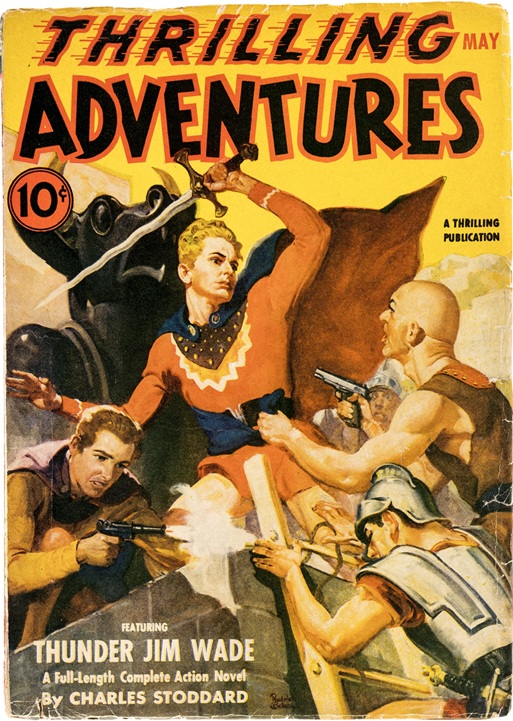
by Rudolph Belarski
This cover is from 1941.

