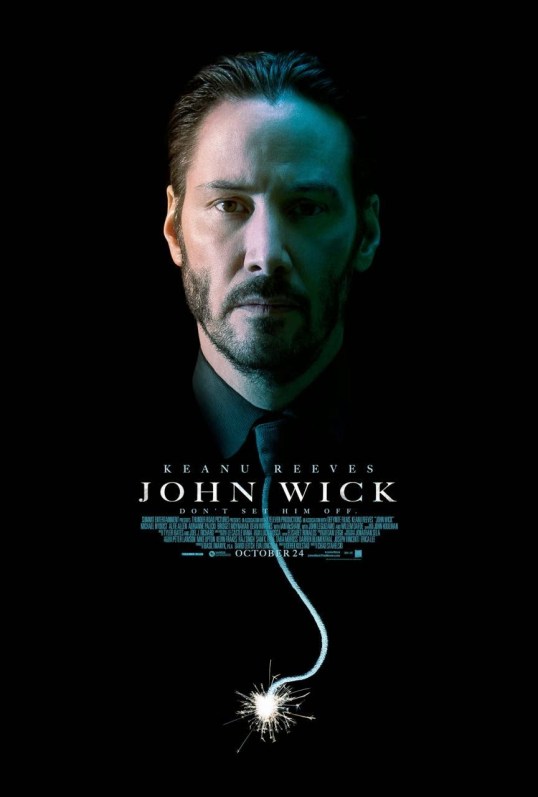
Today, we wish a happy sixty-first birthday to the one and only Keanu Reeves!
Today’s scene that I love comes from the film that made Keanu an icon for a whole generation of moviegoers who had blocked The Matrix sequels from their collective memories, John Wick. In this scene, Keanu explains that it wasn’t just a dog that he lost.
There’s not a pet owner in the world who doesn’t understand exactly what John Wick is saying here. And it must be said that Keanu, who has definitely grown a good deal as an actor over the years, really sells the emotions in this scene.
4 Or More Shots From 4 Or More Films is just what it says it is, 4 shots from 4 of our favorite films. As opposed to the reviews and recaps that we usually post, 4 Shots From 4 Films lets the visuals do the talking!
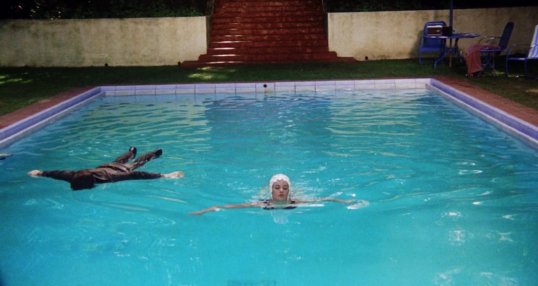
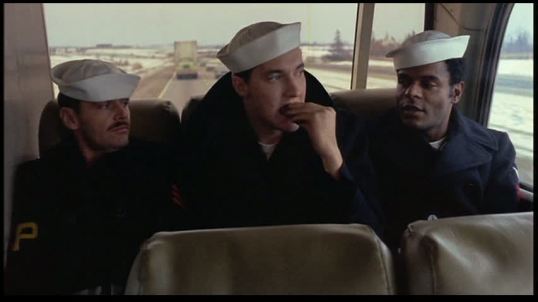
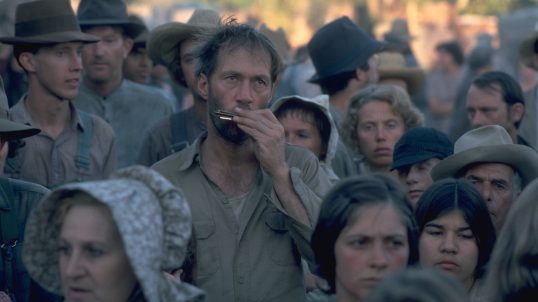
Today, the Shattered Lens celebrates what would have been the 96th birthday of Hal Ashby, one of the most important (and, sadly, one of the most overlooked) directors of the 1970s. It’s time for….
4 Shots From 4 Hal Ashby Films
Harold and Maude (1971, dir by Hal Ashby, DP: John A. Alonzo)
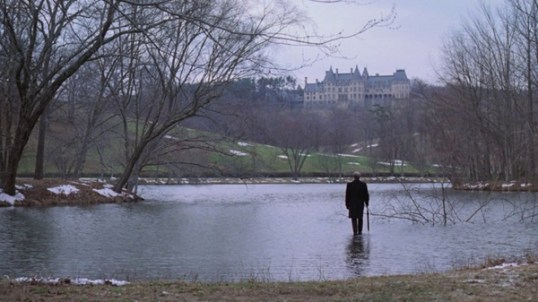
The Last Detail (1973, dir by Hal Ashby, DP: Michael Chapman)
Bound for Glory (1976, dir by Hal Ashby, DP: Haskell Wexler)
Being There (1979, dir by Hal Ashby, DP: Caleb Deschanel)
Sometimes, the most difficult thing is just making it to the audition in time. That is the theme of the video for R.E.M.’s At My Most Beautiful, which follows a cellist as she tries to make it to her audition for R.E.M.
The cellist is played by Rain Phoenix. Rain was the younger sister of River Phoenix, who was a friend of R.E.M.’s Michael Stipe. Rain had previously been a member of River’s band, Aleka’s Attic, and she also served as a back-up singer with the Red Hot Chili Peppers shortly before she appeared in this video.
Director Nigel Dick is another one of those music video directors who worked with almost everyone. If you were a successful musician, Nigel Dick probably did at least one video for you.
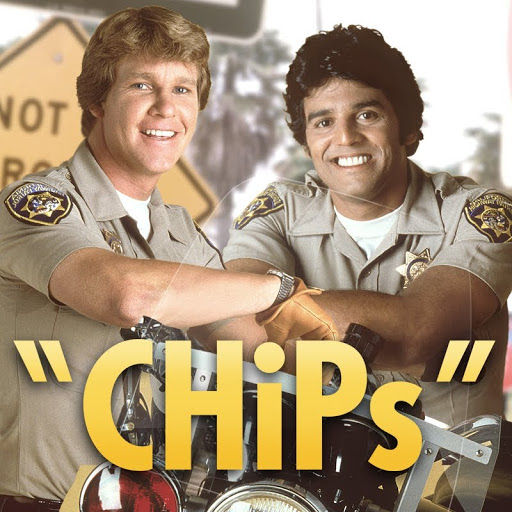
Welcome to Late Night Retro Television Reviews, a feature where we review some of our favorite and least favorite shows of the past! On Mondays, I will be reviewing CHiPs, which ran on NBC from 1977 to 1983. The entire show is currently streaming on Prime!
This week, Ponch fixes everything.
Episode 4.11 “11-99: Officer Need Help”
(Dir by Phil Bondelli, originally aired on January 18th, 1981)
Three criminals are stealing trucks from a trucking company. One of the criminals works for the company but he gets fired, not for his thievery but because he accidentally put a cate of corrosive chemicals on the wrong truck. Now, the highway patrol has to track down the chemicals and also stop the criminals.
It’s a typical episode of CHiPs. A man loses his job after he’s wrongly accused of being the thief. The man’s son (Greg Bradford) helps Jon and Ponch catch the real criminals. There’s a subplot about all of the members of the high patrol carrying a new device that sends out of a signal whenever an officer’s down. Grossman accidentally pushes the button while chasing a lost dog. The emphasis here is on everyone working together and the Highway Patrol going out of their way to always have the best equipment to do their job. In the end, this is such a typical episode that the whole thing is kind of boring.
Really, for me, the only interesting thing about this episode is that it featured a subplot about a new police dispatcher who spoke with a stammer and who had trouble sending out instructions over the radio. I had a lot of sympathy for Kathie Lark (Katherine Moffat) because I had a pretty pronounced stammer up until I was about twelve years old. (It now only comes out if I’m extremely tired or stressed.) That said, considering just how important the dispatchers are when it comes to the Highway Patrol, I was a bit surprised that Kathie got the job in the first place. Kathie mentioned that she had previously been a dispatcher in a small town and again, I wondered how she got that job. To me, it seemed like the Highway Patrol was basically setting Kathie up for failure.
The good thing is that eventually someone gives Kathie some advice that helps her to overcome her nervousness and become an excellent dispatcher. Do you want to guess who gave her the advice? Seriously, I dare you to guess who, out of the show’s cast of characters, magically knew exactly the right thing to say to help Kathie out. If you’re thinking that Ponch was responsible for Kathie becoming a badass on the airwaves, you are exactly right! Is there no problem that Ponch can’t solve? Ponch’s advice, by the way, was that Kathie should always imagine that she was speaking directly to him. The next time that I find myself tripping over a word that starts with B, I’ll try the same thing.
It’s the Ponch Show! Seriously, there’s nothing that Ponch can’t do! Beyond that, this was a boring episode. The California scenery was nice to look at but otherwise, this episode felt like CHiPs on autopilot.
Welcome to Retro Television Reviews, a feature where we review some of our favorite and least favorite shows of the past! On Mondays, I will be reviewing Miami Vice, which ran on NBC from 1984 to 1989. The entire show can be purchased on Prime!
This week, Crockett and Tubbs battle some corrupt cops.
Episode 4.18 “Badge of Dishonor”
(Dir by Richard Compton, originally aired on March 18th, 1988)
Badge of Dishonor opens with Underworld’s Glory, Glory playing on the soundtrack. It’s an early electronic tune, one that isn’t quite EDM but still definitely shows hints of what Underworld and a lot of other synth-pop bands would eventually become. Usually, that would be pretty cool but, unfortunately, the song also has a gospel music feel and I personally gospel music to be excruciatingly dull.
That’s certainly the case here, where the music is played over the opening teaser and the gospel sounds robs it of whatever momentum it might have had. The episode opens with a drug deal gone wrong. Tubbs is working undercover when he and his contacts are suddenly busted by four cops, who kill the real dealers and then steal the drugs and the money. Tubbs barely manages to escape with his life. It should have been an exciting opening but it had a “been there, done that” sort of feel to it. This isn’t the first Miami Vice episode to feature an drug deal gone wrong and it’s not even the first to feature corrupt cops.
The cops in question are all originally from Cuba. Back in Castro’s Hellhole, they were all members of the same street gang. After coming to Miami and building up lengthy juvenile records, the four men were subsequently hired after a race riot (a real-life event that Castillo discusses in his terse manner) led to demands for a more racially-balanced police force. Because the force desperately needed some non-redneck cops, no one bothered to do an extensive background check on the four men when they applied to be cops. Tubbs comments that the corrupt cops are setting “minority hiring back 400 years.”
Crockett and Tubbs’s investigation at first centers on a lieutenant (Reni Santoni) who they think is crooked because he lives on a yacht. The lieutenant explains that he married well and that he suspects the same four cops as Crockett and Tubbs. The lieutenant is subsequently murdered by the cops. It turns out that the corrupt cops are getting their information from an undercover detective named Madison Stone (Michele Shay). Stone has spent the past few years deep undercover, living in a homeless community on the riverfront. Stone is not herself corrupt. She’s just been manipulated and is now in an impossible situation. At least, that’s the way Tubbs views it. Myself, I just felt that Madison Stone appeared to be as bad at working undercover as Sonny Crockett.
Technically, this was a well-made episode. The main problem is that the plot itself just felt so familiar and the four corrupt cops were not particularly interesting. Compared to the usual flamboyant Miami Vice criminals, the cops were pretty bland. In typical Miami Vice fashion, it ended on a dark note. The corrupt cops were defeated but both Madison Stone and their lieutenant were dead. There’s no happy endings in Miami.
In The Alto Knights, I’m pretty sure that Robert De Niro sets the record for saying “What’s the mater with you!?” the most times in one movie.
I don’t know for sure, of course. While I was watching the movie last night, I didn’t keep an exact count and, for that, shame on me. That said, when you consider that The Alto Knights features Robert De Niro playing not just one but two old school Italian gangsters, you can be sure that there were a lot of scenes of either Vito Genovese (Robert De Niro) or Frank Costello (De Niro, again) demanding to know what was the matter. When Genovese watches Costello testifying in front of a Congressional hearing, the “What’s the matter with you!?” count truly goes haywire.
The Alto Knights was directed by Barry Levinson, who has directed some great films. It tells the relatively true story of the rivalry between Costello and Genovese. Both Costello and Genovese were present when the modern Mafia was first created. The diplomatic and negotiation-minded Costello was known as the “Prime Minister of the Underworld.” Genovese was a much more violent gangster and he became one of the most powerful members of the New York Mafia by basically killing anyone who stood in his way. Costello and Genovese started out as weary friends before coming mortal enemies. Costello retired from the rackets after Genovese ordered one of his men to shoot Costello in the head. Meanwhile, Genovese ended up involving the Mafia in the drug trade and died in prison. In the film, Costello narrates their story. There’s a lot of shots of an elderly Costello sitting in what appears to be a park as he speaks directly to the camera. Interestingly enough, Gottitried to do the same thing, with Travolta’s John Gotti speaking directly to the audience while standing in front of the Brooklyn Bridge.
The Alto Knights pretty much features all of the usual Mafia tropes. All the usual points are hit. Albert Anastasia (played by Michael Rispoli) is assassinated while getting a haircut and some viewers will remember that, before De Niro played the man who ordered Anastasia’s assassination, he also played the man who claimed to have shot Anastasia in The Irishman. Personally, I love Mafia films but The Alto Knights felt a bit too recycled to be truly effective. Barry Levison does the usual thing of dropping real-life newspaper headlines and photographs into the middle of the film and it doesn’t so much add verisimilitude as much as it just reminds one of David DeCoteau’s film about Bonnie and Clyde.
The film’s main selling point is that it features Robert De Niro playing two gangsters but there’s really not much gained from casting De Niro in both roles. We get a few scenes of De Niro acting opposite of himself and it’s hard not to notice that Genovese’s reactions often don’t seem to match whatever it is that Costello’s saying. As an actor, De Niro has the ability to be believable as both the cerebral Costello and the hot-headed Genovese but ultimately, the double casting just feels like a distraction. Watching De Niro acting opposite himself, I found myself thinking how much more entertaining it would have been if Joe Pesci, Al Pacino, Harvey Keitel, or even John Travolta had played Genovese. To be honest, if Levinson really had any courage, he would have given the role to James Woods and given us the Once Upon A Time In America/Casino reunion that we all deserve.
The film did win me over a bit towards the end with a recreation of the Apalachin meeting. That was when Genovese invited every mob boss in the country to come to a meeting in upstate New York, just for the feds to suddenly show up and send everyone scattering. For most of the film, it was hard not to feel that Barry Levinson was past his prime as a director but he actually did a good job with the Apalachin scenes. I genuinely laughed when Genovese got into a pointless argument with his driver. I loved the way the film captured the real-life absurdity of a bunch of mob bosses fleeing into the woods, all of their bravado suddenly dissipating as they scrambled into the wilderness. If the entire film had just been about the Apalachin meeting, this review would probably be a lot of different. As it is, one good sequence can’t save the film as a whole.
Hi, everyone! Tonight, on twitter, I will be hosting the debut of the newest social media watch party, #MondayMania! We’re getting things started with 2015’s Stalked By My Doctor, starring the great one himself, Eric Roberts!
You can find the movie on Prime or Tubi and then you can join us on twitter at 9 pm central time! (That’s 10 pm for you folks on the East Coast.) See you then!
Whenever I watch 2010’s Birdemic, I wonder how the birds could possibly want to destroy a civilization that is capable of something like Hanging Out With My Family.