The great British director David Lean was born 118 years ago today.
In honor of his films and his legacy, here is a scene that I love from Lawrence of Arabia. In this scene, Peter O’Toole blowing out a flame transports us straight to a sunrise in the desert. Though Lean started out his career directing small-scale but emotionally rich films like Brief Encounter and Great Expectations, he ultimately became best-known for directing historical epics and cinematic spectacles. This scene shows us why. Even to this day, it seems as if any epic film is destined to be compared to the work of David Lean.
4 Or More Shots From 4 Or More Films is just what it says it is, 4 shots from 4 of our favorite films. As opposed to the reviews and recaps that we usually post, 4 Shots From 4 Films lets the visuals do the talking!
Today, the Shattered Lens wishes a happy birthday to actor/director John Stockwell! Though the critics might not always realize it, Galveston-born John Stockwell is responsible for some of the best beach movies of the 21st Century. No one can make the beach and the ocean look as inviting (or as dangerous) as John Stockwell.
It’s time for….
4 Shots From 4 John Stockwell Films
Blue Crush (2002, dir by John Stockwell, DP: David Hennings)
Into the Blue (2005, dir by John Stockwell, DP: Shane Hurlbut and Pete Zuccarini)
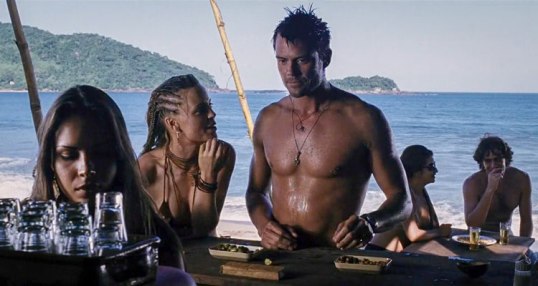
Turistas (2006, dir by John Stockwell, DP: Enrique Chediak and Peter Zuccarini)
In the Blood (2014, dir by John Stockwell, DP: P.J. Lopez)
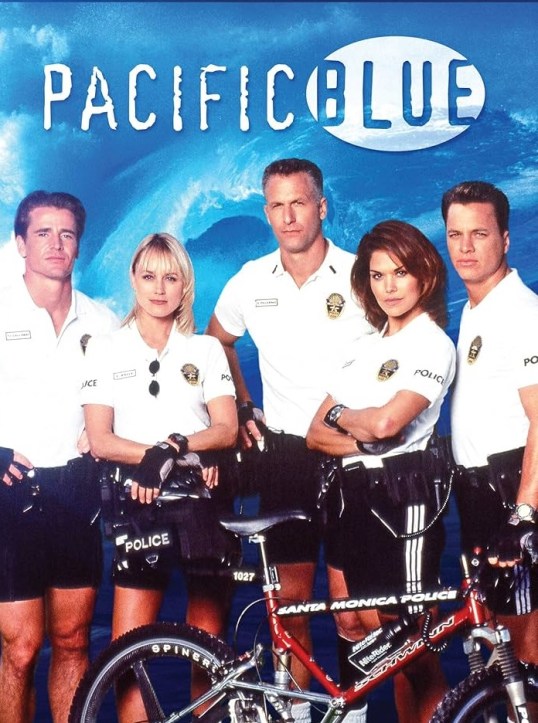
Welcome to Late Night Retro Television Reviews, a feature where we review some of our favorite and least favorite shows of the past! On Tuesdays, I will be reviewing Pacific Blue, a cop show that aired from 1996 to 2000 on the USA Network! It’s currently streaming everywhere, though I’m watching it on Tubi.
This week, the bicycle cops go after pharmaceutical smugglers.
Episode 3.18 “Caretakers”
(Dir by Sara Rose, originally aired on March 8th, 1998)
This week, a drug company is smuggling and distributing black market pharmaceuticals. Leslie Jordan plays Bo, the crazy man who lives in a storage unit and who has figured out what the company is doing. When he gets shot in the back, Chris feels guilty because she refused to listen to his ramblings earlier. After undergoing hypnosis to search for clues as to who shot Bo, Chris goes undercover as a potential drug buyer. It always amuses me whenever any member of the bike patrol goes undercover. None of them are capable of not coming across as being a cop and that’s especially true in Chris’s case. Everything from the way they talk to the way they glare at everyone to the way they stand just a little bit too rigidly screams, “Cop!” And yet the criminals never seem to catch on.
Meanwhile, Victor’s mother is deathly ill and needs some drugs to save her life. Luckily, the local priest has connections. But can Victor set aside whatever his issue is with the church? Does anyone care? I mean, I’m glad that Victor’s mom is alive at the end of the episode but Victor isn’t that interesting of a character.
We are three season into Pacific Blue and none of the characters are really interesting enough to carry the show. Even the lifeguards on Baywatch had more personality than the members of the bike patrol. The main thing that I’ll remember about this episode is that, even when they were keeping an eye on Chris working undercover, the cops all brought their bicycles.
The important thing is that Leslie Jordan survives his injuries. At the end of the episode, TC locks Chris in the Bo’s storage unit so that she’ll be forced to listen to his conspiracy theories. I guess TC’s okay with not getting any for a month.
I’d like this show better if the rode motorcycles.
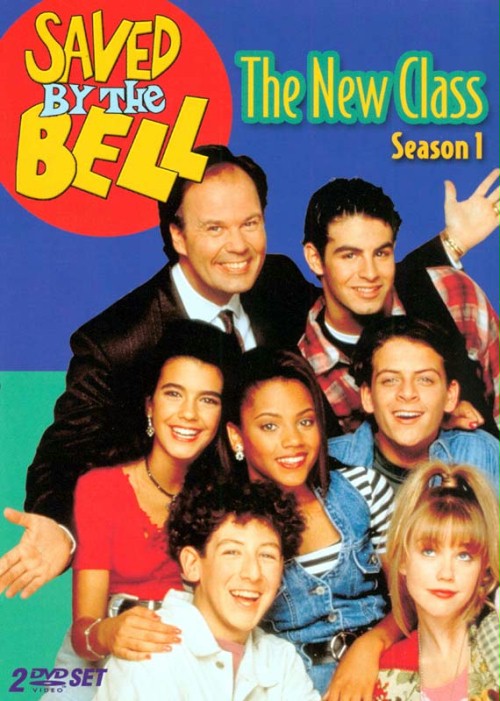
Welcome to Retro Television Reviews, a feature where we review some of our favorite and least favorite shows of the past! On Tuesdays, I will be reviewing Saved By The Bell: The New Class, which ran on NBC from 1993 to 2o00. The show is currently on Prime.
This week’s episode is so annoying.
Episode 1.8 “Belding’s Baby”
(Dir by Don Barnhart, originally aired on October 30th, 1993)
Ugh, this episode.
First off, I totally forgot that Mr. and Mrs. Belding named their son after Zack Morris. They did this because, during the original series, Zack helped deliver his namesake when he and Mrs. Belding ended up trapped in an elevator. While that was nice of Zack to do, I still have to wonder at the logic of naming your son after an unrepentant sociopath.
Anyway, Mr. Belding needs help looking after baby Zack. Scott volunteers to babysit him in order to get out of detention. Scott and the gang take baby Zack to the movies. Scott meets a girl named Ashley (Katy Barnhill), whose mother is a baby photographer who is seeking models. So, Scott pretends to be Zack Belding’s older brother and he and his friends try to get Baby Zack to the studio without Mr. Belding figuring things out. But when Belding takes his son to the Maxx, Weasel and Vicki have to dress up as Mr. Belding’s parents and….
Ugh, this is stupid.
It’s not even stupid in an amusing way. Scott lies about being Zack’s brother. There was absolutely no reason for Scott to lie. Ashley liked Scott from the start so Scott could have just said he was babysitting. For that matter, Mr. Belding could have hired a babysitter instead of entrusting his baby to the least responsible students in the entire school. This whole thing could have been straightened out by everyone not being an idiot. That’s not funny. It’s just annoying.
Dumb, dumb, dumb.
Also, we are eight episodes and Tommy D is still saying things to Scott like, “I’m impressed, kid,” as if he hasn’t known Scott for half of the school year already. And why does it matter if Tommy’s impressed? Tommy doesn’t ever do anything. He’s not a schemer. He just stands around and smiles. I imagine everyone impresses Tommy.
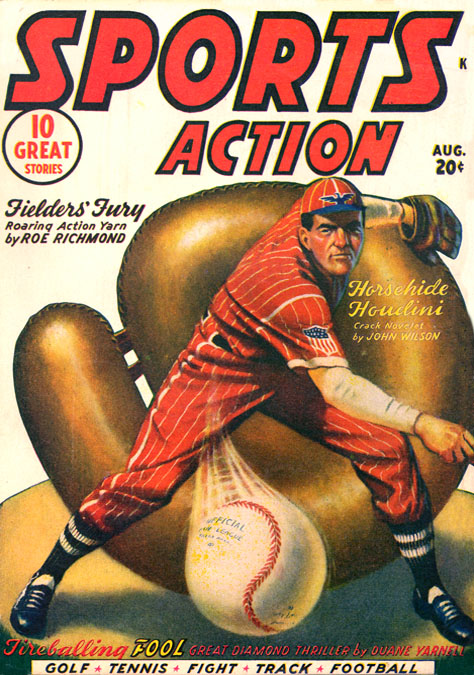
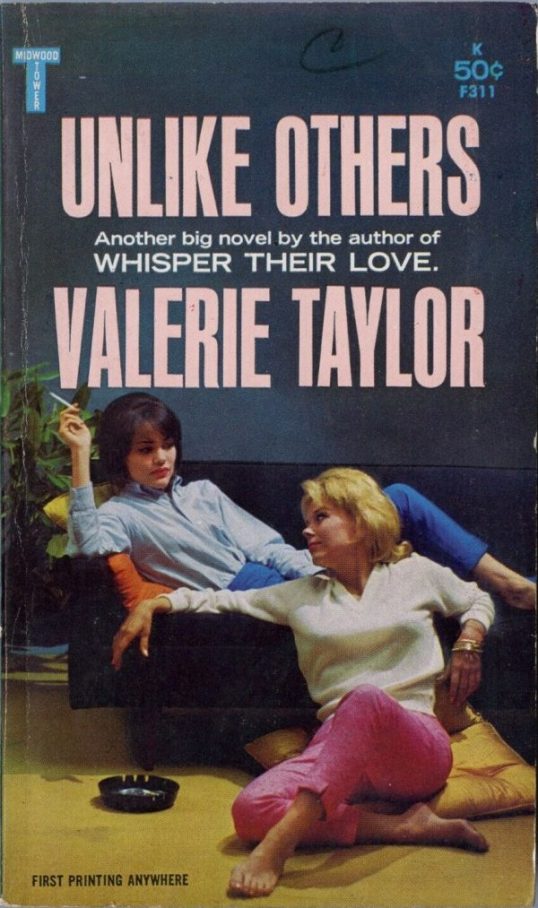
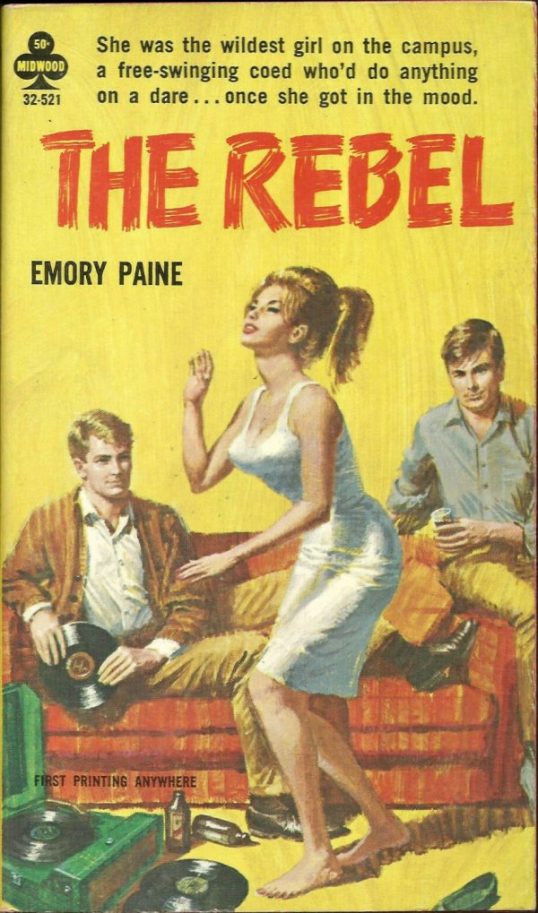
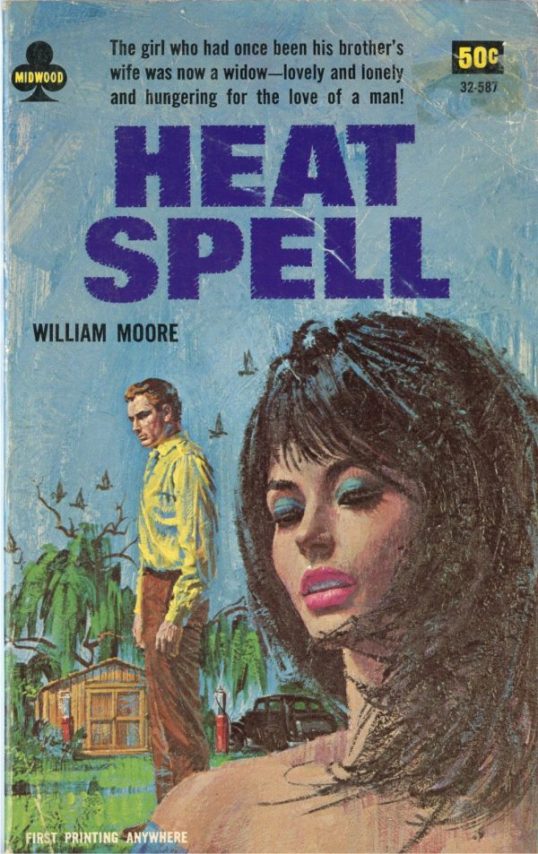
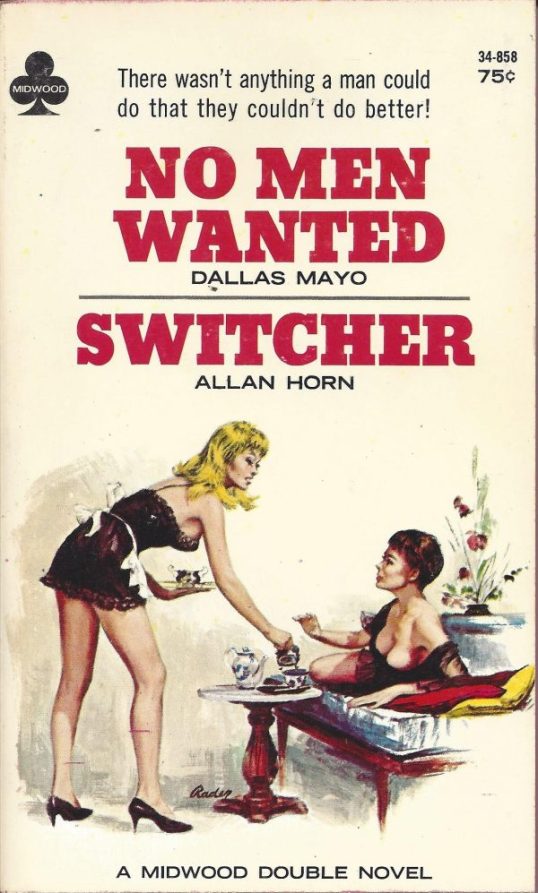
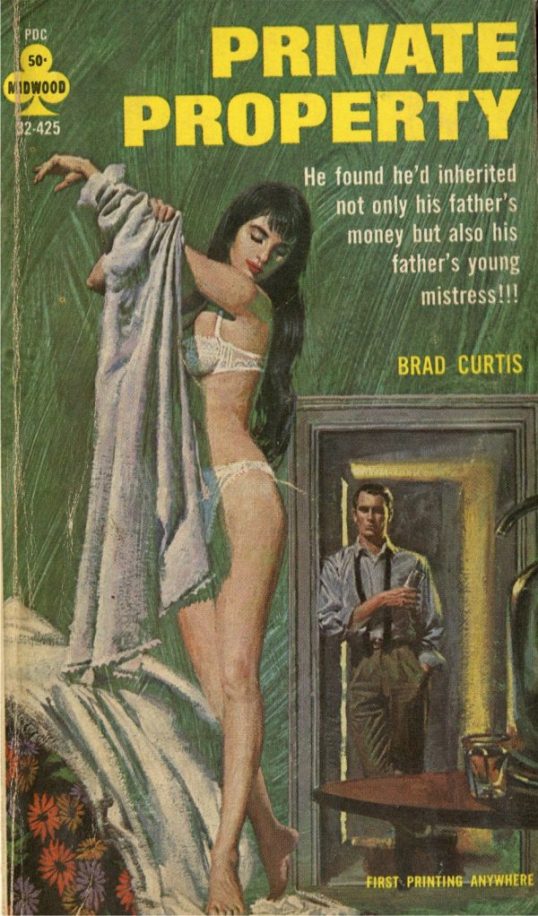
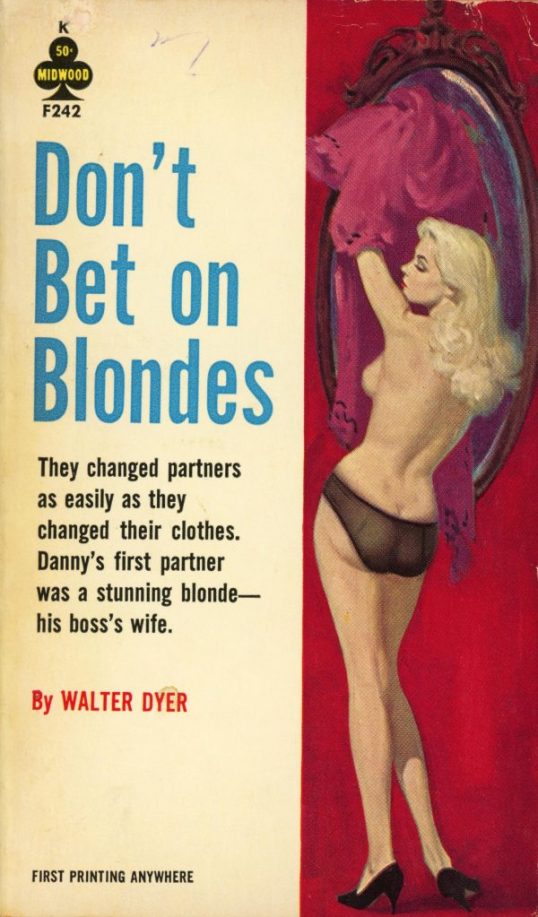
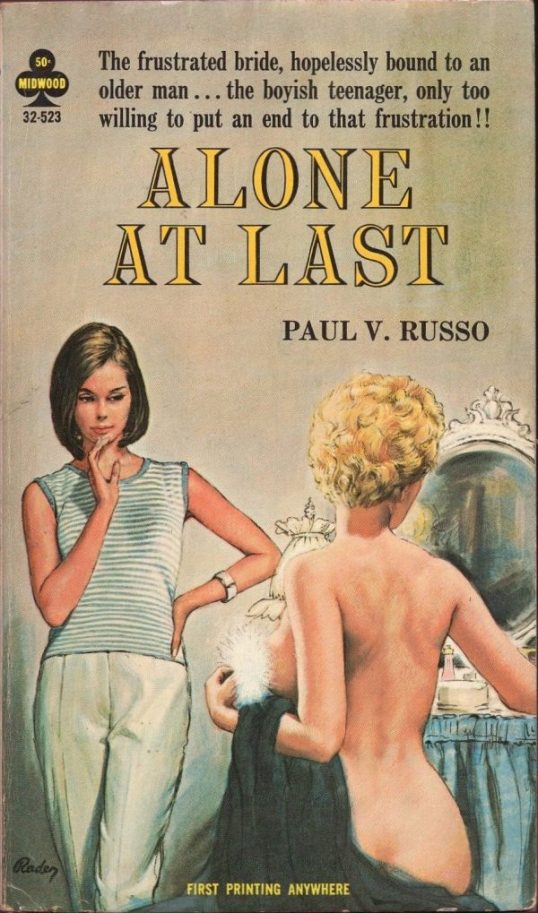
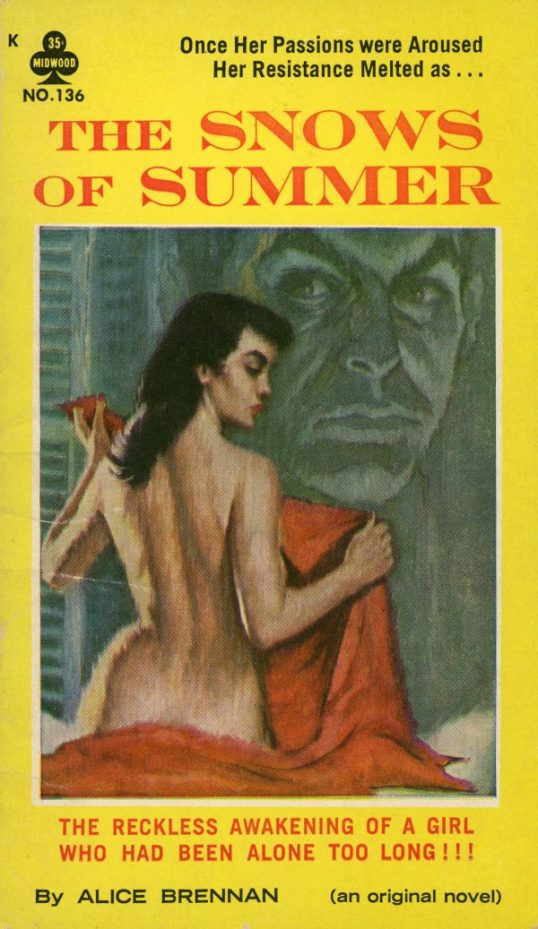
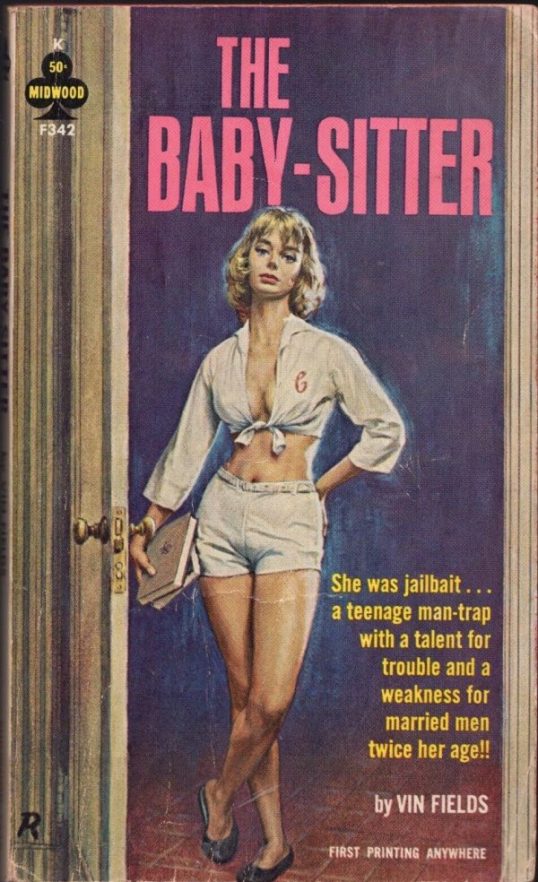
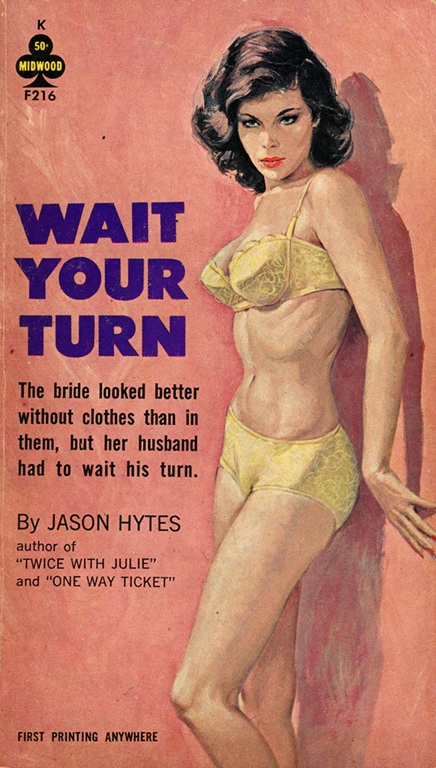
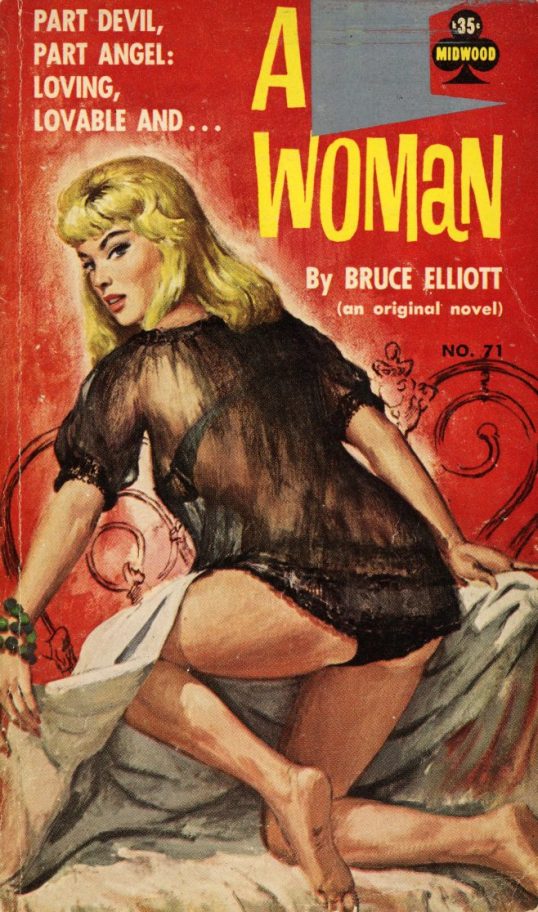
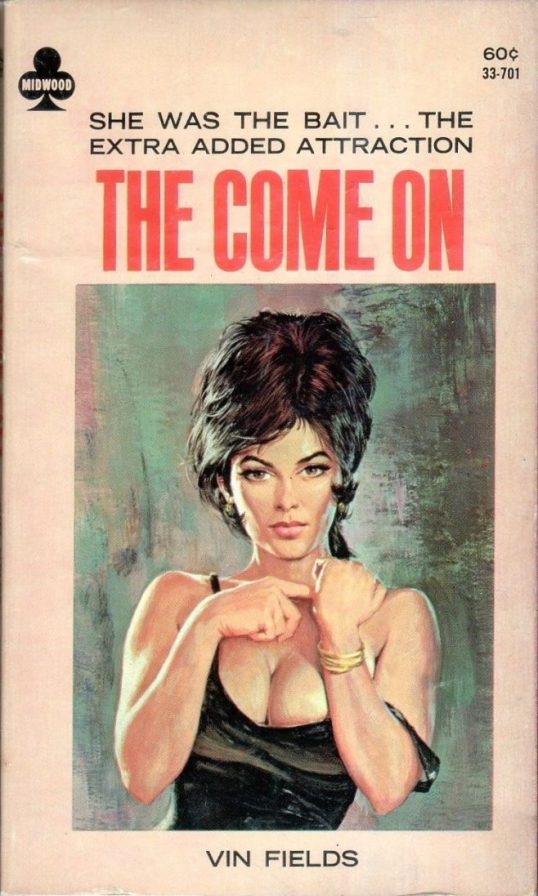
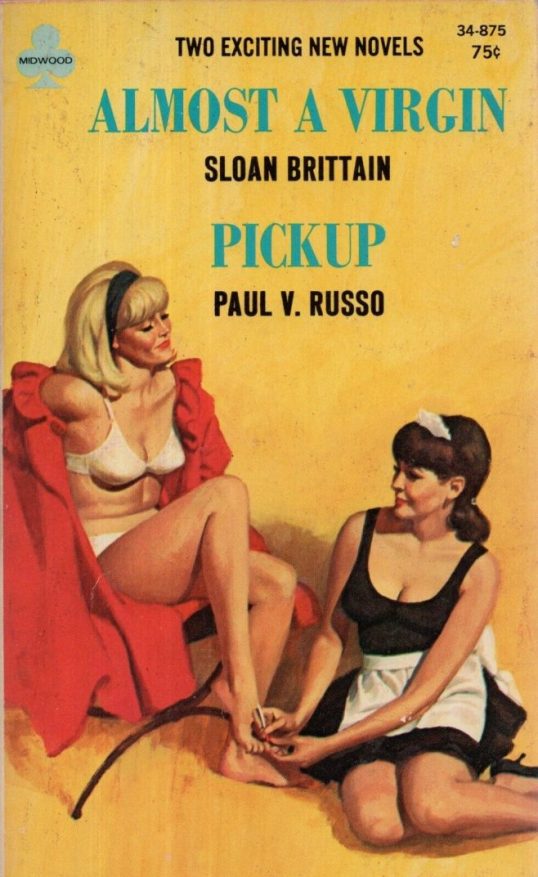
Midwood Books was a publishing house that was active from 1957 to 1968. With a roster of pseudonymous authors, Midwood published “adult” novels that were aimed towards men. Today. their paperbacks are best known for their often racy covers and they are highly prized by collectors as a result.
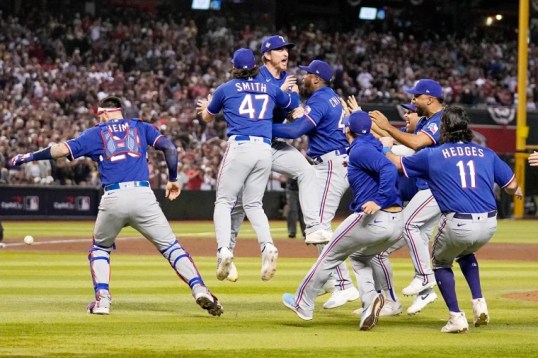
Spring Training is nearly over. Opening Day is March 26th. That’s just two more days! Some people have the Super Bowl. Some people have the Oscars. I’ve got baseball and, even more importantly, I’ve got the Rangers Sometimes, the Rangers break my heart. Not every season has been great. But I can still remember how happy I was when they won their first World Series in 2023. No one gave them much of a chance but the Rangers proved all the doubters wrong. I hope they’ll do it again this year.
Whichever team you cheer for, I hope they bring you a lot of happiness over the upcoming months.
“There are no such things as ‘wars between absolute good and absolute evil’ in human history. Instead, there exist wars between one subjective good and another.” — Yang Wen-li
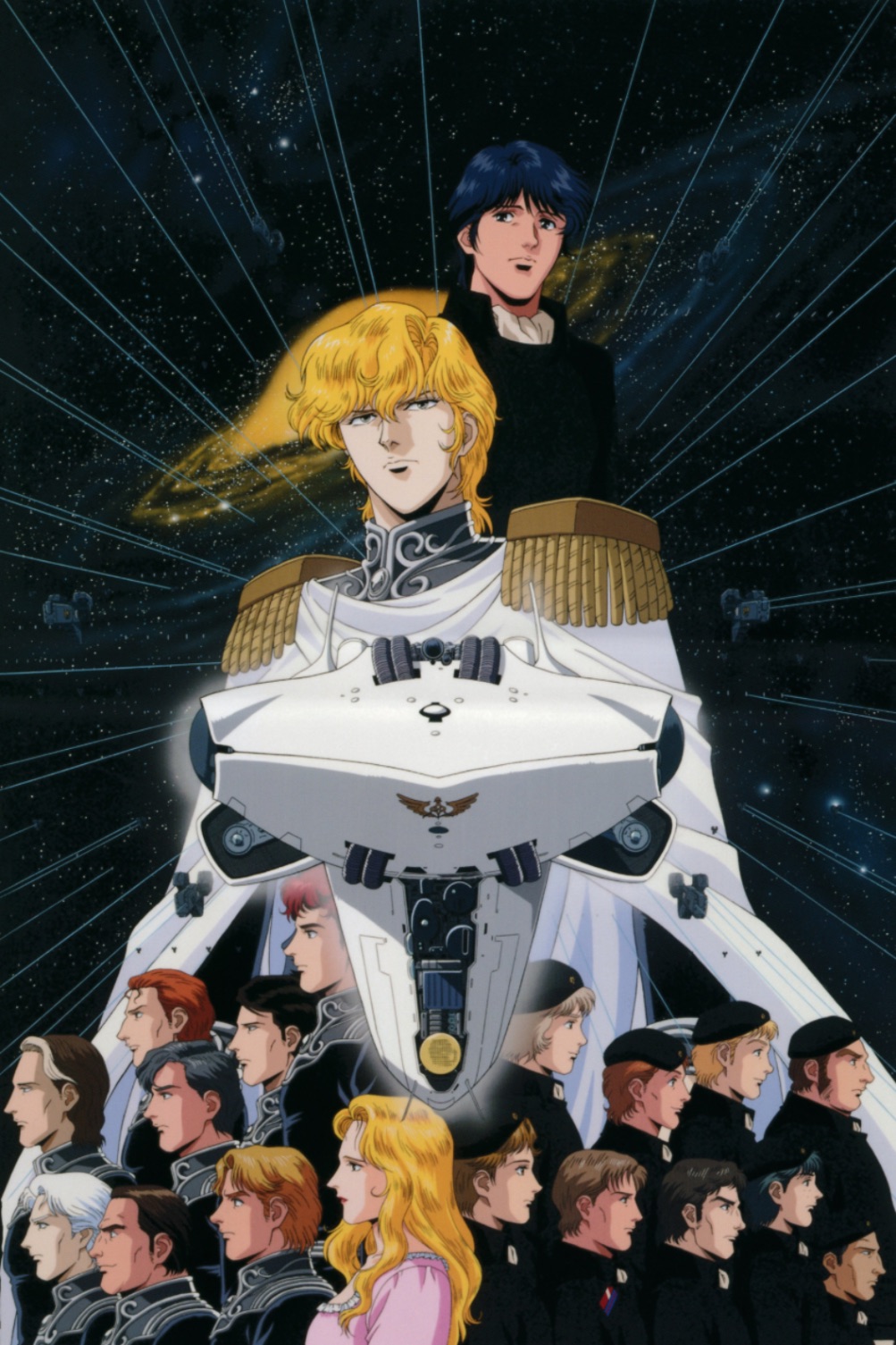
Legend of the Galactic Heroes is an anime that feels like it was built to remind you why the medium can be so powerful, not just as entertainment but as a place to wrestle with big ideas. The original 110‑episode series that ran from 1988 to 1997 is especially important for that reason: it’s long enough and patient enough to show you how war, politics, and history shape entire lives, not just cool power‑ups or final‑boss showdowns. If you’re already a fan of anime, this series is a must‑watch because it proves that the medium doesn’t have to rely on flashy fights or teenage melodrama to hook you; it can do it with strategy, speeches, and the slow, quiet weight of people making terrible choices in the name of “the greater good.” And if you’re someone just getting into anime, it works as a kind of gateway to more serious, adult‑leaning stories that still feel human and emotionally grounded instead of cold or pretentious.
Part of what makes this series so essential is that it doesn’t talk down to its audience. Over 110 episodes, it assumes you’re willing to sit through long debates about democracy, autocracy, and the ethics of war, and it rewards that patience by actually letting those debates matter to the plot. Most mainstream anime might touch on “war is bad” or “freedom is important” in vague, feel‑good terms, but Legend of the Galactic Heroes dives into the details: it shows how democracy can be cowardly, how autocracy can be efficient, and how both systems can produce heroes and monsters at the same time. For fans who love cerebral storytelling, that kind of moral complexity is exactly what’s often missing from shorter, more commercial series. For newcomers, it can be a revelation that anime doesn’t have to be about tsundere romance or overpowered protagonists to feel deeply satisfying.
The series also stands out because of how it handles its two main characters, Reinhard and Yang. Most war epics would turn one of them into a straightforward villain and the other into a noble savior, but the original run refuses that easy split. Instead, it lets you watch both men grow, stumble, and change over years, sometimes seeming inspiring and sometimes genuinely frightening. Reinhard’s rise from a brilliant outsider to a feared ruler is a slow, almost clinical study of how ambition and trauma can merge into something dangerous. Yang’s lazy, bookish personality masks a deep frustration with the same people who glorify him as a hero while voting for politicians he can’t stand. For long‑time fans of the medium, these arcs feel like a masterclass in how to build layered, psychologically rich characters without relying on gimmicks. For someone new to anime, they’re a great introduction to fiction that cares more about nuance than easy answers.
Another reason this series is a must‑watch is its sheer scale and ambition. The 110‑episode run isn’t just “long” for the sake of it; it uses that time to build a galaxy that feels lived‑in and real. You don’t just get two fleets clashing in space; you get senators arguing, spies scheming, soldiers complaining, and civilians living in the shadow of the war. The original series keeps zooming in on ordinary people—low‑rank soldiers, politicians, citizens, even random kids—so you never lose sight of the fact that the “big picture” is made up of a million tiny human stories. For fans already invested in the medium, that sense of depth and worldbuilding is addictive; it feels like peeking into a living timeline instead of a one‑off action romp. For newcomers, it shows that anime can be as epic and historically minded as any live‑action war drama, but with its own visual and narrative language.
Technically, the original 1988–1997 run is modest by today’s standards, but that actually works in its favor. The animation is clean and functional, the space battles are readable rather than flashy, and most of the energy goes into faces, voices, and dialogue. What you lose in spectacle you gain in intimacy: you really feel the tension in a quiet strategy meeting or the weight in a politician’s hesitation before declaring war. The series leans heavily on classical music and long, thoughtful monologues, which can feel like a throwback, but that aesthetic also makes it stand out from most modern anime that chase fast pacing and visual overload. For established fans, this restraint can be refreshing; it’s a reminder that anime doesn’t have to be loud or kinetic to feel emotionally intense. For someone just getting into the medium, it’s a great way to get comfortable with slower, more dialogue‑driven storytelling that still packs an emotional punch.
On a broader level, Legend of the Galactic Heroes is the kind of series that shifts how you see other anime after you finish it. Once you’ve spent so many hours watching admirals argue about the ethics of preemptive strikes or politicians manipulate public opinion, stories that used to feel “weighty” or “serious” might start feeling shallow or emotionally shallow by comparison. The original series doesn’t just entertain you; it trains you to pay attention to how stories talk about power, history, and collective responsibility. For longtime fans, that’s a rare gift: it deepens your appreciation for the medium’s potential. For newcomers, it can be a low‑key entry point into more politically and philosophically ambitious anime without feeling like homework or a lecture.
In short, whether you’re a seasoned anime watcher or someone who’s only just starting to dip into the medium, the original 110‑episode Legend of the Galactic Heroes is worth your time simply because it does things that most anime don’t even try. It trusts the viewer to sit with long, thoughtful conversations, to care about hundreds of characters, and to sit with moral ambiguity instead of rushing to a clean conclusion. It’s not the easiest watch, and it’s definitely not the flashiest, but that’s exactly why it’s one of those series that fans of the medium should experience at least once: it reminds you that anime can be as serious, as sweeping, and as emotionally rich as the best novels and films out there.
In honor of the birthday of Steve McQueen, today’s song of the day comes from his 1968 film, Bullitt. Composed Lala Schifrin later went on to do the score for another film about a California detective with his own way of doing things, Dirty Harry.



 Through the Shattered Lens