Horror Review: Men Behind the Sun (dir. by T.F. Mou)


It was in 1988 that one of the darkest, least-discussed episodes of World War II history was thrust into public consciousness through the work of Chinese filmmaker T.F. Mou. The film in question is Men Behind the Sun, an infamous fusion of historical drama and horror that still provokes debate nearly forty years later. Unlike traditional war films that depict heroic battles, military strategy, or patriotic sacrifice, this film ventures deep into the murky shadows of wartime atrocity, unearthing the story of Unit 731—a chapter that had remained largely buried outside of East Asia.

The film is set during Japan’s occupation of Manchuria, beginning in the 1930s and stretching into the final years of the Pacific War. Mou frames much of the story through the perspective of a group of young Japanese boys who have been conscripted into service with the Imperial Army. These youths, filled with notions of loyalty and honor, find themselves assigned to Unit 731, a supposedly scientific research group whose true mission soon becomes horrifyingly clear. What they encounter—and what the audience is forced to witness—exposes both the capacity for cruelty and the terrifying ease with which human beings can normalize horror under the authority of war.

Unit 731 was not a fictional invention, but a very real military research facility overseen by General Shirō Ishii, a figure who still looms as one of World War II’s most notorious war criminals. Under the guise of developing defenses against epidemics and advancing medical knowledge, Ishii ran a program devoted to biological and chemical warfare research. The methods employed were monstrous: prisoners were intentionally infected with plague and anthrax, subjected to vivisections while still alive, had organs harvested for study, and were sealed within hypobaric chambers to measure the effects of barometric pressure. Others were exposed to grenades, chemical agents, or lethal extremes of cold and heat. The victims—callously referred to by their tormentors as “logs”—were largely drawn from the local Chinese population, though Russians, Koreans, and even children and pregnant women were subjected to the same fate. Official records suggest there were no survivors of these experiments.

In the film, the reaction of the Youth Corps to these atrocities provides the closest thing to a moral anchor. Initially repulsed, the boys attempt to adhere to the strict code of loyalty and duty impressed upon them by the Imperial Army. They are torn between horror at what they observe and fear of disobedience. But when a young Chinese boy whom they had befriended is selected as one of Unit 731’s subjects, the mask of discipline begins to crumble. Their attempt at resistance becomes both a moral turning point and a tragic acknowledgment of the futility of challenging the machinery of the Japanese war state.
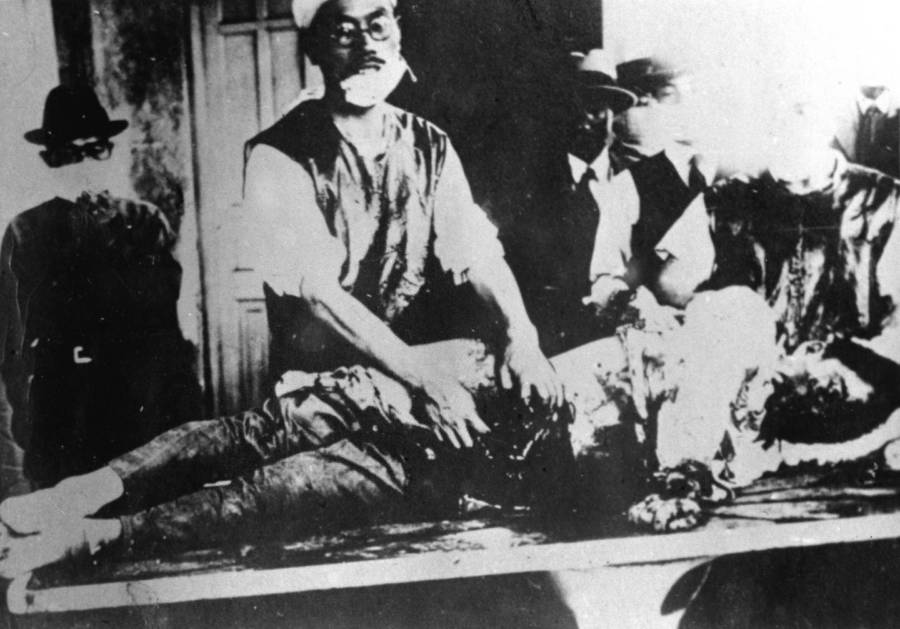
What makes Men Behind the Sun stand out is its fragmented, almost documentary-like structure. Rather than weaving a straightforward dramatic narrative, Mou constructs the film as a series of stark vignettes, each showcasing one monstrous experiment after another. This disjointed quality mirrors the cold and methodical way Unit 731 carried out its work, giving the audience little comfort or space to detach. While the special effects often carry the look of late-1980s low-budget filmmaking, they remain powerfully effective in provoking revulsion. Time has not dulled their impact: the crude visual horror still conveys the visceral reality of suffering more effectively than polished stylization ever could.

To some, the film crosses too far into exploitation, presenting misery in a way that risks sensationalism. To others, it serves as a vital cultural reckoning, a way of exposing truths that were long suppressed not just in Japan but internationally. Men Behind the Sun may not offer the catharsis of traditional war cinema, but its unflinching confrontation with atrocity ensures it occupies a singular place in film history. Even more unsettling is the knowledge that outside the world of film, General Shirō Ishii himself escaped accountability. After Japan’s surrender, he cooperated with U.S. military authorities, trading his research findings for immunity from prosecution. As the Cold War escalated, his expertise in biological and chemical warfare was deemed too valuable to dismiss, and so the crimes of Unit 731 were quietly buried in exchange for data. This chilling epilogue—rooted not in cinema but in historical fact—ensures that the horror of Men Behind the Sun lingers long after the credits roll.

October Positivity: Jerusalem Countdown (dir by Harold Cronk)


2011’s Jerusalem Countdown opens with the world on the verge of destruction.  Israel and a nuclear-armed Iran are negotiating in Washington and not everyone wants the two countries to be at peace.

In Chicago, Daniel (Carey Scott) watches the news of the summit and then looks out his window as his unfriendly and glowering neighbor comes and goes from his house.  Daniel worries that his neighbor is up to something.  He could be a member of a terrorist cell!  Daniel’s wife (Jaci Velasquez) tells him to stop worrying about things that he can’t control but that’s easier said than done.

FBI agent Eve (Anna Zielinski) is approached by her father (Stacy Keach), a former intelligence agent who warns her that the end times are approaching.

Another intelligence agent, Shane Daughtery (David A.R. White) is contacted by a burned-out arms dealer (Lee Majors), who informs him that a group of terrorists are planning on setting off a series of bombs and plunging the world into war.  The arms dealer is assassinated by a man who keeps reciting passages from the Book of Revelations.  Meanwhile, CIA bigwig Jack Thompson (a seriously miscast Randy Travis) continually tells Shane that he can’t share too much information with him because it’s all classified….

Jerusalem Countdown is a faith-based film that also tries to be an action film.  In fact, I would say that far more emphasis is put on action than on faith.  Until the final few minutes of the film, there’s really not much focus put on religion, other than Daniel briefly praying when he finds himself trapped in the neighbor’s house and a scene where a librarian scolds Shane and Eve for not knowing about the Ten Commandments.  One major commandments, by the way, is Thou Shalt Not Kill but Shane and Eve manage to kill quite a few people in this film.  Of course, they were all bad people and Shane and Eve are trying to keep the world from being plunged into a world war so I’m willing to cut them some slack.

The cast, as you may have noticed, has a number of familiar faces in it.  It’s largely a nostalgia cast, the type that’s designed to make people over the age of 60 say, “Lee Majors is in this!”  With the exception of Randy Travis, none of the “stars” have a particularly large role.  One gets the feeling that Stacy Keach filmed his scenes in a handful of hours, collected his paycheck, and then got out of there.  It’s amazing to me that Eric Roberts is somehow not in this film.

As for the film itself, it’s competently made and David A.R. White is one of the better actors amongst the Pureflix regulars.  (White has even managed to maintain a semblance of dignity through five God’s Not Dead films.)  That said, the film itself moves a bit slowly and the low-budget keeps the action from being as memorable as it could be.  There’s a cool helicopter crash but otherwise, it’s never as exciting as it obviously wants to be and there’s a lot — and I do mean A LOT — of filler-type scenes of people talking on their phones while driving from one location to another.  The plot itself feels a bit muddled and there’s a lot of loose ends left dangling, as if the film was meant to be a set up for a sequel that never came.

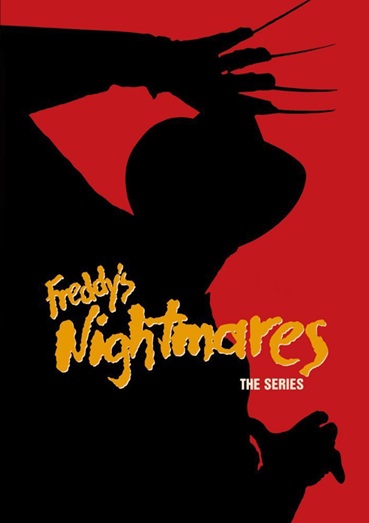
Late Night Retro Television Review: Freddy’s Nightmares 1.11 “Do Dreams Bleed?”


Welcome to Late Night Retro Television Reviews, a feature where we review some of our favorite and least favorite shows of the past! On Fridays, I will be reviewing Freddy’s Nightmares, a horror anthology show which ran in syndication from 1988 to 1990. The entire series can be found on Plex!

This week, there’s a new threat in town!

Episode 1.11 “Do Dreams Bleed?”

(Dir by Dwight H. Little, originally aired on January 8th, 1989)

There’s a new serial killer in Springwood!

We don’t really learn much about the Chopper, other than he attacks people with an axe.  When the episode begins, high school football star John Warring (Damon Martin) is dealing with dual trauma of having not only found the Chopper’s latest victim but also being the number one suspect.  His grades start to slip.  (As was so often the case on this show, his parents are conveniently out-of-town.)  He fears that he’s going to lose his girlfriend, Roni (Sarah Buxton).  Not even John’s coach, Coach Gacey (Jeff McCarthy), is much help.  That’s probably because Coach Gacey actually is the Chopper, not that anyone figures that out.  Driven mad by his dreams, John finds himself being taken away to an asylum.

(Really?  Coach Gacey?  He should have been the number one suspect based on his name alone.)

The second half of the episode follows Ronni as she now starts to have nightmares.  She wants to believe that John is innocent but her dreams indicate that she has her doubts.  Eventually, John escapes from prison and is able to save Ronni from Coach Gacey.  However, when the police arrive, they just assume that Coach Gacey was trying to save Ronni and that John is the Chopper.  Ronni is so shaken by the entire experience that she no longer knows what’s true and what’s not.

Wow, that’s dark!

This was actually a pretty good episode.  For once the two stories had coherent plots, with Ronni’s story logically building off of John’s.  The dream sequences were effectively creepy, director Dwight Little kept the action moving at a good pace, and even the dark ending felt earned as opposed to forced on the narrative.  I would have liked to have heard Freddy’s thoughts on Springwood having a new serial killer (instead, during the host segments, Freddy just did his usual bad jokes) but otherwise, this was a surprisingly good episode.

AMV Of The Day: Crazy In The Night (Gakkou no Kaidan)


As the third day of Horrorthon draws to a close, how about an AMV?

Song: Crazy In The Night by Kim Carnes

AnimeGakkou no Kaidan

Creator: rspectcopyrightmyass (As always, please be sure to check out this creator’s channel)

Past AMVs of the Day

A Blast From The Past: Frankenstein (dir by J. Searle Dawley)


In 1910, Thomas Edison produced what is thought to be the first ever film version of Mary Shelley’s Frankenstein!  Clocking in at 12 minutes and 41 seconds, this film was directed by J. Searle Dawley and stars Charles Ogle as the monster.

Admittedly, the surviving prints of this 107 year-old movie are not in the greatest condition.  But I still think it’s effectively surreal and, in its way, quite creepy.  While it always takes a while for modern audiences to get used to the more theatrical acting styles of the silent films, Charles Ogle still makes for a very memorable monster.  I especially enjoy the tinted scenes where the monster comes to life.  In the video below, it start around the 2:18 mark and it’s truly a scene that I love!

Enjoy this piece of film history!

Horror On TV: Hammer House Of Horror Episode #2: The Thirteenth Reunion (dir by Peter Sasdy)


In this episode of Hammer House of Horror, Julia Foster plays a tabloid reporter who is assigned to investigate an unconventional weight loss program.  Foster discovers that weight loss is actually the last thing that the clinic is concerned with.  This is an enjoyable macabre episode, one the features a particularly nasty twist.

The Thirteenth Reunion originally aired in the UK on September 20th, 1980.

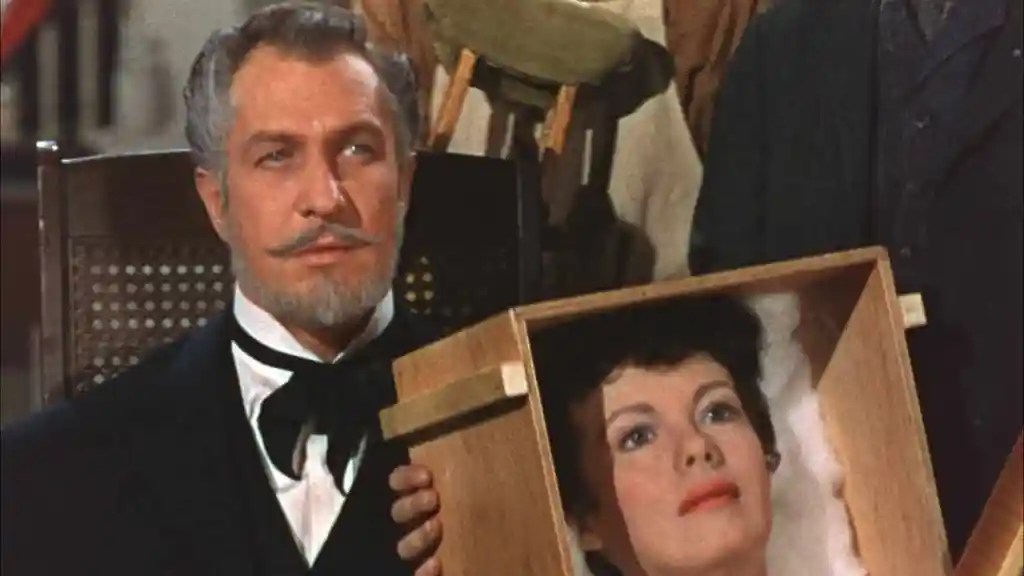
Brad reviews HOUSE OF WAX (1953), starring Vincent Price and a very young Charles Bronson!


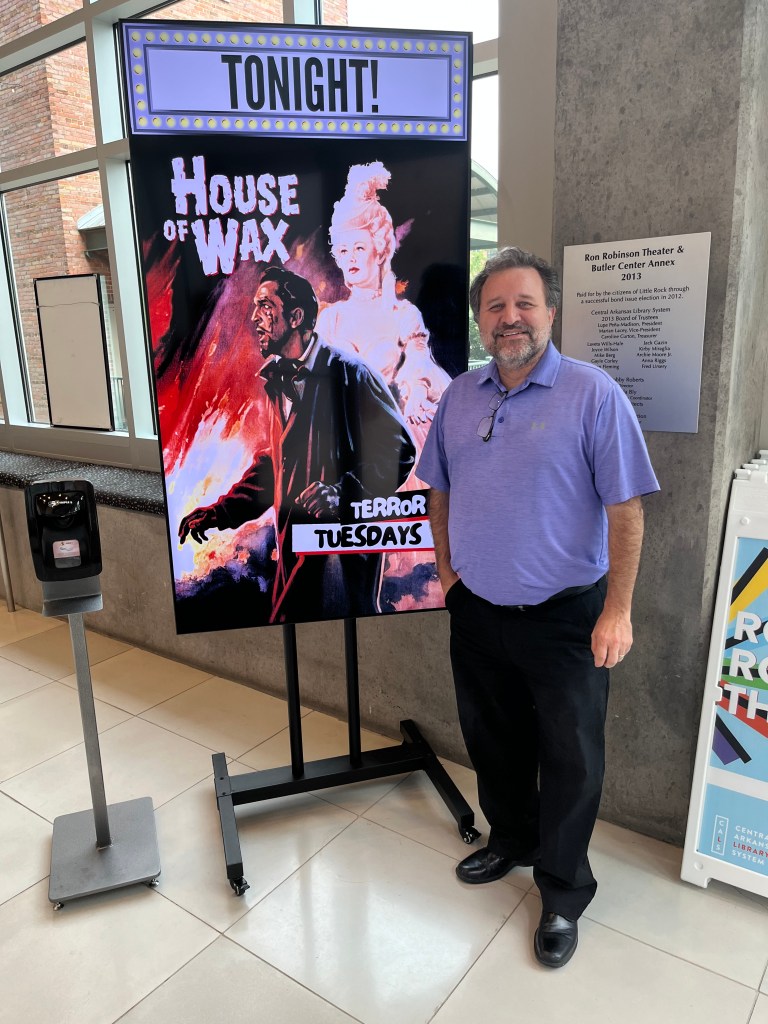
As my readers probably know, I’m one of actor Charles Bronson’s biggest fans, and I’m always on the lookout for venues showing his films on the big screen. In the summer of 2024, the Ron Robinson theatre in downtown Little Rock screened the 1953 Vincent Price classic, HOUSE OF WAX, which features Bronson in one of his earliest on-screen roles. It was so early, he was still being billed as Charles Buchinsky! Of course I wasn’t going to miss it! 

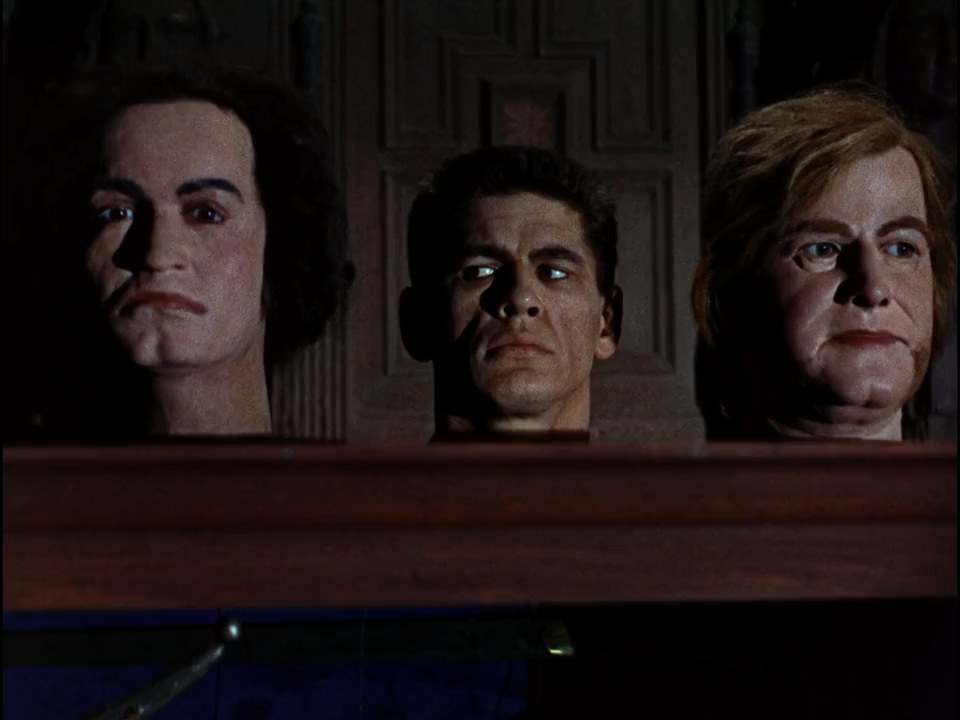
HOUSE OF WAX stars Vincent Price as Professor Henry Jarrod, a talented wax sculptor in early 20th-century New York City. Jarrod’s museum, which features historical figures that look amazingly lifelike, is his pride and joy. However, his business partner, Matthew Burke (Roy Roberts), has grown impatient with his investment and decides he wants to burn down the wax museum for the insurance money. When Jarrod refuses to take part in the fraudulent scheme, Burke sets the museum on fire, leaving Jarrod presumed dead in the process. But Jarrod survives, and with the help of his mute henchman Igor (Charles Bronson), returns to open a new wax museum with a dark and dangerous twist… his exhibits are eerily lifelike because they are real bodies coated in wax. As his former friend Sue Allen (Phyllis Kirk) and her boyfriend Scott Andrews (Paul Picerni) snoop around the house of wax, they begin to suspect that Jarrod has lost his mind and has descended into the mad depths of murder. Will they be able to expose Jarrod’s gruesome secret, or will they become his next exhibit?!!

Directed by André de Toth, HOUSE OF WAX is a landmark horror film, notable for its early use of 3D and Vincent Price’s excellent performance. The film’s strength lies in its undeniably creepy premise, that of turning human beings into wax sculptures, as well as Price’s ability to blend sophistication with menace. Jarrod is quite the sympathetic character at first, but he’s gradually revealed to be certifiably insane as a result of his near-death experience, and that transformation is quite scary. Young Charles Bronson’s portrayal of Igor is also quite freaky. His cold, blank, murderous stare says, “I’ll kill you and not even think twice about it.” His stalking of the heroine, played by Phyllis Kirk, in the dark, spooky house of wax near the end, is one of the true highlights of the movie. It’s also fun seeing Carolyn Jones (AKA Morticia Addams) show up as a spirited victim of the madman! Of course, you can’t help but notice the moments set up for the 3D effects, which come off as quite gimmicky at this point. I specifically took note of the movie’s use of paddleballs and leg kicks! I must admit, however, that these dated elements add to the overall charm of HOUSE OF WAX as a reminder of the olden days of 50’s Hollywood! 

Overall, in my humble opinion, HOUSE OF WAX is a classic scary movie. It’s a perfect treat for fans of vintage horror as well as a testament to the magnetic screen presence of Vincent Price!

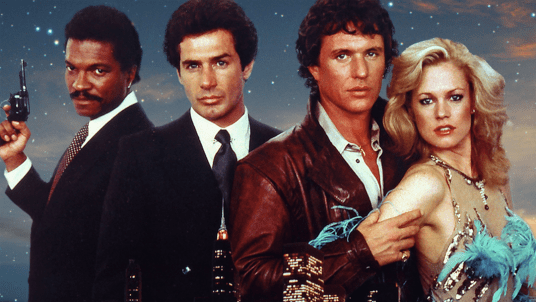
The TSL Horror Grindhouse: Fear City (dir by Abel Ferrara)


Welcome to Manhattan in the mid-80s!

While self-righteous vice cop Al Wheeler (Billy Dee Williams) patrols the streets with the fury of an Old Testament prophet, men flock to seedy bars to watch women like Loretta (Melanie Griffith) dance and strip.  Mobsters like Carmine (Rossano Brazzi) control the streets while club owners like Mike (Michael V. Gazzo) and Frank (Joe Santos) try to do business and make enough money to keep things open.  Bookers like Nicky Parzeno (Jack Scalia) and Lou Goldstein (Jan Murray) compete to see who can place their girls in the most clubs.  Nicky’s best friend and business partner, Matt Rossi (Tom Berenger), is haunted by his violent past as a boxer and his failed relationship with the drug-addicted Loretta.

Meanwhile, a nameless man (John Foster) practices nude tai chai in his warehouse apartment and writes feverishly in his journals.  At night, he stalks the streets with a blade in his hand.  He targets strippers, attacking them as they try to get home from the club.  Honey (Ola Ray) is attacked on a subway platform.  Loretta’s girlfriend, Leila (Rae Dawn Chong), is attacked on the streets.  Obsessed with Loretta’s safety, Matt struggles with his own inner demons as he prepares for a final confrontation with the killer….

1985’s Fear City is another one of director Abel Ferrara’s heavily stylized fever dreams.  In typical Ferrara fashion, the plot is so sordid that one might be tempted to think that the film is meant to be a self-parody and the dialogue mixes profane insults with bizarrely philosophical asides.  As played by Billy Dee Williams, Al Wheeler is not just a cop who wants to clean up New York and Times Square.  Instead, he’s a seething soldier to traditional morality and one who is so intense that it’s something of a shock that he doesn’t just walk around New York shooting people for jaywalking.  Meanwhile, Tom Berenger’s Matt is a hulking brute who is haunted by the time he killed a man in the ring.  He knows what he’s capable of and it scares him but, in order to save Loretta and his business, he’s going to have to become that deadly boxer once again.  “I hate Matt Rossi because he’s arrogant,” Al Wheeler says through gritted teeth.  Meanwhile, Matt deals with his own issues by trashing his office and then leaving the mess for someone else to clean up.  I’m not sure what that was supposed to accomplish but it’s apparently something that Matt just has to do.

Abel Ferrara directed this film five years before King of New York and, in some ways, Fear City feels like a dry run for King of New York.  Both films are highly stylized and both present New York as being a neon-lit Hell where the rich and the poor come together in mutual self-loathing and where the criminals often have more of a code of honor than the cops who are trying to stop them.  Of course, King of New York had Christopher Walken’s magnetic performance as Frank White holding the film and its many storylines together.  Fear City doesn’t really have that.  Billy Dee Williams, Tom Berenger, Jack Scalia, and Melanie Griffith all give strong performance but none of their characters are really quite compelling or grounded enough to keep the film from spinning off into delirious excess.

In other words, Fear City is a mess but it’s one of those over-the-top, shamelessly sordid messes that you really can’t look away from.  There’s enough philosophical dialogue to confirm that, as with King of New York, Ferrara was shooting at something more than just a typical exploitation film.  Unlike King of New York, Ferrara doesn’t quite succeed in saying anything particularly deep about the human condition in Fear City.  But that’s okay.  It’s an entertainingly sordid film.