Monday Live Tweet Alert: Join Us for The Satanic Rites of Dracula!


As some of our regular readers undoubtedly know, I am involved in hosting a few weekly live tweets on twitter and occasion ally Mastodon.  I host #FridayNightFlix every Friday, I co-host #ScarySocial on Saturday, and I am one of the five hosts of Mastodon’s #MondayActionMovie!  Every week, we get together.  We watch a movie.  We snark our way through it.

Tonight, for #MondayActionMovie, the film will be The Satanic Rites of Dracula!  So, if you missed the #ScarySocial live tweet, I guess this is your second chance.

It should make for a night of fun viewing and I invite all of you to join in.  If you want to join the live tweets, just hop onto Mastodon, pull up The Satanic Rites of Dracula on YouTube, start the movie at 8 pm et, and use the #MondayActionMovie hashtag!

Enjoy!

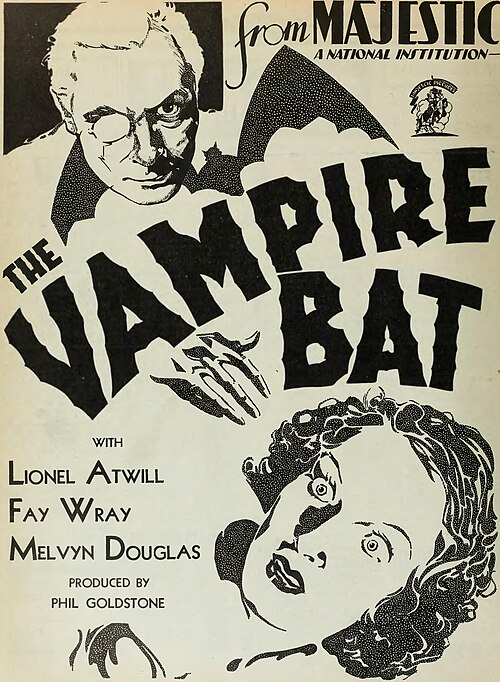
Horror Film Review: The Vampire Bat (dir by Frank R. Strayer)


In 1933’s The Vampire Bat, people are dying in a small German village, victims of blood loss.  A woman named Martha Mueller (Rita Carlisle) was recently attacked by a bat, leading to rumors of a vampire.  When the local town eccentric, a twitchy man named Hermann Glieb (Dwight Frye), argues that bats are actually harmless and admits that he likes bats because they are “soft” and “nice,” people start to suspect that he might be the vampire.  Another man named Kringen (George E. Stone) claims that he was attacked by a vampire and insinuates that it was Glieb.  Glieb may seems like a strange man who likes to collect bats but could he be something even more sinister?

Two town leaders have opposite feelings about the claim that a vampire is attacking the town.  Karl Brettschneider (Melvyn Douglas) is the local police inspector and he deals with facts.  He doesn’t believe in superstition and he initially scoffs at the idea that a vampire is attacking the village.  Meanwhile, Dr. Otto von Niemann (Lionel Atwill) is the town’s doctor.  He’s been treating the victims of the bat attacks and he’s even be letting some of his patients live at his home.  Everyone knows that Dr. von Neimann is a kindly man of science.  Karl is even dating Ruth (Fay Wray), one of Otto’s boarders.  But is the doctor as benevolent as everyone assumes?

When answering that question, consider these four facts:

  1.  Dr. von Neimann is the one who encouraged Kringen to spread stories about a vampire haunting the town, despite the fact that Kringen himself said that he didn’t want to start a panic.
  2. Dr. van Niemann is played by Lionel Atwill.
  3. Glieb is played by Dwight Frye.
  4. Karl is played by Melvyn Douglas.

Indeed, for horror fans, the casting of Lionel Atwill gives the game away.  Lionel Atwill appeared in a number of horror films and it was rare that he wasn’t cast as the villain.  (One of his non-villainous role was as the one-armed Inspector Krogh in The Son of Frankenstein.)  From the minute the viewer sees Atwill, he seem to give off sinister vibes and it’s not really a surprise when he turns out to be less than trustworthy.

As for Dwight Frye, horror fans love him for playing a number of unhinged weirdos, like Renfield in the Lugosi-version of Dracula and the torch-bearing servant in Karloff’s Frankenstein.  Frye was good at playing twitchy types but one thing that all of Frye’s characters had in common is that they were pretty much destined to be victims.  Even when Frye played an unlikeable character,  like in Frankenstein, it was obvious that he was going to end up getting killed at the hands of the Monster.

Finally, Melvyn Douglas was the epitome of propriety in every film in which he appeared.  If Douglas thinks that there is something more going on than just a vampire attacking people, there probably is.  And since we know Douglas can’t be the main bad guy, that pretty much just leaves Lionel Atwill.

The Vampire Bat is a short and enjoyable B-movie that puts an interesting spin on the typical vampire legend.  Though the budget may be low, the cast of Atwill, Douglas, Frye, and Wray can’t be beat and all of them give fully committed performances.  Dwight Frye, in particular, gives one of his best performance as the unfortunate Glieb.  As always, Lionel Atwill makes for an entertaining villain.  At its best, The Vampire Bat comments on the power of hysteria.  Convinced that there is a vampire in their midst, the town goes mad and it directs its anger towards those who are seen as being on the outside, men like Glieb.

The Vampire Bat is more than worthy of your Halloween viewing.

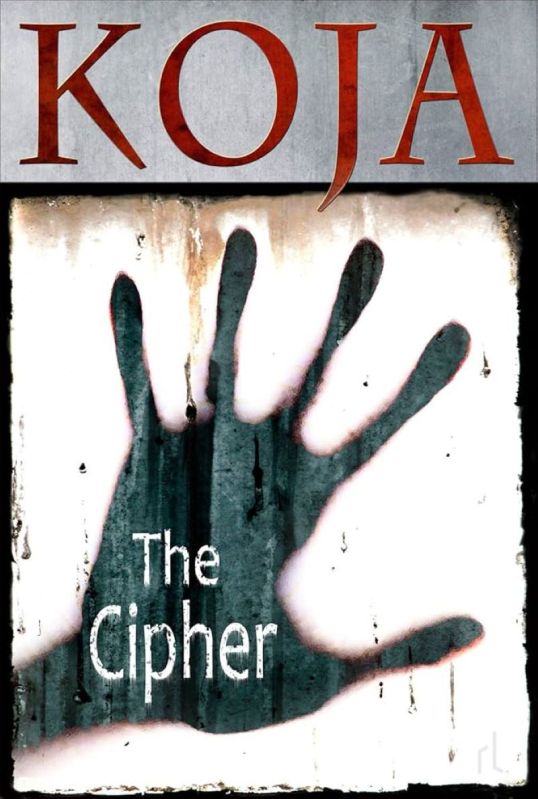
Horror Book Review: The Cipher (by Kathe Koja)


Kathe Koja’s The Cipher stands as a landmark achievement in splatterpunk and psychological horror, noted for its unapologetic dive into existential dread, fragmented narrative, and raw emotional landscape. Its reputation as a genre-defining work is well-earned, yet it also represents a demanding reading experience that diverges sharply from more traditional horror novels. For readers looking for straightforward thrills or clear-cut storytelling, Koja’s novel may feel opaque or even impenetrable. However, for those willing to engage deeply, The Cipher offers a poetic and unsettling exploration of alienation, obsession, and the unknowable.

At the heart of the novel’s challenge is Koja’s distinctive writing style. Eschewing conventional chapter structures or linear storytelling, The Cipher operates as an immersive psychological tapestry woven through the fragmented consciousness of its protagonist, Nicholas. The prose flows in long, often unruly sentences filled with impressionistic and surreal imagery that echo Nicholas’s damaged, chaotic inner world. His thoughts, memories, and anxieties drift in and out of focus, making the narrative feel like a fever dream or an inside-out nightmare. For readers new to literary horror or those more comfortable with clear plots and defined characters, this style can seem alienating and difficult to parse. The book frequently moves between blurred timelines, hallucinations, and raw emotional bursts, challenging the reader to accept ambiguity and psychological discomfort rather than easy narrative anchors.

The story revolves around Nicholas and Nakota, a dysfunctional and toxic couple trapped in a bleak urban environment that acts almost as a third character. This grim unnamed city, reminiscent of the American Rust Belt in decay during the early 1990s, exudes a cold, oppressive atmosphere that mirrors the emotional desolation of its residents. The setting’s grime and desolation bolster the novel’s themes of hopelessness and fragmentation, with Koja’s spare prose turning every scene into a sensory experience of discomfort and decay.

Central to the plot—and the horror—is the discovery of the Funhole, a mysterious and unnaturally black void located in a storage room of the apartment building. Hardly celebrated for whimsy, the Funhole is a locus of enigmatic and malevolent power that both fascinates and consumes. Nicholas and Nakota’s experiments with the Funhole—dropping insects, animals, and eventually cameras—reveal its capacity to distort and corrupt physical reality in grotesque ways, leading to disturbing mutations and aberrations. However, the real horror lies not just in these transformations but in the obsessive pull the Funhole exerts on the characters, particularly Nakota’s increasingly toxic fixation and Nicholas’s reluctant fascination.

Rather than relying on external action or traditional plot progression, The Cipher roots its terror in the psychological and emotional unraveling of its characters. The story is less about what happens and more about how it feels to fall apart in the face of an unknowable force. The degradation of Nicholas and Nakota’s relationship—marked by manipulation, dependency, and alienation—is the emotional thread binding the novel’s narrative chaos. This internal focus demands patience and a willingness to sit with discomfort from the reader; those unaccustomed to introspective or experimental fiction might find the experience frustrating or exhausting.

Overlaying all this is a strong vein of cosmic horror. The Funhole is presented as an unknowable abyss, an entity without explanation, echoing the eldritch voids found in the works of Lovecraft, Blackwood, and Machen. It refuses to comply with human curiosity or understanding, warping reality and identity in ways that defy definition. Unlike classic monster tales, the horror here is existential and diffuse, manifesting as a dark reflection of humanity’s inability to grasp the true nature of the universe or even themselves. In this respect, Koja’s work is a meditation on obsession and transformation, where the boundary between cosmic indifference and personal disintegration disappears.

While The Cipher has been celebrated for its ambition and literary risks, it offers little reprieve in terms of character likability or narrative closure. The protagonists are deeply flawed, often unlikable people caught in spirals of self-destruction. The novel’s resolution is ambiguous and bleak, leaving the audience with more questions than answers, emphasizing themes of loss, transformation, and the unknowable. It challenges standard genre expectations and eschews easy emotional satisfaction, positioning itself as a novel that unsettles rather than comforts.

Readers familiar with the edgier corners of horror fiction—fans of Clive Barker’s visceral fantasies or Poppy Z. Brite’s explorations of identity and desire—will find much to admire in Koja’s approach. The novel’s body horror is not gratuitous but symbolic, a metaphysical cracked mirror reflecting profound anxieties about embodiment, control, and alienation. Its grim realism and morally complex characters resonate alongside challenging literary experiments such as Fight Club and House of Leaves, where mental and existential crises are front and center.

In sum, Kathe Koja’s The Cipher stands as a bold, uncompromising exploration of despair, obsession, and cosmic terror wrapped in a chaotic, poetic narrative. It demands engagement on a deep level, rewarding readers with a unique experience that expands the scope of horror fiction. This is a novel best suited for those who prize atmosphere, psychological depth, and existential questioning over conventional scares or plot-driven horror. While it may prove inaccessible or taxing for some, for others it offers a transformative journey into the dark, tangled spaces of the mind and the universe—an unsettling masterpiece that lingers long after the final page is turned.
Horror On The Lens: Where Have All The People Gone? (dir by John Llewellyn Moxey)


In the creepy 1974 film, Peter Graves plays a father who goes on a camping trip with his two teenage children (one of whom is played by Kathleen Quinlan).  A sudden earthquake and a solar flare causes the trio to try to return to civilization, where they discover that almost everyone has been reduced to a powdery substance and there are only a few crazed survivors.  They try to make their way back to their home in Malibu, facing danger at every leg of their journey.

(It’s almost a low-budget and far more dramatic version of Night of the Comet.)

Effective despite its made-for-TV origins, Where Have All The People Gone? was obviously mean to serve as a pilot for a television series.  The series didn’t happen but, even with a somewhat open-ended conclusion, the movie still works.


Unidentified, Short Film Review by Case Wright


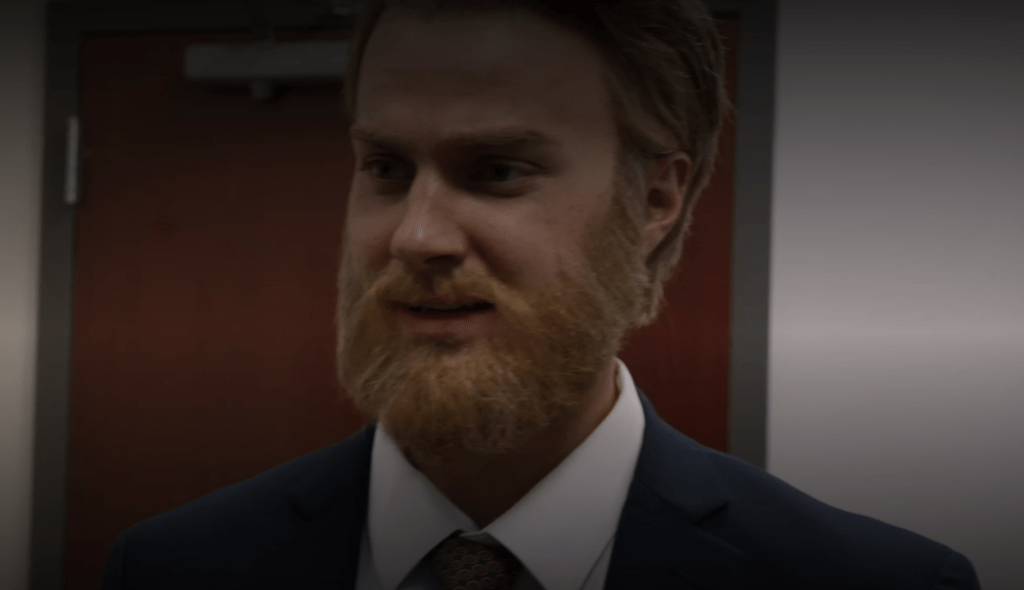
I was unable to find anything on IMDB for this film; so, I used this photo from a previous review where it looked like they were going for a Santa Pedo vibe. Read that review below:

https://unobtainium13.com/2021/10/23/creepshow-time-out-the-things-in-oakwoods-past/: Unidentified, Short Film Review by Case Wright

Unidentified is about an ordinary guy who sees an alien invasion. This concept is so overdone that it is really its own subgenre of suckiness. Some random schmoe sees aliens and is unable to do anything about it accept die?! Mr. Filmmaker of Unidentified, why you are bothering me this garbage? Who cares?!

Hear me, it’s one thing if the ordinary person is heroic or we are setting up the story or he causes a resolution, but when it’s just some doofus driving around for 60% of the short, you are wasting my time! Mr. Filmmaker of Unidentified, I understand that creating a story is hard like how you must be always confused when you try to get the mail or turn on your phone, but that doesn’t mean you should pursue the art of film. Instead of making these terrible shorts that lack even a basic story let alone an ending, how about working on a simplistic craft? I’ll even consider putting it on my fridge! Really, my fridge has some prime real estate on it: magnets, shopping list sticky notes, and stains if it’s my housecleaning day.

If this terrible film did pique your interest…..somehow, the story is a British man in a sedan who drives for several minutes and sees a big monster- yep, that’s it. UGHHH. Maybe Alex Magana has a British cousin?

6 Trailers For October 13th, 2025


For today’s edition of Lisa Marie’s Favorite Grindhouse And Exploitation Film Trailers, we share some trailers from the maestro of Italian horror, Mario Bava!

  1. Black Sunday (1960)

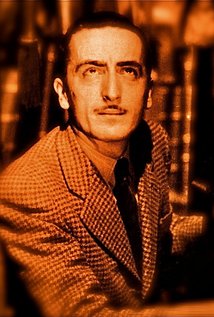
After starting his career as a cinematographer and a visual effects engineer, Mario Bava made his directorial debut with 1960’s Black Sunday, starring Barbara Steele!

2. Black Sabbath (1963)

In 1963, Bava directed one of his most popular films, the horror anthology Black Sabbath.  The trailer put the spotlight on the great Boris Karloff.

3. Planet of the Vampires (1965)

One of Bava’s best films, Planet of the Vampires, was later cited by many as an influence on the Alien films.

4. Bay of Blood (1971)

One of the first slasher films, Bay of Blood was also a social satire that featured Bava’s dark sense of humor.

5. The House of Exorcism (1974)

When it was released in the United States, Bava’s Lisa and the Devil was re-titled House of Exorcism and, after new scenes were filmed, sold as a rip-off to The Exorcist.

6. Shock (1977)

Bava’s final film as a director was Shock, which starred Daria Nicolodi as a woman who is being haunted by the ghost of her first husband.

Music Video of the Day: Devil Woman by Cliff Richard (1976, directed by ????)


Cliff Richard sings about how he became cursed after seeing a black cat with yellow eyes.  Cliff went to a fortune teller, asking her to lift the curse but it turned out that the fortune teller was the one who cursed him in the first place!

The message?  If it can happen to Cliff Richard, it can happen to anyone.

Enjoy!

October Positivity: Holyman Undercover (dir by David A.R. White)


In 2010’s Holyman Undercover, David A.R. White plays Roy.  Roy is an 18 year-old Amish dude from Kansas.  It’s time for him to experience Rumspringa, a period in which he can live life amongst “the English” and decide whether or not he wants to commit to being Amish.  Roy decides to go Los Angeles so he can track down his uncle and work with him as a missionary.

Roy struggles in Los Angeles.  Giving money to one homeless man leads to him nearly getting mugged.  When he meets his uncle, he discovers that Brian (also played by David A.R. White) is now a struggling actor who has a taste for cocaine.  (Brian claims that he’s a holyman working undercover.)  Accompanying Brian to an audition leads to Roy getting cast as Satan on a primetime soap opera.  His wife is played by vapid supermodel Tiffany Towers (Jennifer Lyons).  Meanwhile, the show’s producer is a former country girl named Annie (Andrea Logan White) and soon, Roy is having fantasies about Annie dressing up like an Amish woman and dancing in a field with him.  However, the head of the network (Fred Willard) wants Roy to date Tiffany because it’ll be good publicity for the show.

Throughout it all, Roy remains innocent and confused about the modern world.  He’s never watched television.  He doesn’t know how to use a phone.  He doesn’t understand what a credit card is.  He’s earnest and honest to a fault and, even after Tiffany makes out with him, he continues to insist that he only has eyes for Annie.

Of course, in reality, I imagine that the typical Amish person knows how to use a phone.  I imagine that they probably also know what a television is and they probably even understand that you’re expected to pay your credit card debt.  The Amish may choose to reject a good deal of the modern world but that doesn’t mean that they don’t know what the modern world is.  But this film isn’t meant to be a realistic portrayal of the Amish or of Hollywood or of really anything.

Indeed, I’m not really sure what to make of this film.  It’s faith-based and it ends with Roy delivering a simple message about loving others but the film’s humor is often rather mean-spirited and there’s several jokes that are more than a little racist and homophobic.  (Japanese tourists take pictures while shouting, “Godzilla!”  When Brian ends up in jail, his cellmate is a hulking black man who says his name is Beef because “it’s what’s for dinner.”)  David A.R. White is not bad as Roy but his performance as Brian is incredibly shrill and there’s really no reason, beyond ego, for director White to have cast himself in both roles.

Probably the best thing that one can say about the film is that the name actors — Fred Willard, Clint Howard, Edie McClurg, and Staci Keanan — all manage to survive with their dignity intact.  Indeed, the highlight of the film is, believe it or not, John Schneider earnestly playing himself as the actor who replaces Roy as Satan and who then promptly launches a presidential campaign.  “The country’s going to Hell anyway!” he says, with just the right amount of self-awareness.

Interestingly enough, the film does end with one particularly prophetic scene, as Roy and Annie leave Hollywood to produce an Amish dating show.  Tiffany moves with them to the farm and a group of Amish men compete for her hand in marriage.  Farmer Wants A Wife, anyone?

Late Night Retro Television Review: Degrassi: The Next Generation 1.9 “Coming of Age”


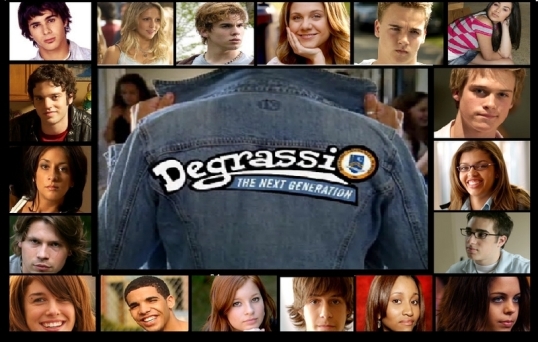
Welcome to Late Night Retro Television Reviews, a feature where we review some of our favorite and least favorite shows of the past!  On Sunday, I will be reviewing the Canadian series, Degrassi: The Next Generation, which aired from 2001 to 2015!  The series can be streamed on YouTube and Tubi.

Whatever it takes, I know I can make it through….

Episode 1.9 “Coming of Age”

(Dir by Bruce MacDonald, originally aired on Mary 13th, 2002)

Degrassi: The Next Generation‘s slogan used to be “Degrassi goes there!” and that’s certainly the case with this week’s episode.  Emma goes from being irrationally annoyed by Sean and Manny to crying while watching a documentary about space.  Spike decides to cheer her up by taking her to the mall.  After Spike tells off a random man who makes a misogynistic comment (Go Spike!), she buys Emma a new white skirt to help her get over her depression.

(Awww!  My mom used to do the same thing for me whenever I was depressed.)

The next day, Emma wears that cute, bright white skirt to school.

And gets her first period.

This episode is a good reminder of why you never wear white when your period is coming.  It’s also a good reminder that your period is nothing to be ashamed of, which is something that we shouldn’t have to be reminded of but, unfortunately, we sometimes do.  When Emma delivers her book report while wearing oversized gym shorts, JT makes a dumb comment asking if Emma had an accident.  Emma replies that “No, I just got my period for the first time …. it happens to 50% of the population.  Perfectly natural, nothing to be ashamed of.”  Woo hoo!  You tell ’em, Emma!  And seriously, go to Hell, JT.  No wonder you’re going to end up dying in another 5 seasons.

Seriously, Emma’s character usually annoys me to death (and, in later episodes, you’ll see why) but she rocks in this episode.  But you know who is really cool in this episode?  Paige, who comes to Emma’s rescue with a pad and assures her that coming of age is no big deal.

As for the other storyline …. eh.  It’s another boring Ashley/Jimmy storyline.  Jimmy’s parents are professionals who are too busy working to make dinner for their son.  So, Jimmy has been hanging out at Ashley’s house.  Ashley gets tired of her boyfriend always being around.  When Toby overhears Ashley whining to her mother about Jimmy always being at the house, he tells Jimmy.

Did I mention that it’s Jimmy’s birthday?

Long story short, Jimmy breaks up with Ashley and ends up spending his birthday alone, eating pizza.  Oh my God!  That’s so sad!  Seriously, couldn’t he at least have gotten Spinner to come over and split a Ritalin with him?  But, the next day, he and Ashley get back together.  This will be a recurring theme through Jimmy and Ashley’s time on Degrassi so get ready for a lot of break-ups and make-ups.

(I still found it funny that part of Ashley’s issue with Jimmy hanging out at the house was that he was bonding with Toby.  I can only imagine how Toby feels about having Terri basically living in the room next to his.  This season, it’s hard not to notice that Terri is always following Ashley around.  Eventually, in the third season, Terri will get a boyfriend and a life outside of being Ashley and Paige’s servant.  Unfortunately, Terri’s boyfriend will eventually end up leaving her with serious brain damage before shooting Jimmy in the back….)

And remember — Degrassi goes there!