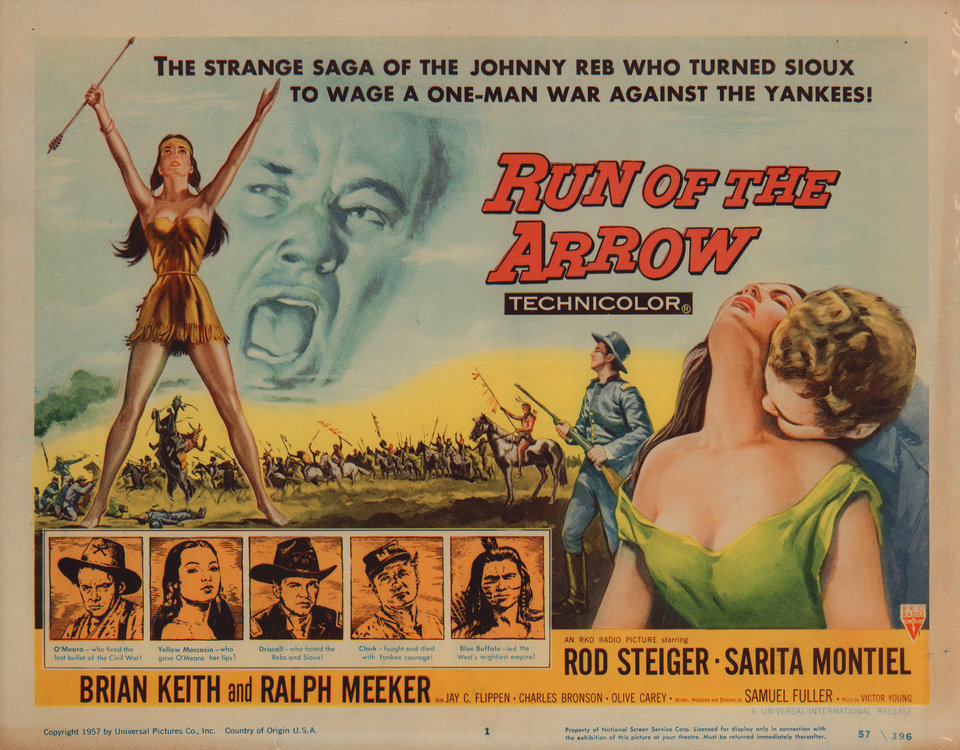
Brad reviews Samuel Fuller’s RUN OF THE ARROW (1957), starring Rod Steiger and Charles Bronson! 


RUN OF THE ARROW opens up on April 9th, 1963, with confederate sharpshooter O’Meara (Rod Steiger) shooting a Union lieutenant named Driscoll (Ralph Meeker). This turns out to be the final shot fired in the Civil War as General Lee is in the process of surrendering to General Grant. It also turns out to be Driscoll’s lucky day, as a slight warping of the bullet causes O’Meara’s aim to be off just enough for him to survive. With no more war to fight and with a heart full of hate for the Yankees, O’Meara declares himself to be a man without a country and decides to head out west towards the land of the Indians. As part of his travels he happens across Walking Coyote (Jay C. Flippen), an aging, renegade Sioux scout who’s headed back home to die. Walking Coyote takes O’Meara under his wing and teaches him the Sioux language, as well as many of their customs. When they’re captured by a band of Sioux warriors led by Crazy Wolf (H.M. Wynant), and are being prepared to be killed, Walking Coyote invokes the “run of the arrow”, a ritualistic game that could save their lives. Unfortunately, no one has ever survived the run of the arrow. But today, it seems there’s a first time for everything, as O’Meara survives just long enough to be found, hidden, and saved by the beautiful Indian squaw Yellow Moccasin (Sarita Montiel). Yellow Moccasin nurses him back to health and presents him to her tribal chief, Blue Buffalo (Charles Bronson), who spares his life since he survived the run. Blue Buffalo also welcomes O’Meara into their tribe and allows O’Meara and Yellow Moccasin, who have fallen in love, to get married and adopt the mute orphan boy, Silent Tongue, as their own son. Things seem to be going well until Sioux Leader Red Cloud (Frank DeKova) and Army General Allen (Tim McCoy) reach an agreement that allows for an Army Fort to be built in a narrowly defined area. While the construction of the fort is entrusted to an honest man of integrity named Captain Clark (Brian Keith), the agreement is ultimately sabotaged by the murderous Crazy Wolf, and then further by the Indian hating Captain Driscoll… yes, that same Union soldier that O’Meara shot on the last day of the war! When the fighting starts again, will O’Meara prove himself to truly be a Sioux warrior willing to kill American army soldiers, or is a part of his heart still with his country?

Director Samuel Fuller’s RUN OF THE ARROW is a movie about the damage that occurs when human beings allow their hearts to be so filled with bitterness and hate that they quit caring about other people. It’s also about what happens when those same people run into rational people of good will, and we find out if they’re still capable of even considering the possibility that their own hate has blinded them from the truth. In other words, it’s a film that’s possibly more relevant today than it was when it was made in 1957. Bitterness and hate is represented by the characters of O’Meara (Steiger), Crazy Wolf (Wynant), and Lieutenant Driscoll (Meeker). O’Meara hates Yankees, Crazy Wolf hates the white man, and Driscoll hates the Indians. The rational people of good will are the characters of Yellow Moccasin (Montiel), Blue Buffalo (Bronson), and Captain Clark (Keith). Yellow Moccasin saves O’Meara, when everyone else would have just let him die. Blue Buffalo engages in honest conversation with O’Meara and even welcomes him into their tribe. Captain Clark shows O’Meara an empathetic ear and kindness when so many others have told him to just get over himself. The actions and fates of the characters play out against this dynamic of hatred versus humanity, with the results underscoring just how tragic it is when people focus on the things that separate us rather than the things that unite us. It’s all so unnecessary, but it’s also a realistic vision of the world we live in. The film also struck me as particularly violent for a 50’s western, which also underscores that reality.

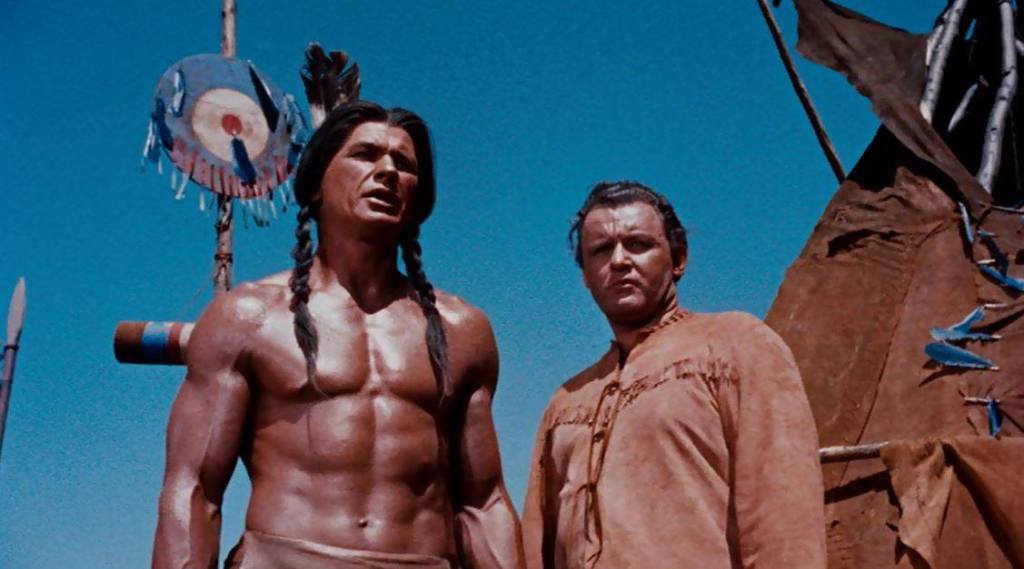
Some of the performances are very effective in the film. Rod Steiger’s Irish, confederate Sioux is an interesting character and the actor gives it his all as you’d expect. I’m a big fan of Steiger and his performance here only solidifies my respect for him. Brian Keith’s Captain Clark arrives fairly late in the proceedings and comes across as a tough, but honest man of integrity at a point when the movie really needs him. He has an excellent scene with Steiger where he debates the old confederate’s reasons for renouncing his citizenship with both sound logic, empathy, kindness and a hint of likable sarcasm all at the same time. It’s one of the best scenes in the film. And likewise, Charles Bronson, the most buff Hollywood Indian to ever strip down to a loincloth, comes across as a reasonable and kind tribal chief in his dealings. Bronson had played Indians before, but he was usually more of the renegade, warpath variety, so it was nice seeing him as a good guy here. H.M. Wynant took the renegade Indian role here which you might have expected for Bronson at the time. He’s suitably fierce but one-dimensional. The same can be said for Ralph Meeker as Lieutenant Driscoll. He’s pretty much just a stereotypical jerk. He’s good at being a jerk though! And Sarita Montiel, voiced by Angie Dickinson, is quite the beauty as Yellow Moccasin. We discussed H.M. Wynant and RUN OF THE ARROW with author Steven Peros on the “This Week in Charles Bronson Podcast.” Check out that interview below:

I’ve recently heard RUN OF THE ARROW compared to Kevin Costner’s DANCES WITH WOLVES, and there are definitely many similarities. I won’t go into all of those here, but one of the things I appreciated the most about RUN OF THE ARROW is the fact that the movie makes its feelings known about politics. In a movie filled with characters who have had their lives upended by the various decisions of political leaders, director Samuel Fuller has crafted a story that focuses most sharply on defining the quality of men based on what’s in their “hearts.” When it’s all said and done, oftentimes the only control we have is the way we respond to the events in our lives, and that’s not politics, it’s personal. To drive this home, in one of their conversations, Walking Coyote tells O’Meara that he could have been a chief if he had wanted to be. When O’Meara pushes the old scout on why he didn’t want the position, Walking Coyote responds with, “Because I hate politics!” On that point, I couldn’t agree more. 
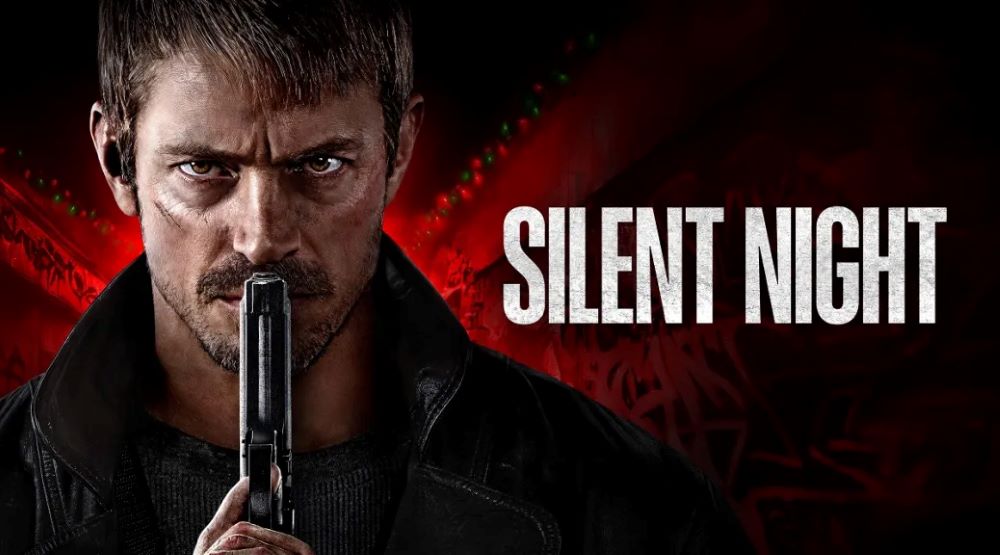
Review: Silent Night (dir. by John Woo)


“I can’t speak, but I’ll make them listen.” — Brian Godlock

Silent Night (2023) finds John Woo making his first American action film in two decades, since the disappointing Paycheck in 2003. While it’s definitely a step up from that sci-fi thriller misfire, Silent Night still doesn’t quite reach the heights of Woo’s Hong Kong classics or even his best Western productions like Face/Off. This latest outing is a lean, mostly dialogue-free revenge thriller that has Woo’s fingerprints all over it—a mix of balletic violence and emotional anguish—but it also shows the limitations of trying to recapture that old Woo magic in a very different cinematic landscape.

The story is simple: Joel Kinnaman plays Brian Godlock, an electrician whose son is killed in a gang shootout on Christmas Eve, and he himself is shot in the throat, losing his voice. The film then follows Brian’s quiet but brutal quest for revenge a year later. The choice to tell this nearly wordless story is a bold gamble, and for much of the film, the absence of dialogue adds power to the emotions and the tension. Kinnaman’s physical performance carries most of the weight—his grief, anger, and determination are all conveyed through body language and expression. This is one of the biggest strengths of Silent Night: Woo’s ability to communicate story and feeling visually, which harkens back to the silent films of early cinema, blending with his signature poetic violence.

That said, the silence also highlights the script’s thinness. The supporting characters, including Brian’s wife (Catalina Sandino Moreno) and a sympathetic detective (Kid Cudi), feel underdeveloped, serving more as plot functions than full people. This narrow focus on Brian’s pain and revenge means the film sometimes feels emotionally shallow beyond the core trauma. Compared to Woo’s earlier work, where secondary characters and relationships added layers of complexity and intensity, Silent Night is more singular and direct, for better and worse.

When it comes to action, Woo shows he still has the chops. The gunfights and hand-to-hand scenes are meticulously choreographed, emphasizing realism with a solid dose of stylized flair. It’s a return to the grounded grit Woo displayed in some of his earlier Hong Kong films, leaving behind some of the higher-octane operatic excess of his best-known Hollywood hits. The violence feels impactful and earned, avoiding cheap spectacle for a more tactile, bone-crunching effect.

Still, Silent Night doesn’t quite have the scope and scale of Face/Off or The Killer. It lacks the grandeur and intricate storytelling that made those films iconic. Instead, it’s a tighter, moodier experience that prioritizes emotional atmosphere over plot complexity. This stripped-down approach is refreshing to a degree, but it can also become monotonous—especially since the lack of dialogue and limited character development demand more patience from the viewer.

Comparing it directly to PaycheckSilent Night is a clear improvement. Paycheck was widely regarded as a forgettable action film that failed to capitalize on Woo’s talents, stuck with a muddled sci-fi plot and lacking the emotional firepower Woo excels at. Silent Night ditches the high-concept sci-fi for a more grounded, personal revenge story, allowing Woo to bring more of his hallmarks to bear—the intense physical performances, a palpable sense of loss, and carefully crafted action sequences.

However, it’s important to temper enthusiasm with the fact that Silent Night is not a full return to Woo’s prime Hong Kong cinema or his best Hollywood days. It’s missing some of the poetry, charm, and iconic bravado of movies like Hard Boiled or Face/Off, where Woo’s characters felt larger than life and the action was operatic and unforgettable. Here, the film often feels restrained, even muted, perhaps reflecting a director adapting to new cinematic expectations but also struggling to fully bring himself back to the forefront in the American industry.

Silent Night is a worthwhile viewing for fans of John Woo and action cinema looking for something different—one part homage to classic revenge tales, one part experiment in silent storytelling. It’s emotionally raw, visually precise, and markedly better than Paycheck, but it also lacks the fire and inventiveness that made Woo a legend. It’s a step forward and a reminder that even the greatest filmmakers can evolve and sometimes falter. If Woo is finding his voice again, it’s decidedly quieter but still unmistakably his own.

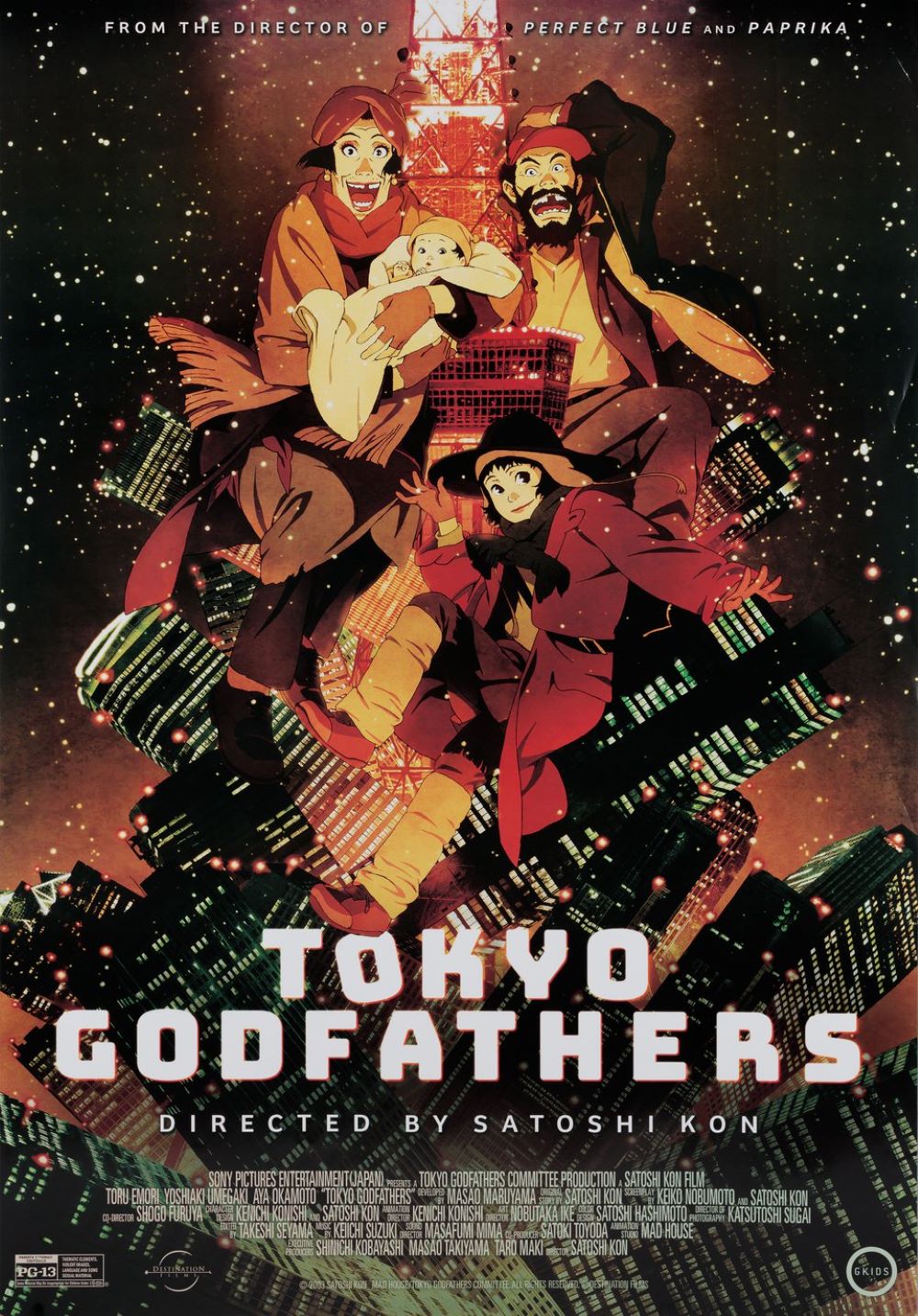
Anime You Should Be Watching: Tokyo Godfathers (Tōkyō Goddofāzāzu)


“I’m scared of my family, but I want to go home.” — Miyuki

Tokyo Godfathers is a film that shows how hope and kindness can be found in the most unexpected places, all wrapped up in a hilarious, chaotic, and heartwarming story set on Christmas Eve in Tokyo. Directed by Satoshi Kon, this 2003 anime follows three unlikely characters: Gin, a middle-aged alcoholic with a troubled past; Hana, a lively transgender woman who dreams of being a mother; and Miyuki, a guarded teenage runaway dealing with her own pain.

The adventure begins when the trio, scavenging through garbage for Christmas presents, discovers an abandoned newborn baby. Hana names the baby Kiyoko, meaning “pure child,” and the three set off on a mission to find the baby’s parents using a few clues left behind. Their journey takes them into the depths of Tokyo’s bustling city life—through snowy streets, a yakuza wedding, and encounters with all kinds of characters, from hitmen to estranged families.

What makes Tokyo Godfathers stand out is its perfect blend of humor and emotional depth. It’s easy to laugh at the trio’s bickering and mishaps, but the film also offers sincere moments of vulnerability and growth. Hana’s fierce protectiveness, Gin’s struggle for redemption, and Miyuki’s search for acceptance form a trio of deeply relatable characters. Their rough lives and personal regrets are shown honestly, but the warmth they create together feels genuine and touching.

The film doesn’t shy away from depicting the harsh realities of their world, including violence, abuse, and loss. Yet even in moments of hardship and conflict, acts of giving and empathy persist. Sometimes these harsh and tender moments intersect in the same sequence—such as tense confrontations that unexpectedly end in compassion, or scenes where despair is met with generosity. This layering creates a powerful sense of life’s complexity, showing that kindness can shine brightest amidst chaos and pain.

Visually, the film captures the chilly, neon-lit cityscape with beautiful detail. The animation highlights not only the busy and bright streets of Tokyo but also the subtle emotions of the characters, from shy glances to moments of frustration or tenderness. The film’s mix of grounded realism with moments of coincidence or miracle lends it a magical yet believable atmosphere.

At its core, the film explores what family really means. The three main characters, though not related by blood, support and care for each other in ways many traditional families don’t. The baby Kiyoko serves as a catalyst for each character to confront their past and rethink their relationships. The story gently shows that family can be chosen, formed through shared hardship and love rather than just genetics.

The film’s holiday setting works beautifully because it taps into the holiday themes of forgiveness, second chances, and hope. But it doesn’t shy away from showing the harsh realities of homelessness, loss, and loneliness—making the moments of joy feel even more earned. The characters are flawed but deeply human, and their journey toward reconciliation and connection is both honest and uplifting.

Though the story relies on some lucky coincidences and wild turns, these moments of serendipity feel like part of the film’s charm, highlighting how unpredictable and strange life can be. These surprises keep the story moving and weave a sense of wonder through the gritty city streets.

The supporting characters the trio meet add layers of complexity and humor, and small scenes—like Miyuki bonding with a single mother despite a language barrier or Hana’s reflections on her past love—enrich the narrative. These interactions remind us that no one’s story is simple and everyone carries hidden struggles.

By the end, each main character faces their own moment of truth—whether it’s Gin reconnecting with his daughter or Miyuki standing up to her past. The film leaves viewers with a hopeful message: even when life feels broken, it’s possible to find grace, redemption, and unexpected family.

Tokyo Godfathers is perfect if you want a holiday movie with heart, humor, and a refreshing dose of realness. You don’t need to be an anime fan to appreciate its warmth and message. It’s a touching reminder that kindness and connection can be found in the most unlikely places—even on the coldest winter nights.

Live Tweet Alert: Join #ScarySocial for The Stuff!


As some of our regular readers undoubtedly know, I am involved in a few weekly live tweets on twitter.  I host #FridayNightFlix every Friday, I co-host #ScarySocial on Saturday, and I am one of the five hosts of #MondayActionMovie!  Every week, we get together.  We watch a movie.  We tweet our way through it.

Tonight, at 9 pm et, Deanna Dawn will be hosting #ScarySocial!  The movie?  The Stuff!  

If you want to join us this Saturday, just hop onto twitter, start the movie at 9 pm et, and use the #ScarySocial hashtag!  It’s a friendly group and welcoming of newcomers so don’t be shy.

The film is available on Tubi!

Brad’s “late night” movie review: THE NAKED CAGE (1986), starring Shari Shattuck and Angel Tompkins!


It’s a hard knock life for Michelle (Shari Shattuck). One moment she’s a hardworking teller at the local bank who loves her horse, Misty. The next moment she’s sentenced to three years in the women’s penitentiary for a crime she didn’t commit. And life is damn tough in prison. There’s the prison warden Diane (Angel Tompkins) who, when she’s not participating in lesbian dalliances with inmates, is offering Michelle protection, but only if she agrees to act as a spy for her. When Michelle says no, Diane sets her up to be brutalized by the sadistic Rita (Christina Whitaker), the bitch who’s responsible for her being in the pen in the first place! Now having to dodge the threat of rape from prison guard Smiley (Nick Benedict), as well as the constant threat of shiv-induced death at the hands of Rita, it seems Michelle may have finally received a lifeline with the arrival of a new prison guard named Rhonda (Lucinda Crosby). Rhonda seems to show some extra interest and empathy in Michelle’s plight, and she just may be in a position to help her with the wrongful conviction. That is, if Michelle can survive one more night in THE NAKED CAGE!! 

Recently, I’ve been trying to watch movies I’ve never seen before that star actors or actresses who worked with Charles Bronson. Tonight, I decided to look for a film starring Angel Tompkins, a Facebook friend, who worked with Bronson in the 1986 cop film from Cannon Films called MURPHY’S LAW. In that film she plays Jack Murphy’s ill-fated ex-wife, where she gives an uninhibited and committed performance in what would have been a throwaway role for many actresses. Not Angel… she took the role very seriously and is actually quite memorable in her couple of scenes. Paul Talbot’s book BRONSON’S LOOSE AGAIN has a chapter on the film, and he was able to interview Tompkins who told of just how much effort went into to her preparation. I recommend the book to anyone interested in Bronson or those numerous actors and actresses who worked with him in the 70’s, 80’s, and 90’s. Filmed the same year as MURPHY’S LAW, I thought it might be fun to see how committed she is in the role of the corrupt warden in Cannon’s THE NAKED CAGE. 

I’ll admit that I am not an expert on the “women in prison” genre of film. I did go through my Pam Grier phase that started with movies like COFFY (1972) and FOXY BROWN (1974), but did extend as deep as the Jack Hill “women in cages” films THE BIG DOLL HOUSE (1971) and THE BIG BIRD CAGE (1972). But those movies had Pam Grier in the cast which provided a couple of ample reasons for me to watch. THE NAKED CAGE does have some interesting things going for it. Like most of Charles Bronson’s 1980’s output, the movie was produced by Cannon Films, the international symbol of quality moviemaking from the 1980’s. And then there’s Angel Tompkins herself. She’s quite the sexy lady, having appeared in films like PRIME CUT (1972) and THE TEACHER (1974). Cannon Films and Angel Tompkins drew me in, but what about the film itself? Is it worth a watch? 

I’ll go ahead and say that for me, THE NAKED CAGE was worth the watch. This kind of movie only works for me if I like the cast. Shari Shattuck is appealing in the lead role of Michelle, a good woman, who’s wrongly convicted, but who soon finds levels of toughness she never knew she had in order to survive. I remember Shattuck starring in films like POINT OF SEDUCTION: BODY CHEMISTRY 3 (1994) with Andrew Stevens. My wife and I also watched the entire DALLAS TV series a few years ago where Shari had an extended role in season 13. She starts out here as a sweet and innocent lady, and by the end she’s wielding guns and knives like a lifelong delinquent, and I liked it! Angel Tompkins does not disappoint as the corrupt warden who seduces the inmates in order to meet her own sexual needs, as well as manipulating them into playing her larger games of control over the rest of the prison. Overall, she plays the role pretty straight, but is once again quite uninhibited when it comes to the more mature content. To me though, the most enjoyable performance comes from Christina Whitaker as the psychotic Rita. Not content with just ruining Michelle’s life, she’s determined to murder her behind the prison walls as well. From the beginning of the film where the fugitive Rita had Michelle’s estranged husband snorting cocaine off her boobs, all the way to the final frames, Whitaker chews every piece of scenery that comes into view. She’s the character I’ll remember whenever I think of THE NAKED CAGE. 

There are some things I didn’t like very much about the film. Prison guard Smiley’s sadistic rapist isn’t fun at all to watch, but his character’s fate is well deserved and somewhat satisfying when it finally occurs. Also, I didn’t care for the manipulation of the character of the drug addict Amy, played by Stacey Shaffer. She had worked very hard to beat her addiction, and in a world where many of us know people who have been lost to addiction, it’s not easy to watch her tragic fall. 

Overall, if you enjoy “women in prison” films, I think you’ll probably like this one. It’s certainly not perfect, but being a fan of Cannon Films and Angel Tompkins, I thought it was an enjoyable way to spend a Friday night while I was waiting for my wife to get home from work! 

Retro Television Review: St. Elsewhere 3.1 “Playing God, Part One”


Welcome to Retro Television Reviews, a feature where we review some of our favorite and least favorite shows of the past! On Fridays, I will be reviewing St. Elsewhere, a medical show which ran on NBC from 1982 to 1988.  The show can be found on Daily Motion.

Today, we start the third season of St. Elsewhere with some new opening credits!

Episode 3.1 “Playing God, Part One”

(Dir by Bruce Paltrow, originally aired on September 19th, 1984)

The opening of the third season finds that St. Eligius is just as depressing as it’s ever been.

Fiscus leads a group of new residents, including Dr. Elliott Axelrod (played by new series regular Stephen Furst), through the hospital.  Fiscus comes across as being an arrogant jackass.  I guess that’s the appeal of being a second-year resident.  You get to look down on all of the first-years.

Jack is still dating Clancy (young Helen Hunt).  When Clancy tells Jack that she’s pregnant, he’s shocked when she says she’s planning on getting an abortion.  Jack proposes to her.  Clancy says she’s not ready to get married and she’s not ready to have a baby.

Dr. Craig is still yelling at Dr. Ehrlich.  Dr. Ehrlich is still annoying the nurses.

Speaking of the nurses, they’re going on strike!

Three firefighters (one of whom is played by Erin Hudson) are injured while on the job and are rushed to St. Eligius with severe burns.  Luckily, plastic surgeon Bobby Caldwell (Mark Harmon, without that terrible mustache he wore during season two) is on call.

Dr. Peter White is working in a shady clinic and is still suing for his right to be a resident.

A traffic accident leaves one nun in a coma and apparently brain-dead.  Sister Doemnica (Michael Learned) wants to take her off life-support.  Westphall (Ed Flanders), who seems even more depressed than usual, disagrees.  It looks like there’s going to be some conflict about this.  For once, I’m on Westphall’s side.  I’m believer in hope.

Auschlander is still battling his cancer.

In other words, it’s another day at St. Eligius.  The third season premiere did a good job of re-introducing viewers to the hospital.  The snarkiness of Fiscus’s tour nicely balanced all of the more dramatic moments in the episode.  If anything has me worried, it’s the possible return of the loathsome Peter White.  How is the hospital going to deal with the return of a man who they all know is a rapist, even if he was somehow acquitted?  I guess we’ll find out.

Review: Kraven the Hunter (dir. by J. C. Chandor)


Kraven is Sony’s latest attempt to mine its Spider-Man-adjacent characters for cinematic gold, this time taking a stab at Sergei Kravinoff, better known as Kraven the Hunter. Even if you’re going in with rock-bottom expectations set by Morbius or the patchy Venom films, you might find yourself torn between mild intrigue and full-on indifference. The movie doesn’t bomb, but it certainly doesn’t soar either—it lands squarely in the “it’s fine, I guess” territory, buoyed by a handful of positive elements but weighed down by a laundry list of issues.

The film tries to position itself as a darker, grittier entry in Sony’s Spider-Man Universe but ultimately falls flat in several key areas. The movie follows Sergei Kravinoff (Aaron Taylor-Johnson), a man battling his toxic past and violent instincts, trying to define himself apart from his ruthless father, Nikolai (Russell Crowe). While Taylor-Johnson puts in a committed, physical performance and the action sequences deliver some visceral excitement—with brutal fight scenes and a snowy prison breakout standing out—the film struggles to transcend its predictable, shallow narrative.

One of the strongest aspects of Kraven is its commitment to visceral, intense action. The movie doesn’t shy away from bloody, fierce fights, embracing Kraven’s nature as a hunter rather than a hero. Physicality is a highlight here with Taylor-Johnson convincingly portraying the character’s power and agility. Some of the choreography—such as a snow-covered prison escape and a jungle chase—inject adrenaline into the movie, complemented by Russell Crowe’s imposing presence as the domineering father. Ariana DeBose’s Calypso and Alessandro Nivola’s Rhino provide interesting, if underdeveloped, counterparts that add flavor to the otherwise monochrome supporting cast.

However, the film is weighed down by a paint-by-numbers storyline that treads the well-worn path of antihero origin stories without adding fresh insight or emotional texture. The plot feels cliched and forgettable, with many moments so awkward and stilted that the dialogue and narrative flow could easily be accused of being AI-generated—and that accusation wouldn’t be out of place. This mechanical, artificial quality in the script creates a disconnect that makes characters seem like hollow archetypes rather than fully realized people. It’s as if the story was stitched together by a formula rather than human creativity, robbing the film of natural humor, depth, or emotional impact.

The biggest glaring example of this artificiality comes in the odd use of CGI for some of the characters’ facial movements. In particular, a scene with DeBose’s Calypso involved digital manipulation of her mouth and eyes to sync dialogue after filming, creating an uncanny, often distracting effect. This technique, reminiscent of the awkward, jarring movement of digitally animated mouths on still images, recalls the uncomfortable “Annoying Orange” vibe and highlights a troubling overreliance on technology rather than retakes or better production planning. It is a standout low point that further reinforces the impression of a rushed or overly engineered project.

The emotional core of Kraven revolves around the toxic father-son dynamic, which Crowe and Taylor-Johnson approach with convincing intensity, though the writing undermines their efforts with repetitive, obvious lines. The other characters, including Calypso, Rhino, and the Foreigner, suffer from limited screen time and one-dimensional arcs, often serving only to advance the plot mechanically rather than enrich the story. The film’s isolation from the broader Spider-Man universe also makes the stakes feel lower, leaving Kraven’s violent vendetta somewhat directionless and detached from broader consequences.

Visually, the film is inconsistent. While it nails gritty, physical action sequences, the CGI and digital alterations break immersion. The attempt at a darker, more grounded tone battles against these technical missteps and a narrative stuck in early-2000s superhero tropes.

Kraven offers some genuinely brutal action and committed performances but is hamstrung by a formulaic, AI-esque script and distracting technical glitches like the digital mouth-sync. It feels like a film caught between creative ambition and lazy execution, where flashes of potential are overwhelmed by awkward dialogue and uninspired plotting. For fans craving raw action or eager to see a Spider-Man villain on screen, it may be a mildly watchable diversion; for anyone seeking a fully fleshed-out, emotionally engaging story, Kraven is likely to disappoint.

Live Tweet Alert: Join #FridayNightFlix for Monty Python and the Holy Grail!


As some of our regular readers undoubtedly know, I am involved in a few weekly watch parties.  On Twitter, I host #FridayNightFlix every Friday and I co-host #ScarySocial on Saturday.  On Mastodon, I am one of the five hosts of #MondayActionMovie!  Every week, we get together.  We watch a movie.  We tweet our way through it.

Tonight, at 10 pm et, I will be hosting #FridayNightFlix and celebrating the event’s 5th birthday with an encore presentation!  The movie?  Monty Python and the Holy Grail!

If you want to join us this Friday, just hop onto twitter, find Legend on Prime, start the movie at 10 pm et, and use the #FridayNightFlix hashtag!  I’ll be there happily tweeting.  It’s a friendly group and welcoming of newcomers so don’t be shy.

See you there!