Who do you blame when a good show goes bad? In this case, I think we can blame Greg Berlanti. Greg is a terrific artist, but he spreads himself too thin, gets distracted, and all of his show go up in smoke after two seasons. I think he just gets bored too easily. Arrow was great the first two and a half seasons, but it started a rapid decline once Greg made 100 different cape shows. Titans follows that pattern as well. The first two season of Titans was some of the greatest television that I’d ever seen. It was realistic, dark, and had humor. The cast was diverse and terrific. The fight scenes looked amazingly real. Not since The Watchmen, could I see myself living in a world with superheroes.
Then Titans, like you’re first real relationship with a person whom you thought about marrying – fell apart when your study session with the blonde outdoorsy girl with the Italian last name took a left turn, your lady found out, and she quickly started dating an event planner with a ponytail.
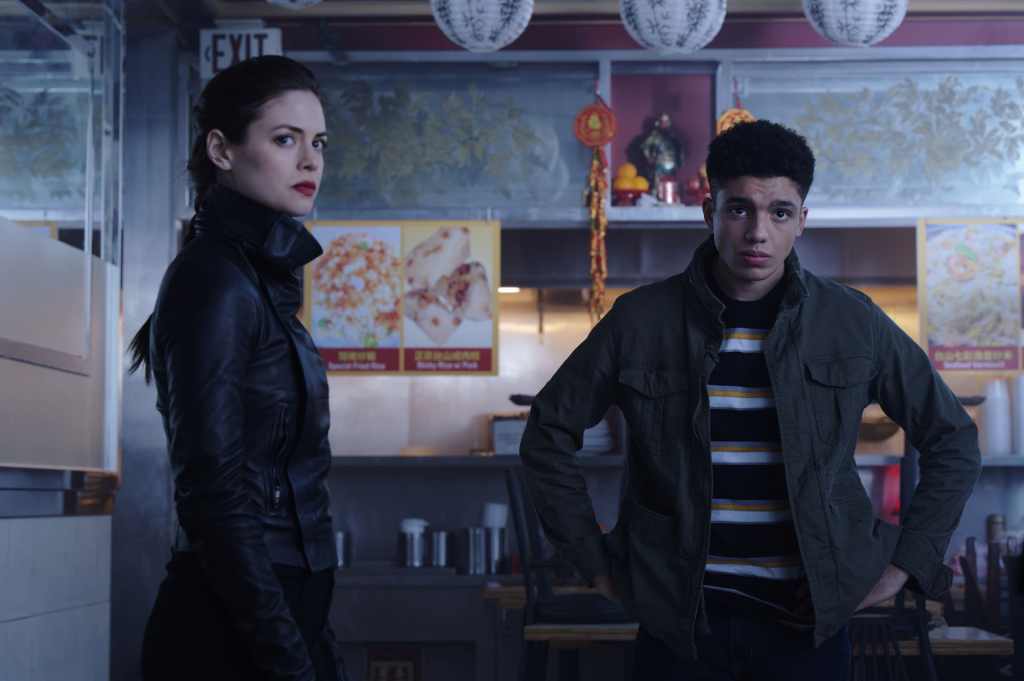
Anywho, once Alan Ritchson (Hawk) moved on to Reacher on Amazon Prime, the show lost its heart; it stopped being realistic. The worst example of this was casting Jay Lycurgo as Tim Drake. To be clear, he is a good actor, but he’s 100lbs soaking wet. See below.
This character had no superpowers and Tim was knocking out dudes twice his size with one punch. It looked straight up silly. Caped crusader movies are kinda goofy just by having people run around in these weird outfits. This was a bridge too far. His acting is good, but this is an action show- not some IFC thinkpiece about skinny Gen-Z bloggers. When he tried to fight and look tough, I couldn’t help but laugh. It’s just stupid looking and takes you totally out of their world. Don’t waste your time- Greg has clearly moved on and let the laziest writing and casting take over. All of the realism and fun has been drained out of the show with the precision of a surgeon.
“51%” Jonathan Crane develops a fear toxin because that’s what he does. “Home” – we watch Hawk die and the series with him. “Souls” – we see Hawk, Tim, and Donna again, but sadly all 100lbs of Tim Drake doesn’t stay dead- too bad for us. “Troubled Water”, “The Call is Coming From Inside The House”, “Prodigal”, and “Purple Rain” Donna comes back to life and Tim Drake – The hero who no one deserves- saves the day from fear toxin by making it rain lightning or something similarly dumb.
But Case, this review is so short. My response: I didn’t give up on this show, Greg did. There is nothing worthwhile here anymore. Take up a hobby, but don’t watch this show anymore. It’s simply not worth it. Greg, you are loved and have proven to make great television; well, up to 26- 38 episodes of it before you lose that lovin feelin. You’ve lost that lovin feelin could be Greg’s Biography. Greg, try a new song as your spiritual touchstone…Waterfalls are pretty and nice, but if you go chasing them – you lose your greatest love- stick to the rivers and the lakes that you’re used to. Please let’s both not kid ourselves, The Flash and Legends was never going to complement Arrow and my study session was NEVER about the books.
The Great Philosophers TLC knew it best…. Greg, have a listen…..
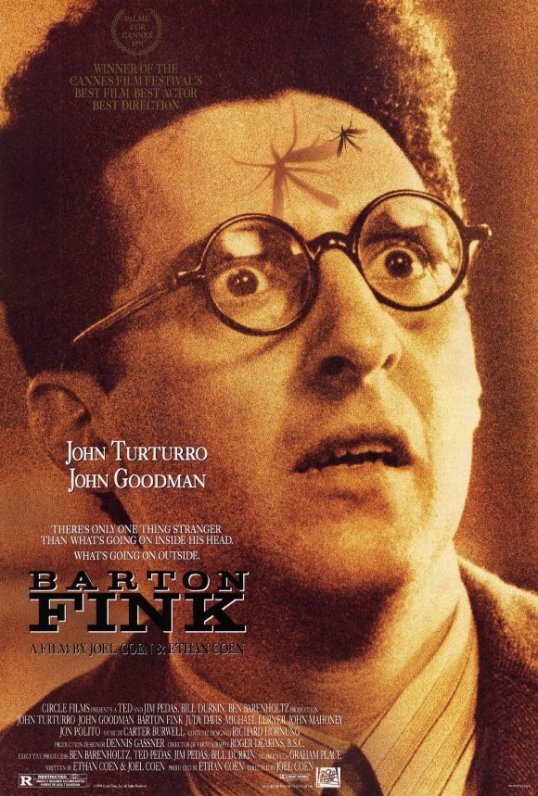
With the Cannes Film Festival underway in France, I decided that I would spend the next few days watching and reviewing some of the previous winners of the Palme d’Or. Today, I got things started with the 1991 winner, Barton Fink.
Directed by the Coen Brothers and taking place in the mythological Hollywood of 1941, Barton Fink tells the story of a writer. Played by John Turturro, Barton Fink is a playwright who has just had a big hit on Broadway. We don’t see much of the play. In fact, we only hear the final few lines. “No,” one the actors says, in exaggerated “common man” accent, “it’s early.” From what we hear of the reviews and from Barton himself, it seems obvious that the play is one of those dreary, social realist plays that were apparently all the rage in the late 30s. Think Waiting for Lefty. Think Hand That Rocks The Cradle. Think of the Group Theater and all of the people that Elia Kazan would later name as having been communists. These plays claimed to tell the stories of the people who couldn’t afford to see a Broadway production.
Barton considers himself to be the voice of the common man, an advocate for the working class. He grandly brags that he doesn’t write for the money or the adulation. He writes to give a voice to the voiceless. When his agent tells him that Capitol Pictures wants to put Barton under contract, Barton resists. His agent assures Barton that the common man will still be around when Barton returns from Hollywood. There might even be a few common people in California! “That’s a rationalization,” Barton argues. “Barton,” his agent replies with very real concern, “it was a joke.” Barton, we quickly realize, does not have a sense of humor and that’s always a huge problem for anyone who finds themselves in a Coen Brothers film.
In Hollywood, Barton meets the hilariously crass Jack Lipnik (Oscar-nominated Michael Lerner). Lipnik is the head of Capitol Pictures and he is sure that Barton can bring that “Barton Fink feeling” to a Wallace Beery wrestling picture. Barton has never wrestled. He’s never even seen a film. The great toast of Broadway finds himself sitting in a decrepit hotel room with peeling wallpaper. He stares at his typewriter. He writes three or four lines and then …. nothing. He meets his idol, Faulknerish writer W.P. Mayhew (John Mahoney), and discovers that Mayhew is a violent drunk and that most his recent work was actually written by his “secretary,” Audrey (Judy Davis). He seeks help from producer Ben Geisler (Tony Shalhoub), who cannot understand why Barton is having such a difficult time writing what should be a very simple movie. Barton sits in his hotel room and waits for inspiration that refuses to come.
He also gets to know Charlie Meadow (John Goodman). Charlie is Barton’s neighbor. Charlie explains that he’s an insurance agent but he really sells is “peace of mind.” At first, Barton seems to be annoyed with Charlie but soon, Barton finds himself looking forward to Charlie’s visits. Charlie always brings a little bottle of whiskey and a lot of encouragement. Charlie assures Barton that he’ll get the script written. Barton tells Charlie that he wants to write movies and plays about “people like you.” Charlie shows Barton a wrestling move. Barton tells Charlie to visit his family if he’s ever in New York. Charlie tells Barton, “I could tell you some stories” but he never really gets the chance because Barton is usually too busy talking about his ambitions to listen. Charlie tells Barton, “Where there’s a head, there’s hope,” a phrase that takes on a disturbing double meaning as the film progresses. Just as Barton isn’t quite the class warrior that he believes himself to be, Charlie isn’t quite what he presents himself to be either. Still, in the end, Charlie is far more honest about who he is than Barton could ever hope to be.
When it comes to what Barton Fink is actually about, it’s easy to read too much into it. The Coens themselves have said as much, saying that some of the film’s most debated elements don’t actually have any deeper meaning beyond the fact that they found them to be amusing at the time. At its simplest, Barton Fink is a film about writer’s block. Anyone who has ever found themselves struggling to come up with an opening line will be able to relate to Barton staring at that nearly blank page and they will also understand why Barton comes to look forward to Charlie visiting and giving him an excuse not to write. It’s a film about the search for inspiration and the fear of what that inspiration could lead to. Towards the end of the film, Barton finds himself entrusted with a box that could contain his worst fears or which could cpntain nothing at all. There’s nothing to stop Barton from opening the box but he doesn’t and it’s easy to understand why. To quote another Coen Brothers film, “Embrace the mystery.”
There’s plenty of other theories about what exactly is going on in Barton Fink but, as I said before, I think it’s easy to overthink things. The Coens have always been stylists and sometimes, the style is the point. That said, I do think that it can be argued that Barton Fink’s mistake was that he allowed himself to think that he was important than he actually was. Self-importance is perhaps the one unforgivable sin in the world of the Coen Brothers. Like most Coen films, Barton Fink takes place in a universe that is ruled by chaos and the random whims of fate. Barton’s mistake was thinking that he could understand or tame that chaos through his art or his politics. Barton’s mistake is that he tries to rationalize and understand a universe that is irrational and incapable of being explained. He’s a self-declared storyteller who refuses to listen to the stories around him because those stories might challenge what he considers to be the “life of the mind.”
Barton Fink is a film that people either seem to love or they seem to hate. Barton, himself, is not always a particularly likable character and the Coens seem to take a very definite joy in finding ways to humiliate him. Fortunately, Barton is played by John Turturro, an actor who has the ability to find humanity in even the most obnoxious of characters. (As obnoxious as Barton can be, it’s hard not to want to embrace him when he awkwardly but energetically dances at a USO club.) Turturro has great chemistry with John Goodman, who gives one of his best performances as Charlie. It’s putting it lightly to say that most viewers will have mixed feelings about Charlie but the film makes such great use of Goodman’s natural likability that it’s only on a second or third viewing that you realize that all of Charlie’s secrets were pretty much out in the open from the start. Michael Lerner deserved his Oscar nomination but certainly Goodman deserved one as well. The rest of the cast is full of Coen Brothers regulars, including Jon Polito as Lerner’s obsequies assistant and Steve Buscemi as Chet, the very friendly front deskman. And finally, I have to mention Christopher Murney and Richard Portnow, who play two of the worst cops ever and who deliver their hardboiled dialogue with just the right mix of menace and parody.
Barton Fink won the Palme d’Or at Cannes, defeating such films as Spike Lee’s Jungle Fever and Lars Von Trier’s Europa. It also won awards for the Coens and for John Turturro. It’s perhaps not a film for everyone but it’s one that holds up well and which continues to intiruge. Don’t just watch it once. This isn’t a film that can fully appreciated by just one viewing. This isn’t a Wallace Beery wrestling picture. This is Barton Fink!
“Impede my mission once more and I will beat you until you are dead.” I swear, I’ll never forget that line, especially coming from Rebecca Hall.
Showcased in this year’s Sundance Film Festival, Andrew Semans’ Ressurection is set to release in theatres by IFC Films and will also appear on Shudder. Rebecca Hall (Passing, Iron Man 3)gave a wild performance as Margaret, a woman revisited by someone (Tim Roth, The Hateful Eight) with a secret that can tear her family apart. The lengths to which Margaret goes to protect her daughter takes her to some extremes. This was one of four films I saw during Sundance’s VOD showings, and I’m looking forward to seeing it again.
Resurrection will be released in theatres on August 5th and then on Shudder soon after.
Anyone who saw Doctor Strange and the Multiverse of Madness was treated to the Teaser Trailer for James Cameron’s Avatar: The Way of Water. This one shocked me because it picked up a bit of applause in the theatre. After all, it’s been 13 years. Not that anyone ever asked for a sequel (or 2 more), I get the feeling Cameron has faith in himself and his crew.
Two things really stood out for me with this teaser. One, Mech-Spiders fixing buildings, what are those?! Two, is that Simon Franglen’s score playing? It’s nice, and with James Horner gone (and missed), I’m hoping the rest of it will be good.
Taking place some time after the first story, Jake Sully (Sam Worthington) and Neytiri (Zoe Saldana) have a family now, and we’ll get to see Pandora’s watery depths. Supposedly, Cameron’s been pushing for upgrades in 3D technology, so it’ll be interesting to find out what advances have happened in a decade.
Avatar: The Way of Water is set for a December release.
I absolutely love Love Death + Robots! Since the first Volume aired, I’ve been hooked on this series, which is produced by David Fincher. It feels like a mix between The Animatrix and MTV’s Liquid Television (which spawned Aeon Flux). I’ve been a bit out of the mix, so I forgot this was in production. Nine new short animated pieces using various styles will air when Vol 3 drops May 20, exclusively on Netflix.
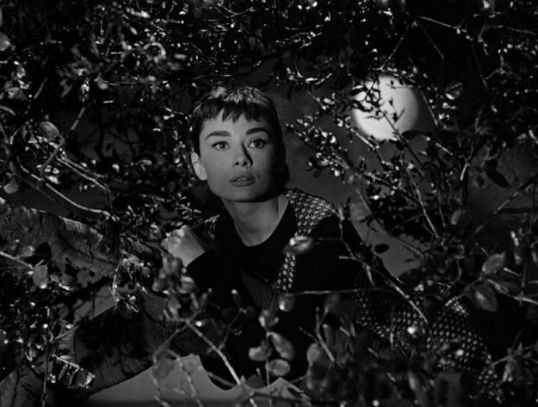
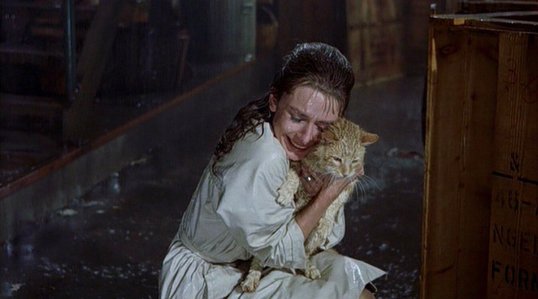
4 Or More Shots From 4 Or More Films is just what it says it is, 4 shots from 4 of our favorite films. As opposed to the reviews and recaps that we usually post, 4 Shots From 4 Films lets the visuals do the talking!
Today would have been the 93rd birthday of one of my favorite actresses, the wonderful Audrey Hepburn!
We’re all Audrey Hepburn fans here at the Shattered Lens. How could we not be? Long before she made her film debut, Audrey Hepburn literally risked her life as a part of the Dutch Resistance during World War II. After she retired for regularly appearing in the movies, she devoted herself to humanitarian causes and served as a UNICEF ambassador. She was one of the greats and, for that reason, we honor Audrey Hepburn today with….
4 Shots From 4 Audrey Hepburn Films
Roman Holiday (1953, dir by William Wyler, DP: Henri Alaken and Franz Planer)
Sabrina (1954, dir by Billy Wilder, DP: Charles Lang)
Breakfast at Tiffany’s (1961, dir by Blake Edwards, DP: Franz Planer)
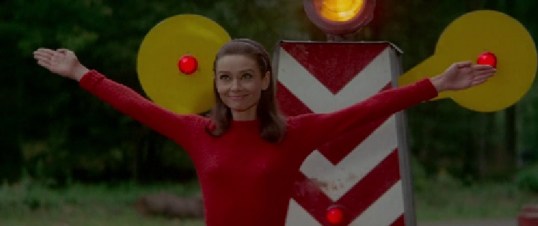
Two For The Road (1967, dir by Stanley Donen, DP: Christopher Challis)
David Cronenberg’s been keeping busy with his latest, Crimes of the Future. It looks like Existenz, but with major upgrades. The film stars Academy Award Nominee Viggo Mortensen (Eastern Promises, A History of Violence), Léa Seydoux (No Time to Die), and Academy Award Nominee Kristen Stewart (Spencer). I can’t begin to understand what the plot’s about, but given it’s Cronenberg, we’re all in.
Crimes of the Future will compete in this years Cannes Film Festival for the coveted Palm d’Or.
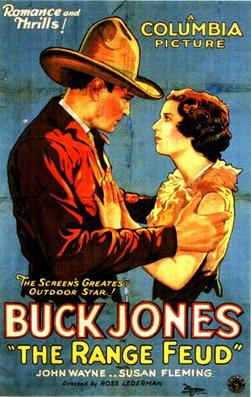
In a frontier town, two ranching families are at war. The Turners claim that the Waltons have been stealing and reselling their cattle. Even an attempt to hold a peace meeting at the local church just leads to more fighting. Complicating things is that young Clint Turner (John Wayne) is in love with Judy Walton (Susan Fleming). When someone shoots John Walton (Edward LeSaint) through the window of his office, Clint is the number one suspect. Not helping is that Clint had an empty round in his gun. Clint says that he fired at a coyote but he missed. Everyone else in town says that its time to hang Clint without a trial.
Only Sheriff Buck Gordon (Buck Jones) stands between the mob and Clint. Buck was raised by the Turner family and considers Clint to be his brother. However, Buck still knows that Clint might be guilty but there’s no way that Buck is going to allow mob justice to rule his town!
The Range Feud was one of the many B-programmers that were released in the 30s. Running less than 60 minutes, it is a briskly paced western that features a theme that was present in many westerns, the battle between mob justice and the law. The townspeople who are eager to hang Clint without a trial represent the old ways of doing things while Buck represents the new way, in which everyone is innocent until proven guilty and entitled to a fair trial.
Buck Jones was one of the best of the early western heroes. He played tough-but-fair men who could definitely handle themselves in a fight but who preferred to try to reason their way out of conflict. Buck Jones served in a Calvary unit, worked as a cowboy, and started in the film business as a stunt man. He had an authenticity that set him apart from others who merely pretended to be cowboys. That authenticity serves him well in The Range Feud. He may feel bad about having to arrest his stepbrother but any character played by Buck Jones can be guaranteed to follow the law. In real life, Buck Jones died a hero. In 1942, Buck Jones was at the Cocoanut Grove nightclub in Boston when a fire broke out. Though Jones initially was able to get out of the nightclub, he subsequently reentered to help other people get out. Severely burned, he died of his injuries two days later.
Of course, the main reason that people will track down this film is for a chance to see the young John Wayne playing a key supporting role as Clint Turner. It’s always a little bit strange to see Wayne playing a young man. He’s one of those actors who you always assume was always in his 40s. Wayne is likable as the free-spirited Clint, though it is again strange to see Wayne playing someone other than an authority figure. For once, it’s Wayne who ends up in jail and who is dependent on someone else to save him.
The Range Feud is an entertaining and fast-moving western. Fans of the genre and of Buck Jones and John Wayne will appreciate it.
I’ll admit, watching the trailer for A24’s Marcel The Shell With Shoes, I was a little amused. The story of a Shell looking to find their family is cute, but once Phil Collins’ “Take Me Home” kicked in, I was hooked. A24 is known for being weird, and this doesn’t look like it’ll disappoint.
Marcel The Shell With Shoes On stars Jenny Slate (Zootopia), Rosa Salazar (Alita: Battle Angel), and Isabella Rossellini (Death Becomes Her), and will be released this June.




 Through the Shattered Lens