What Lisa Watched Last Night #79: California Dreams 3.14 “Boyz R Us” (dir by Patrick Maloney)


Last night, I watched yet another episode of the mid-90s sitcom, California Dreams.  That episode was entitled Boyz R Us.

And yes, it was a very special episode.

Why Was I Watching It?

As I’ve explained in my previous California Dreams-related posts, I’ve been watching episodes of this 90s sitcom because all of the episodes of Saved By The Bell: The New Class have been yanked off of YouTube.

This was actually the third time I had watched the Boyz R Us episode.  I previously watched it last week with my BFF Evelyn after we saw Tyler Perry’s Temptation.  However, the next day was a busy one and I didn’t get a chance to write about it.  Therefore, in order to maintain the integrity of this feature, I rewatched Boyz R Us yesterday so that I could honestly say that it was what Lisa Marie watched last night.

What Was It About?

In this episode, we discover that Tony (William James Jones) is from “the hood.”  This isn’t surprising since, in the world according to mediocre sitcoms, every single black man on the planet was born in the hood just so he could eventually leave, befriend a bunch of white people, and then be accused of “selling out” in a very special episode.

Tony’s cousin, Darren, drops by for a visit and explains to Tony that “Some changes are going down in the hood.”  When an old friend of Tony’s is crippled by gang members, Tony is forced to choose between being a snitch and going to the police or seeking violent revenge on his own.

Meanwhile, the other members of the California Dreams are all broke and get jobs delivering singing telegrams.  To be honest, compared to what’s happening in the hood, the problems of a bunch of affluent white teenagers seem rather trivial indeed.

Incidentally, I was born in Oak Cliff, Texas which is the Dallas version of the hood.  Just saying…

(Of course, my mom also got us all out of there when I was 14 months old and I wouldn’t know a real gangsta if he came up and stared straight at me but that said, I’m still technically from the hood.)

What Worked?

In some of the other episodes that I’ve seen, William James Jones had a tendency to overact.  However, I thought he did a pretty good job in this episode.  If he went over-the-top, that was largely because the episode itself — with its heavy combination of melodrama and messaging — didn’t leave him much choice.  In this episode, Jones embraced the melodrama and good for him.

Don’t get me wrong.  I appreciate and respect the fact that the show was made with the best of intentions.  (Though you do have to wonder just how many real-life gang members would have been spending their Saturday morning watching California Dreams…)  However, the appeal of this episode really is that it’s so over-the-top and melodramatic.

Seriously.

For 22 minutes, everything with Tony is a drama.  Every phone call he gets is bad news and you get the feeling that the other Dreams are starting to dread the prospect of being anywhere near him.  And then, at the end of the episode, Tony manages to not only convince Darren not to throw his life away but also rallies the entire community to finally stand up to the gang culture.  You can argue that the episode’s resolution isn’t all that realistic (for one thing, nobody seems to have considered that at least one of the two gang members would probably have had a weapon of his own) but that’s part of the appeal.

Also, was it just me or did it seem that the California Dreams were personally arresting the two gangstas at the end of the episode?

What Did Not Work?

Two words: Singing telegram.

The singing telegram subplot would have been weak under normal circumstances but when coupled with all of the melodrama and heavy messaging of the main plot, it looked even weaker.  Seriously, do the California Dreams not have parents to borrow money from?

I’m also found myself wondering if their final client specifically told Sly, “I want a group of teenagers dressed like keystone cops to sing to my girlfriend.”

Finally, the show’s writers missed a golden opportunity to have Jake announce, “Jake Summers doesn’t do silent film buffoonery.”

“Oh my God!  Just like me!” Moments

“I just want to know what its like to poor!”  That sounds like something I’d say while attempting to be cute.

Lessons Learned

“Two years is a long time to be gone from the hood…”


Review: Bates Motel 1.5 “Ocean View”


Ocean View

Norma Bates has got some issues, doesn’t she?

Last week’s episode ended with Norma (Vera Farmiga) being arrested for murdering Keith.  Tonight’s episode begins with her sitting in jail and telling both Dylan (Max Thierot) and Norman (Freddie Highmore) that they’re not acting properly upset over her situation.  “Just leave me here,” she tells them, “I don’t need your help.”

Of course, Norma has a bit of a point.  Dylan, after all, waits to eat breakfast before going to see her and, in a nicely subtle moment, Norman briefly smiles at the sight of his mother imprisoned.

Anyway, Norman, with the help of Emma (Oliva Cooke), manages to find the money to pay the bail bondsman and get Norma out of jail.  Once freed, Norma proceeds to insult her attorney and yell at Norman for “getting laid” while she was getting arrested.  Norma should be careful because it seems like that’s the sort of thing that could lead to Norman becoming a cross-dressing voyeur.

Fortunately, evil Deputy Shelby (Mike Vogel) purposefully misplaces some evidence which leads to the charges against Norma being dropped.  While Norma’s understandably grateful, Norman still feels that Shelby is dangerous.

Meanwhile, Dylan is still planning on moving out of the hotel.  His co-worker Ethan loans Max the money to get a place of his own but a few minutes later, some random guy shows up and shoots Ethan in the neck.  Dylan takes Ethan to the hospital and quickly leaves before anyone can ask him any questions.  Then, as he’s driving back home, Dylan happens to spot the shooter wandering down a conveniently deserted alley.  Dylan reacts by running the man down with his pickup truck.

Finally, Emma and Norman team up to search for and, eventually, discover Shelby’s sex slave.  They take her back to the hotel where Norma discovers them and demands to know what Norman’s doing with not one but two girls.  Norman explains who the girl is.  Norma, at first, refuses to believe him but then the girl herself identifies Shelby as being the man who was holding her captive.

Yes, it’s just another episode of Bates Motel

I’ve been struggling for the past few weeks to explain just what exactly it is that intrigues me about Bates Motel.

Don’t get me wrong.  I enjoy the show.  Vera Farmiga kicks ass.  Max Thierot is hot.  Freddie Highmore is creepy yet sympathetic and Olivia Cooke deserves her own Veronica Mars-like show where she solves crimes.

However, there’s also no denying that Bates Motel is a frequently uneven show.  Scenes that work are often followed by scenes that fall flat.  Intriguing plot points (like the fact that the citizens in the town apparently burned a man alive at the end of the second episode) have been brought up just to never be discussed again.

And yet, I still find myself looking forward to seeing where each episode of Bates Motel is going to go.  As I watched last night’s episode, I finally realize why I’m still watching this show.

Bates Motel is seriously weird.

Some of that’s intentional, of course.  However, a lot of the weirdness of Bates Motel comes from the fact that the show is still struggling to define just what exactly it is.  Is it a psychological thriller?  Is it horror?  Is it a mystery?  Is it an adaptation of young adult fan fiction with Emma serving as a Mary Sue for the unseen author?  Or is it a show about a single mother and her two sons trying to make a new life for themselves in a quirky small town?  Is it Lost or is it Gilmore Girls?

After watching last night’s episode, I’m convinced that the people behind the show have absolutely no idea.

But you know what?

That’s okay because it’s actually a lot of fun watching them trying to figure it out.  Since Bates Motel isn’t sure which genre it belongs to, it’s also free to ignore the rules and conventions that come with having a definite identity.  As a result, Bates Motel is a show where anything truly can happen.

Eventually, the constant tonal shifts are going to get exhausting.  Regardless of how well-acted the show may be, it’s difficult to remain emotionally invested in characters who are free of consistency.

Hopefully, Bates Motel will have found its identity by the time its second season rolls around.

For now, however, I’m just having fun discovering what’s going to happen next.

Random Observations:

  • Ethan turned out to be a pretty good guy.  Too bad he got shot in the neck.
  • This episode’s best Vera Farmiga moment: her defensive meeting with her attorney.  “How old are you?”
  • “Ur mom’s bail has been posted.”  That’s got to be one of the saddest texts ever.
  • Dylan is in danger of becoming one big deus ex machina.  Last week, he happened to show up in time to help Norman escape from Shelby’s basement.  This week, he just happened to show up on his motorcycle when Norman needed a ride home.
  • That said, I absolutely love Max Thierot and, episode-per-episode, his scenes with Freddie Highmore have always been a highlight.
  • Just in case you had forgotten this show is a prequel to Psycho, last night’s episode featured Emma getting Norman’s attention by ringing the bell at the front desk, a la Janet Leigh.
  • “I love you, you idiot!”  Yes, those are words that every girl hopes to hear.
  • The Bates Motel has its own web site?
  • Also, you can download the show’s “manga” notebook from the A&E website?  I guess that’s the difference between A&E and CBS.

Review: Bates Motel Episode 1.4 “Trust Me”


bates-motel-trust-me

Last night’s episode of Bates Motel might as well have been called “Norman Bates Gets Laid.”

Oh sure, a few other things happened during the episode.  Norman hallucinated, Norma criticized, Deputy Shelby smiled blandly while thinking evil thoughts, a disembodied hand turned up, Dylan learned the truth about the man that Norman and Norma murdered way back in the first episode, and finally, during the show’s final moments, Norma got arrested for that very murder.

But, for the most part, this episode will mostly be remembered as the episode where Norman Bates got laid.

As I’ve said in previous reviews, Bates Motel’s main struggle has always been to find anything new to tell us about the character of Norman Bates.  The character is so iconic that even those poor souls who haven’t seen Psycho are aware that Norman Bates owned a motel, dressed up like his dead mother, and killed people.  On Bates Motel, Freddie Highmore has done a good job bringing the teenage Norman Bates to life but it can still be difficult to emotionally connect with him because you know that eventually he’s going to grow up to be a peeping tom serial killer cross-dresser.

However, after four episodes, I think that actually might be Bates Motel’s greatest strength.  Since we know what Norman’s eventually going to become, it’s oddly compelling to watch him do things that we usually wouldn’t give a second thought to if they were being done by any other character on television.  For instance, any character on television could have ended up having sex with the oddly-named Bradley (Nicola Peltz).  But, since the character here is Norman Bates, the viewers are now left wonder whether Bradley will survive the experience.

And that’s why, even if it’s occasionally a struggle to remain emotionally invested in the adolescence of Norman Bates, I’ll be back next week to see what happens.

Random Observations:

  • Of course, I’m assuming that Norman and Bradley actually had sex.  The scene itself was filmed in such an over-the-top, romanticized manner — with Norman and Bradley making love under those crisp blue sheets and Bradley smiling beatifically — that I actually found myself wondering whether it was meant to be one of Norman’s hallucinations.  With this show, it’s definitely possible.
  • In case you were wondering, last week’s cliffhanger was resolved by having Dylan distract Shelby long enough for Norman to sneak back out of the basement.  Norman told Norma about Shelby’s sex slave, which led to Norma checking for herself and finding no evidence of anyone being held prisoner in the basement.  Though I know it’s a long shot, what if the woman in the basement turns to be another Norman hallucination?  That would be a neat twist to the plot, no?
  • In fact, what if the entire show is just a hallucination!?  Okay, I need to stop before I blow my own mind…
  • If anyone was born to play a femme fatale in a film noir, it’s Vera Farmiga.  It’ll be a crime if she doesn’t, at the very least, receive an Emmy nomination for her performance here.
  • Emma’s father (played by veteran British actor Ian Hart) seemed to be a bit creepy, didn’t he?  I’m not sure if the character was actually supposed to be that menacing or if we were just supposed to be seeing him through Norman’s eyes.  If nothing else, his overprotectiveness of Emma nicely  parallels Norma’s attitude towards her youngest son.
  • When he was first introduced, I was a little bit uncertain about the character of Dylan.  I wasn’t sure whether or not his character was actually necessary.  However, I think the character has developed quite nicely and I actually enjoy the scenes where Dylan’s mask slips and you see that he actually does care about his half-brother.  Plus, it helps that Max Thierot couldn’t be unlikable if he tried.
  • Speaking of good performances, I’m continuing to love the subtle menace that Mike Vogel brings to the role of Deputy Shelby.  I loved the scene where he took Norman fishing.
  • The most frequent complaint that I’ve heard about Bates Motel is that, despite the fact that a lot is happening, the show’s main story tends to proceed at such a deliberate pace that it’s occasionally difficult to remember what that story was supposed to be in the first place.  Personally, I appreciate the fact that the show is taking its time.  For horror to work on television, it’s important that the show’s atmosphere be just right.  And a good atmosphere requires patience.
  • Bates Motel, incidentally, has been renewed for a second season so, for now, it can take as much time as it wants.

Trash TV Guru : “Hannibal,” Episode 1 : “Aperitif”


hannibal_nbc

Okay, here’s the deal — if you follow my “writing” (am I being too generous already?) either here on TTSL, on my own site,  http://trashfilmguru.wordpress.com, or on other places where my “byline” (again with the generosity!) occasionally appears such as dailygrindhouse.com, geekyuniverse.com, or what have you, it’s probably become apparent to you by this point that I don’t talk TV that much. Movies? Sure, all the time. Comics? Yeah, what the hell, I opine on those plenty, as well. But TV? This is, to my knowledge, a first. A new frontier. A new era. A new beginning. A bold, vast, wide-open, new horizon.

Okay, now I know I’m being far too generous. And grandiose. So I’ll cut it the fuck out right now.

Seriously, though, there’s a reason I don’t talk TV that much — I don’t watch TV that much. Alright, fair enough — I more or less never miss a Wolves or Wild game, so what I mean to say is that I don’t watch series TV that much. It’s just not my bag. Even with DVR and cable on demand, both of which negate the need to be in front of your screen at a set time every week,  it’s fair to say that continuing, serialized television just ain’t my thang for the most part. I’m a die-hard Doctor Who fan and have been since age, I dunno, six or seven, but my absolute, long-standing love for that show precludes me from saying what I really think about its current, depressing, lowest-common-denominator iteration too publicly. And I watch The Walking Dead and Bates Motel but Arleigh and Lisa Marie, respectively, have got those bases covered around these parts already. I’d been kind of wanting to dip my toes into the metaphorical waters of TV criticism on this site for awhile now, but there just didn’t seem much to be much point.

Then, I heard that the network suits at NBC had become either adventurous or desperate enough to green-light a series based around Hannibal Lecter, and furthermore that said new series was actually good, so I figured here’s my chance. Fair enough, the new show, simply (and unimaginatively) called Hannibal, shared a title with Ridley Scott’s genuinely atrocious entry into the Lecter cinematic canon, but why hold that against it? Especially since the territory it was going to mine, the backstory set before both the very best (Michael Mann’s Manhunter) and very worst (Brett Rattner’s Red Dragon) of the cannibal shrink’s celluloid exploits, seemed ripe for mining. Plus, rumor had it that the first episode was going to be directed by David Slade, who gave us 30 Days Of Night  and Hard Candy, two films I absolutely loved (we won’t hold the Twilight flick he did against him).

So, I figured, here it was — a show I could get in on the ground floor of and review every week for the edification of you, dear Through The Shattered Lens reader, whoever you are.

hannibal2

Confession time — I still missed the first episode anyway, despite my best intentions. The Wild were playing that night, so sue me. But I dutifully watched it on Comcast On Demand the next evening, and went in with pretty high hopes. It seemed that pretty much everyone liked this thing, from the most cynical corners of the internet to the most pompous and self-important to the most populist to, frankly, the dumbest (Entertainment Weekly, for instance, raved about it). Yup, everybody seemed to be in agreement — TV is bad bad for you, except for Hannibal.

So, yeah — maybe my expectations were too high. Maybe I just don’t “get” how series TV works. Maybe I stupidly wanted it to look and feel like Manhunter on, probably, a fraction of that film’s budget. And maybe — just maybe — I don’t know what the fuck I’m talking about, but I thought that episode one of Hannibal, titled (again rather unimaginatively) “Aperitif,” sucked.

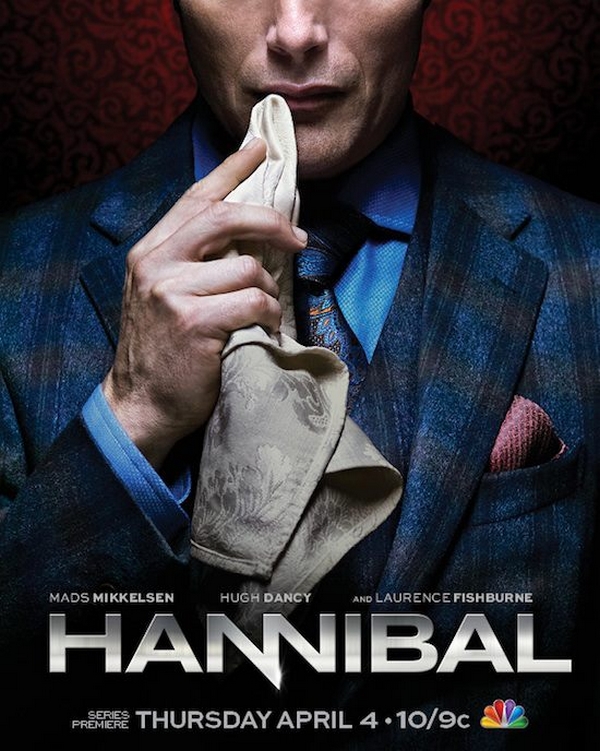
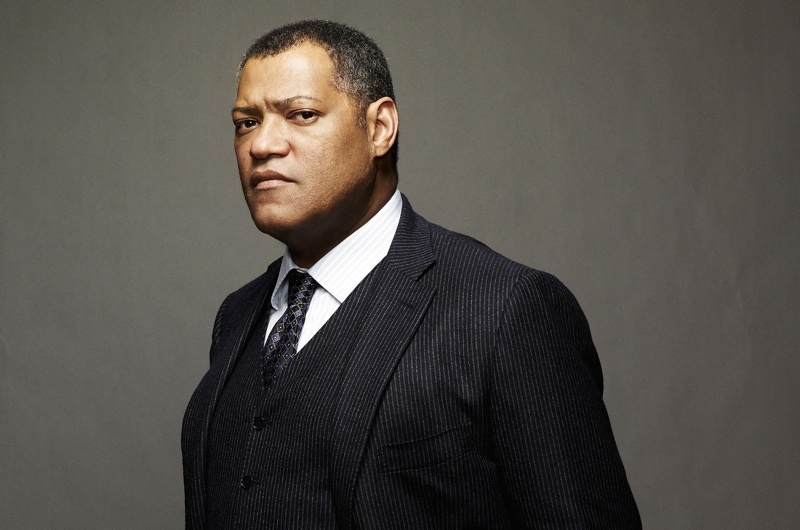
The setup, developed/dumbed down for television by series semi-creator Bryan Fuller (Thomas Harris should still get the lion’s share of the credit in my book) probably should work (and maybe on paper it does) — FBI special agent Will Graham, here played by Hugh Dancy (he of the bloodied glasses in the photo below) is paired with noted psychoanalyst Dr. Hannibal Lecter , here played by Mads Mikkelsen (he of the refined table manners pictured above) by Bureau big-shot Jack Crawford, here played by Laurence Fishburne (he  of the admittedly rather uptight appearance pictured far below). Yup, Graham and Lecter are, for all intents and purposes, partners.

Cool, right? And let’s just for the time being leave aside the fact that Dancy is no William Petersen circa the mid-1980s and that Mikkelsen is no Bryan Cox (still the best screen Lecter, I don’t care what anybody says) or Anthony Hopkins. This is TV, we gotta set our sights lower. But even making allowances for all of that, this was still a thoroughly lifeless, clinical, dull affair. Mikkelsen’s Lecter is closer to the version seen (by those who actually did bother to see it) in Hannibal Rising, which I guess makes sense given that he’s still in the early stages of his cannibalistic career here, and by that I don’t just mean that his vaguely eastern European accent is still present. I mean he’s not the older, accomplished, seen-it-and-done-it-all super-genius criminal of the Cox and Hopkins variety — he’s still, for lack of a better way of putting it, nothing but a pompous ass who happens to eat people. Which I guess makes him more interesting than a pompous ass who doesn’t eat people, but only marginally so.

Hannibal - Season 1

As far as Dancy’s interpretation of Graham goes, he probably does a better job in the role than Ed Norton did in Red Dragon, but the ultra-trendy twists Fuller gives the character — placing him somewhere in the autistic disorder spectrum, making him single so he can apparently spark up a love interest a few episodes down the line with co-star Caroline Dhavernas — are both unnecessary and, frankly, kinda patronizing. A lot of people seem to love the the way that this show has Graham mentally “re-live” the murders he’s investigating (all of which in this opening episode supposedly take place in my home state of Minnesota — probably by way of either rural California or Vancouver) by re-casting himself in the role of the killer, but I found it to be pretty gimmicky, to be honest, and already thoroughly predictable by the second time the conceit was employed.  I’ll take William Petersen’s anguished-and-angry version of the character from Manhunter any day of the week, even if I did promise not to hold the series to the same standards as the films.

And, since I opened that door anyway — one thing that both Michael Mann and Jonathan Demme understood about Hannibal Lecter that, frankly and depressingly, no one else has seemed to be able to figure out is that, underneath his civilized and erudite trappings, this is essentially a blackly comic character.  The greatest flaw of Hannibal the TV series — even greater than the lame-as-hell, wrapped-up-way-too-quickly-and-conveniently murder “mystery” here in episode one — is  its insistence on continuing the humorless, morose trend previously established by Ridley Scott, Brett Rattner, and whoever the hell it was who directed Hannibal Rising. Fuller and Slade just plain don’t seem to get this guy at anything beyond the most surface level, and that’s a shame, because apparently we’re in for 12 more weeks of this shallow, thoroughly unsatisfying interpretation of the character.

Serie 'CSI'

Or, should I say, you are. My days as an armchair TV critic are over (at least for now). Hannibal had a few good things going for it, I suppose — particularly Laurence Fishburne’s spot-on take on Jack Crawford and the nifty little scene where Lecter feeds human meat to Graham (unbeknownst to him, of course) — but not enough to get me to tune in for more.  I’m going back to what I know best. CSI with a cannibal just doesn’t do it for me. Now, Cannibal Holocaust on the other hand —

Review: Bates Motel S1E3 “What’s Wrong With Norman?”


whats-wrong-with-norman-bates-motel-whats-wrong-with-norman-freddie-highmore-vera-farmiga“What’s wrong with Norman?”

It’s a legitimate question because, as the saying goes, that boy ain’t right.  It’s also the question that gives Bates Motel its excuse for existing.

Still, even as we consider what’s wrong with Norman, we might want to ask what’s wrong with everyone else in White Pine Bay?  Seriously.  Last week’s episode ended with Norman (Freddie Highmore) and Emma (Olivia Cooke) being chased by pot farmers while some guy was being burned alive in the middle of the town square.  Meanwhile, Norman’s brother Dylan (Max Thierot) has found a new job working for the same pot farmers who were chasing his brother and, perhaps most disturbing of all, everyone in town seemed to be oddly excited about a logging festival.  And let’s not even start with the fact that everyone seems to exclusively watch black-and-white televisions or that the most popular student at the high school is a girl named Bradley…

Seriously, White Pine Bay is a weird town with an unwieldy name.

However, after spending the previous two weeks setting up its story, this week’s episode of Bates Motel focused on Norman.  Having managed to escape the pot farmers, Norman is back at school and being rude to Emma.  When Emma attempts to apologize for what happened and says that she really was just looking for an excuse to spend some time with him, Norman rather coldly suggests that maybe she should give the little faux-Manga booklet back to him because, after all, “it’s pornographic.”  I actually really liked this little scene.  Olivia Cooke and Freddie Highmore have a lot of chemistry and Cooke’s desperate attempt to explain herself was poignant while also hinting that Emma might have some secrets of her own.

(Seriously, I was pretty wild back in high school but I still would never would have thought that of searching for a sex slave as the perfect opportunity to flirt.)

Anyway, after that, Norman ends up in class trying to take a test.  However, instead of concentrating on the test, Norman keeps imagining the sight of his teacher (and, briefly, his mother) bound and gagged.  This leads to Norman fainting in the middle of class and being sent to the hospital where, along with watching one the town’s many black-and-white televisions, Norman also gets to cuddle with Bradley when she comes to visit him.

(Okay, technically, the TV may not have been a black-and-white set because Norman was watching an old movie.  However, I like to think of White Pine Bay as being a town where color television has been outlawed.)

Norman is eventually sprung from the hospital by Norma (Vera Farmiga) because Norma, as always, is having problems of her own.  Sheriff Romero (Nestor Carbonell) is convinced that Norma had something to do with the disappearance of Keith, the former owner of the motel.  (Romero’s right, of course.  Keith was murdered by Norma in the premiere episode.)  Deputy Shelby (Mike Vogel) informs Norma that he found Keith’s belt under Norman’s bed.  Shelby explains that he’s hidden the belt from Romero but it’s also pretty obvious that, unless Norma continues to do things like attend the local logging festival with him, Shelby might be tempted to let Romero know what he found.

After Norman finds out what his mother is doing and why, he ends up having another hallucination where Norma orders him to get that belt.  However, once Norman sneaks into Shelby’s house, he discovers that Shelby has a woman chained up in his basement…

The main complaint that I heard about the first two episodes of Bates Motel is that, storywise, they moved at too deliberate of a pace.  That was definitely not an issue with last night’s episode.  The episode moved at a good pace, Highmore’s sympathetic yet remote performance is developing nicely, and Vera Farmiga continues to kick ass with her cleverly over-the-top interpretation of Norma Bates.

Personally, I can’t wait to see what happens next.

A Few Random Observations:

  • Earlier, I wondered how Bates Motel — with its combination of black-and-white TVs, old cars, and iPods — is meant to fit in with the larger Psycho mythology.  After tonight’s episode — which featured Dylan making a rather pointed reference to Deliverance, a film that came out 12 years after Psycho — I am all the more convinced, much like Lost, Bates Motel is meant to be taking place in an alternative universe of its very own.  The show’s writers are obviously having fun playing with the apparent timelessness of Bates Motel and I’m having fun watching them do it.
  • Obviously, Freddie Highmore and Vera Farmiga are getting the majority of the critical attention but I happen to love Mike Vogel’s performance as Deputy Shelby.  Seriously, Vogel has transformed Shelby into the epitome of bland villainy.  Watching him, I find myself reminded of Jim Thompson’s classic pulp novel, The Killer Inside Me.
  • I also enjoyed the scene where Dylan and Norman finally did a little brotherly bonding.  It was well-played by both Highmore and Thierot.
  • Did I not predict last week that Dylan would end up working for the pot farmers?
  • I do have to wonder if this episode is going to serve as a template for all future episodes of Bates Motel.  Is Norman going to have a weekly psychotic episode that’s going to lead him to discover more people up to no good?  If so, Bates Motel could run the risk of turning into Dexter: The Motel Years.

Review: The Walking Dead S3E16 “Welcome to the Tombs”


TheWalkingDeadS3E16

“In this life now you kill or you die…or you die and you kill.” — Philip “The Governor” Blake

[some spoilers within]

We’ve finally made it to the finale of season 3 of The Walking Dead.

There’s something about tonight’s episode that was both good and bad. It had the hallmarks of this season’s showrunner, Glen Mazzara, who wanted the series to get back down to basics after a season 2 where there had been too much philosophizing and existential angst. Mazzara delivered on bringing more action to the show. The first couple episodes of this season and the mid-season finale episode showed just how action-packed the show could be and fans responded enthusiastically about this change in the show’s narrative.

Yet, with a 16-episode season there was bound to be some break in the action and it’s here that Mazzara still fell in the same trap that got Darabont removed as the showrunner and what I think got Mazzara removed from the position as well. While Mazzara’s leadership of the show’s writers weren’t as bad when it came to the more slower and introspective part of the season he still couldn’t get rid of the meandering and wheel-spinning in some of the less-action episodes. It didn’t help that while most of the characters in the show had made some great strides in characterization the one main lead who remained an enigma and a problem: Andrea.

“Welcome to the Tombs” was suppose to be the main battle that would determine who would come up as winner between Team Prison and Team Woodbury. The assault on the prison by the Governor’s larger force was fast and loud. It was sort of a “shock and awe” tactic that was meant to disorient and put the fear of God in Rick and his people. We see from the episode’s cold opening that the group looked to have voted to leave the prison before the attack and the empty cellblocks seemed to reinforce this point. It sure didn’t make for a battle that was meant to give Mazzara a climactic sendoff as showrunner this season. yet, when things were about to get real disappointing with the empty prison and the Governor and his people entering an even more silent and empty Tombs we finally saw that things were not as they appear to be.

It was a nice change that the prison group decided to stay and fight as a group even when given the chance to vote on their fate. The fact that they knew there were going to be outnumbered and outgunned also forced their hand to be more creative and sneaky in how they would counter the attack on their hard-earned home. It’s a fine and noisy welcome the Governor and his people get while in the Tombs and showed just how amateurish his army really is (with small exceptions to his small cadre of minions) when stacked up against the more veteran and hardened smaller prison group. It’s not a wonder that this supposed battle between the two groups felt more anticlimactic than explosive.

The episode itself was more character-driven than action when one got down to its basic. We learn more of the Governor, Carl and Tyreese than see explosions, gore and action during the episode’s running time. For some this was made for a so-so finale while others probably saw it as a good finale that finished off the troubled character arc for one of the show’s most hated and difficult characters to work with: Andrea.

It was her episode in the end as we finally see the reasoning for some of the ridiculously maddening decisions she’s made this season. While it’s still not easy to forgive the character (or even the actor in the role) we do get a definite answer to the question of why is Andrea so stupid (in the extreme) or naive (when one is more forgiving) in a world that eats up such sentimentality. We saw how Rick had had to adjust his personality and decision making to not allow sentiments to rule his every act and decision and we saw how successful the group became, but also distanced him from everyone else. Andrea was almost an attempt to balance out the craziness that was both Rick and the Governor, but Mazzara and his writers were never able to pull off that job. In the end, she remained a lost chance to creating a very complex character that one could sympathize instead of hating even when her actions were well-meaning and logical.

“Welcome to the Tombs” saw the ending of a third season that went a long way into fixing the show’s problems under Darabont’s guidance, but the added episodes from 13 to 16 also meant that Mazzara’s vision for the show began to run out of steam by the finale thus the more subdued (despite an explosive opening) and pensive finale. While the show’s slogging towards the finale can’t be fully laid at Mazzara’s feet as showrunner one cannot just say that his legacy was righting the troubled ship that was The Walking Dead, but also failing to finally find the right balance between zombie mayhem and action with the drama that comes with people trying to survive in a world irrevocably changed for the worst.

The Mazzara Era of The Walking Dead has come to an end. The show has become even more popular under his guidance, but it has also remained a show which remained quite uneven in how it told it’s story and wrote it’s characters. Mazzara’s leadership went a long way into fixing most of it, but time ran out for him and his vision and tonight’s finale showed that attempts to do stand-alone and more character-driven episodes during the season as a way to fill-up a 16-episode schedule should’ve been set aside for doing a finale that went just one episode. Mazzara had the right idea, but in the end he ran out of things to do to pull it off. Now it’s up to incoming showrunner Scott Gimple to continue the improvements done under Mazzara and see about fixing the rest of the problems the show has with him in charge. Maybe fourth time is the charm.

Yet, despite all this I have a feeling The Walking Dead will remain the most popular thing on TV and will continue to do so whether Gimple succeeds or not. Such is the power of the zombie genre over the imagination of people everywhere.

Notes

  • Tonight’s episode, “Welcome to the Tombs”, was directed by series veteran Ernest Dickerson and written by season showrunner Glen Mazzara.
  • Well, it looks like we didn’t have to wait too long to find out if the Governor will confront Milton about being the traitor. The same goes as to whether Daryl was going to make it back to the prison after the vents of last week’s episode.
  • The Woodbury attack on the prison was quite an operation that pretty much forgoes any sort of siege that played out in the comics. Instead the writers decided to go for a more aggressive tactic.
  • Nice to see Ma Deuce in action and where the hell did Martinez get his hands on a Milkor 40mm MGL. Weapon laws in Georgia must be much more lax in Georgia than everyone else. It’s either that or he came across a group of dead Marines.
  • We finally get to the meaning of the season finale title as the Woodbury group moves deep inside the prison and into the less than secured area that Rick and his people have begun calling the Tombs.
  • Some nice trickery from Team Prison to scare and rout Team Woodbury once they were inside the Tombs.
  • Once again, it looks like Team Prison needs a lesson in how to kill living people as opposed to zombies. I don’t think they killed anyone from Team Woodbury, except for Carl, once they were running for their lives in the prison yard.
  • Governor has gone bye-bye and even his two most loyal mions in Martinez and Bowman could see it with his work on the Woodbury Army.
  • Carl has definitely turned into a badass. Quite the boss move (or dick move depending on your stance on Lil Grimes) on the Woodbury teen trying to trick Carl into grabbing the shotgun.
  • Tense moments between Milton and Andrea back at Woodbury and the pay off was something that should please Andrea-haters.
  • Carl looks to be channeling his inner-Shane or Governor with the little speech about doing what needs to be done to his own father. It should make for an interesting season 4 now that Carl looks to be heading towards amoral territory.
  • Love how there’s now a growing rift forming between Carl and Rick. It’s something that was explored in the comic book, but never to a degree that really went anywhere. Here’s to hoping incoming showrunner Scott Gimple does a better job in exploring the father-son relationship in season 4.
  • With Andrea’s passing The Walking Dead now has just one member left from the Darabont acting troupe and that’s Melissa McBride.
  • Zombie Kill Count of tonight’s episode: Too much to count.

Past Season 3 Episode Review

  1. Episode 1: “Seed”
  2. Episode 2: “Sick”
  3. Episode 3: “Walk With Me”
  4. Episode 4: “Killer Within”
  5. Episode 5: “Say the Word”
  6. Episode 6: “Hounded”
  7. Episode 7: “When the Dead Come Knocking”
  8. Episode 8: “Made to Suffer”
  9. Episode 9: “The Suicide King”
  10. Episode 10: “Home”
  11. Episode 11: “I Ain’t a Judas”
  12. Episode 12: “Clear”
  13. Episode 13: “Arrow on the Doorpost”
  14. Episode 14: “Prey”
  15. Episode 15: “This Sorrowful Life”

What Lisa Marie Watched Last Night #77: California Dreams S3E13 “Rebel Without A Nerve” (dir by Patrick Maloney)


Last night, I watched yet another episode of the old 90s sitcom, California Dreams.

Why Was I Watching It?

If you’ve been following this site for a while, you may remember that I was introduced to California Dreams by my sister Megan while we were looking for an alternative to watching reruns of Saved By The Bell: The New Class.  (It’s a long story.)  Since every episode of California Dreams is available on YouTube, I’ve been watching them whenever I’ve found myself in the mood to watch a mediocre 90s sitcom.  Last night, I was in the mood.

What Was It About?

Jake Summers (Jay Anthony Franke) has long been known as the coolest, hottest guy at Pacific Coat High School.  However, that’s about to change because Tommy Keating (guest star Joseph D. Reitman) has transferred to PCH and he’s determined to shove Jake off of his pedestal.  At first, it seems like this could never happen because Tommy appears to be overweight, goony, and about 40 years old.  However, when Jake crashes his bike, Tommy moves in for the kill…

Meanwhile, PCH has gone accident free for several days and Principal Blumford (Dennis Hask…oh wait, that’s Earl Boen in the role of Blumford), is excited about the prospect of getting PCH listed in the Guggenheim Book of World Records.  In order to keep the school safe, Blumford assigns Tony (Williams James Jones) and Sly (Michael Cade) to the safety patrol…

Meanwhile, Mark (Aaron Jackson) remains cute yet strangely underused…

What Worked?

As opposed to the previous episode of California Dreams (in which Jake starts smoking and his Uncle Frank gets cancer), this episode was strictly for fun.    Instead of trying to teach us an important lesson about safety, this episode acknowledged what we all truly know: only losers became hall monitors.

Add to that, any episode that attempts to set Jake up as the California equivalent to Lord Byron (mad, bad, and dangerous to know) automatically has a lot of camp appeal.

What Did Not Work?

Was it just me or did Tommy Keating appear to be a little bit old to still be going to high school?  Seriously, if you haven’t graduated by the time you’re 40, you might as well just drop out and get your G.E.D.

Then again, he did ace that Biology quiz so maybe Tommy had finally gotten his act together…

“Oh my God!  Just like me!” Moment

Lorena and I definitely have a similar fashion sense.  Her 2nd outfit (the one with the super cute black miniskirt) was to die for and it reminded me of what I wore to mass on Ash Wednesday.

Also, I frequently mistake ketchup for blood.

Lessons Learned

Safety is for losers.


Review: Bates Motel 1.2 “Nice Town You Picked, Norma.”


-bates-motel--episod

Norman Bates has a brother?

Wow, who would have guessed?

That was the main addition that last night’s episode of Bates Motel provided to the Psycho mythology.  Played by Max Thierot (who was so good in last year’s underrated The House At The End of the Street), Dylan is Norman’s half-brother.  He was born when Norma was 17 years old and, as this episode quickly establishes, he’s a little bitter that Norma abandoned him and his father so that she could marry Sam Bates.

Actually, he’s more than a little bitter.  Bitterness appears to be Dylan’s only emotion.  From the minute that Dylan shows up at the Bates Motel, he’s angry.  Though he greets Norma with “Hello, mother,” (presumably so the slower members of the audience won’t be confused as to who he is), he spends the rest of the episode loudly refusing to call her anything other than “Norma” or “the whore.”

Dylan’s relationship with his half-brother isn’t much better.  About halfway through the episode, Norman reacts to Dylan’s taunting by attacking him with a meat cleaver and gets beaten up for his trouble.  “I told you not to do that!” Dylan shouts after he tosses Norman down to the kitchen floor.

To be honest, Dylan would pretty much be insufferable if not for the fact that he’s played by Max Thierot.  Much as he did in The House At The End Of The Street, Thierot is able to generate sympathy for a fairly unsympathetic character.  It helps, of course, that when compared to Norman and Norma, Dylan almost seems to be sensible.

Norma, meanwhile, has bigger problems than just her oldest son deciding to move back in with her.  She’s still trying to cover up the fact that she killed the previous owner of the motel.  It doesn’t help that Sheriff Romero (Nestor Carbonell) has discovered the dead man’s pickup truck parked near the motel.

Norma handles the situation by flirting with Deputy Shelby (Mike Vogel).  While Norman and Dylan are busy fighting in the kitchen, Norma and Shelby are at the town’s logging festival.  Judging from some of the feedback on twitter, I may be in a minority on this but I actually enjoyed the scenes between Shelby and Norma.  Vogel and Vera Farmiga had a very likable chemistry and I thought the scenes did a good job of establishing the town itself as a character.  Much as Lost had to leave the island, Bates Motel has to be able to tell stories outside of the motel and I think that tonight’s episode showed that it can.

Speaking of things happening outside of the motel, that’s probably where Norman (Freddie Highmore) should try to spend as much time as possible.  When he’s inside the motel, he spends all of his time looking at his little BDSM sketchbook and watching his mother while she undresses in front of him.  However, outside of the motel, he’s got a rather sweet relationship with a girl named Emma (Olivia Cooke).  Together, he and Emma research the origins of the sketchbook (“Don’t worry,” Emma says, “I’ve read lots of manga.”) and they even stumble across a local marijuana farm.

Norman ends up spending a lot of time with Emma because his other female friend, the oddly named Bradley (Nicola Peltz), spends most of the episode at the hospital.  Apparently, somebody set her father on fire.  However, as Deputy Shelby explains to Norma, the town has a way of taking care of trouble makers. That’s made pretty obvious at the end of tonight’s episode when Norma drives by another man who, in an apparent act of retribution, has been set on fire in the middle of the town square.

I enjoyed the second episode of Bates Motel.  It was full of atmosphere and Vera Farmiga’s performance continues to maintain the perfect balance between reality and camp.  Narratively, the story is still unfolding at a very deliberate pace but this episode provided enough intriguing clues to make me excited about seeing what happens next Monday.

That said, I still can’t help but feel that this show’s main weakness is the fact that , as opposed to being a stand alone series, it has to exist as part of the mythology of Psycho.  In many ways, Bates Motel reminds me of The Carrie Diaries, a prequel to Sex In The City that airs on CW.  It’s a well-acted show that’s full of a nicely observed moments but it’s still impossible for me to watch without thinking, “It doesn’t matter what happens because we already know Carrie’s going to eventually end up meeting and marrying Mr. Big.”

By the same token, I still find it next to impossible to watch Bates Motel without thinking to myself, “Eventually, regardless of what happens wit Dylan, Emma, or the pot farmers, Norman’s going to end up wearing Norma’s clothes, peeping on women in the shower, and killing them.”

Divorced from the Psycho mythology, Bates Motel is an entertaining and intriguing little show.  However, without the Psycho mythology, would a show called Bates Motel have ever made it to the air in the first place?

Random Observations:

  • The best scene, by far, was Norma’s alternatively friendly and creepy conversation with Emma.  “And what’s your life expectancy?”
  • How much do you want to bet that Dylan’s going to end up working with the pot farmers?
  • Speaking of the pot farm, am I the only one who was reminded of that episode of Lost where John Locke’s flashback dealt with the period of time he spent living on a commune?
  • I know I said this last week but seriously, how can you not love Nestor Carbonell?

What Lisa and Evelyn Watched Last Night #76: Romeo Killer: The Chris Porco Story (dir by Norma Bailey)


Last night, my BFF Evelyn and I watched the Lifetime original movie, Romeo Killer: The Chris Porco Story.

Romeo Killer

Why Were We Watching It?

First off, it was on Lifetime.  Secondly, both me and Evelyn love the true crime genre.  And finally, the film starred the very hot and very Texan Matt Barr.  Seriously, how couldn’t we watch?

There was one other reason that I wanted to see Romeo Killer.  Chris Porco, the subject of the film and a convicted murderer, actually obtained a court order to prevent the film from being shown.  The New York Court of Appeals overturned the order just two days before Romeo Killer was scheduled to premiere.  After all the drama about whether or not I would even be allowed to see it, how could I not watch when I got the chance to do so?

What Was It About?

Chris Porco (Matt Barr) is handsome, charming, and possibly a sociopath.  After his parents (Lochlyn Munro and Lolita Davidovitch) are attacked by an axe-wielding assailant, Porco is the number one suspect.  While the lead detective (Eric McCormack) tries to send Porco to jail, Porco’s mother insists that her son is innocent.  Meanwhile, Porco is attempting to seduce McCormack’s insecure daughter (Sarah Desjardins…)

What Worked?

Romeo Killer is the epitome of a Lifetime true crime film, in that it featured a truly disturbing crime, a charming villain, a driven cop, and a lot of melodrama.  Though the film made an attempt at ambiguity (for instance, we never actually see Chris Porco attacking his parents and the film ends with a quote from his mother in which she says that she still thinks that her son is innocent), it was also pretty obvious that the filmmakers believed Chris Porco to be guilty.  In the end, Romeo Killer made a compelling argument for Porco’s guilt (which is probably why he tried to keep the film from airing).

As portrayed in the movie, Porco comes across as being a pretty obvious, 1-dimensional psychopath but Matt Barr still does a pretty good job playing him.  Barr captures both the empty interior and charming exterior of the character.  (Of course, it should also be noted that Barr is about a thousand times better looking than the real Chris Porco.)  Among the supporting characters, Eric McCormack, Sarah Desjardins, and Lolita Davidovich all give strong performances.

Porco’s father is played by Lochlyn Munro.  Munro is a Canadian actor who has played small roles in a countless number of Lifetime films.  I don’t know much about him beyond the fact that I’m always happy to see him because, seriously, it’s just not a Lifetime film without Lochlyn Munro.  That said, Munro gave a sympathetic performance here.  The scenes where he staggers around the house after being attacked were difficult to watch.

What Did Not Work?

If I was the type to needlessly nitpick, I would point out what the film itself acknowledges with a disclaimer that appears immediately after the end credits.  While the movie is based on a true story and it does follow the broad outline of the actual case, it is also a fictionalization in which certain characters and events were created for dramatic purposes.  As such, some viewers would be justified in wondering which parts of the film are based on reality and which parts were created to tell a better story.

That said, as far as I’m concerned, Romeo Killer was the epitome of a Lifetime true crime film and, as a result, it all worked.

“Oh my God!  Just like Us!” Moments

Evelyn and I both found ourselves relating to the women in this film, all of whom were charmed by Chris Porco.  Because seriously, Matt Barr made for one seriously hot sociopath…

Lessons Learned

Some bad boys really are bad.

Review: The Walking Dead S3E15 “This Sorrowful Life”


TheWalkingDeadS3E15“I can’t…GO BACK. Don’t you understand that. I can’t” — Merle Dixon

[some spoilers within]

We are now in the penultimate episode before The Walking Dead reaches it’s season finale on March 31. Last week we saw preparations and turmoil inside Woodbury as the Governor has to deal with Andrea finally making the decision to pick Rick and her friends at the prison as her side in the coming conflict. He also has to deal with a potential traitor within his own inner circle. The episode was good in certain aspects, but also did nothing to move the story along. It was an episode that definitely put some viewers into wondering if the season had enough gas to make it to the promised explosive end.

“This Sorrowful Life” switches things over to the prison with Rick having made the decision to sacrifice Michonne to the Governor if it means a chance at avoiding the conflict he knows he and his people has a good chance of losing. He knows the numbers and firepower are against him. While he and his people may be more seasoned and veterans of being on the road killing zombies as a team it won’t be enough against a force that could afford a battle of attrition. It’s a decision that Rick’s inner circle doesn’t agree with (Hershel and Daryl), but they’re willing to support his decision as they have in the past. Rick has kept them alive this long and has earned their trust even if it’s a choice that goes against everything they believe in.

Tonight’s episode is another one that focuses on the choices the survivors in this zombie apocalyptic world have had to make and continue to make to survive another day, week and, the fates willing, another month. It’s also an episode that uses the dark horse in Rick’s group to highlight just how the choices people have made in this new world has changed people and most of it not for the good. I would like to think that tonight’s episode was an exploration of what made Merle Dixon such a character full of contradictions.

Merle Dixon was introduced way over in episode 2 of the first season and he came across as a cartoonish, one-note racist redneck who the audience were suppose to love to hate. But something changed in the time from his last appearance in season 1 and to his reappearance this season. That change wasn’t anything done by the character but how his younger brother, Daryl Dixon, viewed him and how this helped audiences want to learn and know more about a character who seemed to have earned Daryl’s undying trust and love.

We get some side stories in tonight’s episode with Glenn asking Hershel for Maggie’s hand in marriage and then Maggie in turn accepting his offer. We also see Rick finally realizing his error in judgement in trying to use Michonne as a sacrificial offering to the Governor. While this latter was brought on by another hallucinatory episode of him seeing Lori it happens for the briefest of moment. Unfortunately, this change of heart from Rick comes a little too late to stop Merle from going through on the plan to hand over Michonne.

Again we get back to Merle. A character hated by most everyone in the prison outside of his brother (who I believe also harbors somoe fraternal hate for the man even if just a little), but one they want to have on their side even if it means to do the dirty work. Rick knows this which is why he picked him instead of the younger Dixon to fool, capture and bring Michonne to the Governor. Everyone understands that choosing Merle to stay with them was one of necessity and not one born out of the goodness of their own hearts. Even Daryl knows this and even when he tries to convince his older brother to be more amenable towards Rick and the others it comes off as hollow. Daryl knows his brother and trying to change the man now after what he had to go through after season 1 would be a monumental, if not, an impossible task. This is why Merle decision to go on a mission of redemption was such a suprising twist to the episode, if not, the character himself.

It was some great writing by the upcoming season 4’s newest showrunner in Scott M. Gimple in tonight’s episode. We didn’t get a huge dose of exposition from the main leads and the one that we get finally resets the decision Rick made at the end of season 2. The Ricktatorship is now over. It was good and necessary when they were out, alone and desperate after leaving the farm, but now that everyone has learned the skills to survive it was time to rescind the writ of dictator and bring the group back to being a democracy, albeit one that’s now smaller than before.

Gimple also does a great job in making Merle one of the most tragic characters on the show. While Merle may have begun as a cartoonish, racist buffoon he went out a character that we were finally able to understand. He knew his faults and didn’t apologize for them. It was his love for his brother that kept him from going over the edge the way that the Governor has and we see it in his decision to take on Woodbury by himself.

Yet, for all the great writing Gimple did for tonight’s episode (which could be why he was chosen to be the show’s new leader after Mazzara’s exit everything hinged on whether Michael Rooker would be able to put on a performance worthy of tonight’s script. To say that Rooker hit it out of the park would be an understatement. There so much subtle hints in his performance that gave us a peek inside his gruff, outsider attitude towards everyone not named Daryl Dixon. His resigned acceptance at his new role in this new world as the man willing to do the dirty work for others. Be the bad guy so others can remain untainted with having to do the right, but immoral decisions. Rooker kept tonight’s episode from just being another good, but still throwaway until the season finale to one of the best in the show’s life, so far.

It goes to show how much potential this show has to be great. To go beyond it’s horror and grindhouse foundations. We saw it just a few episodes back with the Morgan-centric episode and we saw it even earlier with the episode where Lori redeems herself and exits the show on a high note. When it comes down to it the show shines when it balances all the horror and action with some deep character exploration. It’s a shame that Rooker has to leave the show to make this point, but he did leave it the only way he could and that’s to redeem the character of Merle. To give Merle the chance to choose for himself what he wanted to do and not have others (whether it was the Governor or Rick or even Daryl) dictate what he should or should not be doing. In the end, Merle chose for the love of his baby brother and while the end result would bring heartache and loss to the only person he loved it was his choice and he made it himself.

“This Sorrowful Life” goes down as another major highlight in The Walking Dead and finally lays down the final piece to what looks like an ending that will be another shift in the show’s cast of characters. Whether everyone makes it out alive after the season finale we as the audience will have to wait another week to find out.

Notes

  • Tonight’s episode, “This Sorrowful Life”, was directed by Greg Nicotero and written by next season’s showrunner Scott M. Gimple.
  • The episode’s title comes from the 6th volume of the comic book the show is based on. It was also the volume that dealt with the Governor’s final assault on the prison.
  • I think having Merle become so prominent a character in tonight’s episode should’ve been a clue that his time was numbered.
  • Tonight’s episode was quite a redemptory one for Merle and once again showed how far gone the Governor has towards the darkside.
  • Michonne really got Merle to a “T” and he knows it which seem to trigger the decision he made to let her go and attempt a mission to help out Daryl (it always comes down to his baby brother) and the people in the prison.
  • nice little interlude between Hershel and Glenn and then Glenn and Maggie. It’s one of the few things on this show that doesn’t involve death, violence and zombies and it’s a welcoming respite.
  • Like the character or not, Merle definitely has found himself the most useful person in this new world. It’s no wonder the Governor kept him on as one he trusted (to a point) and why Hershel and Rick was willing to take him back despite what he did to both Glenn and Maggie.
  • Just call Merle Dixon the Pied Piper of Zombies.
  • I think he should’ve taken a bit more time and attracted a bigger herd back to Woodbury.
  • Merle, even one-handed, sure caused a lot of damage against the Governor’s men. Makes one wonder how much more effective he would’ve been on his one-man mission if he had both hands to work with.
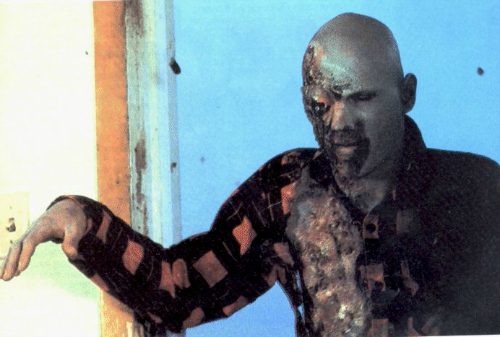
  • Greg Nicotero puts in another easter egg in tonight’s episode straight from the original Dawn of the Dead with the bald zombie in the red flannel shirt. The zombie approaches Merle while he’s in the car with the music blaring. dawnofthedeadzombie
  • Ben, we hardly knew you, but what we did know tells us you were a douchebag like you father Allen. I don’t think many people was going to shed a tear for this character’s demise tonight.
  • Not just killed by Merle but also became a meal in a scene that was horrific and sad.
  • The Governor has done gone past the darkside and into something worse.
  • Fight between Merle and the Governor as brutal as the one between Michonne and the Governor. Just goes to show just how primal fighters get when it comes to taking on someone they hate very much.
  • I felt a great disturbance in The Walking Dead fandom, as if millions of voices suddenly cried out in anguish.
  • Another great episode of work from Greg Nicotero (both as director and special effects man) and his FX magicians over at KNB EFX.
  • Zombie Kill Count of tonight’s episode: 26 onscreen.

Past Season 3 Episode Review

  1. Episode 1: “Seed”
  2. Episode 2: “Sick”
  3. Episode 3: “Walk With Me”
  4. Episode 4: “Killer Within”
  5. Episode 5: “Say the Word”
  6. Episode 6: “Hounded”
  7. Episode 7: “When the Dead Come Knocking”
  8. Episode 8: “Made to Suffer”
  9. Episode 9: “The Suicide King”
  10. Episode 10: “Home”
  11. Episode 11: “I Ain’t a Judas”
  12. Episode 12: “Clear”
  13. Episode 13: “Arrow on the Doorpost”
  14. Episode 14: “Prey”