8 Shots From 8 Horror Films: The Late 50s


4 Or More Shots From 4 Or More Films is just what it says it is, 4 shots from 4 of our favorite films. As opposed to the reviews and recaps that we usually post, 4 Shots From 4 Films lets the visuals do the talking!

This October, I’m going to be doing something a little bit different with my contribution to 4 (or more) Shots From 4 (or more) Films.  I’m going to be taking a little chronological tour of the history of horror cinema, moving from decade to decade.

Today, we take a look at the late 50s!

8 Shots From 8 Horror Films: The Late 50s

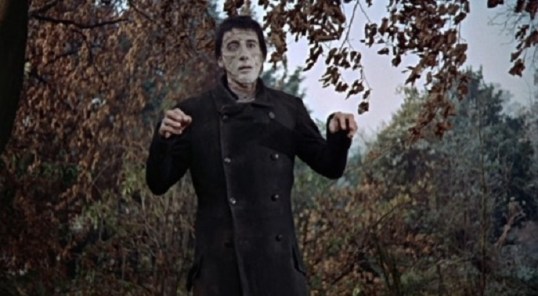
The Curse of Frankenstein (1957, dir by Terence Fisher, DP: Jack Asher)

Plan 9 From Outer Space (1957, dir by Edward D. Wood, Jr., DP: William C. Thompson)

Not Of This Earth (1957, dir by Roger Corman DP: John J. Mescall)

Horror of Dracula (1958, starring Christopher Lee as the Count, Dir by Terence Fisher, DP: Jack Asher)

Night of the Ghouls (1959, dir by Edward D Wood, Jr. DP: William C. Thompson)

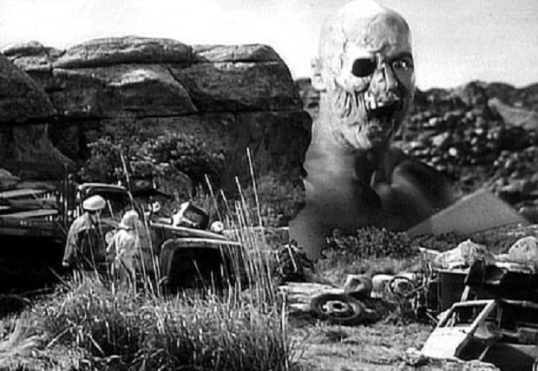
War of the Colossal Beast (1958, dir by Bert I. Gordon, DP: Jack A. Marta)

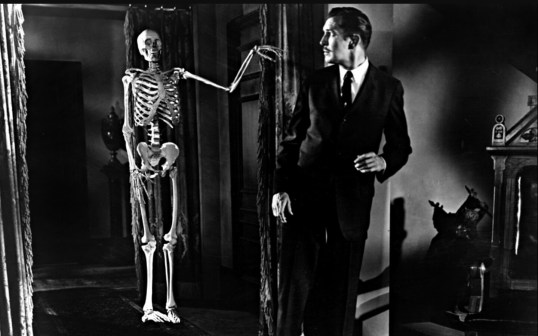
House on Haunted Hill (1959, dir by William Castle, DP: Carl E. Guthrie)

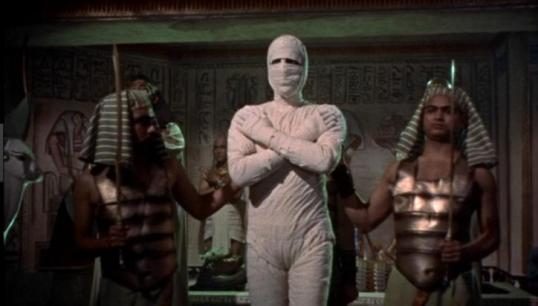
The Mummy (1959, dir by Terence Fisher, DP: Jack Asher)

Horror Film Review: Children of the Corn (dir by Fritz Kiersch)


What to say about the original Children of the Corn?

First released in 1984, this film was based on one of Stephen King’s least interesting short stories. It’s a pretty dumb and poorly-paced movie, featuring villainous puritan children who are more annoying than menacing. The heroes aren’t particularly likable, even if one of them is played by Linda Hamilton. And yet, somehow, Children of the Corn spawned an 11-entry film franchise. (The 11th Children of the Corn film was released in 2020, 36 years after the original.) The original film was remade in 2009 and it continues to be a familiar reference point on the pop cultural landscape. I’ve lost track of the number of Children of the Corn parodies that I’ve seen.

The plot is pretty simple. One day, all of the children in a small rural town get together and kill all the adults. They worship a mysterious entity called He Who Walks Behind The Rows and they sacrifice any adult who is stupid enough to wander into town. The leader of the children is shrill-voiced little twerp named Isaac (John Franklin) and his second-in-command and chief enforcer is the sullen Malachai (played by Courtney Gaies). The children all dress like 1880s settlers and they spend a lot of time staring at each other. Eventually, Malachai overthrows Isaac and ties him to a cross, which leads to a seemingly endless scene of Isaac screeching, “Malachai!” over and over again.

Meanwhile, two adults have accidentally driven into town, Burt (Peter Horton) and his girlfriend, Vicky (Linda Hamilton). They end up running over a child who was trying to flee the cult. They put the body in the trunk of their car and then they kind of forget about it. In their defense, they’ve got a lot to deal with. The children want to sacrifice Vicky and Burt wants to lecture all of the children about how their backwards ways are ruining America. I’m not kidding. This film about children wearing old timey clothes and talking about He Who Walks Behind The Rows tries to convince the viewers that it has a sincere message.

Children of the Corn was not the first movie about killer children but it’s certainly one of the most influential. You have to wonder why because the film itself simply isn’t very good. Beyond the bad acting and the heavy-handed sermonizing, the film’s pacing is all off. A simple story shouldn’t have this many slow spots. Director Fritz Kiersch falls so in love with shots of that haunted cornfield that he forget to use them to tell a compelling story.

And yet, it can’t be denied that there is an audience for this film and the many sequels that followed. I imagine some of it has to do with the fact that people are just fascinated by the idea of evil children. We’re expected to like and forgive the behavior of children, regardless of how obnoxious they may be. Movies like Children of the Corn exploit a real fear that many people have, that children will figure out that they can get away with murder and therefore, they will. It’s a simple and not particularly well-executed idea but it’s one that led to an 11-film franchise so I guess one should never discount the value of keeping it simple.

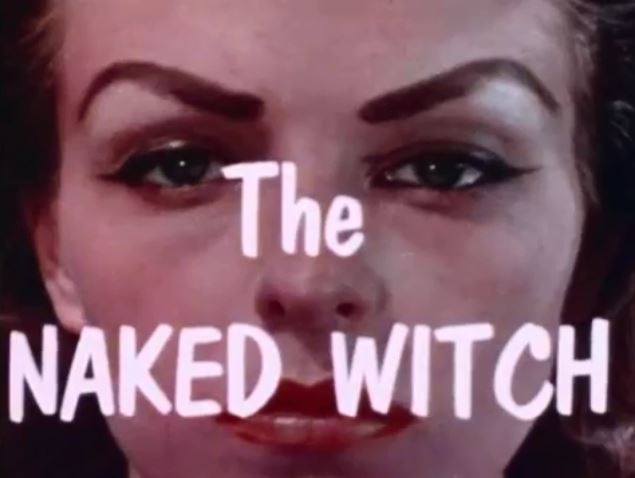
Horror On The Lens: The Naked Witch (dir by Larry Buchanan)


Today’s Horror on the Lens come to us for director Larry Buchanan.

Larry Buchanan was not only born in Texas but he made most of his films here too.  In 1964’s The Naked Witch, a college student is doing a research project on the German-speaking villages in Central Texas.  It’s while visiting one such village that this idiot accidentally brings an ancient witch back to life.  In many ways, this is a typical Buchanan film.  The budget is low and the plot is sometimes incoherent.  But the film is also fairly atmospheric.  In my case, it helps that I’ve actually spent time in Central Texas and I know how creepy things can sometimes get out there.

Enjoy The Naked Witch!

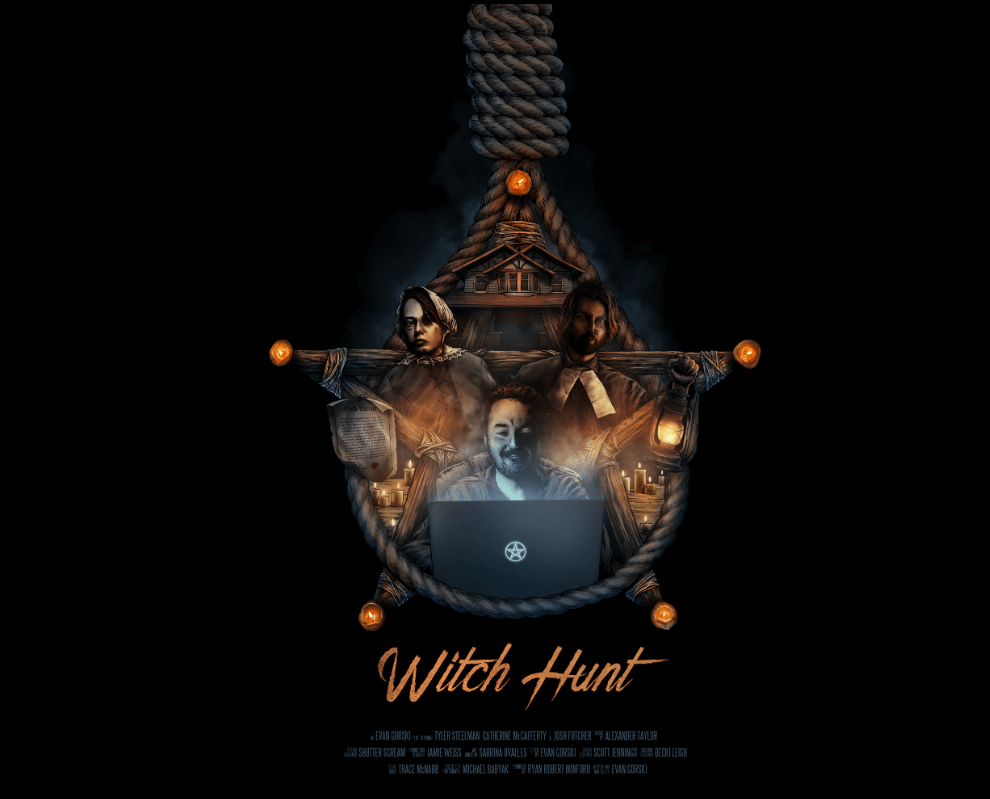
Witch Hunt, Review by Case Wright


Oof

I know many of you wonderful readers must think that I’m rooting for failure. I really want artists to do a good job and not be terrible. The short film is the farm team for many writers, directors, and actors. It forces you to have a clear idea, vibrant characters, be economical with your dialogue, and how to show not tell. This short was 8 minutes and change and it was awesome for the first four minutes. Then…..

The film has a great hook: without any dialogue, we see that the MC is a Twitter troll. He gets a knock at the door. She’s a pilgrim at the door and he proceeds to creep on her in at least three ways. This is a good setup. Then, a witch hunter from the past appears at the creep’s door with an arrest warrant. I’m getting a great twilight zone feel.

The artist shifts gears with a twist that it’s two of his Internet victims in Party City outfits who want to hang him. Then, they hang him. This is so anti-climatic. I get that he murdered their reputations so they murder him IRL. I could see this happening. If someone is recording someone to make them infamous, I could see someone thinking- well I might as well kill this guy. We always work under the assumption that people will play by the rules. This is a stupid way to be because we have obvious examples that it’s not true i.e. Road Rage.

The reveal didn’t pop the narrative suspense balloon with a bang, it deflated it … slowly and sadly. It was more fun for the pilgrims to be ghosts summoned for revenge than two people with a grudge who would be easily caught. Maybe….Maybe, it could have worked if it were clearer through a scene or two what this man had done that warranted his murder. The heroine did mumble something about what he did, but it was rushed exposition. It did not feel justified.

The writer grasped the idea that a payoff is critical in a story and especially a short, but to have a payoff – you need a pay-in. We did get the idea that the MC was a jerk, BUT hanging a man on his porch and seeing his asphyxiated face was not earned. Revenge stories are great, but the target has to be more than a jerk. We need to be clear with a slow burn that this man had harmed the killers so greatly that we agree with them that this guy needed killing. It felt unfair, not disturbing. It felt awkward and disappointing.

It’s a shame because the writer has some talent, but not enough.

Music Video of the Day: Love Kills by Vinnie Vincent Invasion (1988, directed by Nigel Dick)


After a stint as lead guitarist for KISS, Vinnie Vincent went on to form Vinnie Vincent Invasion.  Though the band was only together for four years before the members split up to pursue their own projects (two members of the band would go on to form Slaughter), Vinnie Vincent Invasion had a number of minor hits during its existence.

Love Kills was featured in Nightmare On Elm Street 4: The Dream Master and Freddy repaid them for the song by appearing in the music video.  This video was directed by Nigel Dick, who I think has directed at least one video for every band that has ever existed.

Enjoy!

Horror on TV: Ghost Story 1.4 “Bad Connection” (dir by Walter Doniger)


On tonight’s episode of Ghost Story, Karen Black plays a widow who starts to get mysterious phone calls from a man who sounds just like her late husband.  Black later expressed some regret that she ended up getting typecast a horror actress but she definitely did a good job in these roles.

This episode was co-written by Richard Matheson and originally aired on October 6th, 1972.

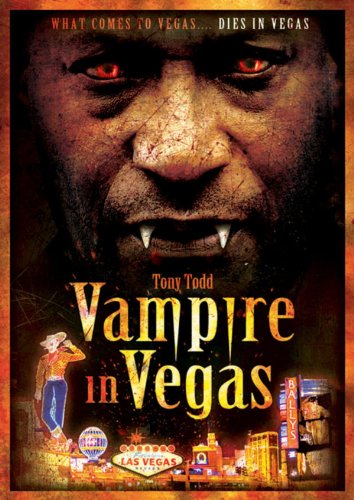
Vampire in Vegas (2009, directed by Jim Wynorski)


In this thoroughly jumbled film, Tony Todd plays Sylvain.  Sylvain is a centuries-old vampire who now lives in a mansion in Las Vegas.  He wants to run for governor of Nevada and then he hopes to become President of the United States.  Before he can campaign, Sylvain has to find a way to spend time in the daylight without bursting into flames.  He recruits Dr. VanHelm (Delia Sheppard) to conducts experiments and develop an anti-sun serum.  When Dr. VanHelm tests a prototype of the serum on three female vampires who have been tied to stakes in the desert, the experiment is observed by a camping couple who call the police.

At the same time, Jason (Edward Spivak) is engaged to marry Rachel (Sonya Joy Sims), so his friends decide to have one last hurrah by dragging him to Vegas and throwing a party with strippers.  Unfortunately, the strippers are all vampires who work for Sylvain.  Jason and his friends become Dr. VanHelm’s latest serum guinea pigs.  When Rachel and her friend Nikki (Brandin Rackley) decide to surprise Jason in Vegas, they are also drawn into Sylvain’s web of conspiracy when it turns out that Nikki is hoping to become the newest of Sylvain’s vampiric servants.

From the minute the film opens with a lengthy exposition dump and footage of Sylvain throughout the years, Vampire in Vegas is obviously a Jim Wynorski film.  With this film, Wynorski not only recreates the nonsensical vampire politics of the Twilight movies but he combines it with the bromantic decadence of The Hangover movies.  It’s not a successful mix.  Sylvain is determined to walk in the sunlight and to run for governor of Nevada but the movie never explains why.  With his mansion and his legion of loyal followers, Sylvain has done very well as a vampire who can only come out at night.  Why would he want to potentially lose everything that he has, just so he can run for governor and eventually president?  Why would Sylvain trade everything that he has now for a job that would mostly involve renaming highways and signing whatever bills end up on his desk?  And how does Sylvain think that he’ll be able to run for governor without someone investigating his past and discovering that he’s a vampire?

That’s a lot of questions and Jim Wynorski makes no attempt to answer them.  Instead, the movie focuses on the strippers stripping and Sylvain waiting for his chance to brave the sun.  It’s a Wynorski film so no shock there.  Tony Todd plays the role with dignity, the rest of the cast is negligible in this Vegas bet that didn’t pay off.

Game Review: Ink (2022, Sangita V Nuli)


In this work of Interactive Fiction, you take on the role of someone who has just lost their fiancé.  You are in mourning and trying to figure out how you can go on with your life even though you’ve lost your reason for living.  Staying at home doesn’t help.  Going to work doesn’t help.  Seeing a therapist doesn’t help.  Religion has failed.  Group therapy provides only momentary relief.

Then, you find an envelope, addressed to you and in her handwriting.  You find the envelope under a park bench that the two of you used to frequent.  Unable to open it, you leave it on the mantle next to the wedding invites that you’ll never get to send.  (Come on, that’s a powerful image.)  Sometimes, the ink on the envelope seems to move, as if the envelope itself is alive.  Will you find the courage to open the envelope and see what is inside?

Ink is an enigmatic but intriguing work of Interactive Fiction.  I would hesitate to call it a game.  It’s a short story that comes with a few options.  You can try to make different choices each time that you play but it seems like the story is fated to always reach the same conclusion, no matter how many detours you try to take.  The letter, much like mourning, cannot be escaped no matter how much you try.  The story is well-written and captures the feeling of being in deep mourning.  The inescapable ending carries enough of a kick to stick with you afterwards.

Play Ink

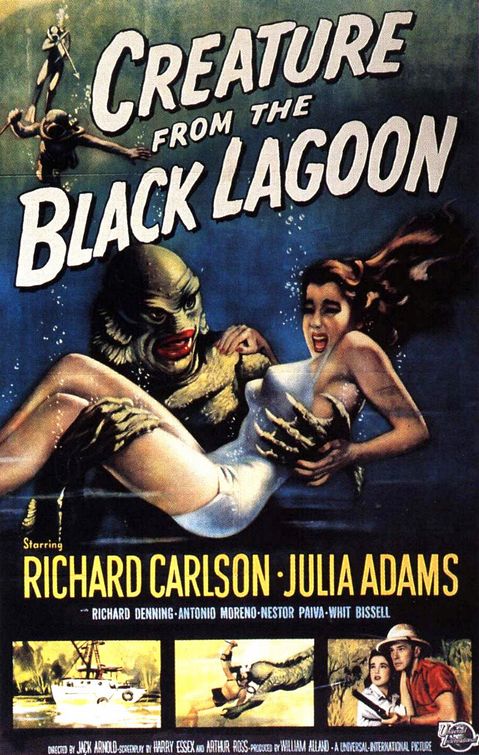
Horror Scenes That I Love: Swimming With The Creature From The Black Lagoon


Today’s horror scene that I love comes from one of my favorite films, 1953’s Creature From The Black Lagoon.  In this scene, Julia Adams goes for a swim.  Little does she realize that, under the water, the Creature is following her every move.  Wonderfully directed by Jack Arnold, this creepy yet oddly lovely scene is one of the best of the 50s.