Horror Film Review: From Hell It Came (dir by Dan Milner)


“And to Hell it can go!” — The Critics

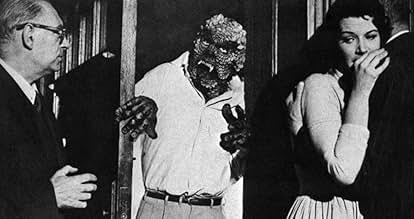
Sometimes, you’ll come across something that simply defies easy description.  It’s something that actually has to be seen to be believed.  I could describe to you the monster at the center of 1957’s From Hell It Came but I don’t know that, even with my extensive vocabulary, I really have the capability to capture just how absurd and weird this thing is.

In this case, a picture says more than a thousand words ever could:

The monster in From Hell it Came is a walking tree that has a rather angry (not to mention immobile) face.  After Prince Kimo is framed for the murder of his father, the chief of a tribe that lives on a South Sea island, he is sentenced to execution.  He announces that he will seek revenge on everyone who framed him.  He’s then stabbed in the heart and encased in the trunk of a hollow tree.  (Apparently, the knife is left in his heart which seems kind of unnecessary but who am I to argue?)  Later, Kimo comes back as a walking tree who tosses his enemies into quicksand.  The knife is still sticking out of the tree, which would suggest that Kimo was physically transformed.  However, the native insist that Kimo has actually become one of their legendary monsters, the fearsome Tabanga.

Along with the natives, there is also a group of American doctors on the island.  They’ve been sent to conduct research and to also give the natives medicine to help them deal with an outbreak of the plague.  The natives don’t trust the medicine.  They trust the magic of their medicine men.  Since this film came out in 1957, the doctors react to this by rolling their eyes and talking down to everyone.  If there’s one thing that has remained consistent over the decades, it’s that the worst way to get people to do anything is to talk down to them.

The doctors are the first to discover the tree stump that will eventually become the Tobanga.  They take the stump back to their laboratory, where they discover that the stump is radioactive due to some nearby atomic tests.  The next day, the stump comes to life and leaves the laboratory.  One of the most interesting things about this film is that the scientists are skeptical about the natives claim that the tree stump is one of their legendary monsters come to life but they are willing to accept that radiation created a walking stump.  Radiation bringing a tree stump to walking life actually makes even less sense than magic doing it.

While the tree is killing its enemies, the American doctors deal with their own drama.  For instance, Dr. Terry Mason (Tina Carver), is a woman and that greatly disturbs her male colleagues, all of whom  can’t understand why she’s not currently married and raising a family.  Meanwhile, Mrs. Mae Kilgore (Linda Watkins, an American actress who played the role with an amazingly bad British accent) owns the local trading post and is not happy about having a killer tree wandering around the island.  Mrs. Kilgore is prone to saying things like, “I saw the bloomin’ thing!”

In the end, the Americans finally figure out how to deal with the murderous tree.  “Your American magic is better,” the current chief of the natives says.  “Hell yeah!” I shout in response, “AMERICA!”  From Hell It Came is a thoroughly ludicrous movie but, once you watch it, you’ll never forget that tree.


Who Is Ready For Some Gothic Explorations?


by Victor Kalin

It’s the Halloween season and what better time is there to apply for a job as the governess at an isolated mansion or to learn the secrets of a prominent but mysterious family?  This is the season to chase voices in the night and stand outside in the rain while a dark, shadowy structure looms behind you.

Need help getting in the mood for your gothic explorations?  Don’t worry!  I’ve got your back with these covers!

by Victor Kalin

Artist Unknown

by Lou Marchetti

by Lou Marchetti

by Charles Rehm

by Harry Barton

Artist Unknown

by George Ziel

Artist Unknown

by Harry Bennett

by Walter Popp

Enjoy your explorations!

Horror On The Lens: The Terror (dir by Roger Corman, et al)


Today, we’ve got a treat!

Who wouldn’t love to see a movie where a youngish Jack Nicholson played a French soldier who, while searching for a mysterious woman, comes across a castle that’s inhabited by both Dick Miller and Boris Karloff?

In Roger Corman’s 1963 film The Terror, New Jersey-accented Jack Nicholson is the least believable 19th century French soldier ever.  However, it’s still interesting to watch him before he became a cinematic icon.  His performance here is rather earnest, with little of the sarcasm that would later become his trademark.  Boris Karloff is, as usual, great and familiar Corman actor Dick Miller gets a much larger role than usual.  Pay attention to the actress playing the mysterious woman.  That’s Sandra Knight who, at the time of filming, was married to Jack Nicholson.

Reportedly, The Terror was one of those films that Corman made because he still had the sets from his much more acclaimed film version of The Raven.  The script was never finished, the story was made up as filming moved alone, and no less than five directors shot different parts of this 81 minute movie.  Boris Karloff’s scenes were filmed first, with the other actors performing in front of a body double during their scenes.  Among the many directors who filmed bits and pieces of The Terror: Roger Corman, Jack Hill, Monte Hellman, Francis Ford Coppola, Coppola’s roommate Dennis Jakob, and even Jack Nicholson himself!  (Despite this number of directors involved, Corman received the sole directorial credit.)  Perhaps not surprisingly, the final film is a total mess but it does have a definite historical value.

(In typical Corman fashion, scenes from The Terror were later used in the 1968 film, Targets.  In that film, Karloff plays a version of himself, an aging horror actor who watches The Terror and dismisses it as being “terrible.”)

Check out The Terror below!

Live Tweet Alert: Join #ScarySocial for The Descent Part 2!


As some of our regular readers undoubtedly know, I am involved in a few weekly live tweets on twitter.  I host #FridayNightFlix every Friday, I co-host #ScarySocial on Saturday, and I am one of the five hosts of #MondayActionMovie!  Every week, we get together.  We watch a movie.  We tweet our way through it.

Tonight, at 9 pm et, Deanna Dawn will be hosting #ScarySocial!  The movie?  The Descent Part 2!  

If you want to join us this Friday, just hop onto twitter, start the movie at 9 pm et, and use the #ScarySocial hashtag!  It’s a friendly group and welcoming of newcomers so don’t be shy.

The film is available on Tubi!

Tommyknockers, Book Review, by Case Wright


Stephen King has had addiction issues his entire adult life. He’s very open about it. In fact, there are at least three books he’s said that he doesn’t remember writing because he was using more blow than Julie on The Love Boat- the books are The Shining, Misery, and The Tommyknockers.

The plot is that a spaceship crashed long ago in Maine and it takes over the brains of the lifeforms who interact with it. The main characters are Roberta AKA Bobbi who literally stumbles on part of the ship, starting the plot because it starts infecting the town. Gard, a four alarm alcoholic/poet and Bobbi’s former lover, comes to help her and is immune to the ship’s affect because of a steel plate in his head.

As the story progresses, the ship changes the town folk both mentally and physically. The townies make all kinds of wacky and interesting inventions without knowing how they work, lose most of their teeth, and they develop pig-like faces. I told you that he did a lot of cocaine when he wrote this book.

The townies use Gard to help them dig out the ship and there are MANY chapters on the digging logistics. It’s fair to say that Gard spent most of his time in this book as an alcoholic day laborer (maybe he even did some work on my upstairs bathroom because that was done really shitty). I think that you could actually say they were entire chapters just devoted to his digging and things like that; man, Stephen really needs an editor with a spine.

A classic Stephen King plot device is that there are people who power up a haunted house and Tommyknockers uses that to an extreme! Even before I became an engineer, I wonder if Stephen understood how batteries worked? Can you imagine what he did to his kid’s Christmas toys?!

While his stories have recurring plot devices, the heroic journey for his characters changed with his personal change in fortune. The stories in Night Shift and the others from the early part of his career were all about failure: failing your loved ones and failing to maintain control over your life. In those years, the heroes could only succeed by sacrificing their life. The way to stop from harming everyone around them was through suicide because “blood calls to blood” i.e. the family curse. I think that it is clear that the Blood is alcoholism and drug abuse- it’s inherited. When he was failing in life, suicide was described as the only option because the hero was the doorway to misery and I can tell you from my childhood an alcoholic father is definitely the doorway to misery.

After 1979, his career took off and his bank account to pay for copious amounts of cocaine. However, the happy endings became the standard. Money can cure a lot problems, but blood calls to blood and the demons will always remain, but that is what made this book stand out because like his novels in the early part of his career- the hero dies. He can’t save Bobbi and this book was at a high point of addiction. It seems clear to me that it crossed his mind that he couldn’t live with his addiction and that death was the only exit.

Tommyknockers is a messy beach read that is mostly entertaining. If you’re like on a vacation with some real downtime and the Wi-Fi is broken or you’re really into aliens, give it a read.


Horror Review: Men Behind the Sun (dir. by T.F. Mou)


It was in 1988 that one of the darkest, least-discussed episodes of World War II history was thrust into public consciousness through the work of Chinese filmmaker T.F. Mou. The film in question is Men Behind the Sun, an infamous fusion of historical drama and horror that still provokes debate nearly forty years later. Unlike traditional war films that depict heroic battles, military strategy, or patriotic sacrifice, this film ventures deep into the murky shadows of wartime atrocity, unearthing the story of Unit 731—a chapter that had remained largely buried outside of East Asia.

The film is set during Japan’s occupation of Manchuria, beginning in the 1930s and stretching into the final years of the Pacific War. Mou frames much of the story through the perspective of a group of young Japanese boys who have been conscripted into service with the Imperial Army. These youths, filled with notions of loyalty and honor, find themselves assigned to Unit 731, a supposedly scientific research group whose true mission soon becomes horrifyingly clear. What they encounter—and what the audience is forced to witness—exposes both the capacity for cruelty and the terrifying ease with which human beings can normalize horror under the authority of war.

Unit 731 was not a fictional invention, but a very real military research facility overseen by General Shirō Ishii, a figure who still looms as one of World War II’s most notorious war criminals. Under the guise of developing defenses against epidemics and advancing medical knowledge, Ishii ran a program devoted to biological and chemical warfare research. The methods employed were monstrous: prisoners were intentionally infected with plague and anthrax, subjected to vivisections while still alive, had organs harvested for study, and were sealed within hypobaric chambers to measure the effects of barometric pressure. Others were exposed to grenades, chemical agents, or lethal extremes of cold and heat. The victims—callously referred to by their tormentors as “logs”—were largely drawn from the local Chinese population, though Russians, Koreans, and even children and pregnant women were subjected to the same fate. Official records suggest there were no survivors of these experiments.

In the film, the reaction of the Youth Corps to these atrocities provides the closest thing to a moral anchor. Initially repulsed, the boys attempt to adhere to the strict code of loyalty and duty impressed upon them by the Imperial Army. They are torn between horror at what they observe and fear of disobedience. But when a young Chinese boy whom they had befriended is selected as one of Unit 731’s subjects, the mask of discipline begins to crumble. Their attempt at resistance becomes both a moral turning point and a tragic acknowledgment of the futility of challenging the machinery of the Japanese war state.

What makes Men Behind the Sun stand out is its fragmented, almost documentary-like structure. Rather than weaving a straightforward dramatic narrative, Mou constructs the film as a series of stark vignettes, each showcasing one monstrous experiment after another. This disjointed quality mirrors the cold and methodical way Unit 731 carried out its work, giving the audience little comfort or space to detach. While the special effects often carry the look of late-1980s low-budget filmmaking, they remain powerfully effective in provoking revulsion. Time has not dulled their impact: the crude visual horror still conveys the visceral reality of suffering more effectively than polished stylization ever could.

To some, the film crosses too far into exploitation, presenting misery in a way that risks sensationalism. To others, it serves as a vital cultural reckoning, a way of exposing truths that were long suppressed not just in Japan but internationally. Men Behind the Sun may not offer the catharsis of traditional war cinema, but its unflinching confrontation with atrocity ensures it occupies a singular place in film history. Even more unsettling is the knowledge that outside the world of film, General Shirō Ishii himself escaped accountability. After Japan’s surrender, he cooperated with U.S. military authorities, trading his research findings for immunity from prosecution. As the Cold War escalated, his expertise in biological and chemical warfare was deemed too valuable to dismiss, and so the crimes of Unit 731 were quietly buried in exchange for data. This chilling epilogue—rooted not in cinema but in historical fact—ensures that the horror of Men Behind the Sun lingers long after the credits roll.

October Positivity: Jerusalem Countdown (dir by Harold Cronk)


2011’s Jerusalem Countdown opens with the world on the verge of destruction.  Israel and a nuclear-armed Iran are negotiating in Washington and not everyone wants the two countries to be at peace.

In Chicago, Daniel (Carey Scott) watches the news of the summit and then looks out his window as his unfriendly and glowering neighbor comes and goes from his house.  Daniel worries that his neighbor is up to something.  He could be a member of a terrorist cell!  Daniel’s wife (Jaci Velasquez) tells him to stop worrying about things that he can’t control but that’s easier said than done.

FBI agent Eve (Anna Zielinski) is approached by her father (Stacy Keach), a former intelligence agent who warns her that the end times are approaching.

Another intelligence agent, Shane Daughtery (David A.R. White) is contacted by a burned-out arms dealer (Lee Majors), who informs him that a group of terrorists are planning on setting off a series of bombs and plunging the world into war.  The arms dealer is assassinated by a man who keeps reciting passages from the Book of Revelations.  Meanwhile, CIA bigwig Jack Thompson (a seriously miscast Randy Travis) continually tells Shane that he can’t share too much information with him because it’s all classified….

Jerusalem Countdown is a faith-based film that also tries to be an action film.  In fact, I would say that far more emphasis is put on action than on faith.  Until the final few minutes of the film, there’s really not much focus put on religion, other than Daniel briefly praying when he finds himself trapped in the neighbor’s house and a scene where a librarian scolds Shane and Eve for not knowing about the Ten Commandments.  One major commandments, by the way, is Thou Shalt Not Kill but Shane and Eve manage to kill quite a few people in this film.  Of course, they were all bad people and Shane and Eve are trying to keep the world from being plunged into a world war so I’m willing to cut them some slack.

The cast, as you may have noticed, has a number of familiar faces in it.  It’s largely a nostalgia cast, the type that’s designed to make people over the age of 60 say, “Lee Majors is in this!”  With the exception of Randy Travis, none of the “stars” have a particularly large role.  One gets the feeling that Stacy Keach filmed his scenes in a handful of hours, collected his paycheck, and then got out of there.  It’s amazing to me that Eric Roberts is somehow not in this film.

As for the film itself, it’s competently made and David A.R. White is one of the better actors amongst the Pureflix regulars.  (White has even managed to maintain a semblance of dignity through five God’s Not Dead films.)  That said, the film itself moves a bit slowly and the low-budget keeps the action from being as memorable as it could be.  There’s a cool helicopter crash but otherwise, it’s never as exciting as it obviously wants to be and there’s a lot — and I do mean A LOT — of filler-type scenes of people talking on their phones while driving from one location to another.  The plot itself feels a bit muddled and there’s a lot of loose ends left dangling, as if the film was meant to be a set up for a sequel that never came.

Late Night Retro Television Review: Freddy’s Nightmares 1.11 “Do Dreams Bleed?”


Welcome to Late Night Retro Television Reviews, a feature where we review some of our favorite and least favorite shows of the past! On Fridays, I will be reviewing Freddy’s Nightmares, a horror anthology show which ran in syndication from 1988 to 1990. The entire series can be found on Plex!

This week, there’s a new threat in town!

Episode 1.11 “Do Dreams Bleed?”

(Dir by Dwight H. Little, originally aired on January 8th, 1989)

There’s a new serial killer in Springwood!

We don’t really learn much about the Chopper, other than he attacks people with an axe.  When the episode begins, high school football star John Warring (Damon Martin) is dealing with dual trauma of having not only found the Chopper’s latest victim but also being the number one suspect.  His grades start to slip.  (As was so often the case on this show, his parents are conveniently out-of-town.)  He fears that he’s going to lose his girlfriend, Roni (Sarah Buxton).  Not even John’s coach, Coach Gacey (Jeff McCarthy), is much help.  That’s probably because Coach Gacey actually is the Chopper, not that anyone figures that out.  Driven mad by his dreams, John finds himself being taken away to an asylum.

(Really?  Coach Gacey?  He should have been the number one suspect based on his name alone.)

The second half of the episode follows Ronni as she now starts to have nightmares.  She wants to believe that John is innocent but her dreams indicate that she has her doubts.  Eventually, John escapes from prison and is able to save Ronni from Coach Gacey.  However, when the police arrive, they just assume that Coach Gacey was trying to save Ronni and that John is the Chopper.  Ronni is so shaken by the entire experience that she no longer knows what’s true and what’s not.

Wow, that’s dark!

This was actually a pretty good episode.  For once the two stories had coherent plots, with Ronni’s story logically building off of John’s.  The dream sequences were effectively creepy, director Dwight Little kept the action moving at a good pace, and even the dark ending felt earned as opposed to forced on the narrative.  I would have liked to have heard Freddy’s thoughts on Springwood having a new serial killer (instead, during the host segments, Freddy just did his usual bad jokes) but otherwise, this was a surprisingly good episode.

AMV Of The Day: Crazy In The Night (Gakkou no Kaidan)


As the third day of Horrorthon draws to a close, how about an AMV?

Song: Crazy In The Night by Kim Carnes

AnimeGakkou no Kaidan

Creator: rspectcopyrightmyass (As always, please be sure to check out this creator’s channel)

Past AMVs of the Day