
by Erin Nicole
Where there is no imagination, there is no horror.
— Arthur Conan Doyle
by Erin Nicole
Where there is no imagination, there is no horror.
— Arthur Conan Doyle

My friend Jason says this is a great film so I’ll share the trailer, despite the fact that YouTube is probably going to start recommending some crazy stuff to me now.
The film is apparently about some theater employees who watch a cursed pornographic movie and then have to deal with a succubus. These things happen. One the one hand, moving to video from film did adversely effect the quality of the films being released by the adult film industry. At the same time, it also led to less supernatural curses. Everything has a price.
Anyway, here’s the trailer. Google’s recommending porn to me now.
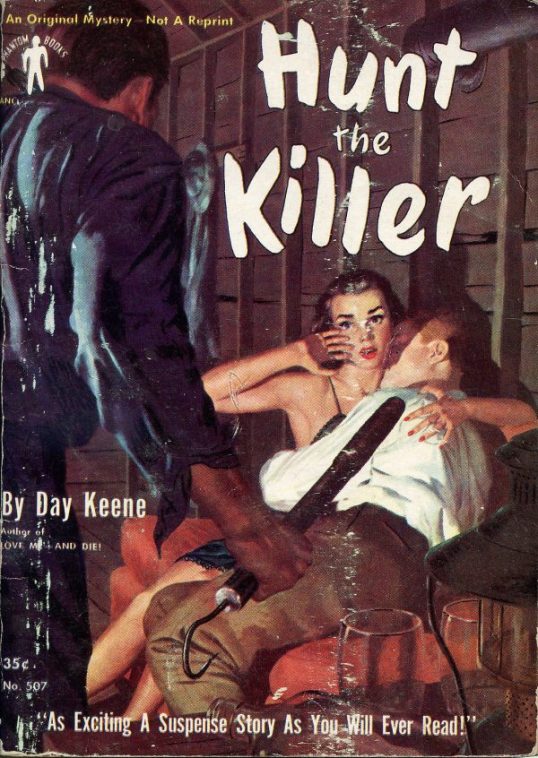
Artist Unknown
For all the analysis that has been dedicated to this song and Neil Tennant’s reasons for writing it, Tennant himself has said that the song itself isn’t as a serious as everyone makes it out to be. As he explained it in a 2009 interview with Andrew Sullivan:
“People took it really seriously; the song was written in about 15 minutes, and was intended as a camp joke and it wasn’t something I consciously took very seriously. Sometimes I wonder if there was more to it then I thought at the time. But the local parish priest in Newcastle delivered a sermon on it, and reflected on how the Church changed from the promise of a ghastly hell to the message of love.”
Not surprisingly, the video is full of religious imagery, along with representations of the seven deadly sins. In the video, Tennant’s fellow Pet Shop Boy, Chris Lowe, plays Tennant’s jailer while the judge is played by the distinguished British actor Ron Moody. An Oscar nominee for playing Fagin in 1968’s Oliver!, Ron Moody also came very close to being cast as the Third Doctor on Doctor Who. Though the role was offered to him, Moody turned it down to focus on his film career. Instead, Moody’s friend, Jon Pertwee, received the role and Moody would often later say that the decision to turn down Doctor Who was one of his biggest mistakes.
This video was directed by Derek Jarman, the experimental British director who is perhaps best known for his adaptation of Christopher Marlowe’s Edward II. A political activist and a pioneer in the British gay rights movement, Jarman would sadly pass away just seven years after directing the video but he left behind a body of work that continues to be influential to this day. Along with directing Laurence Olivier in his final performance (in War Requiem), Jarman is also often credited with having “discovered” Tilda Swinton.
It’s A Sin was one of the Pet Shops Boys’s biggest hits. Would it have been a hit without this video? Probably. But the video definitely didn’t hurt.
Enjoy!

In tonight’s episode of One Step Beyond, Emmy (Patty McCormack) makes the mistake of telling her parents (Eileen Ryan and Leo Penn) that she can read minds. Needless to say, the news does not go over as well as Emmy might have hoped. Her parents have a farm to run! The last thing they need is a witch in their midst!
Emmy runs to the church and prays, “Make me not a witch!”
But what if the world needs a witch?
As with every episode of One Step Beyond, this episode is supposedly based on fact. Patty McCormack is best-remembered for her Oscar-nominated performance in The Bad Seed while Eileen Ryan and Leo Penn are best remembered as being the parents of Sean and Chris Penn.
This episode originally aired on December 22nd, 1959.
Enjoy!
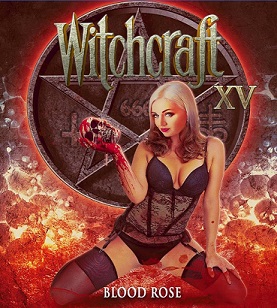 I’m nearly done reviewing Witchcraft films and it’s not a moment too soon. Because nearly every single installment has shared the same weaknesses (and the same “strengths”), I’m running out of things to say about them. Even though I appreciate the franchise’s attempts to maintain a loose continuity over the course of 16 films and nearly 20 years, it can still be difficult to remember which Witchcraft was which. When did Lutz go to London? I think that was Witchcraft X. When was Will dead? That was Witchcrafts VII, VIII, and IX. But don’t ask me what happened in Witchcraft V or VI. It’s all just one big blur of softcore sex and needlessly complex rituals.
Witchcraft 15 picks up right where Witchcraft 14 ended. Witchcraft 15 even opens by reshowing us the final ten minutes of Witchcraft 14, albeit with scenes of a lesbian witch ritual spliced in. Samuel, the warlock yoga instructor, has been vanquished. Sharon (Noel VanBrocklin) has taken over the yoga coven and, because Sharon’s managed to convince everyone that she wasn’t really that involved with Samuel’s attempts to bring the Angel of Death out of Hell, young witch Rose (Molly Dougherty), takes a job at the studio. However, Sharon is still up to her old tricks so she occasionally possesses Rose’s body so that she can steal the souls of other witches and ultimately bring Samuel back to life. It makes no sense but, after you’ve seen enough of these movies, you learn to tolerate incoherence.
Detectives Lutz and Garner (Berta Roberts and LeRoy Castanon) are again investigating all of the mysterious deaths that are occurring because of the latest witch scheme. Will (Ryan Cleary) shows up to help them with the investigation. Will is no longer conflicted about his heritage or his past and he now moves around and talks like he’s the star of his own show on the CW. It all leads to another needlessly complex ceremony and a magical showdown.
Witchcraft 15 is stupid and trashy but it’s a Witchcraft film so that’s to be expected. Ryan Cleary is still not a convincing Will and even Lutz and Garner’s trademark banter feels forced. I do think that Rose and the yoga studio could have been interesting if the film was actually interested in any of that but Witchcraft 15 is ultimately just about getting the witches naked and cashing in on whatever nostalgia direct-to-video hounds might have for the Witchcraft franchise.
I’ve got one one more of these to go. Tomorrow — Witchcraft 16!

The game is an entrant in the 2020 Interactive Fiction Competition. All of the entries can be played here!
You are a private detective, working out of Arkham, Massachusetts. Arkham is a town that’s notorious for its many mysteries. The locals say that it is a town that’s been touched by the paranormal but you’re a detective. You deal with the real world. When a distraught mother hires you to find her missing son, you think that it will just be a routine case. Instead, it leads you to the decaying port town of Innsmouth, a place that makes even Arkham look normal!
A prequel to H.P. Lovecraft’s The Shadow over Innsmouth, The Call of Innsmouth has all the elements that you would expect from a Lovecraft game. There’s a trip to Miskatonic University. There are references to cults, Cthulhu, and the search for ancient and maddening knowledge. You can even chose to read the Necronomicon if you’re so inclined. The game warns you not to read it but ultimately, the choice is yours. Don’t worry though. If you go crazy or get sacrificed, you always have the option to go back and make a different and hopefully better decision. That’s a choice that most Lovecraft heroes don’t get.
I enjoyed this Twine game. The Cthulhu mythos are always good source material for Interactive Fiction and The Call of Innsmouth does a great job of capturing the atmosphere of one of Lovecraft’s stories. The Call of Innsmouth is a mystery and a game worth exploring.
From Joe Dante’s 1981 werewolf masterpiece, The Howling:
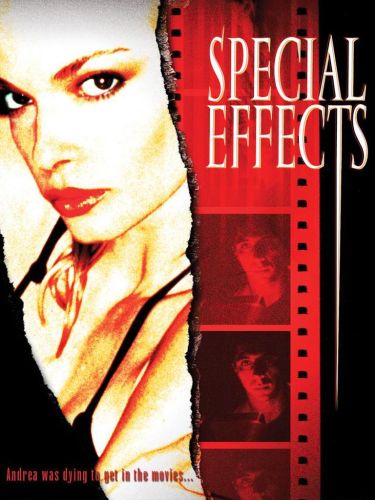
In this rather odd horror film from 1984, dumb-as-mud Keefe Wateran (Brad Rijn) travels from Dallas to New York City, hoping to bring his wife back home. Andrea (Zoe Tamerlis, the star of Abel Ferrara’s Ms. 45) abandoned both Keefe and their son because she wants to be a star. When the film opens, she’s posing topless in a replica of the Oval Office. Keefe is not too happy when he discovers that his wife is apparently appearing in politically-themed nude photo shoots.
And the thing is, you feel like you should feel sorry for Keefe, seeing as how his wife abandoned not only him but also their child. But Keefe is just such a self-righteous know-it-all that you really can’t blame Andrea for leaving him. As soon he starts going on and on about how she’s abandoned her family just to be a tramp in New York, you’re pretty much automatically on Andrea’s side.
Unfortunately, when Andrea turns up dead at Coney Island, the police automatically suspect that Keefe’s responsible. When they show up to arrest Keefe for the murder, he’s only wearing his boxer shorts. One of the detectives comments that, if he was going to commit murder, he would at least wear interesting underwear. And, again, you may want to sympathize with Keefe but the detective has a point. You need to dress for the job you want, not the one you have. I have an entire drawer full of murder thongs, just in case I ever decide to go for a career change.
Keefe is bailed out of jail and provided a high-priced attorney by Christopher Neville (Eric Bogosian). Neville is a big-time Hollywood director …. or, at least, he was until he directed a huge flop. (Apparently, the film had over $30,000 worth of special effects, which I guess was a lot back in 1984.) Neville, whom Andrea was supposed to have a meeting with on the night that she died, says that he’s fascinated by Keefe and Andrea’s story. In fact, he wants to turn it into a movie and he wants to hire Keefe as a special consultant.
However, what we know (but what Keefe doesn’t know, though he’d be able to figure it out if he wasn’t such a total and complete freaking moron), is that Neville murdered Andrea! He strangled her when she objected to him filming them while they were having sex. Now, Neville wants to make a movie about the murder. He even hires Elaine Bernstein (Zoe Tamerlis, again) to play Andrea in the film, despite the fact that Elaine has no acting experience. What’s important is that Elaine looks like Andrea. Neville also manages to manipulate the rather stupid Keefe into playing himself in the film. Soon, Neville is suggesting that perhaps they need to film a scene of Keefe and Andrea having rough sex and maybe Keefe should choke her during the scene….
And it just gets stranger from there. Special Effects is Hitchcock-style thriller from director Larry Cohen, one that’s got a bit more on its mind than just murder and a few heavy-handed jokes about the film industry. Neville may be smooth and manipulative while Keefe may be loud and a bit on the dumb side but, ultimately, they’re both obsessed with turning Elaine into Andrea. Neville wants to transform Elaine into the Andrea that he victimized while Keefe wants to turn Elaine into his idealized version of Andrea, the version that never wanted anything more than to be his wife and the mother of his children. In the end, they’re both creeps. (Admittedly, only one of them is murderer.)
Adding to the film’s strange tone are the three memorably eccentric lead performances. All three of the actors do unexpected things with their characters. Bogosian is wonderfully smug and smoothly manipulative as Neville while Brad Rijin goes all out in making Keefe one of the stupidest characters ever to appear in a leading role in a motion picture. (He’s like Bruce Campbell, without the comedic timing.) And finally, Zoe Tamerlis does a great job playing four different characters — Andrea, Neville’s version of Andrea, Keefe’s version of Andrea, and finally Esther.
Special Effects is an intriguing mix of thrills, horror, and satire with an undercurrent of anger. One gets the feeling that Neville is a stand-in for many of the soulless directors who had the type of career that Cohen felt he deserved. Track it down and check it out.
4 Shots From 4 Films is just what it says it is, 4 shots from 4 of our favorite films. As opposed to the reviews and recaps that we usually post, 4 Shots From 4 Films lets the visuals do the talking.
This month, we’re using 4 Shots from 4 Films to honor some of our favorite horror filmmakers! Today, we honor the one and only Joe Dante!
4 Shots From 4 Joe Dante Films
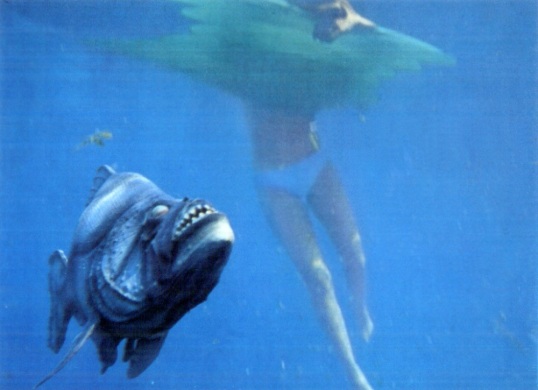
Piranha (1978, dir by Joe Dante)

The Howling (1981, dir by Joe Dante)
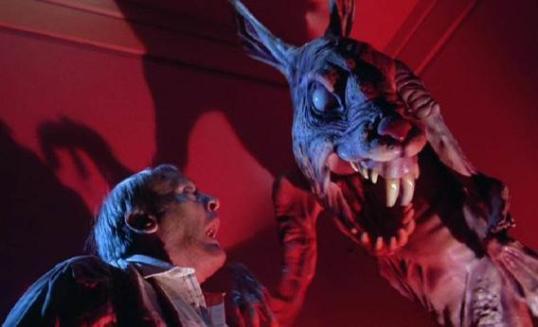
Twilight Zone: The Movie (1983, dir by Joe Dante et al)

Gremlins (1984, dir by Joe Dante)

