8 Shots From 8 Horror Films: The Mid 60s


4 Or More Shots From 4 Or More Films is just what it says it is, 4 shots from 4 of our favorite films. As opposed to the reviews and recaps that we usually post, 4 Shots From 4 Films lets the visuals do the talking!

This October, I’m going to be doing something a little bit different with my contribution to 4 (or more) Shots From 4 (or more) Films.  I’m going to be taking a little chronological tour of the history of horror cinema, moving from decade to decade.

Today, we take a look at the mid-60s!

8 Shots From 8 Horror Films: The Mid 60s

Black Sabbath (1963, dir by Mario Bava DP: Mario Bava)

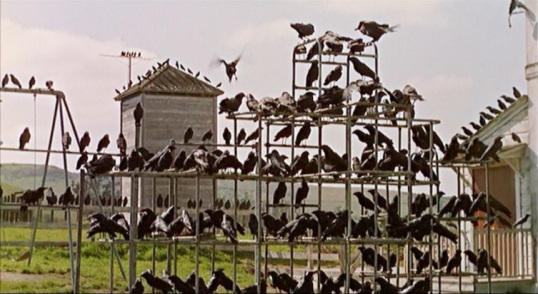
The Birds (1963, dir by Alfred Hitchcock, DP: Robert Burks)

The Raven (1963, dir by Roger Corman, DP: Floyd Crosby)

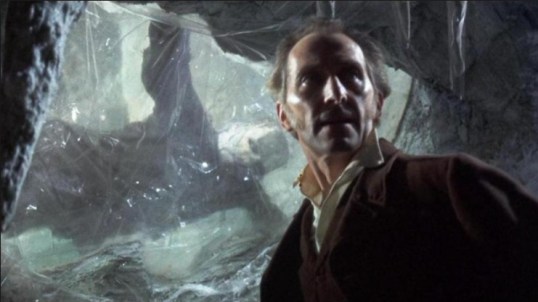
The Evil of Frankenstein (1963, dir by Freddie Francis, DP: John Wilcox)

The Masque of the Red Death (1964, dir by Roger Corman, DP: Nicolas Roeg)

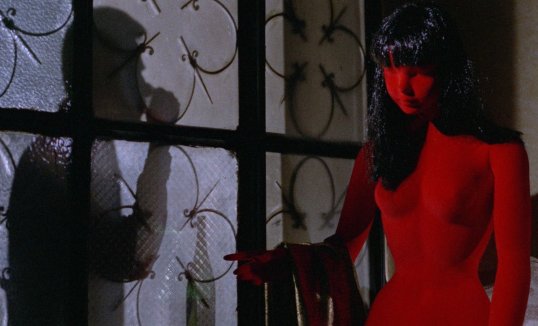
Blood and Black Lace (1964, dir by Mario Bava, DP: Mario Bava)

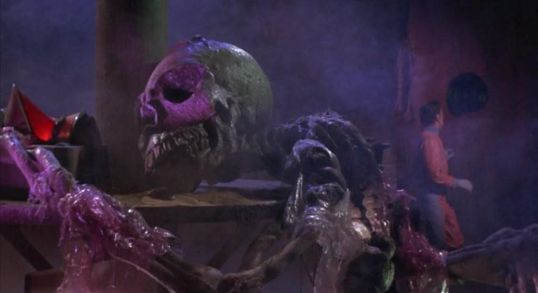
Planet of the Vampires (1965, dir by Mario Bava, DP: Antonio Rinaldi)

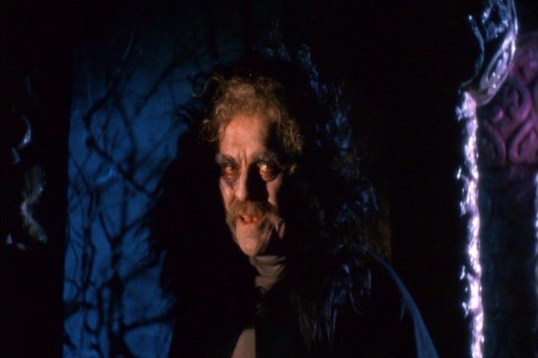
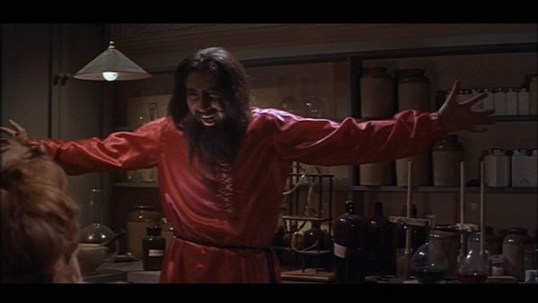
Rasputin The Mad Monk (1966, dir by Don Sharp, DP: Michael Reed)

Horror on the Lens: The Night Stalker (dir by John Llewelyn Moxey)


For today’s horror on the lens, we have a real treat!  (We’ll get to the tricks later…)

Long before he achieved holiday immortality by playing the father in A Christmas Story, Darren McGavin played journalist Carl Kolchak in the 1972 made-for-TV movie, The Night Stalker.  Kolchak is investigating a series of murders in Las Vegas, all of which involve victims being drained of their blood.  Kolchak thinks that the murderer might be a vampire.  Everyone else thinks that he’s crazy.

When this movie first aired, it was the highest rated made-for-TV movie of all time.  Eventually, it led to a weekly TV series in which Kolchak investigated various paranormal happenings.  Though the TV series did not last long, it’s still regularly cited as one of the most influential shows ever made.

Anyway, The Night Stalker is an effective little vampire movie and Darren McGavin gives a great performance as Carl Kolchak.

Enjoy!

Music Video of the Day: Her Black Wings by Danzig (1990, directed by Glenn Danzig and Victor Giordano)


It’s October so I had to find room for some Danzig.  This song appeared on Danzig’s second album, Lucifuge and it features this band at their best.  In 1990, this was the type of music that caused the nation’s moral guardians to go into tizzy.  There were actual Congressional hearings!  Imagine your Congressman listening to Danzig and probably playing it backwards to look for hidden messages.

Emjoy!

Horror on TV: Ghost Story 1.6 “Alter Ego” (dir by David Lowell Rich)


In tonight’s episode of Ghost Story, a sickly child is upset when he becomes to ill to continue going to school.  Luckily, his doppelganger shows up and starts going to school for him!  Unfortunately, it turns out that the doppelganger isn’t quite as benevolent as one might hope.

This episode co-stars Oscar-winner Helen Hayes and was co-written by Richard Matheson.  It originally aired on October 27th, 1972.

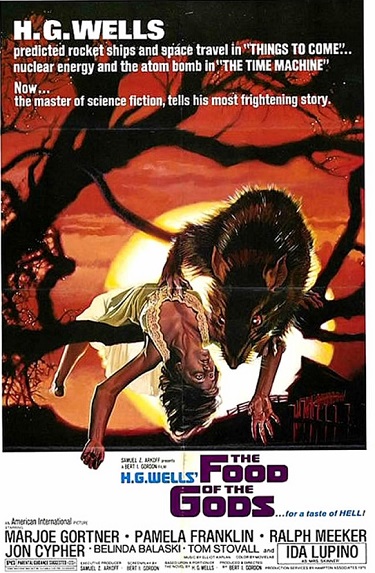
The TSL’s Horror Grindhouse: Food Of The Gods (dir by Bert I. Gordon)


Uh-oh! Something weird has bubbled up to the ground on an island near British Columbia and a farmer and his wife (played by John McLaim and Ida Lupino) foolishly decided to feed it to their farm animals! Soon, they’ve got giant chickens! And listen, that might sound like a good thing to some but I’ve spent enough time around farms to know that giant chickens are not a good thing! Seriously, normal-sized chickens are messy enough. Giant ones? I don’t even want to thinking about it.

Unfortunately, it’s not just the chickens that are eating the food. Rats are eating the food. Wasps are eating the food. All of the animals are turning into giants and now, they’re hunting humans! After his best friend is attacked and killed by giant wasp, a football player named Morgan (Marjoe Gortner) decides to investigate on his own. You would think that a football player would be busy preparing for his next game or something like that but no, not Morgan! Morgan’s determined to find out why there are giant animals off the coast of Canada.

Of course, Morgan isn’t the only one interested in the so-called Food of the Gods. There’s also Jack Bensington (Ralph Meeker), who owns a dog food company. Jack wants to sell the food. Why would Jack want to do that? Does he actually think that causing dogs to transform into giants who would undoubtedly try to kill their masters is somehow going to be good for his company’s reputation? Jack’s main motivation seems to be that he’s a businessman and, in this film’s moral universe, that automatically makes him one of the bad guys. But it seems like even an evil businessman would know better than to kill off all of his customers.

This 1976 film, which is loosely (very loosely) based on a novel by H.G. Wells, was directed by Bert I. Gordon and, if you think the plot sounds a little ludicrous …. well, it is. Nothing about the film really makes much sense but that’s kind of to expected from a Bert I. Gordon film. Gordon specialized in making films about giants destroying stuff. The films were never particularly good but Gordon obviously understood that American filmgoers love big things. Food of the Gods, as silly as it may be, apparently made a lot of money when it was first released.

Today, of course, it’s impossible to watch the film without noticing just how terrible the special effects are. Between the unconvincing use of super-imposed images and the obviously fake rats that are tossed at some of the actors, there’s not a single shot that doesn’t somehow look totally ridiculous. In fact, it’s all so silly and obviously done on the cheap that it becomes rather charming, or at least as charming as the superimposed image of giant wasp ever could possibly be. You have to admire the film’s determination to tell its story despite not having the resources to do so. As for the rest of the film, it’s dumb but it doesn’t take itself too seriously. If you’re specifically searching for a bad giant animal movie, The Food of the Gods is fun in its own goofy, nonsensical, low-budget way.

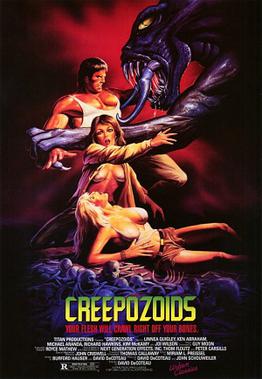
Creepozoids (1987, directed by David DeCoteau)


In 1992, society collapses due to a nuclear war.  In 1998, a group of army deserters are looking for a place to hide from the authorities when they come across an underground bunker in Los Angeles.  The bunker was once home to a research lab.  Even though all of the scientists are dead, the monster that they created is not and soon, the deserters are fighting for their lives, battling not just the monster but also giant rats.

Creepozoids is a low-budget Alien rip-off.  It’s actually a little incredible just how closely Creepozoids copies Alien, right down to a monster that can spit acid and a scene where someone has a fatal seizure while eating dinner.  The monster itself is not badly realized but the giant rats are obviously just stuffed animals that are being tossed on the cast by crew members standing off-camera.  Though the film takes place in what was then the “near future,” it’s an 80s production all the way through.  The top secret government lab as a bulky computer that only one of the deserters knows how to use.  The secrets to genetic modification are stored on a 8-inch floppy disk.  Most 80s and 90s kids will get nostalgic watching this movie.

One of the deserters is played by Linnea Quigley, which is the main reason why Creepozoids retains a cult following.  While the rest of the deserters want to search the bunker and look for supplies, Linnea’s main concern is trying out the facility’s shower.  (Good news, it works!)  Linnea Quigley appeared in many bad films but she always brought a lot of sincerity and good humor to her performances.  In Creepozoids she gamely wrestles with a stuffed rat and proves herself to be one of the best screamers of the 80s DTV horror industry.  The rest of the cast is interchangeable but, as always, Linnea earns her screen queen crown.

Creepozoids is a lesser imitation of Alien but, seen today, it benefits from nostalgia.  I can still remember Creepozoids showing up on Cinemax, late at night and with a warning that the movie featured not only adult language but also nudity and violence.  (Was anyone ever dissuaded by the Cinemax content warnings?)  This is one of the B-movies that made being an 90s kid fun!

Game Review: Use Your Psychic Powers At Applebee’s (2022, Geoffrey Golden)


Because you have the power to read minds and implant suggestions, you have been hired to serve as Schtupmeister Beer’s first Psychic Brand Ambassador.  Your job is to go to restaurants and mentally suggest to customers that they try out Schtupmeister.  What better place to start than Applebee’s?

This is a short, choose your own adventure-style game.  You go to Applebee’s, you scan the customers and the waitresses, and you decide whether or not to read their minds.  Once you get into their heads, you have the option to either help them out with their problems or just suggest that they get drunk.  It’s simple but it’s well-written and all of the characters make a strong impression.  I managed to inspire one person to drink a beer and I think may have accidentally inspired someone else to burn down the restaurant.  It’s not easy being a psychic brand ambassador!  This is an entertaining and frequently funny game, one that wins major points just by combining psychic phenomena with Applebee’s.

Play Use Your Psychic Powers At Applebee’s.

Horror Scenes I Love: The Opening of The Awful Dr. Orlof


For today’s horror scene that I love, I present to you the opening of Jess Franco’s 1962 film, The Awful Dr. Orlof.

Franco doesn’t have the best critical reputation but I’ve always felt that, when he wanted to and actually had the time and the budget, he was capable of directing some memorably surreal scenes.  The opening of The Awful Dr. Orlof is full of atmosphere and sudden horror.  It plays out like a dream of dark and disturbing things.  Franco often claimed to a disciple of Orson Welles (and Franco reportedly did do some second unit work on Chimes At Midnight) and the opening of Dr. Orlof, with its shadowy cinematography and its skewed camera angles, does definitely show some Wellesian influence.

From 1962, here’s the opening of The Awful Dr. Orlof:

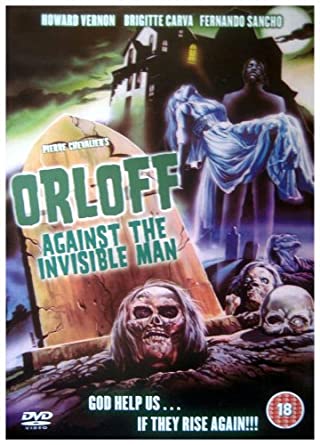
International Horror Film Review: Orloff Against The Invisible Man (dir by Pierre Chevalier)


In 1970’s Orloff Against The Invisible Man, Paco Valladares stars as Dr. Garondet, a turn-of-the-century psychologist.  One morning, Garondet is at his office when a mysterious child delivers a letter requesting that he travel to the castle of Prof. Orloff.  Apparently, Orloff’s daughter feels that her father is losing his mind and is in deep need of therapy.

The castle is located in one of those remote villages that always seem to be home to mad scientists and vampires.  As soon as Garondet arrives, he discovers that none of the villagers are willing to talk about Orloff or his castle.  Instead, they all fear him and, if the audience has seen The Awful Dr. Orlof or any of the other dozen or so films that Jess Franco made about the mad doctor, that shouldn’t be a surprise.

What is a surprise is that Franco apparently had nothing to do with this particular Orloff film.  Instead, Orloff Against The Invisible Man was directed by a French director named Pierre Chevalier.  Chevalier does direct in a very Franco-like manner, making frequent use of the zoom lens and often highlighting odd visual details that have nothing to do with the overall plot.  That said, Chevalier also direct with considerably less energy than Franco.  That is a polite way of saying that this is a surprisingly slow movie.

Eventually, Gardonet does reach the castle.  Orloff’s daughter, Cecile (Brigitte Carva), insists that she did not send the message.  Orloff (played by the great Howard Vernon) tells the doctor that he is not only totally sane but that he also lives with an invisible man.  Orloff proves his claim by having the invisible man pick up a few things in a room while Gardonet watches.  Oddly, Gardonet doesn’t seem to be particularly surprised to learn that Orloff has an invisible servant.

Orloff says that he’s going to tell Gardonet the story of how he got an invisible servant but then it turns out that the story actually has very little to do with that.  Cecile, it turns out, was once mistakenly pronounced dead and put in a coffin.  Two of Orloff’s servants decided to break open the coffin and steal Cecile’s jewelry.  However, when they opened the coffin, Cecile woke up and screamed.  One of the gravediggers stabbed Cecile before the two of them ran from the crypt.  Cecile survived but Orloff was so angry that he tracked down the graverobbers.  He killed one and whipped the other.  (Actually, he may have killed both of them.  Due to some truly bad dubbing, the film isn’t clear on this point.)  He then revived the dead servant, turned him invisible, and now uses him to rule over the village.  Or at least, I think that’s what Orloff was claiming.  Again, the editing of the film was so haphazard and the dubbing some incompetent that the plot wasn’t always easy to follow.  Interestingly enough, there is one scene where we briefly do see what the Invisible Man looks like and he looks nothing like the dead servant but instead appears to be some sort of ape.

Orloff Against the Invisible Man is a mess of bad special effects and sexualized violence.  If Jess Franco could be counted on to make films that were sleazy but enjoyably decadent, Orloff Against The Invisible Man is just sleazy and kind of boring.  The best thing that the film has going for it is Howard Vernon, who brings just the right mix of haughtiness and cynicism to the role of Orloff.  Vernon always played Orloff as being an amoral aristocrat, one whose evil is more the result of ennui than actual maliciousness.  Vernon’s the best thing about Orloff Against The Invisible Man.

As with most of the Orloff films, this one has actually been released under several different titles.  My favorite was The Love Life of an Invisible Man.  Interestingly enough, the film’s American tagline was “God Help Us …. If They Rise Again!” despite the fact that the film didn’t feature any zombies or ghosts.  Instead, it just features a few flashbacks and a lot of exposition.  Orloff Against The Invisible Man could have used the demented imagination of Jess Franco.