Today, the Shattered Lens wishes a happy birthday to Italian film star, Terence Hill!
This scene that I love comes from 1973’s My Name Is Nobody. It features Terence teaching a cocky gunslinger a thing or two about how to win a slap fight.
Today, the Shattered Lens wishes a happy birthday to Italian film star, Terence Hill!
This scene that I love comes from 1973’s My Name Is Nobody. It features Terence teaching a cocky gunslinger a thing or two about how to win a slap fight.
As some of our regular readers undoubtedly know, I am involved in a few weekly live tweets on twitter. I host #FridayNightFlix every Friday, I co-host #ScarySocial on Saturday, and I am one of the five hosts of #MondayActionMovie! Every week, we get together. We watch a movie. We tweet our way through it.
Tonight, at 9 pm et, Deanna Dawn will be hosting #ScarySocial! The movie? Strange Invaders!
If you want to join us this Friday, just hop onto twitter, start the movie at 9 pm et, and use the #ScarySocial hashtag! I’ll be there tweeting and I imagine some other members of the TSL Crew will be there as well. It’s a friendly group and welcoming of newcomers so don’t be shy.
Strange Invaders is available on Prime!
See you there!
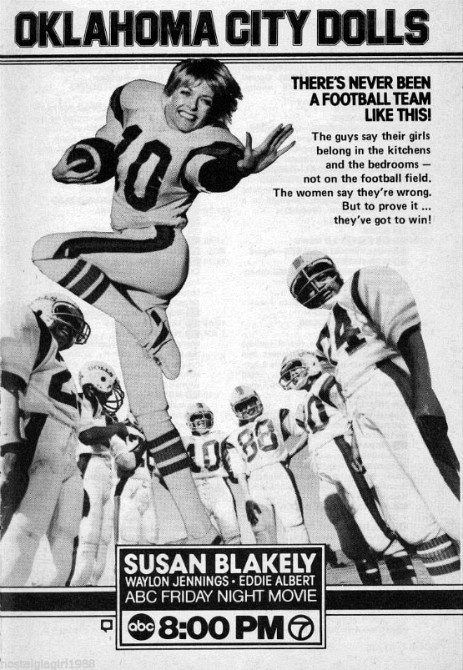 At an Oklahoma manufacturing plant, the women are always expected to put in extra hours while their male co-workers practice as a part of the company’s football team. Shop steward Sally Jo (Susan Blakely) files a complaint with the EEOC. John Miller (Robert Hooks) pays a visit to the plant and says that the women have to be given the same opportunities and benefits as the man, including recreation time. The plant’s foreman, J.D. Hines (David Huddleston), agrees. The woman can have recreation time as long as they’re doing what the men are doing and that’s playing football. Determined to show up Hines and all of her sexist co-workers (and her boyfriend, played by Waylon Jennings), Sally Jo puts together a football team and even gets a broken-down former NFL coach (Eddie Albert) to serve as their trainer.
There actually was a woman’s football team called The Oklahoma City Dolls. They played in the National Women’s Football League and they won the league’s championship three times. However, they don’t appear to have anything to do with this movie, which is as much about Sally Jo trying to get a fair treatment for the workers as it is about hitting the field and running it in for a touchdown. There are some parts of the movie that work. I liked Eddie Albert’s performance as the alcoholic coach and the scene where he discovered that his community service would include coaching a group of women who had never played football before. Folk singer Ronee Blakley was good as the team’s emotionally fragile wide receiver. I even liked that the women didn’t all automatically become the world’s best football players. The movie’s main weakness was that Susan Blakely just wasn’t believable as someone who lived in a trailer park, used “ain’t” in every sentence, and spent her time organizing a union. She was too glamorous for the role and her scenes with Waylon Jennings all felt overwritten and overacted. The story couldn’t decide if it wanted to be a drama about working in a factory or a football comedy and it was pretty uneven as a result. The good thing is that the movie’s heart was in the right place, even if it didn’t always score a touchdown.
As for the real life Oklahoma City Dolls, they were active from 1976 to 1979. An attempt to revive the team in 1982 failed when their financial backers pulled out at the last seconds. The National Women’s Football League folded in 1988.
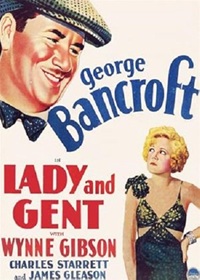 When veteran prize fighter Stag Bailey (George Bancroft) gets cocky and doesn’t bother to properly train for the big fight, he is knocked out by a young up-and-comer named Buzz Kinney (John Wayne). Stag’s manager, Pin (James Gleason), had all of his money riding on Stag winning. Now broke and with the mob after him, Pin tries to steal the cash from the boxing arena and ends up getting shot by a security guard. Stag and his girlfriend, Puff (Wynne Gibson), take in Pin’s young son, Ted, and they devote themselves to raising him. Years later, Ted (Charles Starrett) wants to become a prizefighter but Stag and Puff, who know what years of getting punched in the head can do to someone, try to convince him to go to college instead.
This boxing film is of interest to western fans because of some of the faces in the cast. This was an early John Wayne role and he’s only seen in the ring and then in one brief scene where he confronts Stag and Puff in a bar. Wayne still plays an important role, though, because Buzz’s transformation from being a fresh-faced boxer to being a bitter, punch-drunk bully serves as a warning for what waits for Ted if his adoptive parents can’t keep him out of the fight game. Charles Starrett, of course, would go on to find greater fame as the Durango Kid.
Otherwise, Lady and Gent is a standard pre-code melodrama. It’s a little more realistic than some of the other boxing films that came out in the 30s. Boxing is portrayed as a dirty business that leaves its participants with struggles that all of the prize money in the world can’t make up for. Puff sacrifices her carefree life to raise Ted but it’s worth it in the end. You can tell this was a pre-code film because Stag and Puff are a couple but they only decide to get married so they can adopt Ted.
George Bancroft was a star in the late 20s and early 30s but eventually, he transitioned to character parts. He retired from acting 1942 and became a full-time rancher. One of his final films was 1939’s Stagecoach, starring his Lady and Gent co-star, John Wayne.
Our regularly scheduled review of St. Elsewhere will not be posted today so that we may bring you this special presentation….
My retro television reviews will return next week but for now, check out this 1984 production of You Can’t Take It With You, starring the great Jason Robards. Back in 1938, this play served as the basis of a perfectly charming Frank Capra film. (It also won best picture of the year.) This filmed version of the play’s Broadway revival is just as charming.
And now, without further ado, here is You Can’t Take It With You….
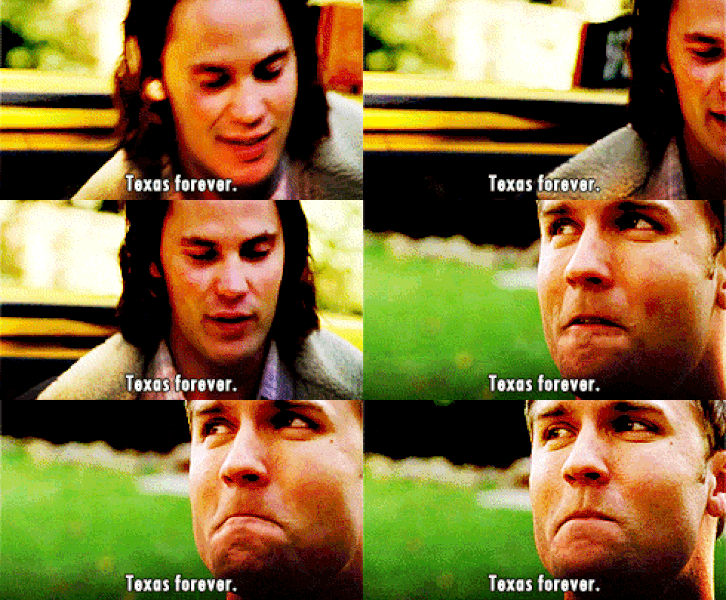
4 Or More Shots From 4 Or More Films is just what it says it is, 4 shots from 4 of our favorite films. As opposed to the reviews and recaps that we usually post, 4 Shots From 4 Films lets the visuals do the talking!
Today, I celebrate my home state!
4 Shots From 4 Texas Films
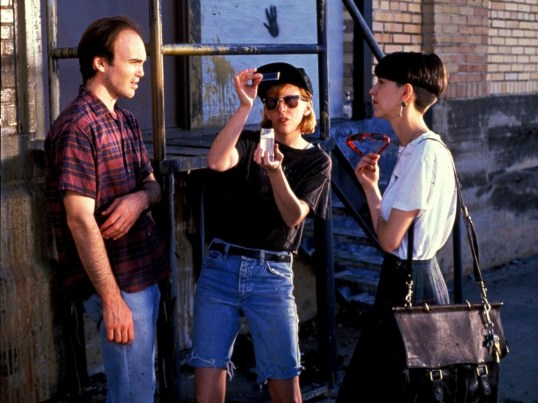
Slacker (1991, dir by Richard Linklater, DP: Lee Daniel)
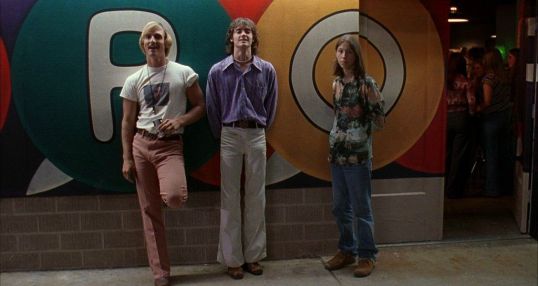
Dazed and Confused (1993, dir by Richard Linklater, DP: Lee Daniel)
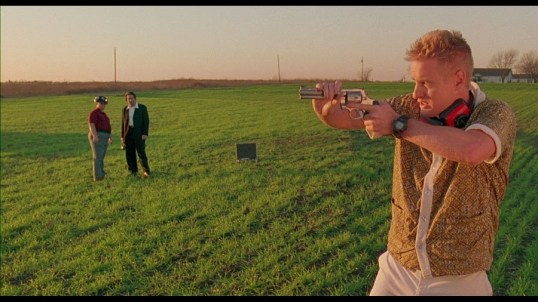
Bottle Rocket (1996, dir by Wes Anderson, DP: Robert Yeoman)

Rushmore (1998, dir by Wes Anderson, DP: Robert Yeoman)
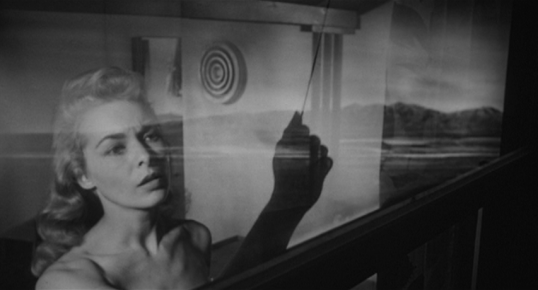
Touch of Evil (Universal 1958)
As some of our regular readers undoubtedly know, I am involved in a few weekly watch parties. On Twitter, I host #FridayNightFlix every Friday and I co-host #ScarySocial on Saturday. On Mastodon, I am one of the five hosts of #MondayActionMovie! Every week, we get together. We watch a movie. We tweet our way through it.
Tonight, at 10 pm et, I will be hosting #FridayNightFlix! The movie? 1958’s Touch of Evil, a true classic!
If you want to join us this Friday, just hop onto twitter, start the movie at 10 pm et, and use the #FridayNightFlix hashtag! I’ll be there tweeting and I imagine some other members of the TSL Crew will be there as well. It’s a friendly group and welcoming of newcomers so don’t be shy.
Touch of Evil is available on Prime!
See you there!
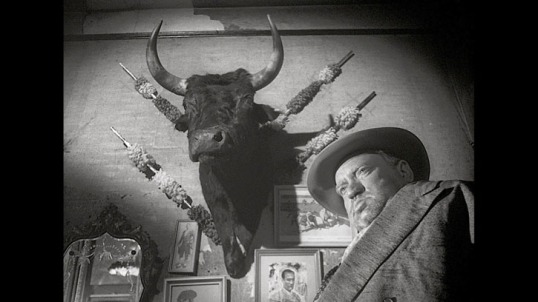
Touch of Evil (1958, dir by Orson Welles, DP: Russell Metty)
It’s kind of a strange thing to say, but watching Quentin Tarantino films has become a special family affair at my house. I shared in a previous post that my son and I drove about 4 hours to Dallas to attend the “Roadshow” version of THE HATEFUL EIGHT back in 2015.
Well, back in 2019, our family was on a vacation in Perdido Key, FL when ONCE UPON A TIME IN HOLLYWOOD was released. Of course we planned to go see it on one of the days while we were there. None of us wanted to have to wait an extra week to see the movie. So, in between days on the beach, visiting the local golf courses and showing off our putt-putt golf skills, we made our way to a theater over in Pensacola to see Quentin’s latest. We loved it!! I didn’t get a picture at the theater, but afterwards I took the kids to a restaurant to have a dinner of fresh seafood by the ocean. I snapped the picture below after we finished up.

That was a wonderful day, and it centered around the love of a family and an excitement and appreciation for Quentin Tarantino. Happy Birthday, Mr. Tarantino!
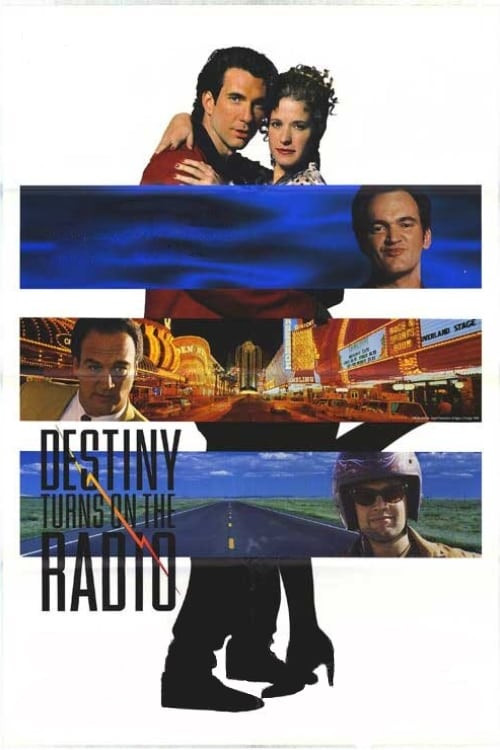 Today, it can be easy to forget what an impact Quentin Tarantino had on pop culture in the 90s. The one-two punch of Reservoir Dogs and Pulp Fiction inspired a generation of young and aspiring filmmakers to believe that anyone could make their own film. Suddenly, you didn’t have to be a film school graduate to call yourself a filmmaker. You could just be someone who loved movies and who was willing to keep hustling until you had something you could slip into Sundance. That was the feeling, anyway. The 90s were full of films about eccentric criminals who talked a lot and who loved pop culture, only three of which were directed by Quentin Tarantino. Some of them were good. Most of them were not.
Destiny Turns On The Radio was one of the first films to rip-off Pulp Fiction and it felt more cynical than most because it was directed by Jack Baran, who wasn’t even a video store clerk. He was a producer of films like The Big Easy and Barfly, an industry veteran ripping off two films directed by someone who was, at that time, still an outsider. The film tells a story that had plenty of Tarantino elements, including Quentin Tarantino himself. Tarantino signed to play Johnny Destiny right after Pulp Fiction won the Palme d’Or at Cannes.
Johnny Destiny is a gambler who is apparently also a God. He emerges from a lightning-filled pool and his dialogue is full of pseudo-philosophy. He is driving through the desert when he picks up Julian (Dylan McDermott) and gives Julian a lift to Las Vegas. Johnny Destiny is taking prison escapee Julian on a ride so that Julian can face his destiny. Julian wants to recover some money from a bank job that he pulled off with Thoreau (James Le Gros) but it turns out that, when Johnny Destiny emerged from that pool, he also stole all the money. (There’s no specific reason for Thoreau to be named after the famous philosopher, beyond the film trying to make itself seem deep by drawing in everyone who read Walden in AP English.) Julian wants to get back together with Lucille (Nancy Travis), a singer who performs songs more appropriate for a 20s speakeasy than a Las Vegas lounge. Lucille is involved with a gangster (Jim Belushi). Belushi sings Vivia Las Vegas but otherwise, this is one of his more boring performances.
Like so many of the Pulp Fiction rip-offs of the 90s, Destiny Turns On The Radio is all self-conscious attitude and cool style, full of references to pop culture that fall flat because there’s no real thought behind them. Reservoir Dogs and Pulp Fiction were full of style but they also told compelling stories. Destiny Turns On The Radio is all style and little else and the cast never comes together the way that the actors in Tarantino’s first two movies did. Watching this film, I realized why Dylan McDermott and Nancy Travis both found more success on television than in feature films. The film posits Tarantino (as Johnny Destiny) as the epitome of cool but it then burdens him with the type of dialogue that he would have cut by the time he started a second draft.
Coming hot on the heels of the success of Pulp Fiction, Destiny Turns On The Radio actually led to a few years where many critics assumed Tarantino would be a two-trick wonder. It was thought lightning struck twice but it would never strike a third time and Tarantino would spend the rest of his career as almost a parody of his earlier success. Luckily, Tarantino proved them wrong and Destiny Turned On The Radio turned out to be not his career’s destination but instead just a detour.
Malibu, CA will not be reviewed tonight so that we might bring you this special presentation….
My retro television reviews will return next week but, for now, why not enjoy something even better than me discussing my hatred of Malibu, CA? 1982’s Wait Until Dark is a videotaped record of a stage production of Frederick Knott’s classic play about a blind woman who is menaced by three criminals. (I assume it was filmed for PBS. According to Lettrboxd, this aired on television on June 20th, 1982.) This play was famously adapted into an Audrey Hepburn film in 1967. The production below gives us a chance to see how the suspense plays out in a theatrical setting. The cast, including Katharine Ross and Stacy Keach, is excellent!
And now, here is Wait Until Dark….

