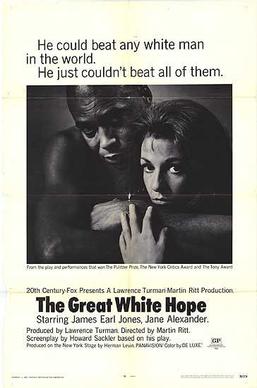
The Great White Hope (1970, directed by Martin Ritt)


The year is 1910 and the sports world is in a panic.  For the first time, a black man has won the title of the heavyweight champion of the world.  Jack Jefferson (James Earl Jones) had to go to Australia because no American city would agree to host the fight but he came out of it victorious.  The proud and outspoken Jefferson finds himself targeted by both the white establishment and black activists who claim that Jefferson has not done enough for his community.

It’s not just Jefferson’s success as a boxer that people find scandalous.  It’s also that the married Jefferson has a white mistress, a socialite named Eleanor Brachman (Jane Alexander, in her film debut).  While boxing promoters search for a “great white hope” who can take the title from Jefferson, the legal authorities attempt to arrest Jefferson for violating the Mann Act by supposedly taking Eleanor across state lines for “immoral purposes.”  Jefferson and Eleanor end up fleeing abroad but even then, their relationship is as doomed as Jefferson’s reign as the heavyweight champ.

Based on a Pulitzer-winning stage play by Howard Sackler, The Great White Hope features Jones and Alexander recreating the roles for which they both won Tonys.  Both Jones and Alexander would go on to receive Oscar nominations for their work in the film version.  It was the first nomination for Alexander and, amazingly, it was the only nomination that Jones would receive over the course of his career.  (It surprises me that he wasn’t even nominated for his work in Field Of Dreams.)  Both Jones and Alexander give powerful performances, with Jones dominating every scene as the proud, defiant, and often very funny Jack Jefferson.  Jones may not have had a boxer’s physique but he captured the attitude of a man who knew he was the best and who mistakenly believed that would be enough to overcome a racist culture.  (Speaking of racist, legendary recluse Howard Hughes reportedly caught the film on television and was so offended by the sight of Jones kissing Alexander that he thought about buying NBC to make sure that the movie would never be aired again.)  Hal Holbrook, Chester Morris, Moses Gunn, Marcel Dalio, and R.G. Armstrong all do good work in small roles.

Unfortunately, The Great White Hope still feels like a filmed stage play, despite the attempts made to open up the action.  Martin Ritt was a good director of actors but the boxing scenes are never feel authentic and the middle section of the film drags.  Jones and Alexander keep the film watchable but The Great White Hope is never packs as strong of a punch as its main character.
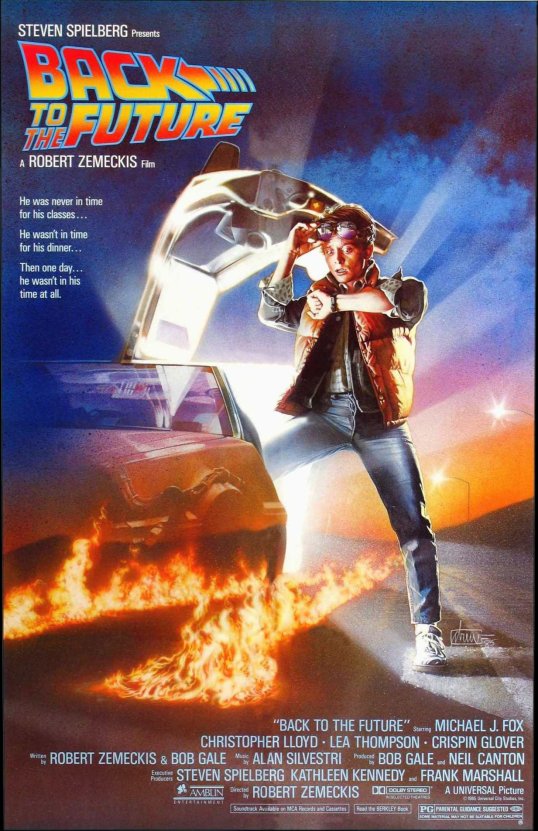
Song of the Day: The Power of Love by Huey Lewis and the News


Since we’re in a Back to the Future sort of mood at the site today, today’s song of the day is an obvious one.  Here is The Power of Love, by Huey Lewis and the News!

The power of love is a curious thing
Make a one man weep, make another man sing
Change a hawk to a little white dove
More than a feeling, that’s the power of love

Tougher than diamonds, rich like cream
Stronger and harder than a bad girl’s dream
Make a bad one good, mm, make a wrong one right
Power of love that keep you home at night

You don’t need money, don’t take fame
Don’t need no credit card to ride this train
It’s strong and it’s sudden, and it’s cruel sometimes
But it might just save your life
That’s the power of love

First time you feel it, it might make you sad
Next time you feel it, it might make you mad
But you’ll be glad, baby, when you’ve found
That’s the power makes the world go ’round

And it don’t take money, don’t take fame
Don’t need no credit card to ride this train
It’s strong and it’s sudden, it can be cruel sometimes
But it might just save your life

They say that all in love is fair
Yeah, but you don’t care (ooh)
But you know what to do (what to do)
When it gets hold of you
And with a little help from above
You feel the power of love
Can you feel it?
Hm-hm

It don’t take money, and it don’t take fame
Don’t need no credit card to ride this train
Tougher than diamonds and stronger than steel
But you won’t feel nothin’ ’til you feel

You feel the power, just feel the power of love
That’s the power, mm, that’s the power of love
You feel the power of love
Feel the power of love

Songwriters: Huey Lewis / John Victor Colla / Christopher John Hayes

Monday Live Tweet Alert: Join Us for The Wraith!


As some of our regular readers undoubtedly know, I am involved in hosting a few weekly live tweets on twitter and occasion ally Mastodon.  I host #FridayNightFlix every Friday, I co-host #ScarySocial on Saturday, and I am one of the five hosts of Mastodon’s #MondayActionMovie!  Every week, we get together.  We watch a movie.  We snark our way through it.

Tonight, for #MondayActionMovie, the film will be The Wraith, starring Charlie Sheen, Sherilyn Fenn, Randy Quaid, Clint Howard, and Nick Cassavetes!

It should make for a night of fun viewing and I invite all of you to join in.  If you want to join the live tweets, just hop onto Mastodon, pull up The Wraith on YouTube, start the movie at 8 pm et, and use the #MondayActionMovie hashtag!

Enjoy!


Scenes That I Love: Back To The Future


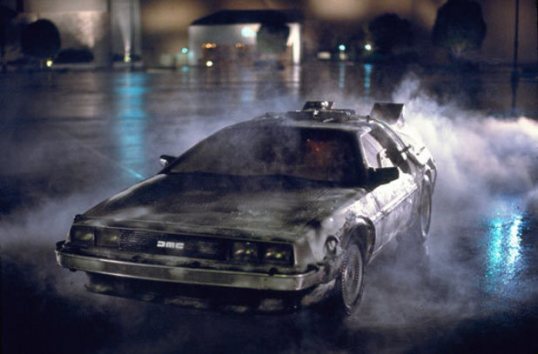
Today would have been the 100th birthday of inventor and would-be automotive tycoon, John DeLorean.  Today’s scene that I love comes from 1985’s Back To The Future and it features DeLorean’s most famous contribution to world of driving (not to mention Doc Brown’s most famous invention, as well!).

Thank you, John DeLorean, for giving us a car so cool that it could travel through time.

4 Shots From 4 Films: Special John Singleton Edition


4 Shots From 4 Films is just what it says it is, 4 shots from 4 of our favorite films. As opposed to the reviews and recaps that we usually post, 4 Shots From 4 Films lets the visuals do the talking.

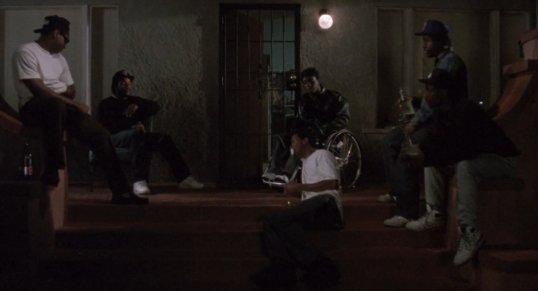
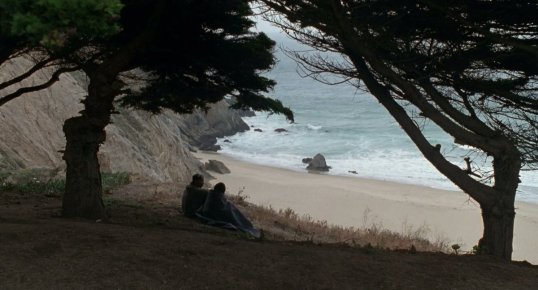
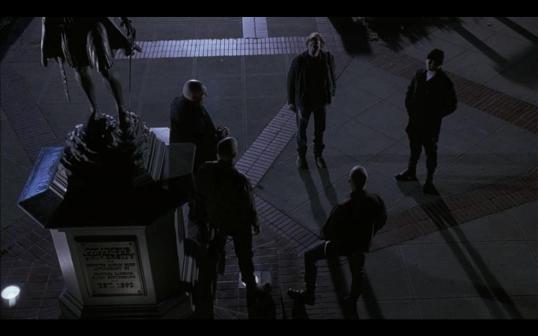
As I mentioned earlier, today would have been the 57th birthday of John Singleton, the first black filmmaker to ever receive an Oscar nomination for Best Director.  It’s time for….

4 Shots From 4 John Singleton Films

Boyz N The Hood (1991, dir by John Singleton, DP: Chuck Mills)

Poetic Justice (1993, dir by John Singleton, DP: Peter Lyons Collister)

Higher Learning (1995, dir by John Singleon, DP: Peter Lyons Collister)

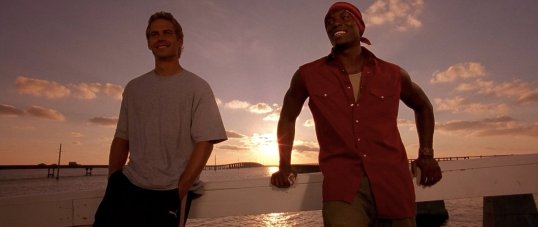
2 Fast 2 Furious (2003, dir by John Singleton, DP: Matthew Leonetti)

Film Review: After Hours (dir by Martin Scorsese)


Directed by Martin Scorsese, 1985’s After Hours opens in an office.  This isn’t the type of office that one might expect a Scorsese movie to open with.  It’s not a wild, hedonistic playground like the office in The Wolf of Wall Street.  Nor is it a place where an aging man with connections keeps his eye on the business for his friends back home, like Ace Rothstein’s office in Casino.  Instead, it’s a boring and anonymous office, one that is full of boring and anonymous people.  Scorsese’s camera moves around the office almost frantically, as if it’s as trapped as the people who work there.

Paul Hackett (Griffin Dunne) works in the office, at a job that bores him but presumably pays him enough to live in New York.  Paul is not a typical Scorsese protagonist.  He’s not a fast-talker or a fearsome fighter.  He’s not an artist consumed by his own passion or an amoral figure eager to tell his own story.  Instead, he’s just a guy who wears a tie to work and who spends his day doing data entry.  He’s a New Yorker but he doesn’t seem to really know the city.  (He certainly doesn’t know how much it costs to ride the subway.)  He stays in his protected world, even though it doesn’t seem satisfy him.  Paul Hackett is not Travis Bickle.  Instead, Paul is one of the guys who would get into Travis’s cab and, after spending the drive listening to Travis talk about how a storm needs to wash away all of New York’s sin, swear that he will never again take another taxi in New York.

One day, after work, Paul has a chance meeting with a seemingly shy woman named Marcy (Rosanna Arquette).  Marcy lives in SoHo, with an artist named Kiki (Linda Fiorentino) who sells plaster-of-Paris paperweights that are made to look like bagels.  Marcy gives Paul her number and eventually, Paul ends up traveling to SoHo.  He takes a taxi and, while the driver is not Travis Bickle, he’s still not amused when Paul’s last twenty dollar bill blows out the window of the cab.

Paul’s trip to SoHo doesn’t goes as he planned.  Kiki is not impressed with him.  Marcy tells him disturbing stories that may or may not be true while a search through the apartment (not cool, Paul!) leads Paul to suspect that Marcy might have disfiguring burn scars.  Paul decides to end the date but he then discovers that he doesn’t have enough change on him to take the subway home.  As Paul attempts to escape SoHo, he meets a collection of strange people and finds himself being hunted by a mob that is convinced that he’s a burglar.  Teri Garr plays a sinister waitress with a beehive hairdo and an apartment that is full of mousetraps.  Catherine O’Hara chases Paul in an ice cream truck.  Cheech and Chong play two burglars who randomly show up through the film.  John Heard plays a bartender who appears to be helpful but who also has his own connection to Marcy.  Even Martin Scorsese appears, holding a spotlight while a bunch of punks attempt to forcibly give Paul a mohawk.  The more that Paul attempts to escape SoHo, the more trapped he becomes.

Martin Scorsese directed After Hours at a time when he was still struggling to get his adaptation of The Last Temptation of Christ into production.  If Paul feels trapped by SoHo, Scorsese felt trapped by Hollywood.  After Hours is one of the most nightmarish comedies ever made. It’s easy to laugh at Paul desperately hiding in the shadows from Catherine O’Hara driving an ice cream truck but, at the same time, it’s impossible not to relate to Paul’s horror as he continually finds himself returning again and again to the same ominous locations.  In many scenes, he resembles a man being hunted by torch-wielding villagers in an old Universal horror film, running through the shadows while villager after villager takes to the streets.  Paul’s a stranger in a strange part of the city and he has absolutely no way to get home.  I think everyone’s had that dream at least once.

Paul is not written to be a particularly deep character.  He’s just a somewhat shallow office drone who wanted to get laid and now just wants to go home.  Fortunately, he’s played by Griffin Dunne, who is likable enough that the viewer is willing to stick with Paul even after Paul makes some very questionable decisions and does a few things that make him a bit less than sympathetic.  Dunne and John Heard keep the film grounded in reality, which allows Rosanne Arquette, Linda Fiorentino, Catherine O’Hara, and especially Teri Garr to totally play up the bizarre quirks of their character.  Teri Garr especially does a good job in this film, revealing a rather frightening side of the type of quirky eccentric that she usually played.

Scorsese’s sense of humor has been evident in almost all of his films but he still doesn’t get enough credit for his ability to direct comedy.  (One need only compare After Hours to one of Brian De Palma’s “comedies” to see just how adroitly Scorsese mixes laughs and horror.)  After Hours is one of Scorsese’s more underrated films and it’s one that everyone should see.  After Hours is a comedy of anxiety.  I laughed while I watched it, even while my heart was racing.

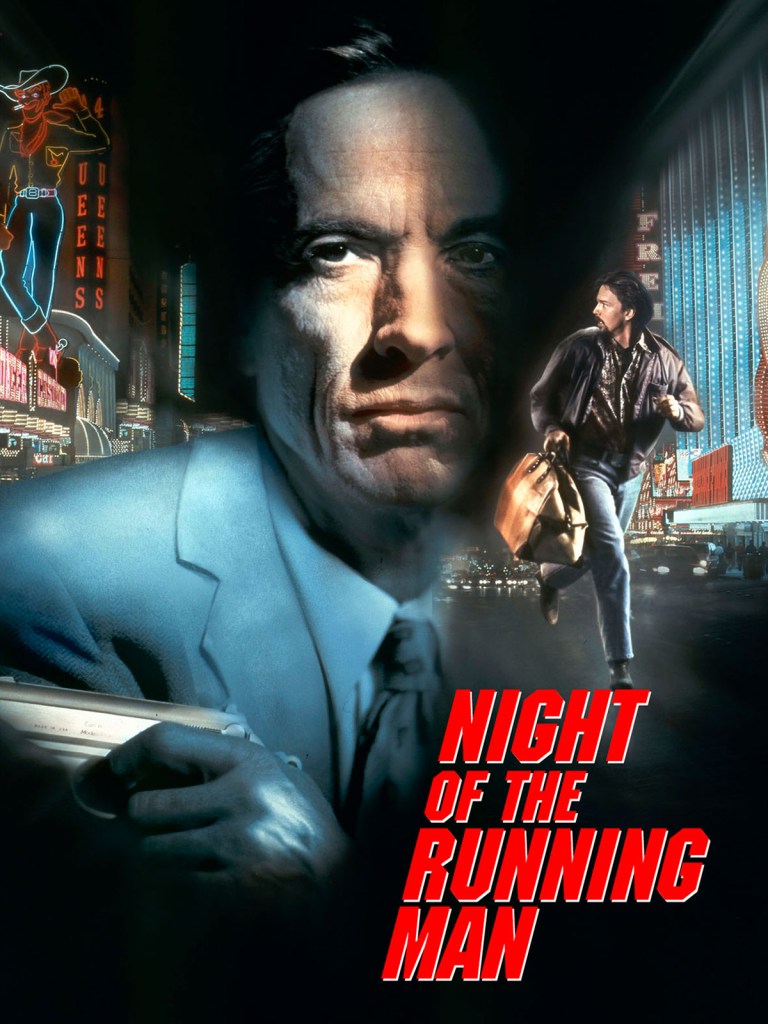
#MondayMuggers – Why NIGHT OF THE RUNNING MAN (1995)?


Every Monday night at 9:00 Central Time, my wife Sierra and I host a “Live Movie Tweet” event on X using the hashtag #MondayMuggers. We rotate movie picks each week, and our tastes are quite different. Tonight, Monday January 6th, we’re watching NIGHT OF THE RUNNING MAN, starring Scott Glenn, Andrew McCarthy, and John Glover.

In a nutshell, this movie is about a Las Vegas cab driver (McCarthy) who discovers a million dollars of stolen money in his cab. He is then tracked by a relentless and cold-blooded assassin (Glenn) sent to retrieve the money.

So why did Sierra pick NIGHT OF THE RUNNING MAN, you might ask? Well I asked her and she said, “I like that guy, Andrew McCarthy.” And that was it! I do remember watching the first hour or so of this movie on cable TV late one night about 25 years ago or so. I remember thinking it was pretty good prior to falling asleep. I’ve always liked Scott Glenn, even though he was a jerk in URBAN COWBOY. He’s a pretty vicious killer here so that should be fun. And John Glover is one of those guys I just enjoy seeing pop up in any movie. His bad guy in 52 PICK-UP is one of my all time favorite villains. Plus, this was directed by Mark L. Lester, the director of TRUCK STOP WOMEN, ROLLER BOOGIE, CLASS OF 1984, and COMMANDO. That’s quite a variety of flicks! And hell, it will be nice for me to see how the movie ends after all these years.

So join us tonight to for #MondayMuggers and watch NIGHT OF THE RUNNING MAN. It’s on Amazon Prime, as well as Tubi and Freevee.

Some thoughts on the Golden Globes


Tonight, I covered the Golden Globe Awards for the Lens via Twitter/X. The full list of winners can be found here.

It was an interesting setup, with comedian Nikki Glazer hosting. She didn’t take up too much time on stage, and I like to think that save for the opening monologue, she kept things moving.

Not all of the jokes hit. There were some embarrassing moments with Harrison Ford and Anthony Mackie. While both Awkwfina and Melissa McCarthy (who looked great for the evening) were good, I kind of wanted things to move on a little quicker.

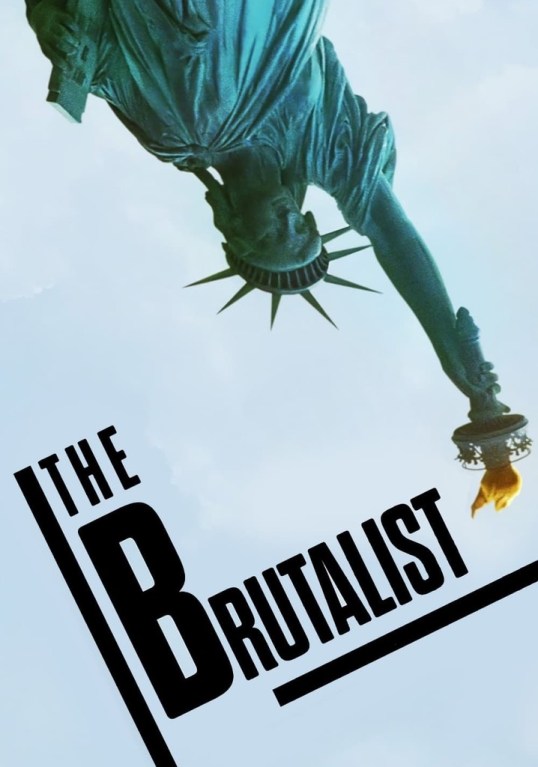
The Brutalist was the Best Picture winner of the evening. The film also won Best Actor (Adrian Brody) and and Best Director in Brady Corbet. This may give the film an interesting chance come Oscar-time. The film beat out high Drama features such as Edward Berger’s Conclave (which managed to pull the Best Screenplay), Denis Villeneuve’s Dune Part Two and James Mangold’s A Complete Unknown.

Jon M. Chu’s Wicked, which some felt was the front runner for the Musical/Comedy was somewhat eclipsed by France’s Emilia Perez, which took home Golden Globes for Zoe Saldana, Best Non-English Film and Best Picture (Musical or Comedy). Wicked did manage to win the newly minted Cinematic and Box Office Achievement award.

Bringing in Demi Moore and Margaret Qualley as presenters for Best Male Actor in a Series was cool to see, watching them play off their pairing in The Substance. Demi’s win for Best Actress was a major highlight for the evening. She, along with Zoe Saldana and Colin Farrell (for HBO’s The Penguin) had some of the best speeches during the show. Colin thanked everyone under the sun, including Craft Services. Also loved the Best Picture (Non-English) winners for Emilia Perez. Colin Farrell thanked everyone from Cristina Milioti to Craft Services. Kieran Culkan beat out his Succession co-star Jeremy Strong for Jesse Eisenberg’s A Real Pain, adding to the notion that Roman might have been the best of the Roys (if not Shiv). It was also great to see Sebastian Stan win for A Different Man. That was a long time coming as I’ve been a fan of his since The Covenant.

Trent Reznor & Atticus Ross won Best Score for Luca Guadagnino’s Challengers. I thought that The Wild Robot would take the Best Animated Film category, but Flow won that, and it honestly looks like a wonderful film.

In TV, it was all about Hacks and Shogun. Both shows dominated the awards with wins for Jane Smart (Hacks), Anna Sawai, Hiroyuki Sanada and Tadanobu Asano (for Shogun). I was particularly happy with Asano’s win, who I thought should have also won an Emmy.

Here’s What Won At The Golden Globes


BEST MOTION PICTURE – DRAMA
The Brutalist

BEST MOTION PICTURE – MUSICAL OR COMEDY
Emilia Perez

BEST DIRECTOR – MOTION PICTURE
Brady Corbet for The Brutalist

BEST PERFORMANCE BY A FEMALE ACTOR IN A MOTION PICTURE – DRAMA
Fernanda Torres for I’m Still Here

BEST PERFORMANCE BY A MALE ACTOR IN A MOTION PICTURE – DRAMA
Adrien Brody for The Brutalist

BEST PERFORMANCE BY A FEMALE ACTOR IN A MOTION PICTURE – MUSICAL OR COMEDY
Demi Moore for The Substance

BEST PERFORMANCE BY A MALE ACTOR IN A MOTION PICTURE – MUSICAL OR COMEDY
Sebastian Stan for A Different Man

BEST PERFORMANCE BY A FEMALE ACTOR IN A SUPPORTING ROLE IN ANY MOTION PICTURE
Zoe Saldana for Emilia Perez

BEST PERFORMANCE BY A MALE ACTOR IN A SUPPORTING ROLE IN ANY MOTION PICTURE
Kieran Culkin for A Real Pain

BEST MOTION PICTURE – NON-ENGLISH LANGUAGE
Emilia Perez

BEST MOTION PICTURE – ANIMATED
Flow

CINEMATIC AND BOX OFFICE ACHIEVEMENT
Wicked

BEST SCREENPLAY – MOTION PICTURE
Conclave

BEST ORIGINAL SCORE – MOTION PICTURE
Challengers

BEST ORIGINAL SONG – MOTION PICTURE
El Mal from Emilia Perez

The TSL Grindhouse: Solomon King (dir by Sal Watts)


In the early 70s, Sal Watts, the owner a popular chain of Oakland clothing stores, took a look at the “blaxploitation” films coming out of Hollywood and thought to himself, “I can do better.”

For two years, Watts worked on his film.  Originally titled Black Agent Lucky King, the film took place in Oakland and an unnamed Middle Eastern country.  When the evil Prince Hassan (Richard Scarro) overthrows the king and takes over the country’s oil fields, Manny King (played by “Little Jamie” Watts) is among the Americans who escape from the country.  Accompanying him is Princess Oneeba (Claudia Russo), who I guess is supposed to be Hassan’s sister, though it’s never really made clear in the film.

Who is Solomon King?  He’s a businessman.  He’s a social activist.  He’s a former Green Beret and a semi-retried agent of the CIA.  All the women love him.  All the men envy him.  He’s the coolest guy in Oakland and everyone assumes that he’s the perfect person to keep Oneeba safe.  Solomon and Oneeba fall in love.  They talk walks along the beach.  Oneeba is amazed that you can hear the ocean when you hold a shell up to your ear.  The entire time, a man with a high-powered rifle is following Oneeba.  Finally, when Oneeba steps out onto the balcony of Solomon’s penthouse, the sniper take his shot.  Oneeba falls in slow motion.  Solomon holds her as she dies and then, he tries to cry.  In this scene, we’re reminded that crying on cue is not as easy as it looks and that Sal Watts was definitely not a trained actor.

Solomon is out for revenge.  He wants to take down Prince Hassan and return the king to his throne.  He also wants to get back the oil wells that Hassan stole from him and his family.  (The film makes it sound like everyone owns an oil well.)  The CIA suggests that Solomon should get some of his Green Beret pals together and overthrow Prince Hasan.  Sure, why not?  I mean, look how well that thinking worked when the CIA and the Mafia tried to invade Cuba!

Eventually, Solomon puts together an army and invades the unnamed Middle Eastern country.  Even though the country is supposed to be in the Middle East, it’s hard not to notice that it looks a lot like Oakland.  Solomon gets his revenge but nothing can bring Oneeba back to life….

Solomon King was long-considered to be a lost film.  A few years ago, a damaged print was discovered and the film was partially resorted.  (The original film reportedly ran close to two hours.  The restoration clocks in at 85 minutes.)  Solomon King is definitely a work of outsider art.  What Sal Watts lacked in experience and ability, he tried to make up for with determination.  There are a few genuinely well-done shots of Solomon driving his car.   (As befits the coolest guy in Oakland, he’s even got a phone in his car!) The soundtrack features an appealing mix of jazz and funk.  And there are a few politically-charged lines of dialogue that suggest that Sal Watts had more on his mind than just making another action film.  That said, Solomon King is also, even in its shortened version, a rather slow-paced and difficult-to-follow film.  The acting is terrible and the fight scenes are haphazardly edited in a way that’s meant to keep you from noticing that no one in the film is actually hitting anyone but which actually has the opposite effect.  My favorite moment was when there was a close-up of Solomon kicking out his leg and then an abrupt jump cut of someone falling backwards, trying to look as if they had been kicked. It was so unconvincing that it was actually kind of charming.

Solomon King is proof that anyone can make a film but making a good one is significantly more difficult.