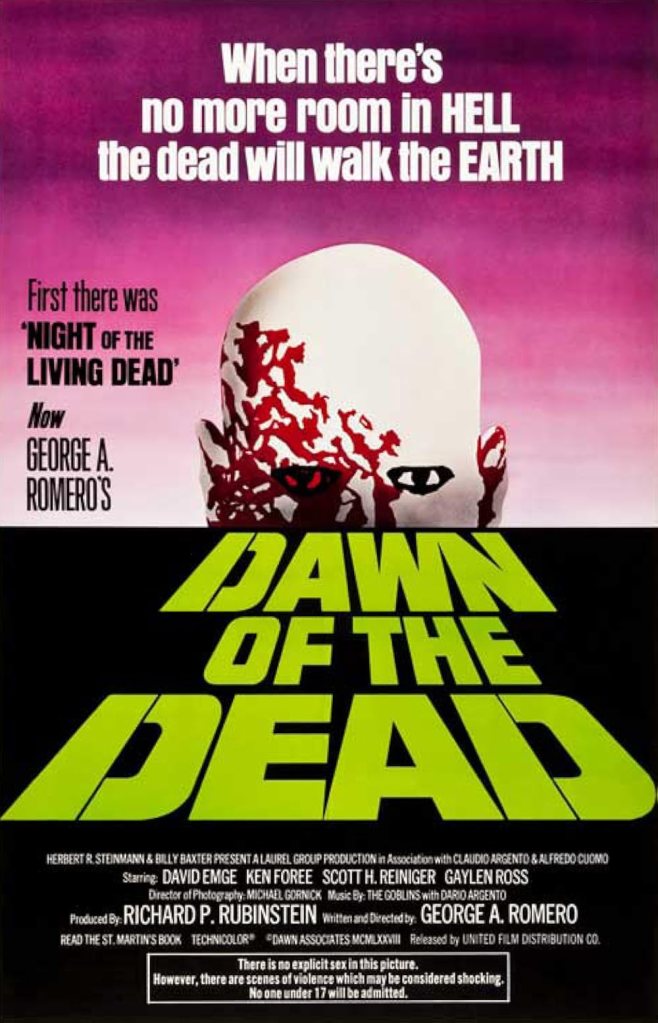
Horror Review: Dawn of the Dead (dir. by George A. Romero)


“When the dead walk, señores, we must stop the killing… or lose the war.”

In 1968, horror cinema was irrevocably changed by the emergence of George A. Romero’s vision, signaling the beginning of a transformative era for the genre. Romero, who had spent much of his early career making industrial and educational films, shifted gears dramatically by crafting Night of the Living Dead, an independent film that did more than just scare audiences—it shattered the conventions of horror. This was a film that rejected the glossy, Gothic monsters of studios like Universal and Hammer, replacing them with raw, unvarnished depictions of human decay and social collapse. The fear Romero invoked was no longer supernatural; it was born from human frailty and social upheaval.

Night of the Living Dead introduced audiences to an entirely new kind of monster: the zombie, not as a mystical or alien infection, but as the reanimated corpse of an ordinary person. This change was more than cosmetic. It shifted the source of horror from “the other” to a reflection of ourselves. Death itself had become weaponized, turning friend into foe in the most visceral way imaginable. The infection was no longer a far-off fantasy but an internal threat. Although the word “zombie” was scarcely spoken in Romero’s first three Dead films, the concept solidified into the cultural lexicon, haunting audiences with the idea that anyone—even the people closest to us—could become the enemy.

Despite the landmark impact of Night of the Living Dead, it would take a decade before Romero was able to produce its sequel. The first film’s shocking violence and disturbing social commentary made Hollywood studios wary of financing a continuation. However, a breakthrough came when Italian horror maestro Dario Argento learned of Romero’s plans and offered to co-finance Dawn of the Dead under the condition that he would receive European distribution rights and be allowed to edit a version for his audience. This international collaboration proved pivotal, allowing Romero to create what many consider not just a sequel but a towering masterpiece of horror cinema.

Released in 1978, Dawn of the Dead solidified Romero’s reputation as a visionary filmmaker willing to confront uncomfortable truths. The Motion Picture Association of America refused the film an R-rating due to its graphic content, and Romero opted to release it unrated to avoid association with the X-rating, which was then primarily linked to pornography. While this restricted the number of theaters willing to show the film, it did not hinder its success. The movie drew large audiences hungry for a horror story that dared to depict society’s unraveling with brutal honesty.

From its opening, Dawn of the Dead confronts viewers with the chaos midst societal collapse rather than building toward it. Traditional authority figures—news anchors, government officials, police—are portrayed as overwhelmed, often ineffective, and sometimes themselves sources of danger. The film’s opening sequence, set inside a frenzied television newsroom, captures this chaos vividly; reporters and producers struggle to maintain composure while the world outside falls apart. This scene encapsulates one of Romero’s central themes: the erosion of trust in institutions during extreme crisis. As media credibility falters, survivors are left in an informational vacuum, further imperiling their ability to cooperate or find sanctuary. This mistrust resonates strongly today, echoing recent real-world crises where institutional failure has worsened public panic and political division.

A critical early sequence—the tenement raid—brilliantly illustrates the film’s social complexity. The conflict here stems not only from the undead but from a clash of cultures: the low-income inhabitants hold tightly to their traditions, especially the respect and mourning of their dead, while the government, scientists, and law enforcement—detached “outsiders”—seek to destroy the infected bodies coldly as threats. This refusal to recognize the residents’ humanity and cultural practices sparks a brutal firefight, symbolizing the broader breakdown of social cohesion. Romero uses this conflict to show that the apocalypse is fueled as much by misunderstandings and institutional coldness as by the undead threat itself.

Within this crumbling world, the film centers on four survivors who become our guides through Romero’s apocalyptic landscape: Roger (Scott Reiniger) and Peter (Ken Foree), two disillusioned Philadelphia SWAT officers who desert after that violent raid; Stephen (David Emge), a helicopter pilot; and Fran (Gaylen Ross), a television producer. These characters represent the fractured remnants of a society that once clung to institutions but is now adrift. Their escape from Philadelphia aboard a stolen news helicopter is less a triumphant flight than a retreat into uncertainty.

Their destination is a suburban shopping mall near Monroeville, Pennsylvania. The mall, abandoned but intact, quickly becomes their fortress. Clearing out the zombies inside and barricading the doors seems like a triumph—an oasis amid apocalypse. The survivors revel in a surreal form of luxury that stands in stark contrast to the danger outside. For a time, they indulge in consumer comforts previously unattainable: fine clothes, gourmet food, and even jewelry. This phase is both a coping mechanism and a critique. Romero uses the mall setting as a dark mirror to American consumer culture. The shoppers turned zombies wander these halls as if drawn by habit, herding toward the very symbols of consumption that once defined the pre-apocalyptic world.

Romero’s critique extends beyond consumerism run amok; he exposes consumerism itself as a new religion for America. In the 1970s, as economic and social uncertainties shook the nation, megamalls emerged as the new temples of worship where consumer habits became ritualistic acts of devotion. The film’s setting drives home this analogy—the mall is not simply a marketplace but a sacred space where the rituals of buying and consuming provide meaning and identity. The zombies’ relentless, automatic wandering through the mall’s stores reflects a zombified devotion to these rituals, implying that consumerism has replaced spiritual and community values, offering hollow salvation in its place.

This portrayal is not accidental but deliberately satirical. The mall is a gilded cage, symbolizing consumerism’s dominance over American identity. Even in the apocalypse, the survivors replicate the rituals of capitalism, clinging to items of superficial value and meaning. The zombies’ mindless shuffling through stores like Woolworth’s and the food court underscores this grotesque cycle. Romero’s message is sharp: consumerism is a kind of death, a trance that distracts from and perhaps accelerates societal decay. The film implies that in America, the line between life and death blurs within the walls of the shopping mall because it is there that life’s priorities have long been warped.

While consumerism forms a visible backdrop, Dawn of the Dead probes deeper, exposing a darker undercurrent: humanity’s inherent violent nature as the real engine of destruction. The undead are monstrous and fearful, but they lack the complexity and self-destructiveness of the living. Throughout the film, Romero presents violence not as a rare failing but as a baseline condition of human behavior. The survivors themselves struggle to suppress impulses of aggression, paranoia, and selfishness that grow more toxic over time.

Roger’s reckless bravado during their clearing of the mall leads to a fatal bite from a zombie, making his death a metaphor for the cost of unchecked aggression. The living kill as readily as the dead, but with purpose and calculation that is often more destructive. The raiding biker gang that ultimately invades the mall appears as a harsh symbol of this self-inflicted violence. Unlike the zombies, whose threat is instinctive, the bikers wield cruelty consciously, plundering and destroying the survivors’ fragile sanctuary. Their incursion shatters any illusion of security and exposes the futility of individualistic survival strategies when cooperation is absent.

The unraveling of the survivors’ cohesion over the course of the film underscores one of Romero’s most bleak insights: humanity’s greatest enemy is itself. Even small groups that depend on trust and unity quickly fragment amid fear and scarcity. Despite the severity of their predicament, the four protagonists are often consumed by petty grievances, distrust, and self-preservation. Romero suggests that unless cooperation becomes a collective imperative, survival is impossible. The dead multiply endlessly, but it is the living who ensure society’s demise by turning against each other first.

Romero’s Dawn of the Dead also marks the cinematic arrival of Tom Savini, whose pioneering make-up effects would forever transform horror filmmaking. Savini and members of his team not only crafted many of the film’s grisly effects but also played some of the biker gang antagonists, blending artistry and performance. While the gore in Dawn can appear somewhat garish or cartoony on film, largely due to lighting effects and the practical limits of makeup technology at the time, Savini’s work set the standard for modern horror effects. His techniques and vision became the bedrock of the gore genre, influencing decades of horror cinema thereafter. His legacy continued as he later directed the 1990 remake of Night of the Living Dead, bringing Romero’s seminal vision to a new generation with his signature effects sensibility.

Ken Foree’s portrayal of Peter anchors the film emotionally; his performance balances toughness with vulnerability, capturing a man grappling with the collapse of law and societal norms while striving to retain his humanity. Scott Reiniger’s Roger provides a volatile contrast—impulsive, reckless, and ultimately tragic—as his aggression leads directly to his downfall. David Emge’s Stephen and Gaylen Ross’ Fran round out the core survivors, expressing pragmatism, grief, and the desperate need for connection as their world crumbles. Their dynamic interactions highlight Romero’s warning: human connection in times of extremity is fragile and fraught, undermined by fear and mistrust.

Romero’s expert use of sound and music further elevates the film. The eerie muzak playing through the mall’s PA system contrasts sharply with the groans of the undead and sudden bursts of violence, creating a haunting dissonance between normalcy and chaos. This effective sound design emphasizes the thematic conflict between consumerist detachment and encroaching apocalypse.

Beyond its horror, Dawn of the Dead serves as a time capsule of late-1970s American socio-political anxieties. America was reeling from the disillusionment of Vietnam, shaken by the Watergate scandal, and grappling with urban decay and economic malaise. The film vividly captures this zeitgeist: a society where institutions are distrusted, violence is normalized, and consumerism both numbs and destroys. Romero’s criticism extends to Cold War paranoia, reflected in his depiction of apocalypse not as a sudden cataclysmic event but a slow, grinding decline fueled by human self-destruction.

Romero’s directing style—unpolished at times but unflinching—adds authenticity to the film’s grim message. His use of long takes, handheld camera work, and naturalistic performances grounds the supernatural in the everyday, making the horror tangible. The bleak humor sprinkled throughout, such as the zombies’ fascination with the mall’s siren and muzak, darkens the tragedy with satirical bite.

Dawn of the Dead does not offer easy hope. Its ending—marked by betrayal, destruction, and resignation—echoes Romero’s worldview: humanity’s baser instincts, left unchecked, will always undermine salvation. Yet, in this stark vision lies an ironic beauty: survival is not only about killing or hiding but the recognition of our shared flaws and the possibility, however slim, of striving beyond them.

In conclusion, Dawn of the Dead remains a masterpiece of horror, combining groundbreaking practical effects, compelling performances, and incisive social commentary to create a film that is as relevant today as it was nearly fifty years ago. Romero’s work challenges viewers to confront the monsters within us all and questions whether human nature’s violent and consumerist impulses might prove more lethal than any undead army. Its enduring legacy lies not just in its scares but in its profound understanding of societal collapse and the fragile bonds that sustain civilization.

Horror On The Lens: Scream of the Wolf (dir by Dan Curtis)


For today’s horror on the lens, how about a little werwolf action?

In the 1974 made-for-TV movie, Scream of the Wolf, Peter Graves is a writer who is asked to help solve a series of mysterious murders.  The fact that both human footprints and wolf tracks have been found at each murder scene has led some people to assume that the killer must be a werewolf!  Will Graves be able to prove them wrong or will it turn out that they are right?  Graves calls in a famous hunter (Clint Walker) to help track down the killer but it turns out that the hunter has secrets of his own.

Scream of the Wolf features a screenplay from Richard Matheson and it was directed by television horror specialist, Dan Curtis.  It feels like it was probably meant to be a pilot in which Peter Graves would deal with a supernatural mystery on a weekly basis.  Even if the movie didn’t lead to a series, it’s still enjoyably atmospheric.


October Positivity: Faith Of Our Fathers (dir by Carey Scott)


2015’s Faith Of Our Fathers tells the story of a road trip to Washington, D.C.

John (Kevin Downes) and Wayne (David A.R. White) might not seem to have much in common.  John is uptight and neurotic, on the verge of getting married but feeling like he has to do one final thing while his fiancée (Candace Cameron Bure) plans their wedding.  Wayne is a proud redneck, someone who lives in a trailer and enjoys picking fights.  When John first shows up at the trailer, Wayne shoots a shotgun at him.  When John refuses to leave, Wayne eventually allows him into the trailer and the two of them talk.

They are linked by their fathers, who both served and bonded in Vietnam.  Through flashbacks, we see how John’s father (Sean McGowan) found strength from his religious faith and how Wayne’s father (Scott Whyte, who viewers of a certain age will recognize from City Guys) eventually set aside his cynicism.  Wayne is in possession of the letters that his father wrote home from Vietnam and John, feeling a need to know who his father was, wants to read those letters.  Wayne agrees to show John the letters if he drives Wayne to Washington D.C. so that they can visit the Vietnam War memorial.

Along the way, the two of them bicker, bond, and have adventures.  This is a road film, which means that it has to take a while for John and Wayne to stop arguing with each other and start to open up about their pasts and their views on the modern world.  They meet a wide variety of people while on their trip, some of whom are trustworthy and many of whom are not.  They also meet Mansfield (Stephen Baldwin), who served in Vietnam with their fathers and who offers up some details about what happened to the men while they were serving in the military.

Unfortunately, the film itself doesn’t really work.  It has all of the flaws that one typically associates with a faith-based filmmaking.  The budget is noticeably low, something that especially becomes an issue during the Vietnam flashbacks.  The dialogue is often didactic.  Downes and White are familiar faces when it comes to faith-based films and they’ve both given good performances in other films but they both feel miscast here.  As played by Downes, John is a bit too neurotic to be believable (or particularly sympathetic) while White’s earnest and, at times, goofy style of performing feels wrong for a character who is supposed to be into random fights and beer.  For someone whose career has largely become about appearing in faith-based films, Stephen Baldwin seems rather detached throughout Faith of our Fathers.  In the flashbacks, he’s one of the least convincing commanding officers that I’ve ever seen in a war film.  In the modern scenes, he just seems bored.  If I’m being hard on Baldwin, it’s because I’ve seen him give really good performances in other films.  Knowing that he could be giving a good performance makes his bad performances all the more frustrating.

I will say this, though.  Faith of Our Fathers takes a stand for supporting our veterans, both when they’re serving and after they’ve come home.  I appreciated that.  All too often, we seem to hold the unpopular wars against those who served, as if the mistakes of those in command are somehow their fault.  That happened with Vietnam and it’s happening right now with Iraq and Afghanistan.  No one should ever be forgotten or deserted by their own country.


The Eric Roberts Horror Collection: 2 Bedroom 1 Bath (dir by Stanley Yung)


In this 2014 shocker, a young couple moves into what seems like a perfect 2 bedroom, 1 bath apartment.  Rachel (Michele Hooks) and Kevin (Andrew W. Walker) are hoping to start a family in their new apartment.  Their landlady (Dee Wallace) is very happy to hear that.  In fact, it’s hard not to feel that she’s a bit too happy to hear it….

In many ways, 2 Bedroom 1 Bath is a typical “is it haunted or not?” thriller.  From the minute that they move into the apartment, Kevin starts to have strange and nightmarish visions.  He imagines himself trying to pick up a baby, just for it to fall to the ground and shatter like a doll.  Dark shadows move in the background while pale faces are reflected in the windows.  After taking a shower, Rachel doesn’t notice that ghostly figure in the mirror behind her.  Things get creepier and stranger after Rachel gets pregnant and Kevin finds himself not only tempted by student but also taunted by mysterious messages that appear in the mail box.

It’s a bit predictable but Hooks and Walker both give strong performances and director Stanley Yung does a great job of creating an ominous and dream-like atmosphere.  This is a film that features several dozen jump scares and just about everyone of them is effective.  It’s an effective piece of haunted apartment horror.

As for Eric Roberts, his role is a small one.  He plays the fertility specialist and he has three scenes with Rachel and Kevin.  When Roberts first appeared, I assumed his character was going to be revealed to be a part of the supernatural conspiracy but no.  He was just a well-intentioned doctor with two patients who had no idea how much trouble they were about to face.  To be honest, I’m so used to seeing Eric Roberts playing villains that it was kind of nice to see him playing a sympathetic professional for once.

Previous Eric Roberts Films That We Have Reviewed:

  1. Paul’s Case (1980)
  2. Star 80 (1983)
  3. Runaway Train (1985)
  4. To Heal A Nation (1988)
  5. Best of the Best (1989)
  6. Blood Red (1989)
  7. The Ambulance (1990)
  8. The Lost Capone (1990)
  9. Best of the Best II (1993)
  10. Love, Cheat, & Steal (1993)
  11. Voyage (1993)
  12. Love Is A Gun (1994)
  13. Sensation (1994)
  14. Dark Angel (1996)
  15. Doctor Who (1996)
  16. Most Wanted (1997)
  17. Mercy Streets (2000)
  18. Raptor (2001)
  19. Rough Air: Danger on Flight 534 (2001)
  20. Strange Frequency (2001)
  21. Wolves of Wall Street (2002)
  22. Border Blues (2004)
  23. Mr. Brightside (2004)
  24. Six: The Mark Unleased (2004)
  25. We Belong Together (2005)
  26. Hey You (2006)
  27. Depth Charge (2008)
  28. Amazing Racer (2009)
  29. The Chaos Experiment (2009)
  30. In The Blink of an Eye (2009)
  31. Bed & Breakfast (2010)
  32. Enemies Among Us (2010)
  33. The Expendables (2010) 
  34. Sharktopus (2010)
  35. Beyond The Trophy (2012)
  36. The Dead Want Women (2012)
  37. Deadline (2012)
  38. The Mark (2012)
  39. Miss Atomic Bomb (2012)
  40. Assault on Wall Street (2013)
  41. Bonnie And Clyde: Justified (2013)
  42. Lovelace (2013)
  43. The Mark: Redemption (2013)
  44. The Perfect Summer (2013)
  45. Self-Storage (2013)
  46. Sink Hole (2013)
  47. A Talking Cat!?! (2013)
  48. This Is Our Time (2013)
  49. Bigfoot vs DB Cooper (2014)
  50. Doc Holliday’s Revenge (2014)
  51. Inherent Vice (2014)
  52. Road to the Open (2014)
  53. Rumors of War (2014)
  54. Amityville Death House (2015)
  55. Deadly Sanctuary (2015)
  56. A Fatal Obsession (2015)
  57. Las Vegas Story (2015)
  58. Sorority Slaughterhouse (2015)
  59. Stalked By My Doctor (2015)
  60. Enemy Within (2016)
  61. Hunting Season (2016)
  62. Joker’s Poltergeist (2016)
  63. Prayer Never Fails (2016)
  64. Stalked By My Doctor: The Return (2016)
  65. The Wrong Roommate (2016)
  66. Dark Image (2017)
  67. The Demonic Dead (2017)
  68. Black Wake (2018)
  69. Frank and Ava (2018)
  70. Stalked By My Doctor: Patient’s Revenge (2018)
  71. Clinton Island (2019)
  72. Monster Island (2019)
  73. The Reliant (2019)
  74. The Savant (2019)
  75. Seven Deadly Sins (2019)
  76. Stalked By My Doctor: A Sleepwalker’s Nightmare (2019)
  77. The Wrong Mommy (2019)
  78. Exodus of a Prodigal Son (2020)
  79. Free Lunch Express (2020)
  80. Her Deadly Groom (2020)
  81. Top Gunner (2020)
  82. Deadly Nightshade (2021)
  83. The Elevator (2021)
  84. Just What The Doctor Ordered (2021)
  85. Killer Advice (2021)
  86. Megaboa (2021)
  87. Night Night (2021)
  88. The Poltergeist Diaries (2021)
  89. The Rebels of PT-218 (2021)
  90. Red Prophecies (2021)
  91. A Town Called Parable (2021)
  92. Bleach (2022)
  93. Dawn (2022)
  94. My Dinner With Eric (2022)
  95. 69 Parts (2022)
  96. The Rideshare Killer (2022)
  97. D.C. Down (2023)
  98. Aftermath (2024)
  99. Bad Substitute (2024)
  100. Devil’s Knight (2024)
  101. Insane Like Me? (2024)
  102. The Wrong Life Coach (2024)
  103. Broken Church (2025)
  104. When It Rains In L.A. (2025

Made-For-TV Horror Review: Mind Over Murder (dir by Ivan Nagy)


In the 1979 made-for-TV movie, Mind over Murder, Deborah Raffin stars as Suzy.

Suzy is a model and an actress.  She has a nice apartment, which she shares with her football-loving boyfriend, Ben (Bruce Davison).  She has a best friend (Penelope Willis), who is constantly looking to get laid.  Her latest job requires her to dance with a man who is dressed up like a giant hamburger.  It would seem that, by the standards of 1979, Suzy has the perfect life.

However, her life is turned upside down when she suddenly starts having visions.  All of the action around her will either switch to slow motion or stop altogether while Suzy has a vision of a scary-looking bald man (Andrew Prine) stalking her.  Her most disturbing vision involves Suzy hearing the sound of a pilot begging for help while his airplane crashes.  Ben tells her that she’s probably just working too hard but, the next morning, Suzy looks at a newspaper and immediately sees a headline about a plane crash.

With Ben dismissing her concerns, Suzy takes it upon herself to meet with the two detectives (David Ackroyd and Robert Englund — yes, Robert Englund!) investigating the plane crash.  They are surprisingly sympathetic to Suzy’s story of hearing the plane crash before it happened.  They arrange for her to meet a psychic researcher, who explains that Suzy must have some sort of mental connection to whoever was responsible for the crash.  While Ben continues to be skeptical and jealous of all the time that she’s spending with one of the detectives, Suzy keeping having disturbing visions of the bald man….

Considering its origins as a made-for-TV movie, Mind Over Murder is a surprisingly frightening film.  This is a film that proves that slow motion can make just about anything creepy and Deborah Raffin does a good job of showing us just how much Suzy dreads those moments when everything starts to slow down and she realizes that she’s about to get hit with another vision.  That said, what truly makes this film frightening is the performance of Andrew Prine, who plays the bald man as being every woman’s nightmare.  He’s a misogynist, the type who is convinced that every woman should be in love with him and that those who aren’t should be punished.  Whether he’s appearing in Suzy’s visions or stepping into her reality, Andrew Prine is never less than terrifying.

Along with featuring a scary performance from Prine, this film also features a genuinely likable one from Robert Englund.  Englund is playing a nice guy here.  In fact, before he made horror history in A Nightmare in Elm Street, Englund almost always played nice guys.  It’s interesting to watch him here, with his friendly manner and his polite style, and to imagine the roles Englund would have ended up playing if he hadn’t gotten typecast as a horribly scarred serial killer.

The first hour of Mind over Murder is brilliant.  The final 30 minutes, unfortunately, find the film turning into a far more conventional thriller, as Suzy’s visions are replaced by the Bald Man actually coming after her.  That said, this is still an effective horror thriller and one that deserves to be rediscovered this Halloween season.

Hercules (1958, directed by Pietro Francisci)


In ancient Greece, Hercules (Steve Reeves) saves the life of the princess Iole (Sylva Koscina) when she nearly loses control of her chariot.  Iole tells Hercules about how her father, Pelias (Ivo Garrani), become the ruler of the kingdom after the murder of the previous king and the exile of the rightful heir to the throne, Jason (Fabrizio Mioni).

Hercules accompanies Iole back to the kingdom, where he proves himself by doing typical Hercules things like defeating both a lion and a bull.  When Hercules’s discovers that his best friend, Chiron (Alfo Poli) is the number one suspect in the murder of the previous king, he goes on a quest with Jason to recover the Golden Fleece, which will reveal the truth.

All sorts of Greek myths are crammed together as Hercules and Jason search for the Golden Fleece, fight a dragon, and are briefly held prisoner by Amazon Queen Antea (Gianna Maria Canale).  (The dragon’s roar was lifted from a Godzilla film.)  Hercules was the first of several Italian film to be made about Hercules.  American bodybuilder Steve Reeves had the right physique for Hercules but the wrong voice and, even in the English language dub, it’s obvious that we are not actually hearing Reeves when he speaks.

Hercules has a deserved reputation for being campy but it’s not as bad as you might think if you’ve only seen the washed-out and heavily edited version that was used for Mystery Science Theater 3000.  (I say that as someone who loves MST 3K and who dreamed of being one of their writers when I was growing up.)  If you can actually see a restored print of the film, ancient Greece actually looks pretty good and the the deep colors go a long way towards establishing the grandeur of a mythological age.  It’s easy to laugh at Steve Reeves and his expressionless acting but he had the right look for Hercules.  The only thing really required of Hercules in this movie is that he be strong and Reeves was definitely that.

Distributed in America by Joseph E. Levine, Hercules was a worldwide success and there would be 18 sequels, with Reg Park eventually taking over the role.  Steve Reeves, having been seriously injured while filming The Last Days of Pompeii in 1959, eventually retired from acting and spent the rest of his life running a ranch in Valley Center, California and promoting drug-free bodybuilding.  Arnold Schwarzenegger frequently cited him as an inspiration for his own acting career.  Steve Reeves passed away at the age of 74 in 2000.

Horror Scenes That I Love: Barbara Steele in Black Sunday


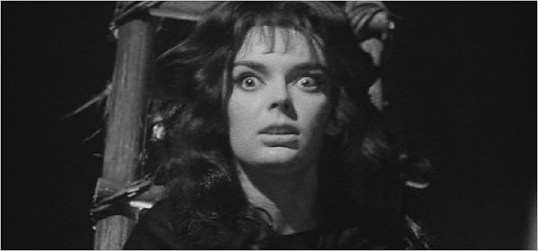
The British-born actress, Barbara Steele, became a star in Italy in the 60s, working with directors from Riccardo Freda to Mario Bava to Federico Fellini.  One of Steele’s defining roles was in Bava’s 1960 film, Black Sunday.

In this scene, Steele’s witch is sentenced to be executed and, since this is a Bava film, it won’t be a quick execution.  What makes this scene stand-out is Steele’s defiance.  It’s hard not to admire her refusal to give those judging her what they want.  You watch this scene and you have no doubt that if you get cursed by Barbara Steele, it’s going to be a curse for life.

Horror Film Review: Kill, Baby…. Kill (dir by Mario Bava)


Kill, Baby…. Kill!, Mario Bava’s 1966 masterpiece, opens at the turn of the 20th Century.

In a small German village, a woman named Irena Hollander (Mirella Panfili) runs up a set of stairs at an abandoned church.  From the bell tower, she either falls or deliberately jumps and crashes into the sharp spikes of the gate below.  Agck!  Falling from that high of a spot is bad enough without then landing on a gate and getting pierced by several sharp points at once.  Making it even more disturbing is that it’s suggested that the spikes don’t instantly kill Irena.  It’s a grotesque and disturbing image, shown to us in bright color.  It’s death as pop art.  It’s the sort of thing that only Mario Bava could have paid off.

Dr. Paul Eswai (Giacomo Rossi Stuart) is summoned to the village by Inspector Kruger (Piero Lulli).  Kruger suspects that Irena may have been intentionally pushed and he wants Paul to conduct an autopsy.  However, the superstitious townspeople say that her body must be buried immediately and Paul and Kruger actually have to rush out to the local cemetery to prevent the Irena from being buried.  The gravediggers warn Paul and Kruger that they will be bringing a curse on themselves by not burying Irena.  Paul and Kruger don’t listen.  At the autopsy, a local medical student named Monica (Erika Blanc) is assigned to serve as the witness.  Paul discovers that a silver coin has somehow been embedded in Irena’s heart.

Paul discovers that the villagers live in fear of the ghost a little girl.  They claim that if you see the girl, that means you are cursed to die.  Paul, being a man of science, is skeptical.  When the daughter of the local innkeeper becomes horrified after saying that she has seen the little girl, Paul is critical of the treatment offered up by her superstitious parents.  (That treatment include a chain of leeches — agck!)  Meanwhile, Kruger goes to the estate of the mysterious Baroness Graps (Giovanna Galletti) and disappears!  It soon becomes clear that the key to mystery lies in the estate of the Baroness and her past.  Karl (Luciano Catenacci), the burgomaster, knows the secret of the Baroness but soon, he finds himself being targeted by the little girl.

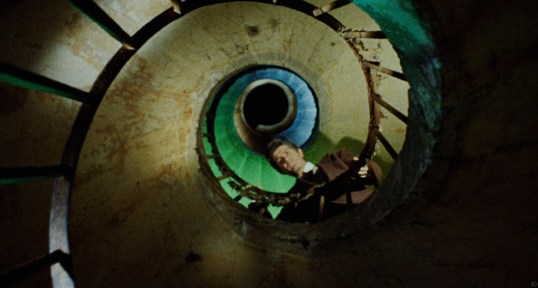
Maria Bava is a director who has been cited as an influence by everyone from David Lynch to Martin Scorsese and Kill, Baby…. Kill! is his masterpiece, a work of horrific pop art that is full of atmosphere, creative use of color, and an intentionally surreal style of plotting that makes the film less a standard story and more of a filmed nightmare.  Towards the end, as Paul pursues the ghost of the little girl, an overhead view of a special staircase, lit in blues and greens, brings to mind Hitchock’s Vertigo while the village itself feels as if it could have been transported over from a Hammer horror film.  Paul is a man of science and the villages are people of superstition and, in the end, both seem to be equally destructive.  Paul is too quick to dismiss the old traditions while the villagers are too quick to put their faith in herbs and incantations.  Bava creates an atmosphere in which everyone seems to be equally doomed.

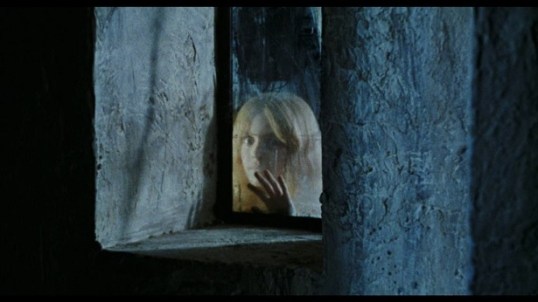
Of course, the main reason why Kill, Baby…. Kill! works is because that little girl (played by Valerio Vali, about whom little is known) is absolutely terrifying.  When she suddenly shows up at a window and stares straight at her latest victim, it’s a true jump scare.  She had an intense stare but, even worse, she seems to be so happy after she’s cursed someone.  The true horror is that she can basically pop up anywhere.  It doesn’t matter if you’re a good person or a rational person or someone who doesn’t even believe in ghosts.  Fate cannot be escaped.

Kill, Baby…. Kill! is a both a story of nightmarish horror and a love letter to pure cinema.

Kill, Baby, Kill

October True Crime: The Texas RailRoad Killer (dir by Luis Antonio Rodriguez)


Angel Maturino Resendiz, now there was a scary person.

Resendiz was a drifter who hitched rides on trains and who killed at least 15 people over the course of 13 years.  Because he traveled by stowing away on trains, his first few crimes went undetected.  Even when people realized that there was a serial killer haunting the nation’s railroads, no one knew exactly where Resendiz would next turn up.  He committed the majority of his murders in Texas, killing random people and using whatever method happened to be most convenient at the time.  However, he also killed people in Florida, Georgia, California, Kentucky, and Illinois.  He would steal his victim’s jewelry but leave behind their money.  (He would return to his home in Mexico to give the jewelry to his sister and mother, both of whom apparently had no idea where he was getting his gifts from.)  After he was placed on the FBI’s Most Wanted List, Resendiz eventually surrendered himself in 1999.  Resendiz was apparently under the impression that he would not be given the death penalty if voluntarily turned himself in.  Resendiz was wrong about that and he was executed in 2006.

Until Resendiz surrendered himself, everyone living near a railroad track was nervous.  I know this from personal experience because, in 1999, my family lived close enough to the tracks that I could lay in bed in the middle of the night and listen to the sound of the trains rumbling in the distance.  Resendiz was a killer who targeted those who were smaller and weaker than him, which basically would have included me, my mom, and my sisters.  Apparently, whenever he did a home invasion, he would also eat whatever food he could find in the refrigerator.  Whereas most killers would probably want to get away from the scene as quickly as possible, Resendiz would sit down and eat leftovers.  For whatever reason, that little detail is the one that creeps me out the most.

2020’s The Texas Railroad Killer is loosely based on the crimes of Angel Resendiz.  The film features Resendiz (Lino Aquino) as he wanders around South Texas, randomly killing.  As played by Aquino, Resendiz comes across as being a somewhat dazed, paranoid shell of a human being, a shadow of death who doesn’t seem to be aware of the difference between reality and what’s only happening in his mind.  Does he really witness a group of strippers being gunned down by law enforcement or is it something that he only imagined?  It’s hard to tell.  After Resendiz commits a murder, he looks over his victim’s identification as if he’s trying to absorb the life that he just ended.  And yes, he does eat in a victim’s house.  Agck!

The Texas Railroad Killer is an extremely low-budget film.  Lino Aquino is convincingly out-of-it as Resendiz but some of the other performers are noticeably less convincing in their roles.  The film is largely plotless and the slow pace will be a turn-off for many viewers.  And yet, there’s a disturbing power to the film’s sun-drenched visuals.  The images of the sweaty Resendiz walking down broken streets or stumbling dazed out of someone’s home stick with you.  Flaws and all, the film captures the soulless existence of a man who lives for no other reason than to kill.

Personally, it makes me glad that he’s dead.

Horror Song of the Day: Tubular Bells by Mike Oldfield


Mike Oldfield didn’t write Tubular Bells specifically for The Exorcist but it’s a song that works perfectly for the film.  Oldfield’s song, which was rumored to have originally envisioned as being a Christmas instrumental, become an iconic horror them.