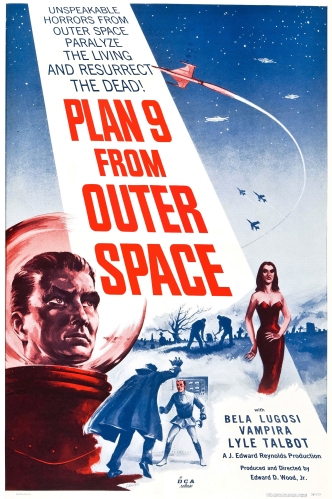
Watching Plan 9 From Outer Space is a bit of a Halloween tradition around the Shattered Lens Bunker and, if you know anything about me, you know that I’m all about tradition!
First released back in 1959 and directed by the infamous Ed Wood, Plan 9 From Outer Space is often described as being one of the worst films ever made. Well, every year, I take it upon myself to defend Plan 9 From Outer Space by pointing out that 1) as opposed to a truly terrible film like Man Of Steel, Plan 9 From Outer Space was made with next to no money, 2) Gregory Walcott does a fairly good job in the lead role, and 3) the film, at the very least, does seem to be sincere in its attempt to promote world peace. Add to that, the film is way too much fun to watch for it to be truly the worst film ever made.
So, seriously, can we at least give Ed Wood the amount of respect that we usually give to Tommy Wiseau?
Enjoy Plan 9 From Outer Space! And remember — can you prove it didn’t happen?
Two of my favorite films of all-time happen to be very similar. In fact, one could say that they’re pretty much the same films. I’m talking about Akira Kurosawa’s Seven Samurai and it’s Western-remake by John Sturges, The Magnificent Seven. Kurosawa’s film is one of the greatest films of all-time and it’s no wonder that many have taken the film’s story of the downtrodden hiring a band of misfits, rogues, but still honorable men to help them fight against huge odds.
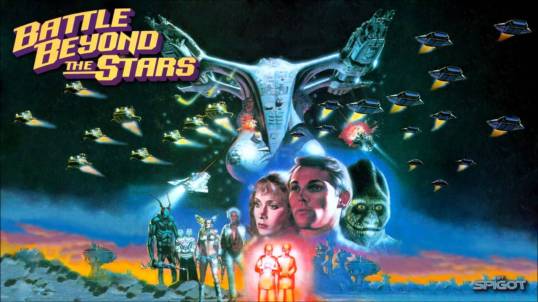
One such film that tries to add onto Kurosawa film’s legacy was the Roger Corman-produced scifi-adventure film Battle Beyond the Stars. This 1980 film was one of Corman’s many attempts to cash-in on the Star Wars phenomena, but in his usual low-budget style.
For a low-budget scifi film, Battle Beyond the Stars happened to have quite a cast one doesn’t usually see in such productions. While it had such grindhouse and exploitation regulars as John Saxon and Sybil Danning, it also starred the wholesome Richard Thomas from The Waltons and George Peppard (who would later become famous with a new generation as Hannibal Smith of The A-Team). The film would be directed by Jimmy T. Murakami, but from watching the film one could see Corman’s fingerprints all over the production from the script which was pretty lean and cut to the basic outline of Kurosawa’s original film. There’s not much fluff to bog down the pacing of the film.
This film has always been a guilty pleasure of mine because it so resemble Seven Samurai and The Magificent Seven, but adds in it’s own unique style and look to a well-worn and well-trodden plot. It was much later that I found out that James Cameron had a major hand in the special effects work in the film. Think about that for a moment. The self-proclaimed “King of the World” who literally breaks film budget records every time he begins work on a film did FX work on battle Beyond the Stars whose effects budget probably wouldn’t buy a day’s worth of crafts table eating for his most modestly budgeted films.
Lisa Marie always loved to say that grindhouse and exploitation films are some of most honest films out there. There’s no bullshit to what we see on the screen. It’s filmmakers forced to be daring and inventive because the lack of resources forces them to think outside the box. Battle Beyond the Stars might be seen as a mediocre attempt to cash-in on a scifi cultural phenomena, but it does so with a go for broke mentality that makes it such a fun film to watch. It’s not the greatest thing Corman has ever produced and some would even call it a very bad film, but once one looked past it’s rough and flawed surface then one could see a gem in the rough hidden beneath.
Oh, this remake of the remake of the original also happened to star one Robert Vaughn who was one of original Magnificent Seven.
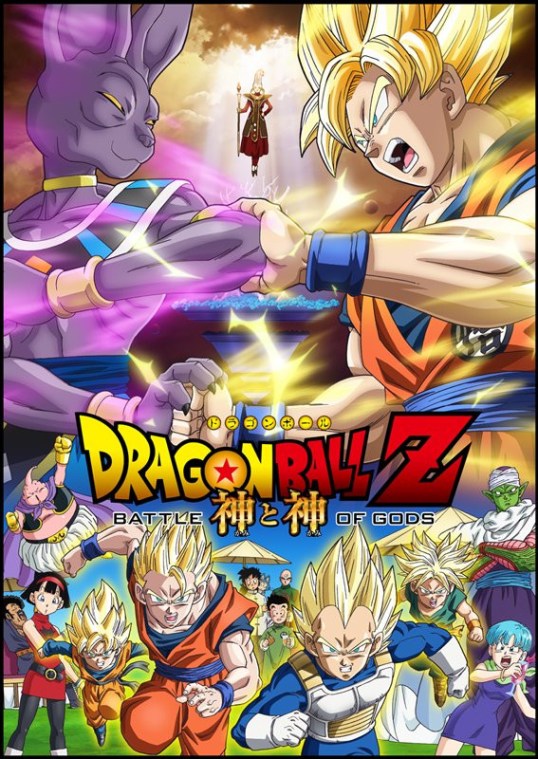
Yes, my friends, while the rest of you were off seeing high flying summer blockbusters with nearly universally positive reviews I took a slightly different approach… and saw one of the very few showings available in my area of Dragon Ball Z: Battle of Gods. You know, the first Dragon Ball Z film in 17 years to receive a theatrical release? That particular fact doesn’t really mean anything aside from highlighting the fact that Battle of Gods was, in fact, released theatrically. Depending on your location, you may still have a few days to see it. Let me get this out of the way right now: If you were – or are – a fan of Dragon Ball Z, you should see this movie.
Why? Well, let’s talk about the film a bit.
Events open with the introduction of Lord Beerus, also called Beerus the Destroyer. He’s smarmy and wicked, and he ordered Freeza to destroy the Saiyan world of Vegeta 39 years ago, before taking a nap. Now that he’s awakened, he is surprised to learn of Freeza’s death, and even more surprised to learn that it was at the hands of a Saiyan warrior. Abruptly, he recalls a prophecy he was interested in once about a “Super Saiyan God” (the film’s dialogue itself makes fun of this title. Don’t worry!). These opening scenes also give us a good sense of the tone of the film: Despite the fact that are no doubt headed to some mighty Dragon Ball Z action sequences later, the film is largely comic in tone.
First, our villain pays a visit to King Kai’s planet, where Goku is training. Most of this sequence is played for laughs, and it’s fairly brief, but Beerus does demonstrate to us his power by effortlessly defeating Super Saiyan 3 Goku in two almost delicate blows.
Disappointed by Goku, Beerus and his servitor, Whis, head to Earth to try and find the other remaining Saiyans, and this Super Saiyan God. Upon arriving, they interrupt Bulma’s birthday party. In a pleasant bit of fan service, all of the characters from the series are there. All of the fighters of course, like Piccolo and Tien Shinhan, but also supporting cast like Master Roshi, Mr. Satan, and Videl. The film runs only about 85 minutes, so most of these characters aren’t given a ton to do, but the middle part of the movie takes place primarily at this party. Here’s where things had the potential to really slow down and drag… because despite Lord Beerus arriving and demanding to meet his Super Saiyan God rival, he soon takes a shine to the buffet table instead. In no time, he and Whis are chowing down on Earth delicacies at Bulma’s invitation.
Meanwhile, a subplot involving a character from the original Dragon Ball anime (one whom I had to Google, but I’m sure there are fans who will better appreciate his appearance in the film). He’s there to steal the seven titular Dragon Balls, which Bulma has collected to give away as a prize on her birthday. Everyone should have a friend like her, I guess, because that’s quite the gift.
Lord Beerus eventually gets into a fight with Buu over pudding cups, and things start to head in the direction we always knew they were going to go: Beerus ultimately is here to challenge his new potential rival for fun and for profit, and unless the Super Saiyan God can prove stronger than he, he’s going to destroy the Earth. As you would expect, the lesser fighters all bounce off of him to no great impact, and even the mighty Vegeta is no match for Beerus, even after going berserk. Luckily, Goku arrives to save the day. Some complicated stuff happens that doesn’t really need a full rehashing. Suffice to to say that with the Saiyan characters pool their energy together, they literally transform Goku into a God in order to battle Beerus.
While I personally found a lot of the nonsense in the middle of the film to be very funny, I suspect it won’t play as well later on small screens as it did in what was actually a fairly crowded theater. What will play nicely on any high definition screen are the battle sequences that make up the last part of the film between Beerus and Vegeta and then, of course, between Beerus and Goku. One compliment that I would not pay to the original run of Dragon Ball Z was to its animation quality. Even the very coolest fights in Dragon Ball Z (say, some of the later ones against Perfect Cell) absolutely pale in comparison to what we get here.
Using modern animation techniques like blending some CGI in with the animation, incredible 3-D angles, and modern computer colouring, the battle sequences are awe-inspiring. Instead of endless series of rapid-fire punches and kicks that leave more to the imagination than we actually see, most of the battles play out with clear, decisive movements. Punches and kicks feel real and powerful. Energy blasts were given a little help from the CGI and seemed to crackle on the screen. Even if you found the central part of the movie a total slog (which would be a shame!) it’s probably worth it in the end!
I’ve seen other reviews cite the ending as underwhelming or disappointing, but I actually thought it was very suitable. While it’s true that the appeal of Dragon Ball Z wasn’t it’s complicated characters or sensible plotting, the spirit of the show and the characters is alive and well in this film, and to see the original voice cast return in so many different roles was pretty impressive… not to mention jumping up and down pretty hard on my nostalgia button. I remember when I used to be frustrated every afternoon by this show’s interminable filler episodes on the Cartoon Network. Battle of Gods might have been the way I’ve most enjoyed it since; in a single, digestible chunk that gave me a little of everything that ever made the show appealing.
Tonight was the season finale of Game of Thrones season 4. It was another great piece of storytelling that managed to juggle several subplots and giving each one their own time to shine.
The latest “Guilty Pleasure” is the 1980 epically mind-numbing fantasy film Hawk the Slayer starring the great Jack Palance in the the villainous role of Voltan the evil elder brother to the film’s title character, Hawk the Slayer. This film is in the other side of the quality spectrum of tonight’s Game of Thrones season finale.
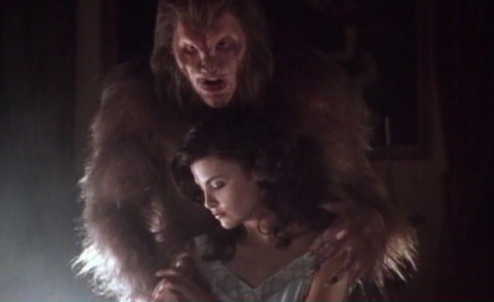
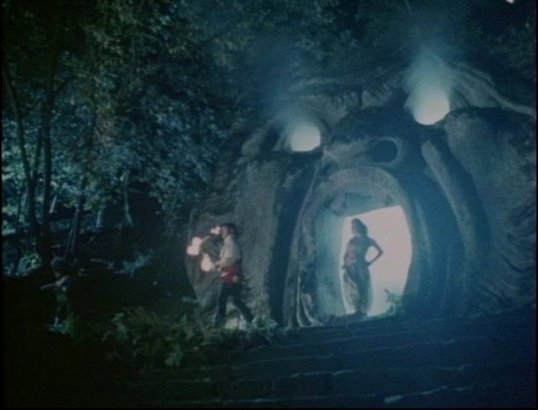
Hawk the Slayer was part of the 80’s flood of sword and sorcery films that included such titles as Conan the Barbarian, Beastmaster and Ladyhawke. To say that this film was bad would be an understatement. Yet, I’m quite drawn to it whenever I see it on TV. In fact, it was on syndication that I first saw this when I was just a wee lad. I might have been around 9 or 10 when I came across it halfway through.
Maybe it was the fact that I was just discovering Advanced Dungeons & Dragons, but this film spoke to me. It had that timeless story of brother against brother. The evil tyrant with legions of evil ne’er do wells against a small band of class-specific heroes and rogues. I mean this had it all. We had the hero of the film who I would probably place in the swordsman class. Then we had Ranulf with his repeating crossbow that would be the band’s rogue. Of course, there’s Gort the giant with his mighty hammer and Baldin the dwarf skilled in the art of the whip. But the one character that really shouted RPG for me throughout this film was Crow the Elf who could fire his bow as fast as any machine gun I’ve ever seen.
I think it’s very awfulness is why I keep returning to it whenever I see it on TV. The acting is atrocious with special effects that even in 1980 would be seen as laughable. The characters themselves were so one-note that one wonders if the person who wrote the screenplay was actually a trained monkey. Yet, the film was fun for all those reasons. It’s one of those titles that one would express as being so bad it’s good. Even now, with childhood several decades past, I still enjoy watching Hawk the Slayer and always wonder when they plan to get the sequel set-up and made.
Oh, the synth-heavy disco-fantasy-western soundtrack was also something to behold.
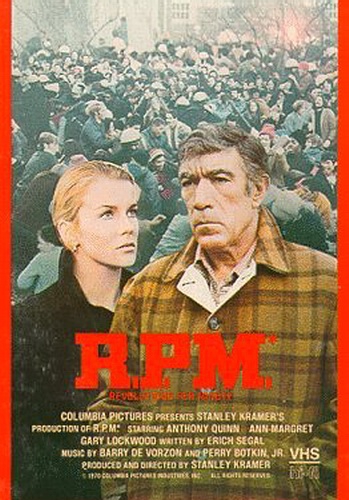
For my next return-to-college film, I ended up watching R.P.M. Like both Getting Straight and Zabriskie Point, R.P.M. was released in 1970 and deals with political unrest on campus.
Directed by Stanley Kramer (who also gave us such respectable and middlebrow liberal films asGuess Who’s Coming To Dinner and Judgment at Nuremberg),R.P.M. takes place at prestigious college. Students radicals led by Rossiter (Gary Lockwood) and Dempsey (Paul Winfield) have taken over a building on campus. When the university’s president goes to confront the students, one of them yells out, “Buzz off!” Well, you know how sensitive college presidents are. He quickly resigns his post and the students demand that he be replaced either by Che Guevara, Eldridge Cleaver, or Paco Perez.
Unfortunately, Guevara is dead and Cleaver is in Algeria. Fortunately, left-wing sociology professor Paco Perez (Anthony Quinn) is available and he just happens to teach on campus! Perez is named interim president of the college. Now, Perez has to bring peace to the campus, despite the fact that the protestors now see him as a sell-out because he accepted the position. Perez also has to deal with nonstop snarky comments from his girlfriend, a grad student named Rhoda (played by Ann-Margaret).
Especially when compared to Getting Straight and Zabriskie Point, R.P.M. is something of a forgotten film. I haven’t found many reviews online and the majority of them mostly seem to focus on the fact that the film is dated and that director Stanley Kramer’s portrayal of the student protestors is incredibly negative. And, in many ways, those criticisms are perfectly valid. And yet, with all that in mind, I still loved R.P.M. Of the three 1970 campus protest films that I watched last weekend, R.P.M. was my personal favorite.
Why do I so love R.P.M?
Well, let’s check out some of the dialogue.
When Paco first comes to see the protestors, one girl literally sings, “Look what the revolution dragged in!”
Later, another demonstrator is heard to philosophically ask, “Why is the good ass never radical and the radical ass never good?” (And that’s certainly a question that was asked by everyone who drove by Occupy Dallas back in 2011.)
About the college administration, one girl announces, “They’ve got empty scrotes!”
When Paco tells Dempsey that the college is finally going to hire a black admissions offer, Dempsey replies, “How black? Is this cat an oreo cookie? Is he related to my uncle Tom?”
When Paco asks how long it will take for the protestors to peacefully leave the building, one of them loudly announces, “It would take to the 12th of never!” Of course, everyone applauds.
And that’s not counting all of the times that random protestors say, “Right on!”
But even better than listening to the protestors is listening to Paco and Rhoda discuss their relationship.
When Rhoda tells Paco that she knows the real him because she sees him without his pajamas, Paco replies, “That’s not reality. That’s flab.” With a world-weary sigh, Rhoda replies, “Flab is reality.”
When Paco complains about Rhoda’s cooking, she sensibly tells him, “Next semester, hump a home economics major.” Paco replies, “I did. The food is great but the talk is lousy.”
After being taunted by a student, Paco asks Rhoda, “Did you tell the kids I was a lousy lay?” Rhoda laughs and replies, “I may have thought it but I never said it!”
Finally, in one heart-warming scene, Paco informs Rhoda that, “The whole campus calls you Paco’s Pillow.”
Seriously, how can you not love a movie with dialogue this overwritten and over-the-top? It’s obvious the Kramer and screenwriter Erich Segal were desperate to sound hip and contemporary and, as a result, nobody speaks like a normal person. Instead, listening to R.P.M. is a bit like listening to a party to which every 60s stereotype has been invited.
And yet, it’s not just the dated dialogue that causes me to love R.P.M. As opposed to the histrionic Getting Straight and the artistically detached Zabriskie Point, R.P.M. is an attempt to seriously deal with the issue of student protest. For every three moments that ring false, there’s one that works and that’s a lot more than most films about campus unrest can say. Anthony Quinn gives a good performance as a man who doesn’t realize quite how complacent he has become. He and Gary Lockwood have a wonderfully tense scene together where they sincerely and intelligent debate their different worldviews. It’s the best scene in the film and one that is so well-done that it excuses any previous missteps.
R.P.M. occasionally shows up on TCM. Keep an eye out for it.
Now, you may be thinking that after reading my reviews of Getting Straight and Zabriskie Point, that we here at the Shattered Lens are encouraging you to overthrow the United States. Nothing could be further from the truth! To quote Michael Scott, nobody here is subversive. Everyone is thoroughly versive. (Michael Scott said that once, didn’t he?)
Anyway, just in case anyone is having any dangerous thoughts, here’s a 30-minute short film from 1972. In Brink of Disaster, Johnny, a college students who sympathizes with the n0-goodniks of the world, breaks into the library so that he cans study late at night and protect it from rampaging campus radicals.
(Wait? What? That makes no sense but, then again, it was 1972…)
Anyway, as Johnny attempts to smoke and study, the ghost of his great-great-great-great grandfather, John Smith, materializes out of thin air and tells him everything that’s wrong with his generation. Johnny attempts to argue but he’s no match for his wiser ancestor.
“Don’t compare to the founding fathers to that riff raff!” John Smith exclaims at one point, “We want to worship God and they want to deny God!”
You tell him, John Smith!
Anyway, you know me. Whether I agree or disagree with the message, there’s nothing that I love more than an old school propaganda film. So, watch and enjoy Brink of Disaster and think twice before you try to overthrow the establishment because you might end up getting haunted by a condescending ghost.
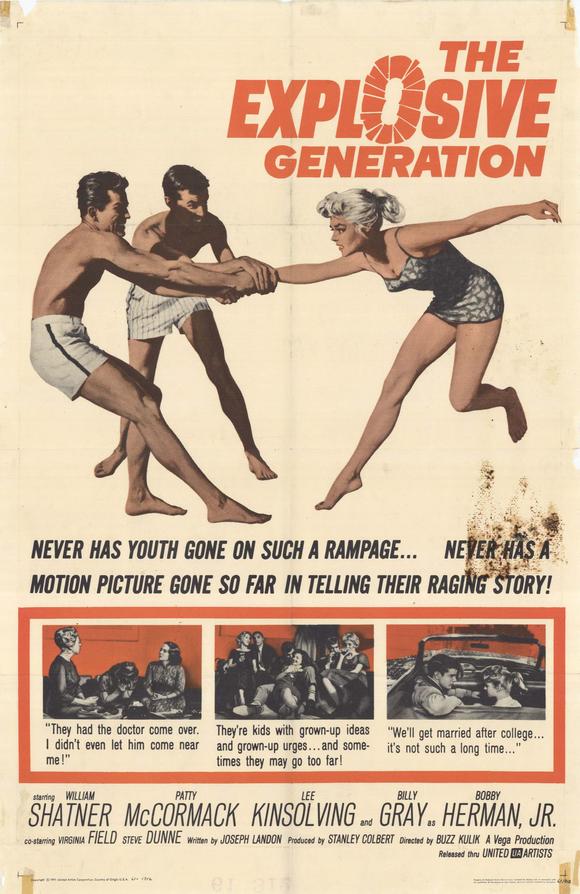
Ever since I first saw it on TCM last year, The Explosive Generation has been a favorite of mine.
This 1961 film deals with sex, peer pressure, censorship, juvenile delinquency, and civil disobedience. The Explosive Generation is one of those films that was made to try to understand the wild and crazy youth of the early 60s, with their crazy rock and roll music, hip way of talking, and their habit of occasionally showing up for high school in a coat and tie. As is typical of low-budget youth films of the period, the film is occasionally clueless and occasionally insightful. In short, it’s a lot of fun and, if you’re a history nerd like I am, it’s a valuable time capsule for the way the world used to be (or, at the very least, the way that people used to think the world was).
Even better, it stars a youngish, intense, and slim William Shatner as an idealistic high school teacher who encourages his students to have a frank and honest discussion about sex. If The Intruder(which was made roughly around the same time) is a film that proves that Shatner was capable of being an intelligent and insightful actor, The Explosive Generation is all about Shatner being Shatner. This performance is everything that you’ve probably come to expect from William Shatner and, as a result, it transcends mundane concepts like good and bad.
Below are two scenes of William Shatner dealing with the Explosive Generation. Be sure to keep an eye out because I’m sure The Explosive Generation will show up on TCM again at some point in the near future!
With the release of the new American reboot/remake/sequel of the classic 1954 Godzilla by Ishirō Honda, I thought it was high time I shared one of my guiltiest of all film pleasures growing up.
Godzilla and everything kaiju I ate up as a wee lad growing up during the 80’s. There really wasn’t anything on Saturday morning and afternoon tv other than reruns of badly dubbed Japanese monsters flicks and anime. One such film was Ishirō Honda’s very own King Kong vs. Godzilla. Yes, you read that correctly. The King of All Monsters fought the Eight Wonder of the World to decide once and for all who was the greatest giant monster of all-time.
The film itself wasn’t that great when I look back on it. Hell, even I had a sort of understanding even as an 8-year old kid that King Kong vs. Godzilla was a pretty bad film, but I still had a blast watching it. The film lacked in coherent storyline and important themes of man vs. nature and the psychological impact of the two atomic bombings of the US on Japan to end World War II wasn’t at all evident in this monster mash-up.
What the film had was King Kong fighting Godzilla. It was like watching two of the greatest icons of youths of my generation duking it out for our pleasure. It didn’t need to have a story or worry about whether it’s depiction of the natives on King Kong’s island was even remotely racist (it was so racist). All it needed to do was show everyone the very fight they’ve been waiting for. Fans of both monster wouldn’t have to wait forever to see the fight happen. This wasn’t going to be a dream fight never to happen like Mayweather vs. Pacquiao.
So, while King Kong vs. Godzilla was never one of the good entries in the Godzilla filmography (I think it was probably the worst) it more than made up for being one of the most campiest and entertaining entries in the Big Guy’s decades long history.
If there ever was a film from my youth that needs to be remade it would be King Kong vs. Godzilla and only Guillermo Del Toro should be chosen to direct it.
If you’ve watched Encore over the last few month, you may have come across a 2001 film called Tart. I did and, despite some pretty glaring flaws, I enjoyed the film. However, I then checked out a few of the reviews that have been posted online and I discovered that I may very well be the only person in the world who doesn’t hate this movie.
Tart is a coming-of-age story. Teenage Cat (Dominique Swain) lives in Manhattan with her divorced mother and her bratty younger brother. Cat attends an exclusive private school with her best friend Delilah (Bijou Phillips) and has a huge crush on William (Brad Renfro). After Delilah is expelled from school, Cat befriends the snobby Gracie (Mischa Barton) and starts to reinvent herself as one of the popular kids. Along with being popular comes drugs, sex, and, eventually, violence.
There’s no telling how many dirty old men were shocked to discover that DVD cover art is often misleading.
I will be the first to admit that a lot of the negative criticism of Tart is justified.
Is the film largely plotless? It is indeed but so is life.
Are all of the film’s adults presented as being one-dimensional jerks? Yes but then again, we are seeing them and their actions through the eyes of a teenage girl and, when you’re a teenager, most adults do seem to be jerks.
Does the film get a bit heavy-handed when it comes to dealing with casual anti-Semitism? It sure does but then again, anyone who thinks that anti-Semitism isn’t on the rise in this country obviously hasn’t been paying attention to the news.
Does the film’s melodramatic conclusion seem to come out of nowhere? Yes, it does. However, when you’re a teenager, everything eventually becomes a melodrama.
Does Brad Renfro seem to spend the entire film wishing he was somewhere else? Yes, he does. In many ways, his performance is painful to watch, both because his character is fighting the same battle with drugs that would ultimately cost Brad his life and the fact that he doesn’t appear to be all that invested in his performance. Watching the film, you’re struck by just how detached Renfro is from the material. It’s easy to criticize the lack of chemistry between Brad Renfro and Dominique Swain but then again, who hasn’t had a crush on a self-destructive bad boy? Who hasn’t thought that she — and she alone — could see something hidden away inside a damaged soul that only she could understand? Who hasn’t dreamed of understanding (and saving) an enigma? Sometimes, detachment is the ultimate aphrodisiac.
Does Bijou Phillips play the same role that she seems to play every time she shows up on screen? Yes, she is playing another wild best friend here but then again, she plays the role well and who hasn’t had a friend who refused to conform?
Does Mischa Barton give a rather broad and over-the-top performance in this film? Yes, she does but then again …. well, sorry. I can’t really think of any way to turn that into a positive.
Shoplifting is fun!
And yet, despite all of the film’s many flaws, I couldn’t dislike Tart. Tart is one of those films that totally misses the big picture and but manages to get so many of the small details right that I couldn’t help but relate to Dominique Swain’s character.
It was the little scenes that worked for me, like the scene where Cat shoplifts for the first time and runs out of the store knowing she’s done something wrong and yet still feeling exhilarated to have gotten away with something or the painfully (for this viewer, at least) accurate scenes of Cat waiting for her father to call on her birthday and then spitefully lashing out at her mother when he doesn’t. I’ve had best friends like Delilah and it was impossible for me not to wince a little at the scenes where Cat and Delilah argue over Cat’s new friends because, seriously, I’ve been there. Even the scene during the opening credits, in which Cat’s skirt is blown upward just as she happens to walk by the boy she likes, felt painfully familiar. Who hasn’t been embarrassed in front of a crush?
It’s the little details that allowed me to relate to this massively flawed film. It’s the little details that make Tart a guilty pleasure.
I sincerely hope that Lisa Marie Bowman will forgive me for muscling in on her (I assume, at any rate) recently-completed “44 Days Of Paranoia” series here at TTSL, but I just couldn’t let it wind up without drawing attention to what is (hopefully) the single-most paranoid flick ever made, namely Ron Ormond’s 1971 Red Scare/Come-To-Jesus religious exploitation number If Footmen Tire You What Will Horses Do?
Ormond was a veteran of the B-movie scene who’s probably best remembered for Mesa Of Lost Women, but at some point in the late ’60s he got scared to death of the emerging youth/anti-war culture and underwent a religious conversion of the “hard turn to the right” variety. Withdrawing from “the business” to his home in Nashville, Tennessee, he founded an outfit known, ever-so-modestly, as “The Ormond Organization,” and set about making evangelical films with his brother and wife as his principal “employees.” The war for our nation’s souls was on, and the Ormonds were determined to do their part by spreading the celluloid gospel.
Enter the Reverned Estus W. Pirkle, hailing from , as you’d probably expect with a name like that, the one-horse town of New Albany, Mississippi. Pirkle was an old-school preacher of the “fire and brimstone” variety who was dismayed by all those pesky civil rights “agitators” who were showing up and disrupting God’s plan for a racially segregated South. He was also worried to pieces about the so-called “Red Menace” He found a way to amalgamate all of his various paranoias into one succinct little book, the title of which you can probably already guess being that this film is based on it, and became a big hit on the traveling revival circuit and at Southern Baptist churches throughout the Bible Belt.
Obviously, when you team up the “talents” of an Ormond and a Pirkle, the end result is going to be a pretty combustible mix, indeed. But you can’t know just how combustible until you see the fruit their collaboration wrought.
The film version of If Footmen tire You What Will Horses Do? takes the form of an extended screed from Pirkle to us lowly mortals in the audience from his position in the pulpit, and, using a “lost soul” teenager named Judy (played by one Judy Creech) as our “point of entry,” shows how Godlessness and moral corruption have wreaked havoc on the lives of our young. What Judy’s doing that’s so wrong is never made clear, mind you, but hey — we know that she does have a boyfriend.
Judy looks especially forlorn when Pirkle talks about the evils of liquor, dancing, and television (he avoids calling out civil rights and anti-war demonstrators by name, but he does inveigh against “riots on campus” and “unwholesome” ideas taking root in the minds of our young), but she’s been unaware of the larger plot that her morally fast-and-loose ways have been playing into — the Communist takeover of these United States.
A lame series of “documented” re-enactments of scenes that “took place in other countries” (where everybody’s got a southern accent) show us what will happen after the dastardly Reds conquer America in, according to Pirkle’s estimation, 16 minutes flat — you can count on, among other atrocities : Commie soldiers breaking into your home to have their way with your wife; kids being forced to pray to Fidel Castro in the public schools in exchange for candy; Christians being shot in the streets and their bodies being left to rot in the baking sun; sons being forced to kill their own mothers if they won’t renounce Christ; and, perhaps most insidious of all, 12-to-16-hour work days, seven days a week, 363 days a year (funny, but that sounds more like a union-busting capitalist’s wet dream than a Communist one).
Dead kids are a mainstay throughout If Footmen Tire You What Will Horses Do?, and when Ormond and company run out of youngsters volunteered by their parents to lay down, pretend not to be breathing, and get splattered with Red Karo syrup, they often resort to using shop mannequins as stand-ins to pad their “mass slaughter” numbers. One scene where no plastic dummies are used, however, is perhaps the film’s most disturbing : a struggling young boy has his eardrums pierced with a bamboo stick so “he can no longer hear the word of Christ” and pukes all over himself while fake blood gushes out of his ears in rivers. Yeah, I know the red stuff’s not real, but the vomit most certainly is, and if the evangelical blow-hards who made this propaganda had any sense of shame they’d at the very least blush for resorting to on-screen, and very real, child abuse in the furtherance of their “holy” cause.
And that’s where Ormond, Pirkle, and the rest of the Holy Rollers who participated in this thing lose me. On the one hand their film can easily be dismissed as the delusional ramblings of the truly insane, but the scary thing is that this is just a celluloid reflection of what many Americans truly felt at the time (and feel now, with Muslims taking the place of Communists), and they were willing to do real harm to a kid in order to dramatize their dipshit point of view. Without that one scene I could have easily laughed my way through If Footmen Tire You What Will Horses Do?, but that single, solitary instance shows that there was, indeed, genuine evil at work here — and those pesky Reds weren’t the source of it.
Look, let’s not kid ourselves — Communism didn’t work out too well anywhere it was put into practice (although Cuba is far from the dictatorial hell-hole that most right-wingers are still trying to convince us it is), and Stalin and the like were, indeed, responsible for countless atrocities. But it’s not like anti-Communism necessarily has clean hands, either. Just ask the people of Vietnam. Or Nicaragua. Or El Salvador. Or Laos. Or Bolivia. Or — the list goes on and on. And we definitely lose any sort of moral high ground we might claim over our purported “enemies” when we resort to the very same tactics in combating them that we accuse them of utilizing.
If Footmen tire You What Will Horses Do? offers a pretty good example, in microcosm, of exactly what I’m talking about. It’s propagandistic nonsense born out of irrational fear that has no basis in factual reality whatsoever and is willing to make a kid throw up on himself just to add an exclamation point to its absurd claims. It could have been fun, hokey, stupid shit — and most of the time it is — but the sick minds of Ormond and Pirkle took it seriously enough, and were willing to traumatize and harm one of the young souls they were supposedly out to “save” in order to prove just how serious they were.
This flick was largely played on 16mm projectors at churches and revival halls, where it was presented as, of course, God’s honest truth. And while all that may seem hokey today, the audiences who watched it at the time lapped it up. In fact, an entire generation was raised on this horseshit. So next time you hear one of the blowhards on Fox “news” or right-wing talk radio blathering on about the “evils” of Communist, Socialist, Islamic, etc. propaganda, consider how far the “good guys” have been willing to go when it comes to brainwashing their own youth. Here’s a YouTube link to the full movie so you can make up your own mind: