Horror Review: Cold Fish (dir. by Sion Sono)


“Life is pain.” — Nobuyuki Syamoto

Unflinching, subversive, and dripping in corrosive dark humor, Sion Sono’s Cold Fish (2010) doesn’t just showcase Japan’s taste for genre-bending horror—it rips open the underbelly of polite society and exposes what writhes beneath. If I Saw the Devil was a descent into the abyss of revenge, Cold Fish is a fever-dream trek through manipulation, depravity, and the most repressed corners of the psyche. Built around the crucible of violence and sex, Sono’s film dares viewers to question not only the shape of evil, but whether the forces that awaken it could be lurking in anyone.

Before Cold Fish, Sono had already established himself as a subversive force in horror with his earlier film Suicide Club (2001), which helped him gain a loyal cult following and introduced him to the genre scene at large as an innovative and provocative filmmaker unafraid to challenge conventions. With Cold Fish, Sono refined his style, offering a tighter, more psychologically driven narrative that accelerates the intensity while probing deep societal anxieties.

Inspired by the real-life Saitama serial murders of the 1990s, committed by dog breeder Gen Sekine and his common-law wife Hiroko Kazama, Cold Fish draws chilling authenticity from these events. Sekine and Kazama ran a pet shop and poisoned several customers before dismembering their bodies to conceal the murders. Sono reimagines this disturbing history by transforming the pet shop into a tropical fish store and fictionalizing details while preserving the core themes of manipulation, complicity, and violence.

The story opens with Nobuyuki Syamoto, the definition of a beaten-down everyman: a tropical fish shop owner whose daughter openly hates her stepmother, whose marriage is half-drowned in silent resentment, and who drifts through life as little more than a shadow. From the outset, Syamoto’s passivity sets a tremulous undertone—terrible things are happening, but he isn’t doing much to stop them. That changes the moment his daughter Mitsuko is caught stealing and rescued by the charismatic Yukio Murata, proprietor of a flashier fish store. Murata’s manners and generosity are overwhelming, almost caricatured, yet there’s an edge of anticipation: something is amiss, and Sono lets the feeling gradually curdle beneath his gentle facade.

Murata’s initial charm morphs into coercive control as he manipulates the Syamoto family into his orbit. When Syamoto is coerced to become Murata’s “business partner,” the narrative takes its first graphic, kinetic turn: a sales pitch for a rare tropical fish goes lethally wrong. Murata poisons a buyer in cold blood, then erupts into violence, forcing Syamoto and his wife into complicity by helping dispose of the body. The shift is immediate and nightmarish—the performance by Denden (Murata) snaps from quirky salesman to a near-mythical monster, as terrifying for his unpredictability as for his casual approach to killing.

From here, Cold Fish dives into a spiral of murder, sexual domination, and psychological torture. Murata and his partner Aiko have murdered dozens, perfecting the art of erasing their victims. As the body count rises, Sono’s camera remains hauntingly restrained: eschewing frantic cuts for long takes, keeping his characters center-frame, locking viewers in Syamoto’s dread-soaked POV. We are forced to witness every mechanical step in the pair’s routine—the body disposal, the literal scattering of ashes, the casual cruelty.

What makes Cold Fish such a disturbing experience is not merely the gore (though the final act is blood-soaked chaos), but the way deviance is normalized, even made bureaucratic. Murata’s operation feels part nightmare, part dull corporate job. This banality breeds horror. At times, Sono punctuates scenes with black comedy: surf rock tunes play in the background as mutilated bodies are processed in Murata’s shop, and his wife’s participation has a twisted, deadpan humor that makes the violence doubly unsettling.

Syamoto’s trajectory is the film’s secret weapon. By trapping us in his perspective, Sono draws out the uncomfortable reality of learned helplessness, craven compromise, and the latent violence beneath a repressive facade. Syamoto isn’t a hero or anti-hero, but a study in desperation and dissolution. His initial submission slowly ferments into rage, and when he finally snaps, the violence is primal and cathartic—a vengeance that feels less like triumph and more like an act of obliteration. Instead of a neat moral arc, Sono’s script is obsessed with the ambiguity of retribution: what festers beneath apathy, what trauma does when left unaddressed, and what the need to act breeds when suppressed for too long.

This thematic preoccupation connects Cold Fish to the likes of I Saw the Devil: both movies use revenge not as justice, but as a mirror for corruption—how far can the ordinary man go before he becomes indistinguishable from the monsters tormenting him? Sono’s film is ultimately more nihilistic, using social commentary as a subtle undertow, with critiques of Japanese conformity, sexuality, and family decaying beneath the surface. The result is a film that is both emotionally exhausting and intellectually provocative.

Technically, Cold Fish offers Sono at his most focused. The cinematography is subtle but relentless, with natural camera movement amplifying character reactions rather than indulging in spectacle. The use of Mount Fuji as a backdrop for scenes of violence is striking and effective. Costume, color palette, and setting all speak of an ordinary world slowly overtaken by surreal terror. The score plays off these moments, with music choices ranging from nervy tension to surf-rock irony.

The performances are uniformly superb. Denden is magnetic as Murata—making each mood shift obvious, unpredictable, and horrifying. Mitsuru Fukikoshi’s portrayal of Syamoto is raw, fragile, and ultimately explosive. The supporting cast amplifies the film’s extremes without ever feeling cartoonish. Sono pushes them to the edge, finding both tragedy and queasy humor in their unraveling. The sound design, especially in scenes of dismemberment and violence, is overwhelming and intense—forcing the audience into a sensory trap that mirrors Syamoto’s psychological implosion.

Yet Cold Fish isn’t just an exercise in gore or cruelty—it’s an autopsy of repression, cowardice, and compulsion, watched through the lens of a culture known for its traditions of obedience. The film asks what drives people to murder, what keeps them silent, and what happens when those limits are breached. It never gives viewers easy sympathies or clean answers, and the ending is deliberately unnerving—Syamoto’s transformation is complete, but it isn’t heroic, nor is it redemptive.

For some, the film’s length and relentless tone will be too much. Others have pointed out its over-the-top final act, and some feel the excessive violence is hard to justify. However, these very qualities are what cement Cold Fish as a significant work in contemporary Japanese horror—it’s the sort of movie that claws at you for days, sticking in the brain with its grim humor and powerful sense of unease. Like I Saw the Devil, it’s less about catharsis than about exposing the permanent scars left by evil and revenge, and the horrifying possibility that what lurks under the surface of normality is just waiting for an invitation to come out.

Ultimately, Sion Sono’s Cold Fish is an important piece of modern horror—not simply for its brutality, but for its relentless psychological excavation and perverse humor. By channeling the real Saitama serial murders into a study of psychological torment and complicity, Sono creates a film that is designed to provoke, to disturb, and to make audiences ask where the boundaries of morality might finally break. For genre fans, it’s a bracing, unforgettable experience; for those who approach with caution, it’s both a warning and an invitation to glimpse the heart of darkness just beneath the surface.
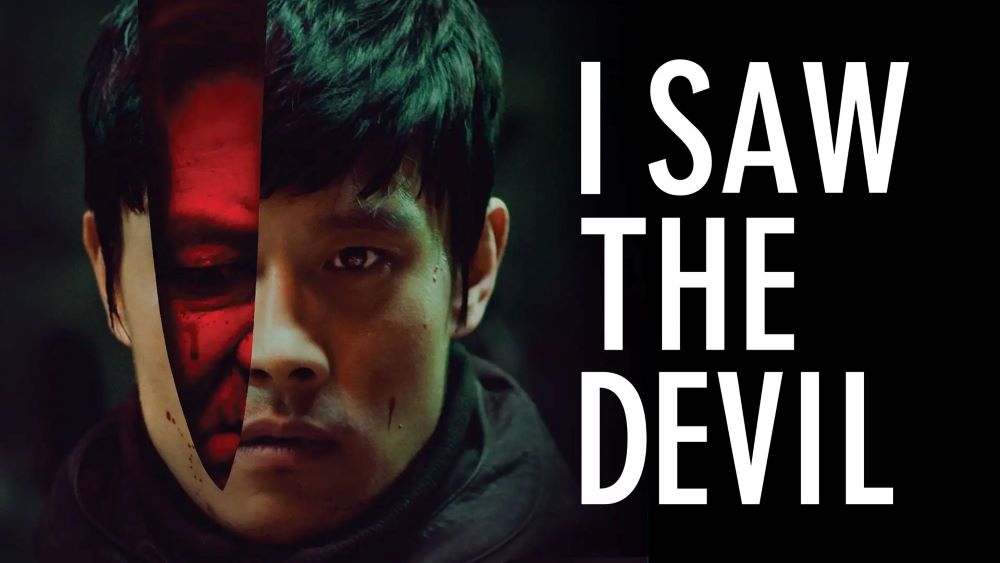
Horror Review: I Saw the Devil (dir. by Kim Ji-woon)


“Revenge is a fire that burns you the most.”

I Saw the Devil (2010) is a film that refuses to play by the rules of typical revenge thrillers. Instead, it pushes the boundaries into some of the most brutal and unflinching territory South Korean cinema has to offer. Directed by Kim Ji-woon, the movie blends elements of horror and psychological thriller, creating a hybrid that’s as disturbing as it is compelling. Much like Kingdom, it blurs the lines between genres—what starts as a revenge story quickly morphs into something darker and more extreme, turning familiar tropes into a raw exploration of evil’s destructive power.

The story follows Soo-hyeon (Lee Byung-hun), an intelligence agent whose fiancée becomes the victim of a sadistic serial killer named Kyung-chul (Choi Min-sik). Instead of a straightforward pursuit of justice, Soo-hyeon dives into a nightmarish game of cat and mouse. His goal? To inflict suffering on Kyung-chul in return, not for closure but for unleashing a kind of revenge that is almost self-destructive. Repeatedly capturing and releasing Kyung-chul, Soo-hyeon becomes trapped in a cycle of violence that steadily erodes his moral boundaries.

That cyclical pattern forms the backbone of the film, adding a rhythm that oscillates between moments of calm and bursts of brutal violence. Scenes of horror are often tinged with dark humor, adding an unsettling layer to the narrative. One standout moment occurs in a remote farmhouse, where Kyung-chul meets his twisted friend Tae-joo, a cannibalistic serial killer who treats violence like a casual dinner conversation. This scene exemplifies the film’s unsettling ability to find morbid humor in the most horrific circumstances, emphasizing how evil—when normalized—becomes almost banal.

Choi Min-sik’s performance in I Saw the Devil is chilling, showcasing his ability to embody pure evil. It’s a stark contrast to his role in Oldboy, where he played Oh Dae-su, a man seeking revenge for his own suffering. Here, Choi’s Kyung-chul is the embodiment of savagery—an inhuman predator with no remorse, no moral compass, just pure chaos. The role reversal highlights the incredible range of an actor whose presence can turn the screen into a nightmare. This flip from sympathetic avenger to monstrous villain makes the film’s exploration of morality even more compelling.

The film’s approach to violence is unabashed and graphic. Scenes of sexual assault, torture, and murder are depicted in unflinching detail, sparking inevitable debates about whether it’s gratuitous or necessary. Kim Ji-woon doesn’t hold back — he wants you to feel the full weight of evil in its most visceral form. This isn’t horror for shock’s sake; it’s a brutal mirror held up to the darker sides of human nature, exploring how unchecked vengeance can corrupt and destroy everything in its path.

Beyond the violence, I Saw the Devil probes deeper questions about morality and obsession. Soo-hyeon’s transformation from devastated lover to relentless avenger is portrayed with subtlety—they’re not just chasing a killer; they’re unraveling themselves. Lee Byung-hun brings a quiet intensity to his role, capturing the tragic descent into obsession and madness. The film makes you ask: how far can you go to punish someone before you become what you hate? And is vengeance ever truly justified? These aren’t easy questions, but I Saw the Devil forces you to sit with them.

Visually, the film is bleak and cold—mirroring its themes of alienation and moral decay. Kim Ji-woon keeps things straightforward, focusing on clear visuals that highlight the starkness of both urban and rural settings. The action scenes are brutal but precise, often choreographed with a sense of dark beauty that enhances their impact. The pacing is tight—about two hours—delivering a relentless story that never quite lets go of the tension.

The soundtrack and sound design don’t overshadow the visuals but add to the sense of dread. Quiet moments are ominous; violent sequences are thunderous, immersing viewers fully into this nightmare landscape. Every detail, from lighting to camera angles, emphasizes the film’s mood: raw and unsettling from start to finish.

The themes extend beyond personal revenge, touching on broader issues of societal trauma and the cyclical nature of violence. Korea’s history of brutal trauma and social upheaval echoes in the film’s exploration of how wounds—personal or national—can perpetuate more violence if left unresolved. It’s a brutal reminder that revenge can become a self-fulfilling prophecy, devouring everyone involved.

But make no mistake: I Saw the Devil is a challenging film. It doesn’t shy away from explicit content or disturbing themes. It’s brutal, unrelenting, and sometimes hard to watch. But that’s its power. It forces viewers out of their comfort zones and confronts uncomfortable truths about justice, evil, and our capacity for cruelty.

I Saw the Devil is a landmark in Korean cinema—an uncompromising look at revenge as a corrosive force. Its fusion of extreme horror and psychological drama creates a haunting experience that stays with you long after the credits roll. It’s not just a revenge story; it’s a primal reflection on what it means to be human—and what it costs to seek vengeance in a world full of monsters.

Horror On The Lens: It Conquered The World (dir by Roger Corman)


“Man is a feeling creature, and because of it, the greatest in the universe….”

Hell yeah!  You tell ’em, Peter Graves!

Today’s Horror on the Lens is 1956’s It Conquered The World.  Graves plays a scientist who watches in horror as his small town and all of the people who he loves and works with are taken over by an alien.  Rival scientist Lee Van Cleef thinks that the alien is going to make the world a better place but Graves understands that a world without individual freedom isn’t one that’s worth living in.

This is one of Corman’s most entertaining films, featuring not only Graves and Van Cleef but also the great Beverly Garland.  Like many horror and science fiction films of the 50s, it’s subtext is one of anti-collectivism.  Depending on your politics, you could view the film as either a criticism of communism or McCarthyism.  Watching the film today, with its scenes of the police and the other towns people hunting anyone who fails to conform or follow orders, it’s hard not to see the excesses of the COVID era.

Of course, there’s also a very persuasive argument to be made that maybe we shouldn’t worry too much about subtext and we should just enjoy the film as a 50s B-movie that was directed with the Corman touch.

Regardless of how interpret the film, I defy anyone not to smile at the sight of ultra-serious Peter Graves riding his bicycle from one location to another.

Here, for your viewing pleasure, is It Conquered The World!


October Positivity: The Moment After (dir by Wes Llewellyn)


1999’s The Moment After opens with the world in a panic.  Millions of people have suddenly vanished into thin air, leaving only their clothes and their loved ones behind.  On a news program, three expects are brought in to discuss what might have happened.  A New Age-y woman argues that “Mother Earth” is eliminating overpopulation.  A wild-eyed man argues that people have been abducted by UFOs.  And finally, a man with a neatly trimmed beard argues that it’s the rapture.  The bearded man is dismissed as being a crank.

Two FBI agents — Adam Riley (David A.R. White) and Charles Baker (Kevin Downes) — are assigned to investigate the disappearances.  Charles is himself shaken because he knew a few people who disappeared.  As they drive around the city and talk to people, they hear the same story.  People who went to church regularly and were Christian vanished while their less faithful loved ones watched.  Adam comes to suspect that there might be something to the Rapture Theory.  Charles, bitter because his wife recently suffered a miscarriage, has no time for it.

As often happens in a crisis, the government grows heavy-handed and sinister.  The President announced that he’s going to follow the lead of Europe and “suggest” that everyone get a chip implanted in their hand.  Charles gets the chip without hesitation.  Adam keeps finding excuses to put it off, even though he’s mandated to get one as a federal employee.  With the country turning into an authoritarian dystopia, Charles and Adam are assigned to track down a renegade preacher (Brad Heller), who is telling his followers not to get chipped.

Stories about the end time have always been popular when it comes to faith-based films.  A lot of that is because the Book of Revelations is written in such a way that there’s a lot of different ways that one can interpret it.  As a result, it’s always interesting to see how “the mark of the Beast,” will be represented in these films.  Sometimes, it’s a tattoo.  Sometimes, it’s an invisible mark that only demons can see.  In this one, it’s a chip that works as a credit card.  And while it’s easy to scoff at this film’s conspiracy theories and the shots of people staring at their palms, some of us still remember how, during the COVID lockdowns, there were more than a few people in positions of influence who argued that the citizenry shouldn’t be allowed in stores or restaurants or anywhere else unless they could show proof they had gotten the vaccine and kept up with the boosters.  There were even some who said that the National Guard should go door-to-door and force the shot on people.  (For the record, I did get the vaccine but, when I started hearing about monthly boosters and all that other stuff, I decided that one shot was more than enough for me.)  There is definitely an authoritarian impulse out there, one that comes out whenever there’s a crisis.  One reason why films like this one continue to find an audience is because real-life governments often behave like the dictatorship portrayed in The Moment After.  Of course, in the movie, everyone can at least say they were influenced by the Devil.  In real life, it just comes down to pettiness and a need to tell other people what to do.

As for The Moment After, it’s a low-budget but fairly well-done thriller, one that keeps the preaching to a minimum and doesn’t feature a lot of the problematic elements that one tends to find in movies like this.  White and Downes both give effective performances.  It avoids the histrionics that tend to define a lot of other apocalyptic films.  This is not a film that’s going to convert anyone but it does a good enough job creating an atmosphere of paranoia and growing dread that it works as a thriller.

A Horror Blast From The Past: Suspense (dir by Lois Weber and Phillips Smalley)


Suspense is a ten-minute blast from the past that comes to us all the way from 1913.

In this film, the Woman (played by Lois Weber) and her baby are menaced by the Tramp (Sam Kaufman), a sinister figure who cuts her phone lines and breaks into her home.  While the Woman tries to protect herself, the Husband (Val Paul) rushes home to save his wife.

Suspense was one of the first thrillers and it introduced many elements that are still used to today, including the cut phone lines and the isolated location.  This was also one of the first films to use the split screen as a narrative technique.  There are many modern horror films that owe a debt to Suspense, whether the filmmakers realize it or not.

Suspense was written and directed by Lois Weber, who is widely acknowledged as being America’s first female filmmaker.

The TSL Horror Grindhouse: The Dunwich Horror (dir by Daniel Haller)


Look at me/I’m Sandra Dee….

First released in the groovy and psychedelic year of 1970, The Dunwich Horror stars Sandra Dee as Nancy, an somewhat innocent grad student at Massachusetts’s Miskatonic University.  When the mysterious Wilbur Wheatley (Dean Stockwell) comes to the university and asks to take a look at a very rare book called The Necronomicon, Nancy agrees.  She does so even though there’s only one edition of The Necronomicon in existence and it’s supposed to be protected at all costs.  Maybe it’s Wilbur’s hypnotic eyes that convince Nancy to allow him to see and manhandle the book.  Prof. Henry Armitage (Ed Begley) is not happy to see Wilbur reading the book and he warns Nancy that the Wheatleys are no good.

Nancy still agrees to give Wilbur a ride back to his hometown of Dunwich.  She finds herself enchanted by the mysterious Wilbur and she’s intrigued as to why so many people in the town seem to hate Wilbur and his father (Sam Jaffe).  Soon, she is staying at Wilbur’s mansion and has apparently forgotten about actually returning to Miskatonic.  She has fallen under Wilbur’s spell and it soon becomes clear that Wilbur has sinister plans of his own.  It’s time to start chanting about the Old Ones and the eldritch powers while naked cultists run along the beach and Nancy writhes on an altar.  We are in Lovecraft county!

Actually, it’s tempting to wonder just how exactly H.P. Lovecraft would have felt about this adaptation of his short story.  On the one hand, it captures the chilly New England atmosphere of Lovecraft’s work and it features references to such Lovecraft mainstays as Miskatonic University, the Necronomicon, and the Old Ones.  As was often the case with Lovecraft’s stories, the main characters are students and academics.  At the same time, this is very much a film of the late 60s/early 70s.  That means that there are random naked hippies, odd camera angles, and frequent use of the zoom lens.  The film makes frequent use of solarization and other psychedelic effects that were all the rage in 1970.  Lovecraft may have been an unconventional thinker but I’m still not sure he would have appreciated seeing his fearsome cult transformed into a bunch of body-painting hippies.

Really, the true pleasure of The Dunwich Horror is watching a very earnest Sandra Dee act opposite a very stoned Dean Stockwell.  Stockwell was a charter member of the Hollywood counterculture, a friend of Dennis Hopper’s who had gone from being a top Hollywood child actor to playing hippie gurus in numerous AIP films.  As for Sandra Dee, one gets the feeling that this film was an attempt to change her square image.  When Wilbur tells Nancy that her nightmares sound like they’re sexual in origin and then explores her feelings about sex, Nancy replies, “I like sex,” and it’s obviously meant to be a moment that will make the audience say, “Hey, she’s one of us!”  But Sandra Dee delivers the line so hesitantly that it actually has the opposite effect.  Stockwell rather smoothely slips into the role of the eccentric Wilbur.  Wilbur is meant to be an outsider and one gets the feeling that’s how Stockwell viewed himself in 1970.  Sandra Dee, meanwhile, seems to be trying really hard to convince the viewer that she’s not the same actress who played Gidget and starred in A Summer Place, even though she clearly is.  It creates an oddly fascinating chemistry between the two of them.  Evil Wilbur actually comes across as being more honest than virtuous Nancy.

Executive produced by Roger Corman, The Dunwich Horror is an undeniably campy film but, if you’re a fan of the early 70s grindhouse and drive-in scene, it’s just silly enough to be entertaining.  Even when the film itself descends into nonsense, Stockwell’s bizarre charisma keeps things watchable and there are a few memorable supporting performances.  (Talia Shire has a small but memorable roll as a nurse.)  It’s a film that stays true to the spirit of Lovecraft, despite all of the hippies.

October Hacks: The Unnamable (dir by Jean-Paul Ouellette)


1988’s The Unnamable takes place in the type of small, superstitious town that H.P. Lovecraft made famous in his stories.  (The Unnamable is loosely based on Lovecraft’s work.)

The students at Miskatonic University are fascinated by the stories that surround the old Winthrop place, a mansion where, 100 years ago, Joshua Winthrop’s wife supposedly gave birth to a hideous monster that proceeded to kill Joshua and all of his servants.  It is said that the mansion is still haunted, perhaps by the ghost of Joshua or maybe by the monster itself!  The students regularly dare each other to stay at the old Winthrop Place.  Joel (Mark Parra) accepts the dare and vanishes, worrying his friends Howard Damon (Charles Klausmeyer) and Randolph Carter (Mark Kinsey Stephenson).  While Howard is a skeptic about the supernatural, Carter is a dedicated student and he’s obsessed with what might be found within the Winthrop house.

Meanwhile, two frat boys (Eben Ham and Blane Wheatley) convince Wendy (Laura Albert) and Tanya (Alexandra Durrell) to come hang out with them for the night in the Winthrop House.  The frat boys claim that it’s an annual initiation that all new students go through.  For the most part, the frat boys just want to get laid.  One of them even drapes a sweater over his shoulders.  Since when has anyone wearing a sweater that way turned out to be a good guy?

Of course, it turns out that Winthrop House is haunted and soon, heads are rolling (literally) and blood is being spilled.  While the frat boys and the girls fight for their lives, Howard and Carter break into the mansion to see if they can find their missing friend Joel.  Of course, Carter is immediately distracted by the mansion’s collection of ancient texts and hidden tunnels.  Howard, on the other hand, just wants to save Wendy’s life and prove that he’s as good as any sweater-draping frat boy.

The Unnamable is fairly low-budget affair, one that mixes the slasher genre with Lovecraft’s chilly horror.  It works surprisingly well.  The house is a wonderfully atmospheric location.  The monster, when it finally makes its appearance, is frightening and very Lovecraftian.  In fact, the monster feels as if could have wandered over from Stuart Gordon’s Castle Freak.  (The Unnamable probably would never have been made if not for the success of Gordon’s Re-Animator.)  The gore is plentiful and, at times, disturbingly convincing.  The main thing that makes The Unnamable work as well as it does is that the cast is surprisingly game and they attack their stereotypical roles with a likable enthusiasm.  Nobody coasts on the fact that the film is just a “horror movie” or just as “slasher flick.”  The characters may not have much depth but the cast still does a good job of bringing them to life (and death).  I especially liked the performance of Mark Kinsey Stephenson as Randolph Carter.  Randolph Carter, of course, is a name that should be familiar to most Lovecraft readers and Stephenson is a delight as he ignore the chaos around him so that he can check out the mansion’s library.  While the film definitely takes some liberties with Lovecraft, Stephenson is still the ideal Carter.

The Unnamable was an enjoyably macabre surprise.

Call Girl Of Cthulhu (2014, directed by Chris LaMartina)


I guess it was inevitable that a movie would be made with that title.

Carter Wilcox (David Phillip Carollo) is a virgin artist who draws pictures of ancient symbols for the one-eyed Professor Edna Curwen (Helenmary Ball) and who meets and falls in love with a call girl/stripper named Riley (Melissa LaMartina).  Because Riley has got an octopus-shaped birthmark on her ass, she gets kidnapped by a cult who tries to turn her into the bride of Cthulhu.

You pretty much know what you’re going to get when it comes to this movie and it pretty much delivers.  There’s plenty of nudity, blood, juvenile humor, and references to the work of H.P. Lovecraft.  The pacing is abysmal and the acting is terrible but surprisingly, the gore was disgustingly realistic and the special effects were not awful.  The tentacled monster was probably about as convincing as it could be in a film like this.  You can tell where the most of the money in the budget went.

The actors playing Carter and Riley are forgettable and chemistry-free.  The one good performance came from Dave Gamble as the smug cult leader.  Never allow yourself to get too smug when dealing with the Great Old Ones.

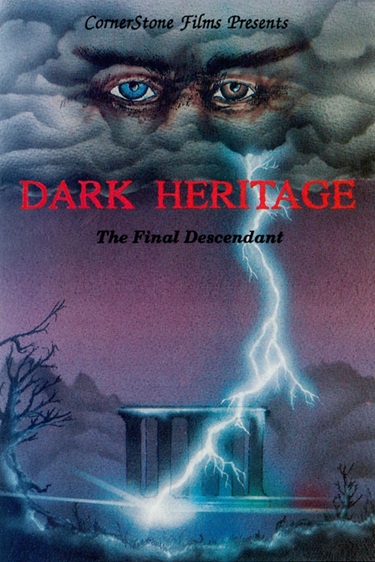
Horror Film Review: Dark Heritage (dir by David McCormick)


1989’s Dark Heritage deals with the aftermath of a violent thunderstorm in Louisiana.

After the thunder has rumbled and the lightning has flashed and all of the rain has fallen, several dead bodies are discovered in the wilderness near a mansion.  Why are the bodies out there?  How did they end up dead?  Are they connected to the reclusive Dansen clan, a once notorious family that may not even exist any more?  Bearded reporter Clint Harrison (Mark LaCour) is sent to find out!

Dark Heritage is an example of one of my favorite genres, the low-budget regional horror film.  Dark Heritage not only takes place in Louisiana but it was also filmed in Louisiana with a cast that spoke in genuine Louisiana accents.  It wouldn’t surprise me to learn that the majority of the crew was from the state as well.  This is not one of those films where the South is represented by the mountains of California.  That brings a certain amount of authenticity to the production and that authenticity can make up for a lot.  This film captures the true atmosphere of Louisiana at its most humid and gothic and there aren’t any yankees around to ruin everything.  That’s always nice.

At the same time, Dark Heritage also wears its low-budget on its sleeve.  Sometimes, it’s effective.  A sepia-clad vision of a ghostly member of the Dansen clan entering the mansion and motioning for the reporter to follow him is far more effective than it has any right to be.  The horror genre is one of the few genres that actually benefits from grainy cinematography and dark lighting.  There are other times when the amateurishness of the production is definitely a distraction.  A scene towards the end where a man threatens Clint with a gun is so overacted by everyone involved that it actually becomes rather humorous to watch.  If the most intense scene of your horror film inspires laughter instead of a racing heart, it’s definitely a problem.

The film itself is loosely based on H.P. Lovecraft’s The Lurking Fear.  Just as with the original story, we get an extended sequence of an underground chamber that is full of some genuinely creepy monsters.  That said, the film’s plot is often not that easy to follow, both because of the illogical actions of the characters and also some genuinely poor sound recording that makes it difficult to follow the conversations.  This is a film where Clint first goes to the mansion with two companions.  When those companions disappear, Clint is told that he is now a murder suspect.  Clint’s reaction is to go find someone else to return to the house with him.  Surely he knows that if that person also dies while visiting the house, he’ll look even more guilty.  I mean, that would only make sense, right?  Why not just stay away from the house?

Dark Heritage has a lot of atmosphere and it even manages to give us a few memorable and creepy visuals.  That said, it’s ultimately done in by its low-budget and its often incoherent plot.


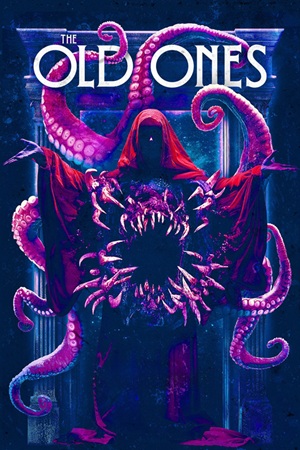
Horror Film Review: The Old Ones (dir by Chad Ferrin)


2024’s The Old Ones opens with an animated sequence of an old sea captain being tossed into a light, an apparent sacrifice.  On the one hand, it’s properly macabre, featuring as it does a cult sacrifice.  On the other hand, it’s also kind of cute because it’s animated.  That juxtaposition between the horrific and the cute pretty much defines the entire film.

The sea captain is Russell Marsh (Robert Miano).  He eventually washes up, 95 years after he left his home on a sea voyage.  Russell is discovered by Dan (Scott Vogel) and his son, Gideon (Brandon Philip), who are camping and having some father-and-son bonding time.  Russell tells them that he was born in 1865 and that he last set sail in 1930.  Dan and Gideon point that’s not possible because it’s 2025 and Russell doesn’t appear to be a day over 65.  Russell says that he’s spent the last 95 year being possessed and controlled by the Old Ones, the cosmic beings who control the universe.  Dan is skeptical but then Dan is promptly killed by a monster who materializes out of nowhere.  Russell and Gideon go on the run, trying to avoid cultists and others who have been possessed by the Old Ones.  Russell says that, if he can find the mysterious Nylarlahotep, he may be able to travel through time and stop himself from going to sea in 1930.  Russell would never be possessed by the Old Ones and, in theory, Gideon’s father would never had died.

The Old Ones is “based on the writings of H.P. Lovecraft” and it should be noted that the film does contain references to a lot of Lovecraft’s stories.  Nylarlahotep (played here by Rico E. Anderson) is a character straight out of Lovecraft and his behavior here — menacing and enigmatic, if slightly bemused by the foolishness of humanity — very much conforms to Lovecraft’s portrayal of him.  The Old Ones will be familiar to anyone with even a passing knowledge of the Cthulhu Mythos.  That said, the film itself doesn’t always feel particularly Lovecraftian, if just because of the amount of humor that is found during Russell and Gideon’s quest.  Gideon is often in a state of shock while Russell is the one who has seen it all and faces every horror with a studied nonchalance.

(One of the film’s best moments is when Russell pragmatically suggests that Gideon should sacrifice himself since Russell is just going to reverse time anyways.)

Considering that the budget was obviously low and that the writings of H.P. Lovecraft are notoriously difficult to adapt, The Old Ones works far better than I certainly expected it to.  The story moves quickly and even the humor adds to the overall feel of the chaotic energy of the Old Ones invading human existence.  The strongest thing about the film is the performance as Robert Miano as Russell Marsh.  As played by Miano, Russell is the perfect hero for this type of story, compassionate but also pragmatic enough not to shed any tears if someone happens to die on Russell’s way to reversing time.  Even if the humor may not reflect the source material, the film still ends on a very Lovecraftian note.  One person’s happy ending is another’s nightmare.