Film Review: Peppermint (dir by Pierre Morel)


2018’s Peppermint is a film about a former banker named Riley North who kills a lot of people but it’s okay because she’s played by Jennifer Garner and has really pretty hair.

It’s also kinda justified because, five years earlier, Riley’s family was murdered and Riley didn’t get justice.  In fact, the perpetrators were acquitted in a trial that was so obviously fixed that I was surprised that no one started shouting “shenanigans.”  Along with hunting down the gang members who murdered her husband and daughter, Riley also murders the prosecutor, the defense attorney, and the judge.  I imagine she did this because Riley knows that if she didn’t kill at least one old white guy, the entire movie would just be the cringey spectacle of a white woman hunting down a group of Hispanic men.  Riley may not know how to get justice through conventional means but she’s still savvy enough to know that you’ve got to throw a few white dudes into your killing spree.  (Otherwise, people might notice that, with the exception of one character, every Latino in the film is portrayed as being a drug-dealing killer.)

We’d probably have more sympathy for Riley if we were not forced to sit through flashbacks designed to show how happy her family was.  Seriously, the Norths were so obnoxiously perfect that you kinda feel like they were tempting fate by just existing in a movie.  No one ever gets away with being that wonderful.  If you want to survive a movie like this, it helps to be dysfunctional.

Anyway, as you watch the film, you might find yourself wondering how Riley learned how to be such an efficient killing machine.  I know that I did  It turns out that, after losing faith in the system, Riley spent five years wandering the world, volunteering with Catholic Relief Services, and trying to find grace through suffering.  No, just kidding!  Actually, she robbed the bank where she worked and then she fled to Singapore where she became an MMA fighter.  (Don’t look at me like that, I’m not the one who wrote this damn movie.)  Now, she’s returned to the United States and she’s blowing shit up.

Fortunately, it turns out that the people who killed Riley’s family are no longer as clever as they were in the past.  How else can you explain their inability to not get blown up or shot in the head?  Peppermint is the type of film that asks you to believe that a group of criminals are so powerful that they can bride a state judge but they’re also so incompetent that a someone in their 40s can pick them off, one-by-one.  This is one of those films where people are only smart when the film’s plot requires them to be.  Otherwise, everyone in Peppermint is dumb as a sack of rocks.

Peppermint attempts to be a female version of Death Wish but it’s not as much fun.  The Death Wish remake may have gotten slaughtered by the critics but it’s still kind of enjoyable to watch because Eli Roth doesn’t hold back from emphasizing how ludicrous the film is.  Peppermint‘s director, Pierre Morel, takes the material a bit too seriously.  That approach may have worked when Morel directed Taken but, in the years since Liam Neeson murdered half of Paris to rescue his daughter, we’ve seen so many Taken rip-offs that the only way to approach the material is in the spirit of self-parody.  If you’re going to have a banker go to Singapore and become a cage fighter so that she can then return to America and blow up a retired criminal court judge, you have to have a sense of humor about it.

I do have to say, though, that I disagree with those critics who claimed Peppermint was one of the worst films of 2018.  It’s not terrible as much as its just kind of forgettable.

Rage in the Cage: CAGED (Warner Brothers 1950)


gary loggins's avatarcracked rear viewer

“In this cage, you get tough or you get killed” – Kitty Stark (played by Betty Garde) in CAGED


The Grandmother of all “Women in Prison” films, CAGED still packs a wallop, nearly seventy years after it’s release. This stark, brutal look at life inside a women’s penitentiary was pretty bold for its time, with its savage sadism and heavy lesbian overtones, and matches up well with BRUTE FORCE as an example of film noir prison flicks. Everything about this film clicks, from its taut direction by John Cromwell to the use of sound to create mood by Stanley Jones, plus a powerhouse mostly female cast led by Eleanor Parker .

The 28-year-old Parker convincingly plays 19-year-old Marie Allen, given a one-to-fifteen year sentence for accessory to an armed robbery during which her husband was killed. The mousey Marie is indoctrinated, given a number (Prisoner #93850), and poked and…

View original post 649 more words

Film Review: The Ride (dir by Michael O. Sajbel)


“Do you own a horse?”

Because I was born and live in Texas, a friend of mine used to ask me that constantly.  His assumption was that everyone in Texas wore a cowboy hat and rode a horse to work.  That, of course, is not true.  I imagine that you’re more likely to see people on horseback in Central Park than you are in downtown Dallas.  As well, for the most part, if you see anyone wandering around Dallas wearing a cowboy hat and cowboy boots, chances are that they’re from up north.  Northerners love to come down to Dallas and see where Kennedy was shot and ask if everything really is bigger in Texas.  It gets annoying after a while.  Of course, I’d by lying if I said that there weren’t any cowboys in Texas.  And yes, there are people down here who own horses.  We’ve got our ranchers and our oilmen and our farmers.  We just don’t have as many as people up in Minnesota seem to assume that we do.

And, to be honest, I’ve known a few cowboys.  If you dig around my family tree, you’ll find a few people who have worked the rodeo circuit.  For the most part, the cowboys I’ve known have been a proud group of people.  They’re not really emotional and they might not spend much time on twitter but you can depend on them to get the job done without a lot of crying and that’s always kind of a nice thing.

As an actor, Michael Biehn has always seemed uniquely right for cowboy roles.  He’s a low-key actor who doesn’t feel the need to always be the center of attention and who does his job with a minimum amount of fuss.  What he does, he does well.  Much like the best cowboys, an actor like Michael Biehn often gets taken for granted.  Viewers just always assume that he’ll always be there, delivering laconic one-liners and viewing the world through weary but never defeated eyes.

Michael Biehn plays a cowboy in the 1997 film, The Ride.  His name is Smokey Banks and he’s the type of character who, if you’ve ever spent any time at a rodeo, you’ll recognize immediately.  He used to be one of the world’s greatest bull riders but now, he’s getting older.  He still walks like a cowboy but he’s definitely moving a bit slower than he used to.  He drinks too much.  He spends too much time with the buckle bunnies.  He’s like a downbeat country song come to life.

But fear not …. redemption is coming for Smokey.  And, like all good redemption arcs, it all starts with being sentenced to community service.  Smokey can either go to jail or he can go to a ranch and teach a bunch of boys how to be a cowboy.  Along the way, he befriends a terminally ill, religious young man (Brock Pierce) who wants to learn how to ride a bull and he also ends up spending some time at a tent revival.  Yes, it’s a religious film but, fortunately, it was made before the whole God’s Not Dead phenomenon so it never gets as preachy or apocalyptic as some other faith-based films.  One gets the feeling that Smokey would find Kirk Cameron to be as annoying as the rest of us do.

It’s a sweet film.  I mean, it’s not a movie that’s going to surprise you.  It’s unapologetic about being sentimental but, at the same time, it’s such a good-natured film that it’s hard to really dislike it.  Michael Biehn grounds the film with his typically low-key charm.  Biehn turns Smokey into a real person and, as much as you might try to resist, it’s hard not to get swept up in his emotional journey.  Considering that the film’s audience was probably limited to kids and church groups, Biehn easily could have gotten away with just phoning in his performance.  That’s the sign of a good actor, though.  Like the best cowboys, they’re good even when they don’t have to be.

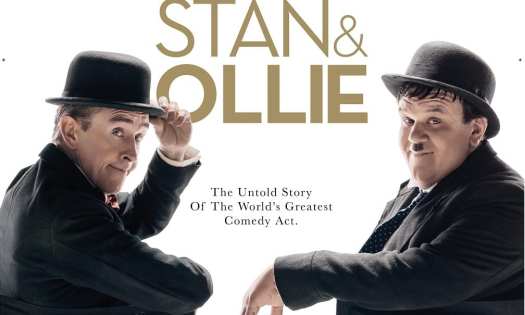
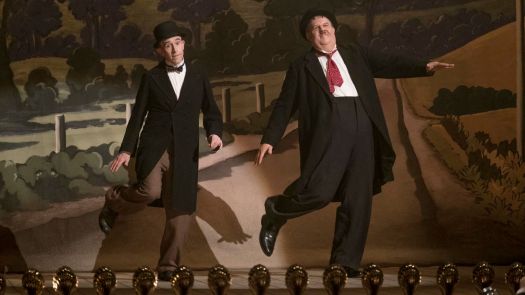
A Love Letter to STAN & OLLIE (Sony Pictures Classics 2018)


gary loggins's avatarcracked rear viewer


I told you Dear Readers I was going to see STAN & OLLIE when it came to my area, and last Saturday night I did just that. Taking the 22 mile trip down the highway to Swansea, MA to catch the 9:40 showing, I have good news and bad news. The good: STAN & OLLIE is one of the best Hollywood biopic I’ve ever seen, a loving tribute to the classic comedy duo. The bad: well, I’ll get to that a bit later.

The film follows Laurel and Hardy as they embark on a 1953 tour of the UK. The duo is older, in need of money, and Stan is working on obtaining funding for their screen comeback – an adaptation of the Robin Hood legend. Ollie is in poor physical condition due to his massive weight gain, but Stan has persuaded him to do the tour. They’re booked into…

View original post 878 more words

Sundance Film Review: Moon (dir by Duncan Jones)


With this year’s Sundance Film Festival getting underway in Colorado, I’m going to be spending the next few days looking at some films that caused a stir at previous Sundance Film Festivals.  Today, I’m taking a look at the 2009’s Moon.

It’s time for all good people to praise Sam Rockwell.

As far as I’m concerned, Sam Rockwell is one of the patron saints of character acting.  Is there anything that he can’t do?  He can do comedy.  He can do drama.  He can play the cool, older guy, like he did in The Way, Way Back.  He can play the nerdy, weirdo as he’s done in too many movies for me to list.  He can play a mentor and he can play a student.  He can make you laugh and he can make you cry.  He’s one of those actors who can seamlessly transition from small indie films to huge blockbusters without missing a beat.  Rockwell won an Oscar for his performance in Three Billboards Outside Ebbing, Missouri and he might just win another one for playing President George W. Bush in Vice.  He can even dance, as anyone who has seen him in Iron Man 2 can tell you.  Rockwell’s been acting since he was a teenager and he’s definitely earned the right to be known as one of our greatest actors.

For that reason, it can sometimes be a little bit difficult to decide just which performance is Rockwell’s best.  He’s appeared in so many different movies and he’s played so many different characters.  Even when the movie’s bad, Rockwell is usually great.  However, if I had to sit down and pick one Rockwell performance as being the epitome of everything that makes him a great actor, I’d probably go with his performance in Duncan Jones’s contemplative sci-fi film, Moon.

In Moon, Rockwell plays a man named Sam.  Sam has spent three years living on the dark side of the moon.  He works for shadowy Lunar Industries.  His job is to mine the moon for helium-3, an alternative energy source that is now all the rage on Earth.  It’s a lonely job for Sam.  He gets up every day.  He rides his lunar rover across the stage.  He returns to the sterile facility, where he lives.  Sometimes, if he’s lucky, he gets recorded messages from his wife and daughter.  His only companion is a robot named GERTY.  Though Sam trusts GERTY, we know better, if just because GERTY speaks with the voice of Kevin Spacey.

From the minute we meet Sam, we can see how living on the Moon has affected him.  He’s quiet and a bit meek.  After three years of isolation, Sam accepts whatever he has to accept to survive.  He doesn’t complain about rarely getting to talk to his family.  He doesn’t question why he has to work alone.  Whatever fight Sam once had in him is gone.  Now, Sam just wants to finish out his time and go home.

And then, one day, Sam is driving the lunar rover when he has a sudden hallucination and then passes out.  He ends up crashing into a crater….

Suddenly, Sam wakes up at the facility.  However, it doesn’t take long to notice that this Sam seems different from the Sam who we met at the start of the movie.  The Sam who wakes up in the facility is younger and angrier than the Sam who we first met.  This new Sam is less willing to accept everything that GERTY tells him.  Even more strangely, this new Sam is convinced that he’s just arrived on the moon….

And then the new Sam meets the old Sam….

In Moon, Sam Rockwell gives two empathetic and memorable performances as the same person.  Old Sam is beaten down by life.  New Sam is angry and just a little bit arrogant.  And yet, what makes the performance so brilliant is that you can easily see how the New Sam could eventually transform into the Old Sam.  Thanks to both Rockwell’s performance and the film’s stark imagery, it’s easy to see how the isolation could eventually rob Sam of his passion, his will to fight, and his intellectual curiosity.  When the Old Sam meets the New Sam, he’s reminded that there used to be more to his life than just the drudgery of his daily routine.  And when the New Sam meets the Old Sam, he’s confronted with what a future of isolation means to him.

Of course, the new Sam and the Old Sam weren’t meant to meet.  And now that they have met, Lunar Industries is on their way to clean up the mess….

Released in the same year as James Cameron’s bombastic Avatar, Moon is a low-key and thoughtful science fiction film, a meditation on isolation and identity.  Duncan Jones directs the film in a stark and low-key style, allowing the film’s story to play out at its own pace.  As visualized by Jones, the lunar landscape is impressive the first time you see it and increasingly bleak with each subsequent look.  Far more than Ridley Scott did in The Martian, Jones captures what it actually is to be totally alone.  (That no critics compared The Martian and Moon, despite their obvious similarities, is astounding to me.)

Featuring Sam Rockwell at his absolute best, Moon is a sci-fi film that remains haunting and powerful, even after films with bigger budgets and flashier special effects have faded into obscurity.

Sundance Film Review: Searching (dir by Aneesh Chaganty)


With this year’s Sundance Film Festival getting underway in Colorado, I’m going to be spending the next two weeks looking at some films that caused a stir at previous Sundance Film Festivals.  Today, I’m taking a look at the 2018’s Searching.

Searching tells the story of David Kim (John Cho) and his daughter, Margot (Michelle La).

David thinks that he has a close relationship with his daughter but, in reality, they’ve been drifting apart ever since David’s wife died two years earlier.  Now, Margot is away at college and David is alone at home.  They still communicate, of course.  They message each other on Facebook.  They Skype.  David sill sends Margot money for her piano lessons.

And yet, even if he can’t bring himself to fully admit it, David knows that they’re not as close as they once were.  Their conversations are often awkward and he doesn’t really know much about the friends that Margot has made at college.  Too often, he finds himself starting to ask her about what’s really going on in her life, just to then erase the message before sending.  One night, when Margot tells David that she’s going to a friend’s house for a study group, he has no reason not to believe her.  It’s not until Margot fails to return from studying that David is forced to confront how little he actually knows about his daughter’s life.

As a film, Searching is set almost entirely on smartphones and computer screens.  Considering that the movie could have just as easily been called Unfriended 3: Searching, this is a surprisingly good and emotionally resonant film.  We watch as David helplessly sends out messages to his daughters, messages that are destined to be unanswered.  We watch as David looks at old pictures and videos of the family he once had, searching for some sort of answer hidden in the past.  And, as we watch all of this, we come to realize that David is not just searching for his daughter’s whereabouts.  Instead, in a world dominated by social media, he’s also searching for a human connection, for something more than just a tweet or a cryptic status update.

Of course, the film does occasionally threaten to take its format just a bit too far.  Sometimes, you really do find yourself wishing that David would just get offline and go outside and look for his daughter.  (Actually, he does do that but, because of the film’s narrative structure, we don’t really get to witness it.)  By the time David is having nightly FaceTime sessions with the detective (Debra Messing) assigned to his daughter’s case, you can be excused for fearing that the film’s style is going to end up collapsing in on itself.

Fortunately, Searching is held together by the lead performance of John Cho.  Whenever Searching threatens to veer into self-parody, Cho is there to bring it back on track.  Before this film came out, I guess Cho was probably best known for appearing in the Star Trek movies.  Searching made him the first Asian-American to headline a mainstream thriller in Hollywood and Cho gives such a sympathetic and compelling performance that you’re willing to excuse whatever flaws might be present in the film’s narrative.  Because he’s played by John Cho, you want David to find his daughter.  You want him to find that for which he’s searching.

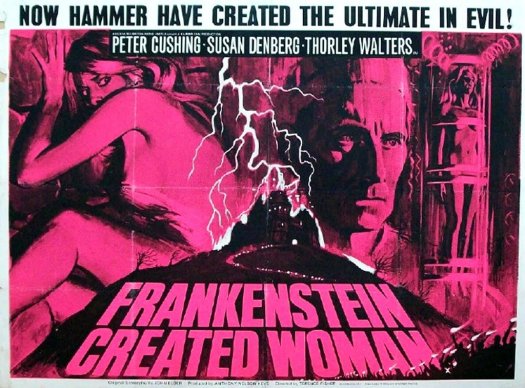
Creature Double Feature 6: FRANKENSTEIN CREATED WOMAN (Hammer/20th Century-Fox 1967)/FRANKENSTEIN MUST BE DESTROYED (Hammer/Warner Bros 1969)


gary loggins's avatarcracked rear viewer


Hammer Horrors were a staple of Boston’s late, lamented “Creature Double Feature” (WLVI-TV 56), so today let’s take a look at a demonic duo of Frankenstein fright films starring the immortal Peter Cushing in his signature role as the villainous Baron Frankenstein.

FRANKENSTEIN CREATED WOMAN was the fourth in Hammer’s Frankenstein series, made three years after EVIL OF FRANKENSTEIN. The Baron is back (after having apparently been blown to smithereens last time around), this time tampering with immortal souls rather than mere brain transplants. The movie features some ahead-of-its-time gender-bending as well, with the soul of an unjustly executed man transmogrified into the body of his freshly dead (via suicide) girlfriend, now out for vengeance!

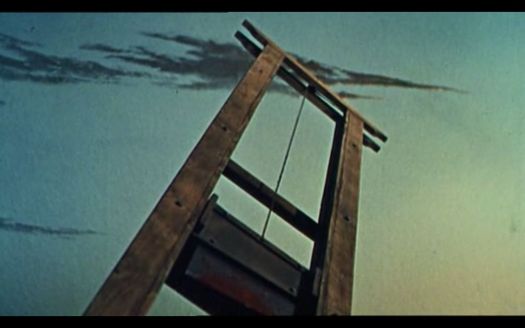
Young Hans (Robert Morris), who watched his father guillotined as a child, grows up to work for muddle-headed alcoholic Dr. Hertz (Thorley Walters , in an amusing performance), who revives the cryogenically frozen Baron…

View original post 687 more words

Sundance Film Review: Three Identical Strangers (dir by Tim Wardle)


With this year’s Sundance Film Festival getting underway in Colorado, I’m going to be spending the next two weeks looking at some films that caused a stir at previous Sundance Film Festivals.  Today, I’m taking a look at the 2018 documentary, Three Identical Strangers.

It’s generally agreed that last year was a great year for documentaries.  Between RBG, Would You Like To Be My Neighbor?, and Free Solo cleaning up at the box office, 2018 was the year that proved the audiences were willing to pay money to see reality captured on film.  For me, there was no better documentary released last year than Three Identical Strangers.

Three Identical Strangers starts out like a Hallmark movie and then slowly turns into a horror movie.  In New York, in the early 1980s, three young men who have previously never met discover that they’re triplets.  At first, they’re a media sensation.  Young, handsome, and charismatic, Edward Galland, David Kellman, and Robert Shafran become instantly celebrities.  We watch archival footage of them appearing on a talk show and talking about how they discovered each other and everything that they have in common.  They all smoke the same brand of cigarette.  They all tend to have the same fashion sense and interests.  All three of them smile while announcing that they’re single and they like women, which causes the audience to break into applause.

It was the 80s and we’re told that meant sex, drugs, and rock and roll.  There are the three brothers at a club.  There they are walking down the streets of New York, with three huge grins on their faces.  There they are making a cameo appearance in a film with Madonna.  Soon, they’re opening up a restaurant together, they’re getting married, and they’re starting families of their own….

And yet, as we watch all of this happy footage, we’re also watching present-day interviews with David Kellman and Robert Shafran.  It’s impossible not to notice that, in the present, both of them speak in voices tinged with weariness.  In the present day interviews, neither one of the brothers smile.  Both of them have their guard up.  To put it simply, neither one of them appears to be particularly happy.

It’s also impossible not to notice that Edward Galland, who is frequently described as having been the most charismatic of the triplets, is nowhere to be seen.

While the three triplets are becoming celebrities, the families that adopted them are wondering why they never knew about the other brothers.  All three of the brothers were adopted through the same adoption agency and, interestingly, all three of them were put into families that had just recently adopted a daughter as well.  One brother was given to an upper class family while another was adopted by a middle class family and finally, the third brother was given to a lower class family.  It quickly becomes clear that this was not a coincidence.

Instead, the three brothers were a part of a social experiment, one designed to see how growing up at different economic levels would effect them.  And, as quickly becomes clear, Edward, David, and Robert weren’t the only part of that experiment.  Under the direction of psychologists Viola W. Bernard and Peter B. Neubauer, several sets of twins and triplets were separated for the exact same reason….

To say anything else about this haunting documentary would run the risk of spoiling it.  It’s a thought-provoking film, as well as a rather disturbing one.  Watching the film, it’s impossible not to mourn for the childhoods that the brothers lost.  At the same time, you do find yourself wondering if all of the triplets’s subsequent problems can be blamed on the experiment or if they would have happened even if they all had been raised in the same family?  The documentary leaves the answer to that question ambiguous.  Much like the triplets, the audience is left wondering what could have been.

Oddly, Three Identical Strangers was not nominated for the Best Documentary Feature Oscar.  Well, that’s the Academy’s loss because this film was the best documentary of a very good year.


Music Video Review: Affection by JaydenART Music (2017, dir by Jayden Yoon ZK)


Who doesn’t occasionally love a good cry?

The 4 and a half minute video below is guaranteed to bring tears to your eyes.  It certainly did to mine.  It’s the story of a dancer and it’s also the story of a father’s love for his daughter and the way that we can all live on through music, art, and memory.  It starts with a dancer — according to the video’s YouTube description, her name is Fiona — dancing and then takes us into the past, showing us how her pianist father supported her dreams until he eventually fell victim to his own mortality.  The film ends with her achieving her dream, along with her younger self, and the sound of her father’s composition playing in the background.

And it’s really nicely done.  The scenes of Fiona dancing are flawlessly combined with the flashbacks to her father, creating a true sense of a dancer living in the moment while still surrounded by her memories and how she came to be the person who is now on stage.  It’s a tribute to not just her father but also to everyone who has ever supported us in our dreams, whether those dreams were artistic or something else.  It’s a heart-felt and sentimental tribute and you can check it out below:

Jack in the Saddle: BUCK BENNY RIDES AGAIN (Paramount 1940)


gary loggins's avatarcracked rear viewer

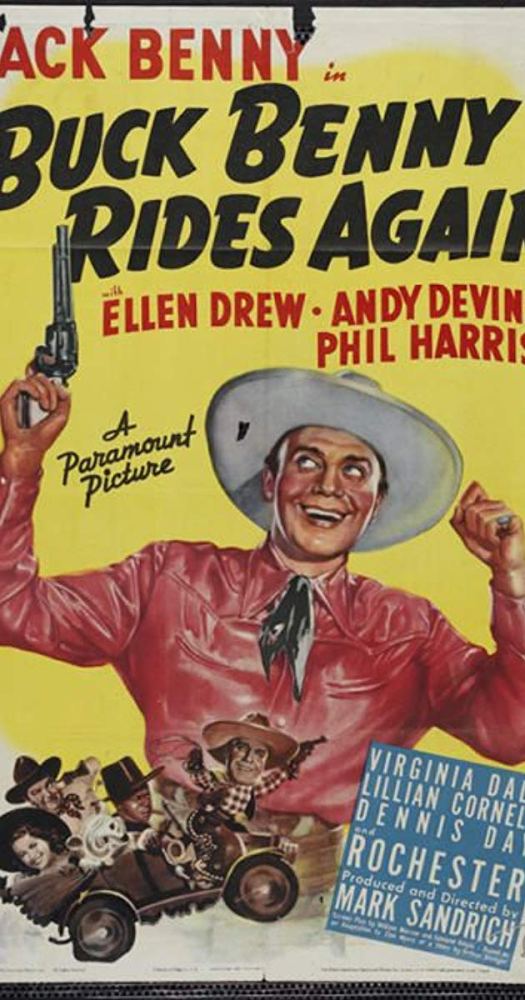
The gang’s all here in BUCK BENNY RIDES AGAIN – Jack Benny’s radio gang, that is! Eddie “Rochester” Anderson, announcer Don Wilson, band leader Phil Harris, comic actor Andy Devine, and crooner Dennis Day all show up for this fun-filled musical comedy romp directed by Mark Sandrich. Even Jack’s radio nemesis Fred Allen is heard (though not seen) cracking jokes at his rival’s expense!

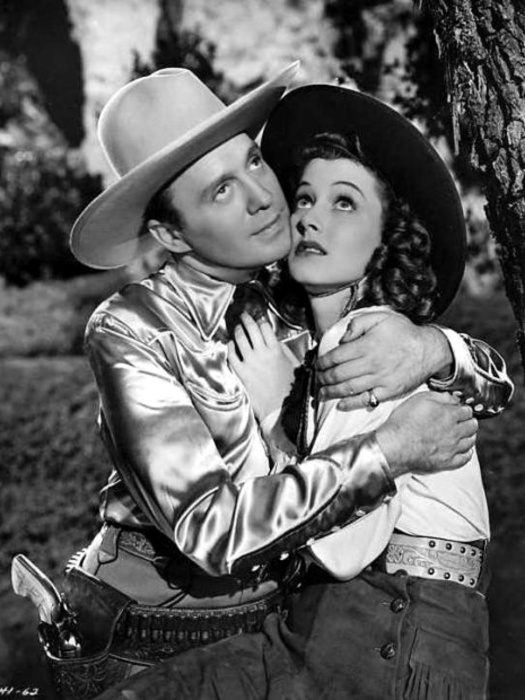
The movie plays like an extended sketch from one of Jack’s radio or TV programs, as the vain Jack falls for pretty Joan Cameron (Ellen Drew), one of a trio of singing sisters (the other two are Virginia Dale and Lillian Cornell) trying to break into show biz. They “meet cute” when Jack accidentally smashes into Joan’s taxi. Jack keeps flubbing his chances with Joan, who only goes for manly, rugged Western types (“I wouldn’t go out with him if he drove up in a sleigh…

View original post 381 more words