Film Review: Miss Bala (dir by Catherine Hardwicke)


About 75 minutes into the American remake of Miss Bala, Gloria (played by Gina Rodriguez) is inadvertently responsible for getting a totally innocent women killed by a Mexican drug cartel.

After I finished watching Miss Bala and I was trying to figure out why exactly this remake did not work for me, my mind kept returning to that scene.  It’s a very dramatic scene and yet, at the same time, it has almost no emotional impact.  Some of that’s because the woman only appears in one other scene before she gets executed and it’s obvious that the only reason the character was included in the film was so she could be killed.  The film itself doesn’t really seem to care about the innocent woman.  Instead, its focus remains on Gloria and how she feels about the violence.  While we get some scenes of Gloria looking distraught and, at one point, vomiting over a balcony, it still doesn’t seem as if Gloria is really that upset about the fact that the woman’s been executed.  Instead, she mostly seems to be annoyed by the fact that she had to witness it.  In the scene afterwards, you never really get the feeling that Gloria’s carrying around any sort of lingering guilt for the role that she played in the woman’s death.

However, I think that what really bothered me was that, in this film that took place almost entirely in Mexico, the executed woman was one of the few positively-portrayed Mexican characters and she was killed off as almost an afterthought.  The film was more concerned with how the American Gloria felt about the woman’s death than about the woman herself.

Miss Bala is a remake of a Mexican film.  The original Miss Bala came out in 2011 and it starred Stephanie Sigman as Laura Guerrero, an aspiring beauty queen who finds herself caught in the middle of the never ending war between the DEA and the Mexican drug cartels.  The original Miss Bala was a violent and often lurid film but it was also an unusually powerful examination of what it’s like to be an innocent trapped in the middle of war.  Stephanie Sigman played Laura with the sad-eyed stoicism of someone who knew that she had little choice but to do whatever the cartel ordered her to do.  In the original Miss Bala, Laura stood-in for every innocent who had been victimized by either side of the War on Drugs.  The film ended up a note of cynical ambiguity, suggesting that survival had less to do with skill and everything to do with luck.

In the remake, Laura is transformed into Gloria, an American makeup artist from Los Angeles who comes to Tijuana to help her friend compete for the title of Miss Baja.  By changing the lead character’s nationality, the remake also changes the story’s focus.  It’s no longer the story of someone trying to survive living in a war zone.  Instead, it becomes just another film about an American getting into trouble while traveling abroad.  Interestingly enough, Lino (Ismael Cruz Cordova), the aspiring drug lord who kidnaps Gloria, is also an American who happens to live in Tijuana. I assume this was done so the film would have an excuse to have everyone speaking English but it still feels odd to watch a movie about the Mexican drug war in which we rarely hear anyone having a substantive conversation in Spanish.

Gina Rodriguez plays the role of Gloria with a sort of open-faced blandness that occasionally makes Miss Bala feel as if it’s an extended episode of Jane The Virgin.  While the remake tries to make Gloria into a more proactive character than the original’s Laura, Rodriguez never suggests that there’s much going on below the surface.  Far more impressive is Ismael Cruz Cordova, who plays Lino with a sexy and dangerous swagger.  Cordova bring so much charisma to the role that it’s not until the end credits role that you realize that nothing Lino did made much sense.

Director Catherine Hardwicke is responsible for one of my favorite film of all time (Thirteen).  She also directed the enjoyably melodramatic Red Riding Hood.  And, of course, she’ll always be known for directing the first Twilight.  With Miss Bala, though, Hardwicke seems to just going through the standard action film motions.  She never captures the original’s outrage about what the never ending drug war is doing to the people of Mexico.  Instead, for the most part, the remake of Miss Bala shrugs off any intentional subtext and instead focuses on building up to a sequel that will probably never come.

Skip the remake of Miss Bala.  The original is all you need.

Lifetime Film Review: V.C. Andrews’ Fallen Hearts (dir by Jason Priestley)


About 12 minutes into Fallen Hearts, the perpetually aggrieved Heaven (Annalise Basso) goes to the local circus so she can taunt her stepfather, Luke (Chris William Martin), over the fact that 1) Heaven looks exactly like her mother, Angel and 2) Angel’s dead.

Upon arriving at the circus, Heaven runs into her stepbrother, Tom (Matthew Nelson-Mahood), but it takes her a while to recognize him because he’s wearing a big red clown nose.  It’s not until he takes the nose off that she recognizes Tom and then asks him why he’s dressed up like a clown.  It turns out that Tom is a clown now!  I guess he got a promotion.  Tom then asks why Heaven has made herself up to look exactly like Angel….

Unfortunately, Luke has already spotted Heaven and, apparently not understanding how death works, becomes convinced that Angel has returned to life and is standing in the middle of a low-rent circus in West Virginia.  Unfortunately, Luke is apparently now a lion tamer and he’s so shocked to see his dead wife that he loses track of his lion.

And, of course, the lion promptly kills Tom.  Would the lion have spared Tom if he hadn’t removed his red clown nose?  We may never know.

Now, of course, everyone in the film treats this as being a great tragedy.  Strangely enough, no one blames Heaven, even though none of this would have happened if not for the Heaven’s apparent obsession with mentally tormenting everyone from her past.  But I have to admit that I laughed out loud as soon as I saw that lion in the background because I knew there was no way the scene was going to end without Tom getting pounced on….

And really, that’s the type of film that Fallen Hearts is.  It’s the third film in Lifetime’s adaptation of V.C. Andrews’s Casteel Saga (the previous two were Heaven and Dark Angel) and, from the minute that lion pounces at Tom, everyone should know better than to take anything that happens too seriously.  Fallen Hearts somehow manages to be even more melodramatic than the first two films and, as directed by Jason Priestley, Fallen Hearts appears to be fully in on the joke.

Priestley not only directs but he also appears in the film, once again playing Tony Tatterton.  Tony is not only Heaven’s unacknowledged father but he’s also her stepgrandfather as well.  When Heaven finally ends up marrying Logan Stonewall (James Rittinger), Tony invites them to come up to Massachusetts for their honeymoon.  Heaven says no but Logan, being a simple boy from the West Virginia hills, is all about family.  While up in Massachusetts, Heaven discover that her first husband, Troy (Jason Cermak), isn’t dead after all.  He’s just been in hiding for the past five years, mostly because, after the wedding, he discovered that he was also Heaven’s uncle and that type of relationship just isn’t right.  Of course, that doesn’t stop Troy and Heaven from having sex after they run into each other while wandering around a hedge maze.  Troy vanishes the morning afterward but soon, Heaven discovers she’s pregnant.  Is the baby Troy’s or Logan’s?

Actually, speaking of babies, Heaven’s trashy and bitter sister, Fanny (Jessica Clement, stealing the entire damn movie) is also pregnant!  And it turns out that Fanny’s been having an affair with Logan so he might be the father.  Then again, there’s also scene where the town’s preacher looks at Fanny and shouts, “WHORE!,” so who knows for sure.  The one thing we do know for sure is that all of this is going to lead to two pregnant sisters facing off in a court room.  These things always do.

Anyway, Fallen Hearts is not a film that’s really meant to be taken seriously and, as I said before, the film itself is obviously in one the joke.  The melodrama is turned up to 11 and the actors tear through the overripe dialogue like a moonshiner trying to outrun the cops.  Annalise Basso again manages to keep things somewhat grounded as Heaven but the film is totally dominated by Jessica Clement, who brings the wonderfully trashy Fanny to vivid life.  The townsfolk and the hillfolk might not think much of Fanny but she keeps Fallen Hearts beating.

The fourth part of the Casteel Saga, Gates of Paradise, will air on Lifetime next Saturday.

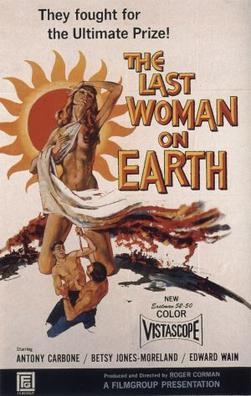
Film Review: Last Woman On Earth (dir by Roger Corman)


The title character of the 1960 Roger Corman film, Last Woman On Earth, is Evelyn Gern (Besty Jones-Moreland).  When a vaguely defined apocalypse occurred and apparently wiped out almost every living person on the planet, Evelyn was on vacation in Puerto Rico and scuba diving.  Because she had her own oxygen tank, she was able to survive while everyone on the surface was asphyxiated by a sudden change in the atmosphere.  (Or something like that.  To be honest, I never quite understood what the apocalypse was about or if it had occurred worldwide or just in Puerto Rico.)

Evelyn may potentially be the last woman on Earth but, unfortunately for her, there’s at least two men left.  There’s her husband, Harold (Antony Carbone).  Harold is a brutish businessman who, before the world ended, was constantly under the threat of indictment.  And then there’s Martin (Robert Towne, who also wrote the script), who is Harold’s attorney.  With the world apparently ending, Harold decides that he’s in charge while Martin decides that he’s in love with Evelyn.  Evelyn, for her part, ends up spending a lot of time praying in the local church.  At the end of 71 minutes, someone is dead and the survivors are left to consider an uncertain future.  It’s not a particularly happy film, though, at the same time, it’s not really well-made enough to be that depressing.

It’s perhaps not a coincidence that this film opens with everyone watching a cock fight because, despite its title, Last Woman On Earth is all about the extremes to which men will go to assert their authority.  There’s absolutely no reason for Harold and Martin to end up trying to kill each other, beyond the fact that they both want to be in charge and they both want the same woman.  Honestly, though, if you’re one of the last three people on Earth, I would think that you might be inspired to rethink certain traditional and patriarchal concepts.  That, of course, doesn’t happen in Last Woman On Earth.  It’s hard not to be disappointed with the fact that, even with society no longer existing, Evelyn’s reaction to most conflict is to retreat to the background and let the man fight it out among themselves.  I mean, we expect no better from Harold and Martin but Evelyn’s passivity in the face of everything gets rather frustrating very quickly.

Of course, it could be argued that I may be expecting too much from a film that was shot over a week and only made because Corman happened to be shooting another movie in Puerto Rico at the time.  Corman rarely went on location so, when he went down to Puerto Rico to do Creature of the Haunted Sea, he decided to get the most out of the location as he could by shooting a second film.  Screenwriter Robert Towne was cast as Martin because he was already getting paid to write the script while the film was being shot.  By casting Towne, Corman saved money that would have otherwise been spent on a professional actor.  Towne, who is credited as Edward Wain, ends up giving a rather bizarre performance, alternating between stiff underacting and eye-bulging overacting.  You kind of find yourself regretting that apparently it was decided that it would have been too expensive to fly Dick Miller or Peter Graves down to Puerto Rico.

The film doesn’t add up too much, beyond serving as a document of an era’s paranoia about the impending end of the world.  (Two years after the release of this film, the Cuban Missile Crisis would bring the world to the brink of a real-life apocalypse.)  Corman does manage to get a few haunting shots of the deserted streets of San Juan, though one gets the feeling that this would more due to luck than any specific intention on his part.  Last Woman On Earth was released on a double bill with Little Shop of Horrors and, when seen today, it really can’t start to compete with Seymour and his talking plant.

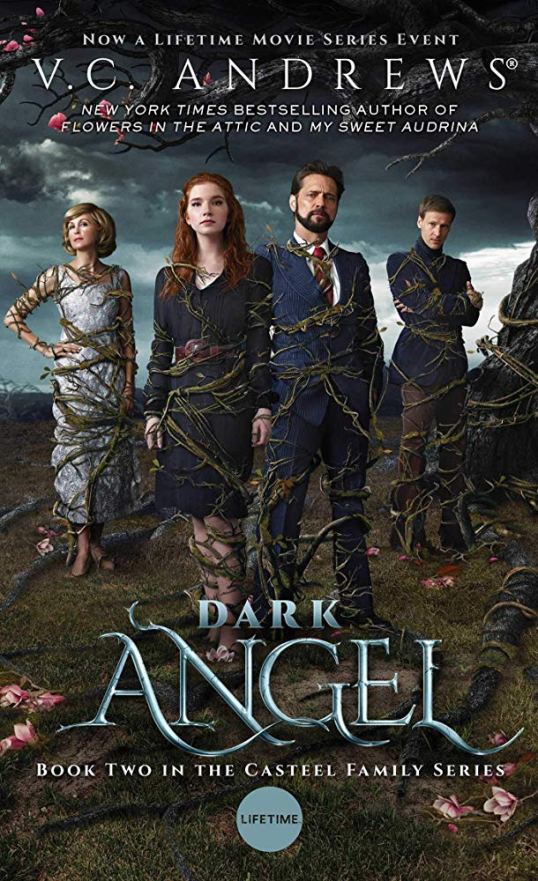
Lifetime Film Review: V.C. Andrews’ Dark Angel (dir by Paul Shapiro)


When we last saw Heaven Casteel (Annalise Basso), she was boarding a bus so that she could leave the backwoods of West Virginia and hopefully live with her mother’s wealthy family in Boston, Massachusetts.

Dark Angel picks up where Heaven left off, with Heaven arriving at stately and creepy Farthinggale Manor and discovering that the rich are just as fucked up as the poor.  She’s greeted by her stepgrandfather, Tony Tatterton (Jason Priestly), who tries to come across as being friendly but quickly reveals himself to be cold and manipulative.  She also meets her grandmother, Jillian (Kelly Rutherford).  Jillian always has a drink in her hand and worries that Heaven will leave “hill grime” around the house.  Jillian doesn’t want Heaven to stay at the house for too long but Tony manages to change her mind.  Tony tells Heaven that, in order to thank him for his generosity, she’ll basically have to do everything that he says.

For instance, Tony tells Heaven that she is, under no circumstances, to enter the estate’s hedge maze.  (Rich people always have a hedge maze.)  So, of course, Heaven does just that.  She gets lost but eventually, she comes across a small house sitting in the middle of the maze.  Inside the house, a handsome man (played by Jason Cermak) carefully crafts a doll’s face.’

“Excuse me, sir,” Heaven says, “I got lost in your hedge maze!”

“You must be Heaven,” the man replies.

The man it turns out is Troy Tatterton, Tony’s younger brother.  Troy suffers from depression and he’s been exiled to the maze because Jillian can’t stand the sound of dolls be made.  Troy and Heaven soon find themselves falling in love, despite Tony’s demand that Heaven stay out of the maze.

Tony also demands that Heaven stop writing to her family but, of course, Heaven continues to try to reach out to them.  Her siblings aren’t doing quite as well as Heaven.  For instance, one sister is living in a trailer.  Her brother is working at a circus.  And her two youngest siblings are living in Washington, D.C, where they’re undoubtedly surrounded by politicians and interns.  AGCK!  It’s a fate worse than spending the rest of your life brewing moonshine in the hills.

And, while dealing with all of this, Heaven is also trying to graduate from high school and hopefully get into an Ivy League college!  She wants to study literature.  At one point, she explains that her favorite writer is Shakespeare but that she also really loves Fitzgerald.  She says that Fitzgerland “saved the best for last,” with Tender Is The Night.  It was at this point that I yelled, “HIS LAST NOVEL WAS THE LAST TYCOON!” and threw a shoe at the TV. 

Complicating matters even further is the fact that her old backwoods boyfriend, Logan (James Rittinger), is attending college in Boston.  Logan says that he doesn’t want anything to do with Heaven because he’s still angry over everything that happened during the previous movie but it’s pretty obvious that he’s still in love with her.

And then….

Well, listen — a lot happens in Dark Angel.  As opposed to Heaven, Dark Angel is full of twists and turns.  Everyone’s got a deep, dark secret and, at time, it gets a bit overwhelming trying to keep track of it all.  Then again, that’s what makes a film like this fun.  It’s just so over-the-top and implausible that you really can’t help but enjoy watching it all play out.  Every few minutes, someone else is popping up and either taunting Heaven for being from the hills or revealing that they’re actually one of her relatives.  Seriously, this is one messed up family.  The good thing is that Dark Angel seems to be aware of how silly all of the melodrama occasionally is.  The other good thing about Dark Angel is that it mostly involves rich people instead of poor people, which means that, as opposed to the first film, everyone gets to wear nice clothes.

Annalise Basso again makes all of us redheads proud in the role of Heaven but the film is really stolen by Jason Priestley, who appears to be having the time of his life playing the ambiguously evil Tony.  Kelly Rutherford is a bit underused as Jillian but she does get one good scene towards the end of the film and she makes for a stylish drunk.

The sequel to Dark Angel, Fallen Hearts, will air on Lifetime later tonight and hopefully, I’ll have a review of it up on Sunday.  And if I don’t, I guess you’ll just have to spank me like a character in a V.C. Andrews novel….

Double Your Fun With Wheeler & Woolsey: HALF SHOT AT SUNRISE (RKO 1930) & COCKEYED CAVALIERS (RKO 1934)


gary loggins's avatarcracked rear viewer

Welcome back to the wacky world of Wheeler & Woosley! Bert and Bob’s quick quips and silly sight gags kept filmgoers laughing through the pain of the Depression Era, and continue to delight audiences who discover their peculiar type of zaniness. So tonight, let’s take a trip back in time with a double shot of W&W comedies guaranteed to keep you in stitches!

1930’s HALF SHOT AT SUNRISE was their 4th film together, and the first exclusively tailored for their comic talents. In this WWI service comedy, Bert and Bob are a pair of AWOL soldiers on the loose in Paris, chasing girls while in turn being chased by a couple of mean-mugged MP’s (Eddie DeLange, John Rutherford). Bert winds up falling for Dorothy Lee (who appeared in most of their films, almost as a third member of the team), the youngest daughter of cranky Col. Marshall (cranky George MacFarlane)…

View original post 968 more words

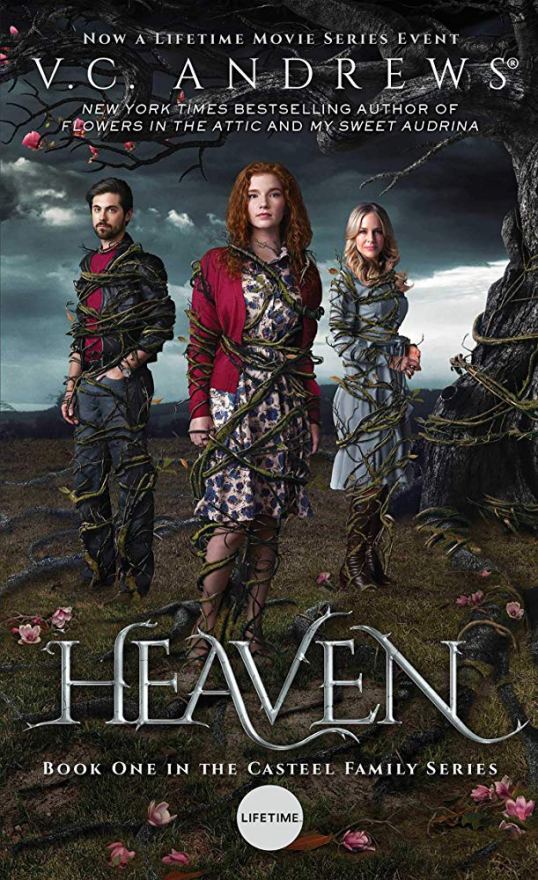
Lifetime Film Review: V.C. Andrews’ Heaven (dir by Paul Shapiro)


So, let’s say that you’re an alcoholic, backwoods hillbilly living in West Virginia.  Everyone in town hates you and your family because, years ago, your father sold a bad batch of moonshine to the mayor’s son.  You’ve got more children than you know what to do with and your wife has just run out on you because she’s blames you for losing her latest baby.  You ain’t got no money and you don’t understand that ain’t no word used by proper folks.  What do you do to make ends meet?

Well, if you’re Luke Casteel (Chris William Martin), you sell your children.  You sell the twins to a couple who can’t have children.  You sell your son to a farmer in Virginia.  You sell one of your daughters to the pervy local priest.  And you keep your oldest daughter, Heaven (Annalise Basso), so that she can clean the house and do the laundry.

Of course, Heaven’s not very happy about this arrangement.  She’s way smarter than the average Casteel and she’s got a crush on a boy at school named Logan Stonewall (James Rittinger).  Everyone keeps telling Logan to stay away from the Casteels and it’s certainly not going to help the family’s reputation once it gets out that Luke’s been selling off his children.

Luke has always resented Heaven, mostly because she’s the daughter of Angel, the only woman that Luke ever truly loved.  Angel was from a rich family in Boston but they disowned her when she married Luke.  Unfortunately, Angel then died giving birth to Heaven.  If that’s not bad enough, Heaven has now grown up to look exactly like her mother which leads to Luke getting drunk and trying to climb into bed with her….

AGCK!

Realizing that Heaven won’t be safe as long as she’s living with him, Luke decides to quit drinking and get his shit together.  JUST KIDDING!  Instead, he decides to sell her too.  He sells her to Kitty (Julie Benz) and Cal (Chris McNally).  Kitty is emotionally unpredictable and alternates between being extremely supportive and extremely cruel.  (She’s also obsessed with keeping her house spotless and really who can blame her?  A house should be clean because you never know who might come by.)  Cal is a sexually frustrated writer who smiles every time that he’s alone with Heaven.

Can you guess what happens?

Heaven is based on a book by V.C. Andrews, the first part of the five-volume Casteel Saga.  A few years ago, Lifetime had a lot of success when they adapted Flowers In the Attic and its sequels so it only makes sense that they would eventually bring the Casteel Saga to screen.  Heaven has everything that you would expect from both V.C. Andrews and Lifetime — melodrama, over the top dialogue, sex, dysfunctional families, and one victimized girl searching for her destiny.

At first, when I started watching Heaven, the film itself seemed to a bit silly.  I mean, I took one look at Casteels mountain shack and I started laughing because it was seriously the nicest shack that I’ve ever seen in my life.  (On Lifetime, even poor hillbillies live in a big house.)  It was also hard not to be amused about how, every few minutes, some primly-dressed townsperson would pop up and say something like, “Logan Stonewall!  You get away from those Casteels!”  As the film went on, though, it became obvious that the film itself had a very self-aware sensibility.  It understood that it was an over-the-top, frequently ludicrous melodrama so, instead of trying to trick us into believing it to be anything else, it instead embraced the melodramatic label and everything that it implied.  This is not a film that’s mean to be taken seriously.  Instead, for the first hour or so, it’s a bit of a self-aware parody.  It’s like Winter’s Bone directed by Paul Feig.

The second half of the film, which finds Heaven living with Kitty and Cal, has a bit more of an edge to it, largely due to Julie Benz’s wonderfully unhinged performance as Kitty.  Benz brings a jolt of real menace to both the role and the film itself.  That’s a good thing because winking at the audience and letting them know that you’re in on the joke can only take you so far.  Julie Benz shows up and basically announces, “Yes, this may be an overheated adaptation of a V.C. Andrews novel but don’t even think about letting your guard down!”

All in all, it makes for an entertaining Lifetime film.  While it may not be a powerful as Flowers in the Attic, it still holds your attention and Annalise Basso gives a good and sympathetic performance as Heaven.  Myself, I related to Heaven because we both have red hair.  Seriously, it’s not always being a redhead.

Heaven was followed by Dark Angel, which I’ll be reviewing later today.

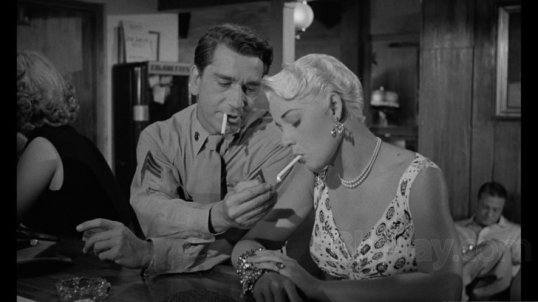
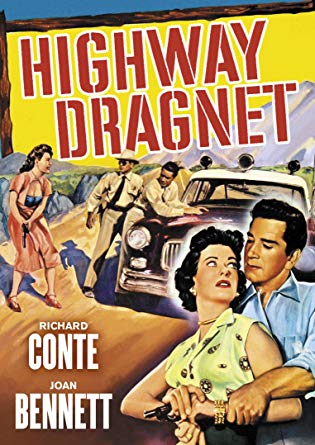
Film Noir Review: Highway Dragnet (dir by Nathan Juran)


Nifty is not really a word that I ever use, mostly because I’m not 80 years old and I’m not totally sure what the word means.  I’ve always assumed that nifty is way of saying that something is good without being too good and, if that’s true, then I have to say that the low-budget 1954 film noir, Highway Dragnet, certainly is a nifty film.

Highway Dragnet opens with Jim Henry (Richard Conte, who decades later would play the evil Barzini in The Godfather) in Las Vegas.  Jim’s just gotten out of the army and he’s visiting his friend, Paul (Frank Jenks).  Paul is a secret agent who is often unexpectedly called away.  Unfortunately, this means that Paul is not around when Jim is accused of murdering another man.  Since Jim was previously seen hitting on the dead man’s girlfriend, the police naturally assume that Jim’s the murderer.  When Jim says that Paul can provide an alibi whenever he gets back from doing his super secret spy stuff, the cops assume that Paul doesn’t actually exist.

Under the direction of the stern Lt. White Eagle (Reed Hadley), the cops are doing a lot of assuming!  Now, if Jim was smart, he would say, “Hey, White Eagle, you know what?  When you assume, you make an ass out of u and me!”  But Jim’s not smart so he decides to fire a gun at the cops and then go on the run!

Hey, Jim …. none of that makes you look innocent!

Anyway, while making his way across the desert, Jim comes across two women who are having car trouble.  Mrs. Cummings (Joan Bennett, who went from nearly getting cast as Scarlett O’Hara in Gone With The Wind to becoming a low-budget noir mainstay) is a fashion photographer and Susan Willis (Wanda Hendrix) is her model.  Jim fixes their car and then asks them for a ride.  They agree, little knowing that they’re heading straight into a …. HIGHWAY DRAGNET!

Of course, it turns out that Jim’s new friends have a connection to the crime of which he’s been accused.  The plot of Highway Dragnet hinges on a totally implausible coincidence.  This is perhaps not surprising when you consider that the script for Highway Dragnet was written by the legendary Roger Corman.  In fact, it was the first script that he ever sold and, though the film was directed by Nathan Juran, Highway Dragnet feels very much like a Corman quickie.  The plot is whatever it needs to be to get the story from the beginning to the end in 71 minutes.  Whether it all makes sense or not doesn’t appear to be all that much of a concern.

So, here’s what does work about Highway Dragnet.  First off, director Nathan Juran (who was also an award-winning art designer) manages to capture some memorable images of the Nevada desert and the film ends with a wonderfully over-the-top and atmospheric confrontation in a flooded house.  Secondly, Joan Bennett is as passive-aggressively menacing in Highway Dragnet as she would later be in Dario Argento’s Suspiria.  I also liked the performance of Reed Hadley, playing the unstoppable and incorruptible Lt. White Eagle.

Last Saturday, I watched Highway Dragnet with my friends in the Late Night Movie Gang and we enjoyed it.  It’s undoubtedly a minor film noir but it’s still entertaining when taken on its own terms.  If nothing else, the box office success of this low-budget production (which was shot over ten days) reportedly inspired Roger Corman to get serious about pursuing his own career in the film industry and, for that, movie lovers will always be thankful.

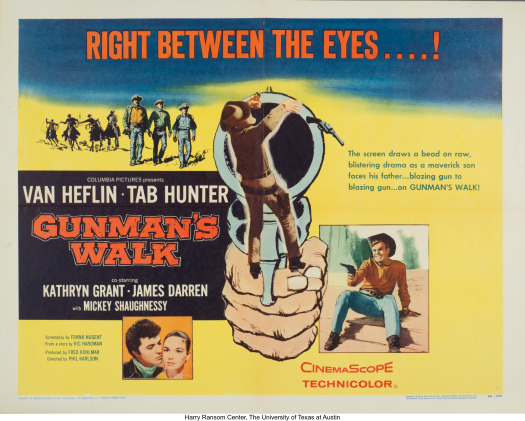
West-Teen Angst: GUNMAN’S WALK (Columbia 1958)


gary loggins's avatarcracked rear viewer

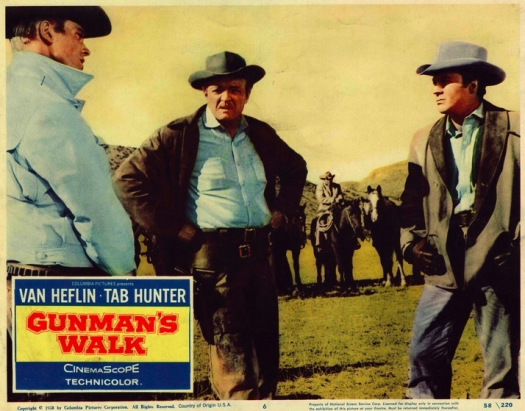
GUNMAN’S WALK may not be a classic Western like THE SEARCHERS or HIGH NOON, but it was entertaining enough to hold my interest. That’s due in large part to a change of pace performance by All-American 50’s Teen Idol Tab Hunter as a sort-of Rebel Without A Cause On The Range, an unlikable sociopath with daddy issues, aided and abetted by Phil Karlson’s taut direction and some gorgeous panoramic Cinemascope shots by DP Charles Lawton Jr.

Boisterous cattle rancher Lee Hackett (Van Heflin) is one of those Men-Who-Tamed-The-West types, a widower with two sons. Eldest Ed (Hunter) is a privileged, racist creep who’s obsessed with guns, while younger Davy (played by another 50’s Teen Idol, James Darren) is more reserved. The Hacketts are about to embark on a wild horse round-up, and enlist two half-breed Sioux, the brothers of pretty young Clee (Kathryn Grant,  young wife of crooner Bing Crosby).

View original post 403 more words

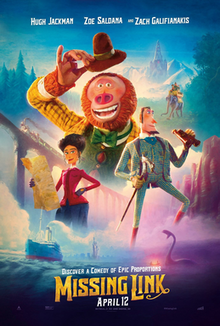
Film Review: Missing Link (dir by Chris Butler)


The year is 1886 and Sir Lionel Frost (Hugh Jackman) is the world’s greatest adventurer.

Or, at least, that’s what he says.  Actually, Sir Lionel may have made a name for himself and gained some popularity as a result of his many adventures but his fellow explorers and adventurers don’t take him seriously.  They view Sir Lionel as being little more than a self-promoter and they’re largely unimpressed with the all the time that he’s devoted to searching for mythical beasts like The Loch Ness Monster and lost lands like El Dorado.  Sir Lionel desperately wants to join the London-based Society of Great Men but the snobbish Lord Piggot-Dunceby (Stephen Fry) refuses to accept his application.

When Sir Lionel receives a letter from someone in America who claims to have tracked down the legendary Sasquatch, Sir Lionel and Lord Piggot-Duncey make a bet.  If Sir Lionel can prove that the Sasquatch exists, he will be allowed to join the Society.  Sir Lionel heads off to America while Lord Piggot-Dunceby promptly hires an evil bounty hunter named Willard Stenk (Timothy Olyphant) to prevent him from accomplishing his mission.  As Lord Piggot-Dunceby explains to his assistant, Mr. Collick (Matt Lucas), the world is changing too quickly.  If Sir Lionel isn’t stopped, people might start to believe in things like evolution or women’s rights.

When Sir Lionel arrives in America, he promptly starts searching for the Sasquatch and, amazingly enough, it doesn’t take him very long to find him.  It turns out that the Sasquatch — who Sir Lionel names Mr. Link — not only speaks remarkably good English but he’s also the one who wrote to Sir Lionel in the first place.  As played by Zach Galifianakis, Mr. Link is a rather laid back and good-natured Sasquatch.  In some ways, Mr. Link is surprisingly worldly and, in other ways, he’s rather naive.  He takes everything that he hears literally, which poses a problem since Sir Lionel has a tendency towards sarcasm.  It also turns out that Mr. Link is lonely but he thinks that he might be related to the Himalayan Yetis.  And Mr. Link thinks that Sir Lionel is just the man to help him get from America to Asia!

Sir Lionel reluctantly agrees.  Accompanying them on their journey is Sir Lionel’s former girlfriend, Adelina Fortnight (Zoe Saldana).  And pursuing them, every step of the way, is Lord Piggot-Dunceby and Willard Stenk.

Missing Link is an enjoyable and undeniably cute stop-motion animated film.  It was produced by Laika, the same animation outfit that previously gave us Kubo and The Two Strings.  While Missing Link is never as memorable or emotionally resonant as Kubo, it’s still a good-hearted film and entertaining enough that an adult can watch it without wanting to tear their hair out.  Blessed with impressively detailed animation and the comedic vocal talents of Hugh Jackman, Stephen Fry, Timothy Olyphant, and Zach Galifianikis, Missing Link has enough funny moments and clever lines that most audiences should be able to overlook the fact that the story itself sometimes feels a bit haphazard in its construction.  Much like the Sasquatch at the center of its story, Missing Link is a rather laid back film.  If Kubo was a carefully-constructed work of art, Missing Link feels like it was almost thrown together at random.  The film is at its best once it reaches the Himalayas, where the humor becomes very barbed and Emma Thompson steals the show in a sharp-witted cameo.

I enjoyed Missing Link.  It’s just too sweet-nartured not to like.

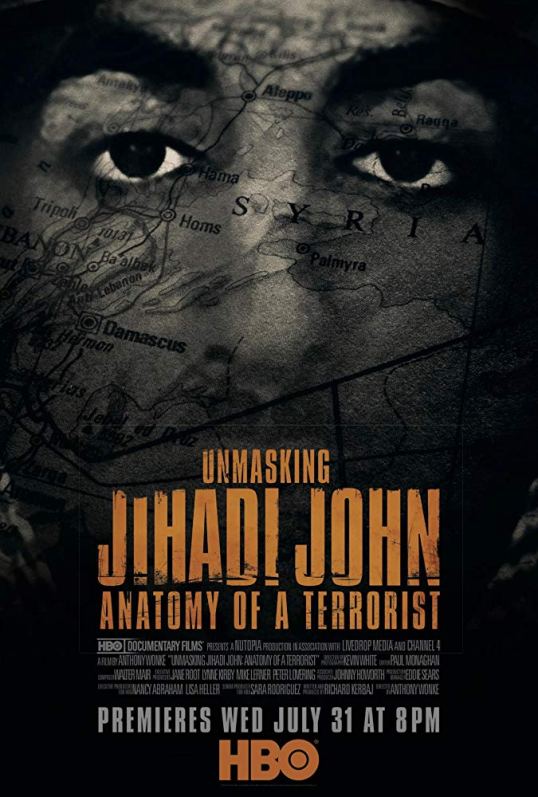
Documentary Review: Unmasking Jihadi John: Anatomy of a Terrorist (dir by Anthony Wonke)


Who was Jihadi John?

He was the black-clad terrorist who haunted the news in 2014 and 2015.  He was the faceless man with the London accent who was frequently filmed standing in the desert, taunting Barack Obama and David Cameron before then beheading a hostage.  In total, Jihadi John was filmed either beheading or directing others to behead 29 hostages.  Among his victims were American journalist James Foley and British aid worker David Haines.

Up until he was apparently blown up by a drone strike in 2015, Jihadi John was, for many of us in the West, the best-known member of ISIS.  When we heard the word “ISIS,” he was the one we pictured.  Because his face was always covered, his identity was unknown.  All we knew about him was that he spoke perfect English with a British accent.  He was like a creature sprung from a nightmare, a monster who materialized out of nowhere and taunted us for our inability to defeat him.  There was much speculation about who Jihadi John was.  Even after we found out that he was probably a Kuwait-born British citizen named Mohammed Emwazi, we still wondered how this man came to be standing in the desert, being filmed as he committed terrible crimes.

The new HBO documentary, Unmasking Jihadi John, is an investigation into the origins of terrorism.  The film attempts to reconstruct Emwazi’s early life as an outsider in the UK.  His teachers describe him as being quiet and somewhat forgettable.  Video from that period shows a skinny and awkward-looking teenager, one who covered his mouth whenever he spoke because he had once been taunted for having bad breath.  When he was ten, he wrote that he wanted to be a soccer player.  A few years later, he was caught on video, smiling while sitting in a computer lab.  And then, just a few years after that, he was in Syria, committing horrific acts of evil.  And make no mistake about it — the Emwazi who we see waving a knife while condemning the West is evil.  Evil comes in many disguises and will often try to justify itself by hijacking a religion or an ideology.  But in the end, evil is evil.

Because Emwazi was vaporized in 2015, he’s not around to explain just what exactly led him to join ISIS.  The film speculates that Emwazi initially joined because he was looking for both a surrogate family and a place where he actually belonged.  The documentary contains clips from several ISIS propaganda videos and what’s interesting is that the images that ISIS used — children playing in the streets, men working together to rebuild a city, and friends hugging each other — are many of the same images that one would expect to find in western advertising.  They’re seductive images, ones that offer up a promise of a better life as long as you follow orders and don’t question authority.  They were exactly the type of images designed to appeal to someone like Emwazi (and countless others), who had a need to feel as if they belonged to something bigger than themselves.

If the first half of the documentary focuses on Emwazi and the founding of ISIS, the second half deals with the aftermath of Emwazi’s actions.  Interviews, with the hostages who survived and the families of those who did not, drive home the pain that was caused by the actions of ISIS as a whole and Emwazi in specific.  It’s in those interviews that we are reminded that Emwazi’s evil cannot be excused by a turbulent childhood or misplaced idealism.  Towards the end of the documentary, the man who controlled the drone that fired the missile that ended Emwazi’s life is interviewed.  When we watch the grainy and coldly impersonal footage of Emwazi’s car blowing up, we feel no sympathy for the man who was called Jihadi John.   As to whether or not there’s joy to be found there, well, that’s up to the viewer to decide for themselves.

It’s a compelling documentary but it’s also frustrating, if just because it poses a question that may be impossible to answer.  Why does evil exist?  How can one go from being a normal, if awkward, teenager to being a savage murderer?  Like the rest of us, the documentary can only wonder why.