Lisa Reviews An Oscar Nominee: Deliverance (dir by John Boorman)


1973’s The Exorcist is often cited as the first horror film to ever be nominated for best picture and technically, I guess that’s correct.  It was definitely the first best picture nominee to ever deal with a battle between humans and a malevolent supernatural force and no one can deny that The Exorcist has influenced a countless number of horror films.

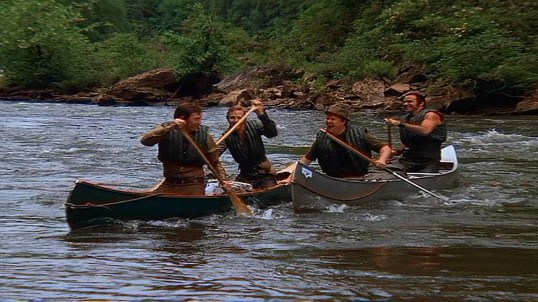
That said, I think you could make the argument that Deliverance, which was nominated for best picture the year before The Exorcist, was in its own way, a horror film.  Certainly, every crazed hick slasher film that has come out since 1972 owes a debt to Deliverance.  Deliverance‘s ending has been imitated by so many other horror films that it’s become a bit of cliche.  Though there might not be any supernatural creatures in Deliverance, the film still features its own set of horrifying monsters.  The toothless redneck rapists (played by character actor Bill McKinney and rodeo performer Herbert “Cowboy” Coward) seem as if they’ve jumped straight out of a nightmare and into the movie.  Of course, they aren’t the only monsters in this film.  There’s also the (fictional) Cahulawassee River, which is due to be dammed up and seems to be determined to take out its anger on anyone foolish enough to try to navigate it.
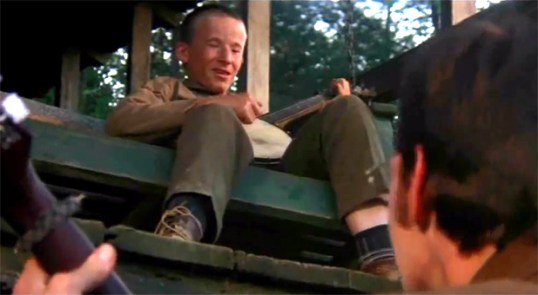
Much as with The Texas Chainsaw Massacre (which came out just two years after Deliverance), the main theme here seem to be that you should be careful about going off the main road.  Just as the unfortunate hippies and college students in Texas Chainsaw Massacre proved to be no match for a clan of backwoods cannibal, the four middle-aged men at the center of Deliverance discover that they’re no match for either nature or its inhabitants.  At the start of the film, we watch as three of the men deal with the locals in a condescending and rather smirky manner.  Only one of them actually tries to be nice to the locals, engaging in a banjo duel with a young boy who clearly loves his banjo but who still refuses to smile or shake hands.  The boy knows what the men are getting themselves into them.  The boy knows what awaits them.

If you grew up in the South, as I did, you’ll recognize all four of the men.  It’s not just that they’re played by recognizable actors.  It’s that each one of them is a common archetype of the type of men you find down here.
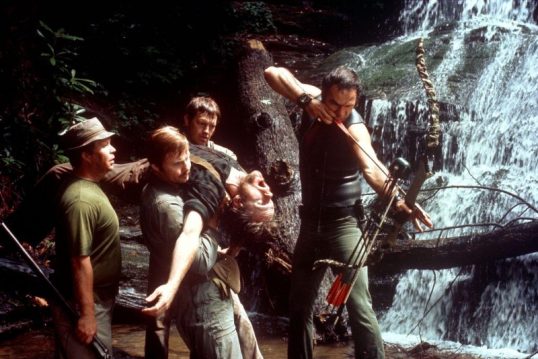
For instance, there’s Lewis (Burt Reynolds), the self-styled alpha male with his leather vest and his bow-and-arrow and his constant talk about how society is eventually going to collapse and only the strong are going to survive.  You know that Lewis is full of it from the minute you see him but he’s so charismatic that you can also understand why the other three men have fallen under his control.

And then there’s Bobby (Ned Beatty).  Bobby is quick to laugh and quick to talk and quick to make a bad joke.  When he says that he’s a salesman, you’re not surprised.  From the start of the film, Lewis complains that Bobby isn’t strong enough or serious enough and, when the mountain men attack, Bobby is the one they target.  And yet, towards the end of the film, Bobby is the one who sells the hastily concocted story about what happened on the river.

Drew (Ronny Cox) is the nicest of the men.  With his glasses and his guitar and his rather touching belief that everything will be okay if everyone just tells the truth, Drew’s the prototype of the Southern liberal.  One can imagine him teaching in a community college and vainly trying to convince his relatives that segregation and nostalgia for the Confederacy is holding the South back.

And finally, there’s Ed (Jon Voight).  Ed smokes a pipe and it’s obvious that he’s someone who has a very secure life.  Ed is the one who is everyone’s friend.  He’s the one who sticks up for Bobby.  He’s the one who reminds Drew to wear his life jacket.  He’s the only one who can get away with (gently) mocking Lewis.  Ed seems like a nice guy but, at the start of the film, there’s a strange emptiness to Ed.  You get the feeling that the reason Ed is friends with everyone is because he doesn’t have any firm beliefs.  Instead, he just adapts to each situation and says whatever everyone wants to hear.  You can’t help but wonder what Ed believes.  By the end of the movie, of course, both Ed and the viewer have learned what Ed is capable of doing.

Cox, Voight, and especially poor Ned Beatty are all perfectly cast in their roles.  Burt Reynolds reportedly felt that this film was his best performance and he was probably right.  Director John Boorman captures both the beauty and the menace of nature, leaving you both in awe of the the river and fearful of what it can do those foolish enough to try to conquer it.  Interestingly enough, while Boorman was directing Deliverance, he was offered The Exorcist.  He turned it down, feeling that the script was too exploitive of the possessed child.  Boorman would, however, direct The Exorcist II: The Heretic (co-starring Deliverance‘s Ned Beatty).

(At the same time, Jon Voight was offered the role of Father Karras in The Exorcist but, like Boorman, turned the film down so he could work on Deliverance.)

While the film is best known for its sequences on the river, one should not overlook the haunting scenes of the survivors once they make their way back to civilization.  After having spent the previous 80 minutes or so presenting everyone in the backwoods as a threat, the final third of Deliverance actually emphasizes the decency of the townspeople.  When one of the men breaks down and starts to cry in the middle of dinner, everyone is quietly respectful of his emotions.  Towards the end of the film, as the survivors are driven out of town, they find themselves stuck behind the old country church, which is being moved upriver.  “Just got to wait for the church to get out of the way,” their driver says while the church’s bell mournfully rings for both the death of the town and the death of innocence.

(Of course, even with all the kind townspeople around, there’s still a somewhat menacing sheriff.  It’s just not a Southern film without a scary sheriff, is it?  “Don’t you boys ever do nothing like this again,” he says at one point.  The sheriff is played by James Dickey, the author of both the novel and the screenplay on which the film is based.)

Deliverance was nominated for three academy awards.  In the directing and the editing categories, it lost to Cabaret.  For best picture, it lost to The Godfather.  Deliverance, The Godfather, and Cabaret, all competing against each other?  1972 was a very good year.
SyFy Film Review: Zombie Tidal Wave (dir by Anthony C. Ferrante)


“Fire up the wood chipper!  It’s feeding time!”

So announces Hunter Shaw (Ian Ziering) towards the end of Zombie Tidal Wave, proving once again that any film, regardless of genre or tone, is automatically made a hundred times better by stuffing someone in a wood chipper.  Or, in this case, several zombies.  Needless to say, there’s soon blood and chunks of blue skin flying everywhere.  It’s messy but, when you’re being attacked by zombies, you do what you have to do.

SyFy advertised Zombie Tidal Wave as being from “some of the people behind Sharknado” and this film definitely shares the same sensibility as the first Sharknado film.  What’s often forgotten is that the first Sharknado film was not quite the all-out parody that the later films in the series eventually became.  It was definitely a comedy but, at the same time, there weren’t any celebrity cameos and David Hasselhoff didn’t end up in space.  Instead, it took a ludicrous idea — sharks in a tornado — and then presented it with just a hint of self-awareness.

Zombie Tidal Wave does the same thing.  As a result, you do get Ian Ziering delivering one-liners, like the one at the start of this review.  And the entire film is full of references to other zombie films.  For instance, there’s a band called The Fulcis and the first zombie to appears bears a distinct resemblance to the boat zombie from Zombi 2.  The many scenes of zombies rising from the ocean will remind veteran zombie fans of Shock Waves.  When the zombies invade a hospital, I was reminded of the infamous Hell of the Living Dead.  But, at the same time, Zombie Tidal Wave plays things relatively straight.  Zombies invade.  People get bitten.  Some people sacrifice themselves for the good of the other survivors.  Zombie Tidal Wave has its moments of humor but it never becomes an out-and-out parody.

Why are zombies washing up on the shores of an island community?  Well, it’s because of an earthquake, one that’s unleashed a horde of the undead.  Hunter Shaw is a fisherman and perhaps the most respected citizen of the besieged community.  Naturally, it falls upon him to not only bring everyone together but also to figure out how to defeat the zombies.  To be honest, it really is a typical SyFy movie, which a handful of characters spending most of the film looking for each other while trying to stay alive and then eventually banding together to battle the threat.  Some people, like Hunter and his wife (Cheree Cassidy) rise to the challenge.  Others, like the rich white guy in the pink shirt, don’t.  Personally, my favorite character was Taani (Angie Teodora Dick) because she grabbed a pointed stick as soon as the invasion began and spent the entire movie kicking zombie ass.  GO TAANI!

Anyway, as a lifelong fan of zombie movies, I enjoyed Zombie Tidal Wave.  It didn’t waste any time getting to the zombie action and really, that’s the important thing isn’t it?  The pace was quick and, as he did in Sharknado, Ian Ziering played the grim hero with the right mix of sincerity and horror.  I don’t know if Zombie Tidal Wave is going to launch a Sharknado-style franchise or not but it was still an entertaining SyFy film.

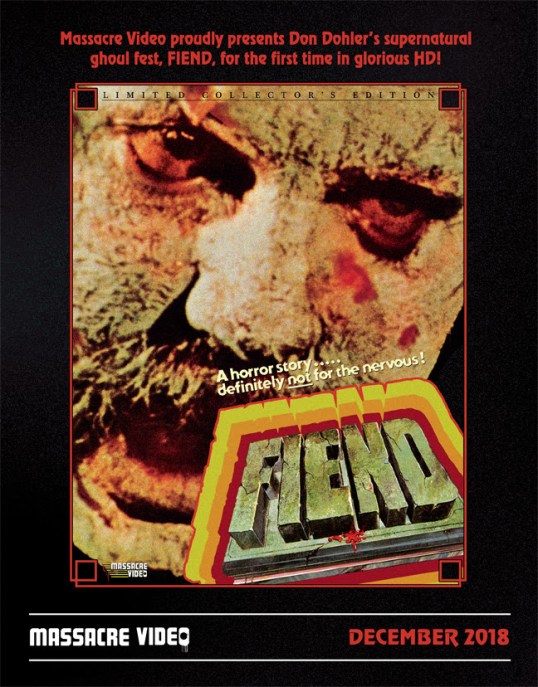
The TSL’s Horror Grindhouse: Fiend (dir by Don Dohler)


The 1980 film, Fiend, is a movie that should be viewed by every aspiring indie filmmaker.  I’m going to tell you why in a few paragraphs but first, allow me to tell you what Fiend is.

Fiend opens with ominous music and a shot of a seemingly deserted cemetery.  While the camera tracks it’s way from headstone to headstone, we become aware of a red light that seems to be floating above the ground, as if it’s searching for something.  The light suddenly plunges into a grave.  A few seconds later, the man who was in the grave claws his way to the surface.  Just one look at him reveals that he’s been dead for quite some time.  However, you might be distracted from the facial decay by the fact that the man is glowing.

The man staggers about, eventually coming across a young woman who has been abandoned in the cemetery by her jerk of a boyfriend.  The man grabs her from behind and wraps his hands around her neck.  Briefly, the man’s glow seems to pulse and then it fades away.  The man is no longer a decaying corpse.  Now, he’s just a middle-aged guy with a huge mustache.  He looks like he should be teaching a remedial math class.

(Perhaps not coincidentally, Don Leifert, the actor playing our living corpse, actually was a teacher.)

Now calling himself Eric Longfellow, the man moves into a nice house in the suburbs and establishes himself as a music instructor.  Longfellow tends to keep to himself, which certainly makes the neighbors a bit curious about him.  Longfellow would probably be more sociable if not for the fact that, every few days or so, he starts to decay.  For that reason, he has to have a constant supply of victims so that he can suck out their life force and renew himself.  Helping him out with this issue is Dennis Frye (played by George Stover, who was apparently a civil servant when he wasn’t acting), who is kind of squirmy and owns some of the ugliest suits ever tailored.  (I assume that Dennis Frye’s name is an homage to Dwight Frye, who played Renfield in the Bela Lugosi-version of Dracula.)

Now, of course, you can only suck the life force out of so many people before people start to notice that something strange is going on.  Longfellow is unfortunate enough to live next door to Gary Kender (Richard Nelson), who is a plain-spoken, beer-drinking guy who just happens to have a mustache that’s almost as huge as Longfellow’s.  Gary doesn’t trust Longfellow so he starts to do some research on his mysterious new neighbor….

Now, here’s the thing to remember about Fiend.  It was made foe $6,000.  That would translate to about $18,000 today.  Either way, it’s a tiny budget.  And yet, it’s an effective (if occasionally goofy) little film and, more often that not, it’s effective precisely because it was shot for next to nothing.  The grainy images give the film a feeling of immediacy.  Though the majority of the murders may have happened in broad daylight because day is easier to light than night, all those daytime murders contribute to the sense of unease, the feeling that no one’s safe at any time.  Even the amateur quality of the performances contribute to the film’s overall dream-like feel.  Director Don Dohler may not have been able to afford expensive special effects or realistic gore but, as a result of that, his direction emphasizes atmosphere over jump scares.  I mean, don’t get me wrong.  This is definitely an amateur film, full of clunky dialogue and the occasional slow scene.  But so what?  Even those flaws add to the film’s nicely surreal atmosphere.

I mean, consider this.  Don Dohler made this film nearly 40 years ago and he spent less money on the entire production than most films spend during one day of shooting.  It was released in only a handful of theaters and I imagine it probably didn’t get rave reviews from the mainstream critics.  And yet, here we are, decades later, and Fiend still has a growing cult of admirers.  It’s available on YouTube and, if you do watch it, I encourage you to read the comments posted underneath the video.  Several of them are from people who either worked on the film or who knew Don Dohler and Don Leifert.  For the most part, everyone seems to have fond memories of both this film and the filmmakers.

Fiend works because, instead of surrendering to the film’s low budget, Don Dohler used it to his advantage.  There’s a lesson there for us all.

Cinemax Memories: Raw Nerve (1991, directed by David A. Prior)


Raw Nerve opens with a serial killer haunting Mobile, Alabama, using a pump action shotgun to shoot women in the face while they’re wearing red high heels.  Race car driver Jimmy Clayton (Ted Prior, brother of this film’s director) has been having visions of the murders so he goes to the police and offers to help them out.  Unfortunately for Jimmy, neither Detective Ellis (Jan-Michael Vincent!) nor Captain Gavin (Glenn Ford!!) believe in psychic phenomena so they toss Jimmy’s ass in jail.  While Ellis’s ex-wife, Gloria (Sandahl Bergman!!!), tries to prove that Jimmy’s innocent, Jimmy’s mechanic (Randall “Tex” Cobb!!!!), takes an unhealthy interest in Jimmy’s teenage sister, Gina (TRACI LORDS!!!!!).
As you can tell from reading the paragraph above, the main thing that this film has going for it is a cast full of recognizable B-actors.  Though none of them are really at their best, Raw Nerve is still your only chance to see Glenn Ford, Jan-Michael Vincent, and Sandahl Bergman all sharing scenes together.  Unfortunately, despite all of the famous names in the cast, Ted Prior got the most screen time and he really didn’t have the screen presence to pull off either the role or the film’s loony final twist.

The best thing about Raw Nerve is that it features both Randall “Tex” Cobb and Traci Lords.  Lords was a legitimately good actress, even if her past as a pornographic actress made it impossible for her to get the type of roles that she really deserved.  Lords doesn’t get to do much in Raw Nerve but she does her best to make Gina into a real character instead of just a generic victim.  Meanwhile, Randall “Tex” Cobb is a marvel as a biker who is never seen without a beer in his hand.  When Cobb eventually leaves the movie, you miss him.

Raw Nerve was one of the many low-budget thrillers that came out in the 90s.  Like many of these films, Raw Nerve was directed by David A. Prior and released by Action International Pictures, which shared both an acronym and a sensibility with American International Pictures.  Though films like Raw Nerve may not have been great art, they were entertaining if you came across one of them on Cinemax.  Where else were you going to see Tex Cobb and Jan-Michael Vincent battle it out at two in the morning?

Halloween Havoc!: ISLAND OF LOST SOULS (Paramount 1932)


gary loggins's avatarcracked rear viewer

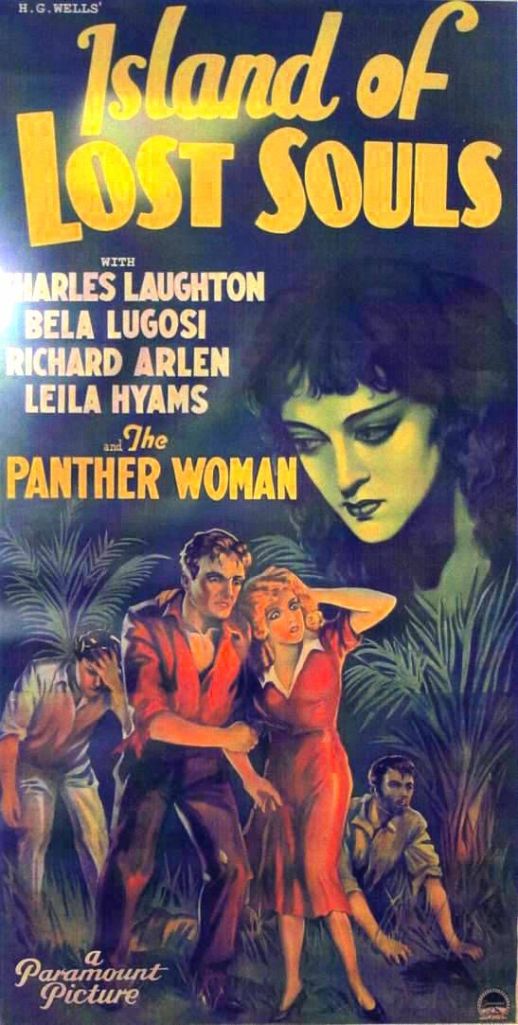
Universal Pictures kicked off the horror trend of the early 30’s with DRACULA and FRANKENSTEIN , and soon every studio in Hollywood, both major and minor, jumped on the terror train. Paramount was the first to hop on board with an adaptation of Stevenson’s DR. JEKYLL & MR. HYDE , earning Fredric March an Oscar for his dual role. Soon there was DR. X (Warners), THE MOST DANGEROUS GAME (RKO), FREAKS and THE MASK OF FU MANCHU (both MGM), and THE MONSTER WALKS and WHITE ZOMBIE from the indies. Paramount released ISLAND OF LOST SOULS at the end of 1932, a film so shocking and perverse it was banned in Britain for over a quarter century, and still manages to frighten even the most jaded of horror fans today.

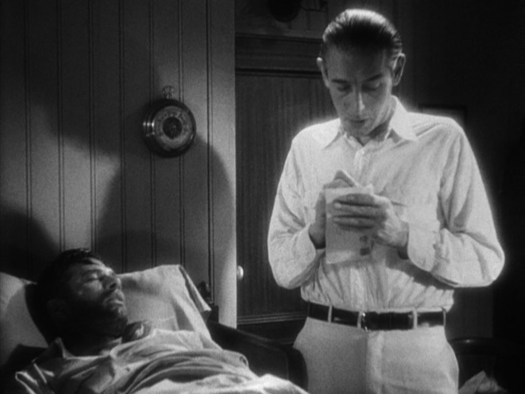
Based on the novel The Island of Dr. Moreau by H.G. Wells, the film begins with shipwrecked Edward Parker being rescued…

View original post 818 more words

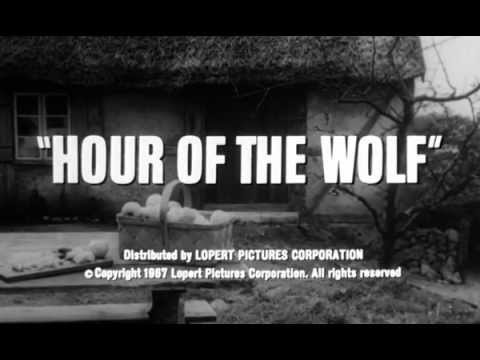
International Horror Film Review: Hour of the Wolf (dir by Ingmar Bergman)


An Ingmar Bergman horror film?

Indeed.  Despite the fact that Bergman’s bleak imagery and existential themes undoubtedly influenced any number of horror filmmakers (Wes Craven’s Last House On The Left was essentially a remake of Bergman’s The Virgin Spring), the 1968 film, Hour Of The Wolf was Ingmar Bergman’s only official horror film.

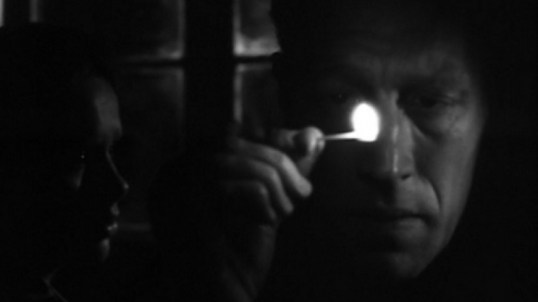
Of course, it’s also an Ingmar Bergman film, which means that it’s also a meditation on relationships, regret, the difficult of ever knowing what’s truly going on inside someone else’s head, and the artificiality of the artistic process.  It tells the story of a painter named Johan Borg (Max Von Sydow) and his pregnant wife, Alma (Liv Ullman) and their life on an isolated island.  Alma is worried about Johan’s feelings towards his former muse and ex-lover, Veronica Vogler.  Johan is haunted by nightmarish visions of menacing figures and the feelings that demons are pursuing him.

The film opens with a title card, informing us that the story that we’re about to see is true and that it’s an attempt to reconstruct the final days of Johan’s life before his mysterious disappearance.  Of course, as anyone who has seen enough found footage films can tell you, the title card is a lie and there never was a painter named Johan Borg, or at least not one who mysteriously vanished while living in an isolated house on an island.  Instead of being meant to convince us that we’re about to see a true story, the title card instead establishes that what we’re about to see can be considered to almost be a dark fairy tale.  The title card is the film’s way of saying, “Once Upon A Time…..”  It’s also a reminder that most fairy tales are considerably more grim than what those of us raised on Disney might expect.

(No coincidentally, the title Hour of the Wolf came from Swedish folk lore.  The Hour of the Wolf is the time between 3 and 5 in the morning, during which it is said that most births and deaths occur.)

While the opening credits flash by on a dark screen, we hear the sounds of men working and anyone who has any experience in theater will immediately realize that we’re listening to a set being built.  As the opening credits come to an end, we hear Bergman shouting out, “Action!”  Our next shot is Alma standing outside of the house that she shared with Johan.  Alma looks straight at the camera as she tells us that she still doesn’t know what happened to Johan.  She tells the unseen Bergman that she’s revealed to him everything that she knows.

It’s an interesting opening, one that reminds the audience that what they’re seeing is merely a recreation of what might have happened on Johan and Alma.  When Alma speaks to Bergman, there’s an interesting subtext to her words and her tone and one gets the feeling that Alma and the director are meant to have a history of their own.  It’s almost as if the film is saying that the story’s meaning can only be found in what we can’t see, in what’s going on behind the camera.  That seems especially true when you consider that, when Hour of the Wolf was filmed, Liv Ullman, who played the pregnant Alma, actually was pregnant with Bergman’s child and that Bergman himself later said that Johan Borg’s nightmares were recreations of Bergman’s own nightmares.  It’s perhaps a little too easy to imagine that the demons that inspire Johan’s art are the same demons that inspired Bergman’s films and that this film is both an apology to Ullman for his own neurotic tendencies and a tribute to her willingness to put up with him.

Hour of the Wolf is a bleakly effective film, one that works as both a dissection of an unstable relationship and a portrait of a man who may be losing his mind.  Von Sydow plays the haunted Johan as a charismatic but introverted artist, a troubled individual who can only truly express what’s happening in his mind through his art.  Indeed, Johan’s tragedy seems to be that the joy he gets from creating can only come from the pain that he suffers from imagining and dreaming.  Ullman is heart-breaking as she tries to keep her husband from succumbing to his own darkness while, at the same time, trying not to get sucked into the darkness herself.  About halfway through the film, Johan confesses to committing a shocking crime and, like Alma, you don’t know whether to believe him or to believe that he’s reached the point where he can’t tell the difference between reality and his nightmares.  Ullman plays the scene with the perfect combination of fear and sadness, sympathy and revulsion.  As for Von Sydow, he brings to life both the natural arrogance of an artist and the terror of someone who suspects that he has no control over his own existence.

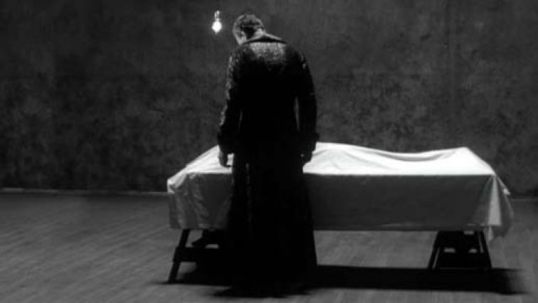
Visually, this film is bleak by even the standards of Bergman.  The black-and-white cinematography plays up not just the shadows of the night but also the brutal desolation of Johan and Alma’s life on the island.  It reminds us that Johan is an artist living in a world without color.  Bergman views Johan and Alma through a detached lens, recording the collapse of their lives but, at the same time, keeping his distance as if to protect the audience from getting trapped inside of Johan’s madness.

Hour of the Wolf may have been Ingmar Bergman’s only official horror film but it’s definitely an effective thriller, one that manages to explore both Bergman’s signature themes while also keeping the audience off-balance and wondering what might be lurking in the darkness.  It may not be one of Bergman’s “best-known” films but it’s definitely one for which to keep an eye out.

Sorority Row, Review By Case Wright


Sorority-Row.jpg

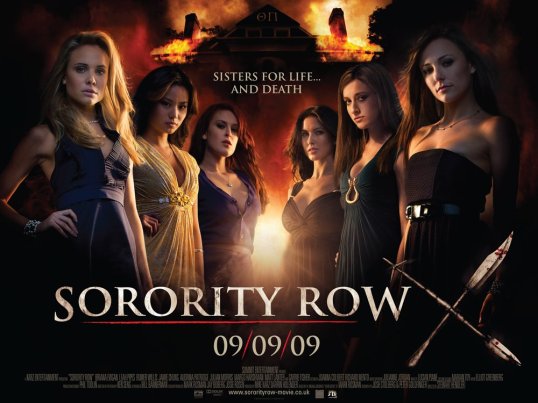
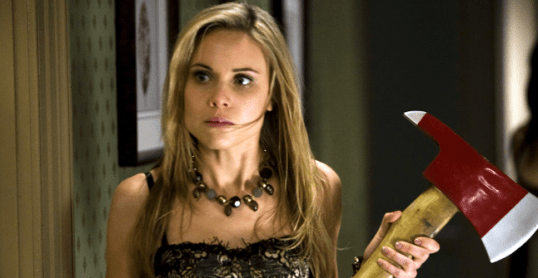
Horror can make a political statement, it can make you reflect on your status in society, or it can just entertain.  The first two types are good, but it’s also nice to just have fun! “Sorority Row” written by Josh Stolberg & Peter Goldfinger and directed by Stewart Hendler is a 1990s throwback.  It had a real “I Know What You Did Last Summer” feel to it.  Honestly, the reviews are not fair to this film.  A lot of people want horror to be all things, but it’s supposed to be fun too.  So, just relax and have a good time.  Also, it doubled its money, which is what a movie is supposed to do- especially horror. It’s one of the few genres left that can produced by mere mortals.

What I liked mostly about the film was the writing.  It had a lot of great humor without it being campy. I’ve gotten to know Josh Stolberg on twitter the script has quite a bit of his personality: clever and quick-witted.  I especially enjoyed Jessica (Leah Pipes).  As a man who went a Greek dominated college, she was very realistic.  Her character and one-liners gave the story a mix of comic relief and reality.  I practiced Criminal Law for waaaaay too long and I can tell you that even honest people can turn to something wicked if they feel threatened.  People will invariably choose themselves over a possible life ending punishment.

The plot is similar to the original House on Sorority Row: a prank run a muck.  The girls belong to Theta Pi and they to love to party, prank, and get murdered.  Garrett a brother of the Sister “Chuggs” cheated on Megan another Theta Pi, which is not okay! So, the sisters have her fake an overdose so that Garrett believes he killed Megan.  The sisters: Jessica, Ellie, Cassidy, Claire, Megan, and Chugs are all in on the prank are a little too convincing because they make Garrett believe that they need to hide Megan’s body in a mine shaft or their lives will be ruined.  The sisters say they have to get rid of the air in Megan’s lungs or she’ll float back up. So, Garrett takes the initiative as a true go-getter and uses a tire iron to stab Megan to death.  Jessica decides very quickly that they need to hide Megan’s body for real.  When Cassidy refuses to participate, they wrap the corpse in Cassidy’s coat and throw it down the mine shaft.  Jessica really thinks fast on her feet.

I don’t know about you, but I think Jessica would be good marriage material. Hear me out: she’s determined, quick-thinking, has a college degree, and is ruthless to protect her goals.  Also, Cassidy tried to be all above it, but as Jessica said- “you could’ve called the police, but you didn’t!”  Agreed.  You don’t get to benefit from something wicked and then look down on everyone else.  Jessica made her choice and stuck to it.  She made a good point as to protecting everyone’s future and ran with it.  Cassidy kept Hamletting over her bad choices.  Do it or Don’t.  Jessica, don’t listen to the haters.

All seems fine a year later.  They’ve all moved on except for Garrett who has become a wreck over his humiliation and accidental murdering.   Then, they all receive a threatening group text on their very old timey looking phones- 2009 was just ten years ago and these phones look like museum pieces.  Sorority-Row-Megan-s-HERO-Cell-Phone-1.jpg

This technology allowed for some extra suspense because reception and tech wasn’t that great then; therefore, the characters can be cutoff from help.  I really think horror shouldn’t be set any time after 2009 because it’s just too easy to get help now.  This lack of tech added a nice layer of suspense.  The text sender stalks and murders them one by one.

The kills were pretty clever: an electrocution, death by chardonnay, tire iron throwing, and a good ol’ fashioned stabbing or three.  It also had a fun twist at the end like the 1990s horror films of my youth.   I recommend this film.  Read my past reviews- I don’t just recommend anything.  I’m an iconoclast and can tell you that this was a lot of fun. Happy Horrorthon!

sorority-row2.png

Horror Film Review: It Stains The Sands Red (dir by Colin Minihan)


So, imagine this scenario.

The world’s ending, again.  The city that you once called home — in this case, Las Vegas — is on fire.  Hordes of zombies are attacking the living and it seems like even the people who have, up until now, survived the undead have still allowed their worst instincts to take over.  The military is opening fire on anyone that they come across and scavengers, both living and not, are all over the place.

Your boyfriend, Nick, has a way to escape.  His lowlife buddies have a plane ready to go.  They’re just waiting for him to show up, mostly because he’s bringing the drugs.  His friends, of course, could hardly care less about you but, as long as you show up with Nick, you know that you’ll be able to escape with them.  Unfortunately, Nick is now dead.  His throat was ripped open by a zombie.

So, now, you’re walking across the Nevada desert and you’re just trying to make it to the airfield without getting killed.  It’s over a 100 degrees out.  You’re not sure where you’re going.  You’re not dressed for a desert journey.  You’re haunted by memories of your son.  Though you’re smarter than people give you credit for being, you have no desert survival skills.  Meanwhile, the same zombie that killed Nick is staggering along behind you, hoping to get a chance to do the same to you.

And, just in case this week wasn’t bad enough, you’re also on your period and you have exactly one tampon.

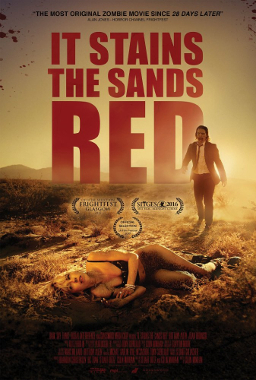
That’s the situation in which Molly (played by Brittany Allen) finds herself in the 2017 zombie film, It Stains The Sands Red.  As Molly makes her way through the desert, she finds herself becoming cautiously attached to the zombie pursuing her, a zombie that she nicknames Smalls (and who is played by Juan Reidinger).  It makes sense, really.  For most (though not all) of the movie, Smalls is the only other creature around.  Who else is Molly going to talk to?  It also helps that, being a walking corpse, Smalls can’t interrupt her while she’s speaking or dismiss her concerns out-of-hand.  When you compare him to the living people that Molly meets, a group that includes two redneck rapists and a few trigger-happy soldiers, it’s easy to view Smalls as being harmless.

Or, at least, it’s easy to view him that way until he gets too close and tries to bite off your finger.

I had mixed feelings about It Stains The Sands Red.  It’s an extremely uneven film, one that is sometimes quite clever and even empowering and sometimes rather forgettable.  Molly’s monologues bring a welcome feminist sensibility to the zombie genre and there’s a clever scene in which she uses a bloody tampon to distract her zombie stalker.  And yet, it’s indicative of both the film’s strengths and its weaknesses that the scene with the tampon is played as much for shock value than as an example of Molly’s resourcefulness.  The film is full of scenes in which we see that Molly has somehow managed to slow down or subdue Smalls but we’re always left wondering how she managed to get close enough to him without getting attacked.  Smalls’s effectiveness as a zombie seems to change from scene-to-scene, depending on the needs of the narrative.

And yet, there’s one thing that I greatly appreciated about It Stains The Sands Red and that was the character of Molly.  As soon as you see her snorting cocaine while wearing her leopard-print leggings, her pleather halter top, and her fake fur, you know that Molly is the type of character who usually dies within the first 15 minutes of a film like this.  Instead, Molly not only survives the first 15 minutes but she goes on to repeatedly show that she’s far more determined and intelligent than anyone in the viewing audience originally gave her credit for being.  She emerges as a compelling and determined survivor, one who refuses to surrender to either the desert or its predators.  Molly is the type of strong female character that horror fans like me have always wanted to see in a film like this.  She elevates It Stains The Sands Red above its flaws and makes the film worth watching.  In the role of Molly, Brittany Allen brings life to this film about the dead.


Into the Dark, “Down”, Dir. Daniel Stamm, Review By Case Wright


Down

Happy Horrorthon!!!!

Should some people embrace their creative mediocrity? YES! Yes, they should.  I don’t mean that what they write or direct is bad. It’s simply unoriginal, predictable, with characters who make obviously bad decisions REPEATEDLY, and still are amazingly fun! I never thought I’d get into Lifetime movies until Lisa got me into them. I discovered how fun Hallmark movies are these past few years.  Law & Order embraced its predictability so much that their main sponsor Listerine would break the show down in the Commercials: Body discovery, Wisecrack, Investigation and Arrest, Prosecution, and Verdict. Law & Order lasted 19 years.  Case, what’s your point?  My point is that mediocrity can be fun…a LOT of fun.

Hulu’s “Into the Dark” series is the fun trash that is great to watch and nothing more (accept for the episodes that are hamfisted, political, and preachy) ; it’s like the Jack in the Box Munchie Meals…yeah, they’ll give you a bit of diarrhea, but come on, sometimes you just gotta have a Sriracha Curly Fry Burger.  That’s just science!

“Down” is awesomely bad.  The actors mug, the character decisions are stupid, and it’s great for the elliptical or exercise bike and probably safer to watch as you’re burning those last Lbs.  The plot is simple and doesn’t try to go into a supernatural direction. It’s fun because it never tries.  Jennifer Robbins ( Natalie Martinez) is trapped in an elevator on a holiday weekend with Guy (Matt Luria), BUT is Guy hiding something sinister? Yes…yes, he is and you can tell because he mugs A LOT!

If Lifetime went down the horror route, this would be the premiere.  Guy is in fact Jennifer’s stalker and manipulates her into having sex like the Lifetime movies with the Single Moms and the Predator Next Door.  Lifetime movies are better than “Down” because with Lifetime movies once the heroine realizes she has to fight; it’s to the death.  Here, when Jennifer realizes Guy is a Psycho Killer she doesn’t Run….Run…Away.  In fact, he tries to kill her a lot and then she gets the upper hand, but does she finish him off? Nooooope.  She fails to deliver the Coup de Gras not once, not twice…no, we’re talking six times here when she could’ve finished the movie and literally had a smoke after the 45 minute mark, but 45 minutes of filler was fine for my physical therapy time.

I know that this reads harsh, but these movies have their place; they’re fun.  If the pacing and plot points matched with a Lifetime MOW, it would’ve been that much better, but you can’t have everything, nor should you! Will I review a bunch more of these Into the Dark quasi-episodes? YES, Yes I will!

Happy Horrorthon!

Horror on the Lens: Raiders of the Living Dead (dir by Samuel M. Sherman and Brett Piper)


Hi there and welcome to October!  This is our favorite time of the year here at the Shattered Lens because October is horror month.  For the past three years, we have celebrated every October by reviewing and showing some of our favorite horror movies, shows, books, and music.  That’s a tradition that I’m looking forward to helping to continue this year.

Let’s start things off with the 1986 epic, Raiders of the Living Dead!

I reviewed this film last year but to recap, it’s the story of a creepy boy, a laser gun, a reporter, and a bunch of zombies.  There’s a mad scientist involved, too.  There always is.  The movie opens with a truck being hijacked and then the action shifts to a power plant and, honestly, I have no idea what any of it means.  Technically, Raiders of the Living Dead is not exactly a good film but it is a film unlike any other that you’ve seen.  If nothing else, it’s a film that you watch and you can’t help but admire the fact that it somehow got made and went on to find a small but kind of appreciative cult audience.  It’s just a very strange film and a good one to start October with, no?

Plus, it has got the greatest zombie-centric theme song ever!  The opening credits alone are worth the price of admission (which, incidentally, is free because those of us at the Shattered Lens love you!)

So, here is Raiders of the Living Dead. 

Enjoy!