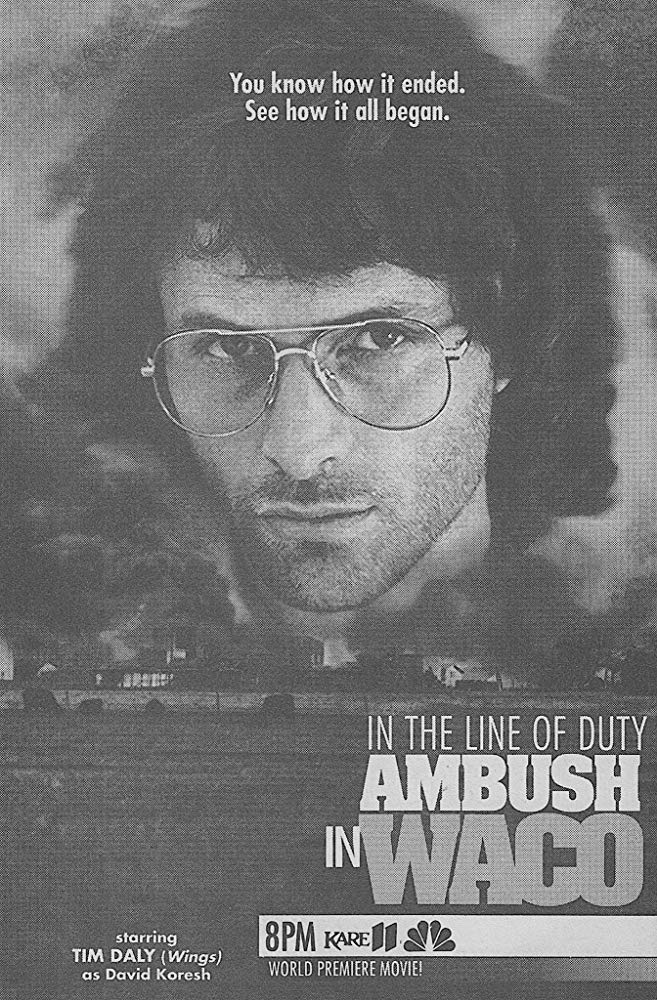
In The Line Of Duty: Ambush In Waco (1993, directed by Dick Lowry)


In Waco, Texas, a scruffy and frustrated musician named David Koresh (Tim Daly) has announced that he is the messiah and is gathering followers to live with him in a compound.  The Branch Davidians, as they are known, spend hours listening as the increasingly unhinged Koresh gives lengthy sermons.  There are rumors that Koresh is abusing the many children who live in the compound and that he is stockpiling weapons for a confrontation with the government.

The ATF makes plans to raid the compound and take Koresh into custody.  Under the supervision of Bob Blanchard (Dan Lauria), the agents run several practice raids.  However, when the day of the actual raid comes, they discover that the David Koresh and the Branch Davidians aren’t going to give up so easily…

Ambush in Waco is a dramatization of the infamous raid that led to a 51-day stand-off between the government and the Branch Davidians, a stand-off that ended with the compound in flames and the deaths of several innocent children.  Over the years, the siege in Waco has often been cited as an example of both government incompetence and law enforcement overreaction.  Instead of arresting Koresh during one of his many trips into town, the ATF decided to do a dramatic raid for the benefit of the news cameras and they were unprepared for what was waiting for them inside of the compound.  After 51 days of negotiations, the FBI tried to force Koresh out and, in the eyes of many, were responsible for the death of every man, woman, and child inside of the compound.  For many, the events in Waco represent the government at its worse.

You wouldn’t know that just from watching Ambush In Waco.  This made-for-TV movie was put into production while the siege was still ongoing.  As a result, the film shows the events leading up to the initial raid but nothing that followed.  Since it would be years before the full extent of the government’s incompetence at Waco would be uncovered, Ambush in Waco today feels like propaganda, a whitewash of a shameful moment of American law enforcement history.  The ATF is portrayed as being thoroughly professional while Koresh is a dangerous madman who is on the verge of trying to lead a violent revolution.  Today, we know that wasn’t the case.  Koresh may have been a loser with delusions of grandeur but he probably would have been content to spend the rest of his life hidden away in his compound.  Meanwhile, newly appointed Attorney General Janet Reno was so eager to prove her toughness that the situation was allowed to get out of control.  That’s not something you’ll learn from watching Ambush in Waco.

Of course, that doesn’t mean that David Koresh wasn’t a bad dude.  Tim Daly is this film’s saving grace, giving an outstanding performance as an unstable, wannabe dictator.  Ambush in Waco shows how someone like Koresh could end up attracting so many followers and it also shows how even the most well-intentioned of people can be brainwashed.  Though the film may not convince us that the ATF was justified in their actions, it does show us why we should be weary of anyone who claims to have all the answers.
Lisa Reviews An Oscar Nominee: Sideways (dir by Alexander Payne)


I’ve never really gotten the obsession that some people have with wine.

Some of that may be because I hardly ever drink.  I’m not quite a teetotaler but I seem to be getting closer with each passing year.  But, beyond that, I just don’t get the whole culture that’s sprung up around wine snobbery.  I don’t get the people who sit around and say, “Oh, this is an amazing Australian wine and, someday, my great-great grandchilden will get to open it when they’re 90 and on their deathbeds.”  Everything that I’ve seen about wine tastings annoys me, from the overdramatic sniffing to the big bowls of spit-out wine.  (I’m not a big fan of spitting in general.)

The 2004 film Sideways is a film that’s all about wine snobs.  It follows two friends as they take a week-long vacation in the Santa Barbara wine country.  Miles (Paul Giamatti) is a depressed English teacher who loves wine and who has never gotten over his divorce.  He’s also a writer, though a remarkably unsuccessful one.  He’s waiting to hear back on his latest manuscript, an autobiographical novel that he fears might not be commercial enough.  Jack (Thomas Haden Church) was Miles’s college roommate and they’ve remained friends, despite Miles feeling that they have nothing in common.  Jack is a former semi-successful actor who now works as a voice over artist.  Jack knows little about wine.  He’s just looking for a chance to indulge in some meaningless, commitment-free sex before getting married.

Miles attempts to teach Jack to appreciate wine.  Jack attempts to get Miles to actually enjoy life for once.  Together …. THEY SOLVE CRIMES!

Actually, they don’t solve crimes.  That’s not the type of film that Sideways is.  This is an Alexander Payne film, which means that it’s essentially a road film in which two different characters consider their own mortality and question whether or not there’s more to life than just what they see around them.  The difference between the two characters is that Miles obsesses on the meaning of it all while Jack doesn’t exactly ignore Miles’s concerns but he’s much better at shrugging them off and blithely moving from one experience to another.  Miles wears his neurosis on his sleeve while Jack is slightly better at hiding them.

During their week-long excursion into wine country, Miles and Jack fall for two women who undoubtedly deserve better.  Maya (Virginia Madsen) is a waitress who is working on her master’s degree in horticulture.  Maya shares Miles’s love of wine and is one of the few people to show any genuine interest in Miles’s book.  Stephanie (Sandra Oh) is as much of a free spirit as Jack and, after spending two days with her and her daughter, Jack starts talking about canceling (or, at the very least, delaying) his upcoming wedding.  Miles, meanwhile, is falling in love with Maya but there’s a problem.  Jack lied to Maya and told her that Miles’s book is about to be published and Jack has failed to tell Stephanie that he’s engaged….

And really, it would be very easy to be dismissive of both Miles and Jack if they were played by anyone other than Paul Giamatti and Thomas Haden Church.  If you ever need a movie to cite as an example of how perfect casting can inspire you to forgive characters who do rotten things and make stupid mistakes, Sideways would be a good film to go with.  Thomas Haden Church brings an unexpected sincerity to the role of Jack, one that keeps him from coming across as being malicious but instead suggests that he just can’t help himself.  If nothing else, Haden Church’s concern for Miles comes across being genuine.  (“I guess because you were wearing your seat belt.”)  Meanwhile, in the role of Miles, Paul Giamatti again proves that he’s one of those rare actors who can take a rather annoying character and somehow make him totally sympathetic.  It help that Giamatti brings a lot of self-awareness to the role.  Yes, Miles can be whiny and self-absorbed but at least he knows that he’s whiny and self-absorbed and he’s just as annoyed with himself as we often are.

The actors even manage to make all of the wine talk palpable for non-wine people like me.  During Virginia Madsen’s lengthy monologue about why she loves wine, I found myself thinking, “That’s why I love movies.”  Just as wine tastes different depending on who is drinking it and when they opened the bottle, how one experiences a movie can change from time to time and depending on each individual viewing experience.  Just as the best wine was cultivated over time, the same can be said of movies, many of which are not recognized for their greatness until years after they were first produced.  Just as Maya thinks about all the people who played a part in creating the perfect bottle of wine, I think about all the people who played a part in creating the movies that I love.  You don’t have to love wine to enjoy Sideways.  You just have to love something.

Sideways was nominated for Best Picture but it lost to Million Dollar Baby.  Amazingly, Paul Giamatti was not nominated for Best Actor.

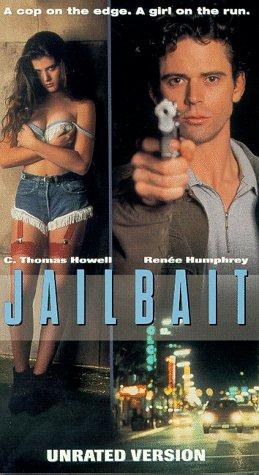
Cinemax Friday: Jailbait (1993, directed by Rafal Zielinski)


Jailbait takes place in Hollywood, the city of dreams.  It opens with one of those long treks down Hollywood Boulevard that should be familiar to anyone who has seen a direct-to-video 90s film.  Street performers try to cheat tourists out of their cash.  Hookers look for customers.  Pimps look for new girls.  Vice cops look over the scene and say, “I’m too old for shit.”  A Greyhound bus pulls into the station and the city’s newest inhabitant, 17 year-old Kyle Bradley (Renee Humphrey), steps off.

Kyle’s from Nebraska and she’s come to Los Angeles because she wants to be a professional dancer.  By the standards of Nebraska, Kyle may be streetwise but she soon discovers that nothing is easy in Hollywood.  She wants to find her half-sister, Merci (Krista Errickson) but Merci is nowhere to be found.  Soon, Kyle is living on the streets, stealing food to survive and faking a heroin addiction to get a bed at the local rehab center.

What Kyle doesn’t know is that Merci is a high-class hooker.  After one of her clients is murdered, Merci is framed for the crime.  Merci’s on the run, though she still finds time to sing in a band.  Heading up the investigation into the crime is Sergeant Lee Teffler (C. Thomas Howell).  Teffler thinks that Merci’s innocent and believes that the murder is connected to a human trafficking ring that is run by his childhood friend, Roman (David Laboisa).  When he meets Kyle, he takes her back to his apartment to keep her safe. Teffler swears that nothing can happen between them because she’s only seventeen.  Kyle says that age shouldn’t matter and, because this is a 90s Cinemax film, he decides that she has a point.

In the late 80s and 90s, there were a countless number of films about innocent girls getting corrupted as soon as they got off the bus in Hollywood and Jailbait is certainly one of them.  Jailbait, however, is one of the better examples of the genre because, from the start, Kyle is tougher than the naive, aspiring starlets who usually populated these films.  Though Hollywood turns out to be an even harsher place than she was expecting, Kyle still comes across like she can take care of herself.  That she’s not portrayed as being a wide-eyed or easily manipulated innocent makes Kyle’s relationship with Teffler feel less problematic than it would be otherwise.  All of the characters, not just Kyle, are written and performed with more depth than you would normally expect to find in a film like this.  Teffler is not just a renegade cop and Roman is not just an evil pimp.  Because of their former friendship, they are portrayed as being two sides of the same coin.

It also helps that Jailbait is better acted than the standard straight-to-video film, with Renee Humphrey and Krista Errickson bringing a lot of depth to their roles.  Even C. Thomas Howell, who often seemed to be sleep walking in his 90s films, is effective as the conflicted Teffler.  Visually, Jailbait does a good job of capturing the glitzy grime of Hollywood.  Though it may not be as well-know, Jailbait is a worthy companion to films such as Angel and Vice Squad.

Lisa Reviews An Oscar Nominee: Who’s Afraid of Virginia Woolf? (dir by Mike Nichols)


I’ve starred in a production of Edward Albee’s play, Who’s Afraid of Virginia Woolf?

That’s right.  I’ve played Martha, the heavy-drinking and dissatisfied wife of a burned-out English professor named George.  Yes, I’ve played the same role for which Uta Hagen won a Tony and Elizabeth Taylor won an Oscar.  Among the other actresses that have played Martha on stage: Colleen Dewhurst, Meg Tilly, Diana Rigg, and Kathleen Turner.  And, of course, me.

Now, I should admit that I was only 16 when I played Martha so I was perhaps a bit too young for the role.  Fortunately, my friend Erik — who played George — was only a year and a half older so he was just as miscast as I was.  (It was, at one point, suggested that I should try to put some gray in my hair but I pointed out that, as a redhead, I would never have to worry about that.)  On Broadway and film, Who’s Afraid of Virginia Woolf? runs for over two hours.  The production in which I starred only had a running time of 13 minutes.  Also, the version in which I starred did not feature the characters for Honey and Nick.  I mean, who needed them when you could just watch Erik and me yell at each other for ten minutes straight.

And that’s pretty much what we did.  When we told our drama teacher that we would be doing a scene from Who’s Afraid of Virginia Woolf? for our “Dramatic Duet,” I’m pretty sure that I saw her roll her eyes.  I imagine that’s because she knew that both of us had a tendency towards the dramatic and that the main we picked the play was so we could compete to see who could be the first to go hoarse from yelling.  She was right, of course.  There was no nuance to our performance, largely because neither one of us really understood what the play was about.  We just thought it was funny that some of our classmates covered their ears while we were loudly insulting and taunting each other.  (For the record, I went hoarse before Erik did and I spent the next two days receiving compliments about my new sexy voice.)

Now that I’ve grown up a little, I think I have a better understanding of what Who’s Afraid of Virginia Woolf? is actually about.  At the very least, I now understand that the story is about more than just two burn-outs yelling at each other while a younger couple awkwardly watches.  I now understand that the game that George and Martha play over the course of the night is not a game of hate but instead a game of a very dysfunctional but also rather deep love.  If anything, I now have more sympathy for George and Martha and far less for the play’s judgmental younger couple, Nick and Honey.

Of course, it helps that I’ve seen the 1966 film version of Who’s Afraid of Virginia Woolf?  Directed (in his directorial debut) by Mike Nichols, Who’s Afraid of Virginia Woolf? features Elizabeth Taylor and Richard Burton as George and Martha and George Segal and Sandy Dennis and Nick and Honey.  All four of them were Oscar-nominated for their roles, making Who’s Afraid of Virginia Woolf? one of the few films to see its entire cast nominated.  Elizabeth Taylor and Sandy Dennis both won in in their categories but it really is Richard Burton (who lost to Paul Scofield) who dominates the film.

Burton was a performer who could be shameless in his overacting.  (Just watch his performance in The Exorcist II if you need proof.)  And really, one would expect that the role of George would appeal to all of his worst instincts.  Instead, Burton gives a surprisingly subtle performance.  He growls when you expect him to yell and he delivers the majority of his lines not with fury but instead with a resigned and rather sardonic self-loathing.  He’s actually less showy than Elizabeth Taylor, who gives an overall good performance but still sometimes comes across like she’s trying too hard to convince the audience that she’s a 50 year-old drunk and not one of the world’s most glamorous film stars.  Throughout the film, Burton seems to be digging down deep and exposing his true self to the audience and, watching the action unfold, you can’t take your eyes off of him.  Everyone in the cast does a good job with their roles but Burton is the one who keeps the film moving.  Just as George is ultimately revealed to be stronger than he originally appears, Burton also reveals himself to be a far more compelling actor than you might think if you just knew him from his lesser roles (and performances).

Admittedly, Who’s Afraid of Virginia Woolf? is not my favorite of the many films that have been nominated for best picture over the last 90 years.  Even when the characters are inhabited by skilled performers, a little bit of George and Martha goes a long way.  That said, this is a historically important film.  The film’s language may seem tame today but it was considered to be shockingly profane in 1966.  The fact that the National Legion of Decency declined to condemn the film despite the language was considered to be a major step forward in the maturation of American cinema.  In fact, it can be argued that the MPAA rating system started as a way to tell audiences that a film like Who’s Afraid Of Virginia Woolf? was not morally objectionable but that it was still meant for adults.

Who’s Afraid of Virginia Woolf? received thirteen Academy Awards nominations.  It was nominated in every category for which it was eligible.  It won 5 awards but ultimately lost Best Picture to rather more sedate theatrical adaptation, A Man For All Seasons.


Escape From New York (1981, directed by John Carpenter)


What’s your favorite John Carpenter film?

Halloween is an obvious choice.  It’s probably the film that John Carpenter is best-known for.  The Thing and Assault on Precinct 13 are two other popular choices.  Libertarians and anarchists have embraced They Live as a sacred text.  In The Mouth of Madness is one of the few films to capture the feel of a classic H.P. Lovecraft story.  Christine is one of the best of the Stephen King adaptations.  My techphobic father recently purchased a Blu-ray player just so he could watch Big Trouble In Little China whenever he felt like it.

For me, though, my favorite will always be Escape From New York.

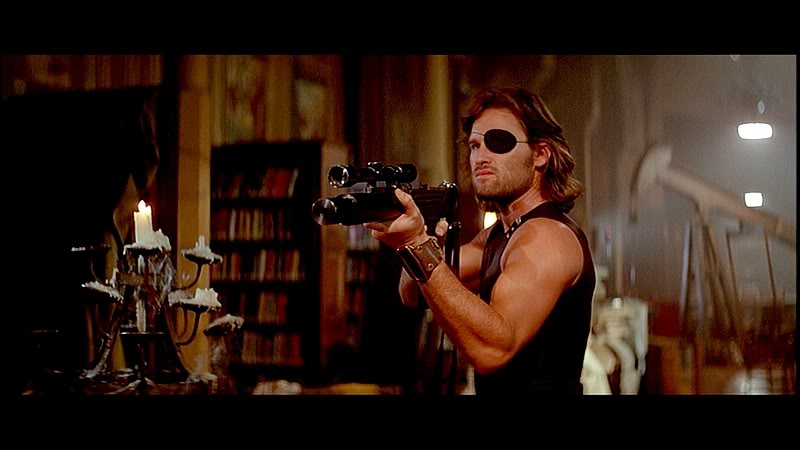
Everything about this movie, from the premise to the execution to the darkly funny ending, is pure brilliance.  For those who have been living off the grid for the last 40 years, Escape From New York takes place in what was, at the time of the film’s initial release, the near future.  Due to a 400% increase in crime, Manhattan has been turned into a floating prison.  A wall has been built around the island.  The bridges are covered in mines.  All of the residents are prisoners who have been sentenced to a life term and the Chock Full O’Nuts is now literally full of nuts.

There’s a new resident of New York City.  He’s the President (Donald Pleasence!) and he was supposed to soon deliver a classified cassette tape to the Soviets.  Instead, with the world on the verge of war, Air Force One has crashed in Manhattan and the Duke of New York (Isaac Hayes!!) is holding him hostage.  Bob Hauk (Lee Van Cleef!!!) recruits notorious criminal Snake Plisskin (Kurt Russell!!!!) to sneak into the prison and retrieve the cassette and save the President, by any means necessary.  If Snake succeeds, he’ll get a pardon.  If Snake fails, he’ll die due to the microexplosives that have been injected into his system.

How unbelievably cool is Kurt Russell as Snake Plisskin?  Before fanfic was even known by that name, people were writing stories about Snake Plisskin’s past and how he lost his eye.  Delivering his lines in a Clint Eastwood-style rasp, Kurt Russell gives one of the best action hero performances of all time.  (Snake was the role that transformed Russell from being a clean-cut former Disney child star to being a cult film icon.)  Everything that Snake says is quotable and, even with tiny explosives circulating through his blood, Snake never loses his cool.  Sometimes, it doesn’t seem like Snake cares whether he lives or dies and that’s what makes Snake such a strong hero.  He’s wiling to take the risks that no one else would.  If he saves the President and the world, cool.  If he doesn’t, neither was probably worth saving anyways.  At the end of the film, Snake reveals that there are things that he does care about.  If you don’t appreciate the people who sacrificed their lives for you, don’t expect Snake to do you any favors.

Snake gets some help from a rogue’s gallery of familiar faces, all of whom have their own reasons for trying to save the President from the Duke.  Harry Dean Stanton is Brain while Adrienne Barbeau is Maggie.  Brain is the smartest man in Manhattan and Maggie’s good with a gun and it’s too bad that we never got a prequel about how they met.  My favorite of Escape from New York‘s supporting cast is Ernest Borgnine as Cabbie, who is the perfect New York taxi driver and whose taste in music plays off in an unexpectedly satisfying way.

Escape From New York is John Carpenter at his best, an exciting race against time full of memorable characters and thrilling action.  Whenever I go to New York and I cross over a bridge into Manhattan, I think about Snake, Cabbie, and the gang driving through a minefield.  Everyone who meets Snake says “I thought you were dead,” but we know better.  Snake Plisskin will never die and neither will my love for Escape From New York.

Lisa Reviews An Oscar Nominee: Lady for A Day (dir by Frank Capra)


The 1933 film, Lady For A Day, tells the story of Apple Annie (May Robson) and Dave the Dude (Warren William), who is perhaps the nicest gangster that you could ever hope to meet.

Of course, when I refer to Dave the Dude as being a gangster, I should make clear that he’s not the type of gangster who guns down his rivals or sells drugs in back alleys.  I mean, I guess he might do that but we certainly don’t see much of evidence of it in the film.  Instead, Dave is just a dapper gambler who travels with a bodyguard named Happy McGuire (Ned Sparks) and whose girlfriend, Missouri Martin (Glenda Farrell), owns a nightclub where, since this is a pre-code film, the acts are slightly racy but not excessively salacious.  The country may be mired in a depression but Dave appears to be doing okay for himself.  Yes, Dave may be a criminal but at least he’s honest about it.

Surviving the Depression has proven to be far more difficult for Apple Annie.  She’s known as Apple Annie because she makes a meager living by selling fruit on the streets of New York City.  Dave is one of her regular customers, as he believes that her apples bring him good luck.  Annie has a daughter named Louise (Jean Parker).  Louise has never met her mother, having spent the majority of her life in a Spanish convict.  Annie regularly steals stationary from a high class hotel so that she can sends letters to Louise.  Not wanting her daughter to be ashamed of her, Annie has always presented herself as being a rich woman named Mrs. E. Worthington Manville.

However, it now appears that Annie’s charade is about to be exposed.  Louise is coming to New York with her fiance, Carlos (Barry Norton) and her prospective father-in-law, Count Romero (Walter Connolly).  Annie knows that when the Louise arrives, she’s going to discover that her mother is not wealthy and that the marriage will probably be called off.  So, led by Dave, Annie’s customers conspire to fool Louise into believing that her mother really is a member of high society.  And if that means that Dave is going to have to not only kidnap (but, let’s be clear, not harm) three nosy reporters and then make a deal with not just the mayor but also the governor to pull of the deception, that’s exactly what he’s going to do.

Though it may be disguised as a sweet and rather simple comedy, Lady For A Day is actually a rather melancholy little film.  Even when Annie and her friends are pretending to be wealthy members of high society, the film is aware that their escape from reality is only temporary.  Eventually, they’ll have to return to the reality of being poor in 1930s America.  At heart, it’s a sad story but May Robson, Warren William, Glenda Farrell, and Guy Kibbee (who plays the pool hustler who is recruited to pretend to be Annie’s husband) all bring such sincerity to their roles that you can’t help but smile while watching it.  Rejected by “polite” society, Annie and her friends have formed a community of outsiders and, throughout the film, the audience is happy that, no matter what, they have each other.

Lady for a Day was the first Frank Capra film to ever be nominated for Best Picture.  Capra was also nominated, for the first time, for best director but he had the misfortune to be competing with Frank Lloyd, who directed Cavalcade.  At the awards ceremony, when host Will Rogers, announced the winner for best director, he said, “Come on up here, Frank!”  An excited Capra ran down to the podium, just to discover that Rogers had actually been talking to Frank Lloyd.  Rogers, seeing what had happened, quickly invited the other nominated director, Little Women‘s George Cukor, to come join Lloyd and Capra at the podium.  Fortunately, one year later, Capra would win the directing Oscar for It Happened One Night.

Cavalcade would go on to win Best Picture but Capra retained so much affection for Lady For A Day that it was the only one of his films that he would subsequently remake.  A Pocketful Of Miracles came out in 1961 and featured Bette Davis in the lead role.  It would be Capra’s final theatrical film.

The Biggest Bundle Of Them All (1968, directed by Ken Annakin)


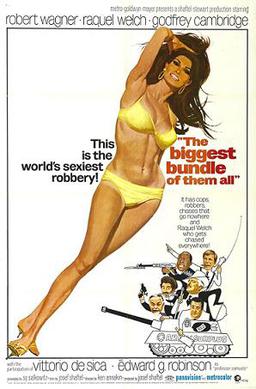
Harry Price (Robert Wagner) is a small-time tough guy with big plans.  He and his gang of accomplices fly over to Italy and plot to kidnap Cesare Celli (Vittorio De Sica), a retired mafia don who is reputed to be worth millions.  However, after snatching Celli from a wedding, Harry discovers that Celli is actually flat broke.  Trying to be helpful, Celli suggests that Harry call up the local gangsters and demand that they pay a ransom for Celli’s release.  When everyone refuses to pay, Celli comes up with another plan.  Celli takes over Harry’s gang and, with the help of Celli’s old friend, Prof. Samuels (Edward G. Robinson), plots to steal $5,000,000 worth of platinum ingots from a train.

Complicating matters is that Harry and his gang are not exactly master criminals.  Benny (Godfrey Cambridge) is a violinist who has moral objections to carrying a gun and who also refuses to cross a picket line, even in the course of a robbery.  (“I’m a union man!”)  Tozzi (Francesco Mule) is more interested in having a good dinner than pulling off the perfect heist.  Davey (Davy Kaye) is short, which is apparently a problem for some reason.  Finally, Harry’s girlfriend, Juliana (Raquel Welch), is more interested in dancing than in committing crimes.  Still, Celli is determined to use them to pull off the heist of the century and, even more importantly, to help prove that this old criminal has still got what it takes.

The Biggest Bundle of Them All was an attempt at a wacky heist film.  Unfortunately, at the time that the film was made, Robert Wagner and “wacky” didn’t belong anywhere near each other.  Wagner stiffly delivers lines like, “I’ve had it, baby.  Can you dig it?” and looks thoroughly out-of-place.  Godfrey Cambridge and Edward G. Robinson have a few funny scenes but both Kaye and Mule are wasted in one-note role while De Sica looks like he’s trying to figure out how he went from Bicycle Thieves to this.  Everyone in the movie just goes through the motions.  Even while they’re robbing the train, the cast seems to be indifferent.

It almost doesn’t matter, though, because this is a Raquel Welch film.  Welch doesn’t have much of a character to play but she looks amazing while doing it and that really is the appeal of any film that Welch made in the late 60s and early 70s.  Welch spends a good deal of the film in a bikini and is undeniably sexy, particularly in the scene where Wagner sends her to seduce De Sica.  She also gets to share a dance with Edward G. Robinson, which is such a goofy and fun scene that it’s almost worth the price of admission.  (Regardless of what fun they may have been having on-screen, Robert Wagner later wrote in his autobiography that, off-screen, Robinson grew so annoyed with Welch’s chronic lateness on the set that he yelled at her until she was in tears.)

Even Raquel Welch in a bikini can only carry a film so far and The Biggest Bundle of Them All is ultimately too disjointed to work.  Director Ken Annakin tries to recreate the same sort of frantic comedy that was at the heart of his previous film, Those Magnificent Men in Their Flying Machines, but the end result falls flatter than 5 million dollars worth of platinum ingots sliding out of an airplane.

Lisa Reviews An Oscar Winner: In the Heat of the Night (dir by Norman Jewison)


The 1967 film, In the Heat of the Night, tells the story of two very different men.

Chief Gillespie (Rod Steiger) is the police chief of the small town of Sparta, Mississippi.  In many ways, Gillespie appears to the epitome of the bigoted Southern cop.  He’s overweight.  He loses his temper easily.  He chews a lot of gum.  He knows everyone in town and automatically distrusts anyone who he hasn’t seen before, especially if that person happens to be a black man or from the north.

Virgil Tibbs (Sidney Poitier) is a black man from the north.  He’s a detective with the Philadelphia Police Department and he’s as cool and controlled as Gillespie is temperamental and uncouth.  Tibbs has no patience for the casual racism that is epitomized by lawmen like Chief Gillespie.  When Gillespie says that Virgil is a “fancy name” for a black and asks what people call Virgil in Philadelphia, Virgil declares, “They call me Mister Tibbs!,” with an authority that leaves no doubt that he expects Gillespie to do the same.

Together …. THEY SOLVE CRIMES!

For once, that old joke is correct.  When a Chicago industrialist named Phillip Colbert is discover murdered in Sparta, Chief Gillespie heads up the investigation and, assuming that the murderer must be an outsider, orders Deputy Wood (Warren Oates) to check out the train station for any suspicious characters.  When Wood arrives at the station, he discovers Virgil standing on the platform.  Virgil is simply waiting for his train so that he can get back home to Philadelphia.  However, Wood promptly arrests him.  Gilespie accuses him of murdering Colbert, just to discover that Virgil’s a police detective from Philadelphia.

Though neither wants to work with the other, that’s exactly what Gillespie and Virgil are forced to do as they investigate Colbert’s murder.  Colbert was planning on building a factory in Sparta and his wife (Lee Grant) makes it clear that, if Sparta wants the factory and the money that comes with it, Virgil must be kept on the case.  Over the course of the investigation, Gillespie and Virgil come to a weary understanding as both of them are forced to confront their own preconceived notions about both the murder and life in Sparta.  In the end, if it’s impossible for them to truly become friends, they do develop a weary respect for each other.  That is perhaps the best that one could have hoped for in 1967.

I have to admit that it took me a few viewings before I really appreciated In the Heat of the Night.  Though this film won the Oscar for Best Picture of 1967, it’s always suffered when compared to some of the films that it beat.  One can certainly see that the film was superior to Doctor Dolittle and Guess Who’s Coming to Dinner.  But was it a better film than The Graduate or Bonnie and Clyde?  Did Rod Steiger really deserve to win Best Actor over Dustin Hoffman and Warren Beatty?  (Amazingly, Poitier wasn’t even nominated.)

To be honest, I still feel that In The Heat of the Night was probably the 3rd best of the 5 films nominated that year, superior to the condescending Guess Who’s Coming To Dinner but nowhere near as groundbreaking as Bonnie and Clyde or The Graduate.  The first time I watched In the Heat of the Night, I thought Steiger blustered a bit too much and the film’s central mystery didn’t really hold together and, to a large extent, I still feel like that.

But, at the same time, there’s a lot to appreciate about In the Heat of the Night.  On subsequent viewings, I came to better appreciate the way that director Norman Jewison, editor Hal Ashby, and cinematographer Haskwell Wexler created and maintained an atmosphere that was so thick that you can literally feel the Mississippi humidity while watching the film.  I came to appreciate the supporting cast, especially Warren Oates, Lee Grant, Scott Wilson, Anthony James, and Larry Gates.  (Gates especially makes an impression in his one scene, playing an outwardly genteel racist who nearly cries when Tibbs reacts to his slap by slapping him back.)  I also came to appreciate the fact that, while the white cop/black cop partnership has subsequently become a bit of a cliche, it was new and even controversial concept in 1967.

And finally, I came to better appreciate Sidney Poitier’s performance as Virgil.  Poitier underplays Virgil, giving a performance of tightly controlled rage.  While Steiger yells his way through the film, Poitier emphasizes that Virgil is always thinking.  As in the same year’s Guess Who’s Coming To Dinner, Poitier plays a dignified character but, here, that dignity is Virgil’s way of defying the demands and expectations of men like Gillespie.  When Virgil does strike back, it’s a cathartic moment because we understand how many times he’s had to hold back.

In the Heat of the Night may not have been the best film of 1967 but it’s still one worth watching.

Birds of Prey (1973, directed by William A. Graham)


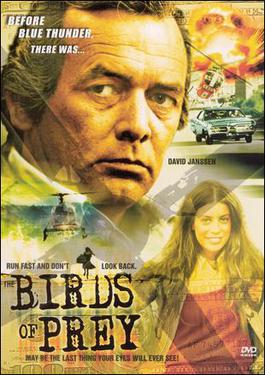
When three disgruntled Vietnam vets rob Zion’s Bank in downtown Salt Lake City and take a bank teller (Elayne Heilveil) hostage, they’re spotted by traffic reporter Harry Walker (David Janssen).  A World War II vet who is going through a mid-life crisis and who feels unappreciated by the country that he risked his life to defend, Harry chases after the robbers in his helicopter.  With Harry’s help, the police corner the robbers on the roof of a parking garage.

That’s when they discover that the robbers have a helicopter of their own!  After abandoning their car, the robbers and their hostage take off in their helicopter, heading into the Oquirrh Mountains.  Though he’s running low on fuel and has been ordered to back off by Police Captain Jim McAndrew (Ralph Meeker), Harry continues to pursue the other helicopter into the wilderness.

A made-for-TV movie from 1973, Birds of Prey is a chase movie, with the usual cars replaced by helicopters.  What makes this movie so exciting is that it was directed in the days before CGI so, when you watch the two helicopters dangerously pursuing each other over Salt Lake City and taking daredevil risk over the mountains of Utah, you’re watching the real thing.  David Janssen was a trained pilot who actually was flying the helicopter and doing his own stunts for the majority of the film.  When the two helicopters nearly collide, you’re aware that you’re seeing a real near-miss, one that could have gone tragically wrong if not for the talents of the men piloting those helicopters.

Despite all of the action in the air, the film does occasionally touch ground.  Harry and McAndrew talk about why some vets can move on and others can’t.  Harry briefly lands on the freeway and gets some help from a passing motorist.  Finally, Harry gets to know the kidnapped teller, who has never been outside of Salt Lake City and who shares Harry’s love of old movies.  David Janssen was the go-to guy for gruff and grizzled heroes in 1970s made-for-TV movies and he’s pretty good as Harry.  But the real stars of the film are the helicopters and the still-impressive aerial footage of them chasing each other above Utah.

Unfortunately, I have never seen a good print of Birds of Prey.  Even the version on Amazon Prime is grainy, scratchy, and sometimes washed-out.  (It also features a promo for a television station in Phoenix, suggesting that it was transferred straight from a VHS tape.)  I hope that, at some point in the near future, someone will restore this minor chase classic.

Lisa Reviews An Oscar Nominee: The Crowd (dir by King Vidor)


Way back when the Academy first started to hand out awards to honor the best films of the year, they actually gave out two awards for best picture.  One of the awards was called Oustanding Production and it’s assumed by most Oscar historians that it was meant to go to the most “entertaining” film of the year.  The other award was called Best Unique and Artistic Picture and it was meant to honor the type of films that might not make a huge amount of money at the box office but which did the most to move cinema forward as an art form.

As a result, when the very first Academy Awards were awarded at the Hollywood Roosevelt Hotel on May 16th, 1929, a popular war film named Wings was named Outstanding Production while F.W. Murnau’s Sunrise was named Best Unique and Artistic Picture.  Sunrise defeated two other nominees, a documentary called Chang and King Vidor’s The Crowd.

It’s long been rumored that, when the votes were first counted, The Crowd originally won Best Unique and Artist Picture but that Louis B. Mayer insisted that the award should go to Sunrise instead.  The head of MGM, Louis B. Mayer reportedly disliked The Crowd, even though it was distributed by his own studio.  Mayer felt that the film was too downbeat and he also resented that King Vidor had resisted Mayer’s demand that the film have a traditionally happy ending.  It’s also been suggested that, since the Academy was largely Mayer’s idea, he felt that, if an MGM film won the initial reward, it would lead to his enemies claiming that Mayer had too much influence over the organization.  That may or may not be true, no one can say for sure.  What we can say for sure, however, is that both The Crowd and Sunrise continue to be recognized as classics of the silent era.

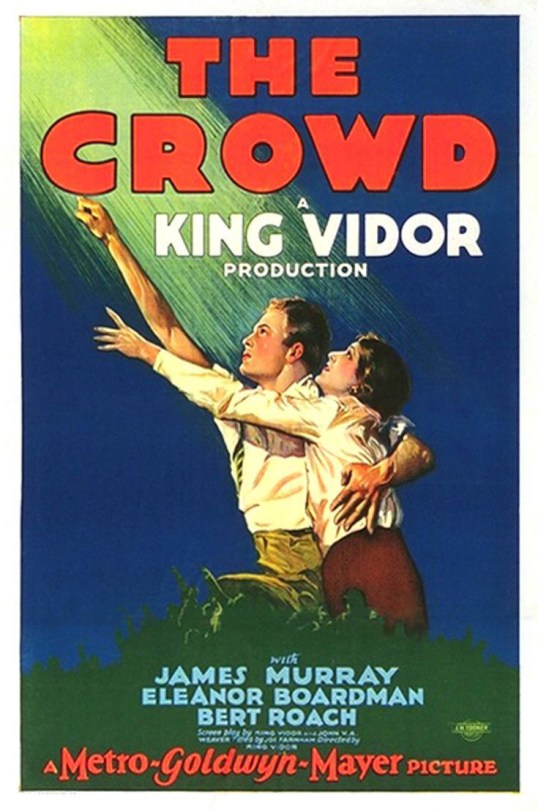
The Crowd tells the story of John Sims (James Muray), who goes to New York when he’s 21, convinced that he’s destined to be someone important.  Sims gets a job at Atlas Insurance, where he’s one of many faceless office workers.  He meets and, after one date, marries Mary (Eleanor Broadman).  They live in a tiny apartment next to an elevated track.  Over the next five years, they raise a family.  They fight often.  Occasionally, they beak up but they always get back together.  Throughout it all, John struggles to prove himself as an individual, just to be continually reminded that he’s only a member of the faceless crowd.

It’s not a particularly happy film.  John starts the film as a member of the crowd and he’s still a member of the crowd when it ends.  If there is anything positive to be found in the film, it’s that John’s family loves him but, even taking that in to consideration, it’s obvious that he and Mary are going to spend their entire lives struggling and that the same fate probably awaits their children.  Knowing that the film was made on the verge of the start of the Great Depression makes John’s story all the more poignant.  If he thinks things are bad now, they’re about to get even worse.

Seen today, The Crowd is still a visually striking film.  Influenced by German expressionism (particularly the work of Sunrise‘s director, F.W. Murnau), Vidor presents New York as being a menacing and frequently surreal world of towering skyscrapers and unfriendly faces.  (Vidor even used the then-unheard of technique of using a hidden camera to capture actual documentary footage of star James Murray dealing with real New Yorkers.)  The Crowd is probably best remembered for the shot where the camera pans up the length of a skyscraper, finally entering the building and showing us the anonymous office workers within.  It’s a shot that perfectly captures the film’s theme of being lost and ignored in an impersonal world.  It’s also a shot that’s been duplicated in a countless number of films.  The Crowd may be 92 years old but its legacy lives on.

Sadly, things did not turn out well for James Murray, the former extra who Vidor cast in the lead role.  The success of The Crowd did not translate into success for Murray.  An alcoholic, Murray ended up living on Skid Row, where he once asked King Vidor for money and reacted with anger when Vidor offered him a role in a new film.  In 1936, Murray was found floating in the Hudson River.  He was 35 years old.

As for the Oscar for Best Unique and Artistic Motion Picture, it was only awarded once.  Starting with the second Oscar ceremony, the Academy merged the two best film awards into one.  Interestingly, the idea of giving out two Best Picture awards was briefly revived in 2018 but the response to the idea was so negative that it was quickly abandoned.