When three college students decide to prove the folly of the nuclear arms race by stealing enough plutonium to make a nuclear bomb of their own, it’s up to Spider-Man (Nicholas Hammond) to sort them out! He better do it quickly, too, because the police suspect that the plutonium may have been stolen by a grad student named Peter Parker.
However, Spider-Man is not the only person who wants that bomb. The evil Mr. White (Robert Alda) also wants the bomb, though he’s not planning on using it to make the case for world peace. Instead, he plans to blackmail the government into giving him a fortune in gold. Now, Parker not only has to clear his own name but he has to keep Mr. White from blowing up Los Angles while, at the same time, preventing a nosy reporter (Joanna Cameron) from figuring out that he’s really Spider-Man.
Spider-Man Strikes Back was released as a feature film in Europe and was advertised as being a sequel to Spider-Man. Gullible audiences who paid money to see it ended up sitting through a two-part episode of the Amazing Spider-Man TV show, albeit one that was edited into a 90-minute movie and which didn’t have stop for commercial interruption.
Spider-Man Strikes Back highlights exactly what went wrong with the first attempt to do a live action version of Spider-Man. There were several members of Spider-Man’s regular rogues’ gallery who could have stolen that bomb and threatened Los Angeles. It sounds like a typical Sinister Six plot. Even the Kingpin, on a bad day, might be tempted to get in on that action. Instead, the villain is a bland arms dealer named Mr. White. CBS reportedly refused to use any classic Spider-Man villains because they wanted to keep the show grounded in reality but the minute Spider-Man crawled up a skyscraper for the first time, the network should have forgotten about trying to keep it real.
To repeat what I said in my review of Spider-Man, Nicholas Hammond is miscast as everyone’s favorite webcrawler. Hammond is likable but he doesn’t come across as being at all insecure and it’s Spider-Man’s insecurities that distinguished him from other comic book heroes. Spider-Man Strikes Back also suffers because it’s clear that much of the Spider-Man footage was reused from the pilot film.
I still enjoyed watching Spider-Man Strikes Back, though. When I was a kid, Spider-Man was my favorite and, even in something like this, it’s still fun to watch him climbing up buildings and webbing up crooks. Though there’s nothing cinematic about Spider-Man Strikes Back and it’s clearly just an extended episode of a TV show, I still liked that the climax took place in an preserved old west ghost town. That was just strange enough to work.
Though Spider-Man Strikes Back was not as successful at the European box office as Spider-Man, it still did well enough that one more feature film would be crafted from the Spider-Man TV show, Spider-Man: The Dragon’s Challenge.
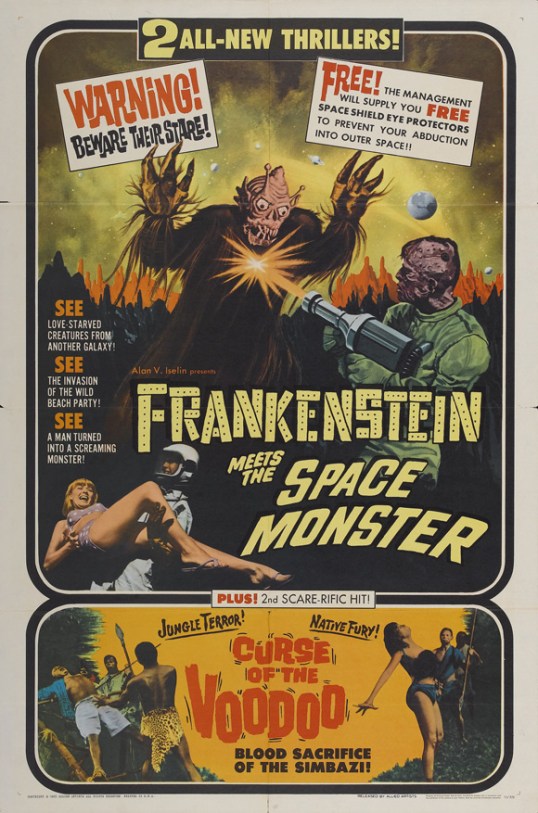
Today’s horror on the lens is the 1965 film, Frankenstein Meets The Space Man. This film features not only the debut of character actor James Karen but it also gave him a rare lead role. You may not recognize the name but you’ll know James Karen as soon as you see him. He’s probably best known, among horror fans, for his roles in Poltergiest and Return of the Living Dead.
Despite the movie’s title, it’s not about Frankenstein. Instead, it’s about an astronaut named Frank who is actually an android. When his latest mission into space goes wrong, Frank ends up crashing in Puerto Rico. Now malfunctioning, Frank causes some major chaos. Can his creator, Dr. Adam Steele (James Karen), track Frank down and put an end to his reign of terror?
And what about the Martians? Android Frank isn’t the only threat in Puerto Rico. A group of Martians have landed and are determined to kidnap any girl wearing a bikini so that they can use them to repopulate their race. We’re told that every woman on Mars — with the apparent exception of Princess Marcuzan, played with evil haughtiness by Marilyn Hanold — has been killed as the result of an atomic war. Assisting Princess Marcuzan is Dr. Nadir (Lou Cutell), a short, bald Martian with pointy ears.
One of the oddest things about Frankenstein Meets The Space Monster is that, despite being a standard — if wonderfully nonsensical — low-budget B-movie, it features a great soundtrack! Just try to get “That’s The Way It’s Got To Be” out of your head.
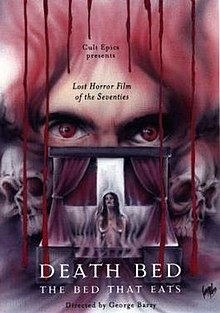
Perhaps one of the most brilliant films ever, the 1977’s Death Bed: The Bed That Eats is a film about a bed that eats people. Yes, just like the title says.
Seriously, that’s almost the entire film. The bed sits in an abandoned, dilapidated mansion that appears to be located out in the middle of nowhere. People break into the mansion. People find the bed, which is surprisingly well-cared for considering the fact that it’s sitting in the middle of a dusty, abandoned house. Some people make love. Some people try to get some sleep. Some people just sit down so they can take off their shoes. But in the end, all of them get eaten.
The bed is vaguely alive, which is to say that, if you listen carefully, you can hear it breathing and chewing. Many years ago, the bed was conjured up by a demon who needed a place to make love to his girlfriend. Unfortunately, his girlfriend died while they were having sex which caused the demon to cry. The demon’s tears brought the bed to life and now, every ten years or so, it has to feed.
We know all of this because the painter Aubrey Beardsley tells us so. Much like Paganini Horror, Death Bed is unique in that it features an actual historical figure as a key part of the story. Aubrey Beardsley was an English illustrator who specialized in pictures of the grotesque, the decadent, and the erotic. Beardsley was only 25 years when he lost his life to tuberculosis, dying in France in 1898. However, Death Bed suggests that Beardlsey did not actually die but was instead imprisoned for eternity inside one of his paintings, forced to helplessly watch as Death Bed feasted. Though Beardsley knows how to destroy the Death Bed, no one can hear his words.
One of the more interesting things about Death Bed is that we actually get to see the inside of the bed while it’s digesting it’s victims. The bed literally eats everything that’s dropped on it, except for one woman who reminds the bed of the woman whom the demon loved. Whenever the bed sees this particular woman, it cries out in pain and we get a shot of red blood shooting through the inside of the bed.
The woman is Sharon (Rosa Luxemburg), a runaway who has come to the mansion with two of her friends. Why they’re at the mansion is never really quite clear, beyond the fact that they want to take care of the place for some reason. Suzan (Julie Ritter) brings flowers, just for Diane (Demene Hall) to point out that the mansion is in the middle of the wilderness and is therefore already surrounded by flowers! The bed eats Suzan and half of Diane.
Meanwhile, Sharon’s brother shows up and, believe it or not, he’s played by a vaguely recognizable actor, William Russ. (Russ is probably best known for playing Cory’s father on Boy Meets World.) Sharon’s brother — who doesn’t get a name beyond that — gets his hands eaten down to the bone by the bed but it doesn’t seem to bother him that much. He just sits there and stares down at his skeletal fingers. Can Sharon and her brother end the bed’s reign of terror? Will Aubrey Beardsley ever find peace?
Earlier, I called Death Bed brilliant and I was not joking. Death Bed plays out like a dream, full of weird images and off-kilter dialogue and strangely subdued performances. As odd as the story may be, the film delivers exactly what it promises. This is a film the promises a bed that eats people and that’s exactly what this bed does. The film plays out in a collection of strange, vaguely-connected images, mixed in with odd moments of humor. There’s a random shot of an elderly woman reading hardcore pornography. The bed drinks pepto bismol after having too much to eat. William Russ explains why his bony hands are falling apart. Death Bed is a dream of dark and disturbing things, a film that creates its own reality and dares you to stop watching. Much like An American Hippie In Israel, there’s no other film like it and therefore, it’s important that it be watched and appreciated. Death Bed is a unique spectacle, one that exists in a universe of its very own.
David Banner (Bill Bixby), still hoping to find a cure for the condition that causes him to turn into the Hulk (Lou Ferrigno) whenever he gets injured or stressed out, heads up to Portland. Pretending to be a simple-minded janitor named David Bellamy, Banner gets a job working in the lab of Dr. Ronald Pratt (Philip Sterling). Banner hopes that Dr. Pratt’s research holds the secret that can release him from being the Hulk. When Dr. Pratt learns Banner’s secret, he and his wife (Barbara Tarbock) work with Banner to try to cure him and to understand the Hulk.
David Banner is not the only person who has infiltrated the lab. KGB agent Jasmin (Elizabeth Gracen) has also been sent to the lab with orders to steal Pratt’s research. Jasmin hates working for the KGB but she’s been told that her sister will be killed unless she complete one final mission. When Jasmin meets and falls in love with David, she starts to reconsider her loyalties. When the KGB finally makes their movies, Jasmin is going to have to decide who to help and the Hulk is going to have to come through and save the day one final time.
David Banner’s saga finally comes to a close in The Death of the Incredible Hulk, the third and last of the Incredible Hulk television movies. It’s also the best of the three, though that might not by saying much when you consider the quality of the first two. While the other two movies both served as backdoor pilots for other heroes and the Hulk was barely even present in the 2nd movie, The Death of the Incredible Hulk keeps the focus squarely on David Banner and the Hulk. (Though Jasmin does seem like she could be a version of the Black Widow, I think the similarities between the two characters are a coincidence. Beautiful and conflicted KGB agents were a popular trope in the 80s and early 90s.) Both Bixby and Ferrigno get to show off what they can do in their signature roles. Bixby is especially good at capturing Banner’s tortured and lonely existence and his performance helps to make The Death of the Incredible Hulk something more than just another cheap sci-fi TV movie.
Though the film stays true to its title and ends with a mortally wounded Banner saying that he’s finally free, it was not intended to be the final Hulk film. There were plans to bring David Banner back to life and presumably, the Hulk would have come back with him. Unfortunately, Bill Bixby himself died in 1993, before shooting could begin on The Return of the Incredible Hulk.
“Really, Lisa Marie? That’s going to be your entire review of this film? Three words?”
Listen, I’ve been wanting to use those three words for a while. Do you think it’s easy to come up with 500 words about every stupid movie that you see, especially when it’s not exactly a movie that really holds your attention? Considering the importance that entertainment plays in our lives and the fact that there actually are good and interesting films being made, dismissing a forgettable film with “Eh, who cares?” is not only justifiable but it’s also perhaps the most honest review that one can give.
“Haven’t you always said that every film deserves a review?”
I may believe that but I’ve never been stupid enough to paint myself into a corner by saying it.
“Well, why don’t you at least tell everyone what the movie is about?”
Goddammit.
“Lisa Marie….”
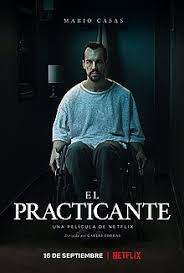
Okay, okay. It’s a Spanish film about this paramedic named Angel Hernandez (Mario Casas). He’s a jerk, a total believer in all of that machismo bullshit. He spends all of his time talking about how smarter he is than everyone else and he has a girlfriend named Vane (Déborah François). They’re trying to have a baby but Angel has a low sperm count. Angel refuses to tell Vane this because, to him, that would make him less of a man.
“So, it’s a film about toxic masculinity.”
Eh. Kinda. Anyway, as a result of an accident, Angel is confined to a wheelchair. He doesn’t take it well. He expects Vane to wait on him hand-and-foot while he does stuff like spy on her and hack her laptop. Eventually, Vane leaves him for Ricardo (Guillermo Pfening) so Angel starts stalking her and, after he discovers that Ricardo has gotten her pregnant, Angel kidnaps her and holds her prisoner in his apartment. He gives her an engagement ring that he stole from a patient and starts talking about how they’re going to get married and how they’re going to raise the child.
“It sounds like a Lifetime movie.”
It is kind of but …. eh. A Lifetime movie would be more fun. This is just another boring movie where a loser kidnaps a woman and holds her prisoner in his apartment while killing anyone who comes close to discovering her. You would think that the villain being in a wheelchair would at least add some sort of curiosity value to the film but it’s all so predictable that it’s hard to care. Hence, my original review.
“Were the actors at least any good?”
I guess. I’ll give Mario Casas all the credit in the world. He did a good job of bringing a really loathsome character to life. I mean, everyone has had to deal with someone like Angel Hernandez at some point in their life. Anyone who has ever been told that they don’t really understand what they need or what they want will be able to relate to what Vane goes through.
“So, the film wasn’t all bad.”
No, it wasn’t all bad but at the same time, there was nothing particularly surprising about it either. I was never surprised by anything that happened. It’s just kind of there. You watch it and you shrug and you say….
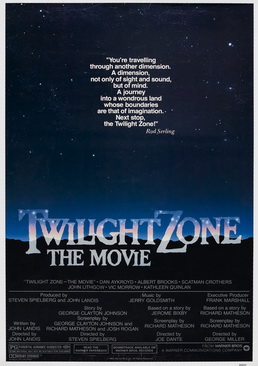
1983’s Twilight Zone: The Movie is meant to be a tribute to the classic original anthology series. It features four “episodes” and two wrap-around segments, with Burgess Meredith providing opening and closing narration. Each segment is directed by a different director, which probably seemed like a good idea at the time.
Unfortunately, Twilight Zone: The Movie is a bit of a mess. One of the episodes is brilliant. Another one is good up until the final few minutes. Another one is forgettable. And then finally, one of them is next too impossible to objectively watch because of a real-life tragedy.
With a film that varies as wildly in tone and quality as Twilight Zone: The Movie, the only way to really review it is to take a segment at a time:
Something Scary (dir by John Landis)
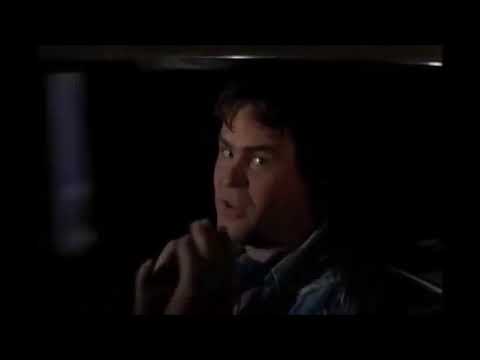
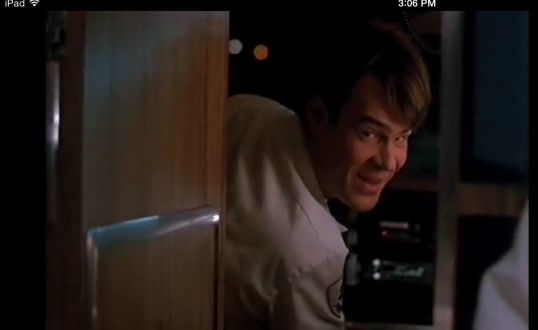
Albert Brooks and Dan Aykroyd drive through the desert and discuss the old Twilight Zone TV series. Brooks claims that the show was scary. Aykoyd asks if Brooks wants to see something really scary. This is short but fun. It’s tone doesn’t really go along with the rest of the movie but …. oh well. It made me jump.
Time Out (dir by John Landis)
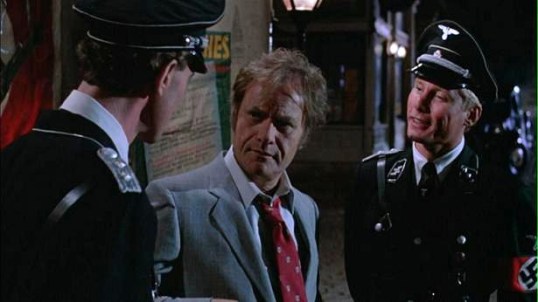
Vic Morrow plays a racist named Bill Connor who, upon leaving his local bar, finds himself transported to Nazi-occupied France, the deep South, and eventually Vietnam.
How you react to this story will probably depend on how much you know about its backstory. If you don’t know anything about the filming of this sequence, you’ll probably just think it’s a bit heavy-handed and, at times, unintentionally offensive. Twilight Zone often explored themes of prejudice but Time Out just seems to be using racism as a gimmick.
If you do know the story of what happened while this segment was being filmed, it’s difficult to watch. Actor Vic Morrow was killed during filming. His death was the result of a preventable accident that occurred during a scene that was to involve Morrow saving two Vietnamese children from a helicopter attack. The helicopter crashed, killing not only Morrow but the children as well. It was later determined that not only were safety protocols ignored but that Landis had hired the children illegally and was paying them under the table so that he could get around the regulations governing how many hours child actors could work. It’s a tragic story and one that will not leave you as a fan of John Landis’s, regardless of how much you like An American Werewolf in London and Animal House.
Nothing about the segment feels as if it was worth anyone dying for and, to be honest, I’m kind of amazed that it was even included in the finished film.
Kick The Can (dir by Steven Spielberg)
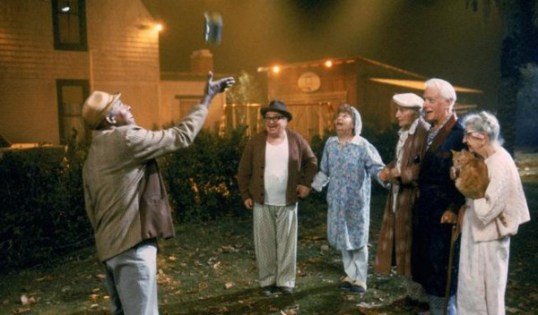
An old man named Mr. Bloom (Scatman Crothers) shows up at Sunnyvale Retirement Home and encourages the residents to play a game of kick the can. Everyone except for Mr. Conroy (Bill Quinn) eventually agrees to take part and, just as in the episode of the Twilight Zone that this segment is based on, everyone becomes young.
However, while the television show ended with the newly young residents all running off and leaving behind the one person who refused to play the game, the movie ends with everyone, with the exception of one man who apparently became a teenager istead of a kid, deciding that they would rather be old and just think young. That really doesn’t make any damn sense but okay.
This segment is unabashedly sentimental and clearly calculated to brings tears to the eyes to the viewers. The problem is that it’s so calculated that you end up resenting both Mr. Bloom and all the old people. One gets the feeling that this segment is more about how we wish old people than how they actually are. It’s very earnest and very Spielbergian but it doesn’t feel much like an episode of The Twilight Zone.
It’s A Good Life (dir by Joe Dante)
A teacher (Kathleen Quinlan) meets a young boy (Jeremy Licht) who has tremendous and frightening powers.
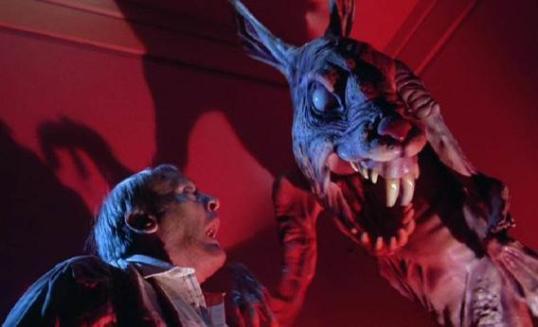
This is a remake of the classic Twilight Zone episode, It’s A Good Life, with the difference being that young Anthony is not holding an entire town hostage but instead just his family. This segment was directed by Joe Dante, who turns the segment into a cartoon, both figuratively and, at one point, literally. That’s not necessarily a complaint. It’s certainly improvement over Spielberg’s sentimental approach to the material. Dante also finds roles for genre vets like Kevin McCarthy, William Schallert, and Dick Miller and he provides some memorably over-the-top visuals.
The main problem with this segment is the ending, in which Anthony suddenly reveals that he’s not really that bad and just wants to be treated normally, which doesn’t make much sense. I mean, if you want to be treated normally, maybe don’t zap your sister in a cartoon. The teacher agrees to teach Anthony how to be a normal boy and again, what the Hell? The original It’s A Good Life worked because, like any child, Anthony had no conception of how adults felt about him. In the movie version, he’s suddenly wracked with guilt and it’s far less effective. It feels like a cop out.
Still, up until that ending, It’s A Good Life worked well as a satire of the perfect American family.
Nightmare at 20,000 Feet (dir by George Miller)
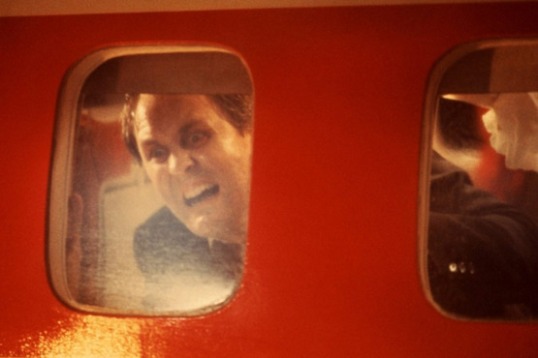
In this remake of Nightmare at 20,000 Feet, John Lithgow steps into the role that was originally played by William Shatner. He plays a man who, while attempting to conquer his fear of flying, sees a gremlin on the wing of his airplane. Unfortunately, he can’t get anyone else on the plane to believe him.
Nightmare at 20,000 Feet is the best of the four main segments. It’s also the one that sticks closest to its source material. Director George Miller (yes, of Mad Max fame) doesn’t try to improve on the material because he seems to understand that it works perfectly the way it is. John Lithgow is also perfectly cast in the lead role, perfectly capturing his increasing desperation. The one change that Miller does make is that, as opposed in the TV show, the gremlin actually seems to be taunting John Lithgow at time and it works wonderfully. Not only is Lithgow trying to save the plane, he’s also trying to defeat a bully.
Something Scarier (dir by John Landis)
Dan Aykroyd’s back as an ambulance driver, still asking his passenger if he wants to see something really scary. It’s an okay ending but it does kind of lessen the impact of Nightmare at 20,000 Feet.
For today’s horror on the lens, we’re very happy to present to you, Dead of Night!
From 1977, this television film is a horror anthology, made up of three stories directed by Dan Curtis and written by Richard Matheson. In the first story, a youngish Ed Begley, Jr. travels through time. In the 2nd story, Patrick Macnee plays a man whose wife is apparently being menaced by a vampire. And in the third story, Joan Hackett plays a mother who brings her dead son back to life, just to discover that sometimes it’s best to just let sleeping corpses lies.
The entire anthology is good, though the third story is clearly the best and the most frightening. Not only is it scary but it’s got a great twist ending.
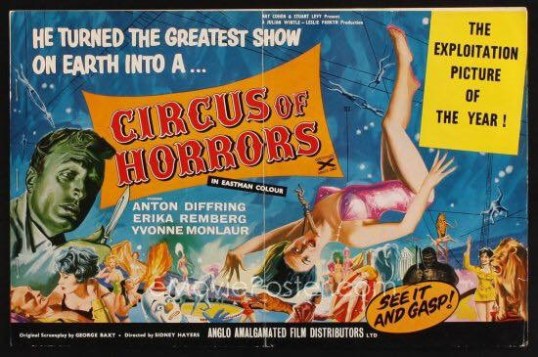
About 15 minutes into this film from 1960, Donald Pleasence gets mauled to death by a dancing beer.
Pleasence plays a character named Vanet. Vanet is an alcoholic who, circa 1947, owns a circus. He also has a daughter named Nicole (Yvonne Monlaur), whose face is scarred as a result of wounds that she received during Germany’s bombing of London. When a plastic surgeon named Dr. Bernard Schuler (Anton Diffring) operates on Nicole and manages to “take away” her scars, Vanet is so thankful that he signs over ownership of the circus to Schuler. Vanet then promptly tries to dance with a bear and gets killed. Poor Vanet.
It turns out that Schuler is a brilliant plastic surgeon but he’s also kind of insane. He and his associates (played by Kenneth Griffith and Jane Hylton) are on the run from the police. However, even with the cops after him, Schuler has to experiment. His plan is to use the circus as a front. He’ll recruit scarred criminals, operate on them, and then require them to perform in his circus. That plan doesn’t really make much sense but I guess a fugitive plastic surgeon has to do what he has to do. Still, it’s hard not to be amused by Schuler describing his plans for the circus as if he’s just come up with the most brilliant plan ever as opposed to just a bunch of gobbledygook. At no point do any of his assistants point out that his plan makes no sense so I guess he must pay well.
Anyway. the film jumps forward twelve years and what do you know! The plan worked! The circus is a hit! People from all over Europe come to Schuler’s circus. The circus is famous for featuring the most beautiful women in the world. The circus is also famous for several mysterious and fatal accidents. INTERPOL thinks that it’s possible that Schuler is intentionally killing his performers for the free publicity. When Schuler makes plans to take his circus back to the UK, Scotland Yard is given a call and a heads up about what Schuler’s been doing. A nosy reporter investigates while the murders continue unabated….
Circus of Horrors is odd. It’s as if someone reached into a bag and pulled out random cards that read, “Circus,” “plastic surgery,” and “Word War II subtext” and then did what they had to do to construct a plot out of those three elements. Of those three elements, the World War II subtext is probably the most interesting. The majority of Schuler’s patients were scarred as a result of the war (which Europe was still recovering from in 1960) and Schuler is played by German actor Anton Diffring. It’s easy to see Schuler, with his German name and his love for medical experimentation, as a stand-in for Nazi fugitives like Josef Mengele and Klaus Barbie. Schuler and his circus move across Europe and, in the end, it’s going to take Europeans working together to stop him. The shadow of World War II hangs over every scene.
Beyond that, Circus of Horrors is a flamboyant mix of horror and soap opera. The colors are bright, the blood flows freely, and the melodrama is definitely embraced. It’s like a Hammer film, just without a Hammer cast. Unfortunately, Anton Diffring is a bit bland in the role of Schuler. One could imagine an actor like Christopher Lee or Peter Cushing working wonders with the role but Diffring often seems to be bored with the whole thing. As well, the film sometimes get bogged down with footage of the circus performers doing their thing. For instance, do we need to see the clowns and the acrobats when what we really want to see is the murderous knife thrower? Circus of Horrors has its moments but, while watching it, it’s hard not to think about how much more fun it would have been if it had been a Hammer film.
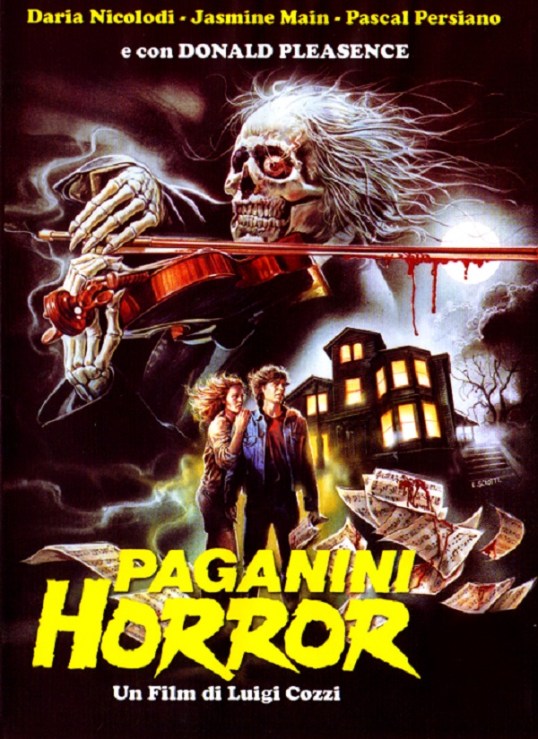
Yes, this 1989 Italian horror film does deal with the legend that violinist and composer Niccolò Paganini sold his soul the devil in return for his talent.
And yes, it does feature Paganini coming back to life and murdering people.
Listen, there’s a lot of critical things that you can say about this film but you have to love the idea of a slasher film that feature an actual historical figure coming to life and doing the slashing. I mean, this is no ordinary, masked murderer! No, this is a murderer whose compositions are still played in concert to this day!
Paganini Horror was written by Daria Nicolodi (who also co-starred) and directed by Luigi Cozzi, two Italian horror figures who — fairly or not — will always be associated with Dario Argento. Nicolodi co-starred in several of Argento’s films and was his longtime girlfriend. She’s the mother of Asia Argento. She also provided Dario Argento with the story that would eventually become Suspiria. Argento and Nicolodi had a notably bad breakup and, though they continue to occasionally work together, it’s rare that you ever read an interview with Nicolodi where she doesn’t have something negative to say about Argento and his later films. Luigi Cozzi, meanwhile, is often considered to be a protégé of Argento’s. Argento produced several of Cozzi’s films and Cozzi has directed multiple documentaries about Argento. For several years, Cozzi was also the co-owner and manager of Argento’s movie memorabilia store, Profondo Rosso.
Considering Nicolodi and Cozzi’s well-documented relationships with him, it’s interesting that Paganini Horror features a character who appears to be, at the very least, slightly based on Dario Argento. Mark Singer (Pietro Genuardi) is an arrogant director of bloody horror films who is hired to shoot a music video for a band. The band, which is in desperate need of a hit, is recording a song that is based on a never before recorded (or heard) composition by Paganini himself. The band’s drummer, Daniel (Pascal Persiano), purchased the composition from a mysterious man named Mr. Pickett (Donald Pleasence). We later see Mr. Pickett standing on the roof of a church, grinning maniacally as he throws away Daniel’s money. Hmmm….I wonder what that’s all about.
Though Pleasence isn’t in much of the film, his performance is definitely one of the highlights of Paganini Horror. That he’s playing an evil character is obvious from the minute he shows but Pleasence seems to be having so much fun with the role that you can’t help but like him. There’s something especially charming about the way he smiles while throwing away that money.
The other highpoint of the movie is Paganini himself. As played by Roberto Giannini, Paganani wanders about wearing a mask and a black coat. He carries a violin that has a very sharp blade sticking out of the bottom of it. Yes, it’s totally ludicrous but that’s kind of the point of it. Paganini was known for two things: 1) being a great musician and 2) the rumors that he sold his soul to the devil. Paganini Horror may emphasize the rumors about the devil but it doesn’t let us forget that Paganini was a damn good violinist….
Anyway, Paganini Horror is a frequently incoherent film, where characters don’t act logically and the rules of Paganini’s curse seems to change from scene to scene. Once you get passed the novelty of Paganini being the murderer, this really is a standard slasher film, albeit one that’s a bit more graphic than its American and British counterparts. That said, I don’t think that it’s quite the disaster that Luigi Cozzi has described it as being. (Cozzi has consistently cited it as one of his least favorite of the films that he’s directed.) Donald Pleasence appears to have had a blast playing his role and there are a few memorable shots of Venice. (Of course, it’s pretty much impossible to find an unmemorable shot of Venice.) The scenes of the band pretending to perform are also enjoyably silly. Paganini Horror may not be great but it’s certainly not boring. If you appreciate Italian horror, you get it.
I watched Paganini Horror on Tubi. It was an enjoyable 90 minutes. I have no regrets.
Still on the run and hoping to find a cure for the condition that causes him to transform into the Incredible Hulk, David Banner (Bill Bixby) is now in New York and using the name David Belson. He’s grown a beard to keep himself from being recognized. I guess it’s like when Superman used to put on his glasses. When David sees a woman being harassed on the subway by two thugs, it’s too much stress for him and he transforms into the Hulk (Lou Ferrigno). When the Hulk turns back into David, he is arrested and charged with being a mugger. (No one believes the witness’s account of seeing a huge green man on the subway.)
Despite the title, the Hulk never goes on trial, though there’s a dream sequence where David turns into the Hulk in a courtroom. (Stan Lee plays the jury foreman.) Just having a nightmare about turning into the Hulk is enough to cause the transformation for real. No New York jail can hold the Hulk.
David’s lawyer is blind and yes, his name is Matthew Murdock (played by Rex Smith). Murdock thinks that the attack on the subway was somehow linked to a crime lord named … yes, Wilson Fisk. Fisk (John Rhys-Davies) wants to set up a national crime syndicate, as if Lucky Luciano didn’t already do that. Using the name Daredevil, Murdock tries to prevent that. David eventually ends up helping.
The Trial of the Incredible Hulk is a huge tease. It promises the Hulk on trial but, instead, it’s just a backdoor pilot for a Daredevil TV series. Just like in The Incredible Hulk Returns, the Hulk is forced to make room for a new hero. But at least The Incredible Hulk Returns actually featured the Hulk working with Thor. In Trial of the Incredible Hulk, the Hulk is hardly present at all. Banner encourages Murdock not to give up, even after he’s badly beaten by Fisk’s men, and he works with Matt to help him prepare for a rematch. But the final battle is almost all Daredevil. Once he escape from prison, Banner doesn’t turn into the Hulk once.
Rex Smith isn’t bad as Daredevil. While he’s not as good as Charlie Cox, he’s still better than Ben Affleck. While the movie does not feature the classic Daredevil costume, it does at least get Daredevil’s origins and powers correct. John Rhys-Davies hams it up as Wilson Fisk. One of Marvel’s most intriguing villains is turned into just another generic bad guy in an office. It’s disappointing.
The Trial of the Incredible Hulk ends with Murdock pledging to protecting the city and Banner again hitchhiking away. Daredevil would have to wait for another 25 years before getting his own series. Banner would return in The Death of the Incredible Hulk.
 When three college students decide to prove the folly of the nuclear arms race by stealing enough plutonium to make a nuclear bomb of their own, it’s up to Spider-Man (Nicholas Hammond) to sort them out! He better do it quickly, too, because the police suspect that the plutonium may have been stolen by a grad student named Peter Parker.