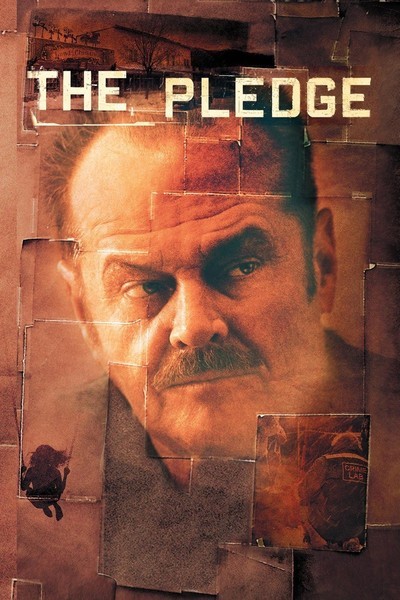
The Pledge (2001, directed by Sean Penn)


Jerry Black (Jack Nicholson) is a detective who, on the verge of retirement, goes to one final crime scene.  The victim is a child named Ginny Larsen and when Ginny’s mother (Patricia Clarkson) demands that Jerry not only promise to find the murderer but that he pledge of his immortal soul that he’ll do it, it’s a pledge that Jerry takes seriously.  Jerry’s partner, Stan (Aaron Eckhart), manages to get a confession from a developmentally disabled man named Jay Wadenah (Benicio del Toro) but Jerry doesn’t believe that the confession is authentic.  When Wadenah commits suicide in his cell, the police are ready to close the case but Jerry remembers his pledge.  He remains determined to find the real killer.

Even though he’s retired, the case continues to obsess Jerry.  He becomes convinced that Ginny was the latest victim of a serial killer and he even buys a gas station because it’s located in the center of where most of the murders were committed.  Jerry befriend a local waitress named Lori (Robin Wright) and, when Lori tells him about her abusive ex, he invites Lori and her daughter to stay with him.  Lori’s daughter, Chrissy (Pauline Roberts), is around Ginny’s age and when she tells Jerry about a “wizard” who gives her toys, Jerry becomes convinced that she’s being targeted by the same man who killed Ginny.  Even as Jerry and Lori fall in love, the increasingly unhinged Jerry makes plans to use Chrissy as bait to bring the killer out of hiding.

The Pledge was Sean Penn’s third film as a director.  As with all of Penn’s directorial efforts, with the notable exception of Into The Wild, The Pledge is relentlessly grim.  Freed, by virtue of his celebrity, from worrying about whether or not anyone would actually want to sit through a depressing two-hour film about murdered children, Penn tells a story with no definite resolution and no real hope for the future.  The Pledge is a cop film without action and a mystery without a real solution and a character study of a man whose mind you don’t want to enter.  It’s well-made and it will keep you guess but it’s also slow-paced and not for the easily depressed.

The cast is made up of familiar character actors, most of whom probably took their roles as a favor to Penn.  Harry Dean Stanton, Tom Noonan, Patricia Clarkson, Sam Shephard, Vanessa Redgrave, Helen Mirren, and Mickey Rourke have all got small roles and they all give good performances, even if it’s sometimes distracting to have even the smallest, most inconsequential of roles played by someone familiar.  Most importantly, The Pledge actually gives Jack Nicholson a real role to play.  Jerry Black is actually an interesting and complex human being and Nicholson dials back his usual shtick and instead actually makes the effort to explore what makes Jerry tick and what lays at the root of his obsession.

Though definitely not for everyone, The Pledge sticks with you and shows what Jack Nicholson, who now appears to be retired from acting, was capable of when given the right role.

Film Review: Radioactive (dir by Marjane Satrapi)


If you want to talk about the birth of the modern world, you have to talk about Marie Curie.

That’s the argument made by the biopic, Radioactive.  It’s a compelling argument and it’s very much correct.  Born in Poland and a citizen of France, Marie Curie was the 1st woman to win the Nobel Prize, the 1st person and only woman to win the Nobel Prize a second time, and the only person to win a Nobel Prize in two scientific fields.  She shared her first Nobel Prize (in Physics) with her husband, Pierre.  After Pierre’s tragic death, Marie won her second Nobel, this time for Chemistry.  Both her daughter and her son-in-law would go on to win Nobel Prizes of their own and the Curie family continues to produce notable scientists to this very day.

Marie Curie is best known for her pioneering research on radioactivity, a coin that she termed.  She developed techniques for isolating radioactive isotopes.  She discovered that radioactivity could be used to battle aggressive forms of cancer.  Without her research, there would be no nuclear power, no chemotherapy, no X-ray machines, and no atomic weaponry.  Marie Curie is one of the few people about whom it can legitimately be said that they changed the world.  Of course, Curie herself later died of a radiation poisoning.

Radioactive opens with Marie (played by Rosamund Pike) on the verge of death, before flashing back to show us her early life and she went from being an obscure scientist to becoming the world renowned Madame Curie.  We watch as she meets and falls in love with Pierre Curie (Sam Riley).  The film celebrates not only their love for each other but also takes a look at Marie’s struggle to escape from Pierre’s shadow.  Though she was acknowledged as his partner and won her first Nobel Prize with him, it’s not until Pierre is trampled death by a bunch of horses that Marie’s genius is truly acknowledged.  The scenes in which Marie expresses her frustration at being overshadowed by her husband are some of the best in the film, largely because the film doesn’t make the mistake of attempting to portray Pierre as intentionally stealing all of the glory for himself.  Instead, society just assumes that Pierre deserves most of the credit because …. well, Pierre’s a man and Marie’s a woman.

Unfortunately, Radioactive makes some perplexing narrative choices.  Throughout the film, there are random moments when we get a sudden flashfoward and see random people interacting with radioactivity.  For instance, we go to a hospital in the 1950s and we listen as a doctor explains that he’s going to use radioactivity to help a patient combat cancer.  Another scene features the atomic bomb being dropped on Hiroshima.  We see the nuclear tests in Los Alamos.  One moment, Marie is crying in the middle of the street.  The next minute, an ambulance drives past her, on the way to Chernobyl.  On the one hand, it’s easy to see what the film’s going for.  It’s showing us everything, good and bad, that will happen as a result of Marie Curie’s work.  It makes the very relevant argument that sometimes, in order to get something good (less pollution, treatments for cancer) you have to risk something bad, like the possibility of being vaporized by an atomic bomb.  But the flashforwards are handled so clumsily that they actually detract from the film.  When I watched the sequence taking place at the hospital, I found myself wondering if Marie Curie discovered bad acting before or after she discovered radioactivity.  This is probably one of the few instances where a biopic would have been helped by taking a more traditional approach to its material.

On the plus side, Radioactive does feature a very good performance from Rosamund Pike, who really deserves to be known for more than just killing Neil Patrick Harris in Gone Girl.  (Don’t spoiler alert me.  The film’s nearly 6 years old.  If you haven’t seen it yet, you weren’t ever going to.)  Radioactive is currently playing on Amazon Prime and you should definitely watch it if you’re planning on keeping radioactive isotopes in your desk at work.  Seriously, don’t do it.

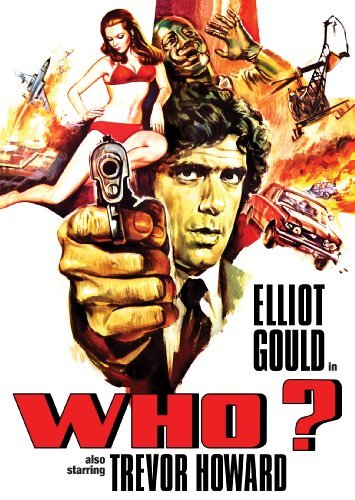
Who? (1974, directed by Jack Gold)


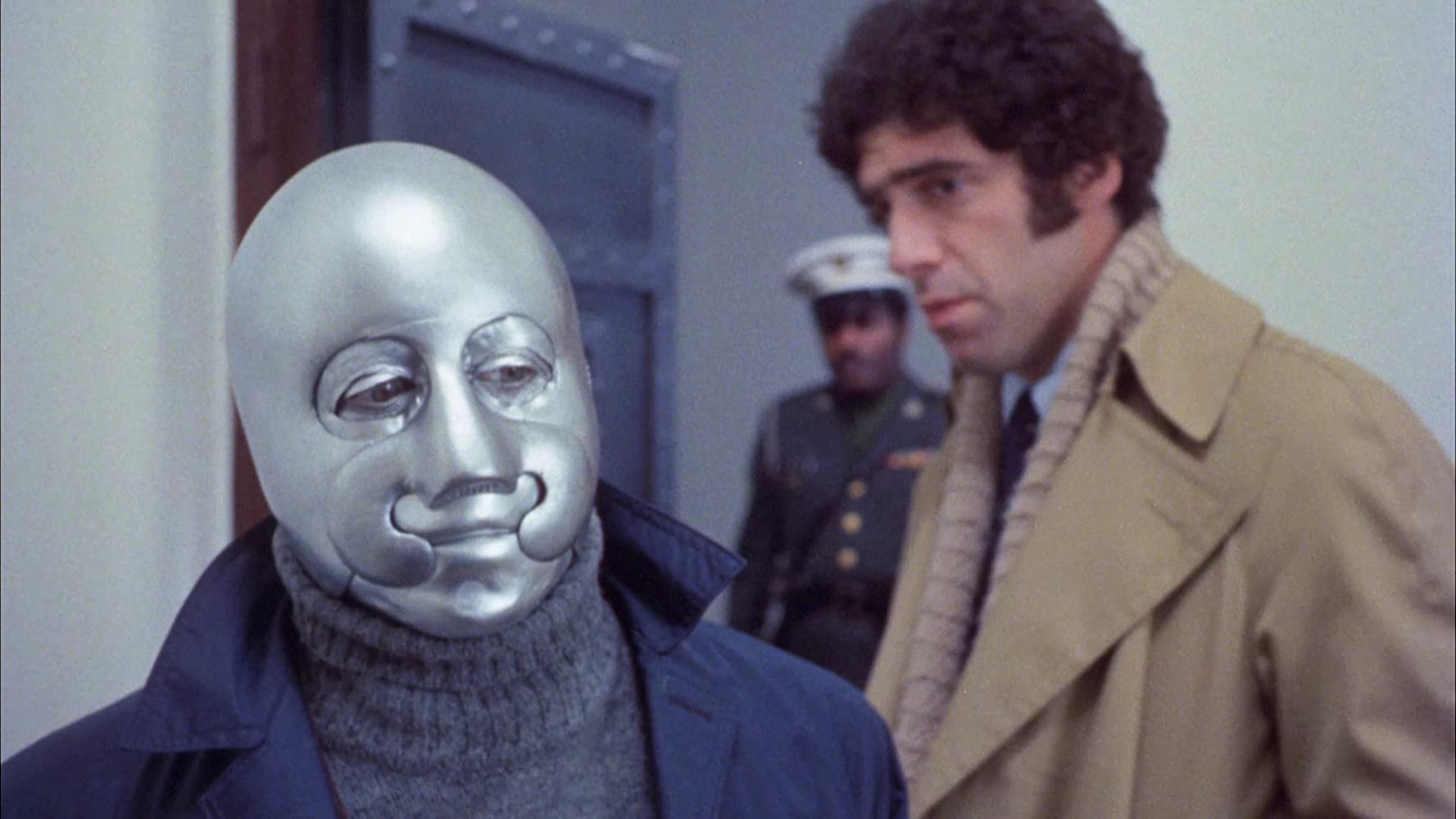
Lucas Martino (Joseph Bova), an American scientist who was previously captured by the Soviets in East Berlin and who was gravely injured in a terrible car crash, is finally returned to the Americans.  But is it really Dr. Martino?  Making identification difficult is that the Soviets had to totally rebuild Martino’s body after his car crash.  He appears to still have one of his original arms but he’s otherwise a cyborg.  He now has a metal head with an expressionless face.  Is he really Lucas Martino or is he a spy?  Even though his fingerprints check out, it’s possible that the real Martino’s arm could have been surgically grafted onto an imposter’s body.

It falls to agent Shawn Rogers (Elliot Gould) to determine whether or not this Martino is the real Martino.  Rogers interrogates the man claiming to be Martino but struggles to determine whether or not the man is who he claims to be.  Complicating matters is that, even if Martino is Martino, it’s possible that he could have possibly been brainwashed by Shawn’s Soviet counterpart, Col. Azarin (Trevor Howard).  As Shawn interrogates Martino, the film frequently shows Azarin asking Martino the exact same questions.  Is the film showing what Shawn thinks happened or is the film showing what actually happened?

Who? is based on a classic sci-fi novel by Algis Budrys.  It’s pretty faithful to its source material but it doesn’t really work as a film.  Some of that is because, despite the fact that Bova gives a good performance, the cyborg makeup is never really convincing.  Many potentially dramatic scenes are ruined by how silly Bova looks.  Trevor Howard is too British to be convincing as a sinister Russian and Elliott Gould is likewise miscast as Shawn Rogers.  Gould was always at his best playing quirky, counter-cultural characters.  Just think about his performance in Robert Altman’s The Long Goodbye, where Gould was such a strange P.I. that it allowed Altman to deconstruct the entire genre.  In Who?, Gould is meant to be a much more conventional secret agent and he seems lost in the role.

Speaking of Robert Altman, he’s the type of director who probably could have worked wonders with Who?  I think Michael Crichton probably could have pulled off the film.  Maybe Mike Hodges, as well.  But Jack Gold was a much less adventurous director than any of these filmmakers and his direction in Who? is often too low-key and conventional.  I kept waiting for the film to really go for it and challenge my expectations and surprise me but it never did.  Who? doesn’t seem to know what type of film it wants to be.  Is it a spy thriller or a sci-fi film or an examination of what it means to be human?  It tries to be all three but just doesn’t succeed.

The idea behind the movie is a good one and Budrys’s book remains intriguing.  This is one that I wouldn’t mind seeing remade, perhaps by someone like Denis Villeneuve or Alex Garland.

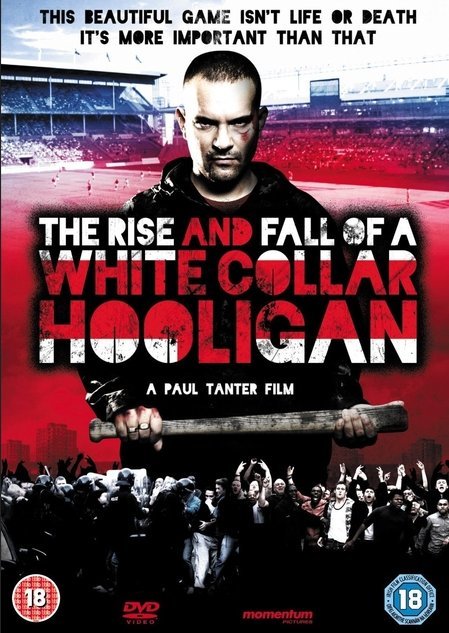
The Rise & Fall of a White Collar Hooligan (2012, directed by Paul Tanter)


Mike Jacobs (Nick Nevern) is an unemployed Brit who has never been able to get much going in his life.  He’s smart but he’s also a university drop-out and he refuses to accept any job that he feels wouldn’t provide a proper mental challenge.  Mike is also a football hooligan, spending most of his time getting into fights with the supporters of rival teams and occasionally with the police.  As Mike explains it, there’s no better thrill than getting angry, destroying stuff, and knowing that your mates are going to back you up.

At the latest soccer riot, Mike runs into an old friend of his named Eddie Mills (Simon Phillips).  Eddie offers Mike a job opportunity.  At first, Eddie just has Mike deliver a few packages, all to determine whether or not Mike can be trusted with something big.  Once Mike has proven himself, Eddie reveals that his business is credit card fraud.  He and his gang steal people’s credit card numbers and then, every night, withdraw as much money as they can on the card.  The scheme works because  the gang only uses a card once and then tosses the number away.  By the time the fraud has been discovered, the gang is using a totally different card.  Eddie explains that it’s a victimless crime because the banks are insured and the card holders don’t have to pay the bill once the fraud has been uncovered.

Despite his initial misgivings, Mike goes to work with Eddie.  At first, everything is great.  Mike is making a lot of money, doing a lot of drugs, and having a lot sex.  However, because this is a crime film, eventually Mike discovers that there’s no such thing as a victimless crime and the world of credit card fraud is much more dangerous than he realized.

It’s a tradition that movies about football hooligans rarely involve much football and that’s the case with The Rise and Fall of a White Collar Hooligan.  By my count, there are three short scenes that take place at a match and none of them are particularly important.  Instead, for Mike and Eddie, the point of football is the fight after the match.  The rush that they get from defying the police and smashing car windows is the same rush that they get from stealing money from the banks and the credit card companies.  The main difference between the two activities is that one just leads to black eyes and broken bones while the other makes them rich.

I liked The Rise and the Fall of White Collar Hooligan.  Though the story’s predictable, it’s stylishly directed and Nick Nevern and Simon Phillips are both good in the main roles.  What I especially liked is that the credit card scheme actually made sense and it was easy to understand how someone like Mike could convince himself that what he was doing really wasn’t that big of a deal.  There’s nothing surprising about the movie but it’s undeniably entertaining.

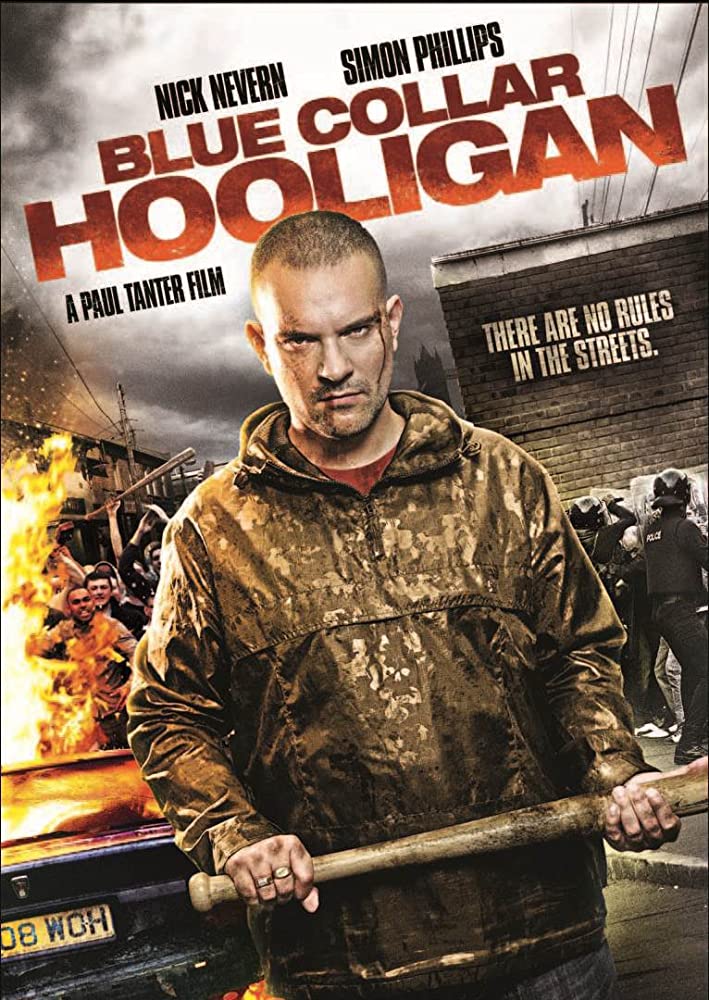
In the U.S., it was released as Blue Collar Hooligan.  I’m not sure why the title was changed.  Mike is blue collar but, throughout the film, he brags about how his crimes are all white collar and he even calls himself as “white collar hooligan.”  Maybe someone thought Americans would be more likely to watch the movie is they thought it was about a blue collar criminal instead of a white collar one.  They’re probably right.


Dream’s Ashes (2005, directed by Rafe Clayton)


Lee (Alistair Marshall) is a drug dealer living in Leeds.  Pining for his former girlfriend, Lee goes about his day-to-day life, dealing drugs, getting harassed by the police, and searching for some sort of escape from his empty existence.  Unfortunately, it’s not going to be easy for Lee.  His own mum tells him that he’s not very smart and there is no easy exit from the world that Lee has found himself in.  Of course, his mother is also his main supplier and she pushes Lee to try to a new drug called Wax which leads to Lee having hallucinations of the baby that his ex miscarried at the start of the movie. Lee’s mother has not only pushed her son into the drug underworld but she’s also supplying his main competitor.  Can you blame Lee for having issues?

Dream’s Ashes is a low-budget indie for the UK.  Not much happens in the film, beyond Lee wandering from one shitty situation to another, all the while thinking about his dead baby and wishing that he could get back together with his ex.  That’s rather point of the film, of course.  Lee is stuck in a dead end existence, where there’s not much to do but deal drugs and wish that things could be different.  Unfortunately, Lee isn’t exactly a compelling character and the scenes where he talks, in voice over, about his life as a drug dealer feel as if they’ve been cribbed from an early draft of Trainspotting.

Where the film does succeed is in its cinematography.  Shot on location in Leeds, Dream’s Ashes looks wonderful.  The majority of the film is in gritty black-and-white, which makes the occasional flash of color all the more meaningful.  Lee’s jacket is always a muted red and the baby, when it appears, appears to be lit with a heavenly glow.  Visually, the film does a fantastic job of capturing the feel of being trapped in a bleak go-nowhere existence.  When Lee starts to embrace his drug-induced hallucinations, you can’t blame him.  They’re certainly better than anything that the real world has to offer him.

Dream’s Ashes is 65 minutes long and available on Prime.


Cinemax Friday: Boulevard (1994, directed by Penelope Buitenhuis)


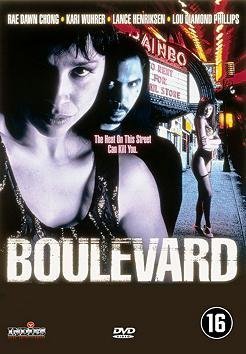
Having been knocked up by her abusive boyfriend, Jennefer (Kari Wuhrer) gives up her baby for adoption and then promptly gets the Hell out of town.  She runs away to the hard streets of Toronto, where she meets and moves in with a prostitute, the worldly Ola (Rae Dawn Chong).  Ola shows Jennefer how to survive in the big city and the two of them bond over how terrible their circumstances are, eventually becoming lovers.  Eventually, in order to make ends meet, Jennefer becomes a prostitute herself.  However, this means dealing with Ola’s sadistic pimp, Hassan (Lou Diamond Phillips), who is the type of creep who likes to practice his golf swing in between beating people to death.  Detective McLaren (Lance Henriksen) wants to take Hassan down but Jennefer knows better than to work with the cops.  Meanwhile, Hassan is growing more unstable and dangerous and Jennefer’s ex-boyfriend, J-Rod (Joel Bissonette), has shown up in town.

Boulevard is an interesting film.  It’s undeniably sleazy and exploitative, with the camera lingering over every sex scene and act of violence.  At the same time, it’s also a film with a conscience.  It’s on the side of the girls on the boulevard and it makes clear that every man who claims to be on their side, with the exception of McLaren, is actually a dangerous pervert.  Jennefer and Ola can only depend on each other.  Kari Wuhrer was rarely cast for her acting ability but she gives a surprisingly good performance in Boulevard and she’s matched every step of the way by Rae Dawn Chong.  Lou Diamond Phillips appears to be having fun getting to play a villainous role.  In fact, he has too much fun and goes so overboard that he sometimes takes you out of the reality of the situation.  Far better is Lance Henriksen, whose seen-it-all persona is used to good effect in Boulevard.

Boulevard is a sleazy film with a heart.

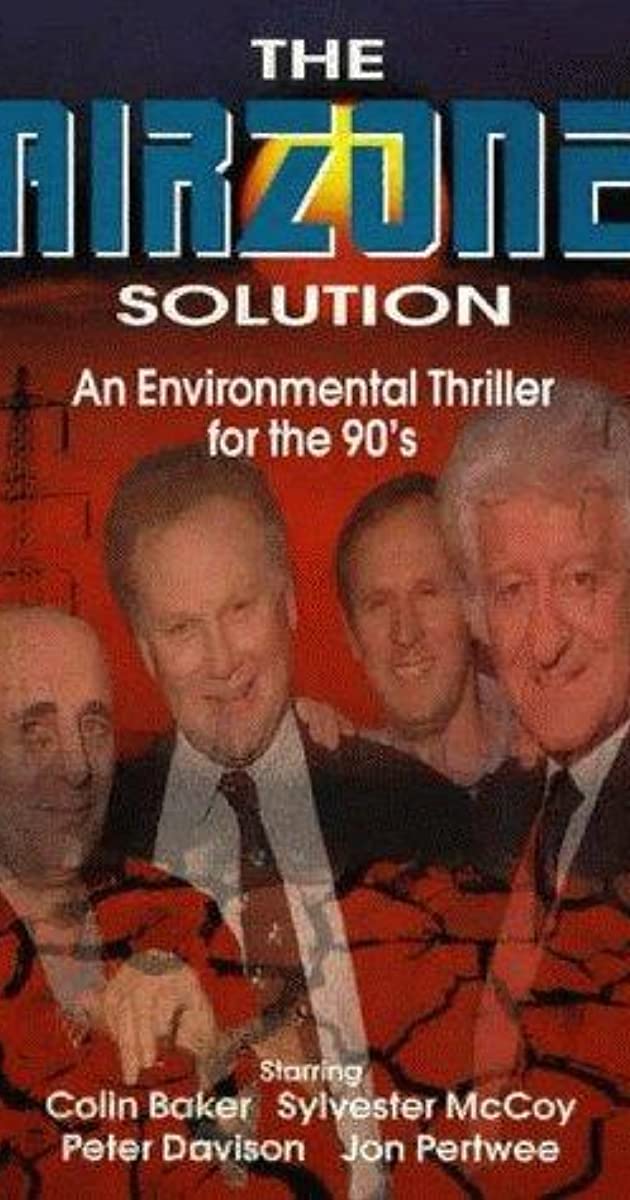
The Airzone Solution? (1993, directed by Bill Baggs)


In the near future, the UK has become so polluted that people have to wear masks when they go outside.  (Save your COVID-19 jokes, the villain here is pollution not a pandemic.)  A mysterious corporation called Airzone claims that they have a solution but some are skeptical.  Journalist Al Dunbar (Peter Davison) and environmentalist Anthony Stanwick (Sylvester McCoy) are determined to investigate on their own and discover what’s actually going on at Airzone.  Unfortunately, Al discovers a bit too much and is murdered by the corporation.

However, Al is not prepared to let something like death get in the way of exposing Airzone.  His ghost appears to both his mentor, Prof. Oliver Threthaway (Jon Pertwee), and to local weatherman Arnie Davis (Colin Baker).  Freaked out by Al’s ghost, Arnie and his girlfriend, Ellie Brown (Nicola Bryant), launch their own investigation into the corporation and they discover that Airzone’s solution comes at a terrible cost.

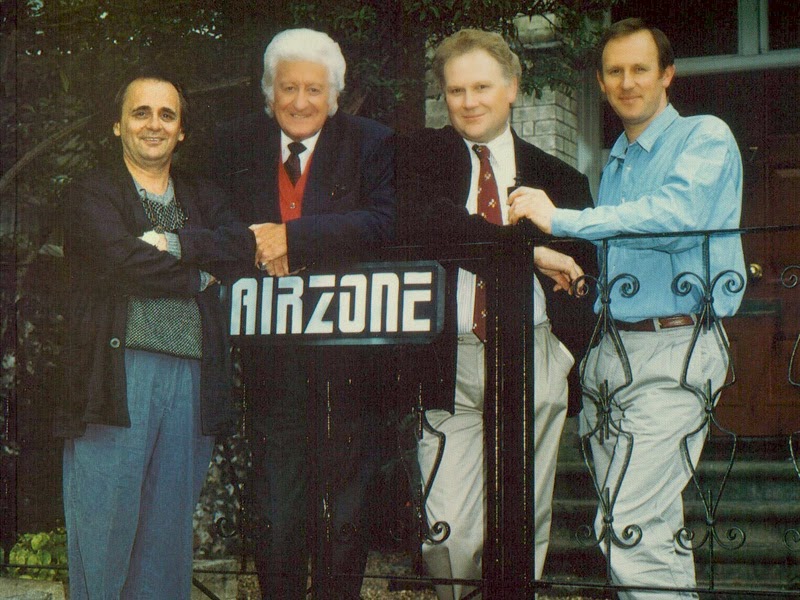
This low-budget, straight-to-video production is best-known for featuring four actors who starred as the Doctor during the original run of Doctor Who.  In fact, when this film was first made, it featured every living Doctor with the exception of Tom Baker.  (Jon Pertwee would die just three years after the film’s release.)  Nicola Bryant, who played Colin Baker’s companion on Doctor Who, plays his girlfriend here while Michael Wisher, who played Davros, shows up as a duplicitous politician.  Even Alan Cumming, who was frequently mentioned as a possible Doctor should the series ever be renewed, has a small role.  If you’re a fan of Doctor Who, you almost have to watch this movie for the cast along.

But is the movie itself any good?  The special effects are cheap, the story is full of plot holes, and there’s a lot of dodgy acting from the supporting cast.  The movie never explains why Al Dunbar’s spirit appears to Arnie Davis instead of someone who could actually do something to stop Airzone.  Jon Pertwee’s role was reportedly added at the last moment and his appearances feel random.  In fact, the film is flawed in much the same way that Doctor Who was often flawed.  And like Doctor Who, it’s often fun despite those flaws.  It’s fast-paced and, despite its weighty environmental theme, it doesn’t take itself too seriously.

All of the former Doctors acquit themselves well in their roles.  Peter Davison and Sylvester McCoy, who were probably the best actors among the original Doctors, are the cast stand-outs but Colin Baker is far more sympathetic and likable here than he ever was on Doctor Who.  I’ve always felt that Colin Baker had the potential to be a good Doctor but he was sabotaged by some of the worst scripts and production decisions in the history of the series and The Airzone Solution? shows what Baker could have done with the role if he’d been given the opportunity.  Jon Pertwee was obviously not in good health when he appeared in The Airzone Solution? but he still hams it up with an entertaining gusto.

The Airzone Solution? will be best appreciated by fans of the original Doctor Who.  It’s not great but it’s worth it just to see everyone gathered together.

Cotter (1973, directed by Paul D. Stanley)


Cotter (Don Murray) is an alcoholic Native American who works as a rodeo clown.  One day, when he’s too drunk to do his job, a bull rider is killed as a result.  All of the other bull riders track Cotter down in his trailer and tell him that his days of being a clown are over.  They tell him that if they ever see him anywhere near another rodeo, they’ll kill him.  It’s a dramatic scene that would probably be more powerful if Cotter wasn’t wearing a clown make-up while rolling around on the floor in a drunken stupor.

With nowhere else to go, Cotter returns to his hometown and tries to surprise his old friend Roy (Rip Torn) by jumping through Roy’s front door while wearing his clown make-up.  However, when Cotter jumps into the living room, the only person he meets is Roy’s half-naked wife, Leah (Carol Lynley) and she promptly fire two barrels worth of buckshot at him.  Showing the reflexes that would have saved that bull rider’s life if only Cotter had been sober, he manages to duck out of the way.

When Roy comes home, he’s at first excited to see his old friend.  He even invites Cotter to stay with them.  Leah slowly warms up to Cotter.  However, the other townsfolk are suspicious of Cotter because of his heritage and his reputation for being a hard drinker.  When a local rancher turns up dead, almost everyone immediately assumes that Cotter must be responsible.  Not even Roy is willing to stand up for his friend.

Made for a low-budget, Cotter is a well-intentioned film that doesn’t work.  A large part of the problem is that, while Don Murray and Rip Torn were both good actors, they both overact in Cotter.  For some reason, both of them yell the majority of their lines.  Torn was a good bellower but Don Murray, who was usually a far more low-key actor, seems uncomfortable in his role.  While it is true that Don Murray first found stardom playing a headstrong cowboy in Bus Stop, it’s also that, from the 60s onward, Murray was always best cast as men of authority and it’s hard to buy him as an irresponsible character like Cotter.  Maybe the film would have worked better if Torn and Murray had switched roles.  Carol Lynley seems more comfortable with her role than either one of the two male leads, though she doesn’t get to do much beyond suffer at the hands of Roy and eventually fall in love with Cotter.  Also giving a good performance is Sherry Jackson, cast as a sympathetic barmaid, though she’s also not given much to do beyond reacting to Cotter and Roy.

Cotter doesn’t have a bad message and it at least acknowledges that Cotter’s alcoholism is largely his way of dealing with the prejudice that he’s suffered his entire life, though Cotter’s monologue on the subject would have probably been more effective if it had been delivered by an actual Native American actor instead of the very white Don Murray.  Unfortunately, good intentions aside, Cotter just never really comes together as a movie.

The Hanged Man (1974, directed by Michael Caffey)


In this made-for-TV western, Steve Forrest stars as James Devlin.  A hired killer and a notorious outlaw, Devlin has finally been captured and is sent to the gallows.  At first, it seems as if the hanging’s been a success and Devlin’s life has been extinguished at the end of the rope.  But then, while his body is at the funeral home and is being prepared for burial, Devlin suddenly opens his eyes and reveals that he’s alive.

No one can figure out how Devlin manage to survive being hung, especially not Devlin.  However, Devlin is now alive and free to leave town.  Has Devlin been sent back to Earth to serve God or did he just get lucky?  Devlin may not be sure himself but he is determined to turn around his old ways.  That starts with protecting a widow (Sharon Acker) and her son (Bobby Eilbacher) from Lew Halleck (Cameron Mitchell), a greedy businessman who wants their land and is prepared to go to any lengths to get it.  Devlin is not only still as good with a gun as he was before his execution but, having survived his hanging, he can now read minds!

The Hanged Man was designed to be a pilot for a weekly TV series and watching it, it’s easy to imagine how the show would have developed.  Devlin would have traveled around the old west, helping out a new guest star every episode and presumably trying to discover why he had been returned to life.  It’s not a bad idea for a show, though the pilot film doesn’t do enough with it.  Despite the fact that Devlin might be undead and that he now has the power to read minds, it really is just a conventional western, featuring the saintly widow and the evil land baron and all of the other familiar tropes of the genre.  It may begin with Devlin coming back to life but it ends with a shoot-out that could have been lifted from any number of old TV shows.

Still, as far as made-for-TV westerns are concerned, this one is entertaining enough.  Steve Forrest is a good hero and, as always, Cameron Mitchell is a good villain.  I wish they had done more with the supernatural aspects of the story but The Hanged Man is good enough for undemanding fans of the genre.

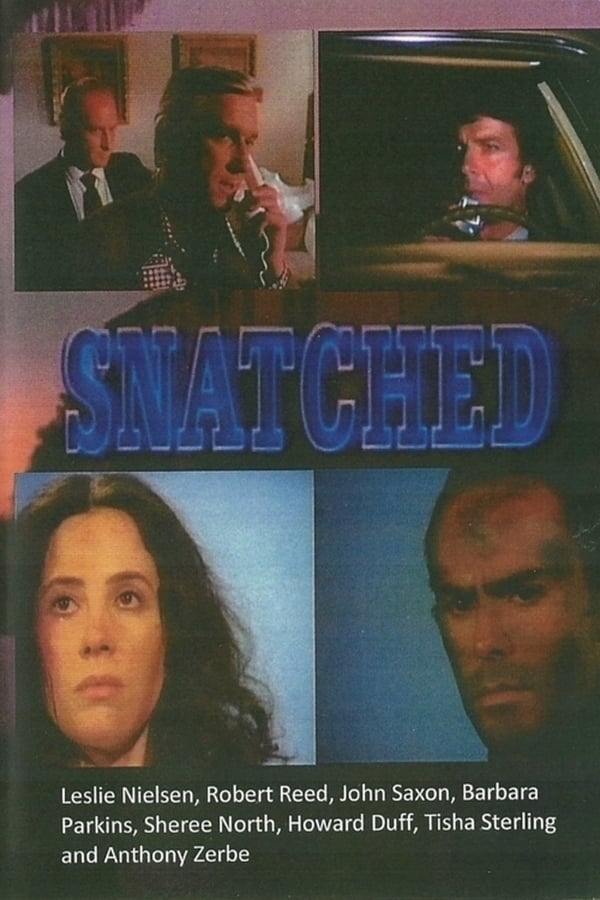
Snatched (1973, directed by Sutton Roley)


Three women have been kidnapped and are being held prisoner in a lighthouse.  Robin Wood (Tisha Sterling), Kim Sutter (Sheree North), and Barbara Maxvill (Barbara Parkins) are married to three wealthy men and the kidnappers (one of whom is played by the great Anthony Zerbe) assume that the husband will be willing to pay whatever is necessary to get back their wives.  Paul Maxvill (John Saxon) and Bill Sutter (Leslie Nielsen!) are willing to put up the money but Duncan Wood (Howard Duff) scoffs at the idea of paying a million dollars just to see his adulterous wife again!

It sounds like the set-up for a Ransom of Red Chief-type of comedy but Snatched is actually a very serious and intelligent thriller, one that will definitely keep you on your toes as you try to keep up with who is working for who.  Kim is diabetic and is growing weaker every minute that she’s being held in the lighthouse.  Paul, Bill, and police detective Frank McCloy (Robert Reed) try to get Duncan to pay his share of the ransom but Duncan is convinced that his wife has been cheating on him and he refuses to pay for her.  On top of that, it turns out that one of the wives might be in on the scheme.  When she tells the kidnappers that she’s actually the one who came up with the plan, is she just trying to protect the other wives or is she telling the truth?  It leads to betrayal and a surprisingly downbeat ending.

Snatched is a well-produced made-for-TV movie.  The mystery will keep you guessing and the cast is made up of a collection of old pros.  Leslie Nielsen, cast here long before he reinvented himself as a comedic actor, is especially good as Bill Sutter and John Saxon gives one of his better performances as Paul.  Even Robert Reed gives a good performance.  Snatched is a classic made-for-TV mystery.