Lifetime Film Review: Killer Daddy Issues (dir by Danny J. Boyle)


“What a nice ranch!” I thought as I watched the opening scenes of Killer Daddy Issues.

Listen, I live in Texas.  I’ve grown up all over the Southwest.  I’ve seen a lot of really nice ranches and I’ve seen a lot of really mediocre ranches and the ranch in Killer Daddy Issues is definitely a nice one.  The scenery is green and bountiful.  The hills are covered with beautiful trees.  There’s a big river nearby.  Majestic horses run across the fields.  This is the type of ranch that you definitely want to visit.  Unfortunately, even the best ranches have their issues.

This ranch is currently owned by Grace (Carolyn McCormick) and her daughter, Carrie (Jillian Murray).  They inherited it and a good deal of money after the death of Grace’s husband.  However, a new man has entered Grace’s life.  Carrie is shocked when Grace returns from a five-day cruise with a new husband!  Reed (Chris Riggi) is handsome and charming and young enough to be Carrie’s brother.  Carrie takes an immediate distrust to Reed.  Despite Reed assuring her that he’s already independently wealthy and that he doesn’t have a criminal record, Carrie is convinced that Reed is only after her mother’s money.  Carrie’s suspicions are not eased when Grace is seriously injured during a riding accident.

Meanwhile, Sofia (Kristina Reyes) has made a shocking discovery.  She and her mother both work at the ranch and, while Carrie treats them with superficial respect, it’s still obvious that there’s a world of difference between their lives and the lives of Grace and Carrie.  When Sofia discovers that her father was Grace’s husband and that she’s actually Carrie’s half-sister, she’s not happy at all.  She’s been cheated out of the ranch that she views as her birthright.

Meanwhile, someone is wandering around the ranch with a rifle, taking shots at people.  Hmmm …. I wonder if that could have anything to do with all the other stuff that’s going on at the ranch?

Needless to say, there’s a lot going on in this movie.  Not only do you have a mysterious new husband who might be a murderous gold digger but you also have the issue of Sofia’s paternity.  One thing that really struck me about this film was just how unlikable Carrie and Grace are.  Even though they’re the main characters, both of them seem to be a bit too secure in their positions.  In the beginning, at least, Sofia is a far more sympathetic character because she does have a legitimate complaint.  She had been denied what rightfully should belong to her.  It’s a bit subversive actually.  Even though Carrie and Grace are presented as being the protagonists, it’s clear that the audience’s sympathy is meant to go to Sofia.

Anyway, this one is okay.  It crams three hours worth of plot into a 90-minute runtime and, as a result, the film does occasionally seem to be a bit overstuffed.  There’s a lot to keep up with.  But the ranch is gorgeous and Kristina Reyes gives an excellent performance as Sofia.  This is a good movie to watch on a weekend afternoon.


Lifetime Film Review: Beware of Mom (dir by Jeff Hare)


Okay, I absolutely love this movie.

When Anna (Cystal Allen) loses her husband and one of her daughters, all in one night, it doesn’t do much for her state of mind.  Even though the official report is that the fire that killed them was due to a gas link, this is a Lifetime movie and that means that they had to have been murdered.  And since the name of this movie is Beware of Mom, it doesn’t take a lot of effort to figure out that Anna must be responsible.  However, she didn’t mean to kill her daughter.  Sometimes, you’re just trying to murder your husband and these things happen.

Anyway, Anna and her remaining daughter, teenage Jessie (Monica Rose Betz), move to another suburb and try to start their life over.  Anna is one of those moms who is determined to be the “cool mom.”  She’s friends with musicians.  She has thousands of followers on social media.  She throws big parties at her house and encourages Jessie to stay out late with her friends.

Her new neighbor, Tanya (Rene Ashton), is not a cool mom.  In fact, Tanya is an extremely overprotective, controlling mom who is determined to make sure that her daughter, 16 year-old Kylie (Nicolette Langley), is not led down the wrong path.  She expects her daughter to not date, to not dress provocatively, to not post pictures of herself online, and to not stay out late.  Needless to say, Tayna is not happy about having Anna living next door, especially after Kyle and Jessie become friends and Anna starts to encourage Kylie to rebel.

Soon, Kylie is going to parties, posing online, and making out with a 34 year-old musician!  Tanya tells Anna to stay away from her daughter.  However, Anna is not one to take orders and she also knows both how to fake a break-in and how to poison someone in such a way as to make it appear as if they’ve had a heart attack.

Beware of Mom, indeed.

As I said at the start of this review, I absolutely loved this movie.  The plot is just so melodramatic and Anna is just such an entertainingly over-the-top villain that it was impossible not to love it.  I mean, to a certain extent, anyone watching this film will be able to relate.  I think everyone went through a period where they felt like their mom wasn’t giving them enough freedom or was being overprotective.  Everyone was jealous of the girl who had the mom who apparently let her do whatever she wanted.  This is a film that acknowledges that our jealousy was understandable and then goes on to explain that the reason why the cool mom let her daughter get away with everything was because she was an insane murderer who wanted to kidnap her daughter’s best friend.  It’s so crazy that you can’t help but love it.

It helps that Crystal Allen really dug into the role of Anna.  Whether she was murdering a stranger or encouraging underage drinking, Anna seemed to believe that all of her action were very reasonable and she seemed to be genuinely bewildered that anyone would object.  Allen was well-supported by the performances of the rest of the cast, especially Monica Rose Betz as her conflicted daughter.  It all added up to the type of suburban melodrama that we can all embrace.

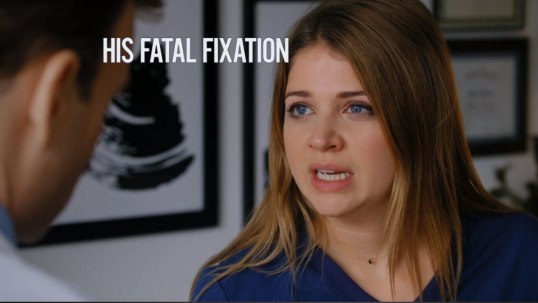
Lifetime Film Review: His Fatal Fixation (dir by Stuart Acher)


His Fatal Fixation tells the story of Lilly Abrams, a woman who discovers that not even changing her name can ensure her safety.

Lilly (played by Sarah Fisher) is a physician’s assistant.  When we first meet her, she’s getting ready for a date with the handsome and successful Jason.  However, that date is interrupted by the sudden arrival of Spencer (Stephane Garneau-Monten), Lilly’s stalker.  According to Lilly, she and Spencer went on one date and Spencer has been following her around ever since.  He claims that he just wants to protect her but it’s obvious that the only person that Lilly needs to be protected from is him.

Since Spencer’s arrival ruins dinner, Lilly and Jason go back to her place and order a pizza.  Unfortunately, when there’s a knock at the door, it’s not the deliveryman.  Instead, it’s Spencer!  Spencer promptly stabs Jason to death and, after slashing Lilly’s face, he ends up falling out of a window.  It appears that Spencer’s dead but …. is he?

A few months later, Lilly is trying to rebuild her life.  She’s moved to a new city.  She’s changed her name to Stella Gordon.  She takes medication to help deal with her PTSD.  And, after visiting a plastic surgery clinic, she even manages to get rid of the nasty scar that Spencer previously left on her face.  The folks at the clinic like her so much that they give her a job.  Soon, Stella is even having an adulterous affair with her boss.  You know that you’ve made it once you start cheating with a married man.

Still, Stella is haunted by her past.  She has frequent nightmares and sometimes, she swears that she can feel Spencer watching her.  But isn’t Spencer dead?  Stella knows that he certainly looked like he was dead after he fell out of the window but how can she be sure?

Strange things start happening.  Someone sends her a dozen lilies, just like Spencer used to do.  People die mysteriously.  Is Spencer back or is Stella losing her mind?  While Stella wrestles with that question, she also grows close to a heavily bandaged patient named Joshua.  Soon, Joshua will be removing the bandages and he’s specifically requested that Stella be there to see his repaired face….

His Fatal Fixation is an enjoyably over-the-top melodrama from Canada.  It’s the type of film where it’s best not to worry too much about the plot.  Sure, there’s all types of plot holes and the film’s characters don’t always act in the most logical or reasonable of ways.  But if you treat the film as the cinematic equivalent of a trashy, sex-filled novel, it’s a lot of fun.  The director even manages to craft some genuinely creepy dream sequences.

Sarah Fisher has appeared in a lot of these films and she does a pretty good job of capturing both Stella’s fear and her hope that she’s actually found a new life, away from her stalker.  Before she became a Lifetime mainstay, Sarah Fisher played Becky Baker on Degrassi.  One of the things that I love about Lifetime films is that they often provide a chance to check in on how my favorite Degrassi cast members are doing.  (Since many Lifetime films are Canadian productions, it’s not surprising to that they tend to be full of Degrassi alumni.)  Fisher is not the only former Degrassite to appear in His Fatal Fixation.  Cory Lee, who played Ms. Oh on the series, also has a small but important role.

His Fatal Fixation is an enjoyable Canadian thriller.  See it with someone who isn’t stalking you.

Lifetime Film Review: Secrets In The Woods (dir by Sara Lohman)


I have mixed feelings when it comes to the idea of camping.

On the one hand, I grew up in the Southwest.  By the time I was 12, I had already lived in Texas, Oklahoma, Arkansas, New Mexico, Colorado, and Louisiana.  My family moved a lot and there were times when we did live in the country.  I’ve spent time on farms.  I love the city a bit too much to ever be called a country girl but, at the same time, I could probably adapt if I ever had to enter the witness protection agency and they gave me a new life in rural Arkansas.

And, even though I currently live in the suburbs and spend as much time as I can in the city (or at least I did until this year started), I still enjoy a nice country vacation.  I enjoy going up to the lake.  Jeff and I usually go out to Mt. Nebo at least once a year.

So, camping is not necessarily something that I can’t do.  That said, I would be lying if I said that I’m really an experienced camper.  To be honest, I find the wilderness to be a bit creepy.  I’m the girl who jumps at every sound and who freaks out at the sight of a bug.  I may say that I’m spending the weekend up at the lake but what that means is that I’m spending the weekend in an air-conditioned lake house with WiFi and cable.  By that same token, going up to Mt. Nebo doesn’t mean actually camping out on a mountain.  It means staying in a nice cabin and making sure that there aren’t any wild animals wandering about whenever I step out on the front porch.

My point is that I could relate to Sandra, the main character in the recent Lifetime film, Secrets In The Woods.  As played by Brittany Underwood, Sandra is a smart, independent woman who may not have a lot of experience camping but who is determined to make the most out of the weekend that her boyfriend, Brant (Taylor Frey), has in store for them.  Brant is definitely a country boy and he’s looking forward to showing Sandra around the cabin where he grew up.

Brant seems like a nice guy but, from the start, the camping trip has its problems.  For one thing, a stop at a gas station leads to Sandra meeting a super creepy local who seems like he’s trying a bit too hard to be friendly.  Then, when Sandra arrives at the cabin, she finds a picture of Brant’s dead mom.  Though Sandra may not notice it, those of us watching immediately notice that Sandra and Brant’s mother share a physical resemblance.

A series of unfortunate events leads to Sandra injuring her foot and then losing the bag that not only had all of her clothes but also her shoes and the keys to Brant’s truck.  They’re stranded up at the cabin!  Brant says not to worry because his father will be along soon.  And if Sandra wants to change clothes, she can just wear some of his mother’s old dresses and….

Uhmmm, wait …. what?

Okay, seriously, if a guy tries to get you to wear his mother’s clothes, it’s a huge red flag.  I don’t care what the situation is.  Even if it means spending the entire weekend in just your underwear, you do not agree to your boyfriend suggesting that you wear his mother’s old dress.  YOU JUST DON’T!  Thank you for coming to my TED talk.

Anyway, things get even worse when Brant’s father, Langley (Jim Klock), shows up and it turns out that father and son have been looking forward to trapping Sandra in the wilderness….

You’ll probably be able to guess where Secrets In The Woods is heading from the minute that Brant and Sandra first show up at the cabin but no matter.  The fact that movies like this are occasionally predictable is a part of a fun.  We know that Sandra’s making a mistake by trusting Brant and the real suspense comes from waiting for Sandra to figure out what’s going on as well.  Brittany Underwood is a sympathetic lead and she’s ably supported by Kabby Borders, who plays her sister.  Depending on what’s going on at any particular moment, Taylor Frey is both convincingly likable and convincingly creepy as Brant.  Meanwhile, Jim Klock turns Langley into a wonderfully hissable villain.

Secrets In The Woods is fun, as the best Lifetime films tend to be.  See it before you go on your next camping trip.

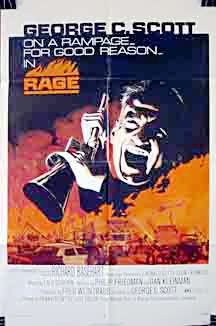
Rage (1972, directed by George C. Scott)


Wyoming sheep rancher Dan Logan (George C. Scott) and his teenage son, Chris (Nicolas Beauvy), spend a night camping out on their land.  While Dan stays in the tent, Chris decides to sleep outside, underneath the stars.  The next morning, Dan leaves the tent to discover that all of his sheep are dead and that Chris is having violent convulsions.  Dan rushes his son to the local hospital, where he hopes that the family’s longtime physician, Dr. Caldwell (Richard Basehart), can save his son’s life.

However, at the hospital, Dan is separated from his son.  Two doctors that he’s never met before — Dr. Spencer (Barnard Hughes) and Major Holliford (Martin Sheen) — take over his case.  They tell him that Chris was probably just exposed to an insecticide and that both Dan and his son are going to have to stay at the hospital for a few days.  Dan is confined to his room and not allowed to see his son.

What Dan doesn’t know is that both he and his son have been unwittingly exposed to a secret army nerve gas.  Though the experiment was only meant to be performed on the animals that were grazing on Dan’s land, Dan and Chris were accidentally sprayed.  When Dan discovers the truth about what’s been done to him and his son, he sets out to try to get revenge with what little time he has left.

Fresh from refusing an Oscar for Patton, George C. Scott made his feature film directorial debut with Rage.  (He had previously directed The Andersonville Trial for television.)  As a director, Scott sometimes struggles.  Rage is so relentlessly grim and serious that even the most experienced director would have had a difficult time making it compelling.  The scenes in the hospital are effective claustrophobic but they’re also often dramatically inert.  The only humor in the film comes from Scott’s overuse of slow motion.  When even simple scenes, like throwing coffee on a campfire, are shown in slow motion, it goes from being ominous to unintentionally humorous.

As a director, Scott did make a very wise decision by casting himself in the lead role.  No one was better at portraying pure, incandescent anger than George C. Scott and the film picks up once Dan discovers what’s been done to himself and his son.  Once Dan sets off to get revenge, Rage becomes an entirely different film, one that is about both a father’s anger and the cold calculation of a government that views him as just as a subject to be tested upon.  The final scene is especially effective and suggests that Scott could have become an interesting director if he had stuck with it.

Scott would direct one more film, The Savage Is Loose, before devoting the rest of his distinguished career to performing.

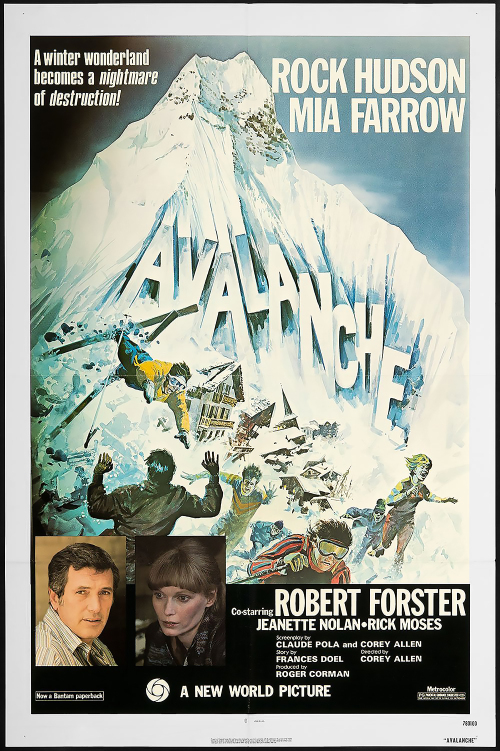
Film Review: Avalanche (dir by Corey Allen)


The 1978 film Avalanche tells the story of a beautiful resort that’s been built in the mountains of Colorado.  Self-righteous photographer and activist Nick Thorne (Robert Forster) keeps insisting that it’s not environmentally safe to build a resort up in the mountains.  According to him, there’s too much snow building up and it’s inevitably going to lead to an avalanche.

The owner of the resort, David Shelby (Rock Hudson), insists that Nick doesn’t know what he’s talking about.  Sure, David may have had to cut a few ethical corners to get his resort built and he may currently be under criminal investigation but that doesn’t make David a bad guy.  All he wants is to have a nice and expensive resort located in the most beautiful and dangerous place on Earth.  Does that make him a bad guy?

Unfortunately, if David was watching the film with the rest of us, he would be aware of all the shots of snow ominously building up on the side of the mountain.  However, David would still probably be distracted by the presence of his ex-wife, Caroline (Mia Farrow).  David would love to get back together with Caroline but Caroline finds herself growing attracted to Nick.  When David isn’t chasing after Caroline, he’s trying to keep his mother, Florence (Jeanette Nolan), from drinking all of the liquor in the resort.  Good luck with that!  Florence is an eccentric old person in a disaster film so, of course, she’s going to be drunk off her ass for the majority of the run time.

There are other dramas occurring at the resort, of course.  TV personality Mark Elliott (Barry Primus) is upset because his ex, Tina (Cathey Paine), is hooking up with arrogant skier Bruce Scott (Rick Moses).  Bruce is upset because Tina expects him not to cheat on her.  Ice skater Cathy Jordan (Pat Egan) is hoping to conquer her insecurities.  Rival ice skater Annette River (Peggy Browne) is …. well, she’s there.  To be honest, I’m not really sure what the whole point of the ice skating rivalry was since they all end getting buried in snow regardless.  Then again, maybe that is the point.  An avalanche doesn’t care about your personal dramas.  All it cares about is destroying tacky resorts that overuse wood paneling.

Yes, the avalanche does come crashing down the mountain eventually.  It takes a while, though.  There’s almost an hour of Rock Hudson walking around with a pained look on his face before the snow finally comes crashing down.  For all of Nick’s talk about how the avalanche would probably be the result of too many people skiing, it actually happens because someone crashes a plane into one of the mountains.

Obviously, the avalanche is the main reason why anyone would want to watch a movie called Avalanche.  Anyone with any knowledge of the disaster genre knows that no one watches these movies for the human drama.  They watch them because they want to see at least 10 minutes of solid destruction.  A disaster movie can get away with almost anything as long as the disaster itself looks good.

The disaster in Avalanche does not look particularly good.  This film was directed by Roger Corman and, despite being one of the most expensive films that Corman ever produced, the avalanche effects are definitely a bit cut-rate.  At the same time, the cheapness of the special effects does provide the film with its own odd charm.  Just consider the scene where one of the ice skaters gets covered in snow while spinning around with a triumphant smile on her face.  (Sure, she might be dead and she’ll certainly never make it to the Olympics but at least she finally mastered a fairly basic skating move.)  The avalanche effects are super imposed over the image of the skater spinning but it’s obvious that it didn’t occur to anyone to tell the skater, “Hey, act like there’s a gigantic amount of snow crashing down on you!”  It’s so inept as to be charming, like when a child draws a really ugly picture but it’s cute because at least they tried and, as a result, you wait until the child leaves your house before you throw it away.

The thing I love about Avalanche is how everyone is even more ineffectual after the avalanche than they were before it.  Usually, in a movie like this, the disaster leads to unexpected heroism and the villains getting the comeuppance.  In this one, the avalanche just inspires more stupidity.  Fire trucks and ambulances literally collide with each other while heading for the resort.  At one point, a group of fireman set up a net directly underneath someone falling out of a ski ramp chair just for the person to somehow land a few inches to the left of them.  Though the film sets David Shelby up to be the villain, it’s hard not to feel that everyone at the resort is just an idiot.

Listen, I love Avalanche.  It’s terrible but it’s a lot of fun and the less-than special effects go along perfectly with the overheated (or, in some cases, underheated) performances.  Rock Hudson wanders through the movie with a strained smile on his face that has to be seen to be believed while Mia Farrow and Robert Forster both try so hard to make their underwritten characters credible that you can’t help but kind of appreciate their devotion to a lost cause.  If nothing else, the shots extras reacting to superimposed shots of the avalanche makes this film worth a look.  This is a cheap and silly movie and if you don’t enjoy it, I don’t know what’s wrong with you.

Film Review: Corvette Summer (dir by Matthew Robbins)


The 1978 film, Corvette Summer, tells the story of Kenny Dantley (Mark Hamill).

Kenny is a student at a high school in Southern California.  He lives in a trailer park and he’s kind of dumb.  He’s the type who rarely shows up to class and, when he does, it’s just to discover that he managed to score a D-minus on his last test.  Kenny doesn’t think school’s important, though.  All Kenny cares about is cars.  He doesn’t date.  He doesn’t have friends.  But he can rebuild a corvette and spend hours talking about why it’s the greatest car in the world.

Yes, Kenny’s an idiot.

Kenny’s auto shop teacher, Mr. McGrath (Eugne Roche), warns Kenny that he’s spending too much obsessing on cars.  Don’t fall in love with a car, Mr. McGrath says.  A car is just a machine and a machine will always let you down.  A machine is something that you build so you can sell it and move on to something else.  To me, Mr. McGrath makes sense but Kenny’s like, “No, that’s totally squaresville.  Real melvin, man.”

(Well, okay, Kenny doesn’t use those exact words but you can tell that he’s thinking them…..)

Anyway, Kenny and the shop class have just rebuilt a red corvette and Kenny’s convinced that it’s the greatest car ever.  However, on the same night that the car makes its debut by cruising down the streets of Kenny’s hometown, it’s stolen!  Maybe Kenny shouldn’t have given the keys to Danny Bonaduce.  Kenny gets so angry that he smashes a cup of coke and attempts to beat up Bonaduce.

Mr. McGrath tells Kenny that these things happen and he suggests that Kenny instead look into enrolling at a community college after high school.  Kenny, however, is too obsessed with finding his car to listen to Mr. McGrath.  He even prints up flyers with a picture of the corvette.  “Have you seen this car?” the flyers ask.  Amazingly, it turns out that someone has.  He tells Kenny that he saw the corvette in Las Vegas.

That’s all it takes for Kenny to head to Nevada.  Of course, since Kenny doesn’t have a car, he has to hitchhiker.  Despite the fact that Kenny looks like a killer hippie and tends to spend a lot of time yelling in a somewhat shrill manner, he’s picked up by Vanessa (Annie Potts).  Vanessa is an “aspiring prostitute” who lives in a van.  “Vanessa” is written on the side of the van, which means that it will be useless if anyone ever needs to use it as a getaway vehicle for a bank robbery.  Way to go, Vanessa.

Once they arrives in Las Vegas, Kenny and Vanessa work a series of different jobs while looking for that corvette.  Along the way, Kenny falls in love, discovers that there’s more to life than just cars, and also suffers a bit of disillusionment when one of his mentors turns out to be not as perfect as Kenny originally believed.

Corvette Summer is best known for being Mark Hamill’s first post-Star Wars role.  He’s in almost every scene of the film and, to be honest, his performance kind of got on my nerves.  Some of that is because, as written, Kenny is almost unbelievably stupid.  But Hamill doesn’t help things by giving a rather shrill performance in the lead role.  Though the film may be a coming-of-age comedy, Hamill is so intense in the role that he comes across as being less like a naive teenager and more like a mentally unbalanced time bomb.  You find yourself hoping that he’ll get the car back before he’s forced to take hostages.  Annie Potts is a bit more likable as Vanessa but her character is dreadfully inconsistent.  One gets the feeling that she’s mostly just there so that Kenny can finally lose his virginity and be a little bit less of a loser by the end of the movie.

I will say that I did really like the performance of Kim Milford, who plays a superslick car thief named Wayne Lowry.  As I watched the film, it took me a few minutes to realize where I recognized Milford from.  He was the star of Laserblast, a film that featured Milford finding a laser gun and using it to blow up a sign advertising Star Wars.  Milford only has a small role in Corvette Summer and we’re not supposed to like him but he’s so handsome and sure-of-himself that it’s hard not to prefer him to the rather histrionic character played by Mark Hamill.

Corvette Summer is such a film of the 70s that watching it is like stepping into a time machine.  That’s not necessarily a bad thing, of course.  Indeed, in 2020, the main appeal of a film like this is a chance to see how people lived in 1978.  (It’s always a bit odd to watch a movie where no one carries a phone or has a twitter account.)  Watching this film in 2020, it’s hard not cringe a little at the sight of not only Kenny hitchhiking but also people stopping to pick him up.  Seriously, are they just trying to get killed?

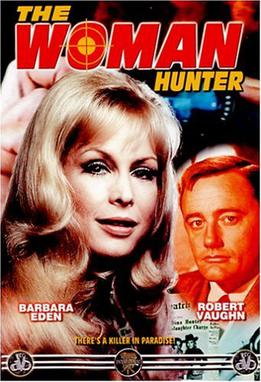
The Woman Hunter (1972, directed by Bernard L. Kowalksi)


Recovering from a traffic accident and having being recently acquitted on charges of vehicular manslaughter, wealthy socialite Diane Hunter (Barbara Eden) heads down to Acapulco with her businessman husband, Jerry (Robert Vaughn).  Diane wants to get away from the publicity of her case and relax but all Jerry seems to care about is business.  When she meets another American named Paul Carter (Stuart Whitman), Paul presents himself as being an artist.  But as Paul seems to be growing more and more obsessed with Diane and Jerry, Diane becomes convinced that Paul may have more sinister motives.  Is Diane right or is she having another breakdown?

The Woman Hunter is a quickly paced made-for-TV thriller that would probably have worked better if the two men in Diane’s life had been played by different actors.  Stuart Whitman and Robert Vaughn were both good actors but they were also so often cast in villainous roles that, as soon as they appear, everyone will know better than to trust either one of them.  The film’s big twist can be guessed just by the fact that Robert Vaughn is playing Diane’s husband.

Whitman seems bored with his role while Vaughn does his usual sleazy businessman routine.  He’s good at it but it’s a role that he played so often that it’s impossible to be surprised when it’s revealed that he’s less than trustworthy.  Barbara Eden gives a good performance and is really the main reason to watch this movie.  After being typecast as a genie in a bottle, Eden goes out of her way in The Woman Hunter to show that she was capable of doing so much more and, for the most part, she succeeds.  She’s sexy, sympathetic, and does just a good enough job portraying Diane’s mental instability that it does at least seem believable that she could be imagining all of the danger around her.  (Or, at least, it would be believable if the men in her life weren’t all portrayed by veteran screen villains.)

The Woman Hunter is forgettable but it was shot on location in Acapulco so at least everyone involved got a nice trip out of the deal.

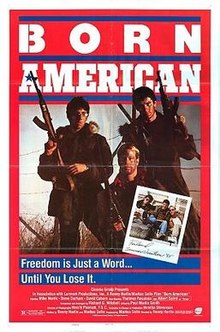
Born American (1986, directed by Renny Harlin)


The year is 1986 and the Cold War is raging between the United States and the Soviet Union.  Three American college students are on vacation in Finland.  Mitch (Steve Durham) and Savoy (Mike Norris) think it would be a great idea to secretly cross the border into Russia and just hang out for a few hours.  The more cautious KC (David Coburn) thinks that would be a mistake but he’s outvoted.

Of course, it turns out that KC was correct.  No sooner have the three students crossed the border than they find themselves being chased by Soviet soldiers and getting accused of raping a woman in a nearby village.  When the three of them attempt to flee back over the border, they instead end up accidentally destroying the village instead.  Arrested by the Russians, KC is tortured by the KGB until Savoy agrees to confess to being an intelligence agent.

Sentenced to a prison camp in Siberia, Savoy and KC are forced to take part in forced labor while Mitch is used as a pawn in an underground human chess match where the pawns are all prisoners and capturing a pawn means that prisoner is then executed.  (I don’t get it either.)  After KC dies due to the abuse to which he’s been subjected, Savoy discovers that there’s a former American intelligence agent known as The Admiral (Thalmus Rasulala) living underneath the prison.  The Admiral is willing to help Savoy escape but he wants Savoy to help him by smuggling a book that The Admiral has written to publishers in the West.

What type of name is Savoy anyways?

Despite the name and the pro-American subject matter, Born American was produced in Finland.  At the time, it was the most expensive Finnish film ever made.  It was also the directorial debut of Renny Harlin and the surprise box office success of Born American led to Harlin getting offers from Hollywood.  If not for Born American, Renny Harlin would never have gotten the chance to direct Die Hard 2 or to marry Geena Davis.  Of course, he also wouldn’t have gotten the chance to direct Cutthroat Island.

The best thing about Born American are the action scenes.  They rarely make much sense in the context of the film’s plot but Renny Harlin proved that, even with his directorial debut, he knew how to film people blowing things up and shooting guns at each other.  The scenes in the prison camp are believably intense, or at least they are until The Admiral shows up in his well-furnished underground lair.

The worst thing about Born American is the plot, which never makes any sense.  I’m about as anti-communist as they come and even I still found it hard to have much sympathy for three obviously wealthy college students who were stupid enough to try to sneak into Russia just so they’d have a story to tell later.  Savoy is not much of a hero because almost all of his troubles could have been avoided by him not acing like an idiot.  Plus, what type of name is Savoy?

Originally, Savoy was to be played by Chuck Norris.  When Chuck withdrew from the project, the producers instead hired his son, Mike Norris, and rewrote the script to make the three Americans college students.  This was Mike Norris’s first starring role and, unfortunately, he’s not very good.  He’s believable as a tourist but once he’s taken prisoner and has to emote, he starts delivering all of his lines in a high-pitched whine and it becomes difficult to listen to him.  Watching Mike Norris in the role of Savoy Brown, I couldn’t help but think to myself that Chuck Norris never would have gotten captured in the first place.

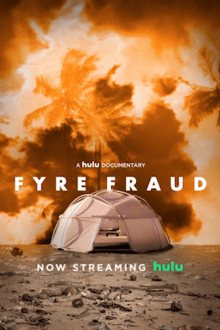
Film Review: Fyre Fraud (dir by Jenner Furst and Julia Willoughby Nason)


Yesterday, on Hulu, I watched Fyre Fraud, a 2019 documentary about the disaster that was the Fyre Festival.

With everything’s that going on in the world right now, it can be easy to forget just what a big deal the Fyre Festival was back in 2017.  The Fyre Festival was supposed to be the greatest party of 2017. Influencers played it up on Instagram. A commercial for it, one that featured the world’s top models on a beautiful island, was pretty much inescapable on social media. It was going to be the greatest musical festival of all time, with luxury villas and yachts and private chefs and …. Blink-182? Even before the entire festival was revealed to be a massive fraud, I have to admit that I was kind of like, “All this for Blink-182?”

The festival did turn out to be a disaster. A lot of people paid a lot of money to end up on the beach, staying in rain-soaked FEMA tents and eating pre-packaged sandwiches. The bands cancelled so there wasn’t even any music. After the festival was officially canceled, several people found themselves stranded on the island. Those of us who weren’t there followed the drama on twitter. We joked about the Lord of the of Flies. One of my favorite tweets about the whole mess compared it to an episode of It’s Always Sunny In Philadelphia. “The Gang Puts On A Music Festival.”

If those two paragraphs above seem familiar, that’s because I copy and pasted them from my review of FYRE: The Greatest Party That Never Happened.  The Fyre Festival was such a legendary disaster that it was the subject of not one but two documentaries, both of which were released within days of each other in 2019.  FYRE: The Greatest Party That Never Happened was released on Netflix while Fyre Fraud premiered on Hulu.

Both documentaries tell the same basic story, though each focuses on different aspects of the story.  For instance, FYRE: The Greatest Party That Never Happened featured several interviews with the people who actually lived and worked on the island where the festival was to take place and it revealed that the majority of them went unpaid for their hard work.  (I’ll always remember the restaurant owner who ended up feeding hundreds of stranded festival goers, all of whom had specifically been told not to bring money with them to the island.)  The Greatest Party That Never Happened went into detail about how the festival fell apart during the planning stages and how those involved in putting it on seemed to by fueled by a willful denial of reality.

Fyre Fraud, on the other hand, focuses on FOMO, the fear of missing out that left so many people vulnerable to a con man like the festival’s organizer, Billy McFarland.  Along with various “experts” discussing the power of social media influencers, Fyre Fraud features footage of the festival goers first arriving, via school bus, at the beach and seeing their FEMA tents.  (While most of the festival goers attempt to joke about how terrible the place looks, one woman loudly sobs in the background and begs the bus driver to turn around.)  Fyre Fraud also features an interview with Billy McFarland, in which McFarland says that he’s willing to answer any questions but then refusing to answer several questions and announcing that he needs to take a break.  If The Greatest Party That Never Happened made Billy McFarland look like a douchebag who overpromised and quickly got in over his head, Fyre Fraud makes him look like a con artist who is incapable of feeling guilt or understanding why so many people were angry with him.

Fyre Fraud never really digs as much into the story as you would want it to.  It’s pretty much a surface-level examination of the Fyre Festival, one that acknowledges the fear of missing out without really doing an in depth examination into way that fear is so strong for so many people.  Fortunately, though, the story of the Fyre Festival is so insane that it’s impossible to make a boring documentary about it.  This is one of those stories that just demands to be told and retold.