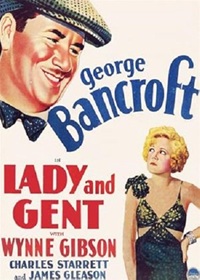
Lady and Gent (1932, directed by Stephen Roberts)


When veteran prize fighter Stag Bailey (George Bancroft) gets cocky and doesn’t bother to properly train for the big fight, he is knocked out by a young up-and-comer named Buzz Kinney (John Wayne).  Stag’s manager, Pin (James Gleason), had all of his money riding on Stag winning.  Now broke and with the mob after him, Pin tries to steal the cash from the boxing arena and ends up getting shot by a security guard.  Stag and his girlfriend, Puff (Wynne Gibson), take in Pin’s young son, Ted, and they devote themselves to raising him.  Years later, Ted (Charles Starrett) wants to become a prizefighter but Stag and Puff, who know what years of getting punched in the head can do to someone, try to convince him to go to college instead.

This boxing film is of interest to western fans because of some of the faces in the cast.  This was an early John Wayne role and he’s only seen in the ring and then in one brief scene where he confronts Stag and Puff in a bar.  Wayne still plays an important role, though, because Buzz’s transformation from being a fresh-faced boxer to being a bitter, punch-drunk bully serves as a warning for what waits for Ted if his adoptive parents can’t keep him out of the fight game.  Charles Starrett, of course, would go on to find greater fame as the Durango Kid.

Otherwise, Lady and Gent is a standard pre-code melodrama.  It’s a little more realistic than some of the other boxing films that came out in the 30s.  Boxing is portrayed as a dirty business that leaves its participants with struggles that all of the prize money in the world can’t make up for.  Puff sacrifices her carefree life to raise Ted but it’s worth it in the end.  You can tell this was a pre-code film because Stag and Puff are a couple but they only decide to get married so they can adopt Ted.

George Bancroft was a star in the late 20s and early 30s but eventually, he transitioned to character parts.  He retired from acting 1942 and became a full-time rancher.  One of his final films was 1939’s Stagecoach, starring his Lady and Gent co-star, John Wayne.
 

A Blast From The Past: You Can’t Take It With You (dir by Kirk Browning and Ellis Rabb)


Our regularly scheduled review of St. Elsewhere will not be posted today so that we may bring you this special presentation….

My retro television reviews will return next week but for now, check out this 1984 production of You Can’t Take It With You, starring the great Jason Robards.  Back in 1938, this play served as the basis of a perfectly charming Frank Capra film.  (It also won best picture of the year.)  This filmed version of the play’s Broadway revival is just as charming.

And now, without further ado, here is You Can’t Take It With You….

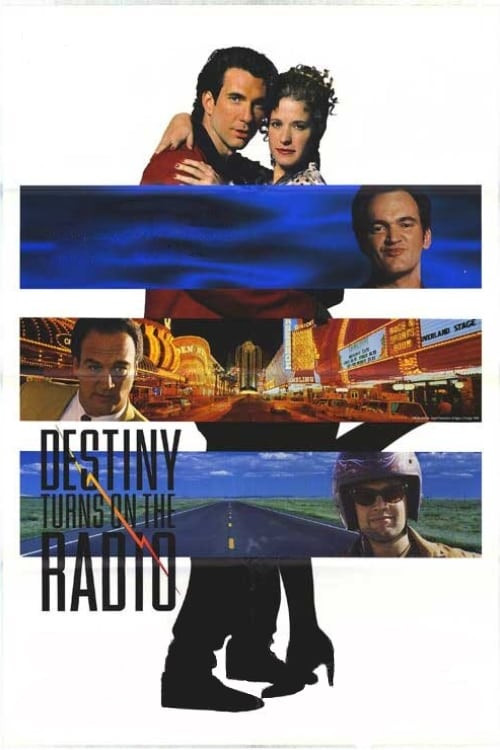
Destiny Turns On The Radio (1995, directed by Jack Baran)


Today, it can be easy to forget what an impact Quentin Tarantino had on pop culture in the 90s.  The one-two punch of Reservoir Dogs and Pulp Fiction inspired a generation of young and aspiring filmmakers to believe that anyone could make their own film.  Suddenly, you didn’t have to be a film school graduate to call yourself a filmmaker.  You could just be someone who loved movies and who was willing to keep hustling until you had something you could slip into Sundance.  That was the feeling, anyway.  The 90s were full of films about eccentric criminals who talked a lot and who loved pop culture, only three of which were directed by Quentin Tarantino.  Some of them were good.  Most of them were not.

Destiny Turns On The Radio was one of the first films to rip-off Pulp Fiction and it felt more cynical than most because it was directed by Jack Baran, who wasn’t even a video store clerk.  He was a producer of films like The Big Easy and Barfly, an industry veteran ripping off two films directed by someone who was, at that time, still an outsider.  The film tells a story that had plenty of Tarantino elements, including Quentin Tarantino himself.  Tarantino signed to play Johnny Destiny right after Pulp Fiction won the Palme d’Or at Cannes.

Johnny Destiny is a gambler who is apparently also a God.  He emerges from a lightning-filled pool and his dialogue is full of pseudo-philosophy.  He is driving through the desert when he picks up Julian (Dylan McDermott) and gives Julian a lift to Las Vegas.  Johnny Destiny is taking prison escapee Julian on a ride so that Julian can face his destiny.  Julian wants to recover some money from a bank job that he pulled off with Thoreau (James Le Gros) but it turns out that, when Johnny Destiny emerged from that pool, he also stole all the money.  (There’s no specific reason for Thoreau to be named after the famous philosopher, beyond the film trying to make itself seem deep by drawing in everyone who read Walden in AP English.)  Julian wants to get back together with Lucille (Nancy Travis), a singer who performs songs more appropriate for a 20s speakeasy than a Las Vegas lounge.  Lucille is involved with a gangster (Jim Belushi).  Belushi sings Vivia Las Vegas but otherwise, this is one of his more boring performances.

Like so many of the Pulp Fiction rip-offs of the 90s, Destiny Turns On The Radio is all self-conscious attitude and cool style, full of references to pop culture that fall flat because there’s no real thought behind them.  Reservoir Dogs and Pulp Fiction were full of style but they also told compelling stories.  Destiny Turns On The Radio is all style and little else and the cast never comes together the way that the actors in Tarantino’s first two movies did.  Watching this film, I realized why Dylan McDermott and Nancy Travis both found more success on television than in feature films.  The film posits Tarantino (as Johnny Destiny) as the epitome of cool but it then burdens him with the type of dialogue that he would have cut by the time he started a second draft.

Coming hot on the heels of the success of Pulp Fiction, Destiny Turns On The Radio actually led to a few years where many critics assumed Tarantino would be a two-trick wonder.  It was thought lightning struck twice but it would never strike a third time and Tarantino would spend the rest of his career as almost a parody of his earlier success.  Luckily, Tarantino proved them wrong and Destiny Turned On The Radio turned out to be not his career’s destination but instead just a detour.

A Blast From The Past: Wait Until Dark (dir by Barry Davis)


Malibu, CA will not be reviewed tonight so that we might bring you this special presentation….

My retro television reviews will return next week but, for now, why not enjoy something even better than me discussing my hatred of Malibu, CA?  1982’s Wait Until Dark is a videotaped record of a stage production of Frederick Knott’s classic play about a blind woman who is menaced by three criminals.  (I assume it was filmed for PBS.  According to Lettrboxd, this aired on television on June 20th, 1982.)  This play was famously adapted into an Audrey Hepburn film in 1967.  The production below gives us a chance to see how the suspense plays out in a theatrical setting.  The cast, including Katharine Ross and Stacy Keach, is excellent!

And now, here is Wait Until Dark….


Film Review: Jackie Brown (dir by Quentin Tarantino)


It took me a while to really appreciated Jackie Brown.

I was nineteen and in college when I first watched the movie.  A friend rented it and we watched it with the expectation that it would be another Tarantino film that would be full of violence, fast music, and stylish characterizations.  And, of course, Jackie Brown did have all three of those.  But it was also a far more melancholy film than what we were expecting and compared to something like Kill Bill, Jackie Brown definitely moved at its own deliberate pace.  That’s a polite way of saying that, at times, the film seemed slow.  It seemed like it took forever for the story to get going and, even once it became clear that Jackie Brown (Pam Grier) and Max Cherry (Robert Forster) were going to steal from Ordell Robbie (Samuel L. Jackson), it still felt like an oddly laid back heist.  Robert de Niro, the film’s biggest star, played a guy who seemed to be brain dead.  Bridget Fonda brought an interesting chaotic energy to the film but her character was disposed of in an almost off-hand manner.  The whole thing just felt off.  I appreciated the performances.  I appreciated the music on the soundtrack.  But I felt like it was one of Tarantino’s weaker films.

As I’ve gotten older, I’ve come to better appreciate Jackie Brown.  First released in 1997 and adapted from a novel by Elmore Leonard, Jackie Brown finds Quentin Tarantino at his most contemplative.  Indeed, Tarantino wouldn’t direct anything quite as humanistic until he did Once Upon A Time In Hollywood.  If the heist seemed rather laid back, that’s because Jackie Brown really isn’t a heist film.  It’s a film about aging, starring two icons of 70s exploitation.  Robert Forster was 56 when he played bail bondman Max Cherry while Pam Grier was 48 when she was cast as Jackie Brown, the flight attendant turned smuggler.  Jackie and Max two middle-aged people faced with a world that doesn’t really make much sense to them anymore.  (Obviously, it’s easier for me to understand them now than it was when I was nineteen and I felt like the future was unlimited.)  Max bails people out of jail and it’s obvious that he still has a shred of idealism within him.  He actually does care about the people he gets out of jail and he’s disgusted by Ordell’s callous attitude towards the people who work for him.  Jackie is a flight attendant who, when we first see her, looks like she could have just stepped out of a 1970s airline commercial.  Ripping off Ordell isn’t just something that she’s doing for revenge or to protect herself, though there’s certainly an element of both those motivations in her actions.  This is also her chance to finally have something for her.  Jackie and Max are two lost souls who find each other and wonder where the time is gone.  All of those critics who have wondered, over the years, when Quentin Tarantino would make a mature movie about real people with real problems need to rewatch Jackie Brown.

Of course, it’s still a Quentin Tarantino film.  And that means we get a lot of scenes of Samuel L. Jackson talking.  This is one of Jackson’s best performances.  Ordell is definitely a bad guy and most viewers will be eager to see him get his comeuppance but, as played by Jackson, he’s also frequently very funny and definitely charismatic.  One can understand how Ordell lures people into his trap.  Jackson loves to watch video tapes of women shooting guns.  He allows De Niro’s Louis to crash at his place and the scene where Ordell realizes that Louis is thoroughly incompetent is brilliantly acted by both men.  And then you have Bridget Fonda, as a force of pure sunny chaos.  Jackson, De Niro, and Fonda are definitely a watchable trio, even if the film rightly belongs to Pam Grier and Robert Forster.

The older I get, the more I appreciate Jackie Brown.  This is the film where Tarantino revealed that there was more to his artistic vision than just movie references and comic book jokes.  This film takes Tarantino’s style and puts it in the real world.  It’s Tarantino at his most human.

Film Review: My Best Friend’s Birthday (dir by Quentin Tarantino)


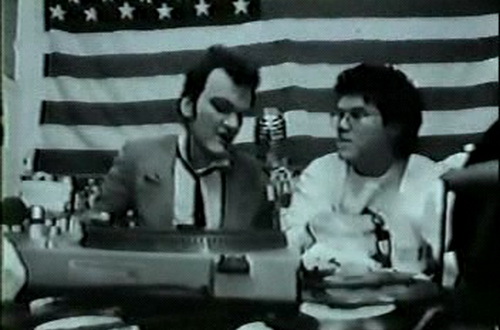
Clocking in at 37 minutes (largely because the majority of the film’s script was either not filmed or the footage itself was lost), My Best Friend’s Birthday tells the story of …. well, it’s not easy to say exactly what it tells the story of.

Clarence (Quentin Tarantino) and Mickey (Craig Hamann)  are two pop culture-obsessed radio DJs.  Clarence tries to snort cocaine while on the air but it turns out to just be itching powder.  The two of them spend a good deal of time talking about the movies that they love.  There’s a scene where Clarence has a conversation with an older man (played by Allen Garfield, who was Tarantino’s acting teacher at the time) who appears to be some sort of exploitation filmmaker.  It’s not always easy to keep track of what Clarence and Mickey are doing, largely because the film’s soundtrack is noticeably muddy.  Mickey is dumped by his girlfriend, Pandora (Linda Kaye), right before his birthday.  (Mickey comes home to find Pandora gathering up all of her belongings.)  Clarence, looking to give his friend a birthday that will cheer him up, ends up hiring a sex worker named Misty Knight (Crystal Shaw), who got into the business after being inspired by Nancy Allen’s performance in Dressed To Kill.  Misty has a pimp named Clifford (Al Harrell).  Mickey keeps getting interrupted whenever he tries to take a shower.  The movie is full of scenes that are linked by everyone’s shared love of pop culture but it never really comes together as a truly coherent story.  Again, this could be because the film was meant to 70-80 minutes long but only 37 minutes appears to have been filmed.

It’s not a totally hopeless film.  Taken individually, the scenes are are generally blocked out well.  Director Quentin Tarantino, who was still working as a video store clerk when he and his friends attempted to make this movie, obviously had a good instinct for camera angels and editing even before he hit it big.  That said, the film is still undeniably amateurish.  The sound quality is terrible.  The actors, most of whom were not professionals, struggle with their dialogue.  Tarantino gave himself a big role and, to put it charitably, Tarantino has always been a better director than actor.  Not surprisingly, Allen Garfield does well in his fast-talking role and Tarantino himself is better in the Gardfield scenes that he is in the rest of the film.  Crystal Shaw is likable as Misty Knight, bringing some much needed energy to her scenes.

This is a film that one watches solely because of who directed it.  If the film has actually been completed, it would have been Tarantino’s first movie.  By most accounts, the film was shot over four years and, eventually, everyone got bored with it and moved on.  It’s perhaps for the best as My Best Friend’s Birthday, with its grainy black-and-white imagery and it sometimes forced humor, feels more like a Kevin Smith film than a Tarantino film.  (Or at least, that’s the feeling one gets from the surviving footage.  Clarence and Misty’s relationship is a lot like the relationship between Clarence and Alabama in True Romance so who knows where My Best Friend’s Birthday would have ended up going.)  That said, if you’re a fan of Tarantino, this film makes for an interesting watch.  It’s a chance to see Tarantino when he was young and still finding his voice.  It’s a project that doesn’t work but there’s enough hints of Tarantino’s talent to make it must-viewing for fans of his work.

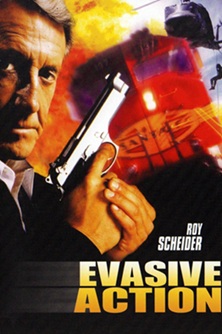
Evasive Action (1998, directed by Jerry P. Jacobs)


Some of the toughest criminals in America are being transported, via train, to a high security prison.  For some reason, instead of using an entire train to transport the prisoners and guards, it’s decided to just put the criminals in one car attached to a normal passenger train.  Did the passengers in the other cars get a warning that would be traveling with a bunch of desperate criminals?  Did they at least get a discount on their tickets?  Of course, Mafia kingpin Enzo Martini (Roy Scheider, slumming) engineers a takeover with the rest of the prisoners.  It’s up to Sheriff Wes Blaidek (Ray Wise) and bartender Zoe Clark (Delane Matthews) to stop the prisoners.

This is a fast-moving, dumb-as-Hell action movie that’s memorable mostly for having a cast that was very much overqualified for the film.  Keith Coogan, Dorian Harewood, Don Swayze, Ed O’Ross, and Sam J. Jones are all in this thing.  Clint Howard plays the homicidal serial killer who lets a child live because the kid has seen Taxi Driver.  Dick Van Patten plays the head of the parole board.  I can understand why Roy Scheider might be selected to play a mob boss and how Clint Howard and Don Swazye ended up playing killers.  But how do you look at this film’s story and think, “This need Dick Van Patten?”  It’s Die Hard on a train but without the wit or the budget.  The movie moves quickly, there’s plenty of train and helicopter action and it’s still good to see so many familiar and eccentric talents gathered together to bring too life one very stupid movie.  It’s too bad they couldn’t find room for Joey Travolta or Joe Estevez but I guess you can’t have everything.

Film Review: The Black-Eyed Children (dir by Jozsef Gallai)


I’ve never been much for camping.

I’ve probably mentioned this before.  I’ve certainly reviewed enough films about deadly campgrounds and fatal walks through the woods that there’s no way that I haven’t talk about camping in the past.  It’s just not for me.  Even though I grew up largely in the country and I tend to think of myself today as being a country girl in the city, I have to admit that staying out in the wilderness has never appealed to me.  I don’t like bugs.  I don’t like the threat of wild animals suddenly appearing out of nowhere.  I’ve seen enough horror movies to know that I should run if I ever see a guy walking through the woods while wearing a hockey mask.  (Not that it would do any good, of course.  I’m such a klutz that there’s no way I wouldn’t trip over a stick or something.)  The fact of the matter is that I find the wilderness to be very creepy.  The dark shadows, the feeling of being surrounded by trees that tower of above me, the isolation of it all …. nope, not for me!

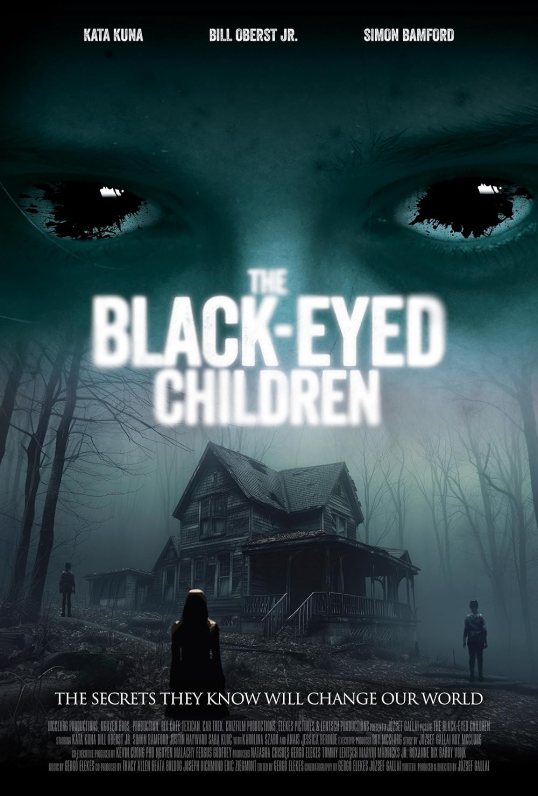
The Black-Eyed Children, an upcoming horror from from director Jozsef Gallai, does a very good job of capturing just how creepy being alone in the wilderness can be.  Kata Kuna stars as Claire, a young psychology major who is totally excited to have gotten a job as a counselor at St. Beatrice, a camp for children with special needs.  Claire wants to make the world a better place and this seems like a wonderful opportunity to do so.  (Honestly, I hate camping but if you told me that doing so would make life better for a child who hasn’t been given much in the world, I would be the first to head down to the sporting goods store and buy a tent.)  However, when Claire enters the woods and finds herself at St. Beatrice, it’s not at all what she was expecting to find.

The camp appears to be totally deserted.  The children who were supposed to be there are gone.  The other counselors who were presumably employed there have disappeared.  Claire walks through the camp, checking cabins and searching for an explanation.  Finding the files on the kids who were supposed to be at camp, Claire starts dialing phone numbers and what she discovers shocks her.  And no, I’m not going to tell you what she discovers.  The Black-Eyed Children is scheduled for a late 2025 release so you can watch it then and find out the secret of St. Beatrice.

The Black-Eyed Children is a found footage film.  Luckily, Jozsef Gallai is one of the best when it comes to working with the found footage genre and the film is full of creepy and atmospheric imagery.  St. Beatrice and the woods surrounding it all give off a vibe of steady menace, leaving the viewer frightened about what might jump out of the shadows.  Kata Kuna does a great job as Claire and what she discovers at St. Beatrice will leave you feeling uneasy, especially if you know about the urban legend that gives this film its name.  Clocking in at 70 minutes, The Black-Eyed Children is an effective and creepy horror film.  It’ll definitely keep you out of the woods.

A Blast From The Past: Rock: It’s Your Decision (dir by John Taylor)


Pacific Blue will not be reviewed this week so that we might bring you this special broadcast of 1982’s Rock It’s Your Decision!

Jeff (Ty Taylor) has been challenged to think about the music he listens to and to only listen to Christian music for a few weeks.  Jeff takes the challenge and, in the film’s climatic speech, he reveals that even Barry Manilow is a servant of the Devil.  This film is dated, incredibly silly, and oddly watchable.  It might have had more impact if the lead character wasn’t so dorky.  “I love a get down beat!”  I love the way his voice cracks when he shouts, “Do you think I’m sexy?”

Pacific Blue will return next week.  For now, check out Rock It’s Your Decision!

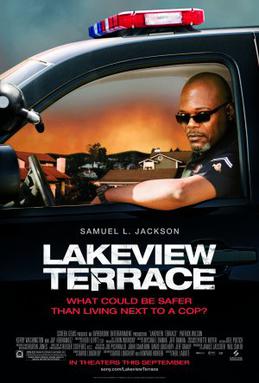
Lakeview Terrace (2008, directed by Neil LaBute)


Chris and Lisa Mattson (Patrick Wilson and Kerry Washington) move in to a large house in the Lakeview Terrace neighborhood of Los Angeles.  It’s a good house in a good neighborhood and it’s just too bad that their neighbor, Abel Turner (Samuel L. Jackson), is a corrupt cop who hates interracial couples.

I remember that Lakeview Terrace caused a brief stir when it was released in 2008.  It was hardly the first film about an interracial couple being harassed by a bigot but it was one of the few where the bigot in question was a black man.  Abel hates white people.  He says it’s because his wife was cheating on him with a white man when she was killed in a car accident.  He does not appreciate Chris listening to rap music and dropping his cigarettes on the street. When Abel’s children spot Chris and Lisa having sex in their swimming pool, that’s all Abel needs to justify his dislike of the couple and his feelings that he doesn’t want this couple living next door.  When Chris asks if Abel could turn off the floodlights that shine into their bedroom window, Abel refuses.  When Chris tries to plant privacy trees, Abel cuts them down.  What starts out as a neighborhood feud escalates as Abel orders one of his informants to break into Chris and Lisa’s house.  Unfortunately, that third act twist also signals the moment that Lakeview Terrace goes from being a reasonably intelligent social satire to being a standard thriller.  Neil LaBute is a director who specializes in making people uncomfortable so it is too bad that Lakeview Terrace ends in a way designed to conform to what audiences have come to expect from thrillers.

Abel’s a hateful figure but Samuel L. Jackson is just as charismatic as ever and the passive-aggressive way that he initially responds to Chris and Lisa will be familiar to anyone who has ever had a bad neighbor or who has to deal with a cop having a bad day.  Patrick Wilson and Kerry Washington, neither one of whom is really that interesting an actor to begin with, are both stuck in bland roles and struggle to keep up with Jackson.  (Wilson and Washington even get out-acted by Ron Glass, playing Lisa’s disapproving father.)  It throws the movie off-balance.  At the same time, Jackson is such an actor who projects so much intelligence that it’s hard to believe that Abel would make the stupid mistakes that he makes towards the end of the movie.  Lakeview Terrace starts out fairly strong but loses its way towards the end.