Song of the Day: The Ballad of Bonnie and Clyde by Georgie Fame


With today’s song of the day, we continue our Bonnie and Clyde theme!

This song is from 1968 and was inspired by Arthur Penn’s classic crime film, Bonnie and Clyde. Oddly enough, this song insists that Bonnie and Clyde were from Savannah, Georgia when everyone knows that they were from my part of the world, North Texas.  Then again, “Savannah” does sound a bit better when set to music than “West Dallas.”

Scene That I Love: The Story of Bonnie and Clyde


In this scene, from Arthur Penn’s 1967 film Bonnie and Clyde, Bonnie Parker (played by Faye Dunaway) writes a poem and tries to craft the future image of Bonnie and Clyde.  Though it has none of the violence that made Bonnie and Clyde such a controversial film in 1967, this is still an important scene.  (Actually, it’s more than one scene.)  Indeed, this scene is a turning point for the entire film, the moment that Bonnie and Clyde goes from being an occasionally comedic attack on the establishment to a fatalistic crime noir.  This is where Bonnie shows that, unlike Clyde, she knows that death is inescapable but she also knows that she and Clyde are destined to be legends.

(Of course, Dunaway and Warren Beatty — two performers who once epitomized an era but who are only seen occasionally nowadays — are already legends.)

4 Shots From 4 Films: Special Arthur Penn Edition


4 (or more) Shots From 4 (or more) Films is just what it says it is, 4 (or more) shots from 4 (or more) of our favorite films. As opposed to the reviews and recaps that we usually post, 4 (or more) Shots From 4 (or more) Films lets the visuals do the talking.

103 years ago today, Arthur Penn was born in Philadelphia.  In the 50s, Penn was one of the new crop of directors who made a name for themselves directing for television.  Like most of his colleagues, he transitioned into film.  Unlike many of his colleagues, he remained a fiercely iconoclastic director, one who was willing to challenge the conventions of Hollywood.  While his early films often struggled at the box office, he was respected by actors and hailed as a visionary by the directors of the French New Wave.

In 1967, he and Warren Beatty changed the course of American cinema with Bonnie and Clyde.  Penn followed up that classic film with movies like Alice’s Restaurant, Little Big Man, Night Moves, and a handful of others.  When he died in 2010, Penn was hailed as one of the most influential (if sometimes underrated) directors of all time.

Today, in honor of the anniversary of his birth, the Shattered Lens offers up….

4 Shots From 4 Arthur Penn Films

The Chase (1966, dir by Arthur Penn, DP: Joseph LaShelle)

Bonnie and Clyde (1967, dir by Arthur Penn, DP: Burnett Guffey)

Alice’s Restaurant (1969, dir by Arthur Penn, DP: Michael Nebbia)

Little Big Man (1970, dir by Arthur Penn, DP: Harry Stradling Jr)

Late Night Retro Television Review: Freddy’s Nightmares 1.10 “The Bride Wore Red”


Welcome to Late Night Retro Television Reviews, a feature where we review some of our favorite and least favorite shows of the past! On Fridays, I will be reviewing Freddy’s Nightmares, a horror anthology show which ran in syndication from 1988 to 1990. The entire series can be found on Plex!
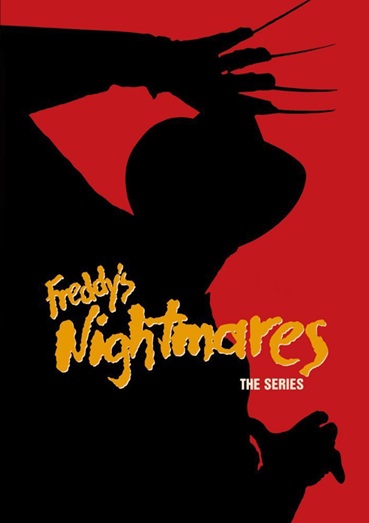
This week, who the Hell knows?

Episode 1.10 “The Bride Wore Red”

(Dir by George Kaczender, originally aired on December 18th, 1988)

This was a dumbass episode.

The first half of the episode dealt with Gavin (Eddie Driscoll) and his anxiety about his upcoming wedding to Jessica (Diane Franklin).  His friends take him out to a bar (called the Ball and Chain) where a stripper (Michele Pawk) ties him up and then taunts him about how bad marriage is going to be.  At the wedding, Gavin keeps seeing a mysterious woman (Katherine Moffat) who is dressed in red.  Then, we flash forward and see how miserable Gavin and Jessica are as a married couple.  Jessica no longer wear dresses and instead spends all day in sweatpants.  Gavin only kiss her when he wants sex.  He spends all of his time at the office.  Suddenly, we’re back at the church and Gavin says, “I do,” and kisses Jessica while the woman in red watches from her pew.

Obviously, the flashforwards were all a part of Gavin’s fantasy while standing at the altar.  But if the flashforwards were the fantasy, what are we to make of the equally cartoonish scenes at the bar?  Was all of that supposed to be real?  Even more importantly, who cares one way or the other?  There really wasn’t much of a story here.

The second half of the episode opened with Jessica and Gavin returning from their honeymoon.  Jessica is upset when she learns her father wants them to come over for dinner.  Jessica then goes out on her own, picks up a married man, ties him to a hotel room bed, and takes his picture.  She has an entire album full of pictures so apparently, she’s been doing this for a long time.

A dream sequence reveals that, when Jessica was a child, she caught her father cheating on her mother and he told her that if she ever told anyone, it would lead to divorce and Jessica would be carved up like a Thanksgiving turkey.

Back in the “real” world, Jessica and Gavin arrive for dinner but Jessica freaks out when she sees that her father (Arthur Roberts) is holding a carving knife.  Jessica reveals that her father cheated on her mother (Margaret Shinn) but her mother reveals that she already knows.  Jessica runs from the house and is kidnapped by the guy she previously photographed.  Soon, she’s the one who is tied to a bed while the guy sharpens a knife….

But then, suddenly, Jessica is tied down to a bed in a mental hospital and her husband is telling a doctor that “this always happens” whenever she has dinner with her parents.  Hey, Gavin — maybe y’all should just stop having dinner with her parents.  Just a thought.

Despite the presence of the talented Diane Franklin, this episode felt pretty superfluous.  Gavin’s story felt pointless.  Jessica’s story at least had a point but it still fell flat.  I’m not sure why Freddy would waste his time with either one of these nightmares.


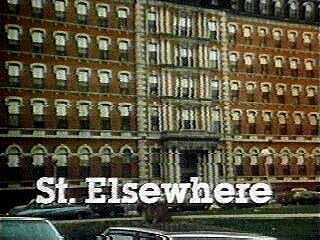
Retro Television Review: St. Elsewhere 2.17 “Vanity”


Welcome to Retro Television Reviews, a feature where we review some of our favorite and least favorite shows of the past! On Fridays, I will be reviewing St. Elsewhere, a medical show which ran on NBC from 1982 to 1988.  The show can be found on Hulu and, for purchase, on Prime!

This week’s episode was available on neither Hulu nor Prime.  I had to watch a really terrible upload that I found on Daily Motion.  Bleh.

Episode 2.17 “Vanity”

(Dir by Mark Tinker, originally aired on March 7th, 1984)

I was relieved to see that this episode featured Kathy Martin returning to the hospital.  I was seriously worried that Peter White had killed her.  With Peter in jail for attacking Wendy Armstrong, Kathy doesn’t tell anyone that Peter raped her.  From the minute we first see her, it’s clear that Kathy is suffering from severe PTSD.  As a character, Kathy Martin was not always treated well by this show.  During the first season, she was often portrayed as being a caricature, the quirky pathologist who liked to have sex in strange places.  This episode finally allowed Kathy to emerge as a fully-developed character and Barbara Whinnery gave a strong performance in the role.

Peter is in jail.  Despite Wendy’s anger, Dr. Morrison regularly visits him.  Morrison says that Peter is obviously sick and needs help but, at the same time, he hasn’t accepted that Peter is also the Ski Mask Rapist.  (Peter wasn’t wearing his mask when he attacked Wendy.)  As for Peter, he continues to feel sorry for himself.

Dr. Craig is upset when he receives a cop of the documentary about him and he discovers that he comes across like an arrogant martinet.  Dr. Craig threatens to sue the director (played, again, by Michael Richards) though one gets the feeling that Craig is mainly angry because he knows the documentary is true.

Nurse Rosenthal gets reconstructive breast surgery.  Joseph, the construction worker who has been having attacks of blindness, is successfully operated on.  Sometimes, things work out well at the hospital.  Not often, but sometimes.

Finally. Mr. Entertainment (Austin Pendleton) returns, singing to patients and upsetting his supervisor.  (Mr. Entertainment now works as a janitor at the hospital.)  To be honest, the majority of this episode was devoted to Mr. Entertainment and it was a bit too much.  Austin Pendleton is a good actor but Mr. Entertainment is such a cartoonish character that I mentally checked out of his story.

This was an odd episode.  There was a lot to work but it was almost all overshadowed by Mr. Entertainment.  Sometimes, you can tell a writer has fallen so in love with a minor character that they’ve forgotten about what the audience is actually interested in.  The episode felt like an example of that.

Live Tweet Alert: Join #FridayNightFlix for Sixteen Candles!


As some of our regular readers undoubtedly know, I am involved in a few weekly watch parties.  On Twitter, I host #FridayNightFlix every Friday and I co-host #ScarySocial on Saturday.  On Mastodon, I am one of the five hosts of #MondayActionMovie!  Every week, we get together.  We watch a movie.  We tweet our way through it.

Tonight, at 10 pm et, I will be hosting #FridayNightFlix!  The movie?  Sixteen Candles!

If you want to join us this Friday, just hop onto twitter, find Sixteen Candles on Prime, start the movie at 10 pm et, and use the #FridayNightFlix hashtag!  I’ll be there happily tweeting.  It’s a friendly group and welcoming of newcomers so don’t be shy.

See you there!

4 Shots From 4 Films: Special Horrorthon Preview


4 Or More Shots From 4 Or More Films is just what it says it is, 4 shots from 4 of our favorite films. As opposed to the reviews and recaps that we usually post, 4 Shots From 4 Films lets the visuals do the talking!

With October approaching, it will soon be time for our annual Horrorthon here at the Shattered Lens.  We’ve been working hard getting things ready!  Here are 4 shots from 4 of the many films that we will be reviewing this October.

4 Shots From 4 Horror Films

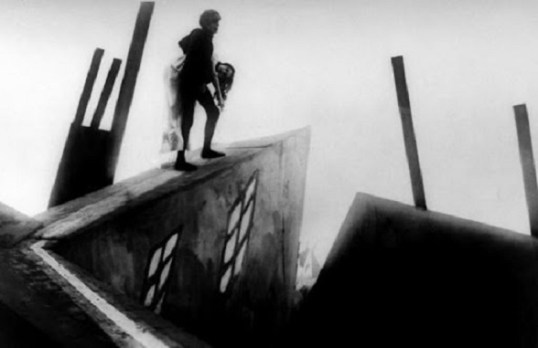
The Cabinet of Dr. Caligari (1920, dir by Robert Wiene)

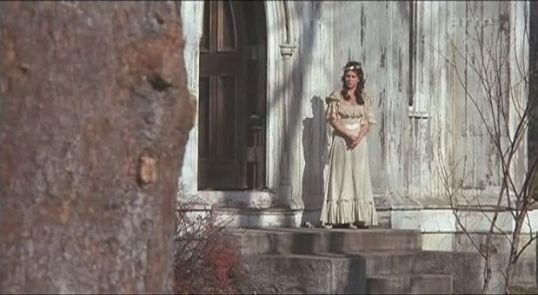
Last House on the Left (1972, dir by Wes Craven)

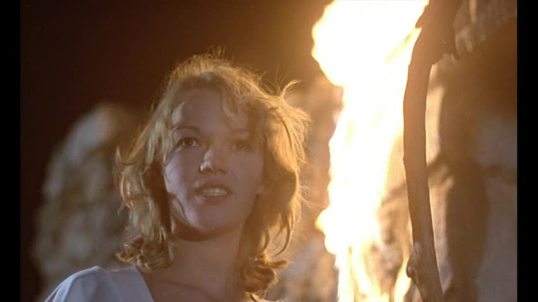
The Grapes of Death (1978, dir by Jean Rollin)

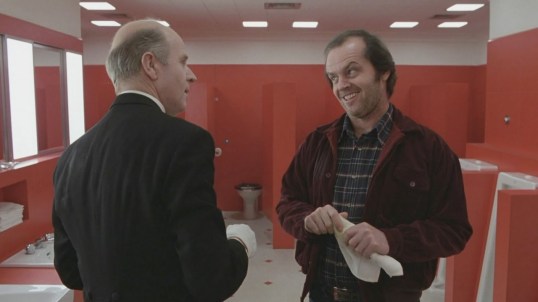
The Shining (1980, dir by Stanley Kubrick)


Scenes That I Love: Linda Hamilton in The Terminator


Today, the Shattered Lens wishes a happy birthday to actress Linda Hamilton.

This scene that I love is the haunting conclusion of the original Terminator.  Even with the Terminator (momentarily) vanquished, there’s still a storm coming.

Late Night Retro Television Review: Highway to Heaven 4.15 “Time In A Bottle”


Welcome to Late Night Retro Television Reviews, a feature where we review some of our favorite and least favorite shows of the past!  On Thursdays, I will be reviewing Highway to Heaven, which aired on NBC from 1984 to 1989.  The entire show is currently streaming on Tubi and several other services!

This week, it’s another courtroom drama on Highway to Heaven.

Episode 4.15 “Time In A Bottle”

(Dir by Michael Landon, originally aired on January 20th, 1988)

A homeless man who goes by the name of Humphrey Bogart (Henry Bal) is arrested for trying to steal a bottle of cheap wine from a liquor store.  The hard-nosed assistant D.A. (Robin Strasser) charges him with a felony.  Jonathan and Mark recruit Humphrey’s friend, Matthew (John Rubinstein), to defend him in court.  Matthew may be homeless but he’s also a lawyer!

It turns out that a corrupt city councilman (Alan Fudge) wants to crack down on the homeless because he wants to turn the homeless district into a commercial area.  If you already guessed that this episode ends with Matthew leading a march of homeless people into a city council meeting while they chant “We will be heard,” then you’ve obviously seen quite a few episodes of Highway to Heaven.

Highway to Heaven frequently did stories about the homeless and I really can’t criticize the show for that.  This was an issue that Michael Landon obviously cared a lot about and the show was usually so earnest and sincere that you could overlook just how heavy-handed it often was.  The homeless people on Highway to Heaven are always a lot more clean-cut and polite than the ones that I used to yell at me when I worked in downtown Dallas.  On Highway to Heaven, the homeless are always funny and philosophical and they have wonderful lessons to teach everyone.  In Dallas, they come up to your car window while you’re stuck in traffic.  In order to visit my aunt when she was dying at Medical City last month, I had to endure being shouted at and occasionally threatened by all sorts of people.  By the end of it, I was running red lights because paying a fine was less annoying than having that guy whole lived at the Forest/Central intersection calling me the C-word while I was waiting for the light to change.

(That’s not say that the homeless should not be treated with compassion or helped because they certainly should.  I’m just saying that this habit that some people have of idealizing and infantilizing anyone living on the streets is, in many ways, as destructive as just ignoring the problem.)

As for this episode, it was a bit too preachy for its own good.  And I know what you’re going to say.  “It’s Highway to Heaven, it’s always preachy.”  That’s true to an extent but the first three seasons were also a bit less self-righteous than the fourth season has been.  The first three seasons featured characters who were often misguided but who were also capable of being redeemed.  In the past, this episode would have been about the city councilman seeing the error of his ways.  This season, though, the city councilman is just evil because he is.  It’s a far more heavy-handed approach to take and, as a result, far less effective.

This is another episode where one impassioned speech manages to change everyone’s mind.  If only things were as simple in the real world.