Retro Television Review: Miami Vice 4.7 “Missing Hours”


Welcome to Retro Television Reviews, a feature where we review some of our favorite and least favorite shows of the past!  On Mondays, I will be reviewing Miami Vice, which ran on NBC from 1984 to 1989.  The entire show can be purchased on Prime!

This week, it’s the most infamous episode of Miami Vice ever!

Episode 4.7 “Missing Hours”

(Dir by Ate De Jong, originally aired on November 13th, 1987)

This is an episode that I had been waiting for years to see.  From the moment I decided to review Miami Vice, I started to read about and hear about this seventh episode of the four season.  This was the episode was supposedly so bad that many people consider it to be the point that Miami Vice “jumped the shark.”  This is the episode were James Brown plays a white-suited singer named Lou de Long, who has going from performing songs to giving lectures about UFOs.  (James Brown is essentially playing himself, right down to the presence of I Feel Good on the soundtrack.)  This is the episode where Trudy disappears for 12 hours and then returns with no firm memories of where she was.  This is the episode where even Crockett and Tubbs see a UFO.  Even though his appearance here does not receive as much attention as much a James Brown’s, Chris Rock made his television debut as a nerdy technician named Carson who was into UFOs.  Carson mentions getting his information for “computer bulleting boards” and everyone looks at him as if he’s speaking Esperanto.

This is the episode that is frequently cited as being the worst in Miami Vice history and really, who am I to disagree?

It pains me to say that.  I really wanted to like this episode, just because it is so strange and and I’ve always been a bit of a contrarian at heart but …. no, this episode really doesn’t work.  The sad truth of the matter is that, for all of his other talents, James Brown was a lousy actor and, with the exception of Michael Talbott and Philip Michael Thomas (who both appear to be having fun), the regular cast gives performance that suggest they all knew this episode was a bad idea.  Miami Vice was at its best when it was a cynical and downbeat show about the futility of the war on drugs.  There’s really no reason for Miami Vice to ever do a science fiction-themed episode.  Somehow, this is the second such episode to air during the fourth season.

Of course, the episode’s most unforgivable sin is that it ends with Trudy waking up in bed.  Not only is that ending a cop out but it’s also pretty rude to anyone who was actually trying to follow the plot or who was actually worried about whether or not Trudy had been brainwashed by the aliens.  Perhaps if this had been a Halloween episode, all of this could have been excused but apparently, this episode aired in the middle of November.

Poor Trudy.  Seriously, Olivia Brown didn’t really get many episode built around her character.  It’s a shame that, when they gave her one, it was this one.  Next week on Miami Vice, who knows?  I’m on vacation.  We’ll see what happens!
Lifetime Film Review: Kidnapped By A Killer: The Heather Robinson Story (dir by Lee Gabiana)


John Robinson has been described as being the Internet’s first serial killer.

I don’t know if that’s an accurate description but it is true that Robinson, who most of his neighbors and family knew as just being a somewhat eccentric businessman who always seemed to be in trouble with the IRS, did make contact with several of his victims in online chatrooms.  No one is quite sure how many women Robinson killed in the 80s and the 90s.  Robinson himself has given contradictory numbers.  What is know is that Robinson started out by luring women to his home by claiming that he had a job for them.  Many of the women who accepted his job offer were either never seen again or their bodies were eventually found on his properties in Kansas and Missouri.  Eventually, after serving time on fraud conviction, Robinson started to use internet chatrooms to find his victims.  He used the screenname Slavemaster, something that would have undoubtedly stunned all of his neighbors.

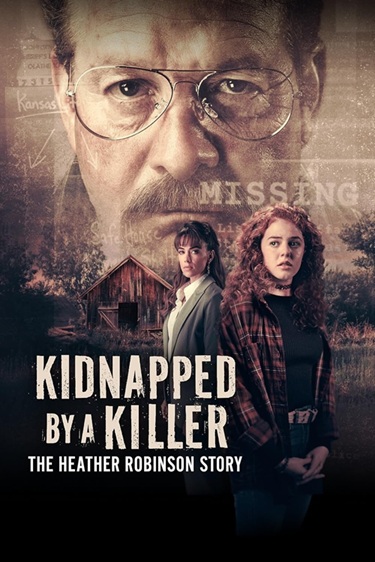
In Kidnapped By A Killer, Steve Guttenberg plays John Robinson.  Now, it should be noted that Guttenberg doesn’t get much screentime and he’s also nearly unrecognizable under a ton of old age makeup.  Guttenberg plays Robinson as being a creepy old man who uses the fact that he walks with a cane to put people at ease.  The film doesn’t spend much time with Robinson and it doesn’t show any of his murders.  Instead, the focus is on the police who investigated Robinson and also on Heather Robinson, a young woman who was Robinson’s adoptive niece but who was also the daughter of one of Robinson’s victims.  After killing her mother, Robinson “gave” Heather to his brother and sister-in-law, telling them that her mother had been a drug addict who abandoned her baby.

The majority of the film focuses on Heather (Rachel Stubington), who is a teenager when John is arrested for the murders that he committed.  Heather struggles to come to terms with the knowledge that her uncle — who seemed kindly, if a bit corny — murdered her mother and that she was essentially kidnapped and given away.  What seemed like an act of kindness — Uncle John not wanting a drug addict’s daughter to get lost in the system — was actually John Robinson’s attempt to cover up his crimes.  Much like the criminal who starts a business to launder money, Heather’s adoption was John’s attempt to launder evidence.  Stubington does a good job as Heather, capturing her struggle to come to terms with her identity.  The scenes of her dealing with her feelings towards John and the scenes of hardened detectives recoiling in shock as they discover the remains of John’s victims all serve as a reminder that murder is not an isolated crime.  It’s something that effects communities and families long after the act itself has been completed.

Kidnapped By A Killer deserves credit for focusing on a victim instead of on John Robinson, himself.  Too often, when it comes to true crime movies, the victims are forgotten while the serial killer gets all the best lines and the big moments.  Kidnapped By A Killer presents John Robinson as being a rather pathetic old man and that’s perhaps the best thing about it.

The Films of 2025: Emmanuelle (dir by Audrey Diwan)


This film is taking itself way too seriously….

I had that thought 16 minutes into Emmanuelle.  A remake of the wonderfully trashy 70s film that made a star (of sorts) out of Sylvia Kristel, this version of Emmanuelle takes itself way too seriously.  It should be noted that no one is under the impression that the original Emmanuelle films or any of the unofficial spin-offs were high art.  The first film may have pretended to be about something but, ultimately, it was a trashy sex romp that was made because some folks wanted to make a lot of money.  That’s one reason why the original film and Kristel’s version of the character continue to be popular.  Both were totally shameless and unapologetic.

The remake, though, is boring.  Emmanuelle (played by Noemie Merlant) even has a boring job.  She works in quality control for a large chain of luxury hotels.  That’s right, quality control.  This film reimagines Emmanuelle as being the female version of Creed from The Office  Emmanuelle has been sent to Hong Kong so that she can evaluate a hotel that is being managed by Margot (Naomi Watts).  The company has tasked Emmanuelle with finding an excuse to fire Margot and Emmanuelle is feeling conflicted about it.  Let me tell you, there’s nothing sexier than quality control.

Emmanuelle has several sexual experiences while staying at the hotel.  The sensuality of Hong Kong gets to her.  While wearing a towel, she flirts with a nervous room steward.  She touches herself in front of an escort who hangs out at the hotel’s pool and she gets upset when Margot sends the escort and her friends away.  Emmanuelle wanders through the film with a blank expression on her face, staring at things that are often happening off-camera.  Hong Kong is presented as being a world where everything is for sale and no desires are forbidden.  If this was one of Joe D’Amato’s Black Emanuelle films, the decadence would probably be strange and entertaining.  However, since this is an Emmanuelle film that takes itself seriously, it’s kind of boring.

In fact, this film really does get caught up in the whole “Will Emmanuelle get Margot fired?” plot.  That is probably the least interesting part of the movie but the filmmakers really do want us to understand that Emmanuelle could lose her job if she doesn’t give Margot a bad report.  But honestly, who cares?  This film makes the mistake of assuming that “quality control” is a lot more exciting than it actually is.

Emmanuelle does fall in love over the course of the film.  Kei (Will Sharpe) is an enigmatic guest who hasn’t had sex in “two or three years” because he lost his desire.  He’s suffering from ennui!  Emmanuelle yells at Kei for smoking in the hotel but she’s attracted to him as well.  At least, that’s what the film wants us to believe.  Merchant and Sharpe have so little chemistry — romantic or sexual — that it’s hard to really care.  They have some philosophical discussions, the type of stuff that even Zalman King would have dismissed as being rather pretentious.

The main problem, as I said before, is that this film just isn’t fun.  It gets bogged down with its plot and Merlant, Watts, and Sharpe all sleepwalk through their roles.  This film should have been glorious trash.  Instead, it’s just dull.

4 Shots From 4 Films: Special Vilmos Zsigmod Edition


4 Shots From 4 Films is just what it says it is, 4 shots from 4 of our favorite films. As opposed to the reviews and recaps that we usually post, 4 Shots From 4 Films lets the visuals do the talking!

Today, we pay tribute to the legendary cinematographer, Vilmos Zsigmond.  Born 90 years ago today in Hungary, Zsigmond got his start in the 60s with low-budget films like The Sadist but he went on to become one of the most in-demand cinematographers around.  In fact, of all the people who started their career working on a film that starred Arch Hall, Jr.,  it’s hard to think of any who went on to have the type of success that Zsigmond did.

Zsigmond won one Oscar, for his work on Close Encounters of Third Kind.  He was nominated for three more.  He also received a BAFTA award for his work on The Deer Hunter and was nominated for an Emmy for his work on Stalin.  He’s considered to be one of the most influential cinematographers of all time.

In honor of the legacy of Vilmos Zsigmond, here are….

4 Shots From 4 Films

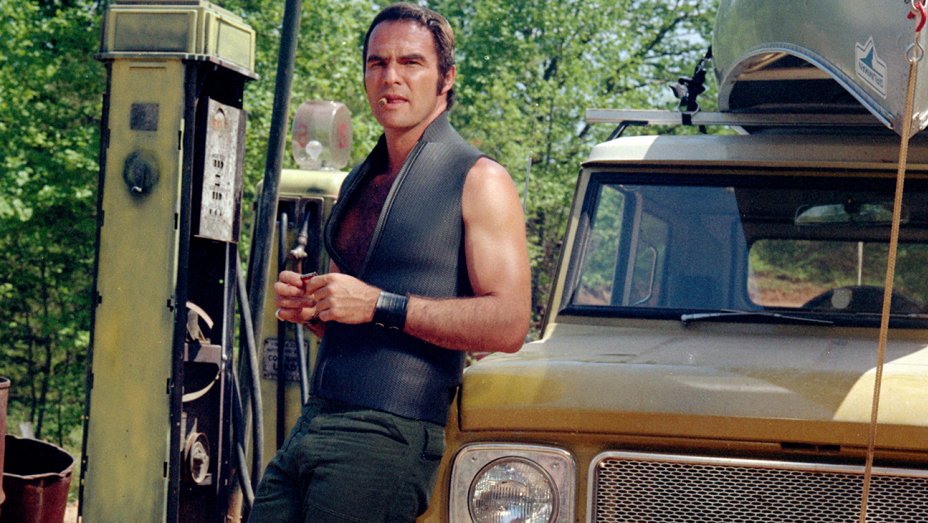
Deliverance (1972, directed by John Boorman, DP: Vilmos Zsigmond)

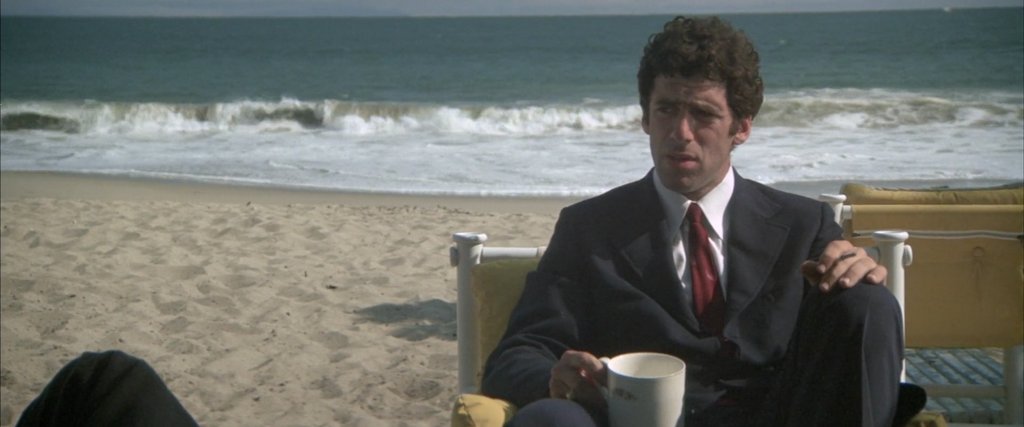
The Long Goodbye (1973, dir by Robert Altman, DP: Vilmos Zsigmond)

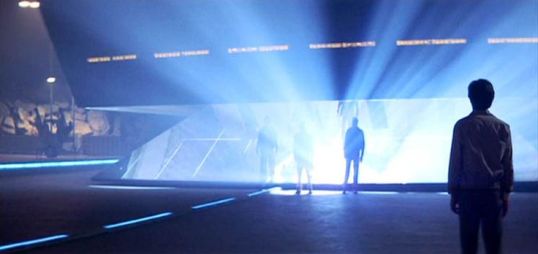
Close Encounters of the Third Kind (1977, dir by Steven Spielberg, DP: Vilmos Zsigmond)

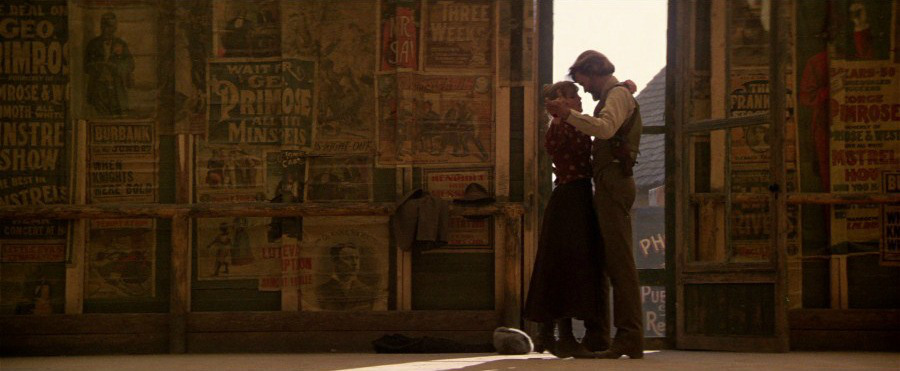
Heaven’s Gate (1980, directed by Michael Cimino, DP: Vilmos Zsigmond)

Late Night Retro Television Review: Degrasssi Hibh 2.6 “Crossed Wires”


Welcome to Late Night Retro Television Reviews, a feature where we review some of our favorite and least favorite shows of the past!  On Sunday, I will be reviewing the Canadian series, Degrassi High, which aired on CBC and PBS from 1989 to 1991!  The series can be streamed on YouTube and Tubi

In yourself, you must believe …. let’s return to Degrassi High.

Episode 2.6 “Crossed Wires”

(Dir by Kit Hood, originally aired on December 10th, 1990)

Alex is dating Tessa but he has yet to kiss her and Tessa’s getting tired of waiting for him.  Arthur and Yick (remember them?) both tell Alex that he’s a total wimp.  Myself, I’m just wondering how Alex somehow went from being a background character to suddenly getting storylines.  For the record, Alex does eventually kiss Tessa and he leaves her breathless, which seems like a bit of an overreaction.  I mean, it’s just Alex….

Of course, any Tessa storyline that doesn’t involve Joey is going to feel somewhat odd because true Degrassi fans know that Tessa is eventually going to end up pregnant after sleeping with Joey, leading to a jealous Snake dropping the first F-bomb ever heard on Canadian television.  But, that was all far in the future.  When this episode aired, Tessa was still just the girl who apparently only owned that one blue dress.

Alex and Tessa’s rather silly storyline is matched with one where Liz, after going on a date with Tim (Keith White, finally getting a storyline after spending so much time as a background character), freaks out after Tim attempts to kiss her goodnight after taking her to a Pogues concert.  Liz eventually tells Spike that she was sexually abused by her mom’s ex-boyfriend and that’s why Liz doesn’t allow anyone to get close to her.  (In many ways, this episode feels like a dry run for the Jane Says episodes of Degrassi: The Next Generation.)  This episode handles the subject with sensitivity, as Degrassi (to its credit) always did.  Tonally, it can be a bit of shock to go from the silliness of Tessa’s story to the seriousness of Liz’s but that’s kind of the way it is when you’re a teenager.  One minute, you’re in a sitcom.  The next minute, you’re in the most depressing drama ever.  That’s certainly the way it was for me when I was in high school.  I preferred the sitcom moments but the fact that I can cry on cue came in useful whenever things started to get serious.

Finally, Dwayne’s moronic friends are upset because Dwayne will no longer let them beat up on Joey.  Dwayne doesn’t care.  Joey’s the only person that knows that Dwayne is HIV positive.  Joey has kept his word and not revealed Dwayne’s secret.  Dwayne helps Joey fix his car and Joey, in return, gives Dwayne a life home.  Dwayne going from being a bully to a sensitive guy is another character arc that would become a Degrassi tradition.

Next week, Kathleen finds some marijuana.  Oh no!

Lisa Marie’s Week In Review: 6/9/25 — 6/15/25


Greetings from Florida!  Jeff and I started our vacation today.  Tonight, I am writing to you from lovely Pensacola, Florida!

Here’s a quick look at what I watched this week:

Movies I Watched:

  1. Almos’ A Man (1976)
  2. Borderline (1980)
  3. Brian Wilson: Song Writer: 1962 — 1969 (2010)
  4. Can You Feel The Beat: The Lisa Lisa Story (2025)
  5. Casualties of War (1989)
  6. Emmanuelle (2025)
  7. Fandango (1985)
  8. Fire Birds (1990)
  9. Friday the 13th (1980)
  10. Friday the 13th: A New Beginning (1985)
  11. Friday the 13th: The Final Chapter (1984)
  12. Friday the 13th Part 2 (1981)
  13. Friday the 13th Part 3 (1982)
  14. Happy Gilmore (1996)
  15. The Jolly Corner (1975)
  16. Kidnapped By A Killer: The Heather Robinson Story (2025)
  17. My Amish Double Life (2025)
  18. Night of the Blood Beast (1958)
  19. The Seduction (1982)
  20. Side Out (1990)
  21. Space Mutiny (1988)
  22. The Surfer (2025)
  23. Tourist Trap (1979)

Television Shows I Watched:

  1. Check It Out!
  2. CHiPs
  3. Degrassi High
  4. Fantasy Island
  5. Highway to Heaven
  6. Homicide: Life On The Street
  7. The Love Boat
  8. Malibu CA
  9. Miami Vice
  10. Monsters
  11. Pacific Blue
  12. St. Elsewhere

Links From Last Week:

  1. Erin reviewed Catch Me If You Can!
  2. Brad reviewed Death Hunt!
  3. Jeff reviewed The Secret of My Success!
  4. I recommended some books and some movies!
  5. PFFT!  (From Ramses and House M)
  6. RIP Brian Wilson…An Homage To The Beach Boys Musical Genius…

(You can check out last week by clicking here!)

Retro Television Review: Homicide: Life On The Street 3.13 “The City That Bleeds”


Welcome to Retro Television Reviews, a feature where we review some of our favorite and least favorite shows of the past!  On Sundays, I will be reviewing Homicide: Life On The Street, which aired from 1993 to 1999, on NBC!  It  can be viewed on Peacock.

This week, it’s another red ball on Homicide!

Episode 3.12 “The City That Bleeds”

(Dir by Tim Hunter, originally aired on January 27th, 1995)

This week’s episode opens with Bolander, Munch, Howard, and Felton having a morning meeting outside of an apartment building.  They put on bullet-proof vets because they (and several uniformed officers) are about to arrest Glenn Holton, a sex offender who is believed to have murdered a child.  Unfortunately, because of a transcription error on the warrant, the detective go to Apartment 201 instead of 210.  As they knock on the door to 201, someone on the stairwell opens fire on them.  Bolander, Howard, and Felton are hit.  Munch somehow avoids being shot.

It’s red ball time!  We’re only 12 episodes into season 3 and this is our third “all hands on deck” red ball of the season.  NBC reportedly wanted showrunner Tom Fontana to give them more drama in return for renewing the low-rated Homicide and Fontana delivered.

And that’s not necessarily a bad thing.  This was a compelling episode, featuring Pembleton tracking Glenn Holton across the city while Bayliss tried to deal with his guilt over being relieved that he wasn’t shot.  After visiting the hospital, Giardello had an emotional breakdown while Lewis was driving him back to the station.  Felton’s wife returned from Philadelphia to visit him in the hospital.  Gloria Reuben and Tony Lo Bianco guest-starred as detectives who came in to help with the case and, for both of them, this episode felt like an audition to join the cast.  Things ended with a cliffhanger.  Holton is still at large.  Felton is awake but hospitalized.  Bolander and Kay are still in critical condition.  It was an exciting episode.

And yet, one can understand why Ned Beatty later said, in an interview, that this was one of the episodes that eventually led to him leaving the show.  First off, why the detectives would be serving the arrest warrant as opposed to the uniformed cops or, considering Holton’s crimes, even the SWAT team, I’m not sure.  Munch makes a comment about how the four of them had served hundreds of arrest warrants in the past but it’s not something that we’ve ever seen them do on the show before.  That the nonstop emotional drama was compelling was due to the strength of the cast and not the strength of the script, which was occasionally so overwrought that it felt almost like a parody of a cop show.  This episode worked but, after it ended, I found myself thinking about how different it felt from the deliberately-paced and moody episodes the aired during the first and second seasons.

And finally, it’s hard not to get annoyed that, with everything going on, we still had to deal with all of Felton’s stupid domestic nonsense.  I’m tried of hearing about Felton’s wife and kids and how he can’t make his marriage work.  I’m even more tired of Megan Russert, a character who could be a total badass, being solely defined by her relationship with Felton.

This episode, the first of a three-parter, held my attention while I was watching it and it was only afterwards that I realized I kind of had mixed feelings about it overall.  Homicide is changing.  We’ll see where it goes.

Lifetime Film Review: My Amish Double Life (dir by Cooper Harrington)


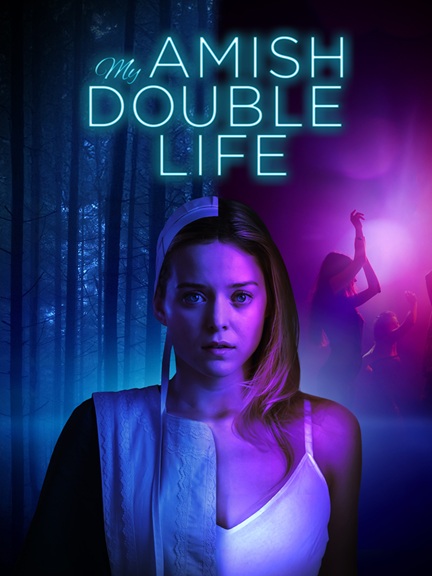
In 2025’s My Amish Double Life, Lexi Minetree plays Emma, a young Amish woman who suspects that her father was murdered and who starts sneaking into the city so that she can see for herself what life is like amongst the English.

While hanging out at the club with her friend Rebecca (Rebecca Coopes), Emma meets the handsome and charming Heath (Ty Trumbo).  When Emma, much like Cinderella at midnight, announces that she has to go home, Heath asks her to meet with him the next day.  He says he really likes her.  Even though it goes against her way of life, Emma does so.  In fact, Emma even ends up at Heath’s large and beautiful home.  Unfortunately, when another woman is murdered by a scythe-wielding assailant, Emma finds herself trapped in a web of deception and danger!

Oh, the Amish!  I feel kind of bad for them.  For the most part, they just want to be left alone but, over the past few years, Lifetime and Hallmark have become obsessed with them.  As a result, we’ve gotten several movies about life amongst the Amish.  On Hallmark, Amish men and woman are falling in love with the English.  On Lifetime, young Amish women are having to solve murders and stand up to condescending male elders.  For the most part, most of these films present the Amish as just being a bunch of people who wear old timey clothes and work on farms.  And certainly, I imagine that the farms and the clothes are an important part of Amish life but it’s still hard not to feel that most of these movies are simplifying things a bit.  If nothing else, they tend to ignore the huge role that both religion and pacifism play in the Amish community.  There’s also a tendency to assume that every Amish person secretly yearns to sneak off to the big city.  In the movies, the Amish obsess about life amongst “the English.”  In reality, it seems to be the other way around.

(I should mention that there’s a fascinating documentary called Devil’s Playground, which follows a group of Amish teenagers on Rumspringa.  I recommend it for anyone who is curious about the Amish.)

But what about My Amish Double Life?  Is it an entertaining film?  Heck yeah, it’s an entertaining film.  I mean, let’s set aside the question of accuracy.  This is a Lifetime film.  You’re not watching it for accuracy.  You’re watching it for the melodrama.  You’re watching it for the mystery.  You’re watching it for the clothes and the houses.  That’s why we watch Lifetime films.  My Amish Double Life had a good mystery, one that features several viable suspects.  Clothes?  Not only did we get old timey Amish clothes but we also got sneaking off to the club in the middle of the night clothes!  Houses?  Heath lives in a mansion and the Amish farmhouses were pretty cozy too!  And melodrama?  This film totally embraced the melodrama!  Lexi Minetree was a sympathetic lead, Lesa Wilson did a good job as her overprotective mother, and Rachel Coopes was a force of chaos as the Amish girl who liked to break the rules.  It was an entertaining film, which is the main thing that a Lifetime film should be.

Seriously, though — if you’re in Pennsylvania and you see a horse-drawn buggy on the road, be polite when you pass and don’t gawk.  The Amish are just living their lives.

The Films of 2025: The Surfer (dir by Lorcan Finnegan)


The Surfer (Nicolas Cage) is an American who has returned to the Australian beach where his dad used to surf.  He wants to buy a home overlooking the ocean.  Even more importantly, he wants to surf with his teenage son (Finn Little).  As the Surfer and his son walk towards the water, they are confronted by three men.  The leader of the men goes by the name of Pitbull (Alexander Bertrand).

“Don’t live here,” Pitbull says, “don’t surf here.”

The Surfer assures Pitbull that his son is an amazing surfer.  (The Surfer’s son looks embarrassed.)

“Don’t live here, don’t surf here,” Pitbull replies.

Pitbull is a member of a cult of local surfers, all of whom follow Scally (Julian McMahon), a self-appointed guru who recites his rules with a ruthless but charismatic intensity.  Scally brands his followers, burning their flesh in a ritual to announce that they are now a part of his family.  “Before you can surf, you must suffer,” Scally says.

Now, to be honest, I would just go to a different beach.  I’m not a surfer.  I’m not even that much of a swimmer.  I do, however, enjoy laying out on a nice beach or by a big swimming pool.  One thing that I’ve learned is that, when the cult arrives, you leave.  Seriously, there’s always somewhere better to go.  Any place that does not have a cult will be infinitely better than a place that does.

The Surfer’s son agrees with me and suggests just going to another beach but that’s not an option for the Surfer.  The Surfer is obsessed with Scally’s beach and he’s determined to surf it.  It was on that beach where the Surfer made his best childhood memories.  It was on that beach where his father died.  The Surfer sends his son back home and then the Surfer literally moves into his Lexus.  He sleeps in the parking lot and he keeps an obsessive eye on the beach.

People come and go.  The Surfer meets the Bum (Nic Cassim), who claims that Scally is responsible for the death of both his dog and his son.  A local cop comes by and is quickly revealed to be a member of Scally’s cult.  The Surfer become more and more disheveled.  He loses his money.  He loses his car.  He runs into his real estate agent (Rahel Romahn) but the agent says that he’s never seen the Surfer before.  The Surfer starts to hallucinate and can no longer keep straight who is who.  What at first seemed like an intense midlife crisis and a desire to reclaim one’s youth starts to seem like something much more troubling and potentially psychotic.  Everyone tells The Surfer to leave.  Everyone tells him that he’s never going to get his house and he’s never going to surfer the beach.  But, like the Bum, the Surfer is a man obsessed.

The Surfer is an intriguing film.  At first, it seems like it’s going to be another Nicolas Cage revenge film.  Then, it becomes a surreal head trip, one that leaves you wondering just who exactly Cage’s surfer actually is.  Unfortunately, the film loses it’s way during its final third and instead becomes a rather mundane thriller.  That said, the cinematography is gorgeous and, if you’re a fan of Cage’s unique style (as I am), this film allows him a chance to get totally unhinged.  I wish the film had stuck with its surreal implications rather than chickening out during the final third but still, The Surfer and Nicolas Cage held my interest.

Song of the Day: Life In The Fast Lane by The Eagles


For this Father’s Day, I’m dedicating today’s song of the day to my father.  I miss you, Dad.

He was a hard-headed man
He was brutally handsome, and she was terminally pretty
She held him up, and he held her for ransom in the heart
of the cold, cold city
He had a nasty reputation as a cruel dude
They said he was ruthless, they said he was crude
They had one thing in common, they were good in bed
She’d say, ‘Faster, faster. The lights are turnin’ red.”
Life in the fast lane
Surely make you lose your mind, mm
Are you with me so far?
Eager for action and hot for the game
The coming attraction, the drop of a name
They knew all the right people, they took
all the right pills
They threw outrageous parties, they paid heavenly bills
There were lines on the mirror, lines on her face
She pretended not to notice, she was caught up
in the race

Out every evening, until it was light
He was too tired to make it, she was too tired
to fight about it

Life in the fast lane
Surely make you lose your mind
Life in the fast lane, everything all the time
Life in the fast lane, uh huh
Blowin’ and burnin’, blinded by thirst
They didn’t see the stop sign,
took a turn for the worse

She said, “Listen, baby. You can hear the engine
ring. We’ve been up and down this highway;
haven’t seen a goddam thing.”
He said, “Call the doctor. I think I’m gonna crash.”
“The doctor say he’s comin’, but you gotta pay him cash.”
They went rushin’ down that freeway,
messed around and got lost
They didn’t know they were just dyin’ to get off
And it was life in the fast lane
Life in the fast lane

Songwriters: Joseph Fidler Walsh / Glenn Lewis Frey / Donald Hugh Henley