On-Stage On The Lens: Hamlet From The Lunt-Fontaine Theater (dir by Bill Colleran and John Gielgud)


That Richard Burton is today best-remembered for his tumultuous marriages to Elizabeth Taylor and for his performances in several less-than-worthy films is unfortunate as Burton was also one of the most highly regarded staged actors of his generation.  In fact, late in his life, Burton often expressed regret that he had ever left the stage for films to begin with.

In 1964, Burton played Hamlet on Broadway, in a production that was directed by John Gielgud.  (Gielgud also provided the voice of the Ghost.)  This is a video-recording of both that production and Burton’s acclaimed performance.  Burton brings an intense and almost divine madness to the role.  Watching, one can see why Burton would have preferred to have been remembered for this instead of for playing Mark Antony.


Retro Television Review: Decoy 1.8 “Escape Into Danger”


Welcome to Retro Television Reviews, a feature where we review some of our favorite and least favorite shows of the past!  On Thursdays, I will be reviewing Decoy, which aired in Syndication in 1957 and 1958.  The show can be viewed on Tubi!
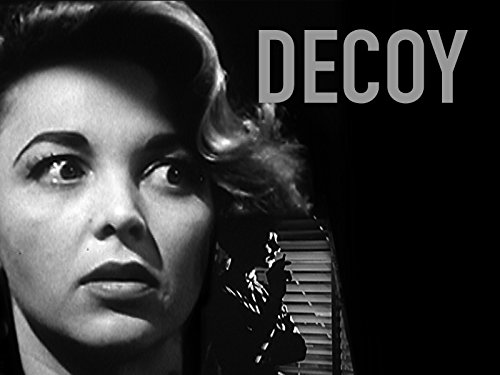
This week, Casey pursues her neighbor and nearly dies.

Episode 1.8 “Escape Into Danger”

(Dir by Teddy Sills, originally aired on December 2nd, 1957)

Casey Jones (Beverly Garland) returns home from a night shift, hoping to get some rest so that she can get over a bad cold.  (I’ve had enough bad colds that I’m fairly confident that Garland herself was suffering from a cold when she filmed this episode and it was written into the script.)  She discovers that her neighbor, Mary (Madeline Sherwood), has hit her abusive and drunken husband across the back of his head.  Mary is convinced that she’s killed her husband and is terrified that she’ll go to jail.  When Casey informs her that her husband is just knocked out and that everything is going to be okay, Mary doesn’t believe her because Casey is a cop and a cop will say anything to make an arrest.  While Casey is in her apartment calling for an ambulance, Mary flees the scene.

Mary’s husband does die but he dies of acute alcohol poisoning so Mary’s off the hook.  (Apparently, this episode take place in a world where assault isn’t a crime.)  Despite her cold, Casey takes to the streets and searches for Mary.  Knowing that Mary is masseuse, Casey checks out all the massage parlors.  In a move that kind of makes me wonder if Casey is really that good at her job, she decides that she might as well get a massage as well.

The woman who gives Casey the massage is Katy Olin (Virginia Kaye), who is Mary’s sister and a bitter ex-con who hates all cops.  While Katy massages Casey, Mary hides in the changing room.  When Casey says that she’s looking for Mary, Katy has Mary sneak out of the dressing room and choke Casey into unconsciousness.  Mary steals Casey’s gun and then makes her escape.

A few thoughts:

First off, after years of being spoiled by shows like Law & Order, I have to say that I was initially surprised that Casey didn’t know that Mary had a sister or that the sister was an ex-con.  But then I remembered that this episode was filmed in 1957, back before all of that information was available at just the touch of a key.

That said, what type of police officer is going to get a massage while on duty?  Even if Casey had looked up from the massage table and seen Mary trying to escape the room, what was Casey going to do?  Chase her through the streets of New York while wearing a towel?  Also, Casey often seems to just drop her purse anywhere, despite the fact that her purse contains a loaded gun.

Third, Katy mentions to Mary that there’s no way for her to leave the room without walking right past Casey.  So, how did Mary get into the room in the first place and how come Casey didn’t notice her when she first arrived?

Fourth, once Casey wakes up, she takes Katy down to the police station.  Katy’s interrogated and refuses to answer any questions.  She asks if she’s being charged with anything and, because she’s not, she’s allowed to go.  Is she not an accessory for hiding Mary and then just standing by while Mary attempted to murder a police officer?

Katy decides that the best thing for Mary to do would be to hide out in her old apartment, the one that is next door to the police officer who Mary just tried to strangle.  (Neither Katy nor Mary appear to be that smart.)  Casey, of course, discovers that two of them hiding there.  She and the neighborhood priest (John McLiam) talk Mary into putting down the gun.  They assure her that she did not kill her husband.  Mary finally believes that Casey is telling the truth….

….which is all good and well except Mary ASSUALTED A POLICE OFFICER!  Indeed, one could argue that what Mary did to Casey counts as attempted murder.  So, really, it seems like Mary should be going to jail regardless.  Unfortunately, we never learn about what happened to Mary after she stop pointing the gun as Casey.  If I was Casey, I would prefer a neighbor who hasn’t tried to kill me.

This episode didn’t really make sense but I’m glad that Casey got over her cold by the end of it.

October True Crime: Hostage (dir by Frank Shields)


First released in 1983, Hostage is an Australian film about Christine (Kerry Mack) and Walter Maresch (Ralph Schicha).

Christine is a young woman who escapes from her abusive father by going on the road with a traveling carnival.  She runs the dart-throwing booth.  It’s a simple life but she’s happy with it.  She has friends and she has freedom.  When Walter, an enigmatic German drifter, joins the carnival, there’s an immediate attraction between him and Christine.  Christine sleeps with him a few times but she makes it clear that she’s not looking for anything serious or permanent.  Walter announces that, if Christine doesn’t marry him, he’s going to shoot himself.  Christine rolls her eyes and leaves his trailer, just to hear a gunshot as she walks away.  At the hospital, Walter refuses to get treated until Christine promises to marry him.

Christine does marry Walter, both to keep him from dying and also because she’s pregnant.  Walter survives his gunshot wound and turns out to be the type of husband who alternates between being wildly romantic and being coldly abusive.  Walter wants to have lot of a children.  He’s upset when Christine gives birth to a girl.  “The next one will be a son!” he announces.  Walter also spends a lot of time complaining about how weak the Australians are compared to the Germans.  And, of course, there’s another huge issue with Walter.

HE’S A NAZI!

Walter is a neo-Nazi.  For whatever reason, it takes Christine forever to figure this out.  Walter drags to Christine to Germany and then gets mad when Christine doesn’t stand along with all of his friends while watching The Triumph of the Will.  Christine opens up Walter’s keepsake box and finds a picture of his father wearing a Nazi uniform and also an iron cross.  Walter’s friends are all blonde Aryan types who are constantly talking about how Germany has lost its way.  And yet Christine doesn’t really seem to get that Walter is a Nazi until Walter starts talking about blowing up buildings and robbing banks.

Eventually, back in Australia, Walter and Christine rob a string of banks and the tabloids are soon describing them as being a modern-day Bonnie and Clyde.  Walter is happy but Christine just wants to grab her daughter and escape from him.  That proves to be easier said than done.  Walter’s not just a Neo-Nazi.  He’s also totally insane….

Amazingly enough, this is based on a true story.  Christine wrote about her ordeal and her book was adapted into Hostage, a film that may look like a typical exploitation film but which is actually a rather engrossing drama about a naive girl who finds herself trapped with a monster.  The film is full of moments that stick with you, like when a policeman comes by Christine’s trailer and manages to totally miss her signals that she’s currently being held, at gunpoint, by Walter.  Kerry Mack and Ralph Schicha both give strong performances as Christine and Walter.  Schicha especially deserves a lot of credit for turning Walter into a believable villain as opposed to just a caricature.  One reason why Walter is so dangerous is because he’s such an idiot and Schicha does a great job of showing what happens when stupidity mixes with confidence.  In one of the film’s more over-the-top moments, Walter and his friend Wolfgang drag Christine to Turkey.  At first, Walter and Wolfgang are cocky but the trip becomes a violent and (literally) bloody disaster.

Hostage brings a real nightmare to life.  Sadly, even after she freed herself of Walter, Christine continued to live a difficult life.  She died of hypothermia in 2019.

Horror Song of the Day: Season of the Witch by Donovan


Since we are now halfway through October, it only seems appropriate to share what may be the most famous (and perhaps the most covered) song about witchcraft, Donavon’s Season of the Witch!

This song was originally recorded in 1966 and it’s gone on to become a Halloween mainstay.  One fan of the song was future director Martin Scorsese, who originally planned to borrow the song’s title for one of his own films.  However, George Romero beat Scorsese out the gate with a film called Season of the Witch and Scorsese ended up renaming his film, Mean Streets.

4 Shots From 4 Horror Films: The 1960s Part Two


This October, I’m going to be doing something a little bit different with my contribution to 4 Shots From 4 Films.  I’m going to be taking a little chronological tour of the history of horror cinema, moving from decade to decade.

Today, we continue the 1960s!

4 Shots From 4 Horror Films

Blood and Black Lace (1964, dir by Mario Bava)

Blood and Black Lace (1964, dir by Mario Bava)

2,000 Maniacs (1964, dir by Herschell Gordon Lewis)

2,000 Maniacs (1964, dir by Herschell Gordon Lewis)

Repulsion (1965, dir by Roman Polanski)

Repulsion (1965, dir by Roman Polanski)

Kill, Baby, Kill (1966, dir by Mario Bava)

Kill, Baby, Kill (1966, dir by Mario Bava)

Horror On The Lens: It Conquered The World (dir by Roger Corman)


“Man is a feeling creature, and because of it, the greatest in the universe….”

Hell yeah!  You tell ’em, Peter Graves!

Today’s Horror on the Lens is 1956’s It Conquered The World.  Graves plays a scientist who watches in horror as his small town and all of the people who he loves and works with are taken over by an alien.  Rival scientist Lee Van Cleef thinks that the alien is going to make the world a better place but Graves understands that a world without individual freedom isn’t one that’s worth living in.

This is one of Corman’s most entertaining films, featuring not only Graves and Van Cleef but also the great Beverly Garland.  Like many horror and science fiction films of the 50s, it’s subtext is one of anti-collectivism.  Depending on your politics, you could view the film as either a criticism of communism or McCarthyism.  Watching the film today, with its scenes of the police and the other towns people hunting anyone who fails to conform or follow orders, it’s hard not to see the excesses of the COVID era.

Of course, there’s also a very persuasive argument to be made that maybe we shouldn’t worry too much about subtext and we should just enjoy the film as a 50s B-movie that was directed with the Corman touch.

Regardless of how interpret the film, I defy anyone not to smile at the sight of ultra-serious Peter Graves riding his bicycle from one location to another.

Here, for your viewing pleasure, is It Conquered The World!


October Positivity: The Moment After (dir by Wes Llewellyn)


1999’s The Moment After opens with the world in a panic.  Millions of people have suddenly vanished into thin air, leaving only their clothes and their loved ones behind.  On a news program, three expects are brought in to discuss what might have happened.  A New Age-y woman argues that “Mother Earth” is eliminating overpopulation.  A wild-eyed man argues that people have been abducted by UFOs.  And finally, a man with a neatly trimmed beard argues that it’s the rapture.  The bearded man is dismissed as being a crank.

Two FBI agents — Adam Riley (David A.R. White) and Charles Baker (Kevin Downes) — are assigned to investigate the disappearances.  Charles is himself shaken because he knew a few people who disappeared.  As they drive around the city and talk to people, they hear the same story.  People who went to church regularly and were Christian vanished while their less faithful loved ones watched.  Adam comes to suspect that there might be something to the Rapture Theory.  Charles, bitter because his wife recently suffered a miscarriage, has no time for it.

As often happens in a crisis, the government grows heavy-handed and sinister.  The President announced that he’s going to follow the lead of Europe and “suggest” that everyone get a chip implanted in their hand.  Charles gets the chip without hesitation.  Adam keeps finding excuses to put it off, even though he’s mandated to get one as a federal employee.  With the country turning into an authoritarian dystopia, Charles and Adam are assigned to track down a renegade preacher (Brad Heller), who is telling his followers not to get chipped.

Stories about the end time have always been popular when it comes to faith-based films.  A lot of that is because the Book of Revelations is written in such a way that there’s a lot of different ways that one can interpret it.  As a result, it’s always interesting to see how “the mark of the Beast,” will be represented in these films.  Sometimes, it’s a tattoo.  Sometimes, it’s an invisible mark that only demons can see.  In this one, it’s a chip that works as a credit card.  And while it’s easy to scoff at this film’s conspiracy theories and the shots of people staring at their palms, some of us still remember how, during the COVID lockdowns, there were more than a few people in positions of influence who argued that the citizenry shouldn’t be allowed in stores or restaurants or anywhere else unless they could show proof they had gotten the vaccine and kept up with the boosters.  There were even some who said that the National Guard should go door-to-door and force the shot on people.  (For the record, I did get the vaccine but, when I started hearing about monthly boosters and all that other stuff, I decided that one shot was more than enough for me.)  There is definitely an authoritarian impulse out there, one that comes out whenever there’s a crisis.  One reason why films like this one continue to find an audience is because real-life governments often behave like the dictatorship portrayed in The Moment After.  Of course, in the movie, everyone can at least say they were influenced by the Devil.  In real life, it just comes down to pettiness and a need to tell other people what to do.

As for The Moment After, it’s a low-budget but fairly well-done thriller, one that keeps the preaching to a minimum and doesn’t feature a lot of the problematic elements that one tends to find in movies like this.  White and Downes both give effective performances.  It avoids the histrionics that tend to define a lot of other apocalyptic films.  This is not a film that’s going to convert anyone but it does a good enough job creating an atmosphere of paranoia and growing dread that it works as a thriller.

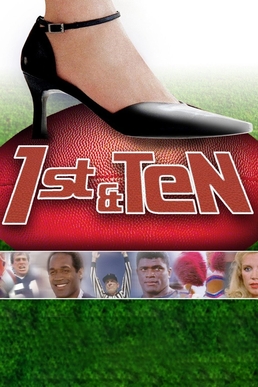
Late Night Retro Television Review: 1st & Ten 2.1 “The Rookies”


Welcome to Late Night Retro Television Reviews, a feature where we review some of our favorite and least favorite shows of the past! On Wednesdays, I will be reviewing 1st and Ten, which aired in syndication from 1984 to 1991. The entire series is streaming on Tubi.

This week, the 2nd season begins!

Episode 2.1 “The Rookies”

(Dir by Bruce Seth Green, originally aired on August 25th, 1986)

It’s time for another season of Bulls football and …. hey, where did everyone go?

As soon as the opening credits for the first episode of the second season started, I noticed that there were quite a few people missing.  Delta Burke, Reid Shelton, Prince Hughes, and Cliff Frazier were all listed.  However, not listed were Geoffrey Scott, Sam Scarber, Clayton Landey, Ruta Lee, Marshall R. Teague, Michael V. Gazzo, and Robert Miranda.  That’s the majority of the cast!

Instead of Geoffrey Scott’s veteran quarterback Bob Dorsey, we now have Jason Beghe as rookie quarterback Tom Yinessa.  We now have Stan Kamber as assistant coach Fred Griner.  We now have Marcus Allen as rookie running back Rick Lambert.  And, as the veteran running back T.D. Parker, we have …. O.J. SIMPSON!

Oh yeah, this isn’t going to be awkward.

O.J, only appears for a few minutes in this episode.  As T.D. Parker, he talks to his wife about how much he loves playing football and how he feels that he has one more season left in him as the Bulls’s starting running back.  Uhmm …. I thought Carl Witherspoon was the Bulls’s running back.  All last season, Carl was the Bulls’s running back.  What the Hell is T.D. Parker talking about?  Is he delusional?  Maybe he’s a crazed fan who just thinks that he was the running back last year.  All of that said, T.D. does come across as being a very nice guy and definitely someone who you can trust to slash his way through all of the ego and hype surrounding professional football.

(Probably not coincidentally, the other Bulls assistant coach is played by A.C. Cowlings, who was a friend of O.J.’s.  Remember A.C?)

Anyway, this episode deals with rookie training camp.  While the veterans get a week off, rookies like Tom Yinessa try out for the Bulls.  Yinessa played football in the Army and the only reason he’s being given a tryout is because “Captain Pete” is a friend of Denardo’s.  Denardo is shocked to discover that Yinessa is a good quarterback but he’s already got two veteran quarterbacks and Diana has signed a deal to bring in a third.  Denardo is forced to cut Yinessa.  Yinessa smashes the mirror in Denardo’s office and says that he’s done Denardo a favor because now Denardo won’t have to face what’s he done.  Okay, weirdo….

Yinessa returns to his job at the auto yard and Bulls football continues!  While hotshot rookie Rick Lambert continues to ask for more money before he’ll even show up at training camp, Diana is informed that the players are threating to strike if the League institutes mandatory drug testing.  Diana says a strike will bankrupt the team.  Why are the Bulls always on the verge of going bankrupt?  Diana needs to hire better people to look after the books.

Here’s my prediction for the rest of the season!  Yinessa will be back because he’s in the opening credits.  And, whatever problems may come up, O.J. Simpson will always cut right to the heart of the matter.

As for this particular episode, it got the job done.  It re-introduced us to the team and, even more importantly, it seemed to signal that all of the nonsense from the first season — the Mafia, Diana’s ex-husband and all the rest of it — was over with.  The show is ready to move on so let’s give it more of a chance than Coach Denardo gave Tom Yinessa.

A Horror Blast From The Past: Suspense (dir by Lois Weber and Phillips Smalley)


Suspense is a ten-minute blast from the past that comes to us all the way from 1913.

In this film, the Woman (played by Lois Weber) and her baby are menaced by the Tramp (Sam Kaufman), a sinister figure who cuts her phone lines and breaks into her home.  While the Woman tries to protect herself, the Husband (Val Paul) rushes home to save his wife.

Suspense was one of the first thrillers and it introduced many elements that are still used to today, including the cut phone lines and the isolated location.  This was also one of the first films to use the split screen as a narrative technique.  There are many modern horror films that owe a debt to Suspense, whether the filmmakers realize it or not.

Suspense was written and directed by Lois Weber, who is widely acknowledged as being America’s first female filmmaker.