4 Shots From 4 Films is just what it says it is, 4 shots from 4 of our favorite films. As opposed to the reviews and recaps that we usually post, 4 Shots From 4 Films is all about letting the visuals do the talking.
Two months ago, Lisa reviewed The Pride of the Yankees. Two days ago, Gary reviewed Take Me Out To The Ballgame. Erin just explained to me why the Orioles are going to lose this season and the Rangers are going to win. Opening Day is almost here.
These 4 shots from 4 films are dedicated to baseball lovers everywhere.
4 Shots From 4 Films
The Natural (1984, directed by Barry Levinson)
Field of Dreams (1989, directed by Phil Alden Robinson)
1) President Dwayne Elizondo Mountain Dew Herbert Camacho (Terry Crews) in Idiocracy (2006)
Sure, it’s easy to be critical of President Comacho. During his presidency, there was famine, pestilence, death, and a total economic collapse. His decision to irrigate the nation’s crops with sports drink called Brawndo did not help. When Secretary of Interior Not Sure (Luke Wilson) decided to use water on the crops, instead of Brawndo, President Comacho sentenced him to die in a monster truck rally. President Comacho did many things that we might disagree with but he was just giving the people what they want. During the Comacho administration the people were happy. Stupid but happy. To his credit, when shown filmed proof that the water making crops grow better than Brawndo, President Comacho pardoned Not Sure and appointed him Vice President. A good President always surrounds himself with the best and the brightest people available.
2) President Thomas “Tug” Benson (Lloyd Bridges) in Hot Shots! Part Deux (1993)
What can we say about President Thomas “Tug” Benson that hasn’t already been said? The former admiral did many controversial things as President. He complained that his ambassadors always left the country right after he appointed them. He nearly invaded Minnesota. He mistook the first lady for a spy. He hit every other living President with a shovel (except for Gerald Ford, who just fell down on his own). But what other President could swim to Iraq and personally engage Saddam Hussein in a light saber duel? To quote President Benson, “We’ll do this the old Navy way. First man to die, loses!”
3) President Chet Roosevelt (John Ritter) in Americathon (1979)
When Chet Roosevelt is elected president, the former governor of California brings a sunny disposition, an optimistic outlook, and an encyclopedic knowledge of affirmative sayings to the White House. America needs it because all of the oil has dried up, many of its citizens are living out of their cars, and a cartel of wealthy Native Americans are threatening to repossess the entire country unless their money is paid back. How does President Roosevelt save the country? First, he smokes a joint. After that, he puts together a telethon — an Americathon — to raise the money to save the country! Teddy and FDR would be proud!
4) President Taffy Dale (Natalie Portman) in Mars Attacks! (1996)
At the end of Mars Attacks!, 15 year-old Taffy Dale succeeds to the presidency after her father, President James Dale, is killed the Martians. That may not be constitutional and Taffy is legally too young to serve but since there are only 10 people left alive at the movie and Tom Jones doesn’t want the job, an exception to the rules can be made. By awarding the medal of honor to Richie Norris and his grandmother, President Taffy Dale lets those 10 people know that America will rebuild.
5) President John “Bluto” Blutarsky (John Belushi) in National Lampoon’s Animal House (1978) and Where Are They Now?: A Delta Alumni Update (2003)
2016 is an election year and things are looking pretty grim right now. It’s enough to make you throw your hands up in frustrating and demand that someone push the reset button. However, things could always be worse. From the world of film, here are 8 President so incompetent, corrupt, and sometimes murderous that they will make you long for the dull mediocrity of a Jeb Bush or a Martin O’Malley.
1) The President (William Devane) in The Dark Knight Rises (2012)
You’re the leader of the free world and a masked terrorist has just launched a deadly attack on a major U.S. city. He has blown up a major sporting event on national television. He has killed the mayor. He is allowing a crazy sociopath to preside over show trials. The terrorist demands that you neither send troops into the city nor do you aid anyone who is trying to leave. What do you? If you are the President played by William Devane in The Dark Knight Rises, you say, “Okay,” and then breathe a sigh of relief when Batman turns out not to be dead after all. William Devane also played JFK in The Missiles of October and President James Heller on 24. Neither of them would have backed down to Bane as quickly as the President in The Dark Knight Rises.
2) The President (Billy Bob Thornton) in Love Actually (2003)
This President thinks that he can bully the world until he makes the mistake of getting on the bad side of the new British Prime Minister (Hugh Grant). How are you going to call yourself the leader of the free world when even Hugh Grant can make you look like a fool?
3) The President (Donald Pleasence) in Escape From New York (1981)
Hey, Mr. President, when Snake Plisskin nearly gets killed trying to save your life, you might want to try showing a little gratitude. Escape From New York ends with Snake asking The President who he feels about all the people who died rescuing him from New York. When the President can only mutter a few words of regret, Snake responds by destroying the tape that would have presumably prevented World War IV. Way to go, Mr. President! Would it have killed you to shed a few crocodile tears, at least over the fate of Cabbie?
4) The President (Cliff Robertson) inEscape From L.A. (1996)
The President from Escape From New York was practically Lincolnesque compared to the jerk who succeeded him. A theocrat who claimed to have an open line to God, this President banned smoking, drinking, cursing, red meat, guns, atheism, pre-marital sex, and everything else that made life fun. Anyone who disagreed got exiled to the island of California. Good thing that Snake Plisskin was still around to set things straight, even if it did mean that Florida ended up getting conquered by Cuba. Why doesn’t Snake ever run for President?
5) President Thomas J. Whitmore (Bill Pullman) in Independence Day (1996)
In a word, overrated. Yes, President Whitmore did lead the army that repealed the alien invaders but he would not have had to do that in the first place if he had prevented the Earth from being invaded in the first place. How many warning signs did the Whitmore administration ignore until it was too late? And how much funding did his administration cut from the military that the Air Force was left in such poor shape that they could get shown up by Randy Quaid in a crop duster? As for Whitmore’s famous speech and the battle that followed, a sequel to Independence Day is coming in June so he must not have done that good of a job of scaring the aliens off.
6) President James Dale (Jack Nicholson) in Mars Attacks! (1996)
At least President Whitmore got a chance to redeem himself by leading the battle against the invaders. James Dale did not even get that far. After foolishly believing everyone who told him that the aliens came in peace, he made the mistake of offering his hand in friendship and ended up with a flag sticking out of his chest.
7) President Alan Richmond (Gene Hackman) in Absolute Power (1997)
Not only did President Richmond think that he could get away with murder, he also thought he could outsmart Clint Eastwood. Big mistake. Clint Eastwood is no Hugh Grant.
8) President Merkin Muffley (Peter Sellers) in Dr. Strangelove: Or How I Learned To Stop Worrying And Love The Bomb (1964)
Mixing the raw charisma of Adlai Stevenson and the phone skills of Bob Newhart, President Merkin Muffley attempts to stop the end of the world and fails miserably. He even allows the Soviet ambassador to get a picture of the Big Board! But don’t worry. President Muffley may have failed to prevent nuclear war but he will not allow there to be a mineshaft gap!
When this election year get you down, just remember: things could always be worse!
So, you want to be a rock and roll star? Then listen now to what I say: just get an electric guitar and take some time and learn how to play. And when your hair’s combed right and your pants fit tight, it’s gonna be all right.
If you need any more help, try watching these four films:
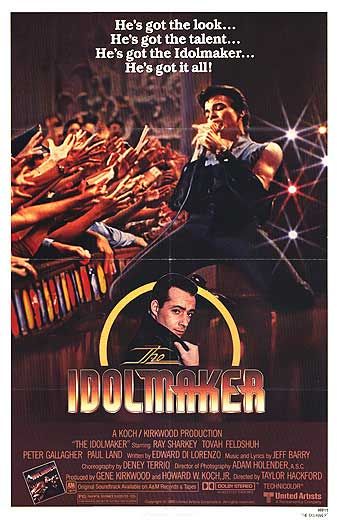
The Idolmaker (1980, directed by Taylor Hackford)
The Idolmaker is a movie that asks the question, “What does it take to be a star? Who is more interesting, the Svengalis or the Trilbys?” The year is 1959 and Vinny Vacari (Ray Sharkey, who won a Golden Globe for his performance but don’t let that dissuade you from seeing the movie) is a local kid from New Jersey who dreams of being a star. He has got the talent. He has got the ambition and he has got the media savvy. He also has a receding hairline and a face like a porcupine.
Realizing that someone who looks like him is never going to make hundreds of teenage girls all scream at once, Vinny instead becomes a starmaker. With the help of his girlfriend, teen mag editor Brenda (Tovah Feldshuh) and a little payola, he turns saxophone player Tomaso DeLorussa into teen idol Tommy Dee. When Tommy Dee becomes a star and leaves his mentor, Vinny takes a shy waiter named Guido (Peter Gallagher) and turns him into a Neil Diamond-style crooner named Cesare. Destined to always be abandoned by the stars that he creates, Vinny continually ends up back in the same Jersey dive, performing his own songs with piano accompaniment.
The Idolmaker is a nostalgic look at rock and roll in the years between Elvis’s induction into the Army and the British invasion. The Idolmaker has some slow spots but Ray Sharkey is great in the role of Vinny and the film’s look at what goes on behind the scenes of stardom is always interesting. In the movie’s best scene, Tommy performs in front of an audience of screaming teenagers while Vinny mimics his exact moments backstage.
Vinny was based on real-life rock promoter and manager, Bob Marcucci. Marcucci was responsible for launching the careers of both Frankie Avalon and Fabian Forte. Marcucci served as an executive producer on The Idolmaker, which probably explains why this is the rare rock film in which the manager is more sympathetic than the musicians.
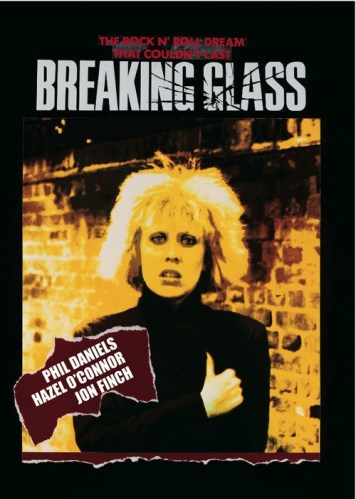
Breaking Glass (1980, directed by Brian Gibson)
At the same time that TheIdolmaker was providing American audiences with a look at life behind-the-scenes of music stardom, Breaking Glass was doing the same thing for British audiences.
In Breaking Glass, the idolmaker is Danny (Phil Daniels, who also starred in Quadrophenia) and his star is an angry New Wave singer named Kate (Hazel O’Connor). Danny first spots Kate while she is putting up flyers promoting herself and her band and talks her into allowing him to mange her. At first, Kate refuses to compromise either her beliefs or her lyrics but that is before she starts to get famous. The bigger a star she becomes, the more distant she becomes from Danny and her old life and the less control she has over what her music says. While her new fans scare her by all trying to dress and look like her, Kate’s old fans accuse her of selling out.
As a performer, Hazel O’Connor can be an acquired taste and how you feel about Breaking Glass will depend on how much tolerance you have for her and her music. (She wrote and composed all of the songs here.) Breaking Glass does provide an interesting look at post-punk London and Jonathan Pryce gives a good performance as a sax player with a heroin addiction.
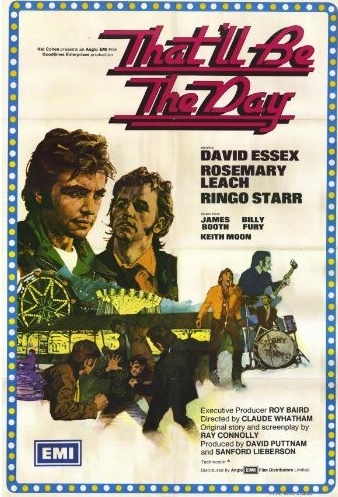
That’ll Be The Day (1973, directed by Claude Whatham)
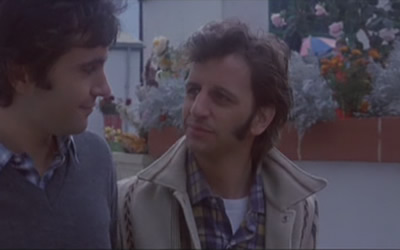
Real-life teen idol David Essex plays Jim MacClaine, a teenager in 1958 who blows off his university exams and runs away to the Isle of Wright. He goes from renting deckchairs at a resort to being a barman to working as a carny. He lives in squalor, has lots of sex, and constantly listens to rock and roll. Eventually, when he has no other choice, he does return home and works in his mother’s shop. He gets married and has a son but still finds himself tempted to abandon his family (just as his father previously abandoned him) and pursue his dreams of stardom.
Based loosely on the early life of John Lennon, the tough and gritty That’ll Be The Day is more of a British kitchen sink character study than a traditional rock and roll film but rock fans will still find the film interesting because of its great soundtrack of late 50s rock and roll and a cast that is full of musical luminaries who actually lived through and survived the era. Billy Fury and the Who’s Keith Moon both appear in small roles. Mike, Jim’s mentor and best friend, is played by Ringo Starr who, of all the Beatles, was always the best actor.
That’ll Be The Day ends on a downbeat note but it does leave the story open for a sequel.
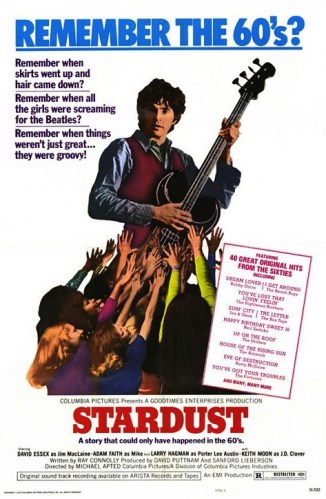
Stardust (1974, directed by Michael Apted)
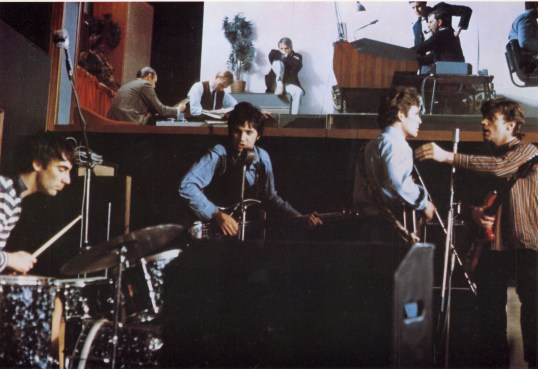
Stardust continues the story of Jim MacClaine. Jim hires his old friend Mike (Adam Faith, replacing Ringo Starr) to manage a band that he is in, The Straycats (which includes Keith Moon, playing a far more prominent role here than in That’ll Be the Day). With the help of Mike’s business savvy, The Stray Cats find early success and are signed to a record deal by eccentric Texas millionaire, Porter Lee Austin (Larry Hagman, playing an early version of J.R. Ewing).
When he becomes the breakout star of the group, Jim starts to overindulge in drugs, groupies, and everything that goes with being a superstar. Having alienated both Mike and the rest of the group, Jim ends up as a recluse living in a Spanish castle. Even worse, he gives into his own ego and writes a rock opera, Dea Sancta, which is reminiscent of the absolute worst of progressive rock. Watching Jim perform Dea Sancta, you understand why, just a few years later, Johnny Rotten would be wearing a homemade “Pink Floyd Sucks” t-shirt.
Stardust works best as a sad-eyed look back at the lost promise of the 1960s and its music. Watch the movie and then ask yourself, “So, do you really want to be a rock and roll star?”
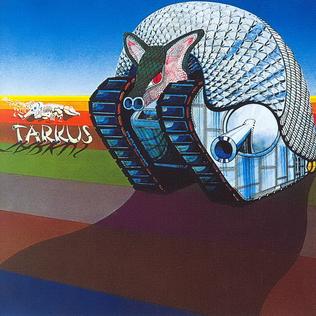
When I was growing up, I used to watch my Dad and his band rehearse in our den. Hanging on the wall, directly behind the dummer, was a poster of a strange armadillo that was also a tank. I later found out that the armadillo was named Tarkus and he was the star of his very own album by a group called Emerson, Lake, and Palmer.
I just heard the very sad news that the Emerson in Emerson, Lake, and Palmer, the legendary Keith Emerson, died yesterday. He was 71 years old.
Whether it was as a member of the Nice, ELP, the Best, or the Keith Emerson Band or as a solo soundtrack artist, Keith Emerson is one of the men who made synthesizers cool. After starting out playing a Hammond organ, Emerson soon discovered and popularized the Moog synthesizer. In doing so, he changed music forever.
Rest in peace, Maestro Emerson and thank you for the music.
“What the fuck do you call 125 murders in 5 years?”
“Work in progress.”
With that line, Dolph Lundgren claimed the role of Frank Castle as his own.
Who is Frank Castle? A former cop, he was mistakenly believed to be dead after mobsters killed his wife and children. He has spent five years waging a one man war on the Mafia. When not killing the criminal element, he spends his time naked in the sewers and having conversations with God.
“Come on God,” he says, “answer me. For years I’m asking why, why are the innocent dead and the guilty alive? Where is justice? Where is punishment? Or have you already answered, have you already said to the world here is justice, here is punishment, here, in me.”
Everyone knows him as the Punisher. Only his former partner, Detective Berkowtiz (Lou Gossett, Jr.) suspects that the Punisher is actually Frank Castle.
Frank has been so effective in his one-man war on crime that the Mafia is now permanently weakened. Plotting to take over city’s underworld, the Yakuza arrives in New York City. Their leader, Lady Tanaka (Kim Miyori), kidnaps the son of Gianni Franco (Jereon Krabbe) and threatens to kill him unless Franco turns his operation over to her. The Punisher and Franco team up to rescue Franco’s son and to destroy the Yakuza. Even as the two works together, the Punisher makes sure that Franco knows that he will be punished for being a criminal.
“There’s a limit to revenge, you know,” Franco says.
“I guess I haven’t reached mine yet,” The Punisher answers.
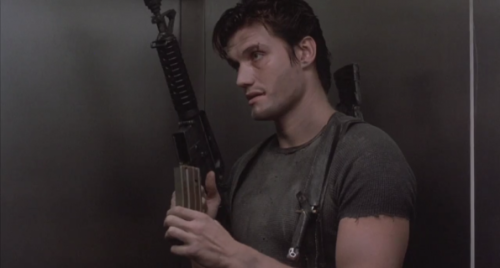
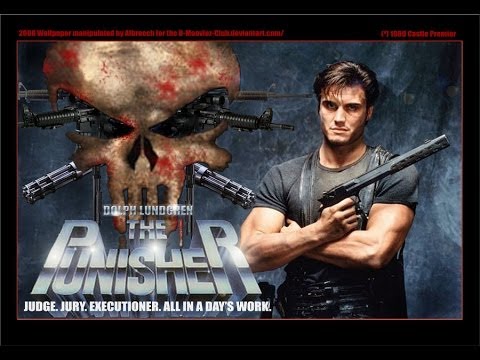
With the current popularity of the Marvel Cinematic Universe, it is easy to forget that, in the 80s and 90s, almost all Marvel movies were straight-to-video affairs like this one, made with budgets so low that they could not even afford a Stan Lee cameo. The Punisher was one of the few halfway entertaining ones. It may not be a great movie but when compared to the 1990 version of Captain America or the Roger Corman-produced Fantastic Four, The Punisher looks like a masterpiece. When this movie was first released, The Punisher was one of the most popular of Marvel’s characters, starring in three separate titles. While the movie embraces the Punisher’s violent methods and reactionary worldview, it also make some unnecessary chances to the character, not only tweaking his origin story by making Frank a former cop (instead of a grieving father whose family fell victim to random mob violence) but also doing away with The Punisher’s iconic skull shirt.
Marvel’s Punisher
Dolph Lundgren’s Punisher
Can a punisher without a skull still be The Punisher?
Surprisingly, he can. Dolph Lundgren is not only physically right for the role but he is also believable as a psychologically damaged vigilante. This Punisher could teach Deadpool a thing or two. After the Punisher kills one gangster in front of the man’s terrified son, he tells him, “Stay a good boy and grow up to be a good man. Because if you don’t, I’ll be waiting.” When the boy aims his father’s gun at him, the Punisher places his forehead against the barrel and says, “Do it.” When you consider that The Punisher was originally introduced, in the pages of The Amazing Spider-Man, as someone who would shoot jaywalkers because they had broken the law, you can see that Lundgren’s performance really gets to the twisted soul of the character.
Even without the skull, Lundgren’s Punisher is still far superior to the versions played by Tomas Jane and Ray Stevenson. When Jon Bernthal plays the role in the second season of Daredevil (and officially brings the character into the MCU), he will hopefully have learned some lessons from watching Dolph Lundgren.
4 Shots From 4 Films is just what it says it is, 4 shots from 4 of our favorite films. As opposed to the reviews and recaps that we usually post, 4 Shots From 4 Films is all about letting the visuals do the talking.
In 1978, George Harrison co-founded HandMade Films to finance Monty Python’s The Life of Brian. The company continued to produce films through the 80s and helped to reinvigorate the British film industry. All of the shots below come from HandMade films and credit George Harrison as executive producer.
4 Shots From 4 Films
Monty Python’s Life of Brian (1979, directed by Terry Jones)
Today would have been George Harrison’s 73rd birthday. In honor of his memory and in tribute to an artist who was taken from us far too young, here he is performing While My Guitar Gently Weeps with Eric Clapton.
“With enough time and enough money, you could spend the rest of your life following the summer around the world.”
That’s the idea behind The Endless Summer, Bruce Brown’s classic surfing film. The Endless Summer follows two surfers, Mike Henson and Robert August, as they make their way across the world, following the summer, exploring virgin beaches, and finding new waves to conquer. The journey starts in California and takes them to Africa, Australia, New Zealand, Tahiti, and finally to Hawaii. Along the way, they discover some surprising things about the world circa 1965. For instance, in Senegal, it costs 30 dollars to stay overnight at a hotel. Even worse, it costs a dollar to get a cup of coffee and a gallon of gas! They also teach some of the natives that they meet how to surf. As they leave one beach in Africa, Brown says that the local tribe now knows only one English phrase: “Hang ten!”
The Endless Summer is usually considered to be a documentary but mostly, it is just director Bruce Brown talking about the history of surfing and how much he loves it. The only soundtrack to be heard in the film is Brown’s narration and the music of the Sandals, a California surf band. Brown’s narration is casual and conversational, mixing corny jokes with hepcat slang and ruminations on the philosophy behind surfing. He also takes the time to explain what a bikini is.
Though The Endless Summer is usually thought of as being a surfing film, it’s also a rock film. During the early 1960s, surf culture and rock culture were largely interchangeable. Surfing films were a huge influence on rock and roll because surf music was born at their screenings. When a filmmaker like Bruce Brown would screen one of his films, he would often provide live narration while playing either west coast jazz or a rock instrumental in the background. For many future aspiring musicians, going to the screening of a surf film would also be their introduction to bands like the Fireballs, the Revels, and the Ventures. Without surf films, there would have been no surf music and no musicians inspired by it.
The Endless Summer may only feature one band on the soundtrack but it captures the free spirit of mid-60s rock and roll. It is a seminal film that will be enjoyed even by people like me who have never surfed a day in their life.
Wade Wilson (Ryan Reynolds) is a mercenary with a sense of humor and a heart of not quite gold. When he is diagnosed with terminal cancer, he leaves his girlfriend, Vanessa (Morena Baccarin), and agrees to allow a secret organization to experiment on him. They will cure his cancer but, in return, they expect him to serve as a super powered slave for their own clients. After being severely disfigured by the sadistic Ajax (Ed Skrein), Wilson develops a super human healing ability. Eventually, Wilson escapes but now fears that he’s too twisted to return to Vanessa. Taking on the identity of Deadpool, Wilson tries to track down and get his revenge on Ajax (real name: Francis).
From the moment I heard that 20th Century Fox was producing a Deadpool film, I had only one request: “Don’t fuck it up.”
After all, there is a reason why Deadpool is one of the most popular characters to come out of Marvel’s later period. He’s certainly the best thing that Rob Liefeld has ever had a hand in creating. First introduced in New Mutants and subsequently used in the various X-books before getting his own ground-breaking series, Deadpool has earned the right to be known as “the merc with a mouth.” Deadpool was popular because, out of all the characters in the Marvel Universe, he alone understood that he was in a comic book. He would frequently break the fourth wall and talk about how ridiculous life as a comic book antihero was. At a time when almost all other super powered characters were presented as being grim and troubled, Deadpool was the often vulgar antidote to comic books that took themselves too seriously.
(My favorite Deadpool moment was when Deadpool had been once again incorrectly assumed dead. When Blind Al told Weasel that Deadpool was dead, the footnote at the bottom of the panel read, “Guess the series is over!”)
I saw Deadpool last weekend.
They did not fuck it up.
My biggest fear was that the Deadpool movie would present a neutered or toned down Deadpool but there was no need to worry. Though the film’s plot may be a standard origin story with a revenge subplot tossed in, Deadpool distinguishes itself by staying true to the character’s anarchistic and self-referential humor. This is not a case of Dolph Lundgren putting on a trenchcoat, driving a motorcycle, and calling himself the Punisher. And it is certainly not a case of the strange character that Ryan Reynolds played in X-Men Origins who was supposed to be Deadpool but definitely was not. Deadpool allows Deadpool to be Deadpool, right down to the red uniform, the broken fourth wall, and the R-rated humor and violence. Deadpool earns its R rating and wears it as a badge of honor This is not a movie for children. Everything that most heroes do and say off-camera, Deadpool does and says for the entire audience to see and hear.
That’s not Deadpool!
That’s Deadpool!
Deadpool ends with the promise of a sequel, perhaps one that will include Cable. Since Cable is one of my least favorite Marvel characters, I hope that the sequel will at least see the return of Colossus (rendered by CGI and voiced by Stefan Kapicic) and Negasonic Teenage Warhead (Briana Hildebrand), both of whom make welcome appearances here. Negasonic Teenage Warhead especially deserves her own spin-off film. Let her blow up shit for two hours. I’ll watch.
Also, if the sequel has to feature Cable, I hope it will also include Dr. Bong. Deadpool needs all the help he can get!


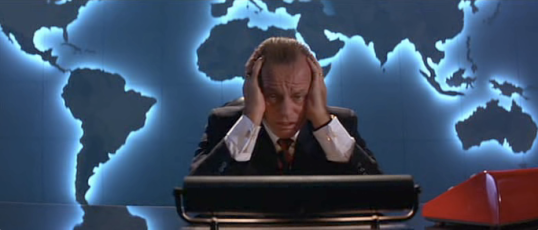
 You’re the leader of the free world and a masked terrorist has just launched a deadly attack on a major U.S. city. He has blown up a major sporting event on national television. He has killed the mayor. He is allowing a crazy sociopath to preside over show trials. The terrorist demands that you neither send troops into the city nor do you aid anyone who is trying to leave. What do you? If you are the President played by William Devane in The Dark Knight Rises, you say, “Okay,” and then breathe a sigh of relief when Batman turns out not to be dead after all. William Devane also played JFK in The Missiles of October and President James Heller on 24. Neither of them would have backed down to Bane as quickly as the President in The Dark Knight Rises.
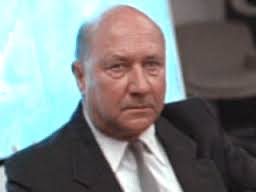 Hey, Mr. President, when Snake Plisskin nearly gets killed trying to save your life, you might want to try showing a little gratitude. Escape From New York ends with Snake asking The President who he feels about all the people who died rescuing him from New York. When the President can only mutter a few words of regret, Snake responds by destroying the tape that would have presumably prevented World War IV. Way to go, Mr. President! Would it have killed you to shed a few crocodile tears, at least over the fate of Cabbie?
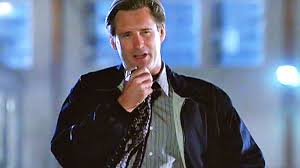 In a word, overrated. Yes, President Whitmore did lead the army that repealed the alien invaders but he would not have had to do that in the first place if he had prevented the Earth from being invaded in the first place. How many warning signs did the Whitmore administration ignore until it was too late? And how much funding did his administration cut from the military that the Air Force was left in such poor shape that they could get shown up by Randy Quaid in a crop duster? As for Whitmore’s famous speech and the battle that followed, a sequel to Independence Day is coming in June so he must not have done that good of a job of scaring the aliens off.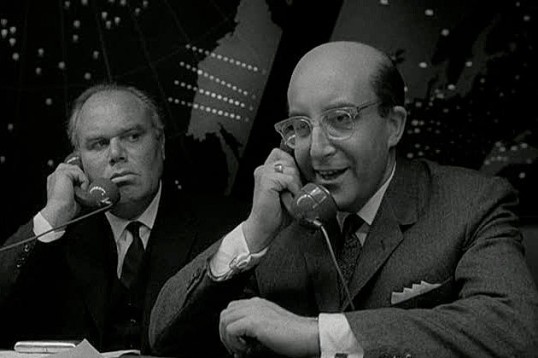

 “What the fuck do you call 125 murders in 5 years?”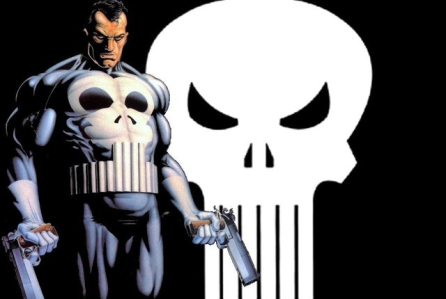

 “With enough time and enough money, you could spend the rest of your life following the summer around the world.”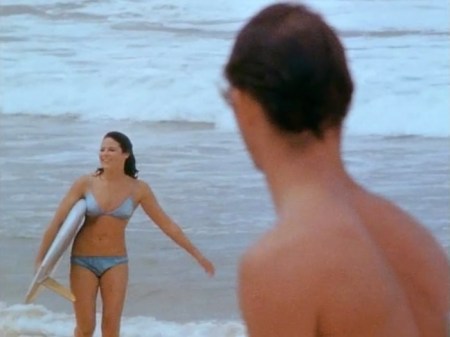

 Wade Wilson (Ryan Reynolds) is a mercenary with a sense of humor and a heart of not quite gold. When he is diagnosed with terminal cancer, he leaves his girlfriend, Vanessa (Morena Baccarin), and agrees to allow a secret organization to experiment on him. They will cure his cancer but, in return, they expect him to serve as a super powered slave for their own clients. After being severely disfigured by the sadistic Ajax (Ed Skrein), Wilson develops a super human healing ability. Eventually, Wilson escapes but now fears that he’s too twisted to return to Vanessa. Taking on the identity of Deadpool, Wilson tries to track down and get his revenge on Ajax (real name: Francis).


 Through the Shattered Lens