Great Moments In Character Actor History: Wilford Brimley on Seinfeld


Though he is best known today for telling diabetics to “check your blood sugar and check it often,” Wilford Brimley was one of the best no-nonsense tough guys in the movies.  Back in the day, no one played gruff and plainspoken as well as Wilford Brimley.  Whether he was playing a senior citizen in Cocoon, a U.S. attorney in Absence of Malice, or a stern father figure in countless movies and TV shows, Wilford Brimley was the epitome of an honest, upright, no bullshit authority figure.  It has been a while since Brimley appeared onscreen but anyone who grew up in the 80s and 90s can remember hearing his distinctive voice and fearing that, somehow, Wilford Brimley knew everything that he had ever done wrong.

Wilford Brimley played many roles but, for me, he will always be Postmaster General Henry Adkins in The Junk Mail episode of Seinfeld.  In this episode, Kramer announces that he is no longer going to accept any more junk mail and dares to suggest that we might not need a postal service at all.  Who better to set Kramer straight than the U.S. Postmaster General, Henry Adkins?  Even if it means having to put off his golf game, Henry is not going to let anyone make a joke out of the U.S. Postal Service.

As Henry himself explains, “I’m a postmaster but I’m also a general and it’s the job of a general to, by God, gets things DONE!”

In the video below, Henry Adkins enters at the 1:17 mark.

After watching this great moment in character actor history, you will never again complain about getting a pottery barn catalogue!

TAMI Part 2: The Big T.N.T. Show (1966, directed by Larry Peerce)


In 1964, American International Pictures released the first concert film, The T.A.M.I. Show.  After the success of T.A.M.I, AIP followed up with a second concert film.  This one would be shot in front of a live audience at Los Angeles’s Moulin Rouge club on the night of November 29th, 1965.  The line-up included Ray Charles, Petula Clark, The Lovin’ Spoonful, Bo Diddley, Joan Baez, The Ronettes, Roger Miller, The Byrds, Donavon, and Ike and Tina Turner.  Phil Spector was recruited to produce the show and he brought with him a live orchestra.  Conducting the orchestra and serving as the night’s emcee was The Man From UNCLE‘s David McCallum.

Originally announced as The T.A.M.I. Show Part II, the title was briefly changed to This Could Be The Night (after a song written by Spector and Harry Nilsson and performed by The Modern Folk Quartet) until AIP finally went with The Big TNT Show, an appropriate title considering the explosive performances that were recorded that night.  The Big TNT Show also recorded the growing division between the rock and roll of the 50s and early 60s and the music of the emerging counter culture, with Ray Charles, Bo Diddley, and Ike Turner sharing the same stage as The Byrds and Donavon.

In one of the show’s best moments, Joan Baez sings You’ve Lost That Loving Feeling while Phil Spector accompanies her on piano.

Other highlights include the Byrds performing Turn, Turn, Turn,

Roger Miller performing his novelty hit King of the Road,

Petula Clark singing Downtown,

The Ronettes performing Be My Baby,

Donavon’s Universal Soldier,

and Ike and Tina Turner’s entire set.

At the end of the film, the viewers are told to “be sure to tune in for next year’s show!” but, one year later, both the world and music would be very different.  The Big TNT Show captures that one final moment before things changed forever.

No Safe Space: Drunk Stoned Brilliant Dead: The Story Of The National Lampoon (2015, directed by Douglas Tirola)


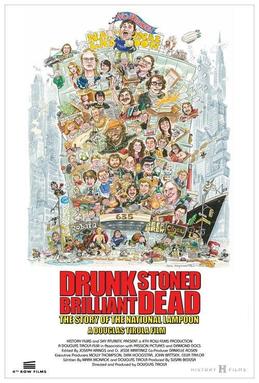
Drunk_Stoned_Brilliant_Dead_PosterThe documentary Drunk Stoned Brilliant Dead pays tribute to National Lampoon.  Founded in 1970, National Lampoon was published for 28 years and, at the height of its popularity, its sensibility redefined American comedy.  When it came to National Lampoon, nothing was sacred and nothing was off-limits.  The success of National Lampoon led to a stage show called Lemmings and The National Lampoon Radio Hour, which featured everyone from John Belushi and Bill Murray to Chevy Chase and Harold Ramis.  Michael O’Donoghue, famed for his impersonations of celebrities having needless inserted into their eyes, went from writing for the Lampoon to serving as Saturday Night Live‘s first head writer.  National Lampoon’s Animal House, Vacation, and Caddyshack are three of the most influential film comedies ever made.  Everyone from P.J. O’Rourke to John Hughes to The Simpsons‘ Al Jean got their start at National Lampoon.

As influential as it was, National Lampoon is a magazine that would not be able to exist today’s world.  Just looking at the cover of most issues of National Lampoon would reduce today’s special little snowflakes to the point of hysteria.  In Drunk Stoned Brilliant Dead, National Lampoon‘s publisher claims that the Lampoon ultimately ceased publication because the religious right threatened to boycott any company that advertised in the magazine.  Today, it would be the “safe space” crowd complaining that the magazine did not come with proper trigger warnings.  Lena Dunham would look at one issue and go into a rage spiral.  Salon would publish a hundred hand-wringing think pieces about how National Lampoon was the worst thing since Ted Cruz.  Colleges would ban it and religious groups would still burn it.  National Lampoon was a magazine that went out of its way to be offensive to both the left and the right but, as editor-in-chief Tony Hendra puts it, the job of satire is to make those in power feel uncomfortable.  By poking fun at everything and challenging its readers, National Lampoon exposed the absurdity behind both the country’s prejudices and some of its most sacred beliefs.

Kennedy VW Ad

Drunk Stoned Brilliant Dead follows the National Lampoon from its founding to its ignominious end.  Along with interviews with Lampoon alumni, it also features archival footage of both Lemmings and The Radio Show, providing glimpses of  Christopher Guest, Bill Murray, John Belushi, Gilda Radner, and Harold Ramis before they became famous.  There are also interviews with celebrity admirers of the Lampoon who talk about how the magazine inspired their own work.  It makes sense that Judd Apatow was interviewed and Kevin Bacon made his screen debut in Animal House but what was Billy Bob Thornton doing there?

Unfortunately, drunk, stoned, brilliant, and dead describes some of the most important and talented figures in the Lampoon‘s history.  The documentary especially focuses on Doug Kenney, the Lampoon’s co-founder.  Everyone interviewed agrees that Kenney was a comedic genius who was also often emotionally troubled and who would vanish for months on end.  After the initial critical failure of Caddyshack, Kenney disappeared in Hawaii.  His body was later discovered at the bottom of the cliff.  Did Kenney jump or did he slip or, as director John Landis suggests, was he murdered by a drug dealer?  Nobody seems to know but Kenney’s ghost haunts the documentary.  This collection of very funny people get very serious when it comes time to talk about Kenney’s death.  Even Chevy Chase briefly redeems himself after years of bad publicity when he gets choked up.

Drunk Stoned Brilliant Dead is tribute to both a magazine and a bygone era.  See it before it gets banned.

How_I_Killed_Lampoon_6_embed

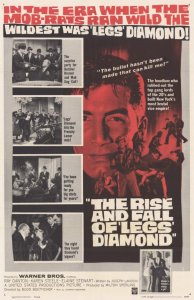
Film Review: The Rise and Fall of Legs Diamond (1960, directed by Budd Boetticher)


TheRiseFallofLegsDiamondIt’s the 1920s.  Prohibition is the law of the land and gangsters control the streets of New York City.  Jack Diamond (Ray Danton) and his tubercular brother, Eddie (Warren Oates), arrives in town.  Jack and Eddie are small-time jewel thieves but Jack has ambitions to be something more.  He works with his girlfriend, Alice (Karen Steele), as a dance instructor but he dreams of being the most powerful mobster in the world.  His first step is to get a job working as a bodyguard for New York crime lord (and fixer of the 1919 World Series), Arnold Rothstein (Robert Lowery).  Though Rothstein never trusts him, Jack works his way into his inner circle and even gets a nickname.  Because he is a dancer, he is renamed “Legs” Diamond.

From the minute that he starts working with Rothstein, Legs Diamond’s cocky personality and ruthless ambition make him enemies.  When he is shot three times, Legs shocks everyone by surviving and announces that he is invulnerable and cannot be killed.  After Rothstein is mysteriously gunned down, Diamond goes to war against Leo “Butcher” Bremer (Jesse White, better known as the original Maytag repairman) for control of the New York underworld.

The Rise and Fall of Legs Diamond was directed by the legendary Budd Boetticher, a bullfighter-turned-director who is best known for directing a series of low-budget westerns in the 1950s.  The violent and hard-boiled The Rise and Fall of Legs Diamond was Boetticher’s only gangster film and it’s a good one.  The Rise and Fall of Legs Diamond is tightly-written, fast-paced, and Lucien Ballard’s black-and-white cinematography ranks with the best of film noir.

The role of Legs Diamond was originally offered to future producer Robert Evans (of The Kid Stays In The Picture fame) but when Evans turned it down, the role was given to Ray Danton.  Though he is occasionally a little stiff, Danton still gives a good and tough performance as Diamond but it is still hard not to wonder what Evans would have been like in the role.  The rest of the cast is full of recognizable B-movie actors, all of whom do a good job.  Actress Dyan Cannon made her film debut in Legs Diamond, playing one of Diamond’s girlfriends.  Meanwhile, in only his third film role, Warren Oates is memorable and sympathetic as the sickly Eddie.  Though Oates does not get to do much in the film, his performance still shows why he went on to become one of the most popular and well-respected character actors of all time.

Though hardly historically accurate (in real life, Arnold Rothstein never knew Jack Diamond and Diamond received his nickname not because he was a dancer but because of the speed with which he ran away from the police), The Rise and Fall of Legs Diamond is an exciting and entertaining Depression-era gangster film.

LegsDiamond

Venturesmania: Beloved Invaders (1965, directed by George M. Reid)


In 1965, while the British were invading the rest of the world, the Ventures were invading Japan.  Hailing from the pacific Northwest, the Ventures were one of the most popular and influential of the instrumental rock bands of the 50s and 60s.  With their debut album, 1960’s Walk, Don’t Run, they helped to define the sound of the emerging surf scene while 1964’s The Ventures in Space inspired a generation of aspiring guitar gods, including Jeff Beck.  The Ventures were phenomenally popular in Japan and they continue to regularly tour there.

Beloved Invaders is a documentary about the Ventures in Japan.  Clips of the Ventures performing in Hiroshima are mixed with footage of the group meeting with their young fans and exploring Japanese culture.  The Ventures all come across as being regular and unassuming guys but the main reason to see the film is for the amazing music.  The Ventures play almost all of their best known songs and watching them perform, you understand why they inspired so many others to pick up a guitar and make music of their own.  Sadly, very few of the great rock and roll instrumental combos of the early 60s were ever preserved on film, which makes Beloved Invaders all the more important.

Beloved Invaders was made for a Japanese audience (when the members of the Ventures speak, they are even dubbed into Japanese) and it can be difficult to track down in the United States.  For a long time, it was a popular bootleg though it was finally released on DVD in 2004 and it can be ordered from the Ventures web site.


Before Woodstock: T.A.M.I. Show (1964, directed by Steve Binder)


51cR8JMSnPL

Five years before Woodstock, there was T.A.M.I. Show.

In 1964, a concert was held over two days at the Santa Monica Civic Auditorium.  Free tickets were distributed to local high school students and the best footage from the two shows was edited into one movie.  Distributed by American International Pictures, T.A.M.I. Show was one of the first concert films.

T.A.M.I. stood for Teenage Awards Music International but no awards were given out during those two days.  Instead, 12 of the most popular music acts of 1964 performed on one stage.  The Beatles may not have been there but almost every other hitmaker of the year showed up.

Among the highlights of T.A.M.I. Show was the performance of James Brown and The Famous Flames, which many consider to be one of the best musical performances ever captured on film.

James Brown’s performance was followed by The Rolling Stones.  Though Keith Richards once claimed that trying to follow James Brown was the biggest mistake of their careers, T.A.M.I. Show was the first time that many American teenagers actually saw the Stones perform.

Also performing: The Supremes, at the height of their popularity.

The Beach Boys’ performance has become semi-legendary because, as a result of copyright issues, it was edited out of prints of T.A.M.I. Show following the initial theatrical run.

For years, T.A.M.I. Show was unavailable for home viewing but finally, in 2010, Shout Factory released this landmark of movie and music history on DVD and they even included the long censored footage of the Beach Boys.  For music lovers, T.A.M.I. Show is a must-see record of the rock scene in between the start of the British invasion and the rise of the counterculture.

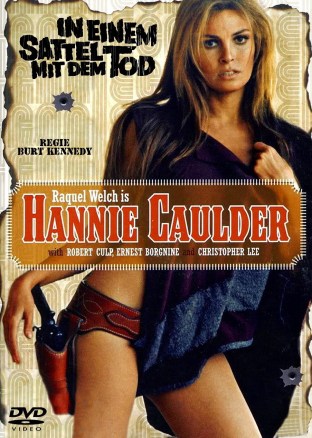
“It’s A Shame To Get It Shot Full Of Holes.” Hannie Caulder (1971, directed by Burt Kennedy)


hannie-posterA century before Beatrix Kiddo killed Bill and The Deadly Viper Assassination Squad, there was Hannie Caulder.

Hannie Caulder (played by Raquel Welch) lives at a horse station on the Texas/Mexico border.  When the outlaw Clemmons brothers — Emmett (Ernest Borgnine), Frank (Jack Elam), and Rufus (Strother Martin) — arrive at the station following a disastrous bank robbery, they brutally murder her husband and take turns raping her.  After setting the station on fire, the Clemmons Brothers leave Hannie for dead.

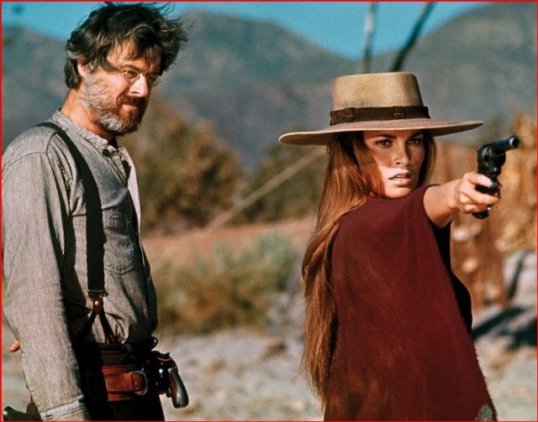
What they do not realize is that Hannie has managed to crawl out of the burning building.  The next day, when a bounty hunter named Thomas Luther Price (Robert Culp) approached the burned out remains of the station, Hannie begs him to teach her how to shoot a gun.

“If I taught you the gun,” Tom says, “you’d go out and get your ass shot off!”

“It’s my ass!” Hannie replies.

“It’s a shame to get it shot full of holes,” Tom says, “It’s as pretty a one as I’ve ever seen.”

Tom refuses to teacher her how to handle a gun but he does allow her to ride with him.  Before she mounts Tom’s second horse, Hannie sees that there is a body lying across the saddle.  “I hope you don’t mind riding with a dead man,” Tom says.

After Tom realizes that she was raped, he agrees to her how to shoot.  But first, he takes her into Mexico to meet a former Confederate gunsmith named Bailey so that Bailey can make her a gun.  Bailey is played by Christopher Lee.  In a career that spanned 70 years, Hannie Caulder was the only Western that Christopher Lee ever appeared in.  At first, it’s strange to see Christopher Lee in a Western, using his Winchester rifle to gun down a group of bandits who threaten his family.  But Lee is a natural and eventually, you stop seeing him as Dracula in a western and you just see him as Bailey.

hc-pic-5

As Bailey and Tom watch Hannie practice her shooting, Bailey says, “Fine-looking woman.”

“She wants to be a man,” Tom responds.

Bailey nods.  “She’ll never make it.”

As an actress, Raquel Welch was often miscast in roles that were only meant to highlight her looks.  She was always at her best when she played tough characters who were not afraid to fight and Hannie is one of her toughest.  While the film certainly takes advantage of her appearance (she spends a good deal of it wearing nothing but a poncho), Welch also gives one of her best performances.  Even with Culp, Borgnine, Elam, and Martin acting up a storm, she more than holds her own.  She not only looks good with a gun but she knows how to use it too.

Though the film was obviously influenced by the violent Spaghetti westerns that were coming out of Italy at the time, Hannie Caulder was directed by Hollywood veteran Burt Kennedy.  Kennedy was best known for comedic westerns like Support Your Local Sheriff  and Hannie Caulder awkwardly mixes drama with comedy.  Scenes of the Clemmons Brothers bickering and grizzled old west types doing a double take whenever Hannie walks by are mixed with Peckinpah-style violence and flashbacks of Hannie being raped.  If the film had a director more suited to the material, it could have been a classic but under Kennedy’s direction, the end result is uneven but always watchable.
hc-pic-3


In Memory of Abe Vigoda: “It was only business. I always liked him.”


abevigoda4

Mark Twain famously said, “The reports of my death have been greatly exaggerated.”

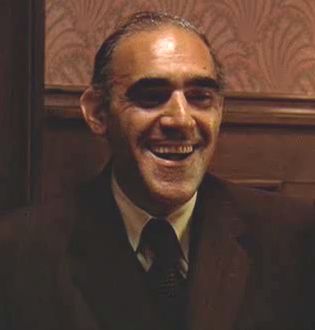
Actor Abe Vigoda could have said the same thing. One reason why Abe Vigoda was such a popular figure was because he had a sense of humor about being so frequently mistaken for dead.  Twice, in 1982 and 1987, his death was incorrectly announced.  For many people, Abe Vigoda will always be best known for appearing on David Letterman and Conan O’Brien to let people know that he was not dead.  There was even a website and a twitter account devoted to keeping people updated on whether Abe Vigoda was alive or dead.  When it was announced, earlier today, that Vigoda had died at the age of 94, many media outlets pointed out that the story was for real this time.

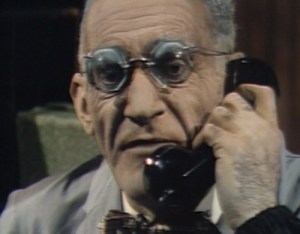
Before he become an internet meme, Abe Vigoda was a great actor who stole scenes in both the best film and one of the best sitcoms of the 1970s.  Before Abe Vigoda was a late night television guest, he was Detective Phil Fish on Barney Miller.  Before he was Fish, he was Tessio in The Godfather.  And before he was Tessio, he was Ezra Braithwraite on the original Dark Shadows.

685-dark-shadows-ezra-phone

Abe Vigoda as Ezra Braithwraite

For me, Vigoda will always be the quietly intimidating Sal Tessio.  Who can forget his final scene in The Godfather, in which he asks Robert Duvall’s Tom Hagan if he can get him off the hook “for old times sake.”  Watch the scene below.  This is great acting.

Rest in peace, Abe Vigoda.  Thank you for the memories.

4 Shots From 4 Films: The Elephant Man, Blue Velvet, Twin Peaks: Fire Walk With Me, Mulholland Drive


4 Shots From 4 Films is just what it says it is, 4 shots from 4 of our favorite films. As opposed to the reviews and recaps that we usually post, 4 Shots From 4 Films is all about letting the visuals do the talking.

Happy birthday, David Lynch!

4 Shots From 4 Films

The Elephant Man (1980, directed by David Lynch)

The Elephant Man (1980, directed by David Lynch)

Blue Velvet (1986, directed by David Lynch)

Blue Velvet (1986, directed by David Lynch)

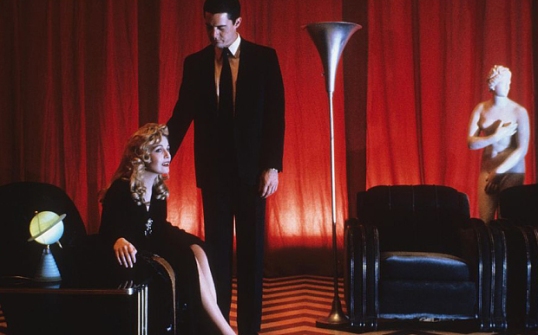
Twin Peaks: Fire Walk With Me (1992, directed by David Lynch)

Twin Peaks: Fire Walk With Me (1992, directed by David Lynch)

Mulholland Drive (2000, directed by David Lynch)

Mulholland Drive (2000, directed by David Lynch)