A Movie A Day #4: The Glory Boys (1984, directed by Michael Ferguson)


glory-boysProfessor David Sokarev (Rod Steiger) is a nuclear physicist who is scheduled to give a lecture in London.  When he is informed by Mossad that a Palestinian splinter group is planning on assassinating him, Sokarev wants to cancel his trip.  However, the Israeli government insists that he go to London and put his life in danger.  To do otherwise would only serve to embolden the terrorists.  Accompanied by two Mossad bodyguards, Sokarev reluctantly leaves for London.

Three Palestinians are intercepted as they attempt to sneak into England.  Two of them are killed but the youngest, Famy (Gary Brown), survives and makes his way to London.  He meets up with McCoy (Aaron Harris), a world-weary member of the Irish Republican Army.  Though McCoy would rather just spend his time with his innocent girlfriend, Norah (Sallyanne Law),  he has agreed to help the Palestinians but is shocked to discover that Famy is so inexperienced that he doesn’t even know how to drive.

The head of MI5, Mr. Jones (Alfred Burke), is tasked with keeping Prof. Sokarev safe.  He recruits Jimmy (Anthony Perkins), a retired agent.  Jimmy once saved Jones’s life but now he is an alcoholic and is considered to be unpredictable and insubordinate.  Once Jimmy comes out of retirement, Jones worries that Jimmy is so obsessed with violence that he’s willing to use Sokarev as bait to draw out the terrorists.

The Glory Boys was originally a three-part miniseries that was made for Yorkshire Television.  It was later re-edited into a 104 minute movie that was released in the United States.  Even late into the 1990s, it was not unusual to come across the edited version of The Glory Boys on late night television.  Based on a novel by Gerald Seymour, The Glory Boys holds up well and the issues that it raises, about how far the government should go to battle terrorism, remain relevant today.  Rod Steiger brings a lot of dignity to the role of Sokarev and Joanna Lumley has a small role as Jimmy’s girlfriend.  But ultimately, the main reason to see The Glory Boys is because of the strange casting of Psycho‘s Anthony Perkins as a British intelligence agent.  Perkins’s accent is dodgy but his jittery persona works surprisingly well for the role.  Jimmy (Is the name meant to be a swipe at the infallible persona of James Bond?) is ruthless, paranoid, and possibly sociopathic, which makes him perfect for intelligence work but worthless for almost every thing else.

For tomorrow’s movie a day, Anthony Perkins returns in another British spy film, ffolkes.

glory-boys-2

A Movie A Day #3: The Firm (1989, directed by Alan Clarke)


the-firm1The Firm, which should not be confused with the John Grisham novel or the Tom Cruise film adaptation, was a 70-minute film about football hooliganism that was made for the BBC’s Screen Two in 1989.  In the United States, it has never really been understood just how big a problem football hooliganism was in the United Kingdom in the 1980s.   That’s because, despite the best efforts of ESPN, most Americans don’t care about soccer.  In America, “soccer riot” sounds like the punchline of a bad joke.  But in Europe, it was a very real problem.  If you want to understand why some people call football hooliganism “the English Disease,” The Firm is the film to see.

Clive “Bex” Bissell (Gary Oldman) has a nice home, a well-paying job as an estate agent, a loving wife (played by Lesley Manville, who actually was married to Oldman at the time), a newborn son, and a large circle of friends.  He’s also the head of the Inner City Crew, a violent group of football hooligans (known as a firm) who follow West Ham United across Britain and pick fights with other firms.  (Bex is actually a second-generation football hooligan and his father is constantly complaining that the new generation isn’t tough or violent enough.)  Bex does it for the buzz.  As another member of the ICC puts it, after listening to a fatuous television commentator going on about how football hooligans are actually searching for some sort of larger meaning in their lives,  “Why doesn’t he just say that we like hitting people?”  With the 1988 European Championships coming up, Bex wants to unite all the regional firms into one national organization, with himself in charge.  To do that, he’ll have to defeat two rival firm leaders, Oboe (Andrew Wilde) and Yeti (Phil Davis).

For a film about people about who are willing to kill over association football, very little soccer is actually seen in The Firm.  The ICC plays a game, which is interrupted by Yeti driving across the field.  Later, Yeti and his lieutenants walk through a stadium, looking for a fight and ignoring the match being played in front of them.  Bex’s childhood bedroom is covered with newspaper clippings about West Ham United but Bex is more interested in the buzz than in football.

The Firm is full of classic scenes, from Bex initiating the newest member of the ICC to the disturbing moment that Bex’s son gets a hold of his knife to the final bar brawl.   For me, my favorite scene is when the three rival firms hold a meeting in a posh hotel room:

Along with featuring one of Gary Oldman’s best performances, The Firm was also the last film to be directed by the great Alan Clarke.  Making good use of the steadicam walking shots that he was famous for and taking an unflinching approach to the story’s violence, Clarke not only directed the definitive film about football hooliganism but also provided a portrait of life in the final years of Margaret Thatcher’s Britain.

For tomorrow’s movie a day, we stay in Britain as Anthony Perkins fights terrorists in The Glory Boys.

the-firm

A Movie A Day #2: Blue Chips (1994, directed by William Friedkin)


blue_chips_movie_posterBlue Chips is a movie that will always make me think of England.

When I was a kid, I would spend every summer over in the UK.  When I flew over for the summer of ’94, the in-flight movie was Blue Chips.  I can still remember sitting in the back of the plane, trying to watch the movie on that tiny screen.  At the time, I did not pay much attention to Blue Chips.  It was about basketball, which was not something that I was interested in.  It also starred Nick Nolte, who, over the years, starred in a lot of the movies that I saw while flying over the Atlantic Ocean.  Try as I might, I could not understand a word that Nolte was saying.  It was impossible to separate his gravely voice from the drone of the plane’s engines.  I didn’t care much about Blue Chips.

Two months later, I was sitting in the back of my return flight when the flight attendant announced, “Our in-flight movie will be Blue Chips, starring Nick Nolte.”  Still not caring about basketball and still unable to understand a word that Nick Nolte was saying, I sat through Blue Chips for a second time.  What else was I going to do?  Step outside and go for a walk?

Looking back, I can understand why Blue Chips would be shown on a plane.  There’s nothing unconventional or controversial about Blue Chips.  It’s not going to start any fights or leave anyone offended.  Nick Nolte plays Pete Bell, a college basketball coach who, coming off of his first losing season, resorts to unethical measures to recruit three star players.  Ricky Roe (Matt Nover) is a farmboy from Indiana and his racist father wants the college to buy him a new tractor.  Penny Hardaway plays Butch McRae, whose mother (Alfre Woodard) wants a new house.  Neon Bordeaux (Shaq!) doesn’t want anything but still gets a new Lexus.   The corrupt head of the school’s booster club is named Happy and is played by J.T. Walsh.  Other than Happy Gilmore, has there ever been anyone in a movie named Happy who hasn’t turned out to be bad news?

Blue Chips was directed by William Friedkin, though you’d never guess that this by the numbers movie was from the same director who did The French ConnectionThe Exorcistor To Live And Die In L.A.  In his autobiography, The Friedkin Connection, he devoted just a few words to Blue Chips, saying, “It’s hard to capture, in a sports film, the excitement of a real game, with its own unpredictable dramatic structure and suspense. I couldn’t overcome that.”

Friedkin’s right but I’m always happy whenever I come across Blue Chips on cable because it reminds me of that long-ago summer in England.

For tomorrow’s movie a day, it’s another sports-related film that always makes me think about Britain: Alan Clarke’s The Firm.

blue-chips-nick-nolte

A Movie A Day #1: Stop Making Sense (1984, directed by Jonathan Demme)


stop_making_sense_poster_originalA pair of immaculate white sneakers, being worn by the lead singer of The Talking Heads, David Byrne, walk out onto a bare stage while an unseen audience applauds.  Byrne places a radio on the stage beside him and says, “I have a tape I want to play for you.”  Accompanied only by a drum machine and an acoustic guitar, Byrne launches into a performance of Psycho Killer that ends with him lurching across the stage like a marionette that is losing its strings.

So begins the greatest concert film of all time, Stop Making Sense.

As Psycho Killer comes to an end, Byrne is joined on stage by bassist Tina Weymouth.  While Byrne and Weymouth perform Heaven, the black-clad stage crew sets up a drum kit behind them.  Drummer Chris Frantz comes out for the third song, Thank You For Sending Me An Angel.  The fourth member of the Talking Heads, Jerry Harrison, appears on stage for Found A Job and is then followed by several touring members of the band, including legendary keyboardist Bernie Worrell, guitarist Alex Weir, percussionist Steve Scales, and backup singers, Lynn Mabry and Ednah Holt.  It’s not until the concert’s sixth song, Burning Down The House, that the entire band is on stage.

Pieced together from three separate shows performed at the Pantages Theater in Los Angeles, Stop Making Sense showcases one of the most important bands of the 80s at their absolute best.  Eschewing any candid footage of the band backstage and only occasionally showing any shots of the audience, Jonathan Demme keeps the focus on the music and David Byrne’s amazing showmanship.  Even more than the music, what really makes Stop Making Sense stand out is Byrne’s physicality.  During one instrumental passage, Byrne even runs around the stage in circles before jumping back to his microphone without missing a beat.

Though the entire band is in great form, Byrne is almost always the focus of attention.  The only time he’s not is when he goes backstage during a performance of Genius Of Love by Weymouth and Frantz’s side project, The Tom Tom Club.  During that time, Byrne is changing into the “big suit,” the costume that continues to define the Talking Heads to this day.

Along with Burning Down The House, highlights include Life During Wartime,

Swamp,

Once in a Lifetime,

and Stop Making Sense‘s most famous moment, David Byrne performing Girlfriend is Better while wearing the iconic “big suit.”

Stop Making Sense is a fun, exhilarating, and sometimes exhausting concert film and, given all the bad feelings that exist between Byrne and the other three members of the band, it’s probably as close as any of us will ever get to experiencing The Talking Heads live.

For tomorrow’s movie a day, I’ll be explaining why Blue Chips always makes me think of England.

Holiday Scenes That I Love: Festivus Dinner From Seinfeld (NBC, 1997)


Again, Happy Festivus!

This scene is from The Strike episode of Seinfeld.  Believe it or not, it is based on a true story.  Scriptwriter Dan O’Keefe, who wrote this episode, grew up celebrating Festivus, a holiday that was created by his father.  In the real Festivus, the aluminum pole was replaced by a clock that O’Keefe’s father would put in a bag and nail to a wall.  To quote O’Keefe:

“The real symbol of the holiday was a clock that my dad put in a bag and nailed to the wall every year…I don’t know why, I don’t know what it means, he would never tell me. He would always say, ‘That’s not for you to know.'”

Enjoy!

Holiday Scenes That I Love: David Bowie and Bing Crosby Sing A Duet in Bing Crosby’s Merrie Olde Christmas (CBS, 1977)


In this scene from Bing Crosby’s Merrie Olde Christmas, David Bowie stops by the home of his old friend, Sir Percival Crosby, and meets Sir Percy’s long-lost American relative, Bing Crosby!  A discussion of modern music and parenting techniques leads to them performing a duet of Peace On Earth/Little Drummer Boy.

This was Bing’s final Christmas special and he died just five weeks after filming completed.  This scene is a holiday classic and has been described. by the Washington Post, as “one of the most successful duets in Christmas music history.”

When asked about David Bowie, Bing said he was “clean-cut kid and a real fine asset to the show. He sings well, has a great voice and reads lines well.”

Enjoy!

No Ewoks, No Jar Jar: Rogue One: A Star Wars Story (2016, directed by Gareth Edwards)


rogue_one_a_star_wars_story_posterA long time ago in a galaxy far, far away…
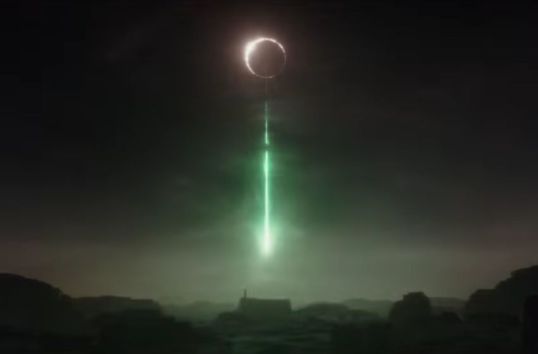
The evil Galactic Empire spent what had to be billions of Imperial credits to build the greatest weapon in the universe.  It was known as the Death Star and it housed a laser so powerful that it could blow up a planet with just one shot.  And yet, for all the effort and all the years that were spent building it, the Death Star had one glaring vulnerability, an exposed exhaust valve that the Rebel Alliance twice used to the destroy it.

For years, fanboys debated why the Empire would go to the trouble to build a super weapon with such an obvious design flaw.  I have to admit that I was often one of them.  No one else seemed to care but, to us, this was a huge deal.  If the Empire could figure out how to blow up a planet with one super laser, why couldn’t they figure out how to protect that one valve?

Now, thanks to Rogue One: A Star Wars Story, we have an answer.  We not only know why that valve was there but we also know what was meant in New Hope when the rebel general said that the plans to the Death Star had been stolen at great cost.

Rogue One is a fan’s dream, one that answers questions while expanding on the Star Wars mythology.  Unlike the previous prequels, it adds to the story without cheapening the original films.  In fact, of all the Star Wars films, Rogue One is the first to make the Death Star into a believable weapon of mass destruction.  When it appears over one planet, it blots out the sun.  When it blows up a rebel base, we see the destruction from inside the base instead of observing it from the safety of Death Star.  Director Gareth Evans does for the Death Star what he previously did for Godzilla.

death-star

Unfortunately, like Godzilla, the action and the special effects in Rogue One are usually more interesting than any of the film’s characters.  Felicity Jones, Diego Luna, Donnie Yen, Jiang Wen, Alan Tudyk, and Riz Ahmed are all good actors but they’re all playing underwritten parts.  No one steps up like Harrison Ford did in the original trilogy.  Commander Kennec, played by Ben Mendelsohn, has a little more depth than the typical Imperial villain but, for better or worse, the film’s most memorable performances come from a CGI Peter Cushing and James Earl Jones providing the voice of Darth Vader.

rogue-one

Despite the underwritten characters, Rogue One is still the best Star Wars film since Empire Strikes Back, a return to the grittiness, the thrilling action, and the awe of discovering new worlds that distinguished the first two movies.  For once, a Star Wars film seems to have more on its mind than just selling toys.  Though we already know what is ultimately going to happen to the Death Star at the end of New Hope, Rogue One is a frequently downbeat film.  There are no Ewoks and, to great relief and rejoicing, Jar Jar is never seen.  The closest that Rogue One gets to comic relief is Alan Tudyk providing the voice of a cynical robot.  The emphasis is on the horrors of war and even the rebels are troubled by some of the things that they have done.  For once, the Rebel Alliance actually feels like a rebellion and the evil of the Empire feels real instead of cartoonish.

Rogue One is projected to be the first of many “Star Wars stories,” stand-alone film that will expand the universe and hopefully clarify some of the points that were left unclear by the original trilogy.  I think it’s going to be very successful very Disney.  I’m just dreading the inevitable Jar Jar origin story.


You Can Get Anything You Want At Alice’s Restaurant


Now that you’ve watched Blood Freak, be sure to take part in another great Thanksgiving tradition and spare 18 minutes to learn about the day that Arlo Guthrie was arrested for littering and how that heinous crime later effected his draft status.

On its 50th anniversary, enjoy Alice’s Restaurant Massacree and have a wonderful Thanksgiving!