
The Winchester Mystery House
The Winchester Mystery House stands in San Jose, California. The home of Sarah Winchester, construction began on the house in 1883 and continued nonstop until Sarah’s death in 1922. The result was a gigantic and maze-like mansion that was built without any master building plan.
Because Sarah was the widow of the treasurer of the Winchester Repeating Arm Company, it was rumored that her mansion was haunted with the ghosts of all the people who had been killed by a Winchester rifle and that, because new ghosts were always arriving, Sarah had no choice but to keep adding extras rooms to the house. Those legends served as the inspiration behind the new horror film, Winchester.
However, Winchester is not the first time that the supposedly haunted mansion appeared in popular culture. In the 45th issue of Swamp Thing, Alan Moore took readers on a trip to the Winchester Mystery House.

Swamp Thing #45 was a part of the American Gothic storyline. For 13 issues, John Constantine led Swamp Thing across America so that he could witness and sometimes battle modern versions of classic monsters. In the larger DC mythology, the events in American Gothic were due to the first Crisis on Infinite Earths. (While the rest of the DC Universe was worrying about whether they would live on Earth-1 or Earth-2, a South American cult was planning on using the crisis as their opportunity to take over the supernatural dimension.) In reality, American Gothic was an excuse for Swamp Thing’s writer, Alan Moore, to indulge his interest in both the occult and contemporary affairs. The Winchester Mystery House and its connection to gun violence was a natural subject for Moore to take on.

Entitled “Ghost Dance,” the story begins with two couples, David and Linda and Rod and Judy, arriving at the long abandoned Cambridge House. While David fills everyone in on the history of the mansion and the legends about the ghosts, Rod openly flirts with Linda and makes jokes about The Shining. Though the name may have been changed, the Cambridge House is drawn to look exactly like the Winchester House.


It does not take long for the four of them to get separated and lost inside the mansion. Rod starts to make love to a nude woman who he thinks is Judy until her wig falls off and he discovers that she is actually the ghost of Franny Mitchell, who was shot in the head by a scorned lover. Rod flees and, after opening a door that would have led to a room that was never actually built, he falls to his death. Judy dies when a herd of bison, all killed by a Cambridge Repeater Rifle, burst out of a closet and trample over her. After seeing two long-dead gunfighters reenacting their final gun battle, Linda faints while surrounded by the blind-folded spirits of people who were executed by shooting squads. As for David, he goes mad as he watches the spirits of everything ever killed by a rifle march through the house. It’s all the ghostly rabbits that finally cause him to snap.


Towards the end of the issue, Swamp Thing finally does show up, long enough to save both David and Linda and to send the spirits back into the chimneys of the Cambridge House. After Swamp Thing leaves with John Constantine, Linda finally regains consciousness and tells David that she wishes he had died instead of Rod.
Sometime later, David visits a gun shop and buys a Cambridge Repeater of his own. Feeling less alone now that he has a gun in his hands, David says he is going back home to see Linda and it is inferred that at least one more ghost will soon be moving into the Cambridge House.
Though controversial when it was first released, “Ghost Dance” is one of the high points of Moore’s run on Swamp Thing. At the time, several readers felt that the issue was too blatantly anti-gun and there were the usual complaints about the story’s violence and sexual content. Moore was one of the pioneers of the idea that comic books, even ones that featured “super heroes” (or swamp things), could deal with real issues and mature themes and that’s what he did with this story. Whether you agreed with his opinions or not, the unapologetic approach that Moore took in Swamp Thing was always far more interesting than the safe, middle-of-the-road approach taken by most of the other mainstream comics of the era.

Swamp Thing Vol. 2 #45 (February, 1986)
- Writer: Alan Moore
- Letterer: John Costanza
- Inker: Alfredo Alcala
- Penciler: Stan Woch
- Colorist: Tatjana Wood
- Cover: Steve Bissette and John Totleben
- Editor: Karen Berger






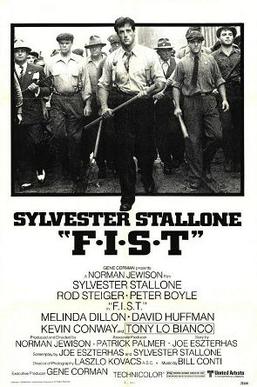 Sylvester Stallone is Jimmy Hoffa!
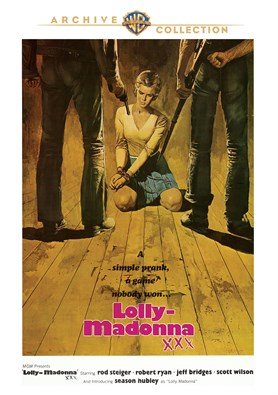 In the backwoods of Hicksville, USA, two families are feuding. Laban Feather (Rod Steiger, bellowing even more than usual) and Pap Gutshall (Robert Ryan) were once friends but now they are committed rivals. They claim that the fight started when Pap bought land that once belonged to Laban but it actually goes back farther than that. Laban and Pap both have a handful of children, all of whom have names like Thrush and Zeb and Ludie and who are all as obsessed with the feud as their parents. When the Gutshall boys decide to pull a prank on the Feather boys, it leads to the Feathers kidnapping the innocent Roonie (Season Hubley) from a bus stop. They believe that Roonie is Lolly Madonna, the fictional fiancée of Ludie Gutshall (Kiel Martin). Zack Feather (Jeff Bridges), who comes the closest of any Feather to actually having common sense, is ordered to watch her while the two families prepare for all-out war. Zack and Roonie fall in love, though they do not know that another Feather brother has also fallen in love with Gutshall daughter. It all leads to death, destruction, and freeze frames.
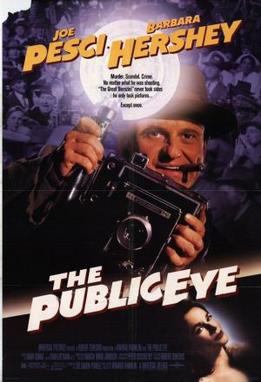 New York in the 1940s. Leon “Bernzy” Bernstein (Joe Pesci) is nearly a legend in the city, a freelance news photographer with a police radio in his car and a darkroom in his trunk. Bernzy is a solitary man who lives for his work, the type who has many acquaintances but few friends. He gets the pictures that no one else can get but his dream of seeing a book published of his photographs seems to be unattainable. As more than one snobbish publisher tells him, tabloid photographs are not art.
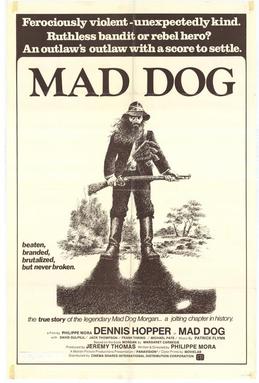 Though he may not be as internationally well-known as Ned Kelly, Dan “Mad Dog” Morgan was one of the most infamous bushrangers in 19th century Australia. Much as with the outlaws of American west, it is sometimes difficult to separate the fact from the legend when it comes to Mad Dog Morgan but it is agreed with Morgan has one of the most violent and bloodiest careers of the bushrangers. Whether Morgan was a folk hero or just a ruthless criminal depends on which source you choose to believe.
 Through the Shattered Lens