Frankenstein vs. Dracula vs. The Mummy: Who Would Win?


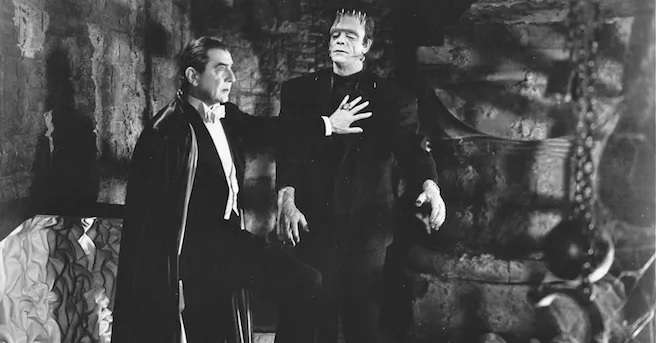
If the next presidential election were held today and the major candidates were Frankenstein, Dracula, and The Mummy, who would win?

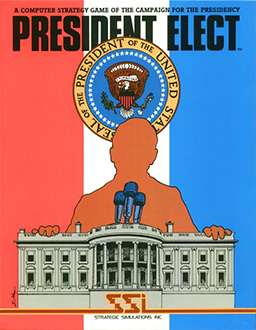
I know that’s a question that has been on everyone’s mind and, in order to find out, I went to the Internet Archive and ran the scenario through a game called President Elect.  President Elect was developed as an election simulator in the 80s and it is still considered to be one of the best and most accurate games of its type.  Over the years, President Elect has correctly predicted the results of almost every election since 1988.

After setting the game to duplicate both the fragile state of the American economy and the uncertain outlook of our current place in the world, I then selected my three nominees.  Frankenstein’s Monster ran as the Democratic candidate.  He had no platform, beyond more funds for fire prevention.  As a public speaker, I had to give him a low rating and I also had to admit that he wasn’t good at maintaining his cool under pressure.  However, I did give him high marks on the “personal magnetism” scale because people have been fascinated by the monster for over two hundred years.  Frankenstein’s Monster may seemed like the underdog but perhaps voters would be moved by his personal story and his refusal to take definite positions on the issues.

Running for the Republicans was Dracula.  As for as public speaking, personal magnetism, and staying calm under pressure, Dracula got the highest rating available.  But his platform was undeniably extreme, with absolutely no concern for human rights.  Dracula was the only candidate to be opposed to the agendas of the Religious Right, the National Organization for Women, and the NRA.  (The last thing that a vampire would want would be for everyone to have access to silver bullets.)  Would he be too extreme for the voters?

Finally, running as an independent was the Mummy.  The Mummy had roughly the same platform as Dracula but little of the personal magnetism.  In fact, the Mummy could not even speak.  But he was determined to get what he wanted and again, he scored high on the personal magnetism because he’s been in so many movies despite spending all of his time under wraps.

I allowed the game to simulate the 9 weeks between Labor Day and the election.  Not surprisingly, Frankenstein’s Monster refused to debate Dracula.  As a third party candidate, the Mummy struggled to keep up financially.  I was expecting a close election with a lot of fireworks but instead, it was clear from week one who was going to win.  Dracula led in the polls from the start and, within the first hour of election night, he had the 270 electoral votes necessary to claim the presidency.  He went on to win a lot more than just 270 though.

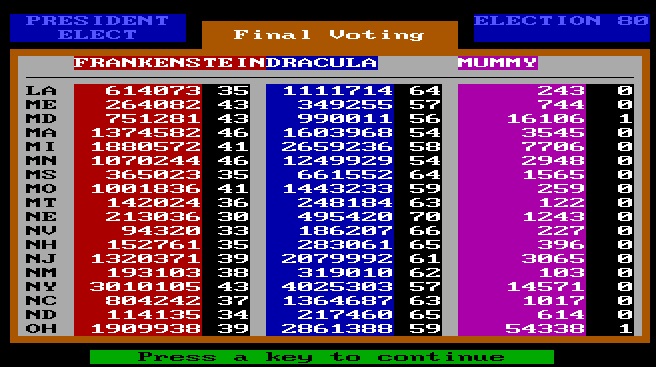
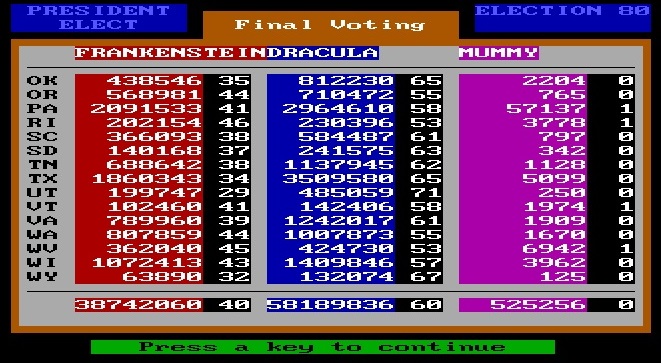
Here are the votes by state:
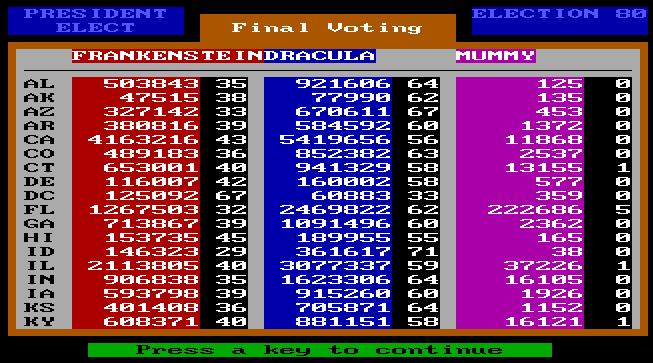
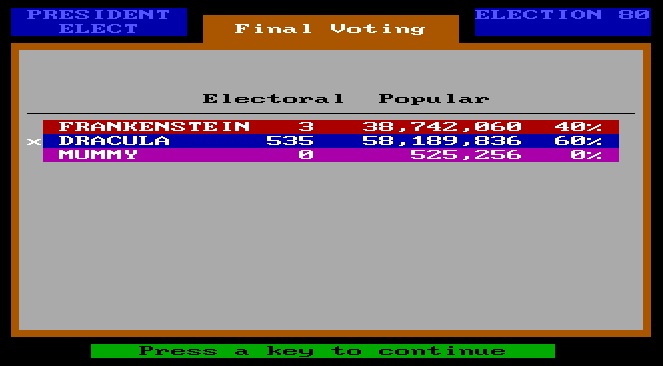
America went full Dracula, not only giving him 60% of the popular vote but also 535 electoral votes.  Frankenstein’s Monster won only the District of Columbia and, even then, he only received 67% of the vote in this Democratic stronghold.  After D.C., Frankenstein’s best states were Minnesota and Rhode Island, in which he took 47% of the vote.  The Mummy turned out not to be a factor at all, despite winning 5% of the vote in Florida.  Frankenstein’s Monster may have had the most compassionate platform but Dracula had the charisma.  His best states were Idaho and Utah, both of which he won with 71% of the vote.

See you at the inauguration!
Music Video of the Day: On A Wicked Night by Danzig (2010, directed by Glenn Danzig)


October is a good month for Danzig.  In this music video, Glenn Danzig gets back to nature.  Say what you will about Danzig because his music isn’t necessarily for everyone.  But Danzig could easily shove much of today’s wimpy rockers into a locker.

Enjoy!

Music Video of the Day: A Touch of Evil by Judas Priest (1990, directed by Wayne Isham)


Though Rob Halford has said that the lyrics are actually a metaphorical look at a love/hate relationship, both this song and the accompanying video are usually said to be about demonic possession.

This video was directed by Wayne Isham, who is another one of those directors who seems to have done at least one video for every single successful band out there.

Enjoy!

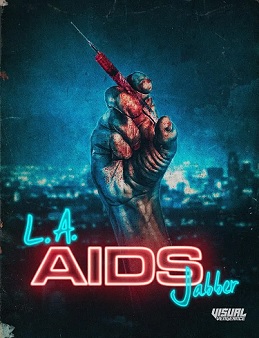
L.A. AIDS Jabber (1994, directed by Drew Godderis)


This is a real movie and that is the real title.

Jeff (Jason Majik) is an angry young man who is seeing a therapist because he has issues with women.  He worked in a furniture warehouse, where he has issues with his boss.  Jeff has issues with everyone but soon, he has an even bigger concern.  Because of a nagging stomachache, Jeff goes to see a doctor.  The doctor does some bloodwork.  He runs the results twice just to be sure.  Then he informs Jeff that he has tested positive for AIDS.  Jeff snaps.  He fills a huge hypodermic needle with his own blood and then goes on a rampage, jabbing people across Los Angeles.

The two detectives who have been assigned to the jabber case (and who appear to investigate every other homicide in Los Angeles as well) do not want the story to get into the press.  Unfortunately, a stolen boombox that belongs to the boyfriend of a local news reporter (Joy Yurada) picks up the sound of the detectives talking on their secure line.  Refusing to be intimidated, the reporter reveals the details of the investigation on the nightly news.  Jeff decides to make the reporter his newest target.

Again, this is a real movie and that is the real title.

L.A. AIDS Jabber is a shot-on-video film that was based on the urban legend about someone with AIDS going to the clubs in New York and Los Angeles and randomly pricking people with a needle.  The movie itself is pretty dire, full of bad performances and subplots that don’t lead anywhere.  To me, the most interesting thing about the movie was how little it actually seemed to know about AIDS or how it was transmitted.  For instance, no one — not even the doctor who tells Jeff that he’s tested positive — uses the term “HIV.”  The doctor tells Jeff that he has “tested positive for AIDS” and then just sends him home.  I get that this film was made in 1994 when people were still learning about this virus but the doctor could have at least informed Jeff that it can take several years for HIV to develop into AIDS.  As a last minute twist reveals at the end of the film, that’s not the only way that the doctor has failed his patient.

As for the rest of the movie, it’s all bad performances, bad acting, bad jokes, and a bad script.  Jason Majik does have one good scene where he starts punching a wall but that’s pretty much it.  This jabber’s not worth getting stuck with.

Game Review: Europop Vampire (2021, Chris Chinchilla)


You’re a vampire so get out there and party!

That is pretty much the plot of this short Twine game.  You are given the option of deciding what type of vampire you are (Are you a Nosferatu or a Twilight or a Gothic Vampire?) and you’re also allowed to decide just how exactly you want to spend your evening.  Do you want to hit the clubs or would you rather spend your night singing karaoke?  It’s up to you.

This game feels like it may have been abandoned why it was still being developed but what there is of it is enjoyable.  The game at least has a sense of humor.  There’s even an ending where the game says that you’re obviously looking for something darker than this game is prepared to offer up.  Not much happens in this game but a few of the jokes did make me laugh.  After you’ve played as many overlong, overly serious Twine games as I have, it’s hard not to appreciate something as unpretentious as Europop Vampire.

Play Europop Vampire.

Music Video of The Day: Stratego by Iron Maiden (2021, directed by Gustaf Holtenas)


This song is off of Iron Maiden’s 17th studio album, 2021’s Senjutsu.  Directed by Swedish animator Gustaf Holtenäs, the epic music video for Stratego imagines an battle in ancient Japan.  Thematically and visually, it goes along with the cover of the album, which featured Eddie dressed as a samurai and holding a katana.

Enjoy!

Jack-O (1995, directed by Steve Latshaw)


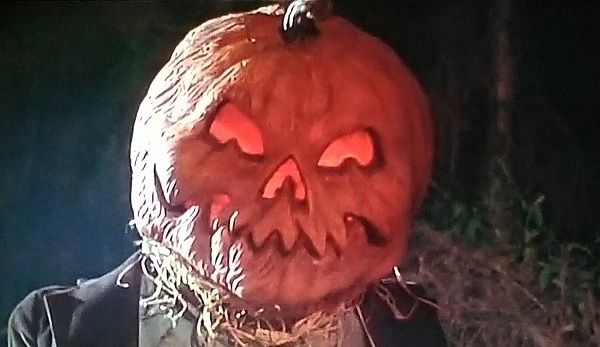
Back in frontier times, a warlock named Walter Machden (John Carradine) terrorized the citizens of the town of Oakmoor Crossing so they tracked him down and lynched him.  Before he was hung, Machden cursed the town.  A demon with a jack-o-lantern for a head terrorized the town until the Kelly Family defeated him and buried him underneath a cross.

Jump forward one hundred years.  It is Halloween night and some drunk teenagers knock over the cross.  Jack-O comes back to life and kills the teenagers.  Jack-O sets out to get revenge on the Kelly family but, for some reason, he decides to kill their neighbors, some more teenagers, and a TV cable guy before going after his targets.  It’s up to young Sean Kelly (Ryan Latshaw) to figure out how to defeat Jack-O for a second time.

The most interesting thing about Jack-O is that it features John Carradine, even though he died a full seven years before the movie was released.  That either means that Jack-O had an unusually long post-production period or the Carradine scenes were shot for another movie and were clumsily inserted into Jack-O.  Carradine was not the only deceased star to make an appearance in Jack-O.  Cameron Mitchell, who passed away in 1994, also makes an appearance as a horror movie host.  Because you can’t have a movie with Carradine and Cameron Mitchell without including Linnea Quigley, she appears as a babysitter who takes a lengthy shower.  Fortunately, Linnea Quigley is still with us.

Overall, Jack-O is regrettable.  The demon, with his Jack-O-Lantern head, is more likely to inspire laughs than screams and it never makes sense that Jack-O would take so much time to kill everyone except for the people that he is actually looking to kill.  The best death involves a toaster but Jack-O doesn’t do anything with the toaster.  Instead, someone just slips and sticks a utensil in the toaster, leading to a shocking death.  Combine the poor acting with the poor special effects with notably ragged editing that often makes it unclear how much time has passed between scenes and you have a Halloween film that is no holiday.

Horror Game Review: Power, MT (2017, Phil Strahl)


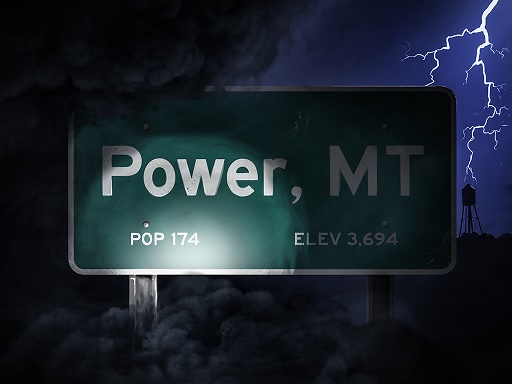
You were just a traveler, passing through Power, Montana, when your car broke down.  Temporarily stranded, you were thankful when a local farmer offered to let you stay in his guest room for the night.  But then something terrible descends upon Power and you find yourself running through the town, fearful for your life.

The objective of Power, MT is straight-forward.  Make your way through town and hopefully, find some sort of protection before you are captured by the strange, apparently supernatural storm that is pursuing you.  To be able to do this, though, you’re going to need the flashlight on your phone to see where you are going.  And, with each turn, that flashlight drains your battery and leaves you that much close to being plunged into a darkness from which there is no escape.  It’s a simple and relatable premise.  Who hasn’t hit the panic button while searching for a place to recharge their phone?  The game is well-written and there are a lot of places to explore, even if there’s not always a lot of time to reach them.  Power, MT captures the feeling of running for your life.  It’s a challenging game (so be prepared to die a few times while figure it out) but it’s also not impossible to win.

Play Power, MT

Music Video of the Day: And Fools Shine On by Brother Cane (1995, directed by ????)


Brother Cane’s And Fools Shine On is best-known for appearing on the soundtrack of Halloween: The Curse of Michael Myers.  No matter what else people say about that movie, the general consensus seems to be that at least the music was good.

The video is slightly horror-themed, though Michael Myers doesn’t show up.  Instead, the video feels like an homage to the expressionistic cinema of F.W. Munrau and Fritz Lang, as if someone tried to combine Nosferatu with Metropolis.

Enjoy!

Iceman (1984, directed by Fred Schepisi)


Scientists at an arctic base make an amazing discovery when they find the body of a prehistoric man that has been perfectly preserved in the ice.  Dr. Stanley Shepherd (Timothy Hutton) and his fellow scientists suspect that the Iceman (John Lone) might be in a state of suspended animation.  Instead of performing an autopsy when the body thaws it, the scientists attempt to resuscitate him.

And somehow, it works.

The Iceman, who is eventually named Charlie, is stunned to be in the modern world and does not know how to react to the scientists studying him.  Only Dr. Shepherd treats Charlie as a human being instead of a laboratory specimen.  Despite not speaking the same language, Charlie and Shepherd bond.  Shepherd realizes that Charlie misses his family and eventually, he figures out that, when he was frozen, Charlie was attempting to stop the Ice Age by offering himself up as a sacrifice to a bird god.  When Charlie sees a helicopter, he mistakes it for his god and starts tying to escape from the base.  Realizing that Charlie will eventually be killed and experimented upon, Shepherd tries to help him escape.

If, and it’s a big “if,” you can overlook the implausibility of Charlie being in suspended animation for over 40,000 years, Iceman is actually a really good film with intelligent performances from both Timothy Hutton and John Lone.  Lone is especially good as Charlie, capturing his confusion, fear, and eventually his heart.  Even though he’s in a strange place and time, Charlie never stops thinking of his family and trying to get back to them.  The film works because, like Shepherd, it understands Charlie is too good for the modern world.