Late Night Retro Television Review: 1st & Ten 2.9 “A Family Affair”


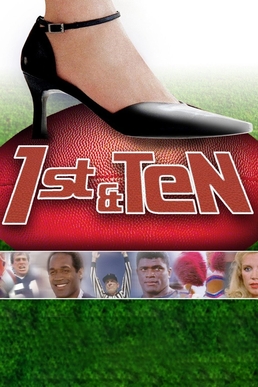
Welcome to Late Night Retro Television Reviews, a feature where we review some of our favorite and least favorite shows of the past! On Wednesdays, I will be reviewing 1st and Ten, which aired in syndication from 1984 to 1991. The entire series is streaming on Tubi.

This week, the playoffs continue.

Episode 2.9 “A Family Affair”

(Dir by Burt Brinckerhoff, originally aired on January 13th, 1987)

A playoff game against Denver is approaching.  Denver is coached by a former protegee of Denardo’s and Denardo is obsessed with winning.  He’s so obsessed that he alienates the players and Coach Grier (Stan Kamber).  Grier is tempted to take a job as Houston’s head coach.  Denardo says he doesn’t care until Diane reveals that Grier has turned down several other jobs out of loyalty to Denardo.

As for the other assistant coach, T.D. Parker (OJ Simpson) has problems of his own.  His youngest son is acting out and the only thing that’s kept him out of juvenile detention is the fact that the cops are all fans of T.D. and the Bulls.  T.D. tells his son that he’s not allowed to leave the house.  When T.D.’s wife says that she thinks T.D. is being too strict, T.D. tells her to back off.  T.D. gets really mad in this episode but none of it is convincing because OJ Simpson was too amiable an actor to really come across as being threatening.  That’s something that would prove helpful to OJ in the years to come.

Meanwhile, the players all invest in the stock market.  The stock doesn’t do well.  The player who recommended the stock is chased out onto the field before the start of the big game against Denver.  Ha ha, those players are all broke now.  Good luck dealing with life after the game.

This show, I never know what to make of it.  Is it a comedy?  Is it a drama?  Why is it so oddly edited?  How many scenes were cut for syndication?  Why do storylines start and then just disappear?  For that matter, why do characters suddenly vanish?  Dr. Death was a huge part of the show during the first half of the second season but I haven’t seen him during the second half.  Did he get traded?  Did he get injured?  Seriously, what’s going on with this show?

I have no idea.  Football’s a confusing sport.

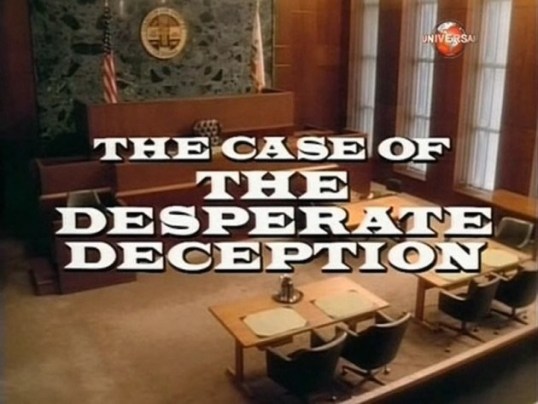
I Watched Perry Mason: The Case Of The Desperate Deception (1990, Dir. by Christian I. Nyby II)


Marine Captain David Berman (Tim Ryan, who looked a lot like Bruce Willis) gets a transfer to Paris so that he can track down Dieter Krugman, a Nazi war criminal who killed his grandparents and crippled his mother (Teresa Wright).  He is told that Krugman is now living under the name of Felix Altmann.  David confronts Altmann at a health spa but, when someone else shoots Altmann, David is framed for the crime.  Luckily, Perry Mason (Raymond Burr) is an old friend of the family’s.  He and Ken Malansky (William R. Moses) hop on the first plane to Paris and Perry starts to read up on the Uniform Code of Military Justice so that he can defend David.  Della (Barbara Hale) stays behind in Denver but Perry calls her a few times.

This was a good entry in the Perry Mason film series.  The mystery was intriguing and the acting — from Ian Bannen, Ian McShane, Terry O’Quinn, Yvette Mimieux, and Paul Freeman — was excellent all around.  Especially good was Teresa Wright as David’s mother.  Some of her scenes were chilling and she gets a great moment at the end of the movie.  Raymond Burr is as good as always but, for the first time, William R. Moses really feels like he belongs in the movie.  This is the first time that I’ve seen Ken without wishing he was Paul.

It’s too bad Della had to stay back in America.  I bet she would have enjoyed seeing Paris with Perry.

Rainbow Valley (1935, directed by Robert N. Bradbury)


In the early 1900s, the town of Rainbow Valley is trying to complete a road that will connect it to another town.  Outlaw Rogers (LeRoy Mason) doesn’t want that road finished because he wants to buy up all the land around Rainbow Valley.  He brings in a hired gun named Galt (Jay Wilsey) to intimidate the townspeople.  When a traveler named John Martin (John Wayne) saves mail carrier George Hale (George “Gabby” Hayes) from the outlaws, the townspeople ask Martin to serve as their marshal and to help finish the road.  Martin agrees but it turns out that he and Galt have a history.

This was one of the B-westerns that John Wayne made before Stagecoach made him a major star.  Wayne gives a confident performance as John Martin.  It’s about as close to a traditional John Wayne performance as you are likely to find in his early films.  It’s a good and short western, with enough gunfire and tough talk to appeal to fans of the genre.

The most interesting thing about this film is that it takes place at the turn of the century, when the old west was being replaced by the modern world.  Everyone in town is amazed that George Hale drives a car.  John says that it’s the first car that he’s ever actually seen.  Of course, this is a western and all the important work is done on horseback.  The best part of the movie is when George realizes that he and Miss Eleanor (Lucille Brown) can’t drive to warn John about an ambush because the car is out of gas and there’s not a filling station to be found.  Eleanor can’t ride a horse so he does the next best thing.  He has the horses pull his Model T like a wagon!

Four years after this movie came out, John Wayne starred as The Ringo Kid in Stagecoach.  In Rainbow Valley, he showed that he was already a star.

Retro Television Review: The Love Boat 7.3 “Bricker’s Boy/Lotions of Love/The Hustlers”


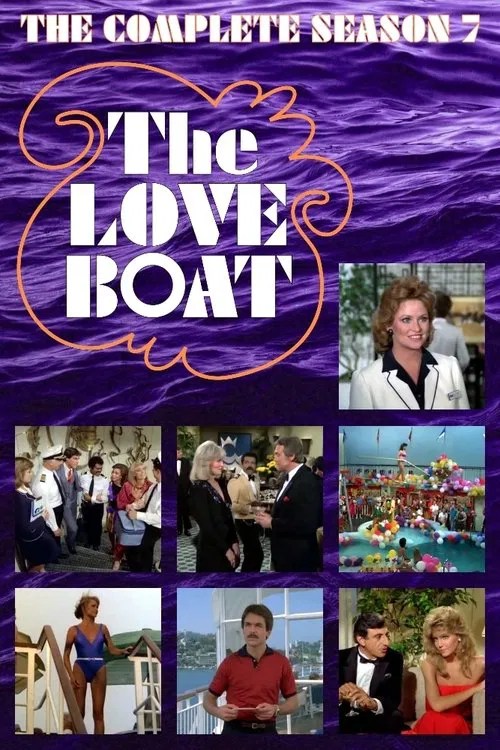
Welcome to Retro Television Reviews, a feature where we review some of our favorite and least favorite shows of the past!  On Wednesdays, I will be reviewing the original Love Boat, which aired on ABC from 1977 to 1986!  The series can be streamed on Paramount Plus!

This week, Doc Bricker gets a surprise!

Episode 7.3 “Bricker’s Boy/Lotions of Love/The Hustlers”

(Dir by Jerome Courtland, originally aired on October 8th, 1983)

Doc Bricker has a son!

Well, actually, it’s more a case of David (Timothy Patrick Murphy) claiming to be Doc’s son.  It turns out that David’s mother was one of Doc’s ex-girlfriends.  By the end of the cruise, Doc has fully accepted David as his son but then David admits that he’s been lying the whole time.  Doc is not his father.  However, he wishes that Doc was his father.  So, Doc — who has got to be the most understanding guy on the planet — adopts him.  Vicki has a crush on the loser and Captain Stubing seems to be okay with that, despite the fact that David is a liar who took a cruise without even bothering to buy a ticket.  Seriously, I’m kind of worried about Vickie at this point.  She’s so bereft of friends her own age that she falls in love with every teenage boy who boards the ship.

While Vicki is busy making a bad decision, gigolo Gary Thomas (Ted McGinley) is traveling with his employer, Arlene (Vera Miles).  Gary falls for Fran (Constance Forslund), who is traveling with her sugar daddy, Roy (Chuck Connors).  Luckily, Arlene falls for Roy, which frees Gary up to date Fran.  Wow, what a sleazy story!  I mean, it’s probably as close to real life as this show ever got but still….

Finally, advertising executive Andy O’Neal (Brodie Greer) works on a perfume campaign and ends up falling in love with his client’s flighty daughter (Lydia Cornell).  Good for them!

Yeesh.  I usually love The Love Boat but this sure was a bland episode!  Not even Ted McGinley pretending to be a gigolo could liven this one up.  I will say that Bernie Kopell once again proved himself to be far better than the material that he had to work with.  But otherwise, this episode was pretty dull.

How coked up was Julie?  Obviously nowhere near enough.


THE STONE KILLER – The Latest Episode of the “This Week in Charles Bronson” Podcast is Available Now!


It has been a while since the “This Week in Charles Bronson” podcast has dropped a new episode focused on a specific Charles Bronson film. That ends today as our episode on the excellent 1973 badass cop film THE STONE KILLER is here for your listening pleasure. Join me and our host Eric Todd, along with special guests “Fanacek” (who hosts one of my very favorite pop culture podcasts) and on-line film critic Robert Baum, as we discuss the film from many different facets. You never know what rabbit holes we’ll go down, what theories we’ll share, or which crazy directions the conversation may head. We’re just fans of Charles Bronson, movies and TV shows, and we love to share that with each other and all of you.

One of the best things about THE STONE KILLER is its incredible cast. Besides Charles Bronson, we get the opportunity to dive off into the careers of cast members like Three’s Company alums John Ritter and Norman Fell, Oscar winner Martin Balsam, the Incredible Hulk‘s nosy reporter Jack Colvin, Papa Walton, and even B-movie queen Roberta Collins. Plus, many more!

So, if you have a little time on your hands, and you think it might be fun to listen to some extremely cool folks (or maybe movie nerds depending on your way of thinking) talking about Charles Bronson’s THE STONE KILLER, I’ve linked to the YouTube version below. It’s also available on Spotify and Apple Podcasts!

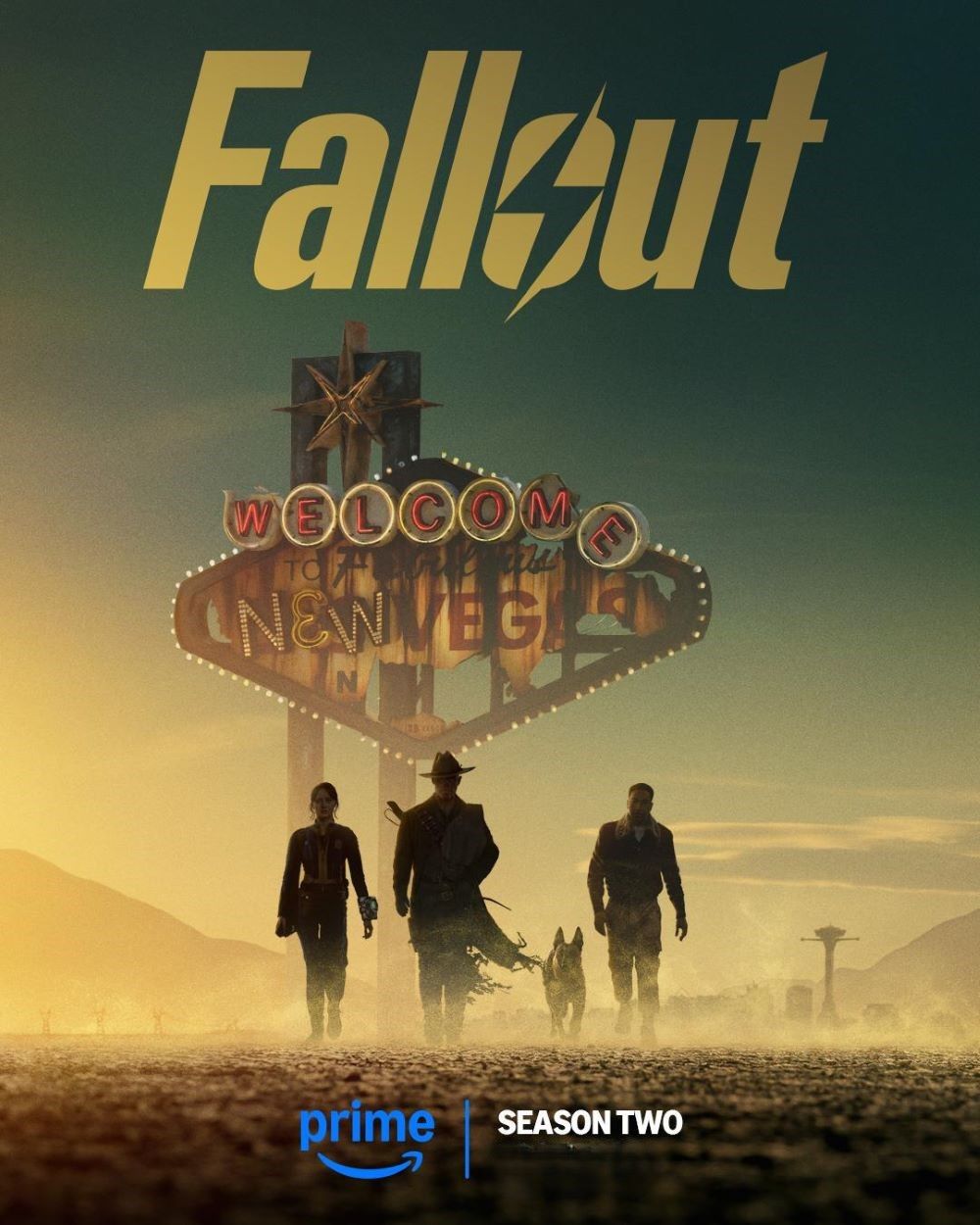
Review: Fallout (Season 2, Episode 5 “The Wrangler”)


“Where I come from, which is America, the House always wins.” — Robert House

Episode 5 of Fallout Season 2 (“The Wrangler”) is the point where the show stops flirting with heartbreak and finally commits to it, using a brutally inevitable betrayal to crack open its core relationships while quietly escalating the bigger myth arc in the background. It is not the flashiest hour of the season, but it is one of the most emotionally coherent, and that focus is both its biggest strength and its main limitation.​

Most of the episode’s weight lands on the dynamic between Lucy and The Ghoul, and the writers lean hard into that “we knew this was coming” tension without turning it into a cheap twist. The Ghoul’s choice to hand Lucy over to Hank in exchange for the continued survival of his cryo-frozen family feels properly miserable: the kind of decision that is logically defendable and morally ugly at the same time. Watching Lucy slowly clock that she’s been a bargaining chip this whole time, right after she and Coop finally seemed to be in sync, gives the betrayal some sting beyond the spectacle of her Power Fist launching him out the window and onto a pole. The performances sell it; Ella Purnell plays Lucy’s hurt as a mix of disbelief and exhaustion, while Walton Goggins lets just enough regret bleed through the monster façade to make it clear that this is hurting him, too, even as he pulls the trigger on the plan.​

Structurally, the episode benefits from narrowing its scope to a few intersecting tracks instead of trying to cover the entire wasteland at once. On the Strip, Lucy’s Buffout fallout continues, sending her hunting for Addictol and instead into a mess involving price-gouging, a fake Sonny, and a very dead real Sonny in a bucket. That sequence walks the line between dark comedy and horror in a way that fits Fallout nicely, turning a simple “go buy meds” errand into a reminder that every familiar storefront can hide a fresh corpse and a new trauma. In parallel, The Ghoul drifts toward his fateful deal at the hotel bar, framed as a guy who has been running for two centuries and finally hits a wall he can’t brute-force his way through. The pacing is patient without feeling sluggish, and the way these threads converge in the final act makes the ending feel earned rather than engineered.​

The big lore bomb this week is less about who’s shooting whom in New Vegas and more about who actually ended the world and what Vault-Tec was really doing. Mr. House’s scenes with pre-Ghoul Cooper ramp up the paranoia by suggesting that Barb may not be the one who actually pushed the apocalypse over the edge, hinting at “another player at the table” tied to the creation of Deathclaws and bigger, unseen forces. It is classic Fallout conspiracy energy: corporations within corporations, shadow projects like FEV and “Future Enterprise Ventures,” and a corporate end-of-the-world plan that feels less like a singular villain’s choice and more like the outcome of a lot of self-interested people nudging the same disaster. The episode does not over-explain any of this, which is smart; it plants a few specific clues—like Norm’s discovery that Vault-Tec’s phase two revolves around genetic testing and forced evolution—and then lets your mind connect it to everything from Deathclaws to the vault experiments we have already seen.​

Norm’s storyline, which could easily feel like a cutaway from the “real” show, actually rebounds this week by giving the corporate plot teeth. His trip with the defrosted junior executives to Vault-Tec HQ mixes bleak humor—finding Janice’s corpse still at her desk, complete with coworkers sniping about her work ethic—with genuine dread as he starts to piece together that FEV is basically a “gene-altering agent for organism supercharging.” It is not subtle, but it works, especially when you realize how neatly it dovetails with what Hank is doing with that head-device in New Vegas: mind control, memory wiping, and turning humans into tools that fit Vault-Tec’s objectives better than their original personalities ever would. Norm getting choked out just as he starts to get real answers is a little on-the-nose as a cliffhanger, yet it keeps his thread from feeling aimless and promises that his office snooping will matter more than it might initially seem.​

On the spectacle side, the episode plays a funny trick: it teases what looks like a huge Deathclaw set piece on the Strip and then has Lucy and The Ghoul do what any sensible player has done in the games—run like hell and load into a different area. For anyone hoping for a full-on Deathclaw brawl, it is bound to be a letdown, especially since three of them are staged as this major escalation and then promptly sidestepped. That said, the choice is thematically on point; the show leans into the fear of the creatures rather than the mechanics of fighting them, and seeing The Ghoul genuinely terrified ties nicely back to his first encounter with one in Alaska two centuries ago. New Vegas itself feels more alive here, with Freeside looking busier and the Strip more dangerous, even if the action is more about near-misses and quick exits than big choreographed battles.​

The humor is hit-and-miss but usually lands on the right side of weird. The Snake Oil Salesman’s return, only to be drafted as Hank’s “voluntary” guinea pig for a head gadget that can pop skulls or wipe memories, leans into the show’s nastier comedic streak. His eagerness to forget a life full of sleaze says a lot about him in a single, darkly funny beat, while also underlining how casually Hank treats human minds as raw material. Not every gag works—some of the junior exec bits feel like they are chasing a joke about tech-bro sociopathy we have already seen before—but the episode keeps the comedy tightly woven into character and plot instead of dropping in random skits.​

If there is a legitimate knock against this episode, it is that the emotional gut-punch between Lucy and The Ghoul is so strong that almost everything else can feel like setup by comparison. The supposed “answer” about who dropped the bombs is really more of another mystery box, and viewers looking for a clearer reveal may feel strung along. The Deathclaw fake-out also risks feeling like the show talking a big game and then refusing to spend the budget to pay it off, even if the character beats that replace the fight are strong. And while Norm’s storyline is finally paying off, it still sometimes plays like a slower, less visceral series running parallel to the one in New Vegas, which might frustrate anyone hooked primarily on Lucy and The Ghoul’s arc.​

Still, as a midpoint episode, this is exactly where Fallout needs to hurt. The Ghoul’s betrayal is painful precisely because the show has spent so much time making Lucy good for him, setting her up as the one person who makes his humanity flicker back on—and then forcing him to choose the ghosts of his past over the partner standing right in front of him. Episode 5 might not deliver the biggest action of the season, but it gives the story a necessary emotional crash-out, sharpens the larger Vault-Tec conspiracy, and leaves nearly every character in a worse, more interesting place than they started.

Fallout Season 2 Episodes

  1. Episode 1: “The Innovator”
  2. Episode 2: “The Golden Rule”
  3. Episode 3: “The Profligate”
  4. Episode 4: “The Demon in the Snow”

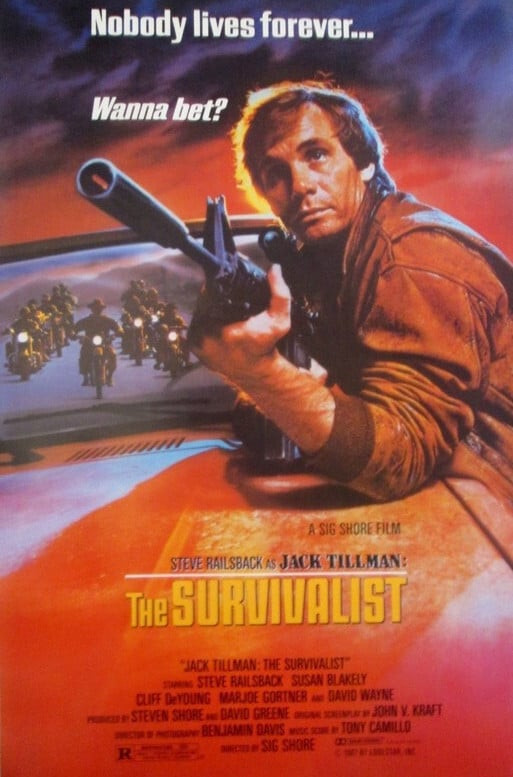
The TSL Grindhouse: The Survivalist (dir by Sig Shore)


1987’s The Survivalist opens with a mushroom cloud forming over a frozen landscape.

In America, a nervous-looking newscaster announces that someone has set off a nuclear bomb in Siberia.  The bomb was apparently a “suitcase bomb” and it was probably set off by a group of terrorists who figured bombing one of the most desolate and sparsely-populated places on Earth would make their point.  However, the Russians are convinced that America was behind the bomb.  Nuclear war is eminent.

People go into a panic.  Civil disorder breaks out.  Even a small town in South Texas finds itself in the grip of societal collapse.  Fortunately, independent builder Jack Tilman (Steve Railsback) has spent his life preparing for this moment.  He has hundreds of guns and explosives and he’s prepared to take his family into the desert while civilization collapses.  When a desperate neighbor comes back Jack’s house and asks for a gun, Jack gives him a shotgun and then reacts with shocks when his friend reveals that he’s never fired a gun before.  Considering that they live in South Texas, I’m surprised too.

(Seriously, how do they scare off the coyotes?)

Jack leaves his home to get some gasoline for their trip.  While he’s out, he’s harassed by the motorcycle riding Lt. Youngman (Marjoe Gortner).  Youngman is with the National Guard and, apparently, the National Guard has turned into a motorcycle gang.  Youngman is declaring martial law and setting himself up as a warlord.  With his perpetual smirk and his feathered hair, Lt. Youngman epitomizes the arrogance of authority.  Jack has no use for him.  Jack also has no use for anyone who wants to keep him from getting his money out of the bank.  Jack has access to a bulldozer, after all.

Unfortunately, while Jack is arguing with Youngman and smashing into the bank, a group of hippies are breaking into his house and killing his family.  A half-crazed Jack kidnaps two of his friends — Dr. Vincent Ryan (Cliff DeYoung) and his wife, Linda (Susan Blakely) — and he takes them into the desert with him.  When Vincent demands to know why they’ve been kidnapped, Jack says that he’s trying to protect them.  Linda gets it.  Unfortunately, Vincent doesn’t.

Last night, I was searching for some Marjoe Gortner films to review.  I came across The Survivalist on Letterboxed and I also came across some amazingly vitriolic reviews, largely from Leftists who accused the film of being a paranoid right-wing fantasy.  I read those reviews and I thought to myself, “It stars Steve Railsback and Marjoe Gortner and it annoys the commies?  I have to watch this!”  I was able to track the film down on YouTube and I proceeded to spend 90 minutes watching civilization collapse.

Is it a good film?  It depends on how you define good.  It’s a low-budget, unashamedly trashy film that was clearly meant to appeal to people with a very definite worldview, one that the filmmakers may not have shared.  (Most films are made solely to make money and any message that is selected is selected out of the hope that it will be profitable.)  The government is corrupt.  Most of the citizens have become complacent and aren’t prepared to handle any sort of crisis.  When civilization collapses, only men like Jack Tilman and Lt. Youngman will thrive because they’re willing to be ruthless.  To try to rationalize the situation, as Dr. Ryan does, is an often fatal mistake.  In short, The Survivalist is a very paranoid film.  That said, its story and its worldview really isn’t all that different from One Battle After Another.  

I enjoyed The Survivalist, precisely because it is such a shameless film.  This is the type of movie where the National Guard rides motorcycles and blow up random buildings for fun.  It’s the type of film where one gunshot can cause a car to explode.  It’s the type of film where actors like Cliff DeYoung and Susan Blakeley attempt to find some sort of deeper meaning in their awkward dialogue while Steve Railsback does his Clint Eastwood impersonation.  Best of all, it’s got Marjoe Gortner going totally over-the-top as a smug authority figure.  It’s a fun movie, a trashier version of Red Dawn.

What’s not to love?

Song of the Day: Lo and Behold, covered by Marjoe Gortner


It’s Marjoe Gortner’s birthday!

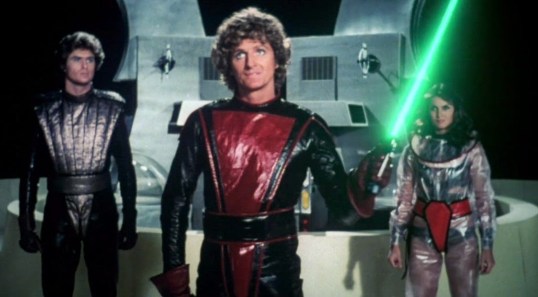
Marjoe Gortner is a former child evangelist who had a long career as an actor in films, usually playing sinister characters.  His most-seen film was probably Earthquake.  My favorite Marjoe film is Starcrash.  That said, Marjoe’s best performance was probably as himself in the candid documentary, Marjoe.  The Oscar-winning film featured a look behind the scenes of the religious revival industry, with Marjoe as an amoral tour guide who discussed how he didn’t believe what he was preaching and who had basically been forced into the business by his parents.  Marjoe described how every word he preached was calculated to inspire people to donate more money to his ministry.  Marjoe described himself as being “bad but not evil.”

In 1972, Marjoe recorded an album called, after his famous documentary quote, Bad But Not Evil.  Today’s song of the day is Marjoe Gortner covering Bob Dylan’s Lo and Behold on that album.

I pulled out for San Anton’I never felt so goodMy woman said she’d meet me thereAnd of course, I knew she would
The coachman, he hit me for my hookAnd he asked me my nameI give it to him right awayThen I hung my head in shame
Lo and behold! Lo and behold!Looking for my lo and beholdGet me outta here, my dear man
I come into PittsburghAt 6:30 flatI found myself a vacant seatAnd I put down my hat
“What’s the matter, Molly, dear?What’s the matter with your mound?”“What’s it to ya, Moby Dick?This is chicken town!”
Lo and behold! Lo and behold!Looking for my lo and beholdGet me outta here, my dear man
I bought myself a herd of mooseOne she could call her ownWell, she came out the very next dayTo see where they had flown
I’m going down to TennesseeGet me a truck or somethingGonna save my money and rip it up
Lo and behold! Lo and behold!Looking for my lo and beholdGet me outta here, my dear man
Now, I come in on a Ferris wheelAnd boys, I sure was slickI come in like a ton of bricksLaid a few tricks on them
Going back to PittsburghCount up to 30Round that horn and ride that herdGonna thread up
Lo and behold! Lo and behold!Looking for my lo and beholdGet me outta here, my dear man

Scenes That I Love: Faye Dunaway In Network


Today, the Shattered Lens wishes a happy birthday to actress Faye Dunaway.

In this scene from 1976’s Network, television executives Faye Dunaway and Robert Duvall discuss the best way to deal with Howard Beale and his falling ratings.

4 Shots From 4 Films: Special Steven Soderbergh Edition


4 Shots From 4 Films is just what it says it is, 4 shots from 4 of our favorite films. As opposed to the reviews and recaps that we usually post, 4 Shots From 4 Films lets the visuals do the talking.

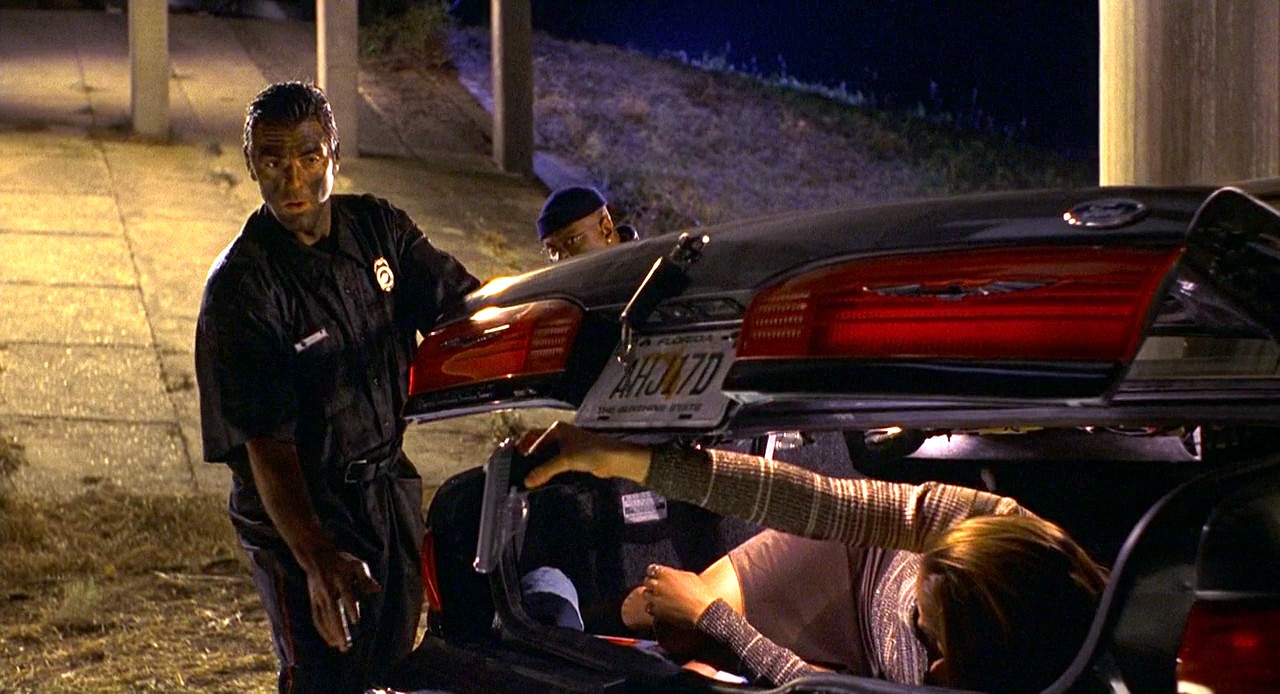
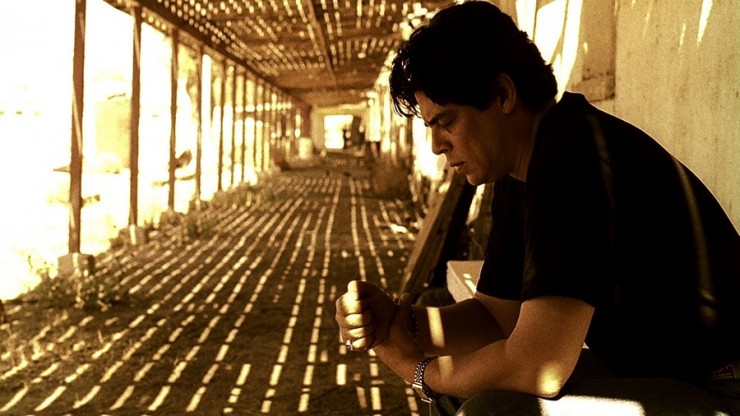
Today, we wish a happy birthday to one the early pioneers of independent film, Steven Soderbergh.  Soderbergh was 26 years old in 1989, when he became the youngest director to ever win the Palme d’Or at Cannes.  Soderbergh went on to become one of the busiest and most interesting director in Hollywood, working in all genres and inspiring filmmakers the world over.

4 Shots From 4 Films

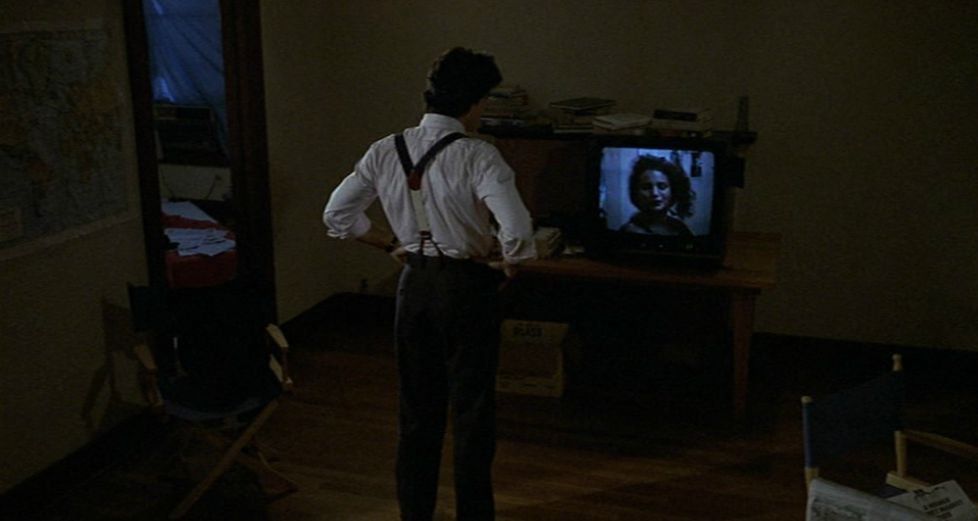
sex, lies, and videotape (1989, directed by Steven Soderbergh)

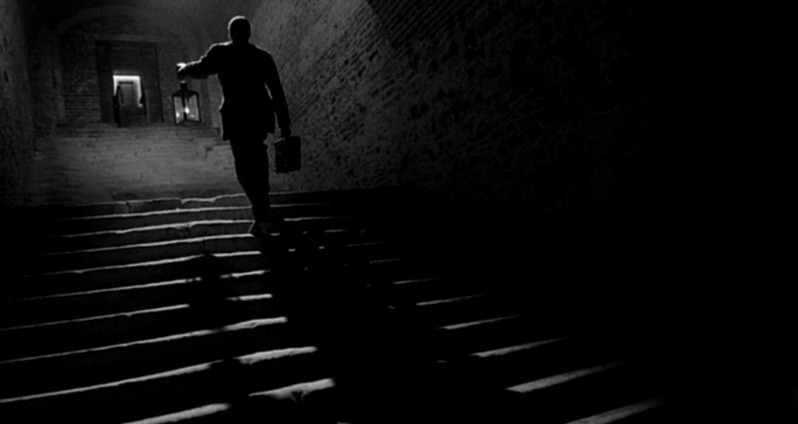
Kafka (1991, directed by Steven Soderbergh)

Out of Sight (1998, directed by Steven Soderbergh)

Traffic (2000, directed by Steven Soderbergh)