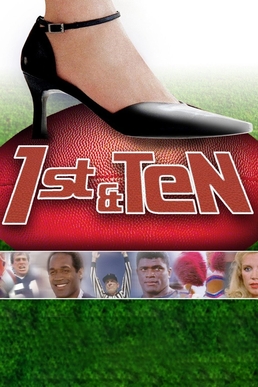
Late Night Retro Television Review: 1st & Ten 2.8 “Easy Come Easy Go”


Welcome to Late Night Retro Television Reviews, a feature where we review some of our favorite and least favorite shows of the past! On Wednesdays, I will be reviewing 1st and Ten, which aired in syndication from 1984 to 1991. The entire series is streaming on Tubi.

Time to get back to 1st & Ten.  To be honest, with all the excitement of the holiday season, I totally forgot that I was reviewing this show.

Episode 2.8 “Easy Come, Easy Go”

(Dir by Burt Brinckerhoff, originally aired on January 6th, 1987)

This is yet another episode of 1st & Ten that felt as if it was put together almost at random.

Mad Dog (Tony Longo) has a one night stand with a lawyer named Molly (June Chadwick) and he ends up becoming obsessed with her.  He shows up at a fancy cocktail party being hosted by Molly’s law firm.  “This man is stalking me!” Molly yells.  All of the men at the party are like, “Mad Dog!  You’re my favorite player!”  Now, I will say that this is a realistic portrayal of how most men act whenever they see a professional athlete but it still felt a bit icky to watch.

Jethro takes a blood test and discovers that little Tommy is not his son.  But he still wants to be a part of the kid’s life.

Yinessa sees a tabloid newspaper headline about his “nude pictures” and starts yelling at a supermarket manager for selling the paper.

Waldren is in financial trouble because he’s been tossing money around.  A group of gamblers approach him and offer to pay to shave points.  OJ Simpson (in the role of offensive coordinator T.D. Parker) tells Waldren, “I’m keeping my eye on you.”  Oh no!  LOOK OUT, WALDREN!

However, Waldren does not shave points.  Instead, he catches the ball that seals the Bulls victory in their first playoff game.  Woo hoo!  Go, Waldren!

A lot happened but, in typical 1st & Ten fashion, none of it added up to much.  It could be because the streaming episodes were edited for syndication but this is just a weird show.  Every episode feels as if their huge chunks of plot missing.

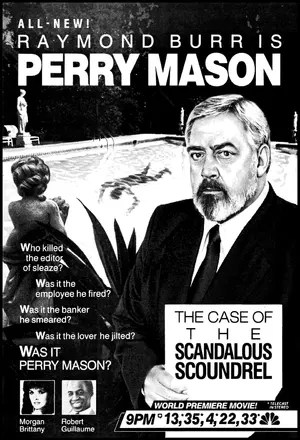
I Watched Perry Mason: The Case of the Scandalous Scoundrel (1987, Dir. by Christian I. Nyby II)


Sleazy magazine publisher Harlan Wade (Robert Guillaume) has made a lot of enemies through his scandal sheet.  He just published a story suggesting that Perry Mason (Raymond Burr) and Della Street (Barbara Hale) are more than just friends.  Well, duh!  Everyone knows Perry and Della are in love!  Perry still wants to sue him but then Harlan turns up dead in his swimming pool.  It would have been interesting if Perry had been a suspect but instead the police arrest Michelle Benti (Susan Wilder), a reporter who was recently fired by Wade.  Because Michelle is the ex-girlfriend of Paul Drake, Jr. (William Katt), Perry defends her in court.

This is another case of someone close to the Mason crew being accused of murder.  The D.A. should know better than to arrest anyone who knows Perry, Della, or Paul.  Michelle first appeared in The Case of the Shooting Star but she was played by a different actress.  It’s still good that, for once, the series actually acknowledged one of Paul’s ex-girlfriends.  I worry about Paul and the way he falls in and out of love.

This one had a good mystery and a really memorable supporting cast.  Morgan Brittany, Yaphet Kotto, Wings Hauser, and George Grizzard all played potential suspects.  I liked that this was one of those mysteries where the victim went to a party before he died and everyone there threatened to kill him at some point.  This movie also featured one of the better courtroom confessions.  Raymond Burr uses a cane in this episode and is usually filmed either sitting down or leaning against something for support.  Even though Burr obviously wasn’t feeling well, it’s nice to see him and Barbara Hale share some sweet scenes together.

Who sent Della flowers, champagne, and perfume?  Watch to find out!

Camouflage (2000, directed by James Keach)


It’s strange to hear Leslie Nielsen drop an F bomb.

That was my main though I watched Camouflage.  Leslie Nielsen plays a hard-boiled private detective named Jack Potter who reluctantly takes on an apprentice named Matty McKenzie (Lochlyn Munro).  Mostly to get Matty, a failed stage actor, out of his hair, Jack sends him to handle a minor case in the small town of Beaver Ridge.  The minor case becomes a major case when it becomes clear that a murder is being planned.

Camouflage starts out like a typical Leslie Nielsen mockbuster, with Nielsen providing a ridiculous, Frank Drebin-style narration.  But the film itself develops into a dark comedy where Matty finds himself in a small town where everyone’s got secret.  Nielsen gives an almost-serious performance as Potter, playing him as a cynic with a tragic backstory and little patience for his protegee.  There’s a tonal imbalance between the moments of broad comedy and the more serious moments and the film doesn’t work as a result but it is interesting to see a post-Airplane! Leslie Nielsen playing things relatively straight.

One interesting thing about Camouflage is that it was written by Billy Bob Thornton and Tom Epperson but, in the final cut, the screenplay is credited to Reginald Perry.  (The small town setting is one that Thornton used frequently in his scripts and it’s easy to imagine him playing the role of Jack Potter in alternate version of this film.)  Camouflage reportedly sat on the shelf for quite a while before it was finally given a release and Nielsen’s narration often feels like it was something that was added in post-production to try to both bring the disjointed film together and to draw in the Naked Gun fans.  I have a feeling the story behind this film is probably more interesting than the film itself.

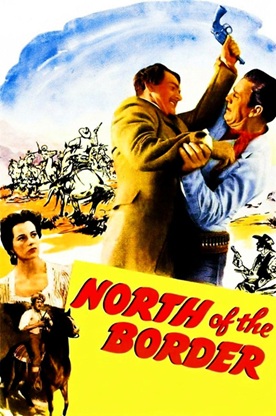
North of the Border (1946, directed by B. Reeves Eason)


Rancher Bob “Utah” Neyes (Russell Hayden) heads into Canada to meet up with his business partner.  Unfortunately, his partner has been murdered by outlaw Nails Nelson (Douglas Fowley).  Mountie Jack Craig (Lyle Talbot) almost arrests Utah for the crime but he becomes convinced that Utah is innocent and Nails is guilty.  Along with fur trader Ivy Jenkins (I. Stanford Jolley), Craig and Utah try to break up Nails’s fur-smuggling operation.

While I was watching it, I thought this movie seemed even more familiar than the usual Poverty Row western.  I realized that’s because I had actually seen Russell Hayden and most of the rest of the cast in another movie that had a similar plot, right down taking place on the other side of the border.  That other movie was called ‘Neath Canadian Skies.  Both it and North of the Border are among the four Canadian western films that Robert Lippert produced in 1946, all of which starred Russell Hayden and were directed by B. Reeves Easton.  Supposedly, it took 20 days to shoot all of them.

As for North of the Border, it’s only 42 minutes long and none of those minutes are wasted.  There’s all of the usual horse chases and gunfights that fans want from these films.  For me, the most interesting thing about the film was getting to see Lyle Talbot play something other than a boring authority figure.  Also, this film features Inez Cooper, a pretty redhead who had a short career but whose beauty and personality as well-remembered by fans of Poverty Row westerns.  She plays the love interest in this one and there’s no doubt that most men would give up living in Utah for her.

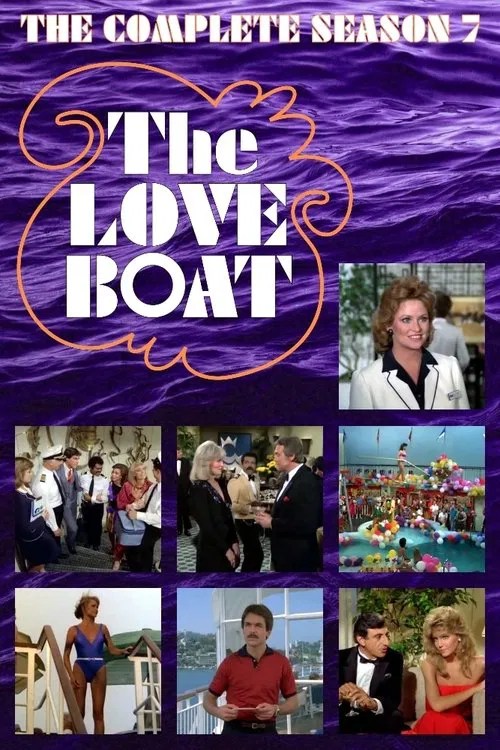
Retro Television Review: The Love Boat 7.1 “China Cruise: The Pledge/East Meets West/Dear Roberta/My Two Dumplings”


Welcome to Retro Television Reviews, a feature where we review some of our favorite and least favorite shows of the past!  On Wednesdays, I will be reviewing the original Love Boat, which aired on ABC from 1977 to 1986!  The series can be streamed on Paramount Plus!

This week, we begin season 7!

Episode 7.1 “China Cruise: The Pledge/East Meets West/Dear Roberta/My Two Dumplings”

(Dir by Robert Scheerer, originally aired on October 1st, 1983)

It’s time for season seven of The Love Boat!

Gopher has been promoted to head purser.  For six seasons, he was assistant purser and I always wondered who the head purser was.  Apparently, there wasn’t one because Stubing promoted him without firing anyone.  It’s possible that I just don’t know how cruise ships work.

The Love Boat crew starts off the season with a cruise around China!  I guess the old saying is true — only Stubing could go to China.  I kept waiting for Stubing to announce that he recognized Taiwan as an independent nation but he didn’t.  I was a little bit disappointed by that.  Instead, Stubing and the crew saw the sights.  There’s a panda bear!  There’s the Great Wall of China!  There’s a bunch of young people all singing, almost as the future of their loved ones depended on doing a good job!  In fact, this premiere episode is really more about seeing the sights of China than it is about any of the drama playing out on the boat.  I guess that makes since.  This episode aired in the pre-Internet age of 1983, so for the audience, this really was a chance to see a world that they probably couldn’t otherwise experience.  It’s not like they could go on YouTube and do a search for China or something like that.  It was up to The Love Boat to open up the world!

That said, Chinese medicine came in for a bit of criticism.  Susan Anton played a woman who didn’t trust doctors and who thought buying a Chinese symbol for good luck would keep her safe.  However, when she suddenly had intense stomach pain, it was up to Doc to save her life.  Where’s your good luck charm now!?

Linda Evans played a woman who fell in love with Lee Majors, little suspecting that Majors was the author of the “Dear Roberta” advice column.  Some of “Roberta’s” advice led to Evans divorcing her previous husband.

Lee Horsley played a man with two girlfriends (Erin Moran and Pat Klous).  Uh-oh!  They all ended up on the boat at the same time!

Finally, Ursula Andress played a dying woman who fell for a mysterious but charming passenger (John Forsythe).  Unfortunately, Forsythe had a warrant out for his arrest and Detective Michael Constantine was determined to take him into custody.  This story was unique in that it had an unhappy ending!  While the crew had a few unhappy endings (Remember when Julie was left at the altar?), this was the first time that things didn’t work out for a passenger.

Was this a good episode?  It was, strictly from the point of view that I like The Love Boat crew and I enjoy spending time with them.  This episode was occasionally a bit too much of a travelogue but the Andress/Forsythe story carried some weight.  All in all, it was a decent start for season 7.

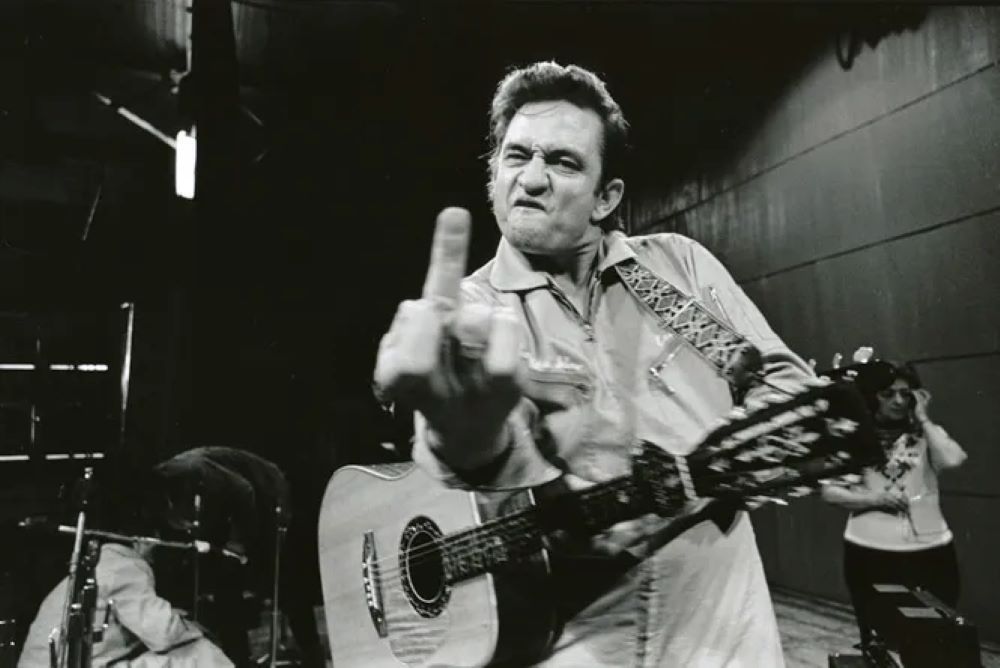
Song of the Day: Cocaine Blues (by Johnny Cash)


Johnny Cash’s “Cocaine Blues” rolling over Lucy gleefully mowing down the ghoul Elvis-faction is one of those perfectly twisted Fallout moments — absurd, violent, and darkly funny. The song’s tale of a killer singing about his own crimes while Lucy grins through the carnage gives the whole scene a warped playfulness. Cash’s deliberate rhythm, all swagger and doom, turns what could’ve been grim into something closer to a dance — a gunslinging ballet where the wasteland’s chaos feels almost celebratory. That contrast is what makes it pop.

In that moment, “Cocaine Blues” becomes more than just needle-drop nostalgia; it’s commentary on Lucy’s transformation. She’s still got that vault-born cheer in her step, but now there’s something unhinged behind it — she’s caught up in the thrill. The imagery of her gunning down rhinestoned ghouls to Cash’s steady beat blurs innocence and indulgence — she’s no longer reacting to the brutality around her, she’s participating in it with genuine abandon. The song’s tale of killing and comeuppance hangs over her like prophecy, reminding us that even the brightest smile in the wasteland can cast a long shadow.

As the gunfire fades and Cash’s voice trails off, the irony hangs in the dust. Fallout has always thrived on these juxtapositions — the sunny Americana soundtrack to utter moral decay. “Cocaine Blues” leaves the scene pulsing with contradictions: joy and violence, freedom and madness, music and mayhem. It’s the sound of Lucy crossing another invisible line while smiling all the way through it, and Cash is there to make sure we don’t miss the joke.

Cocaine Blues

Early one mornin’ while makin’ the rounds
Took a shot of cocaine and I shot my woman down
Went right home and I went to bed
I stuck that lovin’ 44 beneath my head

Got up next mornin’ and I grabbed that gun
Took a shot of cocaine and away I run
Made a good run, but ran too slow
They overtook me down in Juarez, Mexico

Laid in the hot joints takin’ the pill
In walked the sheriff from Jericho Hill
He said, “Willy Lee, your name is not Jack Brown
You’re the dirty hop that shot your woman down”

Said, “Yes, sir, yes, my name is Willy Lee
If you’ve got a warrant, just read it to me
Shot her down because she made me sore
I thought I was her daddy, but she had five more”

When I was arrested, I was dressed in black
They put me on a train and it took me back
Had no friends for to go my bail
They slapped my dried up carcass in that county jail

Got up next mornin’ ’bout a half past nine
Spied the sheriff coming down the line
Hopped and he coughed as he cleared his throat
He said, “Come on you dirty hop into that district court”

Into the courtroom, my trial began
Where I was handled by 12 honest men
Just before the jury started out
I saw that little judge commence to look about

In about five minutes in walked the man
Holding the verdict in his right hand
The verdict read in the first degree
I hollered, “Lordy, Lordy, have mercy on me”

The judge he smiled as he picked up his pen
99 years in the Folsom pen’
99 years underneath that ground
I can’t forget the day I shot that bad bitch down

Come on you hops and listen unto me
Lay off that whiskey and let that cocaine be

The Covers of Headquarters Detective


Artist Unknown

Artist Unknown

It appears that there were at least two pulp magazines called Headquarters Detective.  This was a version that ran for 8 issues in 1936.  And then there’s the better-known version that ran from 1940 t0 1955.  As you can tell from the covers, both versions told the same type of true crime stories.  The covers definitely emphasized the sordid aspects of the stories within.

by Sam Cherry

by Sam Cheery

by Sam Cherry

by Allen Gustav Anderson

Artist Unknown

Artist Unknown

Artist Uknown

by Sam Cherry

by Fred Charles Rodewald

by Allen Gustav Anderson

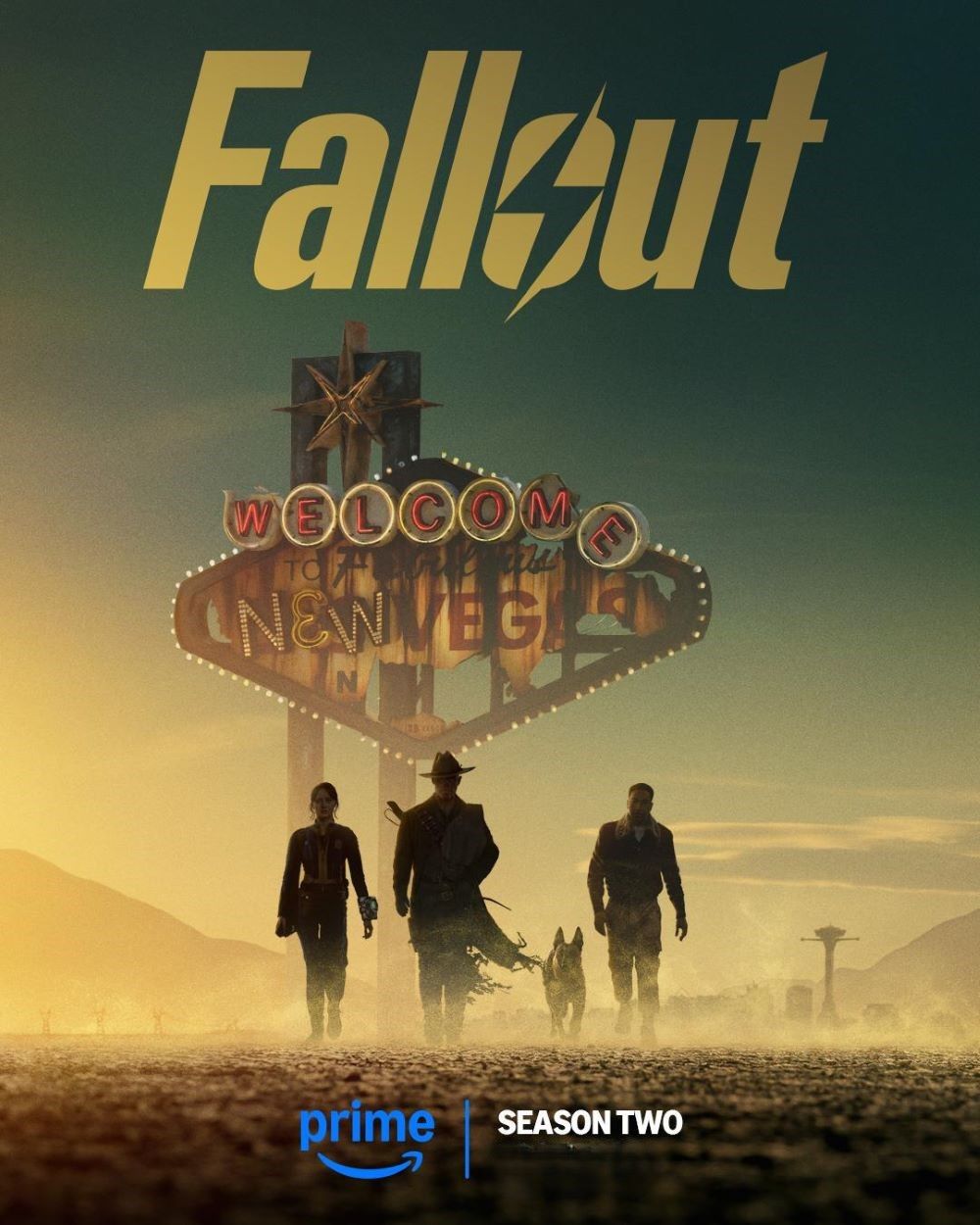
Review: Fallout (Season 2, Episode 4 “The Demon in the Snow”)


“If doing the right thing makes me a traitor, then maybe I’m not the one who’s broken.” — Maximus

Episode 4 of Fallout Season 2, “The Demon in the Snow,” feels like the moment the season properly hits its stride: nasty, funny, and chaotic, but with just enough focus that it never collapses into pure noise. The hour leans into monster-movie horror and drug-fueled mayhem while still pushing the major storylines forward in ways that feel purposeful rather than like random side quests. It is very much a mid-season “everything is escalating at once” chapter, and for the most part, that energy works in its favor.

The episode is built around escalation on multiple fronts. On the surface level, that means finally unleashing a full-on deathclaw, escalating Brotherhood tension into outright war, and sending Lucy stumbling into New Vegas with a chemically assisted death wish. Underneath the spectacle, though, the script keeps circling one idea: the ways addiction, ideology, and systems twist people into thinking their worst decisions are actually noble. That combination of pulpy set pieces wrapped around a fairly sharp thematic throughline is where the episode finds its groove, even if not every beat lands cleanly.

The Cooper flashbacks give the title “The Demon in the Snow” its most literal read. He’s stuck in a remote war zone long before the bombs fall, only to come face to face with a deathclaw framed as this almost mythic horror cutting through soldiers like they barely exist. The sequence works both as a tense creature-feature moment and as a reminder that the apocalypse wasn’t born just from nukes; it was also born from the weapons and bioweapons people created and then failed to control. There’s something quietly grim in the way Cooper realizes that whatever “victory” his side claims out here has less to do with human heroism and more to do with the nightmare they’ve unleashed.

That past horror reverberates nicely against Lucy’s present-day story. She wakes up in an NCR camp wired to Buffout after being dosed for days, which means she’s basically sidelined into instant addiction. The show has a dark sense of humor about it: Lucy’s twitchy, hyper-focused, and suddenly way too ready to bulldoze through anything that isn’t directly tied to rescuing her father. She frames staying on the drug as a moral choice—if it helps her get to Hank faster, then it must be “right”—and that rationalization is exactly the sort of self-delusion the episode keeps poking at. The Ghoul plays the exasperated straight man here, watching her slide further into this chemically boosted version of herself that’s both capable and deeply compromised.

Their approach to New Vegas walks a satisfying line between fresh ground and game nostalgia. The city’s automated defenses are already wrecked by the time they roll up, which kills any chance of a slow-burn infiltration and immediately tells you something very bad has been here recently. The reimagined Kings—now a feral ghoul faction that riffs on the Elvis-obsessed gang from Fallout: New Vegas—become cannon fodder once Lucy lets the Buffout and her revenge drive take the wheel. The fight that follows is gory, brisk, and noticeably sharper in choreography than some of the earlier action this season. At the same time, the show never totally lets the audience forget how disturbing Lucy’s enthusiasm for the violence actually is; even The Ghoul looks a bit rattled by just how far she’s willing to go now.

The Vegas section eventually funnels into the Lucky 38, where the horror angle fully takes over. The once-bustling casino sits eerily vacant, patrolled only by the corpses of destroyed securitrons and an ominous egg that Lucy discovers a little too late. When the deathclaw finally emerges, it’s staged as a true “oh, we’re in over our heads” moment rather than just a giant CGI flex. The earlier wartime flashback helps here; by the time the creature steps into the light in the present, it already has weight in the story as something more than just a boss fight. Pairing Lucy’s adrenaline and bravado with a threat that genuinely terrifies her is a smart way to cap the episode’s Vegas thread.

Over with the Brotherhood, the show continues leaning into its mix of satire and tragedy. Maximus, scrambling to cover up the fact that he killed his superior, shoves Thaddeus into the dead man’s armor, which leads to some very deliberate physical comedy as Thaddeus fumbles around in a suit he barely understands. Around that goofiness, though, the tension over the cold fusion relic boils over. Leadership squabbles turn ugly, and different Brotherhood factions reveal how thin the veneer of honor and order really is once power is on the line. Dane quietly emerges as one of the more competent and grounded figures, slipping recruits out of harm’s way and securing the relic while the so-called authorities are busy imploding.

The strongest Brotherhood moment belongs to Max’s confrontation with High Cleric Quintus. Max comes clean about killing the Paladin and gets a surprisingly measured response—until he explains that he did it to protect ghouls. The conversation flips on a dime into pure zealotry, with Quintus dropping any pretense of nuance and revealing just how deep the organization’s dehumanizing worldview runs. It’s a blunt scene, but it makes the point: the Brotherhood can talk about discipline and order all it wants, yet underneath that rhetoric sits a fanatical hatred that ultimately guides its choices. When the ships start falling and the Brotherhood’s fortress turns into a battlefield, the chaos feels like the natural endpoint of that ideology colliding with reality.

While all of this plays out topside, the Vault storyline quietly remains the show’s creepiest thread. Vault 33 is dealing with a growing water crisis, yet somehow there are still little pockets of privilege and favoritism intact, which underlines how these supposedly “ordered” societies still manage to ration compassion as much as supplies. Overseer Betty’s attempt to negotiate for help with Vault 32 turns anything resembling cooperation into a transaction; every promise of aid seems to come with a hidden clause involving Hank or Vault 31. At the same time, the group from Vault 31 stumbling into the outside world and discovering things like old food trucks brings a streak of bleak comedy. They’re technically in charge, but their naïveté makes them feel just as fragile as anyone else.

Hints of a looming “phase two” for the Vault experiments keep that story humming in the background, suggesting that the worst outcomes for Vault 32 and 33 haven’t even surfaced yet. The vault sections may be quieter compared to the deathclaw and Brotherhood fireworks, but they deepen the sense that the real villain of the series is still the architecture of Vault-Tec’s grand experiment, not just any one person caught inside it.

If there’s a major knock against the episode, it’s that it occasionally feels like it’s doing too much at once. Between Cooper’s war memories, Lucy’s spiral in Vegas, Brotherhood infighting, and the various vault machinations, the hour sometimes jumps away from a scene right as it’s hitting an emotional high point. Lucy’s addiction arc, in particular, moves so quickly that it risks feeling like a setup beat rather than something fully explored in the moment. On the other hand, that density also gives the world a lived-in, interconnected feel—plotlines bump into each other, collide, and ricochet, instead of sitting on separate tracks waiting for their turn.

Taken as a whole, “The Demon in the Snow” stands out as one of the more compelling entries in Season 2 so far. It delivers on fan expectations with the live-action deathclaw and New Vegas callbacks, but it doesn’t stop at simple spectacle. Lucy’s compromised heroism, Max’s struggle to reconcile his conscience with his faction, Cooper’s haunted past, and the vault dwellers’ slow realization that their home is a gilded cage all circle the same idea: people will justify almost anything—violence, bigotry, self-destruction—if it feels like it serves a higher cause or keeps them from admitting they’re afraid. The episode is rough-edged and occasionally overloaded, but that messiness fits the world it’s dealing with, and it sets the board for the back half of the season in a way that feels genuinely promising.