October Positivity: Meant To Be (dir by Bradley Dorsey)


2012’s Meant To Be tells the story of …. well, it tells a few stories.

Tori (Erin Sossamon) is a teenage girl who has a bright future but only if she can survive her less-than-wonderful present.  She has an abusive boyfriend.  Her parents seem to be absent.  She’s a photographer and her high school counselor (Michael Gross) has helped her to find a scholarship but Tori has recently discovered that she’s pregnant!

Linda Dickson (Erika Eleniak) is a social worker, who lives in a nice house and who has a wonderful husband (Dean Cain) but who also seems to be struggling with an overwhelming depression.  Maybe it’s because her 18 year-old daughter has recently left home for college.  She obsesses on finding newspaper stories about 20 year-olds doing wonderful things.  She cuts them out of the paper and puts them in a shoebox.  (I do the same thing with well-written obituaries.)  When a call comes in about a loud argument at Tori’s house, Linda is the one who investigates.  When she realizes that Tori is pregnant, Linda becomes a part of Tori’s life, giving her advice.  Linda is determined to convince Tori to not get an abortion, even if it means that Tori will lose her scholarship.

And finally, there’s Nathan (Bradley Dorsey), a twenty year-old aspiring writer who doesn’t know what he should write about.  In a voice-over, he says that he’s learned that writing about only what you know can be a trap so he’s decided to write about what he doesn’t know.  (By that logic, my next short story should be about trigonometry.)  Nathan grew up in the foster system.  He doesn’t know who his mother was.  He’s not even fully sure where he was born.  But he’s still going to search for her so he can discover not only where he came from but also why he was abandoned.

Nathan finds himself staying at a mysterious hotel, one where all of the other guests also appear to be people who never knew their mother.  Even though Nathan puts a do-not disturb sign on his door, the motel maid (Della Reese) still regularly enters his room and encourages him to get out of bed and continue his search.  With the help of two other guests, Shelly (Kristen Renton) and Becky (Colleen Foy), Nathan is able to track down his mother and her address….

Can you guess who she is?

Of course, you can!  Now, in all fairness to the movie, it doesn’t present the fact that Linda is Nathan’s mother as some sort of surprise twist.  From the moment that Nathan figures out that his mother was named Linda and then Becky comes across an old glamour shot of Erika Eleniak in a high school yearbook, it’s pretty clear that Linda Dickson gave up Nathan and she’s never stopped thinking about him and that’s why she’s so obsessed with Tori.  That’s not the twist.

But there is a twist and here it is….

Are you ready?

Nathan and all the residents at the hotel and most of the passengers on the flights that Nathan takes in  and out of town are …. ABORTION GHOSTS!  That’s right.  Linda had an abortion.  Nathan was the son she was meant to have but didn’t.

Is it heavy-handed?  Yes.  Is it effective?  Well, the answer to that question probably depends on how you feel about abortion.  That’s one thing about all of these abortion movies.  It’s hard for me to imagine that any of these films — whether it’s the church-produced Pro-Life films or the studio-produced Pro-Choice films — have ever changed anyone’s mind about abortion.  As such, movies about abortion largely exist to preach to the choir.  Abortion movies, regardless of which side they come down on, are largely movie that people watch so that they can nod and think to themselves, “My side really is the only correct one.”

As for the film itself, it’s rather slow and the voice-over tends to get rather portentous.  Dean Cain was probably on the set for one day.  Colleen Foy gave the best performance while Erika Eleniak was a bit bland in the lead role.  On the plus side, it looked like a real movie, which is more than one can say for a lot of faith-based films.  Again, how you react to the film will largely depend on whether or not you agree with its message.
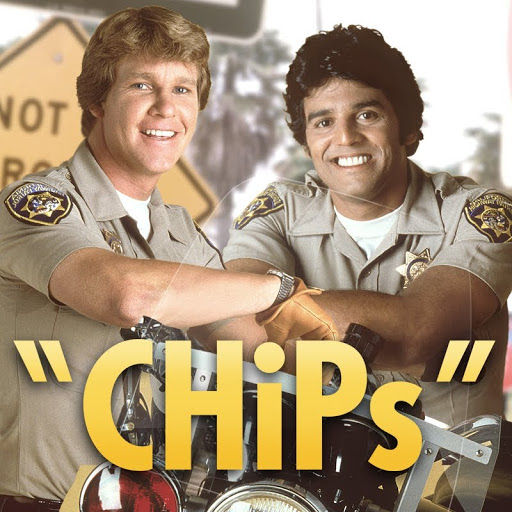
Late Night Retro Television Review: CHiPs 4.18 “The Hawk and the Hunter”


Welcome to Late Night Retro Television Reviews, a feature where we review some of our favorite and least favorite shows of the past!  On Mondays, I will be reviewing CHiPs, which ran on NBC from 1977 to 1983.  The entire show is currently streaming on Prime!

This week, we finally meet Barizca’s family.

Episode 4.18 “The Hawk and the Hunter”

(Dir by Leslie H. Martinson, originally aired on April 5th, 1981)

In this episode, we learn a little bit more about Officer Barizca.  Played by Brodie Greer, Barizca has been an important member of the ensemble since the first season but, up until this point, we really haven’t learned much about his life outside of driving a patrol car and directing traffic at crash sites.

It turns out that Barizca’s father, Pete (Sandy McPeak), is a crop duster.  When it becomes clear that Pete is getting too old to fly his airplane, Barizca takes a leave of absence from the Highway Patrol so that he can help out.  Hopefully, Barizca will find the courage to finally tell his father that it’s time to retire.

Meanwhile, there’s an environmentalist nutjob named Lyle (Dwight Schultz) who is convinced that the Barizcas are spreading poison with their airplane.  Lyle has been sending threats to Pete so, eventually Barizca flies over Lyle and covers him in pesticide to help the Highway Patrol arrest him.  So, I guess Lyle really is going to die now.

At the end of the episode, Pete retires and Barizca returns to patrolling the highways.

This was an okay episode, in that the scenery was nice and I did appreciate that the show made an effort to focus on something other than Ponch being the best at everything.  Dwight Shultz was believably unhinged as Lyle and there was an interesting tension between him and Baker as both of them were Vietnam vets.  Unfortunately, the Barizcas themselves just weren’t that interesting.  This episode was a case of “You’ve seen one strained father-son relationship, you’ve seen them all.”

That said, I hope next week’s episode will introduce us to Grossman’s family.

Horror On TV: Raggedy Ann and Raggedy Andy in The Pumpkin That Wouldn’t Smile (dir by Chuck Jones)


Awwww, that poor pumpkin!  Well, hopefully, he’s smiling now!

This animated special originally aired on Halloween night in 1979.  I would imagine that the crying pumpkin probably traumatized children across America.  Hopefully, all the kids were out trick or treating when this aired.  Myself, I remember that when I was a kid, I would help my mom carve a pumpkin every year.  And then I would get so depressed when we later had to throw it out.  Seriously, I would get really attached to those jack o’lanterns.

Anyway, this cartoon is before my time but I have a feeling that, if I had been around to watch it, I would have been depressed for a whole year afterwards.

Enjoy!

Gelien, Short Film Review, by Case Wright


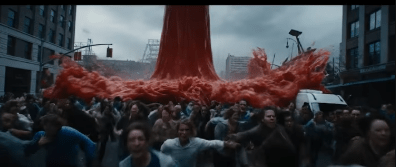
Yes, this is their online poster. Yes, there is no title. Yes, the robot apocalypse will be boring.
I don’t know what jobs AI is going to take away, but it will definitely bore us more quickly. Do we really need to make the Alex Magana’s of the world make more film gonorrhea? What would the penicillin be for an Alex Magana film?

However, Alex Magana did not make this steaming pile of jelly garbage, it was Dark Dabs Horror. The world gets attacked by an extraterrestrial jellyfish that covers the earth in goo and kills everything. Why? Who knows? Is it gross? Not really. Nobody dissolves; instead, they all look like they took a swim in jell-o. I wouldn’t call it horror as much as I would call it unintentionally kinda fun in a very sad way. The future is boring.

Doctor Who — Horror of Fang Rock (1977, directed by Paddy Russell)


The first serial of the 15th season of Doctor Who finally allowed viewers a glimpse of an alien race that they had previously only heard about.

The Rutans are the mortal enemies of the Sontarans.  Their war has gone on for centuries, with neither race getting the upper hand (or tentacle, as the case may be).  Nearly every episode in which the Sontarans appeared involved an attempt to turn Earth into an outpost against the Rutans.  In Horror of Fang Rock, a Rutan travels to Earth and tries to do the same thing against the Sontarans.  Luckily, the Doctor (Tom Baker) and Leela (Louise Jameson) are there to stop it but not before every other character in the serial has been killed.

Horror of Fang Rock takes place early in the 20th Century, at an isolated lighthouse on an island in the English channel.  Other than The Doctor, Leela, and the Rutan, the characters consist of two lighthouse keepers and the four survivors of a shipwreck.  They’re all noble English stereotypes, with names like Lord Palmerdale, Colonel Skinsale, and Adelaide Lessage and none of them survive the horror of Fang Rock.

When I first saw this serial as a kid, it actually left me feeling rather depressed.  It certainly didn’t seem like everyone deserved to die.  Even my mom, who rarely watched the show with my dad and me but who did sit through the first 25 minutes of Horror of Fang Rock before finding something better to do, was surprised when I told her that no one had survived.

When I recently rewatched this serial, I better appreciated just how efficiently Horror of Fang Rock is put together.  It mixes traditional gothic imagery (like the fog-covered island and the dark lighthouse) with aliens and it does a good job of it.  The Rutan itself turns out to be a glowing green mass.  It looks convincingly evil and extraterrestrial.  As soon as it appeared, I understood why the dull-witted Sontarans never seemed to be sure how to defeat the Rutans.  The Rutan was a creature totally unlike the usual humanoid aliens that populated Doctor Who.  It also made sense that only the Doctor and Leela would be able to survive a confrontation with the Rutan because the Rutan was so alien that rest of the inhabitants of the lighthouse had no idea how to respond to it.

At the end of this serial, the Doctor causes the Rutan mothership to explode.  Leela looks straight at the explosion and, as a result, her brown eye turn blue.  Louise Jameson’s eyes were always blue but they weren’t considered to be the right color for the savage character she was playing so, for her first few serial, she had to wear extremely uncomfortable contact lenses.  One of her conditions for returning for Season 15 was that she would no longer have to wear them.  The show’s producers gave in and that was the right decision.  By the time Horror of Fang Rock came along, Baker and Jameson had moved pass their initial awkwardness and were now a strong team.

holds up well as one of the few Doctor Who stories to actually be as scary as the show’s critics claimed.  Tom Baker and Louise Jameson are at their best and the Rutan proves to be the rare Doctor Who alien to live up to the hype.

Werewolf (1997, directed by Tony Zarrindast)


An foul-tempered man named Yuri (Jorge Riverso) gets his hands on the skeleton of a werewolf that was discovered out in the middle of the Arizona desert.  Anyone who gets scratched by the werewolf’s skeleton is destined to transform into a werewolf themselves.

That’s not much of a plot.  This is the first time that I’ve come across the idea that touching a werewolf’s skeleton will also turn you into a werewolf.  It doesn’t make much sense but it does lead to a lot of scenes of Yuri creeping around and hitting people with pieces of the werewolf skeleton.  He’s working with an archeologist (Richard Lynch) who wants to capture a werewolf and then make money by displaying it in a freak show.  Unfortunately, almost everyone who gets touched by the werewolf skeleton dies shortly afterwards.

Other than Richard Lynch and Jorge Rivero, the only “name” actor in this movie is Joe Estevez, Martin Sheen’s look-alike brother.  Joe Estevez has the role that I guess would go to Daniel Baldwin if the movie were made today.  He stands around and yells.  Overall the acting is so poor that it’s often laugh-out-loud funny.  Adriana Stastny mutters, “This is absolutely fascinating,” in the dullest voice possible when she’s first told about how the skeleton can turn someone into a werewolf.  As for the werewolf, it’s appearance changes from scene-to-scene, making it next to impossible to actually follow the plot.

There’s  a reason why this movie is best-known for being used in an episode of Mystery Science Theater 3000.  Without Mike and the bots, it’s almost unbearably dull.  There’s nothing absolutely fascinating about it.

Retro Television Review: Miami Vice 5.3 “Heart of Night”


Welcome to Retro Television Reviews, a feature where we review some of our favorite and least favorite shows of the past!  On Mondays, I will be reviewing Miami Vice, which ran on NBC from 1984 to 1989.  The entire show can be purchased on Prime!

This week, Castillo gets an adventure of his own.

Episode 5.3 “Heart of Night”

(Dir by Paul Krasny, originally aired on November 18th, 1988)

This is season 5’s Castillo episode.

Castillo got to be at the center of one episode per season.  Usually, it involved someone from his past resurfacing and Castillo having to go full samurai (or ninja, as the case may be) to protect them.  That’s certainly the case here, in which Castillo’s ex-wife (Rosalind Chao, replacing Joan Chen) approaches Castillo because she and her husband (James Saito) are being targeted by Rivas (Bob Gunton), an Ecuadorian drug dealer who — *sigh* — has connections to the CIA.

This episode wasn’t really bad.  It just felt awfully familiar.  Even Edward James Olmos, who usually shined whenever he got a solo adventure, seems kind of bored in this episode.  At this point in the series, there was really nothing surprising about the revelation that a South American drug lord was working with the CIA.  Just about every drug lord on the show was portrayed as working for the CIA.  It’s also not a surprise when Castillo’s ex’s new husband turns out to be corrupt.  The episode ends with Castillo watching as the women he still loves walk away from him and, again, been there done that.  Almost this entire episode felt like Miami Vice on autopilot.

Crockett appeared for about two minutes in this episode.  He has his memory back and he’s working for the Vice Squad again.  Castillo points out that Crockett is still being investigated for numerous murders and he suggests that Crockett take some time off.  Crockett reluctantly agrees.  Shouldn’t Crockett be in prison right now?  The man was the biggest drug lord in Miami.  He killed a cop (albeit in self-defense).  I’m surprised he would be allowed back into the Vice Squad with all that hanging over him.  If not sitting in jail, Crockett should at least be under suspension.

It’s just another weird day in Miami.

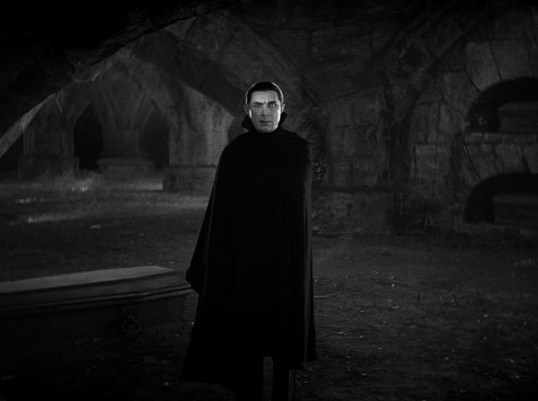
Horror Scenes That I Love: Bela Lugosi in Dracula


Dracula (1931, starring Bela Lugosi as the Count, Dir by Tod Browning, DP: Karl Freund)

On this day, 143 years ago Bela Lugosi was born in what is now Romania.  Lugosi began his career in his native country, appearing on stage.  After serving as an infantryman in World War I, Lugosi moved into the movie industry and appeared in silent Hungarian films.  The young Lugosi was an activist, involved in labor issues and trying to unionize the Hungarian film industry.  When a new government came to power in Hungary in 1920, the politically-active Lugosi moved first to Germany and then eventually ended up in the United States.  After a period of working as a merchant seaman, Lugosi returned to acting.

He first played Dracula on stage in New York City.  In 1928, while touring in the role of Dracula, he moved out to California and quickly became a part of the Hollywood community.  When Universal produced a film adaptation of Dracula in 1931, Lugosi was the obvious choice for the lead role.  The film made Lugosi a star and it also typecast him.  Lugosi never stopped acting, though the films varied widely in quality.  By the end of his career, Lugosi was a member of the Ed Wood stock company.  Even appearing in something like Bride of the Monster, Lugosi still made an impression.

In the scene below, from 1931’s Dracula, Lugosi suggests that Edward van Sloan’s Van Helsing should perhaps leave the country.

A Blast From The Past: The Man With Wax Faces (dir by Maurice Tourneur)


For today’s horrific blast from the past, we have a French horror film called The Man With Wax Faces.  Filmed in 1914 by Maurice Tourneur, this 11-minute film was the first horror movie to be set in a wax museum.  Based on a play that had earlier been performed at the infamous Grand Guignol,  The Man With Wax Faces was technically very advanced for 1914.  This film is not just a horror story.  It was also a chance for Tourneur to experiment with and explore what could be done on film.

The story is a simple one and one that viewers should be able to follow, even if they can’t read the French title cards.  An arrogant man who claims that nothing has ever frightened him accepts a bet to spend the night in a wax museum.  Secretly, his friend also stays in the museum to make sure that all of the conditions of the bet are honored.  Madness and tragedy follow.

Director Maurice Tourneur also made some films in Hollywood during the silent era, before eventually returning to France.  His son, Jacques Tourneur, follows in his footsteps and directed several memorable horror films, including Cat People, I Walked With A Zombie. and Night of the Demon.

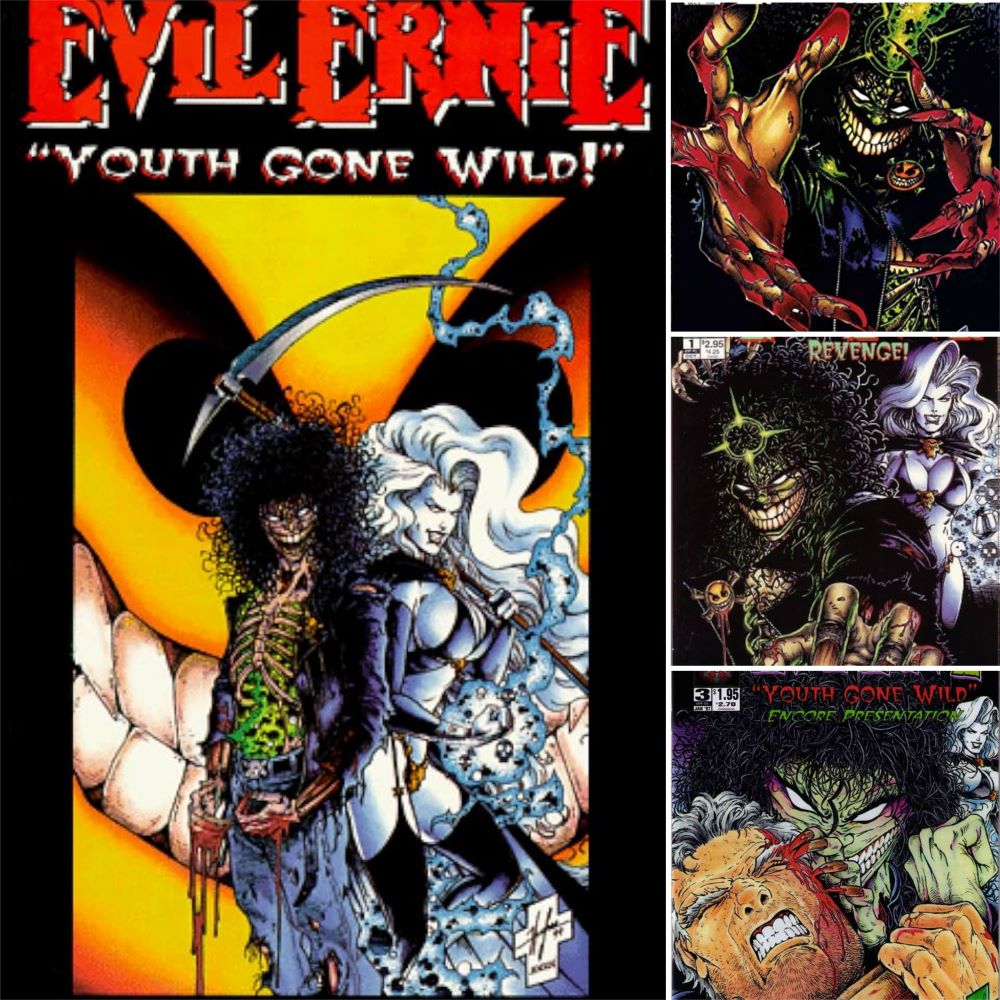
Horror Comics Review: Evil Ernie


Evil Ernie’s legacy began with two key comic series that deeply shaped his character and cemented his place in horror comic history. Firstly, the original Evil Ernie mini-series, published in 1991 by Eternity Comics, introduced readers to Ernest Fairchild—a tortured, telepathic boy whose severe abuse and trauma spiraled into the transformation that birthed Evil Ernie. This five-issue series laid the foundation for the character’s dark mythology, blending psychological horror with supernatural violence and heavy metal influences. Here, Ernie’s pact with Lady Death and the introduction of his iconic “Smiley” button set the tone for his psychotically violent crusade against humanity, portraying him as a vengeful, undead antihero fueled by rage and heartbreak.

Following the original run, the Chaos! Comics imprint expanded on Ernie’s mythos with significant titles like Evil Ernie: Resurrection and Youth Gone Wild. These series pushed the narrative further into apocalyptic territory, showcasing Ernie’s increasing power, his undead army, and the world-spanning consequences of his rampage. Resurrection delved into Ernie’s return from death with amplified powers, setting the stage for his global campaign of destruction. Youth Gone Wild, evokes the rebellious spirit captured both visually and thematically, tying Ernie’s anger and chaos to a larger cultural moment reflective of 1990s heavy metal and punk ethos.

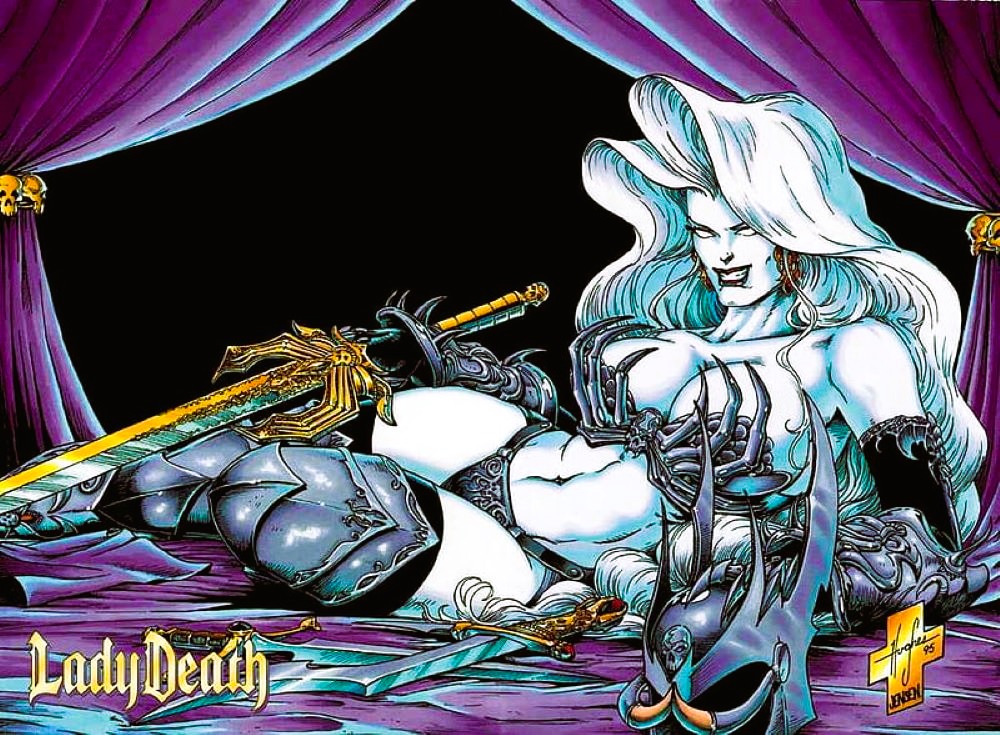
Crucially, the role of Lady Death in these series cannot be overstated. Initially a spectral figure who offers Ernie the love and acceptance he craves in exchange for his violent pledge, Lady Death evolved into the defining character of the Chaos! Comics universe. Her complex origins as the mortal Hope, betrayed and transformed into the queen of Hell, give the stories emotional depth and mythic resonance. Her “bad girl” gothic aesthetic and tragic backstory resonated powerfully with fans, propelling her to overshadow even Ernie himself in popularity and cultural impact.

Evil Ernie’s narrative and character design were heavily influenced by the prevailing heavy metal and splatter punk subcultures of the time. His wild hair, leather attire, and violent, nihilistic persona echoed the sonic aggression and rebellious imagery of bands like Slayer and Overkill, who also explored themes of alienation, death, and wrath. This cultural synergy imbued the comics with an authenticity that attracted a dedicated fanbase attuned to these genres. The explicit violence and body horror scenes showcased the splatter punk influence, pushing boundaries in graphic storytelling to depict raw, unapologetic gore that underscored Ernie’s tragic antiheroism.

The Evil Ernie series was more than just a comic about zombies and destruction; it was a cultural artifact infused with the angst, aggression, and rebellion of ‘90s youth subcultures. It forged a new path in horror comics by blending psychological trauma, supernatural terror, and social outcast narratives while crafting a mythos that was both cosmic and personal. The enduring popularity of Ernie, alongside characters like Lady Death and Purgatori, validated Brian Pulido’s vision and solidified a franchise that remains influential in horror and dark fantasy comics.

In summary, the original Evil Ernie mini-series set the brutal, tragic tone that defines the character, while subsequent series like Resurrection and Youth Gone Wild expanded his mythic scope, fueled by a unique fusion of horror, metal, and punk. Lady Death’s rise within these narratives added emotional complexity and gothic grandeur that enriched the universe Pulido created, creating a layered, compelling world that still captivates cult fans today. Together, these series and characters have left an indelible mark on horror comics, affirming the powerful cultural interplay between music, graphic storytelling, and dark fantasy.