Retro Television Review: St. Elsewhere 2.20 “Cramming”


Welcome to Retro Television Reviews, a feature where we review some of our favorite and least favorite shows of the past! On Fridays, I will be reviewing St. Elsewhere, a medical show which ran on NBC from 1982 to 1988.  The show can be found on Hulu and, for purchase, on Prime!
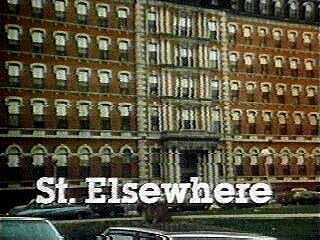
This week, Peter White goes on trial.

Episode 2.20 “Cramming”

(Dir by Tim Matheson, originally aired on May 2nd, 1984)

Dr. Peter White finally goes on trial, charged with raping Kathy Martin and assaulting Wendy Armstrong.  For his attorney, he hires the same lawyer (Conrad Janis) who previously made the case against him at his disciplinary hearing.  The lawyer asks Kathy Martin about her own reputation at St. Eligius.  (“How many times have you had sex in the morgue?”)  Peter himself manages to pass a lie detector test.  (Sociopaths don’t have the same physical reactions to telling a lie as normal people.)  In the end, Peter is acquitted.

Shirley Daniels blames Kathy for the acquittal, saying that she should have come forward earlier.  As for Wendy, she deals with the trauma by binging and then purging.  When one of her patients miscarries after being admitted to the hospital, it’s determined that Wendy carelessly missed a heart murmur.  When Wendy argues that she’s been under pressure due to the trial, Dr. Craig points out that Wendy missed the heart murmur before the trial even started.  Wendy breaks down into tears.

I have to admit that Wendy Armstrong has never been one of my favorite characters on this show.  She’s the type of doctor who most people would dread having to deal with.  She knows all of the technical stuff but she has absolutely no idea how to relate to patients and she gets defensive whenever anyone disagrees with her.  Even if she hadn’t been attacked by Peter White, it seems like it was inevitable that she would eventually end up overlooking something with one of her patients.  That said, my heart still broke for her in this episode.  One gets the feeling that she’s one bad day away from breaking.

This episode ends with all of the residents taking their National Board exams.  The residents know that five of them will be cut from the program.  Having been acquitted, Dr. White approaches Westphall and Auschlander and announces that he doesn’t have any hard feelings towards them and he hopes that they’ll give him a fair shot.  “I’m innocent,” he lies.

Dr. Ehrlich is also nervous about his exams, cramming everything he can into his last minute study sessions.  His Aunt Cherise (Louise Lasser) comes to visit and help him deal with the end of his marraige to Roberta but Ehrlich is able to dump her off on Dr. Westphall.  After having an awkward dinner with the eccentric Cherise, Westphall realizes that he’s not ready to start dating again.

This episode left me reeling, to be honest.  The acquittal of Peter White was a gut punch.  I know he’s guilty.  Everyone in the hospital knows that he’s guilty.  But he’s acquitted.  Kathy Martin’s name is drugged through the mud.  Wendy Armstrong has gone from being determined to self-destructive.  But Peter White has not only gotten away with his crimes but he’s now apparently convinced that he can go back to being a doctor at St. Eligius.  And who knows?  He probably can.  It’s a messed up world.  It was messed up in 1984 and it’s messed up today.

Next week, we’ll find out which residents made the cut!

Horror Scenes That I Love: Swimming With The Creature From The Black Lagoon


Today’s horror scene that I love comes from one of my favorite films, 1953’s Creature From The Black Lagoon.  In this scene, Julia Adams goes for a swim.  Little does she realize that, under the water, the Creature is following her every move.  Wonderfully directed by Jack Arnold, this creepy yet oddly lovely scene is one of the best of the 50s.

October True Crime: The Hunt For The BTK Killer (dir by Stephen Kay)


Dennis Rader is pure evil.

I feel confident saying that, though I’ve never met him.  He’s currently eighty years old and in prison, serving several life sentences for a series of murders he committed in the 1970s, the 80s, and the 90s.  Because he committed the murders at a time when Kansas did not have the death penalty, he escaped being executed.  That said, he won’t be eligible for parole until the next century so we can rest assured that Dennis Rader will die in prison.

Dennis Rader was a serial killer who decided to give himself a nickname.  He wrote letter to the local media in Wichita, Kansas and demanded to be known as The BTK Killer — for Bind Them, Torture Them, and Kill Them.  It was a dumbass nickname but it stuck.  Everything about the BTK case is disturbing but one that always gets me is that nearly got away with it.  His last known victim was an elderly woman who he killed in 1991.  By the time the current century rolled around, The BTK Case had gone cold and was being forgotten about.  Rader couldn’t handle that so he started writing the local media and eventually the police again in 2004.  Rader, being a moron, didn’t consider that he was mailing a DNA sample with every letter.  Eventually, he sent the cops as floppy disk of his “writings.”  What he didn’t realize is that the metadata from a deleted Word Document was still stored on the disk.

Dennis Rader was a deacon in his local church.  He was also an dog catcher and compliance officer for Park City, Kansas.  You know the self-important jerks who send you a letter threatening to fine you if you don’t mow your grass?  Dennis Rader was one of those guys.  When Rader was finally arrested, he was described as being a trusted member of his local community but let’s be honest.  Everyone hates their local compliance officers.  Most serial killers are driven by a need to control and dominate.  Perhaps one reason why Rader had stopped killing was because he was able to channel his sadism into his job.

After he was arrested in 2005, he was on television constantly and he was such a continual presence that he even worked his way into a few of my nightmares.  Rader confessed to his crimes in court, giving a monologue in which he dryly discussed each murder.  Later, one of the primetime news shows interviewed Rader in prison and again, Rader discussed each murder in a flat tone and only showed emotion when he talked about the prospect of never leaving prison.  It was disturbing to watch and listen to and sadly, the media made sure that we heard and listened to it a lot.

The Hunt For The BTK Killer was a made-for-television movie about Dennis Rader (played by Gregg Henry) and the detective (Robert Forster) who eventually arrested him.  It aired in 2005, the same year that Rader was captured and eventually sentenced for his crimes.  It’s a movie that was obviously shot very quickly to capitalize on the media attention that the case was receiving.  As is often the case with the movies like this, it was filmed up in Canada.  (Canadian film mainstay Maury Chaykin appears as a true crime writer.)  All that said, it’s still an effective film.  Gregg Henry, under a ton of makeup, plays Dennis Rader as being the type of busybody who gets off on telling people what to do and who believes that being a deacon at his church will absolve him from the murders that he committed.  It’s a good performance and Henry is well-matched with Robert Forster.  Forster’s naturally world-weary vibe made him the ideal choice for playing detectives who have seen the worst that humanity had to offer.  Most importantly, the film shows how fear can change a community.  When BTK is on the loose and sending taunting letters to the newspapers and the local television station, the people of Wichita soon start to suspect their neighbors and what was one a friendly town becomes a place where even Forster is at risk of getting accidentally stabbed by his terrified wife.

Dennis Rader was someone who obviously enjoyed the fear that he generated.  He cried when he went to prison and hopefully, he’s still crying now.

Horror Song of the Day: Call of Ktulu (by Metallica)


Metallica’s “The Call of Ktulu” is like an eerie soundtrack to something ancient and terrifying lurking just beneath the surface. The whole song feels like a slow, deliberate wake-up call for an otherworldly monster straight out of Lovecraft’s nightmares. Without any lyrics, it’s the music itself that tells the story—starting off quiet and haunting, then gradually building layers of tension like the air getting heavier before a storm, pulling you into an unsettling experience of growing dread.

What’s cool is how each instrument adds its own flavor to that feeling. Cliff Burton’s bass rumbles low and deep, almost like the sea itself is grumbling, while the guitars slowly creep in with sharp, sometimes almost claw-like riffs. Lars Ulrich’s drums keep everything feeling urgent without rushing it, like the heartbeat of something big and unstoppable. It’s not just playing metal riffs; it’s like they’re painting a picture of a cosmic beast stirring from an ancient sleep, and you can’t look away even though you’re scared.

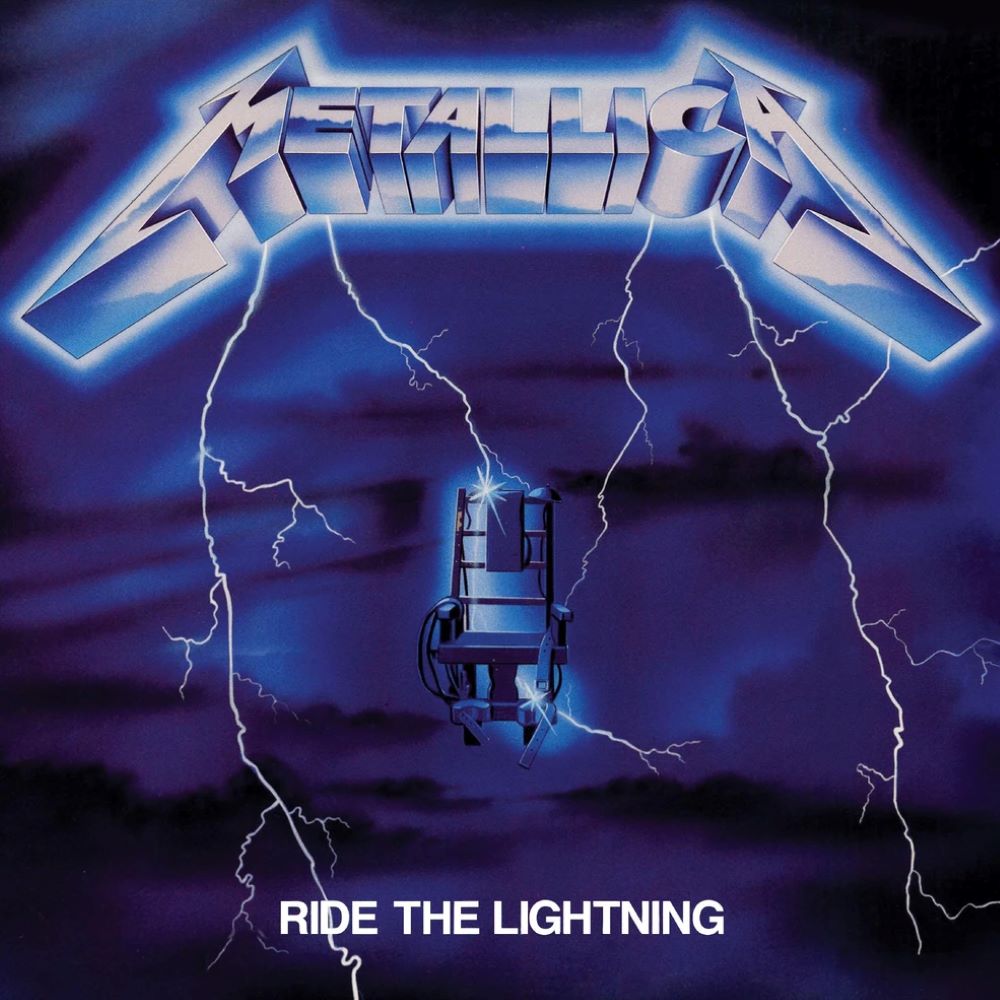
Interestingly, “The Call of Ktulu” was initially started by Dave Mustaine before his dismissal from Metallica, but it ultimately became a collaborative piece among all four original band members. Released as part of their 1984 album Ride the Lightning, the song reached new heights when performed with the San Francisco Symphony Orchestra on the live album S&M. The legendary composer Michael Kamen arranged and conducted the orchestral parts, adding sweeping strings and powerful brass that turned the track into an apocalyptic ritual of sound, blending Metallica’s heavy riffs with symphonic grandeur and amplifying the song’s cosmic horror vibe to an unforgettable level.

4 Shots From 4 Horror Films: The 1960s Part 3


This October, I’m going to be doing something a little bit different with my contribution to 4 Shots From 4 Films.  I’m going to be taking a little chronological tour of the history of horror cinema, moving from decade to decade.

Today, we finish off the 1960s!

4 Shots From 4 Horror Films

Even The Wind is Scared (1967, dir by Carlos Enrique Taboada)

Even The Wind is Scared (1967, dir by Carlos Enrique Taboada)

The Witchfinder General (1968, dir by Michael Reeves)

Witchfinder General (1968, dir by Michael Reeves)

Rosemary's Baby (1968, dir by Roman Polanski)

Rosemary’s Baby (1968, dir by Roman Polanski)

The Nude Vampire (1969, dir by Jean Rollin)

The Nude Vampire (1969, dir by Jean Rollin)4

Handyman, Short Film Review by Case Wright


The short is a fun watch. Adult children go home to split inheritance and the middle-child goes bonkers starts killing everyone.

The film is not listed on imdb, but I will provide a link.

The middle child daughter is arguing with her older brother who wants his new wife to get a share of the inheritance. However, this really doesn’t happen because you have to follow the will and unless the brother’s wife were listed to inherit, she’s not getting anything. However, the movie has to happen; so, let’s ignore that.

There is a beginning, middle, and an end. The film has a strong pacific northwest vibe. It is over the top and fun because of it. If you can get past the legal fiction related to the inheritance and I am assuming that you likely don’t care, this short will thoroughly entertain.

Horror Review: Revenge (dir. by Coralie Fargeat)


“Violence is a language written in blood; it tells the story of those who refuse to be silenced.”

Coralie Fargeat’s 2017 film Revenge is an intense and striking blend of horror and thriller that refreshes the rape-revenge genre with a strong emphasis on female empowerment and resistance. At its core, the film follows Jen, a young woman who is brutally assaulted and left for dead in a desert. Against all odds, she survives and seeks brutal revenge on her attackers. What makes Revenge stand out is its blend of graphic, realistic violence and a striking, highly stylized visual approach, resulting in a film that is both visceral and symbolic.

Revenge sits within a long tradition of rape-revenge films that includes both grindhouse exploitation and serious art films. One of the earliest and most influential films in this tradition is Ingmar Bergman’s The Virgin Spring (1960), a somber and moral exploration of a father’s response to his daughter’s rape and murder in medieval Sweden. Bergman’s film inspired many later works, including Wes Craven’s famously brutal The Last House on the Left (1972), which reinterprets the same story through the lens of exploitation horror. Other notorious examples include I Spit on Your Grave (1978), known for its graphic depiction of sexual violence and violent retaliation. More recent films like Jennifer Kent’s The Nightingale (2018) revisit these narrative themes with psychological and political depth. Fargeat’s Revenge draws on this history, combining symbolic storytelling and thematic depth with the raw brutality and energy of grindhouse exploitation.

The narrative structure of Revenge is familiar: Jen, introduced as the mistress of a wealthy man, is assaulted by his friends. Her lover Richard tries to silence her by pushing her off a cliff, but Jen survives, severely injured and impaled on a tree. Her journey is one of intense physical suffering, but also resurrection and fierce empowerment. The film’s use of bright, vivid colors such as hot pinks and blues shifts the story into a surreal, symbolic space where gender roles are exaggerated and the desert becomes a mythic battleground where Jen fights to reclaim control.

Fargeat depicts Jen’s trauma and physical recovery through graphic and detailed body horror—not simply for shock, but as a visual metaphor for reclaiming agency. For example, Jen’s self-treatment of her impalement wound with a hot beer can brands her skin and symbolizes her rebirth and determination. These elements mark a clear departure from earlier rape-revenge films that sensationalized female suffering, shifting the focus to the survivor’s power and autonomy.

Cinematographer Robrecht Heyvaert’s work enhances this dynamic, contrasting the bright, harsh desert landscape with the cold, sterile luxury of Richard’s home. This contrast symbolizes the clash between raw survival and social control. The violence throughout the film is explicit and often hard to watch, but it is deeply rooted in the reality of trauma rather than fantasy.

Matilda Lutz’s performance as Jen is a key strength of the film. She transforms from a vulnerable, objectified figure into a fierce, focused avenger. The male antagonists are less developed, serving as archetypes of toxic male dominance—entitlement, violence, and cowardice—and their downfall reflects the collapse of that social order.

While Revenge maintains the fast pace and suspense of a thriller, its focus on graphic body horror and trauma places it firmly within the horror genre, aligning with the French Extremity movement known for its intense depictions of suffering and transgression. The source of horror here is not supernatural but very much rooted in the physical and psychological impact of violence.

The film has been praised for its technical skill and its focus on female resistance and empowerment. Instead of exploiting female suffering, it forces audiences to confront violence and trauma in a way that centers strength and rage. This is a clear reimagining of the revenge narrative through a modern lens that highlights resilience.

Revenge stands as both a tribute and a reinvention within its genre. It nods respectfully to the moral complexity of Bergman’s The Virgin Spring, the shock tactics of grindhouse staples like The Last House on the Left and I Spit on Your Grave, and the psychological depth of The Nightingale. Yet it simultaneously reinterprets these influences, making a statement that is both timely and provocative.

Coralie Fargeat’s Revenge is a powerful and contemporary entry into the rape-revenge genre, blending horror and thriller conventions with a focus on survival and agency. The film explores the physical and emotional effects of trauma and the possibility of reclaiming power through violence. Its vivid visuals, symbolism, and intense violence challenge audiences to rethink assumptions about gender, justice, and survival. It is a film that provokes strong reactions while delivering a deeply felt story of empowerment and resilience.

Horror On The Lens: Attack of the Giant Leeches (dir by Bernard Kowalski)


I love the 1959 film, Attack of the Giant Leeches.

The set up is a classic one.  In the humid bayous, a sweaty and unappealing store owner (Bruno VeSota) discovers that his much younger wife (the great Yvette Vickers) has been cheating on him.  In one scene, he forces his wife and her lover to enter the swamp.  It’s terrifying because the swamp is full of …. GIANT LEECHES!  I’m a Southern girl.  I’ve spent some time in the bayous.  Let me tell you, swamps are creepy enough without the addition of giant leeches.

Full of sultry melodrama and bayou atmosphere, Attack of the Giant Leeches is one of the best of the giant monster films of the 50s.  It’s amazing was radiation can do!

Live Tweet Alert: Join #FridayNightFlix for Planes, Trains, and Automobiles!


As some of our regular readers undoubtedly know, I am involved in a few weekly watch parties.  On Twitter, I host #FridayNightFlix every Friday and I co-host #ScarySocial on Saturday.  On Mastodon, I am one of the five hosts of #MondayActionMovie!  Every week, we get together.  We watch a movie.  We tweet our way through it.

Tonight, at 10 pm et, I will be hosting #FridayNightFlix!  The movie?  Planes, Trains, and Automobiles!

If you want to join us this Friday, just hop onto twitter, find Planes, Trains, and Automobiles on Prime, start the movie at 10 pm et, and use the #FridayNightFlix hashtag!  I’ll be there happily tweeting.  It’s a friendly group and welcoming of newcomers so don’t be shy.

See you there!