4 Shots From 4 Films is just what it says it is, 4 shots from 4 of our favorite films. As opposed to the reviews and recaps that we usually post, 4 Shots From 4 Films is all about letting the visuals do the talking.
4 Shots from 4 Assassin Films
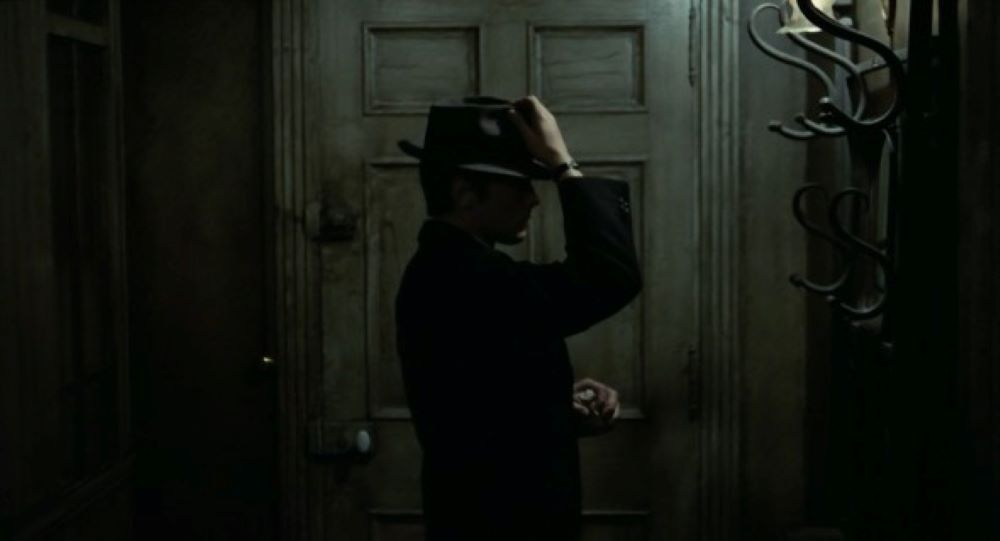
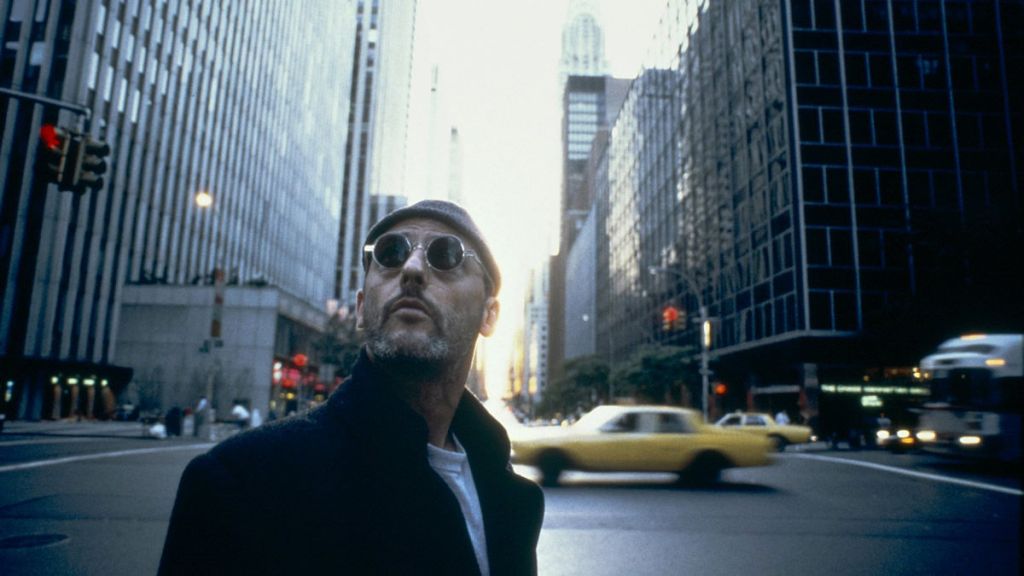
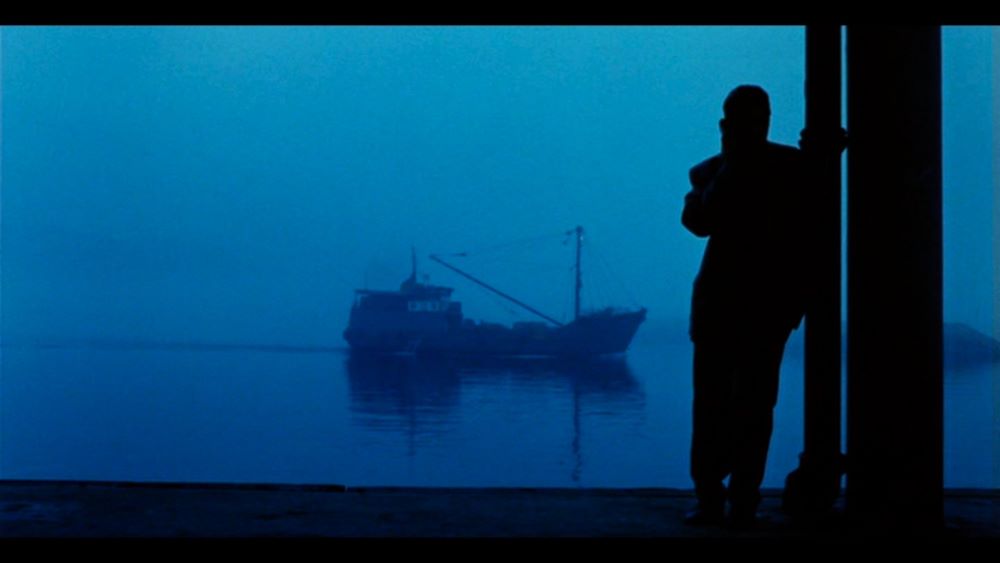
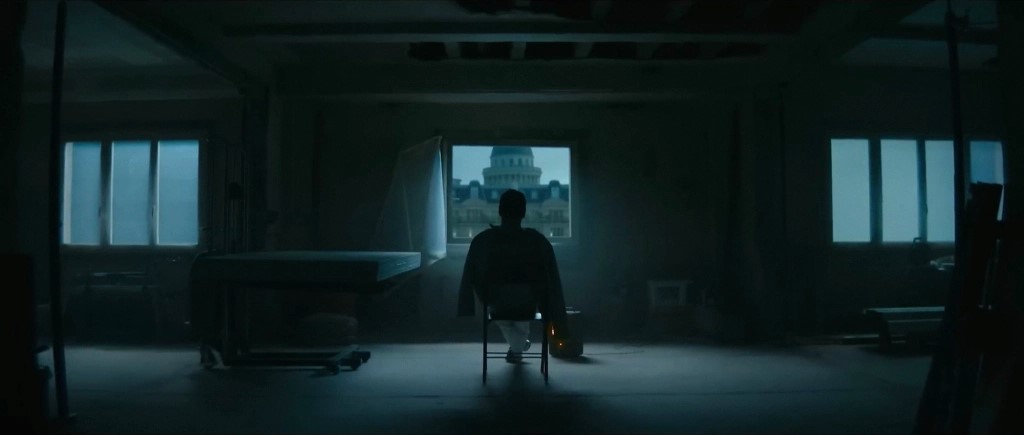
4 Shots From 4 Films is just what it says it is, 4 shots from 4 of our favorite films. As opposed to the reviews and recaps that we usually post, 4 Shots From 4 Films is all about letting the visuals do the talking.
4 Shots from 4 Assassin Films
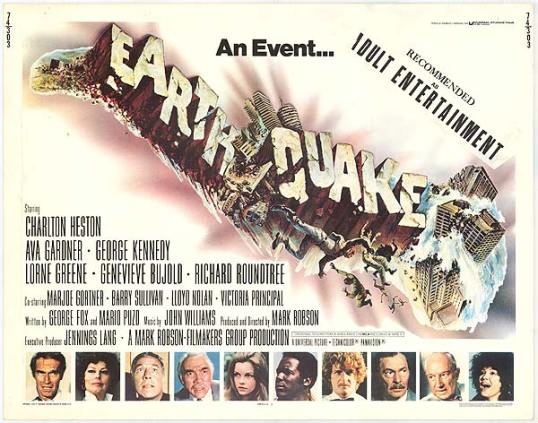 Today is Marjoe Gortner’s 81st birthday!
The former child evangelist-turned-whistleblower-turned-recording-artist-turned-golf-tournmanet-organizer appeared in some of the most memorable exploitation films of the 70s and 80s, usually playing villains. (Personally, I’ve always liked his heroic performance in Starcrash.)
In today’s scene, from 1974’s Earthquake, Marjoe gives au unforgettably creepy performance as the type of character who, today, would probably be called an incel. Usually, no one takes him serious but, when an earthquake hits, he puts on his uniform and becomes a mini-tyrant. Few actors were as effective at playing crazy as Marjoe Gortner.
Venice is my favorite city in Italy.
I mean, it’s such a cliché, isn’t it? Tourists always fall in love with Venice, even though the majority of us really don’t know much about the city beyond the canals and the gondolas. I spent a summer in Italy and Venice was definitely the city that had the most American visitors. Sadly, the majority of them didn’t do a very good job representing the U.S. in Europe. One night, a bunch of drunk frat boys approached me, all wearing University of Texas t-shirts. One of them asked, “Are you from Texas?”
“No,” I lied.
“You sound like you’re from Texas!” his friend said.
“No, ah’m not from Texas,” I said, “Sorry, y’all.”
That’s not something that would have happened in Florence or even Naples! In Rome, handsome men on motor scooters gave me flowers. In Venice, on the other hand, I had to deal with the same jerks that I dealt with back home!
I still fell in love with Venice. And yes, it did happen while riding in a gondola. At that moment, I felt like I was living in a work of art. I can still remember looking over the side of the gondola and watching as a small crab ran across someone’s front porch. That’s when I realize that, by its very existence, Venice proved that anything was possible.
It is said that Venice is slowly sinking. That Venice has a reputation as being a dying city would probably have come to a surprise to the drunk Americans who were just looking for a girl from Texas that summer. And yet, Venice has always been associated with death. Just consider Thomas Mann’s Death in Venice and the subsequent film adaptation from Luchino Visconti. Consider the controversial Giallo in Venice and Don’t Look Now.
Venice is a city that is beautiful at day and ominous and menacing at night. That’s certainly something that’s captured in Alone in Venice.
Made for an obviously low-budget but featuring some stunning shots of its title city, Alone In Venice tells the story of Saul Larson (Apollo Luce), a young actor who has spent the last year in Venice. He says that he was told to stay in the city by a Chinese film director who is in love with him. He says that he’s waiting for her to come out to Venice to join him. At one point, he says that she has even arranged for him to be classified as a permanent resident of the city so that he doesn’t have to worry about his visa expiring. How she did that is never really explained, though its implied that, while she’s arranged for him to stay in Venice forever, she’s also trapped him there. He can live in Venice but he can’t leave it.
A friend from America (played by Lisa Jacqueline Starrett) visits him and tells him that she thinks that he’s being used. She points out that he’s living in a crummy apartment that doesn’t even have a good view and that the director is 1) married and 2) hasn’t contacted him in months. A man named Tommaso (Luca Rosini) invites Saul back to his place and it’s implied that the two have a brief affair, though Saul continues to obsess over the director and her love of orchids. When the prostitute who lives down the hall offers herself to Saul for free, Saul appears to have a panic attack. Saul insists that the director exists and that she will be coming for him in just a few days.
The majority of the film is made up of scenes of Saul walking around and sometimes running through Venice. The city is the main attraction here. At day, the city is vibrant and full of life. At night, the city is full of shadows and a frightening clown makes an appearance. There’s more than few shots that owe a debt to Don’t Look Now and its sequences of Donald Sutherland chasing after the figure in the red raincoat.
What does it all mean? The film largely leaves that up to the viewer. Whether or not the film works will depend on how much tolerance the viewer has for open-ended storytelling and unanswered questions. (As you may have guessed, neither one is particularly an issue for me.) Saul is committed to believing that his director is coming for him and occasionally, there’s something a bit disturbing about his obsession with her. Throughout the film, he’s given plenty of opportunities to move on, whether it’s returning to America with his friend or pursuing a new relationship. Instead, he chooses again and again to be alone in Venice.
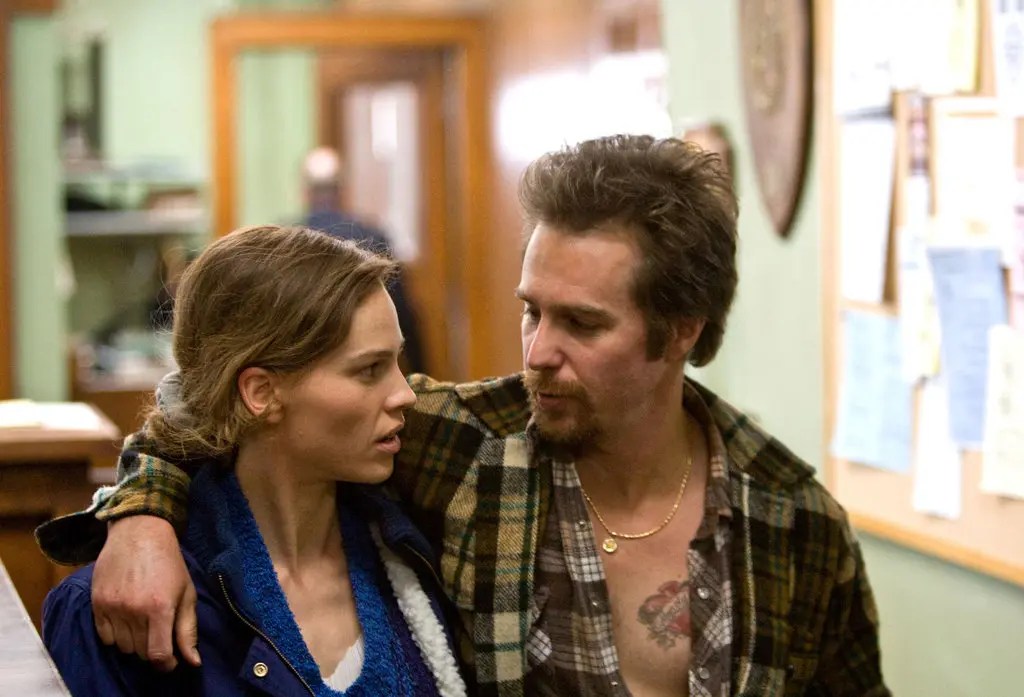
My wife and I love movies based on real-life stories. We were looking for something to watch this afternoon on the MAX app and came across their “Real Life Dramas” section. One of the movies we saw listed was CONVICTION (2010) starring 2-time Oscar winner Hilary Swank. My wife loves Hilary Swank so we decided to give it a spin.
Betty Anne Waters (Hilary Swank) watches as her brother Kenny (Sam Rockwell) is convicted of the murder of Katherine Brow on May 21st, 1980 in Ayer, Massachusetts and sentenced to life in prison. Even though she knows he’s a troublemaker, Betty Anne is convinced that he’s not a murderer, so she gives up everything in her life to try to prove his innocence, especially after she learns that he tried to kill himself while in custody. Her husband (Loren Dean) divorces her and takes their kids with him. This doesn’t stop her. She goes back to school, eventually making her way to law school for the sole purpose of helping to exonerate her brother. In a positive turn of events, Betty Anne realizes that the new field of DNA testing could be the key to overturning her brother’s conviction. She contacts attorney Barry Scheck (Peter Gallagher) from the “Innocence Project” who assists those who believe DNA testing can help overturn previous convictions. Will Betty Anne finally be able to prove Kenny’s innocence, or will he have to spend the rest of his life in jail for a crime she doesn’t think he’s capable of committing?
Movies like CONVICTION are such an interesting watch for me, especially since we can know how these stories play out with a simple google search. When I see a movie is based on a real story, I purposefully avoid the facts of the actual events so I can see the events depicted on screen without my own internal bias taking front and center. I enjoyed watching how the events unfolded in CONVICTION. Hilary Swank and Sam Rockwell are such good actors, and I appreciate the work they put in here. I don’t pretend that everything depicted on screen is exactly how it was in real life, but I do believe that the actors portray the essence of truth, and I must admit to a tear in my eye when that truth is finally acknowledged for Kenny Waters at the end of the film. I also enjoyed telling my wife that the director of CONVICTION is Tony Goldwyn, the bad guy in the blockbuster film, GHOST. I just thought that was kind of cool, and so did she.
The real truth of Betty Anne Waters and Kenny Waters is ultimately bittersweet, but their story is both a testament to, and an indictment of, the American judicial system. As a person who truly loves our country, I think it’s important to realize that things aren’t always perfect, even in the United States of America!
See the trailer for CONVICTION below:

by James Avati
This leggy cover is from 1962.
We’re only 13 days into the new year and we’ve already got the first great song and music video of 2025!
Enjoy!
Welcome to Late Night Retro Television Reviews, a feature where we review some of our favorite and least favorite shows of the past! On Mondays, I will be reviewing CHiPs, which ran on NBC from 1977 to 1983. The entire show is currently streaming on Prime!
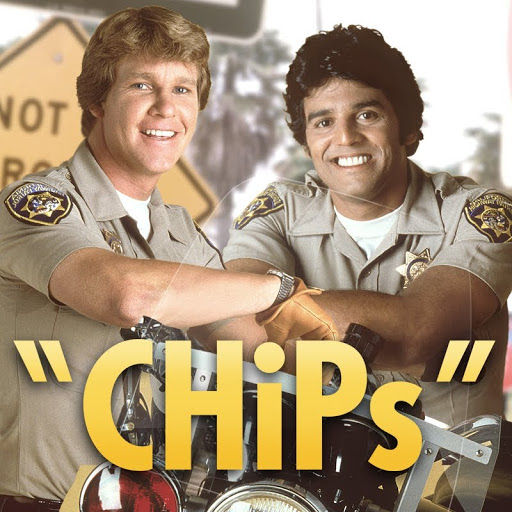
This week, CHiPs deals with the oil crisis!
Episode 3.4 “High Octane”
(Dir by John Florea, originally aired on October 6th, 1979)
Tonight’s episode of CHiPs is a real history lesson.
The episode was aired at a time when the U.S. was suffering from a shortage of gasoline. Conflict in Iran had led to both the Shah fleeing the country and Americans being taken hostage. Oil production fell, OPEC raised its prices, and people panicked and started to hoard gasoline. Many states instituted odd-even gas rationing, which meant that only people with an odd-numbered license plate could purchase gas on an odd-numbered day and only people with an even-numbered license plate could purchase gas on an even-numbered day. As so often happens when the government attempts to micromanage a crisis, this only made things worse as there were soon long lines at the pump and reports of fights breaking out between people at gas stations. Even with the rationing, many gas stations ran out of gasoline before they could serve every customer. If you didn’t arrive early enough, chances were that you would not be able to put gas in your car,
California was one of the many states to institute odd-even rationing and this episode of CHiPs is all about the battle over gasoline. Two crooks are siphoning gas from independent gas stations and then reselling it to other stations. (Their biggest customer is played by veteran screen tough guy, Aldo Ray.) Getraer is injured when he crashes his bike while chasing the two crooks, which makes this case personal for Ponch and Baker. Meanwhile, Ponch and Baker have to break up fights at the gas station, chase yet another guy who was caught siphoning gas from a car, and save yet another motorist who passes out from the fumes of all the gas cans that he had in the backset of his car. Ponch even starts to date Beth (Ellen Bry), because she works at a gas station and can tell him the best time to show up to make sure that he and Baker are able to fill up their bikes. Meanwhile, at headquarters, Harlan is giving lessons on the best way to keep unused fuel from evaporating.
Of course, it wouldn’t be CHiPs if there wasn’t also a light-hearted sports angle. This week, everyone’s into roller hockey. Ponch serves as the referee for the CHP-sponsored kids’ roller hockey game and everyone agrees that he’s the best referee that they’ve ever seen. And why not? He’s Ponch and, by the time the third season rolled around, CHiPs was definitely The Ponch Show. Later, the adult officer play roller hockey as well. It’s the show’s way of saying, “California’s still fun, even with the gas rationing!”
I enjoyed this episode because I’m a history nerd and it was interesting to see how the show dealt with the 1979 oil crisis while it was occurring. It’s interesting that this episode was a bit cynical about rationing, as CHiPs was usually a show that portrayed the government and its policies as positively as possible. In 1979, even the audiences of CHiPs was fed up with having to pay — let me check my notes to make sure I have this right — nearly a dollar a gallon for gas.
Really? Just 90 cents for a gallon gas? Get me a time machine. I’m going to 1979!
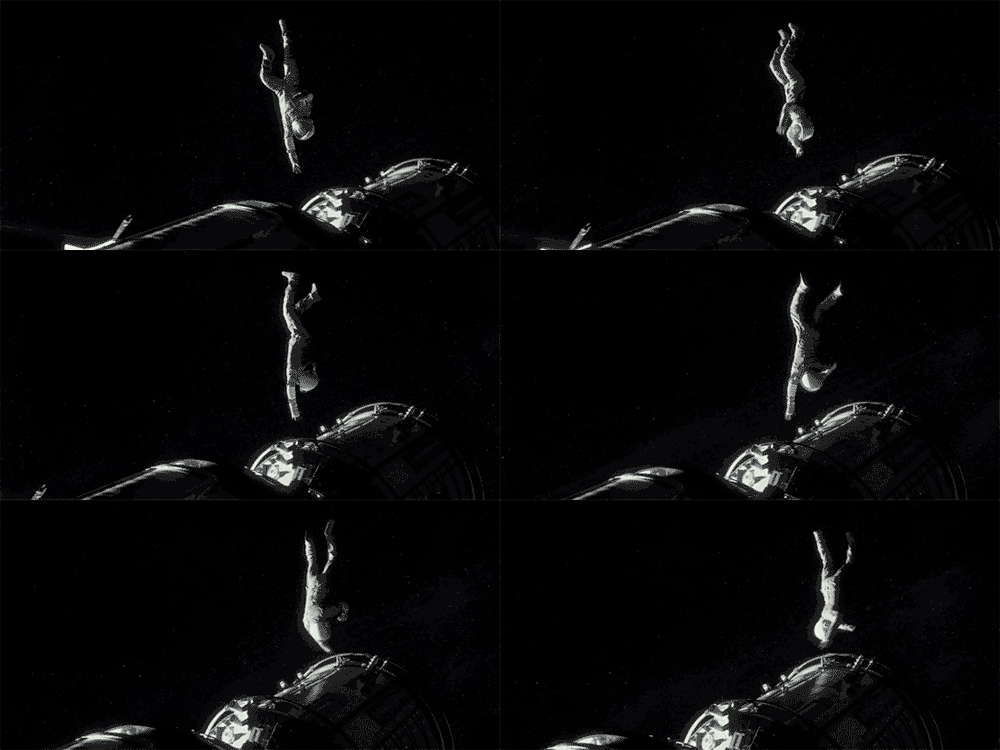
Remember Gravity?
Released in 2013, Gravity is largely a two-person film. There are a few other characters who appear at the start of the film and we hear different voices throughout the movie (including the voice of Ed Harris, cast once again as the voice of NASA) but, for the most part, this film centers on George Clooney and Sandra Bullock floating through space. Clooney is Kowalski. Bullock is Stone. They’re two astronauts who are in space trying to fix the Hubble Telescope when their shuttle is struck by a wave of space debris. When the shuttle inoperable and the rest of the crew dead, Kowalski and Stone try to figure out how to get back down to Earth.
Space, it turns out, is not as empty as we tend to assume. Along with the space debris that caused them to get stranded in space in the first place, there’s also a lot of abandoned equipment and outposts that they can use to get back to Earth. Unfortunately, they’ve got limited oxygen and limited time with which to reach any of that equipment and, even if they do reach it, there’s no guarantee that they’ll be able to get any of it to work. After Kowalski sacrifices himself to help Stone reach the International Space Station, Stone alone must find a way to return to Earth before the space debris complete their orbit and again threaten to send her hurtling into space.
Gravity is one of those films that demands to not only be seen on the big screen but also to be seen in 3D. (I say this as someone who was not exactly a fan of the post-Avatar 3D boom. Too often, 3D felt like a distraction. In Gravity, it feels like a key part of the story.) The film not captures the terror of being alone in the emptiness of space but, at the same time, it also captures the beauty of having the entire universe in front of you. It’s a visually stunning and beautiful film. Kowalski says, at one point, that he has a hell of a view and it’s hard not to agree with him. Space may be deadly but it’s beautiful as well. Stone finds herself tempted to simply allow herself to spend the rest of eternity floating lifelessly in space but ultimately, she embraces life. She refuses to give up and the film refuses to give up on her or, by extension, the rest of humanity. Gravity celebrates the beauty of space and creation while also showing that life on Earth has its own beauty as well. By the film’s end, one can argue that Stone has literally been reborn.
It’s a powerful film, one that is well-acted by both Bullock and George Clooney, both of whom have the star power necessary to hold our interest even when the overwhelming grandeur of space threatens to steal our attention. (I would argue that Bullock’s performance here is far superior to her Oscar-winning turn in The Blind Side.) Gravity received ten Oscar nominations and it won seven of them, including the Best Director award for Alfonso Cuaron. However, it lost Best Picture to another powerful film, 12 Years A Slave.
 48 Hrs. begins with a violent and bloody jailbreak. The fearsome Billy Bear (Sonny Landham) helps his criminal associate, Albert Ganz (James Remar), escape from a chain gang and kills several guards in the process. Billy and Ganz then head to San Francisco, where they start killing their former associates while searching for Luther (David Patrick Kelly). Another bloody shootout leaves several detectives dead and SFPD Detective Jack Cates (Nick Nolte) looking for revenge.
That’s not the way you might expect one of the most famous comedies of the 80s to begin. It’s not until Jack arranges for another associate of of Ganz’s to be released from prison for 48 hours that anything humorous happens in the film. However, because Reggie Hammond is played by Eddie Murphy, 48 Hrs. quickly becomes very funny.
Murphy was appearing on Saturday Night Live when he was cast in 48 Hrs, in a role that was written with Richard Pryor in mind. One of the first things that Murphy requested was that the character’s name be changed from Willie Biggs to Reggie Hammond. Murphy made the role his own and watching him, it’s hard to believe that he was only 21 and also that 48 Hrs was his first film. Murphy performs with the confidence of a natural movie star. He’s good in the film’s most famous scene, where he pretends to be a cop and talks down an entire bar full of rednecks. (I can’t repeat his most famous line but everyone knows it.) But Murphy is even better in the scenes where he’s just reacting to Nolte’s slovenly cop.
The comedy in 48 Hrs comes from the mismatched partnership and initially hostile chemistry of Jack Cates and Reggie Hammond. Cates has a job to do while Reggie, understandably, wants to enjoy as much freedom as he can before he gets sent back to prison. The humor is so effective because it’s almost entirely character-based. There are no gags but there are two well-written characters with differing ways of looking at the world who have to learn how to work with each other. The two of them start out disliking and distrusting each other but ultimately become best friends, even if Jack does punch Reggie and Reggie does keep trying to steal Jack’s lighter. Because this is a Walter Hill movie, there’s still a lot of action. Nolte and Murphy may make you laugh but there’s nothing funny about full-on psycho performances of James Remar and Sonny Landham. 48 Hrs. not only allows Murphy and Nolte to show off their comedic ability but it also allows them to be true action heroes.
Popular with critics and audiences, 48 Hrs. was the most commercially successful film of 1982. It set the standard for most buddy-cop movies to this day and it introduced the world to Eddie Murphy.
Welcome to Retro Television Reviews, a feature where we review some of our favorite and least favorite shows of the past! On Mondays, I will be reviewing Miami Vice, which ran on NBC from 1984 to 1989. The entire show can be purchased on Prime!

This week is all about justice for Zito!
Episode 3.13 “Down For The Count: Part Two”
(Dir by Richard Compton, originally aired on January 16th, 1987)
Picking up where last week’s episode ended, Down For The Count: Part Two finds almost the entire Vice Squad mourning the death of Larry Zito. I say “almost” because, as usual, Castillo refuses to show any emotion or even look anyone in the eye. When he first appeared, Castillo’s stoicism made him an interesting character but I have to admit that I’m starting to get a bored with the character and his refusal to speak in anything more than terse growls. ZITO’S DEAD! WAKE UP, CASTILLO!
Switek, needless to say, is heart-broken. Trudy tells Gina that she had a totally meaningless one night stand with some guy she met at a club because she was depressed. (“Did it make you feel better?” Gina asks. “No!” Trudy wails.) Crockett is determined to take down crooked boxing promoter Oswaldo Guzman (Pepe Serna) and prove that Zito was not a junkie but that he was instead murdered by Guzman’s goons. As for Tubbs, he makes a few jokes. WHAT’S WRONG WITH YOU, TUBBS!? ZITO’S DEAD!
Crockett and Tubbs go undercover as Burnett and Cooper and, once again, I find myself wondering how they can keep successfully doing that when their cover has gotten blown over a dozen times over the course of the series. Do criminals in Miami not talk to each other? This time, Crockett pretends to be involved with a cable sports network that wants to make a deal to air the fights that Guzman sponsors. When a Las Vegas gangster named Guilinni (former Warhol superstar Joe Dallesandro) shows up looking to kill Guzman, Crockett and Tubbs effortlessly manipulate both sides. It turns out that criminals aren’t that smart.
Meanwhile, Trudy and Gina meet one of Crockett’s associates from the Vietnam War. His name is Danny Allred (Chris Elliott) and he’s a former CIA agent who now lives in an abandoned airplane. Danny is a codebreaker and he helps them to figure out the code that Guzman was using to keep track of all of his crooked fights. Danny is a fun character and I hope he shows up in more episodes. He added some moments of levity to what was otherwise a pretty grim episode.
This episode had plenty of good moments. The scene where Crockett and Tubbs visited Zito’s apartment was both poignant and nicely-acted by both Don Johnson and Philip Michael Thomas. The final shoot-out was violent even by the standards of Miami Vice. That said, I’m a bit surprised that the episode didn’t revolve around Switek. Switek gets to express his anger and argue with Internal Affairs at the start of the episode and gets to repeatedly shoot Guzman at the end of the episode but he’s largely absent for the middle part of the story. As Switek was both Zito’s partner and his best friend, it really does seem like he should have been at the center of the entire episode.
Still, I was glad that Zito’s name was cleared and that Guzman ended up getting shot multiple times until he fell out a window. The show’s final credits featured still shots of John Diehl as Zito. I’m going to miss Larry.
 Through the Shattered Lens