The Film’s of 2024: God’s Not Dead: In God We Trust (dir by Vance Null)


It can be easy to forget just what a big splash God’s Not Dead made when it was released back in 2014.  Today, it’s taken for granted that every year, at least one faith-based movie will be released to terrible reviews and then “shock” everyone by opening up strong at the box office.  However, in 2014, God’s Not Dead was the film that started the whole trend, along with sparking the ongoing debate about whether or not Hollywood has the slightest idea what most Americans want to see.

That’s not to say, of course, that God’s Not Dead was a good film.  It’s not.  It’s a ludicrously simplistic and smug film that, over the course of its overly long run time, promotes the idea that the only reason atheists exist is because they’re either bitter, evil, or both.  (For the record, if a professor truly threatened to fail a paying student solely because of his religious beliefs, the end result would probably be a lawsuit.)  The idea that someone could sincerely disagree with the film’s heroes or even believe differently than them without having an ulterior motive is not one that is entertained in the God’s Not Dead universe.  Indeed, perhaps the most interesting thing about the God’s Not Dead films is that they are just as heavy-handed and often just as condescending as the secular films being churned out by the major studios.

God’s Not Dead has, to date, spawned four sequels.  The second was enjoyably campy and featured an earnest performance from Melissa Joan Hart.  The third, which is the the closest that the franchise has gotten to actually making a good film, was surprisingly even-handed, or at least as even-handed as a film in this franchise can be.  The fourth was way too talky but, because it came out during the COVID lockdowns, its condemnation of government overreach reflected the way that a lot of people were feeling at the time.  Somewhat inevitably, the fifth film finds Reverend David Hill (David A.R. White) running for Congress again the villain from the second film, dastardly atheist Peter Kane (Ray Wise).

The film opens with the death of an incumbent congressman.  His opponent, Peter Kane, tells the press that the congressman was a good man and then proceeds to gloat about his death in private.  Kane is an ultra-liberal atheist.  Usually, the villains in the God’s Not Dead universe have a dead relative to help explain why they’ve lost their faith but Kane is just evil.  (In God’s Not Dead 2, Kane specifically put Melissa Joan Hart on trial for expressing her Christian beliefs and then chortles, “We are going to prove God is dead!”)  With Kane on the verge of being elected to Congress by default, Rep. Daryl Smith (Isaiah Washington) suggests that David Hill, who went viral for denouncing Congress in the fourth film, should be the party’s new nominee.

After some hesitation, Hill agrees.  However, he drives his campaign manager, Lottie Joy (Samaire Armstrong), crazy by basing his campaign on his religious beliefs.  Of course, if you didn’t want a candidate to talk about his religious beliefs in a campaign, why would you nominate a pastor whose fame is totally based on those beliefs?  Add to that, Hill is running for a Congressional seat in Arkansas.  I have family in Arkansas.  Growing up, I occasionally lived in Arkansas.  Sure, there are liberals in Arkansas and there are atheists in Arkansas.  But none of them are going to get elected to Congress anytime soon.  Arkansas is probably one of the few states where Hill’s faith-based campaign wouldn’t be considered controversial.

(That Mike Huckabee has a cameo as himself should be all the reminder that viewers need that Arkansas is not at all hesitant about electing pastors to higher office.)

It’s heavy-handed and cartoonish, which is probably to be expected.  Unfortunately, it’s also rather boring, with not even Ray Wise’s villainy providing much entertainment value.  Outside of arguing that atheists are evil and that separation of church and state is just a catch phrase, the film argues that money is a divisive force in politics and that politicians shouldn’t be bought.  Wow, really!?  It’s a film about politics that has little fresh insight to offer.  David Hill goes from being a media-savvy pastor to being an innocent naïf who is shocked to discover that politics is a dirty business.  God’s Not Dead: In God We Trust makes Billy Jack Goes To Washington seem like a hard-hitting portrayal of American politics.

I will give this franchise some credit for maintaining a surprising sense of continuity.  As I mentioned earlier, Ray Wise returns as the character that he played in the second film.  Paul Kwo is back as Hill’s associate pastor.  Dean Cain returns as the amoral businessman from the first film.  You have to imagine that Kevin Sorbo is kicking himself for allowing his smug professor character to die in the first film.  What’s funny is that the college student who kicked off the franchise by refusing to sign a piece of paper declaring God to be dead has pretty much vanished from the films.  Whatever happened to that kid?

In the end, we all know where this is going.  The next film will undoubtedly feature David Hill running for president.  2028 is right around the corner.
Late Night Retro Television Review: Monsters 2.18 “The Offering”


Welcome to Late Night Retro Television Reviews, a feature where we review some of our favorite and least favorite shows of the past! On Wednesdays, I will be reviewing Monsters, which aired in syndication from 1988 to 1991. The entire series is streaming on YouTube.

This week features the most fearsome monster yet.

Episode 2.18 “The Offering”

(Dir by Ernest Farino, originally aired on February 18th, 1990)

After a serious auto accident, Lewis (Robert Krantz) wakes up in a hospital with a bandage wrapped around his head.  Dr. Hubbard (Orson Bean) tells Lewis that he’s suffered a concussion and must rest.  All Lewis wants to know is whether or not his mother’s surgery went okay.  Dr. Hubbard sighs and says that they were not able to get all of the cancer.

Lewis’s comatose mother is a patient at the same hospital and, when Lewis sneaks into her room to visit with her, he’s shocked to discover that he can see a giant insect-like creature that is hovering over the bed and producing slugs that are burrowing under his mother’s skin.  Lewis sees the same thing when he looks at other cancer patients but Dr. Hubbard insists that Lewis is only having hallucinations.

In order to try to help Lewis come to terms with both his accident and his mother’s cancer, Dr. Hubbard allows Lewis to watch as a patient undergoes radiation treatment.  Lewis is the only one who can see that the slugs are drawn to the radiation and will leave a patient’s body to find the source of it.  Still unable to convince Hubbard that what he’s seeing is real, Lewis sneaks out his room, steals a radioactive isotope, and prepares to make the ultimate sacrifice to save his mother.

The Offering is a return to form for Monsters.  Full of atmosphere and featuring a genuinely disturbing set of monsters, this is an effective and well-acted episode that works because it captures the helplessness that everyone will feels when a family member or loved one is seriously ill.  I lost my mother to cancer and my father to Parkinson’s, two diseases that are still not as understood as they should be.  Like Lewis, I spent a lot of time wishing that I could somehow just see and understand what was causing their illnesses so that I could know how to save them.  Cancer and Parkinson’s and dementia are all monsters that we wish we could just squash under our heel as easily as we could a bug.

In the end, Lewis eats a glowing radioactive isotope so that all of the cancer slugs will be drawn to his body.  Couldn’t he have just used the isotope to lead the slugs out into the middle of the street or something?  Lewis offers up his own life to save his mother.  It reminds me of the old Norm McDonald joke, that dying of cancer is the equivalent of beating cancer because the cancer dies with you.  That’s a good way to look at it.  Cancer never wins.

The TSL Horror Grindhouse: Fraternity Demon (dir by C.B. Rubin)


In 1992’s Fraternity Demon, Isha (Trixxie Bowie) is a succubus who is summoned into the real world by a nerdy frat boy who is doing something with a personal computer.  To be honest, I’m not totally sure what nerdy Dave (Al Darrouch) did to summon the succubus but she shows up in the real world and proceeds to have softcore sex with some 30 year-old frat boys in her quest to find Dave.

To be honest, I should have stopped this film as soon as I saw the New York skyline and “Troma Presents” at the start of it.  I’ve seen enough Troma films that I knew exactly what I was getting myself into but I kept watching the film just in case it turned out to be some sort of lost masterpiece.  Unfortunately, the film turned out to just be another boring Troma softcore film, featuring bad acting, bad humor, and terrible sound quality.  I honestly cannot begin to put into words just how wooden most of the acting was.  This was apparently C.B. Rubin’s only film as a director and watching the film, one can see why.  Fraternity Demon is an 86 minute film that feels like four hours, largely because the director obviously had no idea how to tell a story cinematically.

That said, I stuck with the film because everything that I read about Fraternity Demon said that the film was worth sitting through for the performance of Shock-Ra, the band that plays the fraternity party.  And I will say that I did like Sh0ck-Ra.  They reminded me a bit of X, the Los Angeles punk band that I’ve been obsessed with ever since I watched The Decline of Western Civilization a few months ago.  Speaking of punk, the film features a character who apparently lives on the front steps of the frat house.  He wears a Black Flag t-shirt and he growls at people.  He was probably the best actor in the film, assuming that he was an actor and not just some guy who the director couldn’t convince to leave.

Let’s see, what else was amusing in this film?  The fraternity was named SUX.  The sorority was named ASS.  That was pretty dumb but it made me laugh because, when I get delirious in my boredom, I tend to laugh at dumb things.  Nerdy Dave and his potential girlfriend, Kelly (Deborah Carlin), were kind of a cute couple.  One of the sorority girls comments that she likes a shy guy that she’s seen in at the frat house.  Kelly immediately says, “Dave?” because, of course, frat houses are only allowed to have one shy guy.

I initially assumed that Trixxie Bowie was an adult actress slumming in a Troma softcore flick but it turns out that Fraternity Demon was her only film role.  She made her debut as a star and then she never made another film.  Her performance in this film isn’t particularly good but she does manage to get off a few good one-liners.

Is that 500 words yet?  It is?  Good, let’s end this review.

Seriously, no more Troma films for me….

Horror on TV: One Step Beyond 2.24 “The Mask” (dir by John Newland)


For today’s episode of One Step Beyond, we have The Mask.

In The Mask, a World War II-era fighter pilot crashes in the Sahara.  Though he’s eventually rescued, he’s forced to wear a mask while recovering from his injuries.  When the mask is removed, everyone is shocked to discover that Lt. Harold Wilesnki not only look like an ancient Egyptian prince but he also seems to have the prince’s memories as well!

The Mask originally aired on March 1st, 1960.

Enjoy!

October Hacks: Hellweek (Dir by Eddie Lengyel)


It’s open season on frat boy douchebags in 2010’s Hellweek!

And seriously, who’s going to complain about that?  Seriously, I’ve watched a lot of low-budget slasher films and I’m usually willing to cut them a lot of slack, especially when it comes to the generic characters who tend to populate them.  I mean, that’s just the genre.  Most of the money in the budget is going to go to fake blood and plastic body parts.  The gore comes first in movies like this because the gore is what people are going to remember.  For the most part, the casts of these films are made up by either regional actors or complete amateurs.  Sometimes, they’re likeable and I always appreciate that.  But, at the same time, I’m not going to make a big deal out of a less-than-compelling performance in a low-budget slasher film.  That said, Hellweek featured some of the most repellent characters that I’ve ever seen.  Seriously, this is a movie where one guy loudly announces, “It’s pussy time!” before jumping on a bed.  It’s a movie where two other guys say, “Let’s go talk to these cumbuckets,” while at a party.  This film features some of the least likable characters that I’ve ever seen.  Of course, most of them end up dying but still….

The killers in this particular film are a family of inbred hillbillies, who all wear masks and kill anyone stupid enough to enter the warehouse that they call home.  “Let’s show her some Southern hospitality!” the patriarch of the family announces at one point.  One member of the family wears a clown mask and plays an organ.  Another jumps up and down and claps whenever someone is being tortured.  They’re not really a family that you would want to live next to, though for a bunch of weirdos roughing it in an abandoned warehouse, they’re clothes were remarkably clean.  This isn’t like The Texas Chainsaw Massacre, where you looked at the family and automatically imagined the odor of sweet, blood, and chicken feathers.  Instead, you look at the family and you wonder which local community theater donated the costumes.

It takes a while for the film’s victims to make their way to the warehouse.  Nearly the entire first hour is padding, with the frat boys arguing amongst themselves and with their girlfriends.  One of the girlfriends describes a disturbing dream that she had.  Another has a flashback to a murder that happened when she was younger.  They argue amongst each other.  They go to boring parties.  They have too much to drink.  At one point, they visit a psychic.  It doesn’t really add up to much because it’s just there to pad out the running time.

The second hour (and this film runs for an unwieldy 117 minutes) is an improvement on the first, if just because the killers show up and finally give the plot some sort of direction.  Again, this is a low-budget film and it’s obvious that the majority of the budget was spent on the gore.  Some of it is effectively icky.  Some of it is so obviously fake that I couldn’t help but laugh once I looked up from the pillow I was hiding behind.  The warehouse is an effectively creepy location so I’ll give the film some credit for that.  I’ll give it another point for featuring a lead character whose hair was red just like mine.

Overall, Hellweek is forgettable, even by the low-budget slasher standards.


October True Crime: Smiley Face Killers (dir by Tim Hunter)


“Okay, you need to go back on your meds….”

“Kaeen, I am on my meds.”

That exchange, between college student Jake (Ronen Rubinstein) and his girlfriend, Keren (Mia Serafino), pretty much sums up 2020’s Smiley Face Killers.  It’s a study of modern paranoia, in which Jake thinks — with good reason — that he’s being stalked and all of his friends think that he just needs to take more of his meds.  The fact that a lot of very weird things are happening to Jake doesn’t really matter to his friends.  They’ve decided that any and all problems are linked somehow to taking meds.  “Take your meds” is the only solution that they can offer up.  It’s empty advice but it’s also advice that makes them feel absolved about going to parties and obsessing on their own petty dramas while Jake essentially loses his mind.

Jake suspects that he’s being stalked and that his phone is being hacked and that someone wants to kill him.  He’s absolutely right about that.  The majority of the film follows Jake as he tries to get someone — anyone — to accept that he’s right to be paranoid.  The film may have been sold as Eli Roth-style torture porn or as a postmodern slasher movie but, instead, it’s a study in isolation.  Jake is being stalked by the Smiley Face Killers for reasons that are never made particularly clear.  That said, one gets the feeling that, if the Smiley Face Killers didn’t get Jake, some other group of homicidal lunatics would have.  It’s a dangerous world out there and Jake has obviously pissed off the forces of fate.

Who are the Smiley Face Killers?  The film’s opening credits refer to them as being an urban legend, though I think that gives the whole Smiley Face Killer thing too much credit.  Over the years, there have been several incidents of college students drowning.  All of the students were male.  All of them were athletic.  The majority of them were members of fraternities.  Two retired homicide cops noted that smiley face graffiti was present at many of the “crime scenes” and they came up with a theory that these students were being purposefully drowned by a cult who used the smiley face as their calling card.  It’s a ludicrous theory but one that was embraced by some grieving parents who were still trying to understand how their child could have possibly died when he had his entire future ahead of him.

Of course, it’s far more probable that there is no cult.  The fact of the matter is that the smiley face is a universal symbol and it’s one that you can find drawn or painted just about anywhere.  As well, the majority of the victims were described as being drunk when last seen alive.  College students — especially frat boys — have a tendency to drink more than they can handle.  When a college happens to be near a river or even a creek, it’s a sad of fact of life that there’s a chance of someone stumbling into the water during the night.  That’s especially true if that person is drunk.  No parents wants to admit that their child died because he didn’t know when to say when, leaving them susceptible to conspiracy theories about cults.  Dr. Phil did an entire show on the Smiley Face Killer theory.  Oprah’s network aired an entire docuseries about the theory and pretty much presented it as a fact.  Both of them exploited the grief of the parents for ratings.  Shame on both of them.

As for the movie, it’s actually weirdly effective.  Screenwriter Bret Easton Ellis and director Tim Hunter (who also did the similarly dark River’s Edge) do a good job of capturing the paranoia of everyday life.  Jake is pretty much doomed from the minute we see him but the film holds our interest by showing how everyone but Jake has essentially closed their eyes to what’s happening in front of them.  In the end, Jake has no control over his fate, whether he’s taking his meds or not.

Vampirella (1996, directed by Jim Wynorski)


Intergalactic vampire Vlad Tepes (The Who’s Roger Daltrey) has come to Earth and is performing in Las Vegas under the name Jamie Blood.  Though most vampires now drink synthetic blood, Vlad is a purist who prefers to drink straight from the veins of others.  Vlad wants to unleash a horde of vampires on Earth.  Trying to stop him is Vampirella (Talisa Soto), another intergalactic vampire who wears a revealing red bodysuit and little else.

Jim Wynorski says this is the only film that he regrets directing.  Think about that.  This is a film that even Jim Wynorski regrets!  It’s easy to understand why.  Talisa Soto is attractive and convincing in the action scenes but she’s still miscast of Vampirella, a character who was as known for her voluptuous figure as for her status as one of the first vampire super heroes.  The movie has none of the subversive humor of the original Vampirella comic book and the special effects look cheap even by 1996 standards.  With the exception of Roger Daltrey’s devilish portrayal of Vlad,  Vampirella is an anemic take on a vampire legend.

Of course, in 1996, almost all comic book movies were as bad as Vampirella.  While there were exceptions like the Batman movies, most comic book films were low-budget affairs that were made for nice audiences and which no one put much effort into.  Comic books movies were not expected to be blockbusters or huge cultural events and most of them, like Vampirella, were released with very little fanfare.  Things have certainly changed.

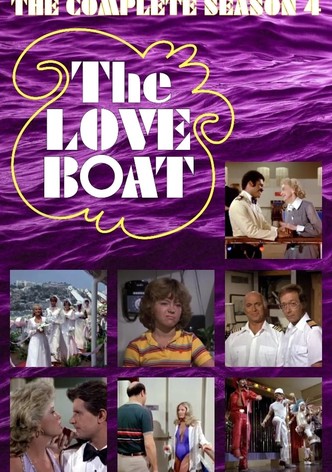
Retro Television Review: The Love Boat 4.28 “Tony and Julie/Separate Beds/America’s Sweetheart”


Welcome to Retro Television Reviews, a feature where we review some of our favorite and least favorite shows of the past!  On Wednesdays, I will be reviewing the original Love Boat, which aired on ABC from 1977 to 1986!  The series can be streamed on Paramount Plus!

This week, season 4 comes to an end!

Episode 4.28 “Tony and Julie/Separate Beds/America’s Sweetheart”

(Dir by Richard Kinon, originally aired on May 16th, 1981)

Wedding bells are in the air!

Carl Mitchell (William Christopher) boards the boat without his wife.  As he explains to Gopher and Isaac, he was married when he booked the cruise but now he’s not married because his wife was too much of a slob.  However, Carl is still determined to take his cruise and enjoy himself.  As soon as Carl goes off to find his cabin, his wife, Lynn (Toni Tennille), boards the ship and tells Gopher and Isaac that she just broke up with her neat freak husband but she’s determined to go ahead and take the cruise that they booked before their break-up.

Carl and Lynn are not happy to discover that they’re both on the cruise and that they’re sharing a cabin.  Carl wants to date a younger woman.  Lynn flirts with Doc Bricker.  Of course, Carl and Lynne are still in love with each other.  Lynn decides to win Carl back by cleaning up the cabin.  Carl decides to win back Lynn by messing the cabin up.  It’s like the most pointless story that O. Henry never wrote.  The important thing is that Carl and Lynn decide to give their marriage another chance.

(Personally, I couldn’t live with someone messy.  And Lynn really does just toss stuff all over the place.  I think they should get a divorce.)

While this is going on, Vicki is super-excited when her favorite actress, Becky Daniels (Alison Angrim), boards the boat.  But Becky is actually a spoiled brat and, when she hires Vicki to serve as her stand-in for a movie that’s being shot on the boat, she goes out of her way to make sure that Vicki is humiliated.  Vicki is briefly disillusioned with Hollywood, until Becky apologizes and she and Vicki become friends.  Okay, then.  Glad that worked out!

Meanwhile, Julie is late arriving at the boat because she’s been busy visiting her aunt (a glowering Nancy Kulp).  She even gets into an argument over a cab with Tony Selkirk (Anthony Andrews), a veterinarian.  Julie wins the argument and the cab but imagine her shock when Tony turns out to be a passenger on the boat!  She’s even more shocked when she sees Tony walking around with two chimpanzees.  Of course, as you’ve probably already guessed, Tony and Julie fall in love.  And Tony asks Julie to marry him.  And Julie says yes!

And that’s where season 4 ends.

Is this the end of Julie’s tenure as cruise director?  I guess we’ll find out next week.  As for this episode, it was pleasant-enough way to end the fourth season.  The stories did not particularly interest me but the Love Boat crew has become a strong enough ensemble that the show is no longer as dependent on its guest stars as it used to be.  This episode, I enjoyed watching the crew more than the passengers.  Seriously, I want to take a cruise now.

Next week, we start season 5!

Bonus Horror Song of the Day: Electronic Battle Weapon 7 (Acid Children) by The Chemical Brothers


“You are all my children now.”

Hey, does that voice sound familiar?  Who would have thought you could dance to Freddy Krueger?

Some people have told me that they find the clown in this video to even scarier than Freddy.

Horror Scenes I Love: Nancy’s School Dream From A Nightmare On Elm Street


Today’s horror scene that I love comes from 1984’s A Nightmare on Elm Street.  Directed by the great Wes Craven, A Nightmare on Elm Street remains a frightening and creepy masterpiece.  It’s ability to scare its audience has not been diminished by countless sequels and rip-offs.

In today’s scene, Nancy (Heather Langenkamp) discovers that she’s not even safe from Freddy (Robert Englund) at school.