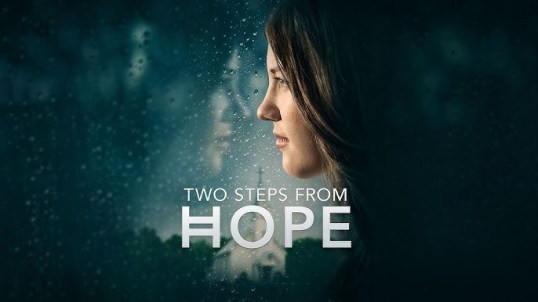
In 2017’s Two Steps From Hope, a family gets hit by tragedy upon tragedy. First, the eldest son is killed in a car accident, which leaves his sister struggling with guilt and his parents on the verge of divorce. In the split second necessary for that accident to occur, lives were changed forever. (If I seem to be harping on this, that’s because I’m still struggling to deal with the fact that my father was okay until he went to the store in May and was involved in the car accident that aggravated his Parkinson’s and ultimately cost him his life. If he hadn’t gone to the store on the day or even at that particular moment, he would probably still be alive today. I will admit that I spend a lot of time obsessing on this and I think it’s definitely changed the way that I react to just about everything.) Then, his sister starts to suffer from sudden nosebleeds, including having one while spending the weekend away at camp. When she returns from camp, she overhears her parents are arguing and, upset, she runs away. After she returns home, her health continues to deteriorate and it’s discovered that she is suffering from Leukemia.
As far as faith-based films are concerned, this one isn’t bad. It’s refreshingly non-preachy and it makes a sincere attempt to deal with grief in a realistic way and without offering up any quick solutions. The characters in this film are going to be struggling for a long time but at least they can draw strength from their faith and their bond as a family, albeit one that is currently in turmoil. That’s not a bad message and the actors play their roles with enough authenticity that the emotions ring true. The movie manages to handle potentially treacly scenes without allowing itself to fall into the trap of being overly sentimental. It’s a well-done film.
That said, the most interesting thing about the film is how it was made. The story was written by a group of teenage interns at Gaffer Media and those same interns made up the majority of the crew, giving them a chance to learn not only about filmmaking but also to make a film about teenagers that didn’t sound like it was written by an adult desperately trying to sound young. (Most faith-based films combine the worst dad jokes with absolutely the worst dialogue imaginable. Whenever I watch them, I always imagine the screenwriter scouring social media in an attempt to learn how people under the age of 18 talk. The end result is an overreliance on slang and a lot of scenes involving parents wondering why their children are so into their phones. “This new phone is totally on fleek!” the teenager will say while the parents exchange bemused glances.) The teenage crew (and I should note that this film was released seven years ago so none of them teenagers anymore) all did a good job. That is definitely something to be positive about.



 Through the Shattered Lens