by Paul Man
by Paul Man
Enjoy!
 One year after throwing his tin star to the ground and riding out of town in disgust at the cowardice of the citizens who he once served, former Marshal Will Kane (Lee Majors, stepping into the role that won Gary Cooper an Oscar) returns to Hadleyville with his bride, Amy (Katherine Cannon).
Hadleyville has a new sheriff. When Kane angrily left, he was replaced by J.D. Ward (Pernell Roberts), a corrupt tyrant who runs the town with an iron fist and who is more interested in making money than upholding the law. Ward is determined to collect the bounty on Ben Irons (David Carradine), a reformed outlaw who swears that he’s innocent. Kane decides to try to help Ben escape from Ward and his posse, which leads to potentially disastrous consequences for him. Will the town finally show the courage necessary to stand behind Kane or will he once again be forced to go it alone?
High Noon, Part II is a made-for-TV movie. It was obviously designed to be a pilot for a potential television series, one that would have featured the weekly adventures of Will Kane in Hadleyville. As far as made-for-TV westerns are concerned, it’s about average, neither particularly good nor bad. Lee Majors may not have been a great actor but he was believable in western roles and both Pernell Roberts and David Carradine give good performances as well. Jerry Jameson directs in a workmanlike manner. The story’s predictable but it’s a western so what do you expect?
The main problem with the film is that it’s set up to be a sequel to a film that never needed one. When Gary Cooper threw that star in the dust and climbed up on that wagon with Grace Kelly in High Noon, the whole point of the story was that Will Kane was never going to return to Hadleyville because the citizens of Hadleyville deserted him when he most needed them. Hadleyville didn’t deserve Will Kane. That’s what set High Noon apart from other westerns. Having Kane return to Hadleyville and once again pick up the tin star negates everything that made High Noon so effective. The whole point of the ending was that Will Kane was never going to return but, according to this movie, he did and forgave the town for the unforgivable. It’s impossible to watch High Noon II without thinking about how it goes against everything that the first High Noon was all about.
Oddly enough, the film’s forgettable screenplay was written by the great Elmore Leonard. Leonard did better work before this film and he would do better work afterwards.
So, put yourself in this situation.
You’re an aspiring writer, which is a really nice way of saying that you don’t have much money. Because you haven’t paid your rent in four months, you’ve just gotten kicked out of your apartment. As bad as that is, you can take some comfort from the fact that your incredibly hot boyfriend owns a really nice and really big apartment and he probably won’t have any issue with letting you live there. I mean, he’s always eager for you to sleep over so why not just move in? So, you head over to his place to give him the news and….
….some blonde that you’ve never seen before opens the door and asks you who you are!
Okay, now you’re in trouble. Not only do you not have an apartment but you also don’t have a boyfriend. You have no money and you have no family to fall back on. While many writers wrote some of their best work while living in boxcars and drifting across the country, you’re not sure that’s what you want to do with the next few years of your life. So, you get on social media and you let the world know that you need a job. ANY JOB!
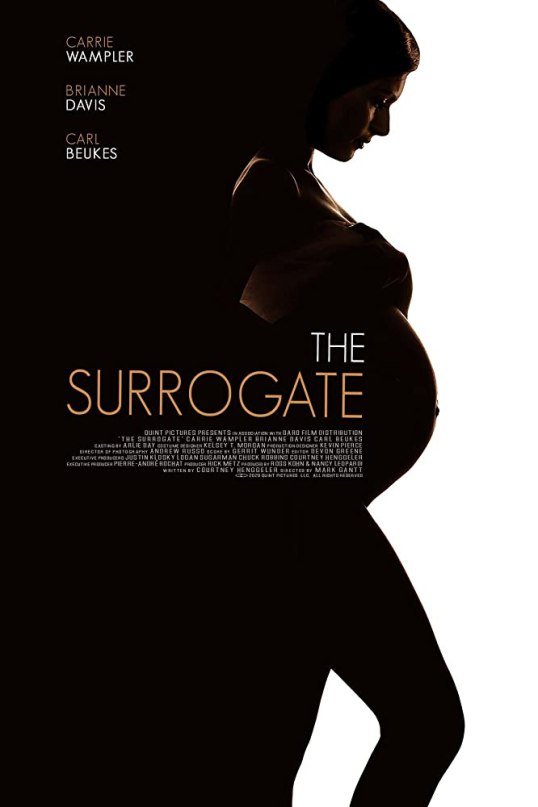
That’s what happens to Olivia (Carrie Wampler), the character at the center of The Secret Life of a Celebrity Surrogate. It all happens during the first 10 minutes or so of this movie and it does make Olivia into an instantly likable character. There’s no way that you can’t sympathize with her because everything that could go wrong in her life has gone wrong in just the course of a few hours. When Olivia is contacted by Cassidy (Jordyn Aurora Aquino) and told that there is a job opportunity for her but that it requires Olivia to be discreet, you can’t blame Olivia for jumping at the opportunity. What else is Olivia going to do? Starve?
It turns out that Cassidy works for Ava (Brianne Davis) and Hayden (Carl Beukes) von Richter, a celebrity couple who, after Ava’s last few films flopped at the box office, are now mostly famous for being famous. Ava and Hayden hire Olivia to act as a surrogate to carry their child. Olivia will get $150,000 once the baby is born and she’ll get to stay at Ava and Hayden’s fabulous mansion. The main conditions seem reasonable: Olivia will have to be discreet and she’ll also have to stay healthy and be regularly checked out by Ava’s army of doctors. Olivia agrees.
And, at first, everything seems okay. Ava and Hayden are charming, even if Ava is a bit high-strung and Hayden often seems like he’s lost in thought. Olivia bonds with Cassidy and chef Peter (Kenneth Miller). Ava can be demanding but that makes sense and …. wait, a minute, did Ava just do cocaine in a public restaurant? And what exactly is Hayden doing with that hypodermic needle?
Needless to say, Ava and Hayden are not as perfect as they initially seem and Olivia soon starts to have doubts about whether or not they should even be parents. Hayden, especially, seems to get creepier (and more and more gropey) with each passing day. Soon, that fabulous mansion starts to feel like a prison and Olivia comes to realize that her employers are even more dangerous than she originally suspected….
The Secret Life of a Celebrity Surrogate is a film that’s very much of the moment. We live in a society that is obsessed with celebrities, even faded ones like Ava and Hayden. We also live in a world where ordinary people — like Olivia — can actually connect with celebrities via social media. At the same time, though people may not always be quick to admit it, we all secretly suspect that most celebrities are actually crazy and probably have a dungeon underneath their mansion. Even our favorites are often suspected of harboring dark secrets, as seen by the eagerness of the twitter mob to cancel their former heroes. As such, we can all relate to Olivia’s willingness to be a part of Ava and Hayden’s seemingly glamorous life while, at the time, Ava and Hayden’s “quirks” serve to confirm what we’ve always suspected about what goes on behind closed doors in Beverly Hills and on Park Avenue.
The Secret Life of a Celebrity Surrogate strikes a good balance between thriller and satire. It embraces the melodrama while also retaining enough self-awarness to be fun. Brianne Davis and Carl Beukes are both entertainingly sleazy as the celebrity couple from Hell while Carrie Wampler is sympathetic and likable in the role of Olivia. This is an entertaining Lifetime movie that will be enjoyed by anyone who has ever looked at a celebrity tweet and thought to themselves, “What a weirdo.”
by Edmund Emshwiller

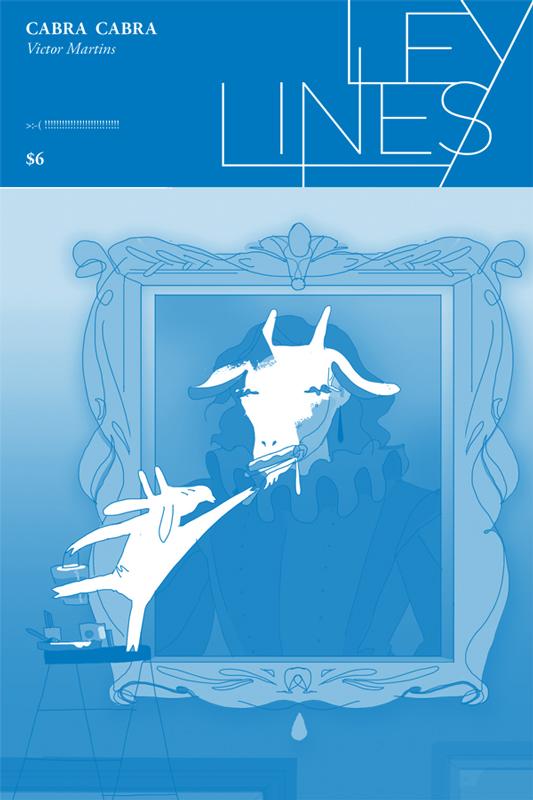
Separating art from artist has always been a tricky proposition, but it’s doubly so when the artist in question is a symbol of liberation and subjugation both. Many artists from various media whose work I generally respect hold or held views I absolutely abhor, from Steve Ditko to Jim Steranko to Douglas Pearce to Peter Sotos, but it’s not all that difficult to say “their worldview’s repugnant, but I like their stuff” without coming off as a hypocrite. Respect for one facet of a person’s life isn’t a tacit endorsement of all of it. But what do you do with Virginia Woolf, who’s justly lauded for her trailblazing feminism and fearlessness in dealing with overtly queer subject matter and themes literally decades before such things were discussed in “polite” (as in, bigoted) company — but was also a fairly pronounced racist?
Cartoonist Victor Martins tackles that very conundrum in…
View original post 676 more words
Today’s music video of the day is for a cover of The Verve’s The Drugs Don’t Work.
I like the video. It has definite drowning feel to it, which is appropriate for the song.
Enjoy!
I have to admit that I have a sneaky admiration for network television.
I mean, on the one hand, the networks are dying. After decades of dominating America’s free time, network television was pushed aside first by cable and now by streaming services. It’s been a long time since anyone looked to the big four networks in search of ground-breaking entertainment. (Don’t even get me started on the CW.) In many ways, the networks feel like relics of a bygone era. Why structure your life around staying at home on a certain night so that you can catch whatever’s on NBC, ABC, CBS, or Fox when you can just DVR it or watch it online at your own convenience?
And yet, the networks carry on. In the middle of the Streaming Revolution, the networks continue to insist that they’re at the forefront of American culture. “Look,” they say, “We have football! We have the awards shows! We have game shows hosted by formerly funny comedians! We have the smarmiest late night talk shows host around! We have the nightly news!” There’s something oddly touching about the refusal of the networks to admit that they’re no longer particularly relevant. They’re like Charles Foster Kane, isolated away in Xanadu and insisting that he’s still as powerful and important as he’s always been.
I guess that’s why I’m always fascinated by the start of a new television season. That never-say-die spirit just appeals to me and I always imagine a bunch of network executives saying, at the start of each season, “This time, we’re going to show Netflix and HBO how it’s done!” With the Emmys now over and done with, the 2020-2021 network television season has begun. For me, It’s always interesting to see which shows become a surprise hit and which shows end up getting cancelled after just three weeks. Oddly enough, the previous television season brought us no real hits and only a few dramatic cancellations. That’s the first time I can remember anything like that happening. It was strange.
This new season is also going to be strange because, as a result of the COVID-19 pandemic, production on a lot of shows were halted. Of the few new dramas and sitcoms that are scheduled for this season, the majority of them are starting in October. Even once the season does get started in earnest, most nights are going to be dominated by celebrity-themed games shows and reality competition programming. That said, I remain an optimist. Surely, there will be at least one good new drama or sitcom on network television this season, right?
Well, it probably won’t be Filthy Rich.
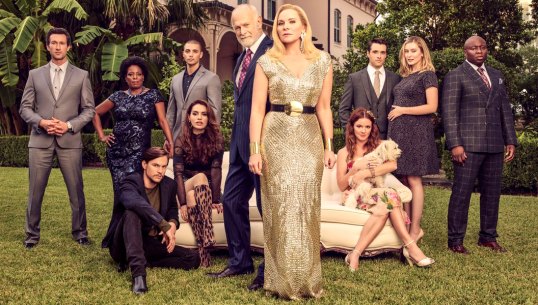
Filthy Rich, which premiered on Fox on Monday night, is the latest primetime soap opera. It’s a show about a wealthy Southern family that owns a Christian television network. When the patriarch of the family is killed in a plane crash, it leads to all of his bastard children coming out of the woodwork so that they can get their inheritance and blah blah blah. It’s meant to be campy and over-the-top and satirical but, judging from the pilot, it just tries too hard. Kim Cattrall plays the scheming matriarch and her erratic southern accent serves to remind that us that Kim Cattrall doesn’t exactly have the greatest range as an actress. Meanwhile, none of the children are really that interesting and even the big, ornately decorated mansion seems rather dull. It’s all a bit too calculated to be genuinely subversive.
With its portrait of scheming rich people and Christian hypocrites, Filthy Rich feels like the edgiest show of 1999. Unfortunately, it’s airing in 2020 and, at this point, we’ve all seen enough Ryan Murphy productions to be able to guess every single thing happens in the pilot for Filthy Rich. (Admittedly, Filthy Rich is not actually a Ryan Murphy production. Instead, it was developed by the director of The Help, Tate Taylor.) There’s not a single surprise to be found. The show seems to think that it’s blowing our minds but, at this point, it takes more than a supporting character smoking weed to be shocking. What would have made Filthy Rich better? It probably would have helped if it had aired on HBO or maybe even FX. Instead, it’s a primetime network show that tries hard to convince us that it’s edgy when it’s actually totally mundane.
Anyway, it’s hard to imagine Filthy Rich surviving against Dancing With The Stars and The Voice so hopefully, everyone involved will move on to better things.
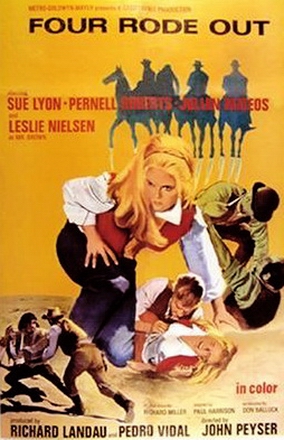 In this self-conciously hip western, former Lolita Sue Lyon stars as Myra Polsen. Myra has a reputation for being the town tramp and, when her father discovers Myra in bed with wanted outlaw Frenando Nunez (Julian Mateos), it leads to her father having a violent breakdown which ends with him shooting himself and Frenando escaping into the desert. (Before anyone comments, that’s not a misspelling. The outlaw’s name actually is Frenando.) World-weary U.S. Marshall Ross (Pernell Roberts) heads into the desert to try to capture Frenando. Accompanying him are Myra (who still loves Frenando) and the mysterious Mr. Brown (Leslie Nielsen!), a detective who is obsessed with Frenando and who says that he’ll kill the outlaw as soon as he sees him.
Also accompanying them is a ghostly folksinger played by Janis Ian, of At Seventeen fame. Ian sings songs that comment upon the story and they’re just as empty-headed and bad as you would expect them to be. Janis Ian’s presence marks this as being one of the handful of new wave westerns that were released in the wake of Easy Rider, The Wild Bunch, and the films of Sergio Leone. These westerns attempted to appeal to the counter-culture by sympathizing with the outlaws and featuring crooked lawmen. The addition of Janis Ian and her songs is Four Rode Out‘s way of saying, “This may be a western but this is a western that gets it.” Instead, it just comes across as artificial and forced. There’s a lot of room for both moral ambiguity and political subtext in the western genre, which was something that Leone and Sam Peckinpah proved. There’s less room for a hippie folksinger, as Four Rode Out demonstrates.
Other than Janis Ian’s songs and some dialogue that tries too hard to be profound, Four Rode Out isn’t bad. Sue Lyon really digs into the role of Myra and even Pernell Roberts gives a good performance. Of course, if you’re watching this movie in 2020, it’s probably going to be because of Leslie Nielsen. This movie was made before Nielsen recreated himself as a comedic actor and it’s interesting to see how the same things that made Nielsen so funny — the deadpan delivery, the overly serious facial expressions — also made him a good villain. For modern audiences, it can be difficult to look at Leslie Nielsen without laughing. That’s how much we associate him with comedy. But once you accept the fact that this is Leslie Nielsen playing a bad guy, he’s very convincing in the role.
One final note of interest: Four Rode Out was based on a story idea from the actor Dick Miller. Yes, that Dick Miller. Unfortunately, Miller himself is not in the movie.
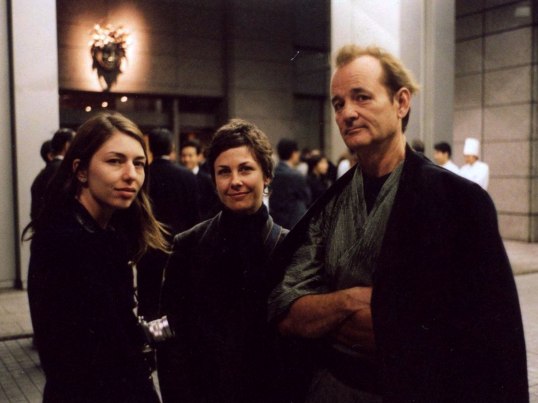
4 Shots From 4 Films is just what it says it is, 4 shots from 4 of our favorite films. As opposed to the reviews and recaps that we usually post, 4 Shots From 4 Films lets the visuals do the talking!
Today, we wish a happy 70th birthday to everyone’s favorite actor, Bill Murray!
That means, of course, that it’s time for….
4 Shots From 4 Films
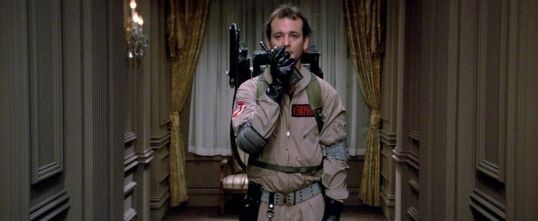
Ghostbusters (1984, dir by Ivan Reitman)
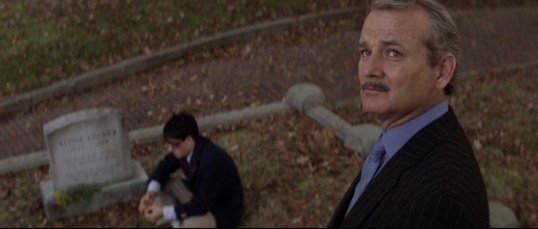
Rushmore (1998, dir by Wes Anderson)
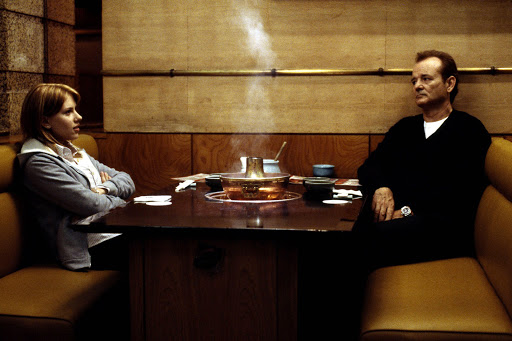
Lost In Translation (2003, dir by Sofia Coppola)
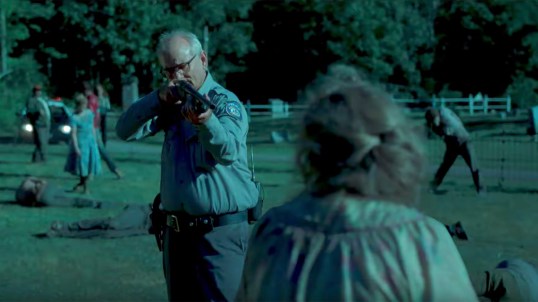
The Dead Don’t Die (2019, dir by Jim Jarmusch)
 Through the Shattered Lens