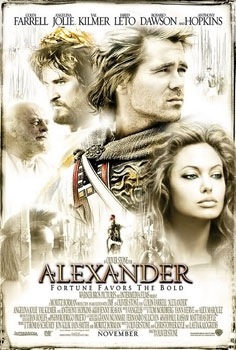
Film Review: Alexander (dir by Oliver Stone)


Before I really get into talking about Oliver Stone’s 2004 film, Alexander, I should acknowledge that there’s about four different version of Alexander floating around.

There’s the widely ridiculed theatrical version, which was released in 2004 and which got terrible reviews in the United States, though it was apparently a bit more popular in Europe.  This version of Alexander was a notorious box office bomb and Oliver Stone’s career has never quite recovered from it.  Though Stone’s still making movies, it’s been a while since he’s really been taken as seriously as you might expect a two-time Oscar winner to be taken.  The box office and critical failure of Alexander is a big reason for that.

There’s also the Director’s Cut of Alexander, which is slightly shorter than the version that was released into theaters and which apparently emphasizes the action scenes more than the original film did.  For an Oscar-winning director to release a director’s cut that’s actually shorter than the version that he originally sent into theaters is rare and it shows that the film’s subject matter was one that Stone was still trying to figure out how to deal with.

There is also the “Final Unrated Cut,” which lasts 3 hours and 45 minutes and which Stone described as being the Cecil B. DeMille-version of the story.  At the time the Final Unrated Cut was released in 2007, Stone announced that he had put everything back into the movie and that we were finally able to see the version of the story that he wanted to tell.

However, Stone apparently still left some stuff out because, in 2009, we got the Final Cut, which goes on for 206 minutes and which, once again, apparently includes everything that Stone wanted to put in the original cut of the film.  The Final Cut has actually received some positive reviews from critic who were not impressed by the previous three versions of Alexander.

For the record, I saw the Director’s Cut.  This is the second of the Alexanders, the one that runs 167 minutes.  Some day, I’ll watch the four hour version and I’ll compare the two films.  But for now, I’m reviewing the 167-minute version of Alexander.

Anyway, Alexander is a biopic of Alexander The Great, the Macedonian ruler who took over a good deal of the known world before mysteriously dying at the age of 32.  The film jumps back and forth in time, from an elderly Ptolemy (Anthony Hopkins, going about as overboard as one can go while playing an ancient Greek historian) narrating the story of Alexander’s life to Alexander (Colin Farrell) conquering his enemies to scenes of Alexander’s mother (Angelina Jolie) and one-eyed father (Val Kilmer) shaping Alexander’s outlook on the world.  Along the way, we discover that Alexander was driven to succeed and forever lived in the shadow of his father.  We also discover that he may have been in love with his general, Hephaistion (Jared Leto), even though he married Roxane (Rosario Dawson, who gets to do an elaborate dance).  We also discover that no battle in the ancient world could begin before Alexander gave a long speech and that all of the Macedonians spoke with thick Irish accents.  Stone has said that the Irish accents were meant to signify that the Macedonians were working-class.  Other people say that, because Colin Farrell’s accent was so thick, the rest of the cast had to imitate him so he wouldn’t sound out-of-place.

And here’s the thing — yes, Alexander is a big, messy film that is often incoherent.  Yes, the cast is full of talented actors, every single one of which has been thoroughly miscast.  Yes, it’s next to impossible to keep track of who is fighting who and yes, it’s distracting as Hell that all of the Macedonians have Irish accents and that Angelina Jolie uses an Eastern European accent that’s so thick that it almost becomes a parody of itself.  All of these things are true and yet, I was never bored with the director’s cut.  The sets were huge, the costumes were beautiful, and the cast was eccentric enough to be interesting.  Val Kilmer, Angelina Jolie, and Anthony Hopkins all go overboard, chewing every piece of scenery that they can get their hands on.  Colin Farrell alternates between being determined and being wild-eyed.  Jared Leto allows his piercing stare to do most of his acting.  Even Christopher Plummer shows up, playing Aristole with a North Atlantic accent.  No one appears to be acting in the same film and strangely, it works.  The ancient world was chaotic and the combination of everyone’s different acting styles with Stone’s frantic direction actually manages to capture some of that chaos.

Oliver Stone apparently spent years trying to bring his vision of Alexander’s life to the big screen.  Watching the film, it’s a classic example of a director becoming so obsessed with a story that they ultimately forgot why they wanted to tell it in the first place.  Stone tosses everything he can at the cinematic wall, just to see what will stick.  Is Alexander a tyrant or a misunderstood humanist?  Is he a murderer or a noble warrior?  Is he in love with Hephaistion or has his borderline incestuous relationship with his mother left him incapable of trusting anyone enough to love them?  The film doesn’t seem to know who Alexander actually was but it’s so desperate to try to find an answer among all of the endless battle scenes and lengthy speeches that it becomes undeniably compelling to watch.  If nothing else, Alexander gives us the rare chance to see an Oliver Stone film in which Stone himself doesn’t seem to quite know what point it is that he’s trying to make.

Alexander is a mess but there’s something fascinating about its chaos.  It’s a beautiful wreck and, as with all wrecks, it’s impossible to look away.
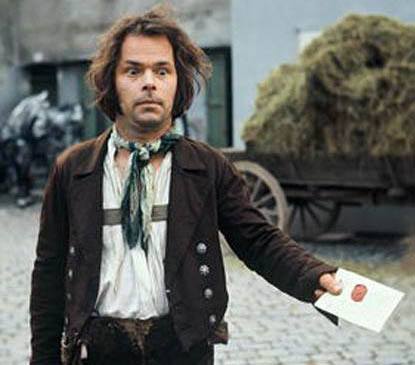
The International Lens: The Enigma of Kaspar Hauser (dir by Werner Herzog)


Once upon a time, in 19th century Germany, there was a young man who was known as Kaspar Hauser.

No one was really sure what Kaspar’s original name was or where he even came from.  He was found, in 1828, wandering the streets of Nuremberg.  He carried an unsigned letter with him, one that said that he was 16 yeas old, from the Bavarian border, and that he had been raised by someone who taught him how to read and write and about “the Christian religion.”  The note also stated that the boy had never been allowed to step out of the house before being taken and abandoned in Nuremberg.  He carried a second letter, which was supposedly from his mother and stated that the boy’s name was Kaspar and that his father had been in the Cavalry.  Some people who saw the two letters felt that they had both been written in the same handwriting, leading to speculation that Kaspar may written the letters himself.

When he was first found, it was believed that Kaspar could barely speak.  He knew the word for “Horses!” and he often repeated the phrase, “My father was cavalryman!”  As time progressed, Kaspar’s vocabulary expanded and he said that his earliest memories were of being locked away in a room.  His meals were brought to him by someone who always wore a mask.  Some people felt that Kaspar may have been the kidnapped child of a nobleman or an unacknowledged member of the royal family.  Others felt that he was a charlatan and that he was faking the entire thing.  Briefly, Kaspar was a celebrity as people from around the world wondered who he was and where he had come from.

In 1828, he was found with a cut on his forehead.  He said that he was attacked by a mysterious stranger who announced, before cutting him, “You have to die!”  The stranger was never found and there was even some speculation that Hauser had cut himself.  In 1830, he was found with another wound on his forehead, this time claiming that he had been grazed by a bullet after a gun accidentally went off.  Again, some felt that Hauser was intentionally injuring himself for the attention while others felt that the people who had held him prisoner were again trying to kill him.

Hauser was found wounded one last time, in 1833.  This time, he was found with a deep cut to his chest.  He claimed that he had, again, been attacked by a mysterious stranger.  A note was found where Hauser claimed that he had been attacked, a cryptic letter that claimed that the attacker was the same man who had previously cut Hauser’s head.  By this point, there was a lot more skepticism about Hauser and his stories and it was generally assumed that he had stabbed himself and injured himself worse than he ha intended.  It’s said that when Hauser died of his wounds, his last words were, “I didn’t do it to myself.”  Assuming that Hauser was born when the note from his mother claimed that he was, Kaspar Hauser was 21 when he died.

The mystery of Kaspar Hauser is an intriguing one and it’s one that’s explored in Werner Herzog’s 1974 film, The Enigma of Kaspar Hauser.  The film sticks fairly closely to the known facts of Hauser’s life.  For instance, Herzog does not show us the final attack on Hauser.  Instead, he just has Hauser tell us about the attack, leaving it to us to decide whether or not Kaspar is telling the truth.  At the same time, the film starts with footage of Kaspar being held in a small room.  We watch as a dark-clad stranger carries Hauser to Nuremberg and, after showing him how to walk, then abandons him on the streets of the city.  Herzog accepts Hauser’s claim that he was raised in a locked room but he leaves it to us to decide why Hauser was in that room and why he was eventually abandoned in Nuremberg.

Kaspar Hauser is played by an actor named Bruno S.  Bruno S. was a nonprofessional and he was 42 year-old when he played the 16 year-old Hauser.  And yet, Bruno S. has such an unconventional screen presence that he seems perfect for the role.  With his wide-eyed stare and his tentative movements, Bruno S. is poignantly believable as someone who is discovering the world for the same time.  As the film progresses, Hauser develops a sharp and cynical wit, all of which Bruno S. captures perfectly.

Hauser is another Herzog protagonist who, because he’s on the outside of regular society, has developed the ability to see the world in a way that no one else can.  While he lays dying, Hauser has visions of nomadic Berbers in the Sahara Desert.  Why?  Why not?  That’s the enigma of Kaspar Hauser.  As in all of his best films, Herzog embraces the questions without trying to manufacture answers and the end result is a haunting film about one of Germany’s most enduring historical mysteries.

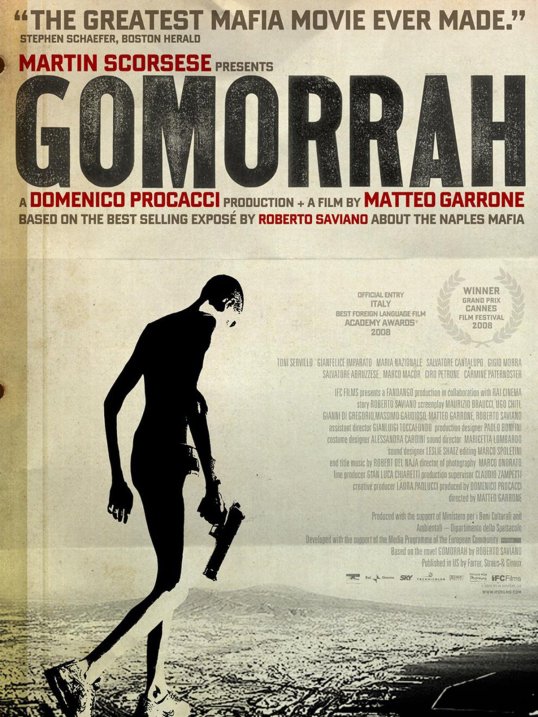
The International Lens: Gomorrah (dir by Matteo Garrone)


In the suburbs of Naples, a group of middle aged men are gunned down while relaxing at a tanning salon.  The 2008 Italian film, Gomorrah, opens with that shocking act of violence and, though we don’t ever learn much about the men who have just been killed or even why they were killed, we spend the next 137 minutes watching the ramifications of those murders.

The poorest neighborhoods of Naples have been plunged into violence as two rival clans of the Camorra go to war.  (The Camorra is like the Mafia but even more violent.)  We’re never quite sure who has gone to war with who or who is winning the war.  For the most part, we’re usually not even sure who is allied with who.  The details of the war are not as important as the people who are caught up in it.

For instance, there’s a 13 year-old boy named Toto (Salvatore Abruzzese) who desperately wants to join one the clan-affiliated gangs.  Toto has a job delivering groceries and, after he proves that he can be trusted by delivering a package of misplaced drugs to the gang, he allowed to join.  Of course, he also has to help his new friends murder one of the people to whom he delivers groceries.

And then there’s Don Ciro (Gianfelice Imparato), who looks like  quiet accountant but who has one of the most dangerous jobs around.  He’s the guy who has to deliver money to the families of all of the clan members who have been arrested or killed.  Having that money is dangerous, even for someone who doesn’t appear to have a violent bone in his body.  One thing that Gomorrah quickly establishes is that, when it comes to the Camorra, there is no honor.  Everything that we’ve been led to believe about organized crime having any sort of code is a lie.  Everyone is a target, even the ones who appear to just be timid bankers.

Pasquale (Salvatore Cantalupo)) is a tailor who takes a job training Chinese garment workers.  Because the Chinese workers are directly competing with the Camorra-owned factories, Pasquale soon discovers that his life is in danger.  He even has to hide in the trunk of a car so that he can be safely smuggled into work each night.  It’s a dangerous world but Pasquale’s story does conclude with one of the film’s best and most darkly humorous moments.

Franco (Toni Servillo) works in waste management, hauling away people’s garbage and then secretly dumping it where it won’t be discovered until long after it’s poisoned the soil.  Franco’s business may be funded by criminals and he may be destroying the Earth but Franco still very proud of himself.  He’s the type of hard worker who built Italy’s economy.  Without him, Italy would be dependent upon other countries for its survival.  Franco is the type of man who makes Italy and therefore Europe great.

And finally, there’s Marco (Marco Macor) and Ciro (Ciro Petrone), two teenage morons who love Scarface and who think that they’re destined to become master criminals just like Tony Montana.  Hoping to impress the clans, they commit a series of progressively violent crimes.  Even as the Camorra plots a violent retribution for the two of them, the two teens are too busy playing on the beach, stripping down to their underwear and firing off rifles, to understand.  It’s easy to dismiss these two as just being idiots who are in over their heads but what else is there for them?  They live in one of the poorest neighborhoods in all of Europe,  There are no economic opportunities.  There’s no chance for any sort of advancement.  They’re trapped, prisoners of both their birth and their circumstances.  They can either try to be gangsters or they can just be passive observers.  Either way, there’s a good chance they’ll get caught in the crossfire.  When the choice is between being a victim and victimizer, is it such a shock that the two of them would want to be the latter?

Gomorrah is a gritty crime film, shot in a documentary-style with a largely nonprofessional cast and featuring scenes of sudden and shocking violence.  Unlike most mafia movies (though the Camorra is not the same as the Mafia that we know here in the United States), Gomorrah is barely concerned with the mobsters.  Instead, its focus is on those who have to live around them, the indirect victims of their nonstop vendettas.  The film understands that its audience is probably full of people like Marco and Ciro, people who can quote Scarface but who have no understanding of the actual damage that has been done by organized crime.  Gomorrah sets out to correct the record and it does a pretty good job of it.

Gomorrah is a harrowing but effective film, one that shows how poverty breeds crime and crime, for the most part, just breeds more poverty.  To its credit, the film doesn’t offer up any easy solutions.  Instead, it just asks us to acknowledge the reality of what’s happening all around.

The International Lens: The Vanishing (dir by George Sluizer)


A man named Rex (Gene Bervoets) is driving through France with his girlfriend, Saskia (Johanna ter Steege).  They’re from the Netherlands and they’re taking their first vacation together.  Saskia tells Rex about a strange recurring dream that she’s been having, one where she’s floating through space and she’s on the verge of colliding with someone else.  When Rex fails to take her dream seriously, they have a brief argument.  It’s the type of argument that every couple has had at one time or another.  At the time, it’s serious.  Afterwards, it’s something that you laugh about.

When they pull over at a rest stop, Saskia goes into a gas station.  She says that she’s only going inside for a few minutes, just so she can pick up two drinks.  She should be right back.

She never returns.  Rex searches the entire rest area but no one can remember seeing where she might have gone off to.  It’s as if she’s vanished off the face of the Earth.

This is how the 1988 Dutch film, The Vanishing, begins.  The opening is creepy enough.  What’s amazing is that things only get creepier as the story progresses.

Three years pass by.  Saskia is never found.  Despite the fact that Rex is now dating Lieneke (Gwen Eckhaus) and makes it a point to only refer to Saskia as having been a “friend,” he remains obsessed with her disappearance.  He continues, for instance, to pay to put up missing posters of her.

Walking through the city, a French chemistry professor named Raymond Lemorne (Bernard-Pierre Donnadieu) and a friend of his see one of the posters.  Raymond’s friend says that Rex should just give up.  If Saskia hasn’t been found yet, she’ll never be found.  Raymond asks his friend how he would feel if it had been someone close to him who had disappeared.  Raymond sympathizes with Rex and wonders who could have abducted Saskia.

Of course, Raymond already knows the answer.  As we see in flashback, Raymond is the one who kidnapped Saskia.  Raymond Leomorne is a friendly, calm, and always reasonable family man.  Once, while he and his family were enjoying a weekend afteroon, he even dove into a river to save a girl from drowning.  Raymond, however, has always know that there was something different about him.  When he was a child, he once jumped off a balcony just for the experience.  Everyone assumed that he had fallen off the balcony because, after all, only a crazy person would actually jump.  And Raymond has always been as normal as normal can be….

There’s been a lot of films made about the banality of evil but none capture the concept quite as perfectly as The Vanishing.  Even after he reveals the truth about what he’s done, Raymond remains a remarkably reasonable, friendly, and mild fellow.  He discusses committing murder in the same tone that someone would use while discussing doing yard work.  If anything, the obsessive Rex seems more outwardly unstable than Raymond.  While Raymond cheerfully acknowledges that he is a sociopath, Rex insists that he’s not still in love with Saskia.  Of course, everyone in the film knows better.  Rex remains obsessed with not only Saskia but also the manner of her death.  He says that he’s living in the present but he spends his time continually trying to recreate the past.

When Raymond starts sending Rex postcards in which he offers to show him, step-by-step, what happened to Saskia, Rex agrees to meet with him.  The majority of the film is simply Rex and Raymond talking to each other while driving through the night.  What makes these deceptively low-key scenes especially disturbing is that Raymond doesn’t carry a gun or any other weapon.  Rex could probably subdue him at any minute and take him to the police.  Even after Rex has his answers, he continues to listen to Raymond.  He continues to passively allow Raymond to control every minute of their story, all so he can try to recreate the day the Saskia vanished and hopefully find a different ending to their trip.  It all leads to a shocking final twist and one of the most haunting finales in cinematic history.

The Vanishing is a horror film that’s effective specifically because it doesn’t takes place in a fantasy world or feature any imaginary monsters.  It takes place in the real world and its monster is all too real.  It plays out with the power of a nightmare.  Much like Saskia’s dream about being in the egg, The Vanishing moves like an unstoppable force of dread.  It’s a frightening film but it’s also not one that you can look away from.

Police Academy 3: Back in Training (1986, directed by Jerry Paris)


Police Academy 3 opens with a state in the middle of a fiscal crisis.  Money has to be saved somewhere and the governor (Ed Nelson) has decided that it’s not necessary for the state to have two police academies.  I am not sure why the governor would be the one to make that determination since the previous two Police Academy films established that the academies are run by the city but I guess I should remember that I’m watching a Police Academy film and not ask too many questions.

Which academy is going to be closed down?  Will it be the academy run by Commandant Lassard (George Gaynes) or the one run by Commandant Mauser (Art Metrano, returning from the second film)?  Mauser is willing to use any dirty, under-handed trick to keep his academy open.  Meanwhile, Lassard has his most recent graduating class returning to instruct his latest batch of recruits.  Can Mahoney (Steve Guttenberg) and Michael Winslow’s human sound effects machine save the academy?

When I watched Police Academy 3 this weekend, I was surprised to discover that it wasn’t as bad as I remembered.  Maybe it’s because I watched it immediately after the first two films and my senses were dulled but Police Academy 3 turned out to be an amiable and enjoyably stupid comedy. It helped that two of the new recruits were played by Tim Kazurinsky and Bobcat Goldthwait.  Returning to the roles that they first played in the second movie, Kazurinsky and Goldthwait make for a good comedic team.  As for the rest of the Police Academy regulars, they all do their usual comedy bits like pros and without any fuss.  It’s predictable and sometimes, funny.

Police Academy 3 was the first Police Academy film to have a PG-rating and, as a result, the jokes were still as juvenile and crude as the first two movies but, at the same time, Police Academy 3 seems to have made peace with the fact that it’s target audience was a bunch of adolescent boys dropped off at the theater by their mothers.  Mauser is still regularly humiliated but no one gets a blow job while standing in front of a podium.  This is a Police Academy for the entire family, assuming that your family is easily amused and not too demanding.

Police Academy 3 is a dumb movie and the recurring joke about policemen accidentally entering the Blue Oyster Bar is even less funny the third time that it’s used.  There’s also a Japanese recruit who only seems to be included because, back in the 80s, American films were obsessed with making fun of Japan.  Despite all that, Police Academy 3 is still not as bad as the usual Police Academy sequel.

But what about Police Academy 4?  Check in tomorrow to find out if it’s also better than I initially remembered.

(It’s not.)

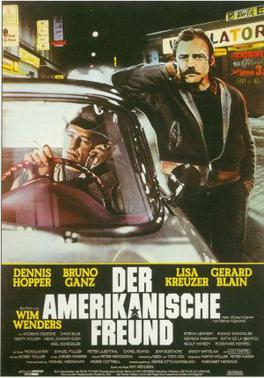
The International Lens: The American Friend (dir by Wim Wenders)


The 1977 German film, The American Friend, tells the story of two men.

Tom Ripley (played by Dennis Hopper) is an American.  He’s also a very wealthy criminal.  He wears a cowboy hat almost everywhere he goes and always tends to be a little bit too forceful when he talks to people.  Because he’s wealthy, he is tolerated by high society but everyone seems to view him with a bit of suspicion.  And perhaps they should because Ripley actually has a pretty good scheme going.  Working with an artist named Derwatt (director Nicholas Ray), Ripley sells forged paintings.  He goes to auctions and bids on these paintings, artificially driving up the price.  When Ripley isn’t selling forged paintings, he’s traveling around the world and speaking into his tape recorder.  He’s an existential cowboy, one who doesn’t appear to have any morals but who is still capable of exclaiming, “I’m confused!” with real anguish in his voice.

Jonathan Zimmerman (Bruno Ganz) is a German art restorer and picture framer who has a beautiful wife, two children, and a lovely shop.  He also has leukemia and is obsessed not only with his impending death but also his fear that he’s going to end his life without really doing anything memorable.  When Jonathan meets Ripley at an art auction, he refuses to shake Ripley’s hand because he knows about Ripley’s shady reputation.  Ripley is offended but slightly forgiving when he learns, from a mutual acquaintance, that Jonathan has been sick.

Back at his mansion, Ripley receives a message from a French gangster named Minot (Gerard Blain).  Minot wants Ripley to murder a rival gangster for him.  Ripley, however, tells Minot that he should contact Jonathan and offer him the contract.  Ripley then spreads a rumor that Jonathan’s illness has gotten worse and that both his doctor and his family are keeping the truth from him.  Now believing that he’s on the verge of dying and desperate to make some money so that his family won’t be helpless after he’s gone, Jonathan is far more open to accepting Minot’s unexpected offer to become a hired gun.

To his shock, Jonathan is able to carry out the murder.  However, Minot is not content to just have Jonathan kill one man.  Minot is concerned about the activities of an American gangster (played by director Sam Fuller) and he expects Jonathan to keep killing for him.  Meanwhile, Ripley, feeling a bit conflicted over his part in Jonathan’s new career, take it upon himself to help Jonathan out in his latest assignment.  And so, on odd friendship is born….

The American Friend is based on Patricia Highsmith’s novel Ripley’s Game (which, itself, is a sequel to oft-filmed The Talented Mr. Ripley).  In Highsmith’s novels, Ripley was always portrayed as being suave, well-spoken, and never suffering from self-doubt.  Dennis Hopper plays Ripley as a cowboy who appears to be in the throes of an existential crisis.  It’s quite the opposite of the literary Ripley but it works perfectly in the world created by The American Friend.  At times, there’s something almost child-like about Hopper’s Ripley.  As played by Hopper, Ripley is an unintentional force of destruction, one who targets Jonathan on an impulse and then, just as impulsively, decides to help him out.  It’s one of Hopper’s best and most multi-layered performances.

Dennis Hopper is equally matched by the great Bruno Ganz, who plays Jonathan as being a gentle soul who is as shocked as anyone to discover that he’s capable of murder.  Though he is morally offended by Ripley’s reputation, he still can’t help but try to help Ripley out when Ripley unexpectedly shows up at his shop.  Even towards the end of the film, Jonathan seems to be so happy to finally be doing something unexpected with his life that his joy is almost infectious.  You’re happy for him, even though you know things probably won’t turn out well for him.

As directed by Wim Wenders, The American Friend is a perfect mix of existential angst and film noir homage.  While there’s undoubtedly a political subtext to the film — one gets the feeling that Ripley’s destructive friendship with Jonathan is meant to represent the way that America views Europe — The American Friend works best as an homage to the glorious B-movies of the 40s and 50s.  (It’s probably not a coincidence that both Nicholas Ray and Samuel Fuller have prominent supporting roles.)  There’s a sequence on a train that’s the equal to Hitchcock at his best and the story’s conclusion will stick with you long after the film ends.

Sadly, most of the principle members of the cast are no longer with us.  All of them are at their best in The American Friend and Wim Wenders gives them all a terrific showcase in which to display their talent.  The American Friend is definitely a film worth tracking down.

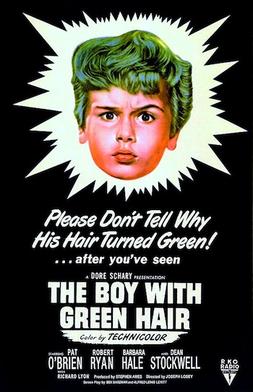
Film Review: The Boy With Green Hair (dir by Joseph Losey)


Who is Peter Fry (played by a 12 year-old Dean Stockwell), the young boy at the center of the 1948 film, The Boy With Green Hair?

When we first meet him, Peter is a nearly mute child who has had all of his hair shaved off and who refuses to talk about either one of his parents.  He’s mysteriously shown up in a small town and it’s only after a kindly psychologist (played by Robert Ryan) speaks with him that we discover that Peter is an orphan.  Both of his parents are dead, victims of the Second World War.  Fortunately, a retired actor named Gramps (Pat O’Brien) is willing to adopt Peter and raise him as his own.  Gramps has all sorts of stories about the times that he performed in Europe.  The film hints that Gramps might be a damn liar but he’s well-meaning, nonetheless.

Peter starts to attend school and slowly, but surely, he comes out of his shell.  Soon, he appears to be just another carefree child and his hair even grows back.  But then, one day, he sees a poster featuring other war orphans, children like him who have lost their families to war.  When Peter overhears adults talking about how the world may go to war again and how there are now even bigger and more destructive bombs that can be dropped on America’s enemies, Peter start to get upset.  What’s the point of going to school and preparing for the future if there’s not going to be any future?

One night, Peter goes to sleep.  When he wakes up in the morning, he discovers that his hair has turned green!

Why has Peter’s hair turned green?  It’s hard to say but the town is remarkably unsympathetic.  It’s perhaps understandable that Peter’s classmates would make fun of him because they’re children and children are the worst about not being able to handle change.  But not even the adults seem to be able to handle Peter having green hair!  They want to shave his head again!

With even kindly old Gramps prepared to take away Peter’s green hair, Peter flees into the woods.  There’s where he runs into the spirits of all the children who have either died or been orphaned by war.  They have a message for Peter….

The Boy With Green Hair is both an antiwar parable and a plea for tolerance.  There’s not a subtle moment to be found in the entire film but, considering that it was made at a time when the world was still in ruins and people were still getting used to living in the shadow of the atomic bomb, it’s perhaps understandable that the film would be a bit heavy-handed.  It was, after all, made during a heavy-handed time.  That said, the film actually works better as a parable about racism than as a pacifist statement.  It’s kind of hard to see how Peter having green hair could convince people to pursue world peace but the way that Peter is ostracized for being different from everyone else is something to which many viewers could undoubtedly relate.

There’s some weird padding in the film.  For instance, there’s a weird musical number involving Gramps that comes out of nowhere.  Still, one can see why the film made an impression on some viewers.  Dean Stockwell gives a sympathetic and, most importantly, naturalistic performance as Peter and the film’s message is a sincere one.  One could easily imagine and also easily dread the prospect of this film being remade with Peter’s hair turning green over climate change.  I’m a little surprised that hasn’t happened yet, especially considering the amount of coverage that was once given to Greta Thunberg, whose pronouncements and fame have made her a somewhat angrier version of the boy with green hair.  Hopefully, a remake won’t ever happen, as the original film works just fine as it is.  Not everything has to be remade.

Film Review: The Passenger (dir by Michelangelo Antonioni)


The 1975 film, The Passenger, tells the story of David Locke (Jack Nicholson).

Locke is a television news journalist.  From what we can gather, he’s respected from his colleagues, even though he doesn’t seem to be extremely close to anyone, including his wife (Jenny Runacre).  Everyone thinks that Locke is dead.  They believe that he was found dead in a hotel room in Africa, the victim of a heart attack.  What they don’t know is that Locke is actually alive.  He switched identities with Robertson (Charles Mulvehill), the man who actually was found dead in the hotel room.  After years of reporting on a world that appears to be going insane, Locke has decided that it’s time for a fresh start.  He no longer wants to deal with his marriage, his career, or anything else that used to define David Locke as a person.  He now just wants to be Robertson.

Of course, the problem with this plan is that Robertson had a life before Locke appropriated it.  Locke discovers that Robertson was not only a gun runner but he was also supplying weaponry to the same rebels that Locke, in his previous life, traveled to Africa to do a story on.  Since Locke has Robertson’s appointment book, he decides to keep all of Robertson’s meeting across Europe.

Meanwhile, Locke’s wife is curious to know about her husband’s final moments and, for that reason, she wants to speak with this mysterious Robertson, who was the last person to reportedly see her husband alive.  Locke’s friend, Martin (Ian Hendry) sets out to try to track down Robertson.  Locke, meanwhile, has met an architecture student (Maria Schneider), with whom he embarks on a passionate affair despite not ever learning her name.

The Passenger famously ends with a seven minute tracking shot, one that begins in a hotel room and then moves out into the hotel’s courtyard before then returning to the hotel room.  While the audience is watching the action unfold in the courtyard, something very important happens inside of that hotel room.  In fact, what happens in the hotel room is probably the most important moment of the entire film and yet director Michelangelo Antonioni only shows us the events leading up to the moment and the events immediately afterwards.  Antonioni leaves it up to the audience to determine exactly what happened inside of that hotel room.  It’s a bold move on his part and it’s also the perfect way to end this film.  The Passenger is a film about detachment and it only makes sense that the film would end with the ultimate statement of detachment, with the emphasis being less on what’s happening in the hotel room and more on the fact that life, in all of its random and confusing messiness, will continue regardless of how the story of David Locke turns out.

It’s definitely not a film for everyone.  Those who watch the film excepting a typically explosive Jack Nicholson performance will probably be surprised to discover that Jack plays a rather quiet character in The Passenger, one who is often so introverted that it’s a struggle to figure out what exactly is going on inside of his mind.  Locke thinks that, as a journalist, he understands the world but, when he becomes Robertson, he discovers that there’s a big difference between reporting a story and actually being a part of that story.  It’s an odd experience, watching Jack Nicholson play a character who is essentially in over his head.  And yet, this is is also one of Nicholson’s best performances.  Freed up from his usual tricks, Nicholson gives a vulnerable and ultimately rather sad performance as a man who realizes too late that he’s grown so detached from the world that he no longer really has an identity.

The Passenger‘s a difficult but intriguing film.  It’s a classic of the 70s and features Jack Nicholson at his best.

Film Review: Fingers (dir by James Toback)


Welcome to method actor Hell!

The 1978 film, Fingers, tell the story of Jimmy “Fingers” Angelilli (Harvey Keitel).  Jimmy is a creep who works as a debt collector for his father, a small-time loan shark named Ben (Michael V. Gazzo).  Jimmy is violent and brutal and often wanders around with a disturbingly blank-look on his face but we’re supposed to like him because he’s a talented pianist and he’s got a recital interview coming up at Carnegie Hall.  Jimmy carries a radio with him wherever he goes and he’s obsessed with the song Summertime.  He’s the type who will sit in a crowded restaurant and play the song and then get upset when someone tells him to turn off his radio.  By the end of the movie, I was really hoping that someone would take Jimmy’s radio and smash into a hundred pieces.

Jimmy is in love with Carol (Tisa Farrow, who was a far better actress than her sister Mia and who would later appear in Lucio Fulci’s classic, Zombi 2), who doesn’t really seem to all that into him.  Despite being in love with Carol, Jimmy still hits on every woman that he meets and, because this is a 70s films, he’s constantly getting laid despite being kind of a charmless putz.

Jimmy meets a former boxer named Dreems (Jim Brown).  Carol is apparently one of Dreems’s mistresses.  Jimmy silently watched while Dreems knocks two women’s heads together.  Jimmy stands there with his little radio and a blank expression on his face.  Is anything going on inside of Jimmy’s head?  It’s hard to say.

Eventually, Jimmy finds out that a gangster (Tony Sirico) owes his father money but is refusing to pay.  It all leads to violence.

As a film, Fingers is pretty much full of shit but that shouldn’t come as a surprise because it was the directorial debut of James Toback and there’s no American filmmaker who has been as consistently full of shit as James Toback.  Fingers has all of Toback’s trademarks — gambling, crime, guilt, classical music, and a juvenile view of sexuality that suggests that James Toback’s personal development came to a halt when he was 16 years old.  It’s a pretentious film that really doesn’t add up too much.  Again, you know what you’re getting into when James Toback directs a film.  Don’t forget, this is the same director who made a documentary where he was apparently shocked to discover that no one wanted to finance a politically-charged remake of Last Tango in Paris starring Alec Baldwin and Neve Campbell.

Fingers is a bit of an annoying film and yet it’s not a total loss.  For one thing, if you’re a history nerd like I am, there’s no way that you can’t appreciate the fact that the film was shot on location in some of New York’s grimiest neighborhoods in the 70s.  While I imagine it was more of a happy accident than anything intentional on Toback’s part (because, trust me, I’ve seen Harvard Man), Fingers does do a good job of creating an off-center, dream-like atmosphere where the world constantly seems to be closing in on its lead character.  Jimmy is trying to balance his life as violent mobster with being a sensitive artist and the world around him is saying, “No, don’t count on it, you schmuck.”

As well, Harvey Keitel gives a …. well, I don’t know if I would necessarily say that it’s a good performance.  In fact, it’s a fairly annoying performance and that’s a problem when a film is trying to make you feel sympathy for a character who is pretty unsympathetic.  That said, there’s never a moment in the film where Keitel is boring.  In Fingers, Keitel takes the method to its logical end point and, as a result, you actually get anxious just watching him simply look out of a window or sit in a corner.  Even though Jimmy eyes rarely shows a hint of emotion, his fingers are always moving and, just watching the way that he’s constantly twitching and fidgeting, you get the feeling that Jimmy’s always on the verge of giving out a howl of pain and fury.  It doesn’t really make Jimmy someone who you would want to hang out with.  In fact, I spent the entire movie hoping someone would just totally kick his ass and put him in the hospital for a few weeks.  But it’s still a performance that you simply cannot look away from.  Watching Keitel’s performance, you come to realize that Fingers is essentially a personal invitation to visit a Hell that is exclusively populated by method actors who have gone too far.

Anyway, my feelings about Fingers were mixed.  Can you tell?  It’s an interesting movie.  I’ll probably never watch it again.

Film Review: The Panic In The Needle Park (dir by Jerry Schatzberg)


The 1971 The Panic in Needle Park tells the story of two young lover in New York City.

Helen (Kitty Winn) is an innocent runaway from Indiana who, when we first meet her, has just had a back alley abortion.  Her boyfriend, Marco (Raul Julia), doesn’t seem to be too concerned about her or anyone else for that matter.  Instead, it’s Marco’s dealer, Bobby (Al Pacino), who checks in on Helen and who visits her when she eventually ends up in the hospital.  It’s also Bobby who gives her a place to stay after she gets out of the hospital.

Bobby is a small-time dealer.  He’s not book smart but he knows how to survive on the streets and it’s hard not to be charmed by him.  He literally never stop talking.  As he explains it to Helen, he’s been in jail 8 times but he’s not a bad guy.  His brother, Hank (Richard Bright, who also co-starred with Pacino in The Godfather films), is a burglar and he legitimately is a bad guy but he and Bobby seem to have a close relationship.  Bobby also swears that he’s not a drug addict.  He just occasionally indulges.  It doesn’t take long to discover that Bobby isn’t being completely honest with either Helen or himself.

Together, Bobby and Helen ….

Well, they don’t solve crimes.  In fact, they really don’t do much of anything.  That’s kind of the problem with movies about drug addicts.  For the most part, drug addicts are boring people and there’s only so many times that you can watch someone shoot up before you lose interest.  Heroin may make the addicts feel alive but, with a few notable exception (Trainspotting comes to mind), it’s always been a bit of a cinematic dead end.  The film takes a documentary approach to Bobby and Helen’s descent into addiction and it’s not exactly the most thrilling thing to watch.

Bobby and Helen live in an area of New York that’s known as needle park, largely due to the fact that it’s full of addicts.  It’s a place where people sit on street corners and nod off and where everyone’s life is apparently fueled by petty crime.  An unlikable narcotics detective (Alan Vint) occasionally walks through the area and tries to talk everyone into betraying everyone else.  It turns out that being a drug addict is not like being in the mafia.  Everyone expects you to betray everyone else.

As I said, it’s a bit of a drag to watch but you do end up caring about Bobby and Helen.  They come across as being two essentially decent people who have gotten caught up in a terrible situation.  Even when they piss you off, you still feel badly for them because you know that they’ve surrendered control of their lives to their addictions.  It helps that they’re played by two very appealing actors.  This was only Al Pacino’s second film and his first starring role but he commands the screen like a junkie James Cagney.  Meanwhile, making her film debut, Kitty Winn gives a sympathetic and likable performance as Helen.  You watch Winn’s vulnerably sincere performance and you understand why Helen would have looked for safety with undeserving losers like Marco and Bobby and, as a result, you don’t hold it against her that she seems to be addicted not just to heroin but also to falling for the wrong men.  Helen does a lot of stupid things but you keep hoping that she’ll somehow manage to survive living in needle park.

Pacino, of course, followed-up The Panic In Needle Park with The Godfather.  As for Kitty Win, she won best actress at Cannes but the role didn’t lead to the stardom that it probably should have.  Her best-known role remains playing the nanny in The Exorcist.