It takes a certain amount of courage to sing while a rat’s crawling on your shoulder and, in honor of that courage, here is today’s music video of the day!
Enjoy!
It takes a certain amount of courage to sing while a rat’s crawling on your shoulder and, in honor of that courage, here is today’s music video of the day!
Enjoy!
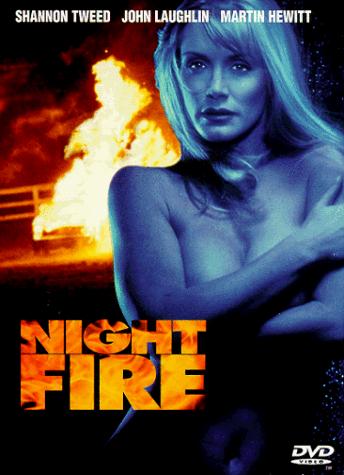 Night Fire is yet another 90s neo-noir starring Shannon Tweed.
In this one, Tweed plays Lydia. Lydia is a work-obsessed millionaire who is unhappily married to Barry (John Laughlin). Lydia and Barry’s sex life has come to a halt. Lydia wants romance. Barry wants to tie her up in bed and run a knife over her body. Even though they have retreated to an isolated ranch house to try to fix their marriage, Lydia simply cannot bring herself to leave her work behind.
One day, while Barry is attempting to drown Lydia in the hot top, two drifters suddenly show up and claim that they’re having car trouble. Cal (Martin Hewitt) and Gwen (Rochelle Swanson) are wild and uninhibited and everything that Lydia is not. Lydia is uncomfortable with the idea of them staying at the house while Barry just wants to watch the two of them have sex. Eventually, the expected mate swapping does occur but there’s a twist. Barry hired Cal and Gwen to show up at the ranch and help him turn on his wife. But it turns out that Barry has another, more sinister motive for wanting Cal and Gwen to spend the weekend.
Night Fire is typical of the type of films that used to show up on late night Cinemax. The plot is mostly just an excuse to get everyone naked and most viewers will be able to see the big twist coming from a mile away. From the very first scene, it’s obvious that Barry is not to be trusted.
On the plus side, Night Fire features one of Shannon Tweed’s best performances. Tweed, who has always been a better actress than most critics give her credit for being, gives a smart and believable performance as Lydia. The script often forces Lydia to do things that fly in the face of logic and it seems to take her forever to figure out that there’s something strange going on. Lydia would probably seem unbearably daft if she wasn’t played by Shannon Tweed, who is capable of keeping the audience on her side even when she’s playing a role that, on paper, shouldn’t make any sense. Tweed is smart enough not to play Lydia as being frigid but instead as someone who is just frustrated that her immature husband has invited two complete strangers to spend the weekend with them. Rochelle Swanson and Martin Hewitt are impressive as the two drifters while John Laughlin is sabotaged by dialogue that reveals him to be untrustworthy from the first minute that he shows up.
Night Fire may not be perfect but it should keep fans of 90s-era Shannon Tweed happy.
The 1935 adventure film, The Lives of a Bengal Lancer, is a film that probably could not be made today.
Of course, that’s true of a lot of films from the 30s. In some cases, that’s a good thing and, in some cases, that’s a bad thing. The Lives of Bengal Lancer is an entertainingly old-fashioned adventure story but it’s also a shameless celebration of the British Empire. The fact that it was made in Los Angeles and featured all-American Gary Cooper in the lead role doesn’t diminish the fact that it’s pretty much a celebration of British colonialism.
Gary Cooper plays Lt. Alan MacGregor, a Scottish-Canadian who serves in British Calvary. He’s a member of the Lancers and is currently serving in India, which, at the time that this movie was set (and made), was still under British control. When the film begins, MacGregor is greeting the new arrivals. Among those arrivals are Lt. John Fosythe (Franchot Tone) and Lt. Donald Stone (Richard Cromwell). Lt. Forsythe is an experienced officer who has been sent to India as a replacement for another officer who managed to get himself killed while out on a patrol. Meanwhile, Lt. Donald Stone is a newly commissioned officer who is desperate to win the approval of his father (and McGregor’s superior), Col. Tom Stone (Guy Standing). Unfortunately, Donald quickly discovers that winning the approval of his father isn’t going to be easy. Col. Stone, after all, has a lot to deal with.
For instance, there’s Mohammed Khan (Douglas Dumbrille). Kahn is a local prince and he boasts that he has got an Oxford education. He pretends to be an ally of the British but instead, he is plotting a revolution. The first step in that revolution is to intercept a convoy of British weapons but how can Kahn discover the convoy’s route? Maybe he could kidnap a lancer who is close to the unit’s commanding officer? With the help of a Russian femme fatale named Tania (Kathleen Burke), Khan is able to capture Donald. When MacGregor and Forsythe defy the colonel’s orders and attempt to rescue Donald on their own, they end up getting captured as well!
“We have ways to make men talk!” Khan declares and soon, the three men are having their fingernails ripped out and the skin underneath burned with fiery bamboo. It’s a shocking act of sadism, one that caught me by surprise in 2020. I can only imagine how audiences in 1935 reacted to Gary Cooper and Franchot Tone being so graphically tortured on the big screen. Though the men swear that they will not reveal the location of the convoy, how much torture can they take before they break?
As I said at the start of this review, The Lives of a Bengal Lancer is an old-fashioned film and, with its depiction of savage rebels and heroic colonizers, it would probably cause a riot if it were released today. However, if you can set aside the whole pro-imperialist theme of the film, this is a fairly entertaining film. It gets off to a slow start and, to modern eyes, some of the acting is bit creaky but Gary Cooper is, not surprisingly, well-cast as the film’s hero and he’s ably supported by Tone and Cromwell. Douglas Dumbrille and Kathleen Burke are entertainingly campy villains and the film’s final battle is well-done.
A box office success, The Lives of a Bengal Lancer was nominated for Best Picture but it lost to an even bigger hit (and a film that was a bit more critical of the British Empire), Mutiny on the Bounty.


by Ernest “Darcy” Chiriaka,
Today’s music video of the day comes to us from one of my favorite countries, Italy!
Goditi i video e la musica che ami!
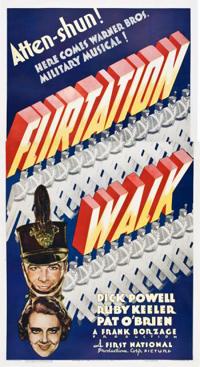
In the 1934 Best Picture nominee, Flirtation Walk, Dick Powell plays a soldier who is constantly trying to go AWOL.
It’s not that Richard “Dick” Palmer Grant Dorcy Jr. dislikes the army. In fact, he’s actually getting a pretty good deal out of his enlistment. He’s been stationed in Hawaii, where he gets to go to luaus and hang out on the beach. He has a wonderful friend and mentor in the person of Sgt. Scrapper Thornhill (Pat O’Brien). Since this film was made in 1934, he’s not going to have to worry about going to war for another 7 years. He’s known as The Canary because he loves to whistle and sing. Everyone like Pvt. Dick Dorcy and that includes Kit Fitts (Ruby Keeler).
Unfortunately, Kit’s father is General Fitts (Henry O’Neill) and he’s none too amused about his daughter having a romance with an irresponsible enlisted man. He would much rather that Kit marry his aide, Lt. Biddle (John Eldredge). After he’s told to stay away from Kitt, Dick makes plans to desert so he can run off with her. Fortunately, Scrapper finds out what Dick is planning and he goes to Kit and warns her that Dick’s about to throw away his life for her. Not wanting him to get into trouble, Kit pretends that she never felt anything for Dick. When a broken-hearted Dick wonders why Kit rejected him, Biddle smugly informs him that he’s neither “an officer nor a gentleman.”
Stung, Dick decides to fix that problem. In order to become an officer, he applies for admission to West Point and gets in. Dick leaves Hawaii for the mainland and he does very well at West Point. He’s even put in charge of producing, writing, and directing West Point’s annual theatrical production. However, things get complicated with Gen. Fitts arrives to serve as superintendent. Coming with Gen. Fitts are both Kit and Lt. Biddle.
Deciding to express his angst through art, Dick writes a show about a female general. Since Kit is the only female at West Point, guess who gets the lead role? Though Kit is still in love with Dick, she can’t get him to listen to her explanation for why she rejected him. Will a stroll along West Point’s famed Flirtation Walk help fix things?
Well, it is a Dick Powell musical….
Flirtation Walk is a pleasant but forgettable movie. Dick Powell and Ruby Keeler make for a cute couple but neither one of them gives a particularly interesting performance and the bland songs don’t make much of an impression either. Those who are into military history might enjoy the fact that the film was actually filmed on location at West Point but, for the rest of us, this is a nice but not particularly memorable musical romance. For me, the most interesting part of the film was that it didn’t even attempt to be realistic when it came to Dick’s theatrical production. It’s a huge production, if never coming close to being as much fun as the one from 42nd Street.
Why was Flirtation Walk nominated for Best Picture? I imagine it was because it was a hit at the box office. It only received one other nomination, for Best Sound Recording. Regardless of why it was nominated, it lost to the far more memorable It Happened One Night.

4 Shots From 4 Films is just what it says it is, 4 shots from 4 of our favorite films. As opposed to the reviews and recaps that we usually post, 4 Shots From 4 Films lets the visuals do the talking!
Francois Truffaut, the greatest French director not named Jean Renoir or Jean Rollin, was born on February 6th, 1932. If he was still with us, he would be 88 years old and I would like to think that he would still be making films. The greatest director of the French new wave, Truffaut truly loved cinema and that love came through in every film he ever made. My favorite Francois Truffaut film — and this will probably come to a surprise to no one — is Day For Night. Seriously, if you don’t fall in love with the movie making process while watching Day For Night, you might want to get checked to make sure that you still have a heart.
In honor of what would have been his 88th birthday, here are….
4 Shots From 4 Francois Truffaut Films

Shoot the Piano Player (1960, dir by Francois Truffaut)
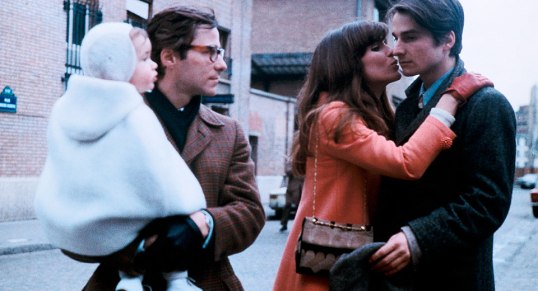
Stolen Kisses (1968, dir by Francois Truffaut)
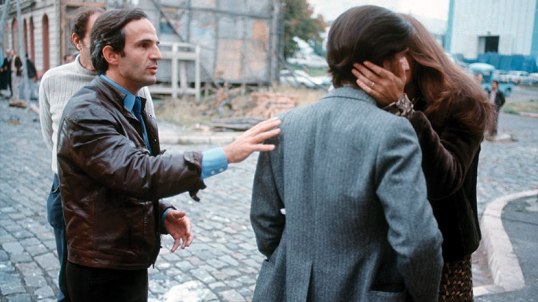
Day For Night (1973, dir by Francois Truffaut)
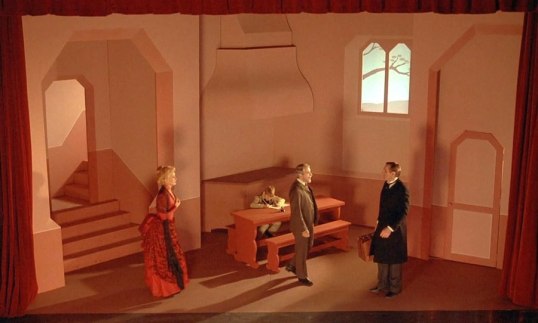
The Last Metro (1980, dir by Francois Truffaut)

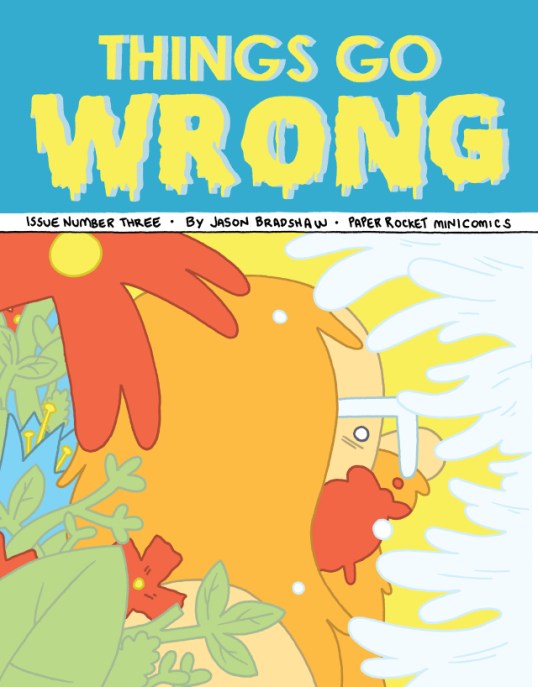
As a trilogy that concerns itself with a “from the inside” look at the clinical depression and mental and physical breakdown of its protagonist, Jason Bradshaw’s Paper Rocket Mini Comics-published Things Go Wrong has been about the farthest thing from an “easy read” one can imagine — but it’s certainly been admirably honest, impeccably drawn, and absorbing in the extreme. Hope has been in short supply, but artistic integrity? That’s present and accounted for throughout, and if honest explorations of tough topics are your sort of thing, then the plain truth is that they simply don’t come much better than this. Now that the final issue, #3, is upon us, then, the questions that hang over it are — what sort of ending does Bradshaw have in store, and what sort do we want?
I mean, certainly our ostensible “hero,” James, deserves a break — but how “legit” would…
View original post 670 more words
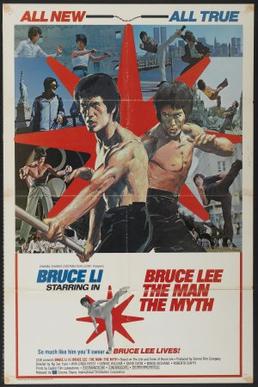 In 1958, a Hong Kong teenager named Bruce Lee (played by Ho Chung-tao, credited under the name Bruce Li) is upset that his mother is forcing him to go to college in America. His martial arts instructor assures Bruce that he is meant for great things and encourages him to bring his philosophy of life to all of the people of the world.
In America, Bruce finds fame as a martial arts instructor and he pursues a career as an actor. However, everywhere he goes, he’s told that no major American studio would ever be willing to invest money in an “unknown Chinese actor.” Bruce finds brief fame with a supporting role on The Green Hornet but his Hollywood prospects sputters when he announces that he refuses to play any demeaning stereotypes. Taking control of his own career, Bruce returns to Hong Kong and produces his own films. He becomes an international superstar before dying under mysterious circumstances at the age of 32.
Following the death of the real-life Bruce Lee, there were hundreds of martial arts films released that featured look-alike actors who were credited with names like Bruce Ly, Bruce Lei, Bruce Lai, and Bruce Le. These films often featured Lee either fighting the Tongs or some other sort of international conspiracy. Many of them also speculated about the cause of his death or flat out presented Lee as having faked his death in order to escape from his enemies. (Typically, these films would feature at least some footage of Lee’s funeral and the real Bruce Lee lying in his coffin.) So many of these films were released that they eventually were grouped under their own genre, Bruceploitation.
Of the faux Bruces who appeared in Bruceploitation films, Ho Chung-tao was the most successful. Credited as Bruce Li, he not only bore a strong physical resemblance to Bruce Lee but he was also one of the few Bruce imitators to have any on-screen charisma as well. Bruce Li may not have been Bruce Lee but, of the imitators, he was the best. (He was also one of the most frequently frustrated, retiring from acting at the age of 40 because he was sick of only being allowed to play Bruce Lee.)
Bruce Lee, The Man, The Myth is a generally straight-forward biopic. It covers all of the big events of Lee’s life and, unlike a lot of other Bruceploitation films, it mostly sticks to the facts. That doesn’t mean that there aren’t a lot of fights to be found in this film. Lee is constantly getting into fights but, for the most part, they’re just with people who want to challenge the great Bruce Lee and see if he’s really as impressive as everyone says that he is. Other than a strange but fun scene where Bruce is approached by the daughter of a mafia boss, this film does not portray Lee as being a crime fighter or a secret agent. Like many Bruceploitation film, this movie hints that Lee faked his own death but, in the version I saw, a narrator dismisses the reports of Lee’s survival as just being rumors. (The narrator also says that if Bruce is still alive, he’ll emerge from hiding in 1983. Draw your own conclusions.)
Bruce Lee, The Man, The Myth is an entertaining biopic. When it comes to a Bruceploitation flick, all that most people really ask for is that the Bruce imitator be convincing and that the fights be exciting. On both counts, Bruce Lee, The Man, The Myth delivers.

by Bruce Minney
 Through the Shattered Lens