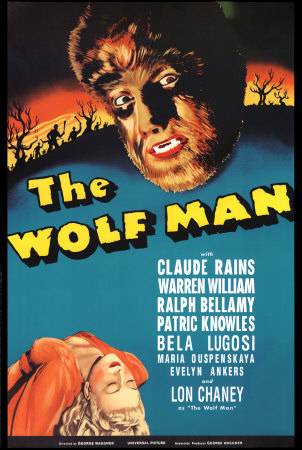
Today’s horror scene that I love comes from 1941’s The Wolf Man.
In this scene, poor, unfortunate Larry Talbot (Lon Chaney, Jr) visits a gypsy camp and learns that sad truth of his fate from Maleva (Maria Ouspenskaya). I love this scene not only for the iconic dialogue but also for George Waggner’s atmospheric direction and Maria Ouspenskaya’s performance. Even Lon Chaney, Jr. gives it his all in this scene. Larry Talbot may have been a dumb lug but he was our dumb lug!
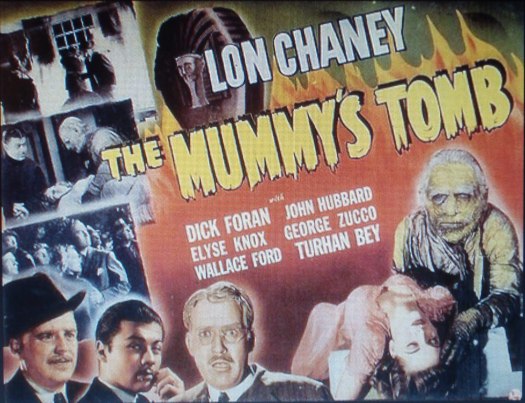
Universal followed up THE MUMMY’S HAND with 1942’s THE MUMMY’S TOMB, casting their new horror sensation Lon Chaney Jr. in the role of the undead Kharis. But it didn’t really matter who was under all those bandages, Karloff , Chaney, Tom Tyler, or Lou Costello (okay, maybe not Costello), the part is just a non-entity used to further the plot along, and the new film was almost completely scuttled by a bad performance from Turhan Bey as the latest High Priest of Karnak, Mehemet Bey.
THE MUMMY’S TOMB kicks off with Dick Foran under Jack Pierce’s old age makeup relating the tale of finding Princess Ananka’s tomb thirty years ago to his son John (John Hubbard), John’s fiancé Isobel (Elyse Knox, mother of NCIS star Mark Harmon), and sister Aunt Jane (Mary Gordon ). Or rather, stock footage from the previous film tells the tale, which takes up about 15…
Listen, I’ve watched a lot of Italian horror films. I know how violent they can be. I know how gory they can be. I know how sordid they can be. I know how disturbing they can be. It’s not like I sat down and watched Torso with virgin eyes. But with all that in mind, Sergio Martino’s 1973 giallo still totally freaks me out!
Why does it freak me out?
Well, it’s going to be hard to really explain it without spoiling the movie’s biggest twist. It occurs about halfway through the film and it totally took me by surprise when it happened. Suddenly, Torso went from being just another film about a seemingly unstoppable murderer to becoming a tension-filled game of cat and mouse. So, I’m going to discuss the movie but I’m going to give a spoiler alert before I talk about the twist and, if you’ve never seen Torso before, you should stop reading and you should discover what happens for yourself.
Torso takes place in Perugia, Italy. During the day, it’s a beautiful city that’s surrounded by a beautiful countryside. The nearby University of Perguia seemse to be exclusively populated by beautiful students, including American exchange student Jane (Suzy Kendall) and her best friend, the wealthy Daniela (Tina Aumont), and beautiful instructors, like the rather opinionated Art History teacher, Franz (John Richardson).
But at night, Perugia changes. The countryside around the university becomes considerably less beautiful. A masked killer stalks through the fog-covered woods, carrying with him a knife and an endless supply of red scarves. He kills anyone that he comes across in the wilderness, including one of Jane and Daniela’s friends!
With everyone panicking about the serial killer in their midst, the ineffectual police investigate the usual sordid collection of suspects but with little success. Daniela, meanwhile, thinks that she may have seen the killer and, for her own safety, she, Jane, and their friends all go to her family’s villa for the holiday weekend.
And then….
(SPOILER ALERT)
(SPOILER ALERT)
(SPOILER ALERT)
Jane breaks her ankle and is given a sedative by the local doctor. This knocks Jane out for the night and when she finally wakes up, she discovers that all of her friends have been murdered and the killer is still in the villa! Fortunately, he doesn’t realize that Jane’s in the villa as well. Unfortunately, he’s also locked all the doors and the windows, so that he can have the privacy necessary to dispose of the bodies. For the rest of the film, Jane has to try to get someone to notice that she’s trapped in the villa without drawing the attention of the killer. Needless to say, this proves even more difficult than it sounds.
Torso is often dismissed as being a lesser giallo, particularly when it’s compared to some of Sergio Martino’s later contributions to the gnre. While Torso might not feature as complex a plot as some of Martino’s other films (and you’ll probably guess the killer’s identity long before the film reveals it), it does feature a second act that is so nerve-wracking and suspenseful that I barely breathed while watching it. Visually, Martino does an excellent job of contrasting the beauty of the outside world with the horrors inside the villa and both Suzy Kendall and Tina Aumont give good and sympathetic performances in the lead roles.
Torso totally gave me nightmares but I’d watch it again.
4 Shots From 4 Films is just what it says it is, 4 shots from 4 of our favorite films. As opposed to the reviews and recaps that we usually post, 4 Shots From 4 Films lets the visuals do the talking.
Today, we pay tribute to a very special breed of monster with….
4 Shots From 4 Werewolf Films
Werewolf of London (1935, dir by Stuart Walker)
The Curse of the Werewolf (1961, dir by Terence Fisher)
The 1961 Hammer film, The Curse of the Werewolf, is a good example of a film that could succeed on casting alone.
As you can probably guess from the title, this film is about a werewolf. And there was never an actor more perfect for the role of a werewolf than Oliver Reed. Set aside Reed’s legendary reputation for wild off-set behavior. Set aside the fact that Reed specialized in playing men who often seemed to have a beast lurking deep within them, a beast that was constantly bursting out. With his handsome but scarred face and his burly physique, Oliver Reed looked like a wolf. If I had to sit down and paint a picture of how I visualized a man who transformed into a beast, the picture would probably end up looking like Oliver Reed.
In fact, Reed is so perfectly cast in this film that it’s easy to overlook the fact that he doesn’t even show up until the last quarter or so of the film. Clocking in at a relatively leisurely-paced 91 minutes, The Curse of the Werewolf plays out more like an extremely grim fairy tale than a traditional horror film.
It begins in 18th century Spain, with a beggar stumbling across the wedding of a cruel nobleman. When the beggar asks for food, he’s mocked. He’s cruelly forced to beg and then, for his trouble, he’s thrown into jail. Isolated from the world, the beggar’s only human contact comes from his kindly jailer and the jailer’s mute daughter. When the nobleman tries to force himself on the daughter, he’s rejected. As a result, he throws the jailer’s daughter into the cell with the now animalistic beggar. When she’s eventually released, she promptly murders the nobleman but she’s now pregnant with the beggar’s child.
That child is named Leon Corledo and eventually, he’ll become Oliver Reed. But first, we watch as he grows up, the adopted son of the kindly Don Alfredo (Clifford Evans). Alfredo’s housekeeper considers Leon to be cursed because he was born on Christmas Day and his mother died in childbirth. Alfredo may dismiss that as a silly superstition but, as Leon grows up, strange things do happen. Goats are murdered and, even though a dog is blamed, we know that it has something to do with Leon.
Yes, Leon is a werewolf but interestingly enough, it’s not the full moon that transforms Leon into a beast. Instead, it’s stress and depression. When Leon grows up and goes to work in vineyard, he’s fine until he realizes that he’ll probably never be a rich man like his boss and he’ll never have enough money to marry Christina (Catherine Feller). That’s when he loses control and transformed.
The Curse of the Werewolf is a dark and moody film, directed in an appropriately atmospheric fashion by Terence Fisher. Leon is one of the more tragic Hammer monsters, having been born with an affliction that he can’t control and which no one else is capable of understanding. Oliver Reed gives a wonderful performance, revealing the tortured soul that lurks underneath the fearful exterior. This Hammer film may not be as well-known as the Dracula or Frankenstein films but it’s definitely one that deserves to be seen.
Today’s horror on the lens is Killers From Space, a 1954 film about …. well, killers from space!
Like a lot of 1950s sci-fi films, this one features Peter Graves as a properly grave-voiced scientist. It’s about some googly-eyed aliens who abduct people and force them to reveal America’s nuclear secrets! This low-budget, independent film has quite a pedigree. It was directed by Billy Wilder’s brother and written by his nephew, Myles.
It appears that YouTube is finally back up (for the sake of future historians, YouTube was down for several hours on the night of Tuesday, October 16th, 2018, leading to great panic on twitter) so I can share tonight’s episode of Kolchak: The Night Stalker!
In this episode, our favorite neurotic journalist investigates several cases of spontaneous human combustion. It all appears to have something to do with the spirit of a dead gangster, one who is wandering around in the form of a famous (and still living) conductor.
I swear, Chicago was a crazy place to live in the 70s.
This episode originally aired on November 8th, 1974.
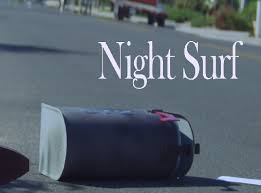
Where do stories come from? Not important or interesting. Why are some stories shot out like a cannonball from an artist’s brain in a matter of days like Kerouac’s “On The Road” and even written on a scroll; whereas, some stories take a decade or more of developing until they are born like Stephen King’s The Stand? Very Important and Very Interesting! I will not be discussing King’s opus The Stand, but rather how it evolved from Night Surf.
Night Surf was written for the University of Maine literary magazine in 1969 when King was twenty-two. Night Surf introduces us to the plague that kills off mankind and how people can be pulled to darkness when no one is looking. The disease is even called “A6” just as it was called in The Stand, but The Stand didn’t get published until 1978. Why did it take so long for The Stand to incubate and his other stories seem to shoot from him like they are on a sluice?
I see this dichotomy in my own writing. For some stories, I’ll get pieces of dialogue and scenes in my head that kick around for years, but I don’t know how they fit together like a jigsaw puzzle with too many smooth edges. I can’t speak for Stephen King, but for me the longer developing stories occur when I’m picking at something personal like an emotional wound that’s been puffed out by pus, but not yet ready to drain. I guess I just want to hold onto the pain; maybe, King does too?
Night Surf takes place on the New England coastline when summer’s ending, but it’s not just the leaves dying on the trees; humanity is blowing out from a massive viral extinction event. The disease is called A6- a superflu. In The Stand, he refers to the virus also as Tube Neck and Captain Trips. The world is not quite dead yet, but it’s getting there. The story is narrated by Bernie who is spending humanity’s last days at a beach town. At first, the group believes that they are immune from the disease and demonstrate their superior immunity with the most primitive act of all: Human Sacrifice. A man who’s dying from the flu comes to their town and, instead of caring for him and helping him die, they burn him to death in a bonfire.
Why burn him? They describe it almost like a sacrifice to the beach itself. The act seemed to me to be more like a line in the stand between the dying world and themselves. The mere mortals are simply cord wood and can be used for fuel. Their perception as the kings of humanity is vindicated by their health because they are immune and the rest of humanity perished. It harkens to the idea of the Puritans where the Select were touched by God and were guaranteed success in life and VIP treatment on the ethereal plane. Of course, the Puritans would balk at using lesser people as a duraflame.
Soon after burning the flu victim alive, Bernie realizes that one of his comrades has A6 symptoms and will soon die, indicating all of them might expire soon. The story forces us to look at what allows us to be moral. Are we only good because society will punish us if we are bad? It could be argued that they looked at the immolation as a last hurrah, but I think that is wrong because at the time in the story, they believed they were immune. If their friend had developed symptoms before the unlucky traveler arrived, would they see him as their brother or would they have burned them both to adamantly declare their superiority?
The theme of people being seduced to darkness is throughout The Stand, but in this story, they don’t get the devil made me do it excuse; the group murdered because they could and felt like doing it. After the immolation, we return to Bernie’s backstory, humanizing him even more. It seems King is saying that this horrendous act was just another act in a number of countless acts that Bernie did from birth to his upcoming demise. Maybe doing evil is just as common as getting the paper? I hope not, but as the great philosopher Bobby Dylan said, It’s not dark yet, but it’s getting there.
This story is more relevant to me today than when I first read it years ago. What makes it more difficult for me is that the people in the story are just so normal. I hope none of my readers will ever have to do this, but I’ve looked right into the face of evil once and the man looked like he could have been a cousin. When I remember the encounter, it still chills me to the bone. I met a Bernie once; maybe, you have too, but you didn’t know it.



 Through the Shattered Lens