Guilty Pleasure No. 39: Ghost Whisperer


Once upon a time, there were two shows about women who could speak with the dead.

One show ran from 2005 to 2011.  It starred a future Oscar winner and, over the course of its run, it was nominated for a bunch of Emmys.  It may have never been a huge hit but it received decent ratings and, even more importantly, it was a critically acclaimed.  The show claimed to be based on fact and it took a low-key, procedural approach to its stories.

The second show ran from 2005 to 2010 and it starred a multiple Golden Globe nominee and it was never nominated for any major Emmys.  (The first season, however, did receive a Teen Choice nomination.)  Like the first show, it was never exactly a big hit, though it did have a loyal audience.  Whereas the first show was acclaimed by critics, the second show was routinely dismissed.  If the first show was subdued and low-key, this second show took the exact opposite approach.

The first show was called Medium.

The second show was called Ghost Whisperer.

I watched both of them and I can tell you that both had their strengths and their weaknesses.  Medium was, at time, genuinely creepy and Patricia Arquette gave an admirably serious performance.  At the same time, the show was often so serious that it was a bit of a drag to watch.  You may have believed that Arquette could talk to the dead but you never really bought into the idea that they would want to talk to her or anyone else on the show.  In short, Medium was good but it wasn’t much fun.

Ghost Whisperer, on the other hand…

Listen, I’m not even going to pretend that Ghost Whisperer was a great show.  It was a frequently silly and over-the-top show.  Jennifer Love Hewitt played Melinda Gordon, who lived in Grandview, New York and who owned an antique shop called — I kid you not — Same As It Never Was Antiques. The dead would come to Melinda because they still had feelings that needed to be resolved on Earth before they could cross over into the afterlife.  Sometimes the ghosts were in denial.  Sometimes they were rude, violent, and scary.  Sometimes they were just mildly quirky.  But they always ended up happy that Melinda was able to find a way for them to move on.  Over the course of five seasons, the show developed both the quirkiness of the town and the mythology behind the ghosts themselves.  We learned about the Watchers and the Shadows and the Shinies and the Book of Changes.  We also learned a bit about Melinda’s history.  Season 3 ended with Melinda helping her deceased father go into the light and you better believe I cried.

If Medium was an often dour, somber, and deliberately frumpy show, Ghost Whisperer was bright, fun, and unapologetically glamorous.  While poor Patricia Arquette always seemed to be carrying the entire weight of the world on her shoulders, Jennifer Love Hewitt always appeared to be having a blast playing Melinda.  While she may not have been as good as an actress as Patricia Arquette, Jennifer Love Hewitt always brought just enough natural enthusiasm to the role that she could make even the most hackneyed of dialogue believable.  When I looked over some of the reviews of Ghost Whisperer’s first season, the immediate thing that I noticed was that many of the critics (in particular, the male critics) were obsessed with pointing out that Jennifer Love Hewitt was continually dressed and filmed in such a way to emphasize her breasts, as if there’s some sort of crime in being proud of what you have.  But for me, as someone who shares the struggle of trying to find cute clothes for big boobs, it was empowering that Melinda didn’t hide her body, her personality, or her beliefs.  As played by Hewitt, Melinda was confident,  outspoken, and unapologetic.  Yes, she dressed a certain way.  Yes, she looked a certain way.  Yes, she believed that she could help ghosts cross over.  And if anyone had a problem with it, so what?  Melinda was a role model who never really got her due.  If I ever find myself speaking to ghosts, I hope that I handle it half as well as Melinda did.

Ghost Whisperer ended in 2010 and Medium ended in 2011.  Medium may have been nominated for more awards but guess which one I’ll always make a point to watch in syndication?

Previous Guilty Pleasures

  1. Half-Baked
  2. Save The Last Dance
  3. Every Rose Has Its Thorns
  4. The Jeremy Kyle Show
  5. Invasion USA
  6. The Golden Child
  7. Final Destination 2
  8. Paparazzi
  9. The Principal
  10. The Substitute
  11. Terror In The Family
  12. Pandorum
  13. Lambada
  14. Fear
  15. Cocktail
  16. Keep Off The Grass
  17. Girls, Girls, Girls
  18. Class
  19. Tart
  20. King Kong vs. Godzilla
  21. Hawk the Slayer
  22. Battle Beyond the Stars
  23. Meridian
  24. Walk of Shame
  25. From Justin To Kelly
  26. Project Greenlight
  27. Sex Decoy: Love Stings
  28. Swimfan
  29. On the Line
  30. Wolfen
  31. Hail Caesar!
  32. It’s So Cold In The D
  33. In the Mix
  34. Healed By Grace
  35. Valley of the Dolls
  36. The Legend of Billie Jean
  37. Death Wish
  38. Shipping Wars

4 Shots From 4 1973 Horror Films: The Creeping Flesh, The Exorcist, Night Watch, The Wicker Man


4 Shots From 4 Films is just what it says it is, 4 shots from 4 of our favorite films. As opposed to the reviews and recaps that we usually post, 4 Shots From 4 Films lets the visuals do the talking.

Since I just reviewed 1973’s Don’t Look Now, here are 4 shots from 4 other horror films that were released the same year.

4 Shots From 4 1973 Horror Films

The Creeping Flesh (1973, dir by Freddie Francis)

The Exorcist (1973, dir by William Friedkin)

Night Watch (1973, dir by Brian G. Hutton)

The Wicker Man (1973, dir by Robin Hardy)

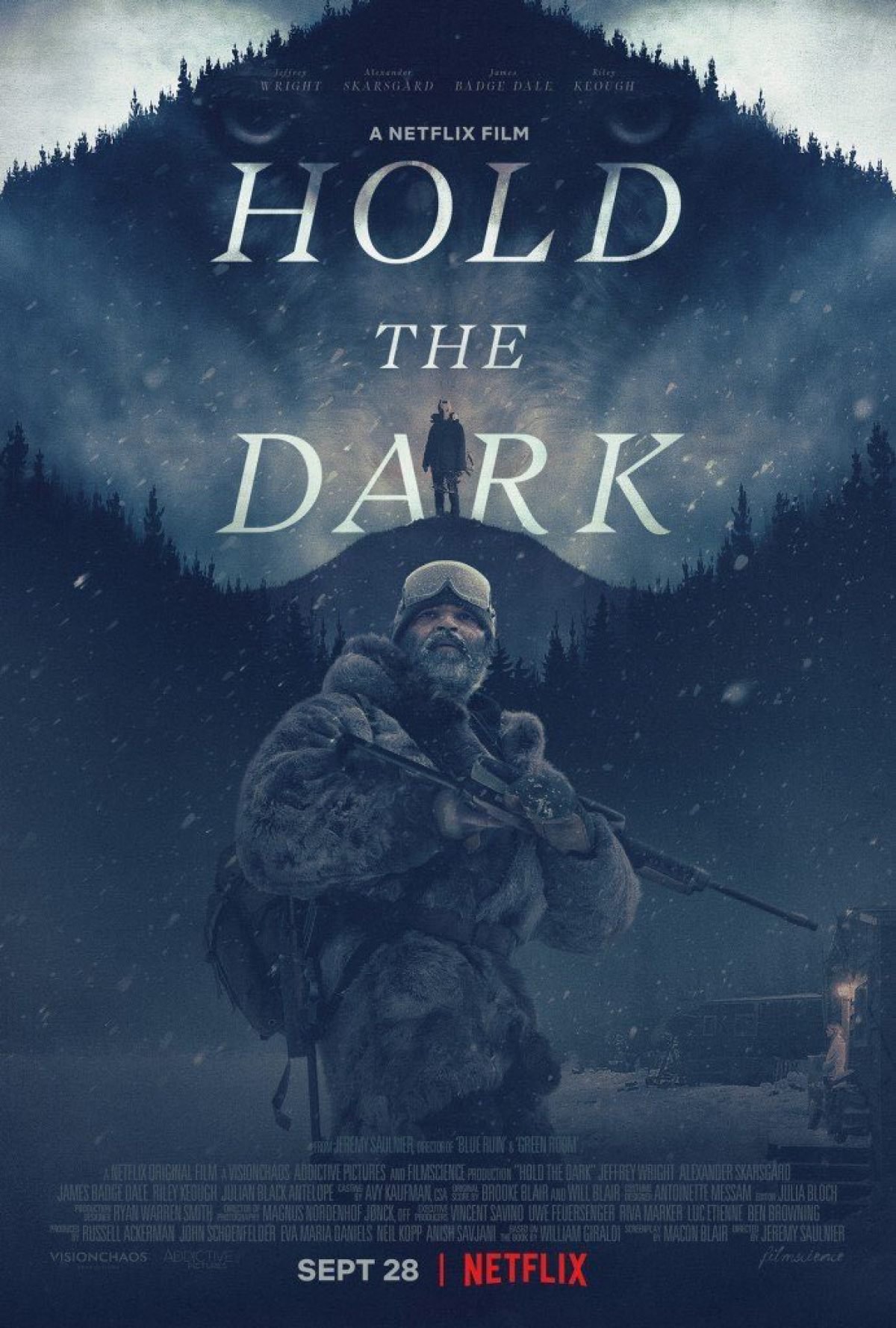
Horror Review: Hold the Dark (dir. by Jeremy Saulnier)


Hold the Dark

“The dead don’t haunt the living. The living haunt themselves.” — Russell Core

Jeremy Saulnier, writer-director of Blue Ruin and Green Room, invites the brave and the curious into his latest creation, steeped in the dark, foreboding Alaskan wilderness and tinged with supernatural folklore.

No one could accuse Saulnier of timidity when it comes to on-screen violence. While many filmmakers stage more elaborate or explosive sequences, Saulnier aligns more with Sam Peckinpah than Michael Bay. His films present violence at its most unglamorous. The brutality he depicts is neither titillating nor exploitative; instead, it’s stark, sudden, and deeply unsettling.

Saulnier views humanity’s capacity for violence as primal—an inherent trait held in check only by the thin veneer of civilization. In his films, man is not truly civilized, but rather a creature pretending to be, always closer to savagery than he’d like to admit. Whether it’s a drifter caught in a blood feud or a punk band fighting for survival against backwoods neo-Nazis, his characters are pushed to rediscover that inner, violent core—even as they try to cling to the fragile rules of civilized behavior.

With Hold the Dark, Saulnier veers away from the straightforward narratives of his previous films and ventures into something more ambiguous—closer to a haunting campfire tale than a conventional thriller. Its deliberately opaque storytelling may frustrate viewers who prefer clear protagonists, antagonists, and linear progression. Yet, like his earlier work, the film continues his fascination with moral ambiguity and the blurred line between good and evil.

The story begins with retired naturalist Russell Core (Jeffrey Wright), who is summoned by Medora Slone, a grieving mother living in the remote Alaskan village of Keelut. She believes wolves have taken her young son, along with two other children before him. Knowing Core’s experience as a wolf expert and hunter, she asks him to track and kill the animals responsible—both for justice and to provide closure for her husband, who is deployed in Iraq.

From the moment Core arrives in Keelut, the film slowly shifts from a man-versus-nature premise into something far more mythic and unsettling—a dark fairytale with no promise of a happy ending. This tonal shift will either draw viewers in, asking them to surrender to its grim, disorienting atmosphere, or leave them detached and confused, searching for concrete answers the film refuses to provide.

Like Saulnier’s previous films, Hold the Dark does not shy away from brutality. Violence erupts suddenly and with horrifying efficiency, emphasizing how fragile the human body—and psyche—really is.

The screenplay, written by frequent collaborator Macon Blair, raises compelling questions: Is violence an inherent darkness within humanity, merely suppressed by the “light” of civilization? Or is it something learned, passed down like a contagion through generations? Is it an inescapable cycle, or something that can be broken? These are questions without easy answers, and the film’s ambiguity—while potentially frustrating—is also what gives it lingering power. It invites viewers to sit with these ideas rather than resolve them.

Where the narrative may divide audiences, the performances are consistently strong. Jeffrey Wright anchors the film as Russell Core, serving as both participant and observer—mirroring the audience’s own confusion and unease. Riley Keough and Alexander Skarsgård, as Medora and Vernon Slone, add further layers of tension. Keough’s eerie stillness contrasts sharply with Skarsgård’s explosive response to his son’s death—a turn that propels the film from mystery into outright horror, complete with imagery that borders on slasher territory.

Hold the Dark may not be a direct evolution of Blue Ruin or Green Room, but it carries forward Saulnier’s thematic obsessions. It allows him to explore more esoteric territory while maintaining his signature style—raw, unflinching, and deeply primal. There’s nothing comforting or hopeful in this dark fairytale, but then again, fairytales were never meant to be. They exist to confront the darkness, to give it shape, and, perhaps, to help us endure it.

Horror Film Review: Don’t Look Now (dir by Nicolas Roeg)


Donald Sutherland and Julie Christie in Don’t Look Now (1973)

I have to admit that I’m actually a bit embarrassed to say that Venice is my favorite city in Italy.

I mean, it’s such a cliché, isn’t it?  Tourists always fall in love with Venice, even though the majority of us really don’t know much about the city beyond the canals and the gondolas.  I spent a summer in Italy and Venice was definitely the city that had the most American visitors.  Sadly, the majority of them didn’t do a very good job representing the U.S. in Europe.  I’ll never forget the drunk frat boys who approached me one night, all wearing University of Texas t-shirts.  One of them asked, “Are you from Texas?”

“No,” I lied.

“You sound like you’re from Texas!” his friend said.

“No, ah’m not from Texas,” I said, “Sorry, y’all.”

I mean, that’s not something that would have happened in Florence or even Naples!  In Rome, handsome men on motor scooters gave me flowers.  In Venice, on the other hand, I had to deal with the same assholes that I dealt with back home!

That said, I still fell in love with Venice.  And yes, it did happen while riding in a gondola.  At that moment, I felt like I was living in a work of art.  I can still remember looking over the side of the gondola and watching as a small crab ran across someone’s front porch.  That’s when I realize that, by its very existence, Venice proved that anything was possible.

I’ve often heard that Venice is slowly sinking.  That Venice has a reputation as being a dying city would probably have come to a surprise to the drunk Americans who were just looking for a girl from Texas that summer.  And yet, Venice has always been associated with death.  Just consider Thomas Mann’s Death in Venice and the subsequent film adaptation from Luchino Visconti.  Consider the controversial Giallo in Venice.  And, of course, you can’t forget about the 1973 film, Don’t Look Now.

Oh my God, Don’t Look Now is a creepy movie.  It’s probably best known for two things: the lengthy sex scene between Julie Christie and Donald Sutherland (which was apparently quite controversial back in 1973 but which seems rather tame when viewed today) and the film’s shock ending.  It’s one of the best and most disturbing endings in the history of horror and I’m not going to spoil it in this review.  The first time I saw the movie, the ending caught me totally off guard and gave me nightmares.  Admittedly, it’s not hard to give me nightmares but what’s remarkable is that, upon subsequent viewings, the ending is still just as frightening and disturbing.  In fact, knowing what’s going to happen makes the film even more chilling.

The film’s story is actually a rather simple one.  After their daughter, Christine, accidentally drowns, John (Donald Sutherland) and Laura Baxter (Julie Christie) take a trip to Venice.  Though they’re in Venice so that John can restore an ancient church, both John and Laura are mostly trying to escape their grief.  Laura meets a blind woman, Heather (Hilary Mason), who claims to not only be a psychic but who also says that she can see Christine in the afterlife.  Laura believes Heather and is concerned when Heather says that Christine wants them to leave Venice.  John, on the other hand, believes that Heather is a fake.

When the Baxters get a phone call informing them that their son has taken ill, Laura flies back to the UK.  Or does she?  One day, John spots his wife riding on a boat with Heather and her sister.  Has Heather abducted or brainwashed his wife?  When John goes to the police, they are as skeptical of him as he was of Heather.  In fact, they start to suspect that John may have something to do with a recent rash of murders.

Confused, John searches Venice for his wife but, instead of finding her, he spots a figure in the distance.  It appears to be a young child, one who is wearing the same red coat that Christine was wearing when she drowned….

It’s a simple story but it’s told in a very complex fashion.  Director Nicolas Roeg is best known for his fragmented narrative style.  Roeg often mashes together scenes from the past, present, and future and leaves it up to the viewer to put it all together.  (For instance, in Don’t Look Now, scenes of John and Laura making love are intercut with scenes of them getting dressed afterward.)  Roeg’s style that can often come across as being pretentious but, in Don’t Look Now, it works perfectly.  The audience is kept off-balance and is always aware that that’s more than one possible interpretation for everything that is seen.  Is Laura in the UK or is she on a boat in Venice?  Is Heather seeing Christine or is she just trying to con a grieving mother?  Is John chasing the figure in the red coat or is she actually the one pursuing him?  Is John chasing the figure because he believes that she’s his daughter or because he wants to prove, once and for all, that Christine is gone and never coming back?  Roeg keeps you guessing.

Death seems to permeate every frame of Don’t Look Now, whether it’s Heather’s cheery descriptions of the afterlife or the sight of a bloated corpse being pulled out of the canal.  Even when John is working in the church, he still nearly slips off a scaffolding.  While John restores ancient buildings to the vibrant glories of the past, the present seems to grow more and more ominous and menacing.  John and Laura may have traveled to Venice to escape their grief but their grief follows them.  How they deal with that grief — both as a couple and as individuals — is what determines their fate.  For a film that is full of mysteries, none is as enigmatic as Julie Christie’s smile when she’s on the boat.

I’m probably making Don’t Look Now sound like an incredibly grim film and, to a certain extent, it is.  After all, early 70s cinema is not known for its happy endings.  And yet, as dark and disturbing as this film may be, it’s impossible to look away from.  Roeg does a fantastic job capturing both the beauty and the decay of Venice while Donald Sutherland and Julie Christie are so sympathetic as John and Laura that you find yourself rewatching and hoping that somehow, they don’t end up making the same mistakes that they made the last time that you watched.

Don’t Look Now is an essential horror film and one that’s as timeless as the sight of a crab running across someone’s front porch.

Horror on The Lens: The Tower (dir by Richard Kletter)


Hi there and welcome to the October Horrorthon!

This is our favorite time of the year here at the Shattered Lens because October is horror month.  For the past five years, we have celebrated every October by reviewing and sharing some of our favorite horror movies, shows, books, and music!

A part of the tradition of Horrorthon is that we begin every day in October by sharing a free movie.  Now, I should warn you that most of these movies will come from YouTube and you know how YouTube is about yanking down videos.  So, if you’re reading this in 2024 and wondering where the promised movie disappeared to … well, you should have watched it in 2018!

Let’s start things off with the 1993 made-for-television movie, The Tower!

Have you ever asked yourself what Die Hard would have been like if it had starred Paul Reiser and the Alan Rickman role had been played by an overzealous automated security system?  Well, watch The Tower to find out!  This is one of those movies where the hero, played by Paul Reiser of all people, manages to get almost everyone in the movie killed and yet we’re not supposed to hold it against him.

By the end of the movie, you’ll totally be on The Tower’s side!

Enjoy!

(I wrote a more in-depth review of The Tower over at HorrorCritic.)

Welcome to October!


by Erin Nicole

Welcome to October on the Shattered Lens!

Here’s hoping this month finds you with joy, family, friends, fiends, ghouls, and ghosts!

Today is also the start of the Shattered Les’s annual horrorthon!  Sit back, enjoy the reviews, the art, and the music videos, and have a great month of ghoulish fun!

by Erin Nicole

Music Video of the Day: I’ll Bite Your Face Off by Alice Cooper (2011, directed by ????)


To quote Alice Cooper himself:

“This is my tip-of-the-hat to early Rolling Stones.  Like in 1964/65 when their songs were very Chuck Berry orientated. They just feel so good, in the pocket. This song was begging to be in the live show. We’ve done it in four different continents now and no one had ever heard it. By the second chorus, the whole audience is singing ‘I’ll Bite Your Face Off.’ It’s the perfect little 3 minute hit single.”

I’ll Bite Your Face Off was the first single to be released off Welcome 2 My Nightmare, Alice Cooper’s 26th studio album and a follow-up to Cooper’s 1975 album, Welcome To My Nightmare.  Each song represents a different aspect of a bad dream.  In I’ll Bite Your Face Off, Alice dreams about being introduced to the devil.

The video was filmed at several different live venues.  One of these performances was at the 100 Club in London, where actor Johnny Depp joined the band on guitar.