Monthly Archives: September 2016
The Origin of Billy Jack: BORN LOSERS (AIP 1967)

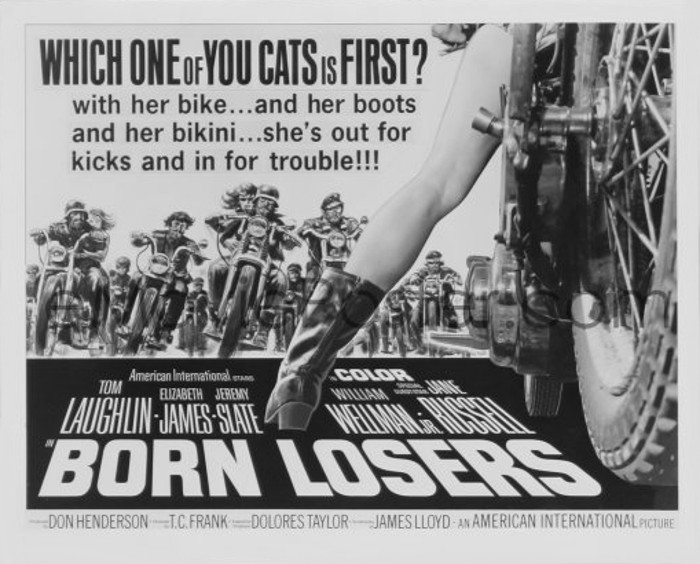
The character Billy Jack, star of the wildly popular 1971 film (and its two sequels), made his debut in this 1967 exploitation flick about a sociopathic biker gang and the lone man who stands up to them. Tom Laughlin, a minor figure in Hollywood at the time who had appeared in GIDGET and THE DELINQUENTS, conceived the character way back in 1954. Unable to get his original screenplay produced, he and co-star Elizabeth James banged out this motorcycle drama and he was given the opportunity to direct by American International Pictures, always on the lookout to make a quick exploitation buck.

The Born Losers are a degenerate gang of outlaw bikers terrorizing the small town of Big Rock. Ex-Green Beret Billy Jack, a half-breed Indian back from ‘Nam, saves a local kid from getting an ass kicking by breaking out his rifle, winds up the one locked up and given 120 days in jail or $1,000…
View original post 559 more words
Film Review: Sully (dir by Clint Eastwood)

The new film Sully is about several different things.
Most obviously, it’s about what has come to be known as the Miracle on the Hudson. On January 15th, 2009, US Airways Flight 1549 had just departed from New York’s LaGuardia Airport when it was struck by a flock of geese. (They say that it was specifically hit by Canadian Geese but I refuse to believe that Canada had anything to do with it.) With both of the engines taken out and believing that he wouldn’t be able to get the plane back to either LaGuardia or an airport in New Jersey, the flight’s plot, Chelsey “Sully” Sullenberger (played by Tom Hanks) landed his plane on the Hudson River. Not only did Sullenberger manage to execute a perfect water landing but he also did so without losing a single passenger.
I’m sure that we can all remember that image of that plane sitting on the river with passengers lined up on the wings. We can also remember what a celebrity Sully became in the days following the landing. At a time of national insecurity and cynicism, Sully reminded us that people are still capable of doing great things. It also helped that Sully turned out to be a rather humble and self-effacing man. He didn’t use his new-found fame to host a reality TV show or run for Congress, as many suggested he should. Instead, he wrote a book, raised money for the National Suicide Prevention Lifeline, and appeared in two commercials for St. Jude Children’s Research Hospital.
Wisely, Sully opens after the Miracle on the Hudson, with Sully still struggling to come to terms with suddenly being a celebrity. (That said, we do get to see the landing in flashbacks. In fact, we get to see it twice and it’s harrowing. The “Brace! Brace!” chant is pure nightmare fuel.) Tom Hanks plays up Sully’s modesty and his discomfort with suddenly being a hero. Even while the rest of the world celebrates his accomplishment, Sully struggles with self-doubt. Did he make the right decision landing the plane on the Hudson or did he mistakenly endanger the lives of all the passengers and crew members?
A lot of people would probably say, “What does it matter? As long as he succeeded, who cares if he actually had to do it?” Well, it matters to Sully. Some of it is a matter of professional pride. And a lot of it is because the soulless bureaucrats at the National Transportation Safety Board are investigating Sully’s landing. If it’s determined that he could have made it back to airport and that he unnecessarily endangered the lives of everyone on the plane, he could lose his job and his pension. As we see in a few scenes with Sully’s wife (Laura Linney, who is somewhat underused), the Sullenbergers really need that pension.
That brings us to another thing that Sully is about. It’s a celebration of not only individual heroism but individuality itself. The NTSB claims that they have computer-generated recreations that prove Sully had enough time and fuel to return to an airport but, as Sully himself points out, the NTSB has ignored the human element in their recreations. As a result of their obsession with regulation and procedure, the bureaucrats have forgotten that planes are not flown by computers but individuals who have to make split-second decisions.
That’s one of the things that I loved about Sully. In this time when we’re constantly being told that our very future is dependent upon always trusting the bureaucrats and following their rules and regulations, Sully reminds us that the government is only as good as the people who work for it. And, far too often, the people are smug and complacent morons.
(For the record, Sullenberger has said that the real-life hearings were not as confrontational as the ones depicted in the film. However, even taking into account the dramatic license, the overall message still rings true.)
And finally, Sully is a film about what America has become in the wake of 9-11. Just as in real-life, the film’s Sully suffers from PTSD in the days immediately following the Miracle on the Hudson. Even while the rest of the world celebrates him, Sully has nightmares about what could have happened if he hadn’t made the landing. When we watch as Sully’s plane collides with a New York skyscraper, it’s impossible not to be reminded of the horrible images of September 11th. Not only does it drive home what was at stake when Sully made that landing but it also reminds us that, regardless of what some would want us to beg, there are still heroes in the world. Not every story has to end in tragedy. People are still capable of doing great things. Heroism is not dead. With tomorrow being the 15-year anniversary of the day when 3,000 people were murdered in New York, Pennsylvania, and D.C., it’s important to be reminded of that.
Sully is a powerful and crowd-pleasing film. (The normally cynical audience at the Alamo Drafthouse broke into applause at the end of the movie.) Director Clint Eastwood tells this story in a quick, no-nonsense style. During this time of bloated running times, Sully clocks in at 97 minutes and it’s still a million times better than that 150-minute blockbuster you wasted your money on last week. Toss in Tom Hanks at his best and you’ve got one of the best films of the year so far.
Artwork of the Day: Wanton Bait

Artist Unknown
Music Video of the Day: Fell In Love With A Girl by The White Stripes (2002, dir. Michel Gondry)
First off–thank you so much for filling in for me this week, Lisa. I was really sick. I’m glad this daily post was kept up. Also, of course Downtown Sasquatch counts. If I said no, then Lisa might revoke my Degrassi fan card. I also have to agree since there are some music videos that will tread that line as well that I have in mind for the future. Onward!
I have mentioned before about the great musical apocalypse of the late 90s. In 2001, The Strokes released their album Is This It. They had bad and good timing. The bad timing was because it was released shortly before 9/11, which meant they had to remove a song that would have gone over like a lead balloon at the time. They had good timing because it meant that the late 90s era was dying. You did had Limp Bizkit trying to get clever with their music video parody for their song My Way. You actually had Sum 41 with their music video for Still Waiting that seemed to be trying desperately to make fun of bands like The Strokes. I even remember that my local Bay Area alt rock station played along and actually aired the song like it was breaking news that the band had indeed changed their name to The Sums. It felt kind of sad. A last gasp. At least in retrospect we can enjoy some of those songs now that we are out of that era.
But we are here to talk about the notorious The White Stripes. They had actually been around prior to The Strokes’ Is This It. They released their debut album in 1999. The Hives had also released their debut as early as 1997. I can’t speak for everyone, but once The Strokes album came out, then there just seemed to be untold numbers of these garage rock revival bands. So many so that The Killers went ahead revived new wave–post-punk depending where you look–while they were at it. I’d say their music is a little bit of both. Sadly, this period got so white hot that it seemed to largely fizzle itself out by the mid-to-late 2000s. Too bad.
In 2002 The White Stripes sort of decided to team up with Michel Gondry to make this music video. According to Wikipedia, Jack wanted to work with Mark Romanek because he directed Devil’s Haircut for Beck. However, the record company screwed up and hired Michel Gondry. Jack remembered he did Deadweight for Beck, which he also liked, so he was find with Gondry.
Aside from one short part that they did with CGI, it was all done with genuine LEGO bricks that they went out and bought to make the music video. The kid at the start of the music video is Gondry’s own kid.
For me, this is right up there with the music video that was done for The Alan Parsons Project’s song Don’t Answer Me. It’s an experimental music video rather than a regular short film music video.
Sébastien Fau did the special effects on the music video. I can find one other music video credit for him where he worked as the director for what appears to be a French music video. He does have a couple of other credits on IMDb, but that’s it.
Romain Segaud worked as an animator on this music video. He did a couple more music videos as a director, but that’s all I can find as far as music videos are concerned. Beyond that, he seems to have primarily done work for French television.
Enjoy!
Back to School Part II #30: Welcome to the Dollhouse (dir by Todd Solondz)
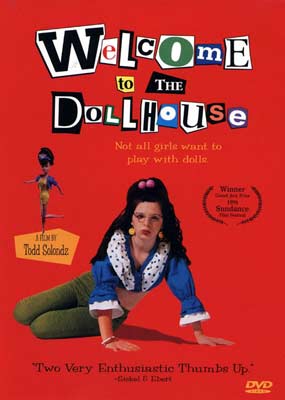
1995’s Welcome to The Dollhouse is a seriously dark movie.
That really shouldn’t be too surprising. The film was written and directed by Todd Solondz, a filmmaker who goes out of his way to showcase the darkest corners of human existence. For that matter, the film stars Heather Matarazzo. Matarazzo won an Independent Spirit Award for playing Dawn Wiener, a 12 year-old outcast who is nicknamed “Wiener Dog” and essentially spends Welcome to the Dollhouse being tormented by almost everyone in her life. According to Wikipedia, upon winning the award, Matarzzo announced that she hoped to spend her career playing characters “whom are ostracized for some reason.”
And, if nothing else, Dawn is certainly ostracized.
There’s been a lot of movies that have claimed to be about teen outcasts. Whenever you watch those films, one thing you immediately notice is that the “outcasts” rarely seem to truly be outcasts. Instead, they’re often portrayed as artistic types who just need to take off their glasses, let down their hair, and go on a shopping spree. For instance, Rachael Leigh Cook was an outcast in She’s All That but it turned out that all she needed to do was go out on a date with Freddie Prinze, Jr. Sissy Spacek, Chloe Grace Moretz, and Emily Bergl all played outcasts in different versions of Carrie but, fortunately, they could always use their psychic powers to kill all the bullies at their school. Unfortunately, Dawn doesn’t have psychic powers and it’s doubtful that even dating Freddie Prinze, Jr. would help her out.
There’s a scene in Welcome to The Dollhouse in which Dawn witnesses a group of bullies shoving another outcast into a locker. When Dawn steps forward to ask him if he’s okay, her fellow outcast snaps, “Leave me alone, Weiner Dog!” and then runs off. Dawn is the outcast that even the other outcasts make fun of.
The entire film is pretty much told from her point of view. It’s a true journey into the life of an outcast and a chance to see what life looks like when you’re on the outside looking in. We watch as her family ignores her and instead lavishes their attention on her bratty younger sister, Missy (Daria Kalinina). When Missy is briefly kidnapped (largely because Dawn neglected to let Missy know that their mother wouldn’t be able to pick her up after ballet class), Dawn even goes, by herself, to New York City and searches for her. Dawn wants to be the hero of this story but not only does she not find her sister but, when Dawn returns, she discovers that no one even noticed that she was gone.
Dawn does have two friends. One is a fifth grader whose friendship she quickly loses. The other is Brandon (Brendon Sexton III), an angry delinquent who, before becoming her friend, tries to rape her. Brandon, who has a horrific and abusive home life, lights a joint at one point. Dawn tells him that she doesn’t smoke but then earnestly adds that she does think marijuana should be legal.
Dawn does have an older brother named Mark (Matthew Faber). Mark is as nerdy as his sister but he appears to have made peace with it. (Either that or he’s so used to being on the outside that he doesn’t even notice anymore.) Mark assures Dawn that things will get better but it’ll be a few years. He also starts a band, which leads to Dawn getting a huge crush on the lead singer, Steve (Eric Mabius). In fact, Steve is so handsome and charismatic (in a teenage rock star wannabe sort of way) that Dawn doesn’t even realize that, during the rare times that he does talk to her, he’s actually talking down to her…
Welcome to the Dollhouse is one of those films that you watch and you keep waiting for that one moment that Dawn is going to be allowed some sort of victory. You wait for her to get a compliment. You wait for her to make a new friend. You wait for her to smile after coming to some sort of sudden realization. And it never happens. If anything, Dawn is more miserable at the end of the movie than she was at the beginning.
In the end, you realize that her only triumph comes from the fact that she’s managed to survive and she now has a better understanding of just how much life is going to suck. It’s not exactly a happy movie. It gets even worse if you know that Solondz’s 2004 film, Palindromes, opens with Dawn’s funeral. (Dawn, we learn, committed suicide after getting pregnant in college.)
And yet, Welcome to the Dollhouse remains compulsively watchable. Heather Matarazzo does such a good job as Dawn that you find yourself rewatching and hoping things turn out differently. Whenever I watch Welcome to the Dollhouse, I always think to myself that I would have been nice to Dawn if I had known her. Of course, that’s probably not true. No one was nice to Dawn in the movie and no one would probably be nice to her in real life. At the best, if I had gone to school with Dawn Weiner, I probably would have just patted myself on the back for not being mean to her face.
What sets Welcome to the Dollhouse apart from other teen films is that Todd Solondz is willing to admit this.
Music Video Of The Day: Feel It By Jakalope (2004, dir by My Pet Skeleton and Lisa Mann)
Today’s music video of the day is Feel It by Jakalope, one of my favorite Canadian bands!
I’m a huge fan of both this song and this video. The song, which was co-written by Trent Reznor, first appeared on Jakalope’s debut album, It Dreams. It Dreams was also co-produced by Reznor and perhaps it’s appropriate that the video itself is reminiscent of some of the videos that Mark Romanek directed by Nine Inch Nails.
(The video itself was directed by Lisa Mann and graphic artist Vincent Marcone, aka My Pet Skeleton.)
One of the great things about being a fan of Degrassi is that it’s exposed to me Canadian bands, like Jakalope. In fact, from season 4 through 7, Jakalope performed the show’s famous theme song. As for Feel It, it can be heard in Ghost In The Machine, the premiere episode of Degrassi’s fourth season.
In fact, the entire fourth season was full of great music! In particular, Islands in the Stream, the season’s 6th episode, featured a beautiful song called Pretty People, which was performed by the Robber Who Robbed The Town. I have searched and searched and I have yet to find Pretty People ANYWHERE! Seriously, it is sooooo frustrating!
Oh well. At least I have Feel It…
Artwork of the Day: Passion C.O.D.

Artist Unknown
Back to School Part II #29: A Friend To Die For a.k.a. Death of a Cheerleader (dir by William A. Graham)
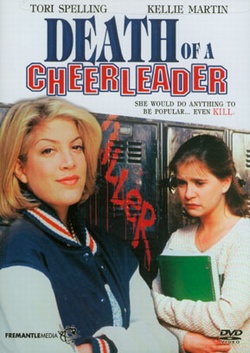
Over the past couple of year, I’ve had so much fun making fun of Tori Spelling’s performance in the original Mother, May I Sleep With Danger? that I almost feel like I have an obligation to review a movie in which she gave a halfway decent performance.
That film would be another 1994 made-for-TV-movie. It was apparently originally broadcast as A Friend To Die For but most of us know it better as Death of a Cheerleader. That’s the title that’s used whenever it shows up on Lifetime. There actually was a time when Death of a Cheerleader used to show up on almost a monthly basis but that was a while ago. Lifetime has since moved on to other movies about dead cheerleaders.
Technically, as my sister immediately pointed out when I made her watch the movie, the title isn’t quite correct. Though Stacy Lockwood (Tori Spelling) does try out for and is named to her school’s cheerleading squad, she never actually gets to cheer. Instead, shortly after the school assembly in which her selection is announced, Stacy is found stabbed to death. But really, Death of A Future Cheerleader doesn’t quite have the same ring to it.
As for who killed Stacy … well, it’s no secret. This is one of those true crime films where the murderer is not only portrayed sympathetically but is the main character as well. Angela Delvecchio (Kellie Martin) was a high school sophomore who was obsessed with trying to become popular. She looked up to Stacey and desperately wanted to be her best friend. (Why she didn’t just offer to bribe Stacey, I don’t know. Maybe she hadn’t seen Can’t Buy Me Love….) When Stacey got a job working in the school office, so did Angela. Of course, the school’s somewhat sleazy principal (Terry O’Quinn, coming across like John Locke’s worst nightmare) only made it a point to talk to Stacey and pretty much ignored Angela. When Stacey applied to work on the yearbook, so did Angela. When Stacey tried out for cheerleading, so did Angela.
In fact, the only time that Angela stood up to Stacey was when Angela was taunting the school’s token goth (played by Kathryn Morris). That turned out to be a mistake because Stacey never forgave her. When Angela invited Stacey to a party, Stacey was reluctant to go. When Stacey did finally accept the invitation, Angela stabbed her to death.
A Friend to Die For/Death of a Cheerleader is based on a true story and the film tries to lay the blame for Angela’s crime on the affluent neighborhood she was raised in. Just in case we missed the message, the film actually features a Priest (played by Eugene Roche) who says that the community put too much pressure on Angela to succeed.
Uhmmm….okay, if you say so.
Seriously, this is a pretty good little true crime film and both Tori Spelling and Kellie Martin give really good performances but this whole “It’s society’s fault” argument is typical, mushy, made-for-TV, bourgeois liberal BS. Angela picked up the knife, Angela committed the crime, end of story. That said, A Friend To Die For is pretty good as far as these movies go. I already mentioned the performances of Spelling and Martin but also keep an eye out for Marley Shelton, who gets a really good scene in which she explains that she never liked Stacey that much while she was alive.
You can watch A Friend To Die For/Death of a Cheerleader below!
Stranger Things- Season 1, Episode 6 – The Monster; ALT Title: Are you there God? It’s me, El.
Cold Open: Creeper is calling for Nancy. She is lost in the Shadow World. In her haste, Nancy is has passed the exit and his alone in the with the monster. Creeper sees the tree portal, then Nancy’s outstretched arm, and pulls the love of his life back into the Light World like a forceps baby. The tree’s portal closes.
Roll Credits.
Steve is driving with his crew all worried about Nancy. He uses his much improved Ninja Skills to go up to Nancy’s bedroom, but is frozen with shock and rage at the sight of Creeper comforting Nancy on her bed.
Joyce’s House: Hop is mentally exhausted, but pushes through it. He explains that he saw Will’s room because there was a kid’s bed and kid’s drawing on the wall. However, when Joyce asks, “Was [the drawing] good?” Hop describes it as a kid’s drawing. She shows Hop an example of Will’s very good artwork. Hop realizes that all this time that he’s been looking for another kid. David Harbour plays this scene with a mix of realization and rage that they did this to yet another kid. I haven’t seen acting this good since the Robert Mitchum or Gary Cooper. In five years, he’ll be holding an Oscar.
Mike’s house: Nancy showers off her evil goo. She has Creeper sleep in her bed. Maybe, he’ll take some photos of her when she sleeps? You two deserve each other.
Hop and Joyce: They go on a quest to find El’s mom, using his library research. Given that was a trolling ground for Hop, I didn’t mean to have that previous sentence to read vaguely dirty.
Nancy’s Room: Nancy Nancy Drews (sorry had to go there) a theory that the monster is a predator, who hunts at night, and detects blood. HMMMMMMM, whatever could it be???? They decide to set a trap.
Mr. Clark’s house: He is visited by Evil Modine’s Blonde Henchwoman and is duped into revealing the boys’ identities with promises of nerdy tech programs for promising youths.
Flash to El: Evil Modine brings El a one-dollar Target store plant because he wants to her to make contact and he’s obviously cheap.
El wakes in the woods. She puts her wig on to become a normal girl again. She looks into the water seeing herself as a freak, a monster, an ersatz girl. El tosses the wig and screams her energy into the lake.
Mike’s House: Karen uses her bobby pin to gain access to Nancy’s room, expecting to find a sleeping kid. Instead, she sees an empty bed and the indications that a boy spent the night.
Lucas’ House: The boys try to make up. It’s a bit corny, but in a good way. Lucas is determined to find Will on his own and he’s convinced that El is a traitor. Dustin insists that it was pretty awesome; she threw him into the air with her mind. Lucas’ face says it all- that’s why she sucks, SHE’S NOT HUMAN!
El decides to go shopping for some Eggos. She’s dirty, she’s weird, and the villagers are scared. FLASH to the Evil Bathtub: El is being submerged into the dark world -the in between space that separates our world and the Shadow World a membrane that acts a terrible bridge. Back to the store where once again, we find a dickish manager. She calls the manager a Mouth Breather; it’s pretty awesome. He tries to stop El because she’s leaving the store without paying and El’s like – LEGGO MY EGGO! BOOM- The sliding glass doors explode.
Hop and Joyce: They arrive at Terry Ives’ home to ask her about her daughter. She is catatonic.
Lucas: We see him leaving to find Will. He sees a white Hawkins Power and Light van. Dustin and Mike, separated from Lucas, discuss why Lucas is upset. Dustin explains that Lucas is jealous because he’s being replaced by El.
We learn from Terry’s sister that she got into MK Ultra in college. They gave Terry loads of LSD, put her in the salt water tank, but she was pregnant. This gave her baby enhanced superpowers. This is an obvious nod to Dean Herbert’s Dune, when Lady Jessica takes the Water of Life when she was pregnant; thereby, giving her daughter Alia superpowers. Yep, I just laid some nerd knowledge on you! Boom! Terry’s sister explains that Terry believed she would have telekinetic and other badass powers; we flash to El’s mojo badassery throughout the series. All the while she describes this, there is baby music playing in the background that is extra creepy.
Lucas uses his compass and arrives at Evil Modine’s Government Facility.
Nancy and Creeper find supplies to set their trap. When they go outside, she sees the movie theater marquee – All The Right Moves Starring – Spray Painted – Nancy the Slut Wheeler. She’s mortified. She hears spray paint cans being used and finds Steve and his cohorts. She slaps him. Steve starts insulting Creeper and Creeper kicks Steve’s ass. The cops arrive and in a funny accidental assault on a police officer, Creeper is arrested.
Hop and Joyce: She’s devastated that it’s been 12 years since Terry saw her daughter, meaning she may never see Will again. Hop explains that there’s still a chance. He explains that he’s been through what she’s going through, but his daughter was taken permanently, but he will get Will back to her. People in pain will sometimes lash out because a person tries to share their pain, thinking that the sharer is trying to make it about themselves. WRONG! Don’t be that way! Pain is not unique. There’s sympathy and empathy. Sympathy- wow, that sucks. Empathy- I felt your kind of pain because this happened to me. This is a vulnerable act of sharing, creating intimacy and intimacy is the bedrock of any relationship.
Hop gets a call that Creeper was arrested.
Back at the Police Station, Nancy brings Creeper some ice for his candid photo taking hands.
Lucas: He sees a bunch of Hawkins Power and Light vans. Lucas realizes that the government is on to them.
The Bullies find Dustin and Mike at the Quarry. The World’s Smallest Bully (WSB) catches Dustin and threatens to cut out Dustin’s baby teeth, if Mike doesn’t jump into the quarry. The tension builds and he jumps. The boys run to see a likely dead Mike; instead, Mike is suspended in mid-air and hoisted back to the top of the cliff. We cut to El who has her signature bloody nose. She shoves one bully into the air and breaks the WSB’s arm. El says, GO! The bullies do.
Flash to In between dark room: She sees the monster and approaches. She reaches out to it’s scaly skin and touches the creature. It shrieks at her with a head full of teeth. El’s terror is so great that she releases a huge energy burst that tears a hole in our dimension, linking our world to the shadow world and the Monster.
Back to the quarry, El confesses she opened the gate; therefore, she is the monster. Mike eschews that notion- You saved me El. They all hug.
Dustin, Mike, and El have return to Mike’s house and the Hawkins Power and Light Van is waiting for them.


 Through the Shattered Lens