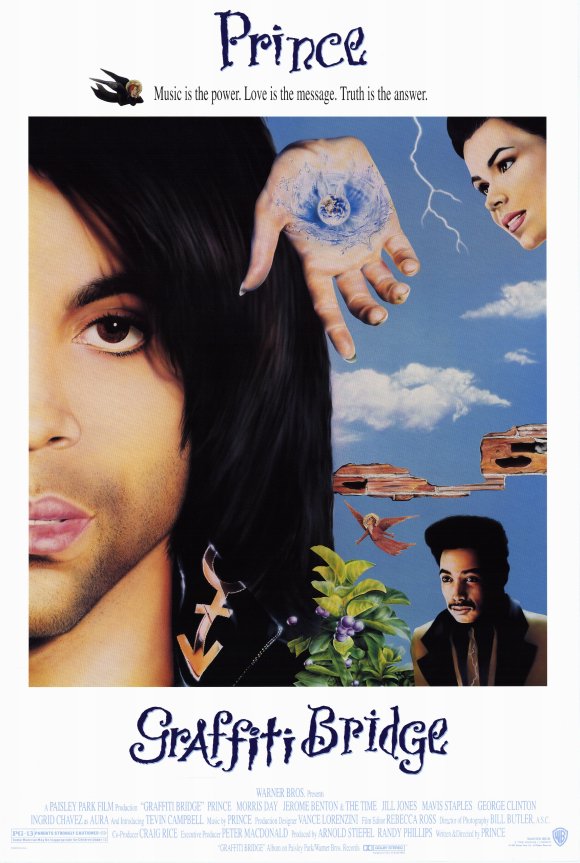
Long before Prince (way too) prematurely crossed the mythical Rainbow Bridge, he crossed another bridge — specifically, Graffiti Bridge. And while this 1990 sequel to Purple Rain isn’t remembered all that fondly by many and frankly showcases His Royal Badness at his most self-indulgent, it’s far from a bad flick, features plenty of well-staged, extremely-high-energy song and dance numbers, and provides an interesting glimpse into the spiritual awakening he was going through that would go on to inform so much of the rest of his life and career.
Originally conceived of by Prince (who wrote and directed it) as a co-starring vehicle for himself and then-girlfriend Kim Basinger, their break-up necessitated a quick bit of re-casting and, I’m guessing, resulted in a budget-and-resources trim-down from Warner Brothers, but who are we kidding — given the film’s navel-gazing premise and heavy focus on music over story it was probably never…
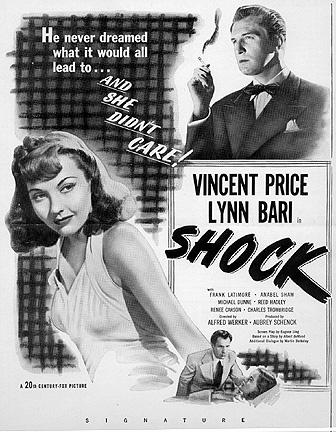
Shock opens with a young housewife named Jane Stewart (Anabel Shaw) waking from a dream, getting out of bed, looking out a window, and seeing something rather serious happening in the house next door. A man and a woman are arguing. Though Jane doesn’t recognize the man, horror fans will immediately realize that he’s Vincent Price, without a mustache. As Jane watches, the man beats the woman to death. When Jane’s husband, Lt. Paul Stewart (Frank Latimore), returns home, he discovers that Jane is in a catatonic state.
Paul calls the local cranky physician, Dr. Harvey (Charles Trowbridge), to the house. Dr. Harvey takes one look at Jane and announces, “She’s in shock!” (YAY! WE HAVE A TITLE!) Paul looks confused so Dr. Harvey goes on to explain, “She’s had a great shock.” Unfortunately, Dr. Harvey is not trained to deal with shock but he knows someone who is. That man’s name is Dr. Richard Cross.
Soon Dr. Cross shows up and — OH MY GOD, IT’S VINCENT PRICE! That’s right — Dr. Cross not only caused Jane’s shock but now he’s going to treat it! Or is he? Though Dr. Cross claims to be wracked with guilt over the murder, his nurse, Elaine Jordan (Lynn Bari), is less concerned about it. In fact, since Elaine is also his mistress, she’s rather happy that Dr. Cross has murdered his wife. Now, she just has to convince him to murder Jane before she recovers from her shock.
(Interestingly enough, Dr. Cross’s plan involves treating Jane with insulin shock therapy, which would seem to indicate that Dr. Cross has seen Dr. Kildare’s Strange Case too many times.)
I had high hopes for Shock, largely because of the presence of Vincent Price. From what I’ve read, the box office success of Shock changed the course of Price’s career. Before Shock, Price was a character actor who occasionally got a good supporting role. After Shock, he was transformed into the horror icon who we all know and love today. Shock was the first time that Price was cast in the type of mad scientist role that would later become his trademark. For that reason, Shock has an important place in the history of cinematic terror.
But, unfortunately, Shock itself is kind of forgettable. It’s pretty much your standard thriller, one that makes the mistake of revealing Price’s villainy from the start. (It would have been far more effective if the film tried to shock us with the realization that Price is the bad guy.) It’s always fun to watch Vincent Price in a movie but he actually gives a rather subdued performance here and, as a result, he’s not as much fun as he would be in his later films. In other words, Shock is no House On Haunted Hill.
That said, Shock is definitely a piece of film history and, as such, it’s worth watching. And here it is:
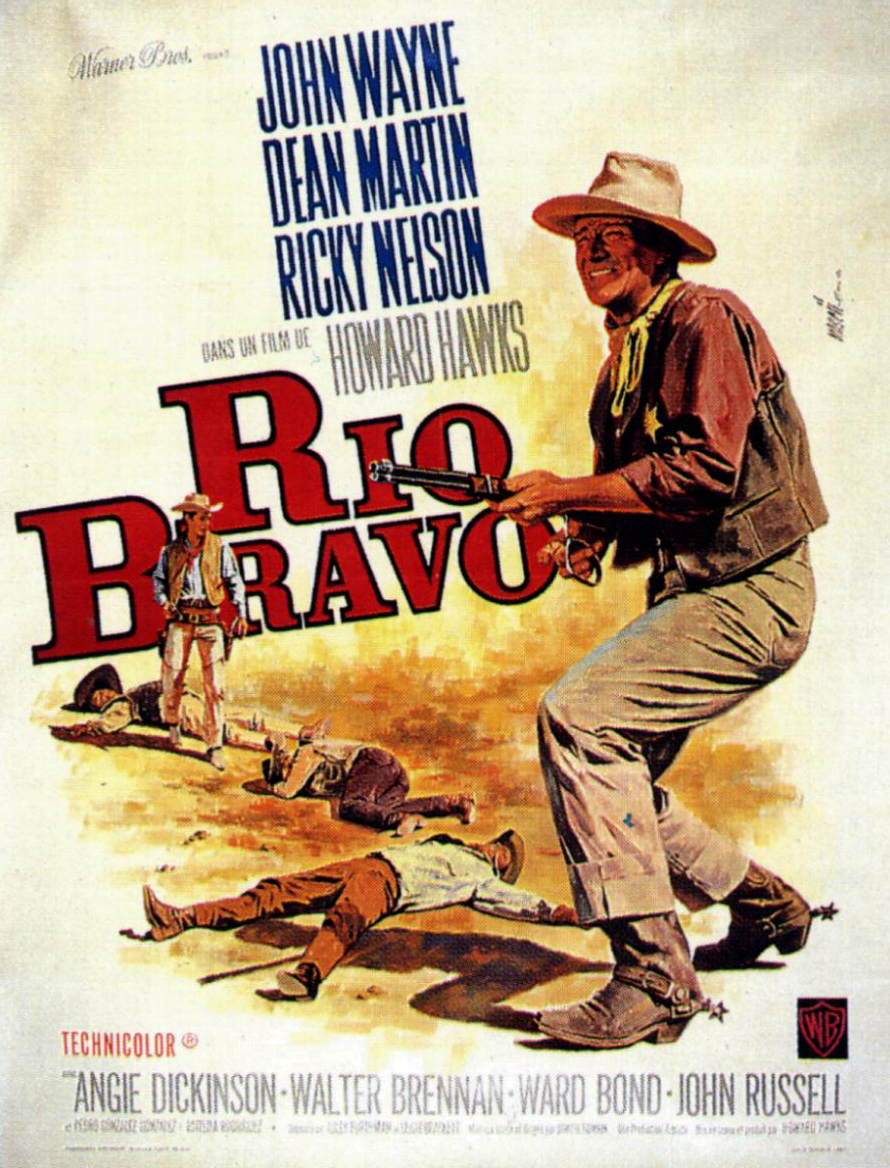
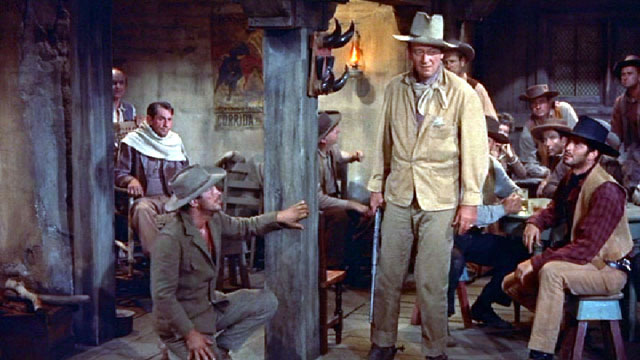
If there’s such a thing as the quintessential “John Wayne Movie”, RIO BRAVO may very well be it. Producer/director Howard Hawks created the perfect blend of action and humor, leading an all-star cast through this tale of a stand-off between the good guys and the bad guys. RIO BRAVO’s theme has been done over many times, most notably by John Carpenter in 1976’s ASSAULT ON PRECINCT 13. Hawks himself remade the film, with Wayne again starring, as EL DORADO and RIO LOBO, but the original remains the best of the bunch.
The plot itself is pretty basic. When disgraced deputy Dude (called Borrachon, Spanish for ‘big drunk’) walks into a saloon looking for booze, no-good Joe Burdette tosses a silver dollar into a spittoon for kicks. Sheriff John T. Chance stops Dude from embarrassing himself, only to receive a whack in the head for his efforts. Dude goes after Joe and a fight breaks out, and Joe kills…
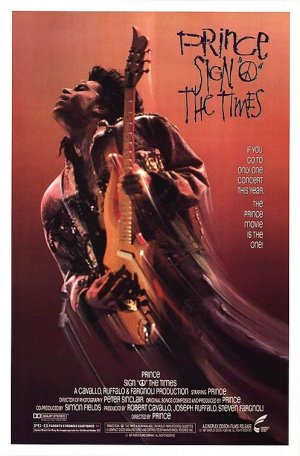
In recent days I’ve emerged from my funk by feeling the funk — leave it to Prince to have provided his fans with the one sure-fire way of getting over his death which is, of course, by getting into his music. He wouldn’t want us to feel too blue for too long, after all — he’d rather have us all feeling decidedly purple. And what better way to not only remember, but celebrate, his extraordinary life than by witnessing the magic he created at the very height of his powers?
Granted, one could argue that said “height” lasted for decades, but for my money the best filmed record of it came in 1987 with the release of his flat-out monumental concert movie, Sign “O” The Times, directed (with a considerable amount of flair and confidence, I might add) by Prince himself with uncredited assistance from his former manager/business…
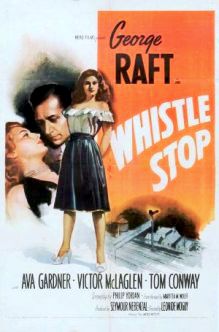
The 19th film in Mill Creek’s Fabulous Forties box set was 1946’s Whistle Stop and I’m sad to say that I ran into some trouble when I tried to watch it. As much as I love the Mill Creek box sets, the DVDs within are somewhat notorious for getting easily damaged. That was the problem that I ran into when I tried to watch Whistle Stop. From the minute I hit play, the film would randomly pause. The picture would randomly pixelate. The sound would randomly vanish. As you may have picked up, it was all very random but it also made it impossible for me to watch Whistle Stop.
However, like almost every other film that’s ever shown up in Mill Creek box set, Whistle Stop is in the public domain and, therefore, it’s been uploaded to YouTube by dozens of different accounts. Once I realized that the DVD wasn’t going to work, I switched over to YouTube and I finally got watch Whistle Stop.
Really, I probably shouldn’t have gone to all the trouble. Of the 19 Fabulous Forties films that I’ve watched so far, Whistle Stop is perhaps the least interesting. Half of the film is a film noir and the other half if a small town melodrama but, with its convoluted plot and uninspired direction, it really doesn’t work as either.
Mary (Ava Gardner) grew up in a small town but, eventually, she left and went to the big city, hoping to make a new life for herself. Apparently, she didn’t succeed because, two years later, she returns to the small town. (The town is so small and obscure that it’s mostly known for its train stop. Hence, it’s a “whistle stop.”) When she returns, she discovers that her ex-boyfriend, Kenny Veech (George Raft) has become a loser in her absence. Kenny is still in love with her but he’s also bitter at her for leaving town.
Making things even worse, from Kenny’s point of view, is that Mary is now dating a sleazy nightclub owner named Lew Lentz (Tom Conway). Kenny’s best friend, Gitlo (Victor McLaglen), comes up with a plan, in which he and Kenny will kill Lew and make it look like a robbery. However, Lew has plans of his own and…
You know what? I’m probably making Whistle Stop sound more interesting than it actually is. This is one of those films were the plot manages to be absurdly complicated without actually adding up to much. On the plus side, Ava Gardner, one of my favorite of great femme fatales, is beautiful and sultry as Mary and reminded me of why, for several years, Film Noir Femme Fatale was my default Halloween costume. Tom Conway makes Lew Lentz so amazingly sleazy that you can’t help but admire his commitment to the role. On the other hand, George Raft is totally miscast and way too handsome and naturally rakish to play a total loser like Kenny Veech. Watching the film, you can tell that he wasn’t particularly comfortable playing such an insecure and passive character.
Whistle Stop wasn’t particularly memorable but if you want to watch it, you can do so below. It’s free!
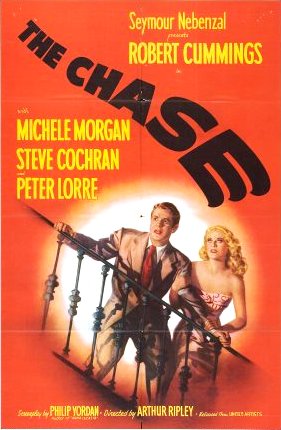
The 18th film in Mill Creek’s Fabulous Forties box set was 1946’s The Chase, which turned out to be a pretty nifty little film noir. Did I actually just use the word nifty in a film review? Yes, I did but then again, everyone should use the word “nifty” at least once in their lives.
The Chase tells the story of Chuck Scott (Robert Cummings), whose life is anything but nifty. When we first meet him, he’s standing outside in the rain, staring into a restaurant, and enviously watching the people eating inside. Chuck is a returning serviceman. He helped to win World War II but he’s now returned to a society that has changed in his absence. He has no money, he has no home, and he suffers from what we would today call PTSD.
Things change for Chuck when he finds the wallet of a man named Eddie Roman (Steve Cochran). He returns the wallet, discovering that Eddie not only lives in a mansion but he also has a sinister henchman named Gino (Peter Lorre!). Eddie is so impressed that Chuck returned the wallet and didn’t try to steal any of the money that he offers to put Chuck on the payroll.
Soon, he is working as Eddie’s driver. Of course, Eddie has an accelerator installed in the backseat, so that he can control how fast the car is going. Eddie enjoys freaking Chuck out by randomly speeding up the car. Along with being a spectacularly bad passenger, Eddie also turns out to be a gangster.
When Chuck meets the mysterious Lorna (Michele Morgan), it’s love at first sight but there’s a big problem. Lorna happens to be married … to Eddie! Chuck and Lorna flee to Cuba, with Eddie and Gino in pursuit…
Or do they?
Chuck, it turns out, has been suffering from nightmares since he returned from the war. Often times, he wakes up with amnesia. Are Eddie, Gino, and Lorna real or are they just figments of Chuck’s dream state? Is Chuck really living in a film noir or is he just dreaming that he is?
The Chase is an effectively dark little film noir, one that will keep you guessing. Steve Cochran appears to be having a lot of fun as the cheerfully sociopathic Eddie (and it’s interesting to note that, in the same year as The Chase, Cochran had a supporting role in another film about the struggles of returning servicemen, the Oscar-winning Best Years Of Our Lives) and, of course, Peter Lorre is great as Gino. Michele Morgan is both sympathetic and enigmatic as Lorna and Robert Cummings does a good job of playing a man who is never quite sure whether he’s awake or he’s asleep.
The Chase is a classic mix of film noir and psychological melodrama. Watch it below!
If there’s anything that I’ve learned, from my long history of watching horror films, it’s that only fools go camping. Seriously, nothing good ever comes from wandering around in the woods or sleeping in a tent. Inevitably, you’re either going to attacked by a zombie while you’re skinny dipping in the nearby pond or a man with a machete is going to show up while everyone’s busy having sex in a tent. In short, nudity and the great outdoors equals death.
And really, it makes sense. When you’re camping, you’re in an isolated place and you are totally at the mercy of the elements, the killers, and occasionally the zombies. There’s a reason why so many horror films center around unlucky campers. Because, seriously, camping is terrifying!
Just check out My Little Sister, for instance.
My Little Sister is the latest film from directors Roberto and Maurizio del Piccolo. It opens in the wilderness, with shots of an old woman wandering through the woods. The old woman looks happy but it’s a disturbing sort of happiness. First off, she’s wearing a nightgown, which isn’t exactly the most practical wandering around in the woods outfit. Secondly, her wrists are heavily bandaged. And finally, she doesn’t really seem to have an easily identifiable reason for being out there in the woods. She spends a while picking up leaves and smiling at them. Occasionally, she crawls around in the dirty. As we watch her, we occasionally cut to black-and-white photographs of an unhappy looking family and headlines about missing tourists.
While the old woman plays with leaves, something far more disturbing is happening in a nearby house. In one room, a bound and terrified woman (Sofia Pauly) watches as her boyfriend is murdered and another woman is killed with a weed whacker. Doing the killing is a hunched over, grunting man (Saverio Percudani) who appears to be horribly disfigured…
In another room of the house, an unmoving figure sits in front of a TV and watches grainy footage of a young girl holding an older man a bottle of what appears to be water. The man pours the liquid on his face and suddenly starts to scream. Hmmm…apparently, it wasn’t water…
Meanwhile, in the woods, campers Sheila (Holli Dillon) and Tom (Mattia Rossellini) watch as the old woman plays with the leaves and they laugh at her, which may seem mean but I think most of us would probably do the same thing. Sheila and Tom are supposed to meet up with their friends but their friends are nowhere to be seen. Instead, there’s just an empty campsite and an eccentric woodsman (David White) warning them to beware of someone that he calls the little sister…
Of course, all of these storylines converge but I’m not going to tell you how. You may think that you’ve figured out some of it just by reading the review up to this point but My Little Sister has a few surprises up its sleeve. There’s a little twist at the end that my horror-loving soul absolutely loved. Let’s just say that, in this film, no one is every truly safe.
My Little Sister plays out like a mix of Friday the 13th, The Texas Chainsaw Massacre, and — believe it or not — Sinister. At its best, My Little Sister achieves a dreamlike intensity. The wilderness is filmed to look both beautiful and threatening at the same time and the scenes in the house, in particular, are pure nightmare fuel. When it comes to a film like this, the effectiveness depends on how much you care about the potential victims and fortunately, both Holli Dillon and Sofia Pauly give totally believable, sympathetic, and relatable performances. As I watched them try to survive, I kept wondering what I would do if I found myself in the same situation. I doubt it would end well.
Finally, there’s no way I can finish this review without making a special mention of Lucia Castellano, who gives a really good and genuinely surprising performance as the crazy old woman in the wilderness. She is both frightening and sympathetic at the same time.
My Little Sister is a brutally effective and entertaining horror film. Keep an eye out for it!
Remember how, in the 1990s, every aspiring indie director tried to rip off Quentin Tarantino by making a gangster film that mixed graphic violence with quirky dialogue, dark comedy, and obscure pop cultural references? That led to a lot of terrible movies but not a single one (not even Amongst Friends) was as terrible as Mad Dog Time.
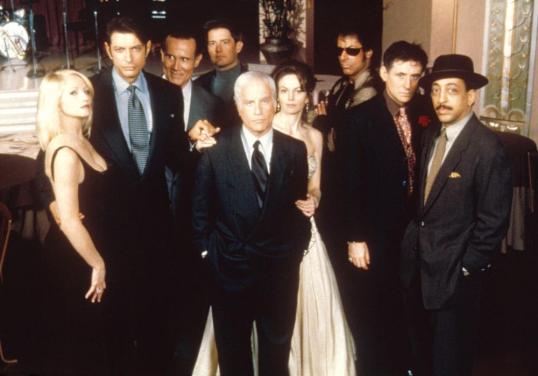
That Mad Dog Time was terrible should come as no surprise. Most directorial debuts are. What made Mad Dog Time unique was the sheer amount of talent that was assembled and wasted in the effort to bring this sorry movie to life. As the son of Joey Bishop, director Larry Bishop was Hollywood royalty and was able to convince several ridiculously overqualified actors to play the thinly drawn gangsters and rouges who populated Mad Dog Time. Much like the Rat Pack movies that his father once starred in, Larry Bishop’s debut film was full of familiar faces. Some of them only appeared for a few seconds while others had larger roles but they were all wasted in the end. Hopefully, everyone was served a good lunch in between filming their scenes because it is hard to see what else anyone could have gotten out of appearing in Mad Dog Time.
Mob boss Vic (Richard Dreyfuss) has just been released from a mental hospital. With the help of his main enforcer, Mick (Jeff Goldblum), and a legendary hitman named Nick (Larry Bishop, giving not only the worst performance in the film but also the worst performance of the 1990s), Vic is going to reassert his control over the rackets. Vic also wants to find his former mistress, Grace Everly (Diane Lane) but he doesn’t know that Grace is now with Mick and that Mick is also having an affair with Grace’s sister, Rita (Ellen Barkin).
(Grace and Rita are the Everly Sisters! Ha ha, between that and all the rhyming names, are you laughing yet?)
Ben London (Gabriel Byrne) has taken over Vic’s nightclub and, while singing My Way with Paul Anka, tells Vic that he should take an early retirement because he’s a paranoid schizophrenic. Before he can deal with Ben, Vic has to kill all of his other rivals, all of whom are played by actors like Michael J. Pollard, Billy Idol, Kyle MacLachlan, Gregory Hines, and Burt Reynolds. The bodies start to pile up but Jimmy the Undertaker (Richard Pryor, looking extremely frail in one of his final roles) is always around to make sure that everyone gets a proper burial.
And there are other cameos as well. Joey Bishop is the owner of a mortuary. Henry Silva is wasted as one the few gangsters to stay loyal to Vic. Christopher Jones, who previously co-starred with Larry Bishop and Richard Pryor in Wild In The Streets before dropping out of a society, plays a hitman who pretends to be Nick Falco. Even Rob Reiner shows up a limo driver who talks too much.
Almost every poorly paced scene in Mad Dog Time plays out the same way. Three or more men confront each other in a room. Hard-boiled dialogue is exchanged for an interminable length of time until someone finally gets shot. You would think, at the very least, it would be watchable because of all the different people in the cast but none of the actors really seem to be into it. Richard Dreyfuss and Jeff Goldblum resort to smirking through their scenes while Gabriel Byrne often appears to be drunk. Whenever he’s in a scene, Burt Reynolds seems to be trying to hide his face and it is hard to blame him. There were many terrible movies released in the 90s but none were as bad as Mad Dog Time.




 Remember how, in the 1990s, every aspiring indie director tried to rip off Quentin Tarantino by making a gangster film that mixed graphic violence with quirky dialogue, dark comedy, and obscure pop cultural references? That led to a lot of terrible movies but not a single one (not even Amongst Friends) was as terrible as Mad Dog Time.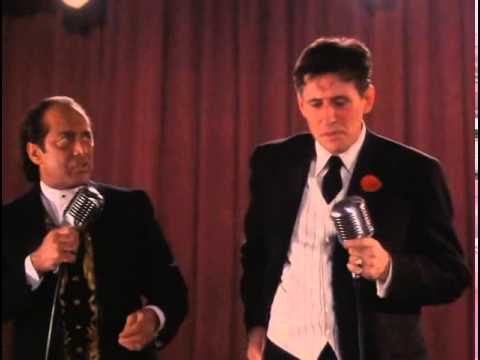
 Through the Shattered Lens