October Music Series: Тарас Компаніченко – Танець


Here’s an obscure one for you. I don’t have much time to write today, so I’ll keep it short. Тарас Компаніченко (Taras Kompanichenko) is a Ukrainian early music and folk musician born in 1969. Wikipedia describes him as “an influential kobzar, bandurist, lutenist, lira player”, and I’ll leave those terms for you to investigate. The world of Ukrainian folk is vast, both unique in its own right and a major participant in the greater sphere of Eastern European music. It seems like over the last twenty years especially the former Soviet-dominated nations have exploded in a renaissance of music and tradition. If you like what you’re hearing here, dig around a bit for more. It might be hard to find at first, but when you learn where to look there’s a wealth of it out there.

Horror Scenes I Love: The Prophecy (dir. by Gregory Widen)


What is it about stories of angels and demons that makes people gravitate towards them. One doesn’t even have to be religious to feel a sense of curiosity towards such stories. Is it because deep down we put some sort of faith that we’re being watched over by the One who created us. I’m not religious, but I always found stories about angels and their rebellion against God quite interesting. It’s the age-old tale of love, betrayal and redemption on a cosmic and divine scale. It’s from one such story that I find the latest “Scenes I Love”.

The film The Prophecy was one I had already reviewed a while back and whenever I come across it on cable I tend to drop whatever I’m doing and watch it. I go into much more detail why I enjoy this film very much in my review of it. This time I like to share one scene from the film that hints at just how much more epic this film could’ve been if it was a full-blown novel. It helps that the performance by Viggo Mortensen as Lucifer shows that even in 1995 he was already a great actor who hasn’t been discovered yet. While it’s deserving to say that Christopher Walken owned this film with his work in it I’d say Mortensen’s portrayal of The First Angel, The Morningstar and God’s Most Favored was something I wish a film could be made around.

Listen here, Maggott


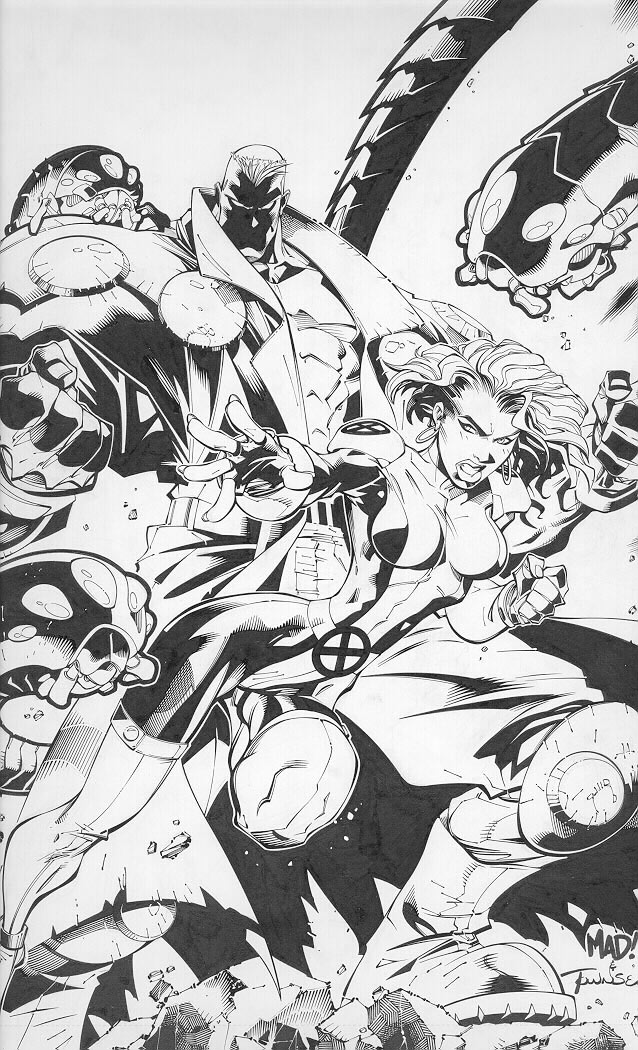
Image

Had an idea for one of the most overlooked X-Men, Japheth aka Maggott. For those who never encountered the character, he was created by Scott Lobdell & Joe Madureira. He appeared around the same time as the Magneto clone, Joseph.  He had a history with the real Magneto, “Erik” freed the slugs from Japheth’s body and revealed that he was a mutant.  He served as an X-Man after the Zero Tolerance event and he was demoted to Generation X after Hank McCoy suggested that he needs more training.  He was eventually captured by a reformed Weapon X program and murdered in the Neverland death camp, resurrected as magical techno-organic zombie during the Necrosha event, and apparently teaches at the Jean Grey School

Image

He was billed for having the strangest mutant powers ever! His digestive system manifested as twin biomechanical slugs that exited his abdomen to consume and returned when their meal was over. They transferred energy to him, changing his skin blue & granting him superhuman strength.  He also possessed psychometry and it allows him to draw psychic residue from his environment.  The slugs were sensitive to magic and mystical energy.  His main weakness was, he couldn’t be separated from the slugs too long or he would starve.

My idea involves Mojo and particularly Spiral and her Body Shoppé. Mojo sees great rating potential in Japheth but he believes that he first needs a makeover. Spiral abducts him, modifies him based on Mojo’s orders, and dumps him in the Savage Land. His slugs (the slug experimented on by Nathaniel Essex and the remaining one) were integrated on a molecular level and dispersed throughout his body.  His mutant digestive system had evolved into a tactile consumption aura. Japheth can now feed through touch. His stomach cavity contains a biomechanical battery that stores the energy gained from eating and augments his enhanced state.  He can expel the excess energy as a corrosive energy burst. His psychometry and the slugs’ sensitivity to magic grew to the point of Parker’s ESP.

Pusher Man Returns (only in my head)


Image

I have been toying around with  Pusher Man reintroduction ideas.

**Those who haven’t read Brian K. Vaughan’s Runaways should skip this, it contains spoilers**

The Pusher Man was a drug dealer that sold MGH, mutant growth hormones.  Mutant Growth Hormones is a drug that granted normal human superhuman abilities (usually based on the donor’s ability) or amplifies a posthuman’s super power. He also possesses a pair of gloves derived from the Fistigons.  Fistigons are a pair of mechanical gauntlets created by the Steins; they allowed the user to project and manipulate flames.  The Steins were a part of the Pride, a powerful criminal organization that had dominated the West Coast. The LAPD were in their pocket & no super villain or evil entity dared enter California.  PM was fooled into believing the Pride was recruiting him by Chase Stein.  His mistake resulted in his death at Kingpin’s order.

The first idea involves Pusher Man using Mr. Immortal-derived MGH before Kingpin’s goons arrived. It allowed him to survive the savage encounter.  His damaged Fistigons were repaired and upgraded by former Atlas Corporation engineers. The gauntlets are bionic systems powered by designer MGH.  The vials are integrated into the gloves and function as nanofactories.  Raijin is a tetrawatt electrical projection.  Brute is gravity field manipulation utilized to simulate superhuman strength.  Sprite is molecular intangibility.  Jotunn is gamma radiation enhanced size magnification.  They also possess chameleon circuitry that allow them to replicate Stark’s repulsor beam technology, Von Doom’s shield system, and Death Head II’s bladed weapon.

The second idea involves the Pusher Man’s next of kin, Pusher Man II.  PM II is the 17 year old cousin of the first who plans on avenging PM’s death and revolutionizing the MGH business.  He developed a more potent form of MGH which he sells to criminal organizations like HYDRA and AIM for a greater profit.  Pusher Man II installed a nanomachine failsafe in his MGH batch to prevent HYDRA and AIM from recreating his formula.  He used his wealth to hire former Atlas Corporation engineers to construct an advanced version of the Fistigons.  This version has the same functions as the one defined in the previous idea. The only differences are the dimensional storage device used to transport MGH shipments and the ability to transform into ring-like devices when inactive.

October Music Series: Muzsikás – Dunántúli Friss Csárdások


Hungarian folk group Muzsikás have been around since 1973, but this song is much older. Dunántúli Friss Csárdások translates as “Transdanubian Fast Csárdás”, and “Csárdás” in turn refers to a Hungarian folk dance. It derives from an old Hungarian word for “tavern”.

It’s not always clear to me where exactly folk music comes from. Bands preserve it as best they can, but there aren’t exactly that many options for research. It’s not like we have a written record. What’s gone is gone. When the last village musician dies, hundreds, maybe thousands of years of musical tradition dies with him. With the aid of easy recording and generous grants, it is easy enough for what still remains today to be preserved (and more often than not exploited into that crime against culture we call ‘world music’), but at this point just how much is left? I don’t mean that to be rhetorical; I’d really like to know how modern folk and folk metal bands acquire their sources.

Dunántúli Friss Csárdások and the rest of the songs on this album are an exceptionally clear case. They result from the efforts of Béla Bartók (1881-1945), one of the earliest musicians to consciously recognize folk music’s peril and attempt to preserve it. Trained as a classical musician, from 1904 on he set his focus on Eastern European folk, not only transcribing it and incorporating it into his classical compositions, but also making over 1000 actual recordings, mostly between 1906 and the start of the war. A random example will more likely than not yield a bland 10 seconds of someone talking or humming, but after listening to twenty or so I found one that really impressed me:

Does Dunántúli Friss Csárdások and the rest of the Muzsikás album derive from one of Bartók’s field recordings, or from one of his original compositions based upon them? That I’m not sure about, but one could always just ask the band. Frankly I think it might be a bit more fun to dig through the full collection of Bartók recordings looking for them.

October Music Series: Utuk Xul – The Ancient God of the Light


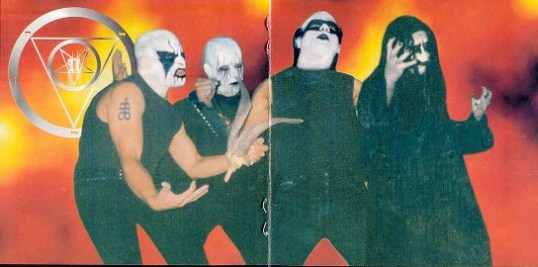
What I especially love about this song is the sustained, poor production quality noise. Utuk Xul, hailing from Cali, Colombia, are not a band to write home about, and The Goat of the Black Possession is not a particularly special album. One especially degrading review on Encyclopaedia Metallum gives it a lowly 25%, and I’m afraid there’s not much in the review that I can argue with. But what may well be entirely generic songs are masked by a really menacing and constant wall of sinister noise. The quality of the recording is spot on, whatever one might say about the song writing. On one hand “The Ancient God of Light (part II)” really captures the aural spirit of black metal. On the other hand it captures everything that’s especially cheesy about the genre it represents.

Kicking off with a liturgical ode to Satan, the album goes on to mimic every stereotype of the genre in fairly generic form. It’s impossible to tell whether the band is trying really, really hard to be evil or whether the whole thing is tongue-in-cheek a la Carpathian Forest, but unlike Carpathian Forest they lack the relative fame to make that distinction relevant. This song’s title refers to Lucifer–the band present themselves as devout Satanists of the literal Christian sort, not LaVey’s variety–and the lyrics are everything one could hope for in especially cheesy black metal: “Call the moon, Lucifer, the morbid star! The ancient god of the light, my force! Lucifer prince of the abyss! Morbid star, light of the abyss! The hell light of the storms!”, etc.

The one thing the 25% review got definitively wrong, I think, is in chastising them for buying into the Swedish scene he dubs “norsecore”. The term is an entirely appropriate insult for one of black metal’s weakest subgenres, but part of what makes most bands in the Swedish scene pretty bad is their refined recording quality; the blast beat ad nauseam routine isn’t an innately bad thing. On “The Ancient God of Light (part II)” (What became of “part I” is anyone’s guess. It doesn’t appear on this album.) I think Utuk Xul really nailed it. The atmospheric noise just screams evil here, and, moreso than other tracks on the album, this song is sufficiently devoid of attempts at song construction to function as one continuous, sustained explosion. I love it.

I actually find The Goat of the Black Possession as a whole fairly enjoyable for the same reason I like this song, but there might be a bit of nostalgia playing into that too. It was the product of one of my earliest completely arbitrary purchasing sprees in search of unknown black metal bands, and in 2003 I had a lot less to compare it to. “The Ancient God of Light (part II)” is the only track I’ll flaunt without reservations, but if you really enjoy its effects as a background piece then you probably won’t be disappointed by the rest.

Whether Utuk Xul really take themselves seriously is anyone’s guess, but intentionally or not they succeeded in producing one of the lamest photo shoots I have ever seen. Enjoy:

Horror Scenes I Love: Dawn of the Dead (dir. Zack Snyder)


Continuing our horror-theme for October the latest “Scenes I Love” entry comes from one of those hated remakes that was actually better than expected (and for some better than the original…yes, heresy). It’s from the excellent extended opening sequence for Zack Snyder’s remake of George A. Romero’s horror classic, Dawn of the Dead.

In most zombie films we never truly get to see the early hours of the zombie apocalypse from the ground. We always hear about it second-hand after it has already occurred. In Snyder’s remake we get to see it first-hand just as it’s flaring up to uncontrollable levels.

I’m a traditional Romero-type zombie enthusiast myself, but I must admit that Snyder’s choice to make the zombies in this remake runners does add a sense of the end-times as we see zombies after zombies running and gunning after neighbors who either don’t know what the hell just dropped in their neighborhood or just too slow to get away. Love how this sequence even has a shout-out to the original version with the traffic helicopter that flies in to give a bird’s-eye view of the whole apocalypse coming down on everyone.

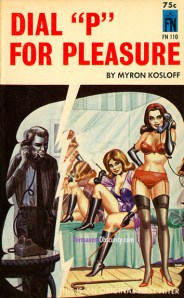
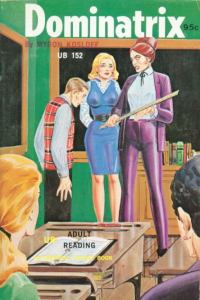
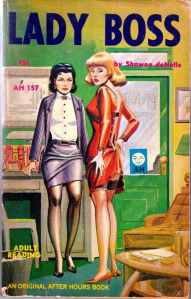
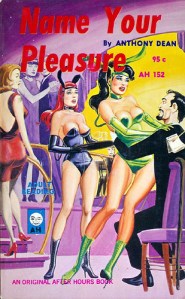
Artist Profile: Eric Stanton (1926 — 1999)


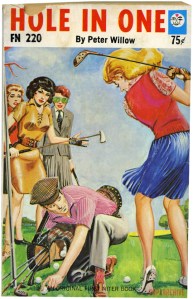
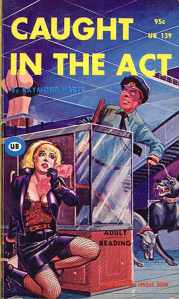
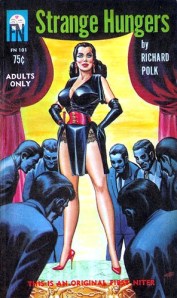
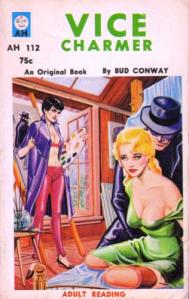
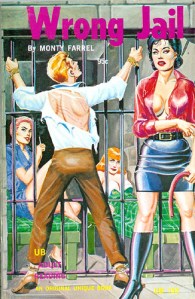
Born and raised in New York City, Eric Stanton was 12 years old when he was quarantined because of Scarlet Fever.  During this time, he started to draw out of boredom.  After a stint in the Navy, Stanton attended the Cartoonists and Illustrators School and found work as a freelance artist.  Between 1963 and 1966, Stanton painted over a 100 paperback book covers.  His covers typically featured strong women dominating weak men.

Below are a few examples of Stanton’s work as a paperback cover artist.

Quick Review: The Master (dir. by Paul T. Anderson)


If I had a choice between watching the worst of Paul T. Anderson’s films and the best of Paul W.S. Anderson’s films, P.T. would win just about every time. Unless of course it’s about Event Horizon. I love that film, but that’s for a different review.

Sometimes, you walk into a movie expecting one thing, and are given something completely different. I decided to see Paul Thomas Anderson’s The Master on a whim. It is as amazing as it is strange. Most of the movies I’ve seen lately have been event based, but it was nice to catch a film that seemed more character driven. The film’s protagonist, Freddy Quell is as unorthodox as they come, and I wouldn’t be shocked in the least to see Joaquin Phoenix get some major recognition for this. It’s not without it’s problems, though I’d see it again in a heartbeat.

I’ll be the first to admit that I’m not terribly qualified for a movie like this – it’s very “art house”, much like Refn’s Drive and Von Trier’s Melancholia (one of which I own and the other I love). A lot of it for me felt like the story wasn’t really going anywhere, though I loved the character interactions. Reviewing a film like this requires a bit more depth and understanding of cinema on a whole than what I currently have. For me,  there are moments where it almost feels like Anderson said..”Well, they did this…” with someone asking him “And then…?” right after every new point. By the time you’re done with the film, you may ask yourself just what it was you just saw (or what was the point of it, more or less). Then again, I had a similar feeling with the first half of Melancholia and adore that film because of it’s second half. What rescues The Master are the performances, particularly Phoenix’s, that help raise the movie when it threatens to sputter. This, along with the cinematography, really adds to things. The film is beautiful, especially when viewed in the 70MM format. There are some great wide-angle shots, the framing is sweet and the focus is brilliant considering you’re not watching a digital presentation. That’s at least what I took from it, visually. Anderson can make a film look beautiful.

If you can catch a 70MM showing, definitely try to do so.

Okay, that’s sweet, but what is the movie about? 

The Master is basically the story of Freddy Quell, a former Naval officer who doesn’t quite walk a straight road. He has a penchant for two things – an explosive temper and the ability to make moonshine out just about any liquid. From his first line, one gets the idea that something is just a little off with him, and it confused me a little in the opening scenes. I guess what I expected was a little different from what I got. Watching someone compulsively masturbate on a beach will do that to you.

Freddy, who finds himself in some odd jobs and situations, stumbles his way onto a boat and finds himself the next morning the guest of one Lancaster Dodd (Philip Seymour Hoffman), the leader of a group that follow a movement called “The Cause”. Dodd asks Freddy to stay and make more of his special brew. This becomes the start of a journey for both individuals. Freddy comes to find that Dodd is quite the interesting person, being invited to have his entourage stay with different friends and share with them the way he’s found to improve upon the human condition. There is a beautiful 10 minute question and answer auditing session between Dodd and Quell that’s a great example of the acting and focus in the film. Everyone seemed to go all out with their performances, which comes to no surprise given how well There Will Be Blood turned out. Amy Adams also has a good role as Dodd’s wife, supporting him through his plans in a number of ways. Having worked with Phillip Seymour Hoffman in the past, they seem to have some great chemistry together. Much of what she did was a little shocking for me, but she handled her scenes very well.

In trying to save Freddy from himself and his reckless ways, The Master doesn’t quite lead the audience where they think it’ll go. Not that it has to, mind you. However, if you’re walking into the film expecting something grand by the end of the film, you may find yourself somewhat disappointed. At least, my audience didn’t seem to voice a lot of good words for the story, though most of what I did hear was praise for the actors. I loved it, but it was just started to lose me in the last 15 minutes. However, the performances are such a standout that you really can’t ignore the film. I’m almost certain that come awards time, The Master will be in the mix.

A Horror Quickie With Lisa Marie: Slaughter High (dir by George Dugdale, Mark Ezra, and Peter Litten)


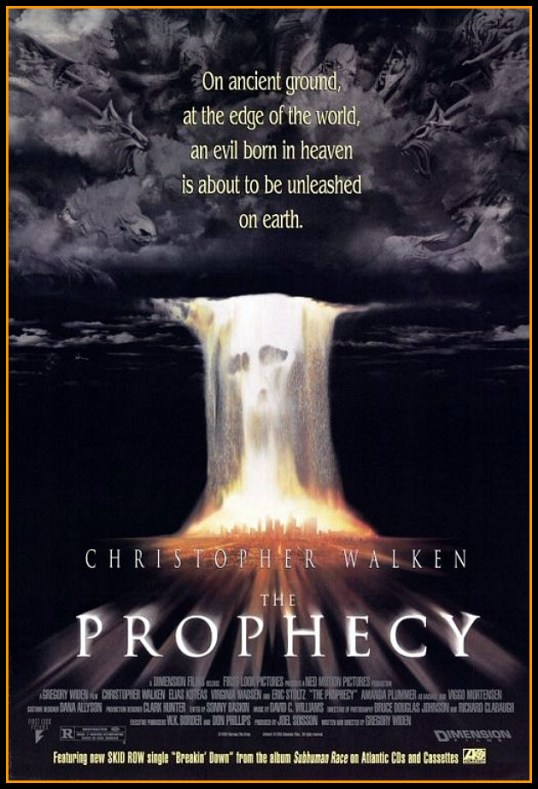
Before I left on my vacation, I watched several free horror movies on Fearnet.  The majority of those films were worth exactly what I paid for them but, occasionally, I came across a film that was worth a quarter or two more.  One of those fifty cent films was Slaughter High.

Though it was obviously made a few years earlier, Slaughter High was released in 1986 and was a part of the whole mid-80s slasher cycle.  Like many of the films in this cycle, Slaughter High opens with a high school prank gone wrong.  Poor Marty (Simon Scuddamore) is the victim of an incredibly cruel April Fool’s Day prank that ends with him totally naked and being dunked in a toilet by a group of 8 students who are surprisingly sadistic.  Of course, part of that sadism could have something to do with the fact that they all appear to be in their 30s, yet they’re still students in high school.  A coach (who appears to be the only teacher in the entire school) happens to come across the students tormenting Marty and he punishes them by ordering them to go to the gym and start doing push ups.

“This is all Marty’s fault!” one of the 8 sadists exclaims.

So, naturally, they play yet another prank on poor Marty.  This prank involves Marty smoking a poisoned joint and then accidentally spilling a jug of acid on his face.  As his tormenters watch, a seriously disfigured Marty is taken out of the school on a stretcher.

Exactly ten years later, the 8 sadists (who have now all graduated) get an invitation to attend a reunion at the old high school.  When they arrive, they discover that 1) they’re the only ones who have been invited and 2) the high school has been abandoned and is on the verge of collapsing.  Now, you might think that this might lead at least one of them to remember that it’s been exactly 10 years since they totally destroyed Marty’s face and life but you would be wrong.  Instead, the group decides to break into the old school and spend the night.

You can probably guess how well that works out.  Even as our guests discover that random pictures of Marty have been posted throughout the school, none of them suspects that something bad might be about to happen.  In fact, it’s not until one of them drinks a beer that’s been spiked with acid that it occurs to any of them that they might not be alone…

Slaughter High is something of a surprise, a low-budget horror film that works exactly because it doesn’t make any sense.  Nobody in this film acts like a logical (or halfway intelligent) human being and that — along with a genuinely creepy setting, a camera that never stops prowling through the dark corridors of that dilapidated school, and some surprisingly brutal death scenes — all comes together to create a narrative that feels more and more dream-like as the story continues.  Narrative logic is ignored in favor of nightmarish imagery and the end result is a slasher film that seems to be directly descended from Lucio Fulci’s Beyond trilogy.

It’s hard to talk about Slaughter High without talking about the film’s ending and it’s impossible to talk about that ending without spoiling the entire film.  So, I’ll just say that Slaughter High has two endings.  One concludes the action at the school and then, a few minutes later, there’s a twist ending that concludes the film as a whole.  Just on the basis of a few online reviews that I’ve read, the “twist ending” is something that people either love or they hate.  Myself, I felt that the film’s first ending would have been a perfect place to end things but, at the same time, the twist didn’t bother me.  If nothing else, it nicely complimented the entire film’s lack of narrative logic.

A sad sidenote: Simon Scuddamore, who plays Marty here, never made another film because he apparently killed himself a few weeks after filming his role.  On another odd casting note, Caroline Munro plays one of Marty’s high school tormentors despite being in her mid-30s at the time.